-
-
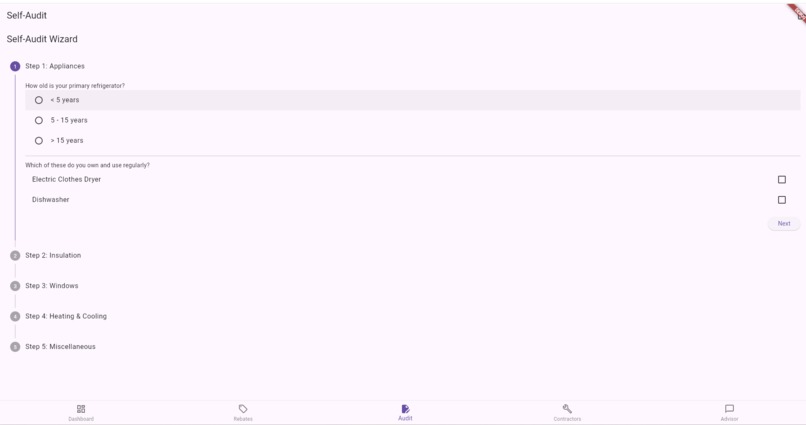
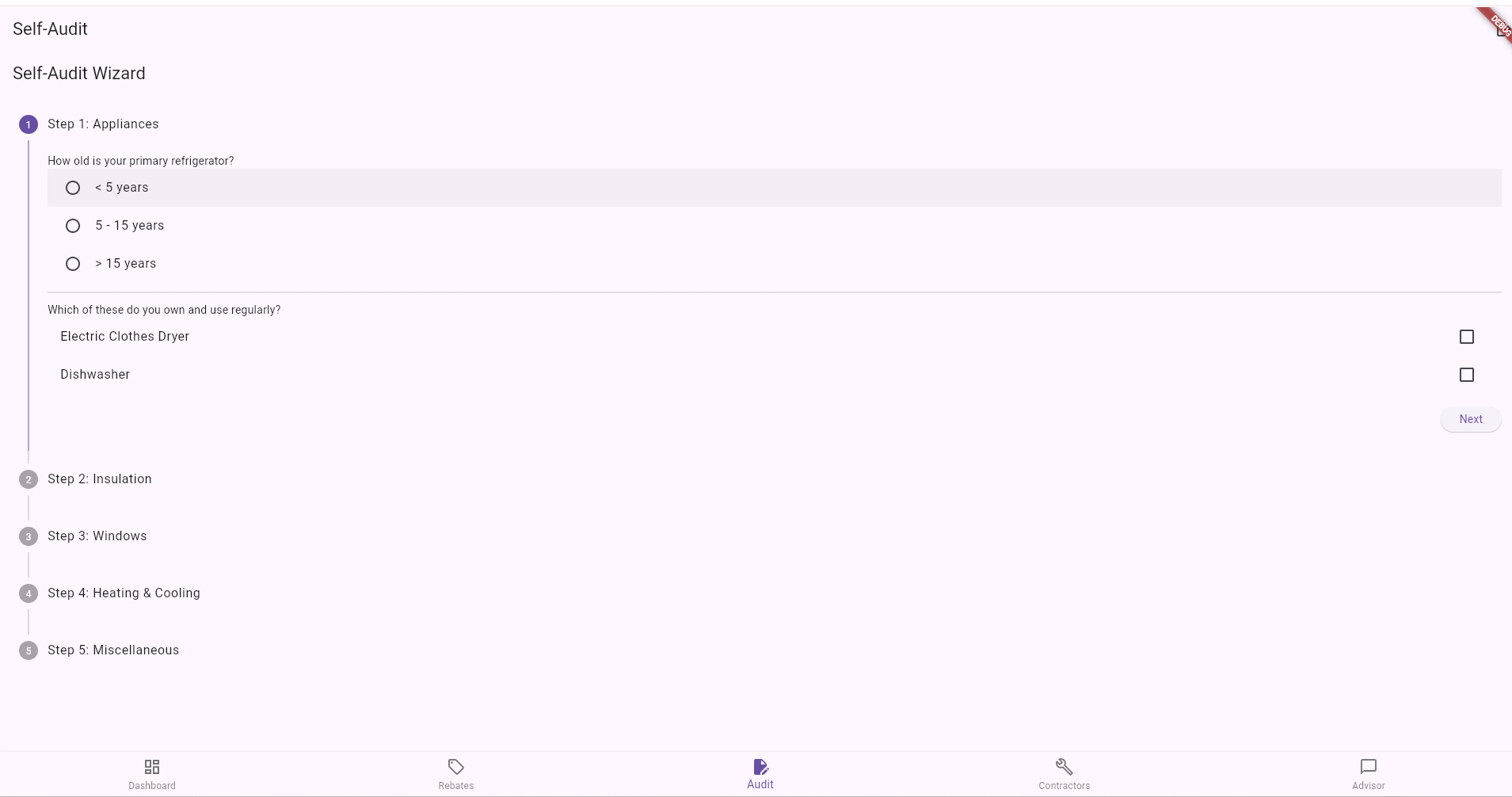
Audit
-
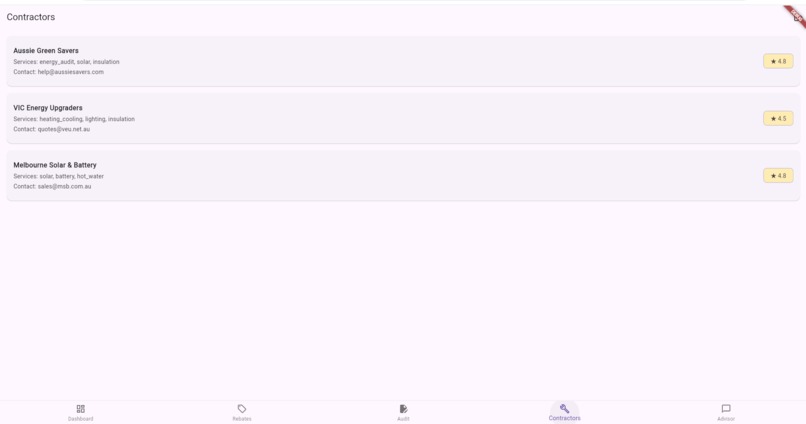
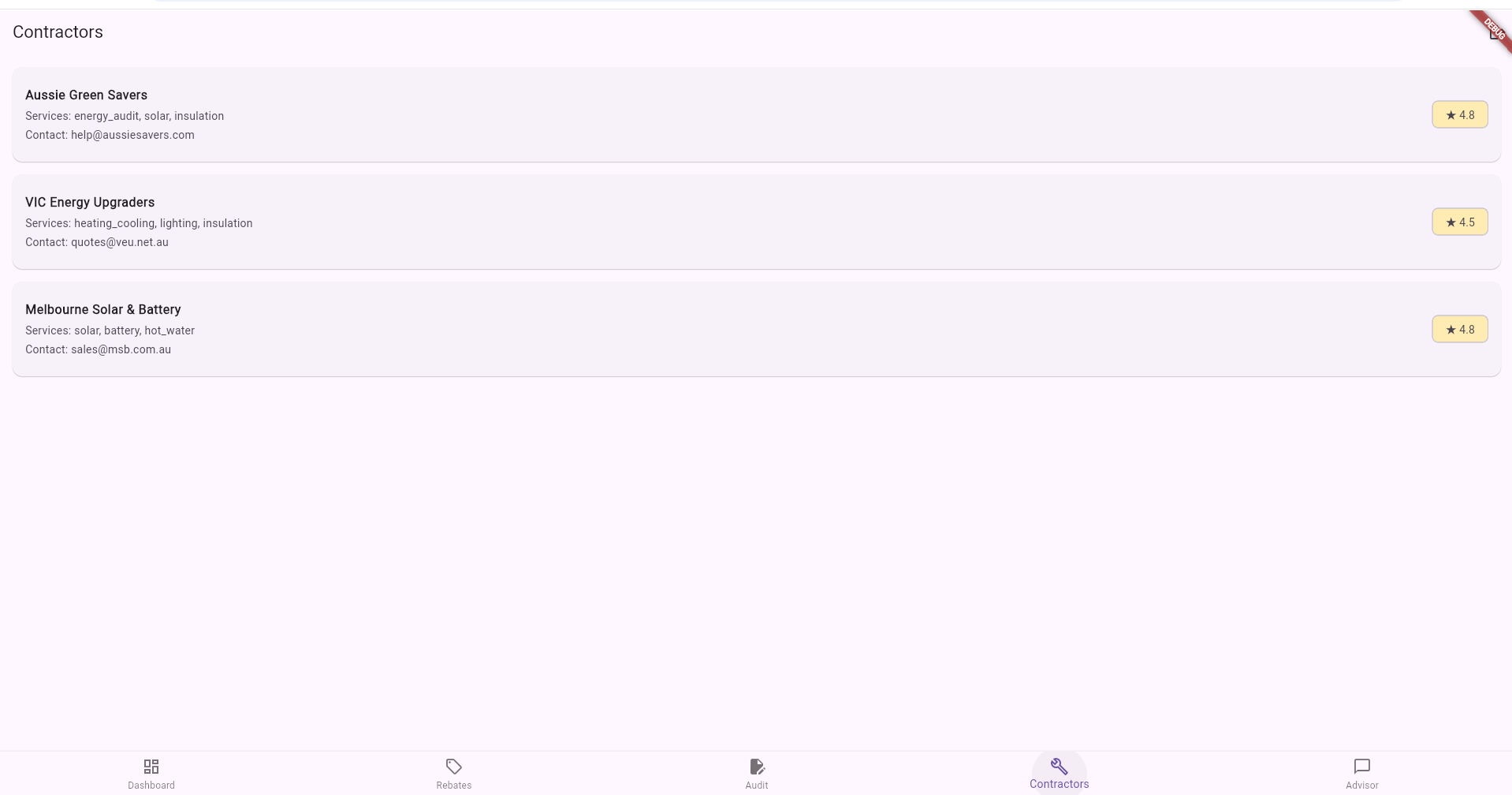
Contractors
-
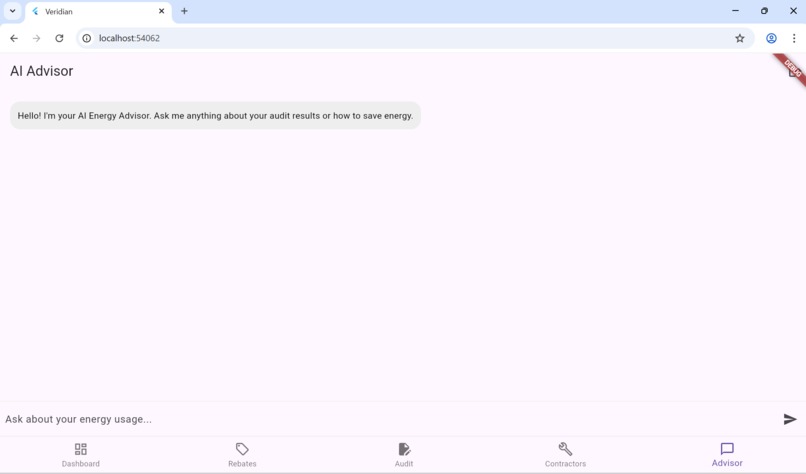
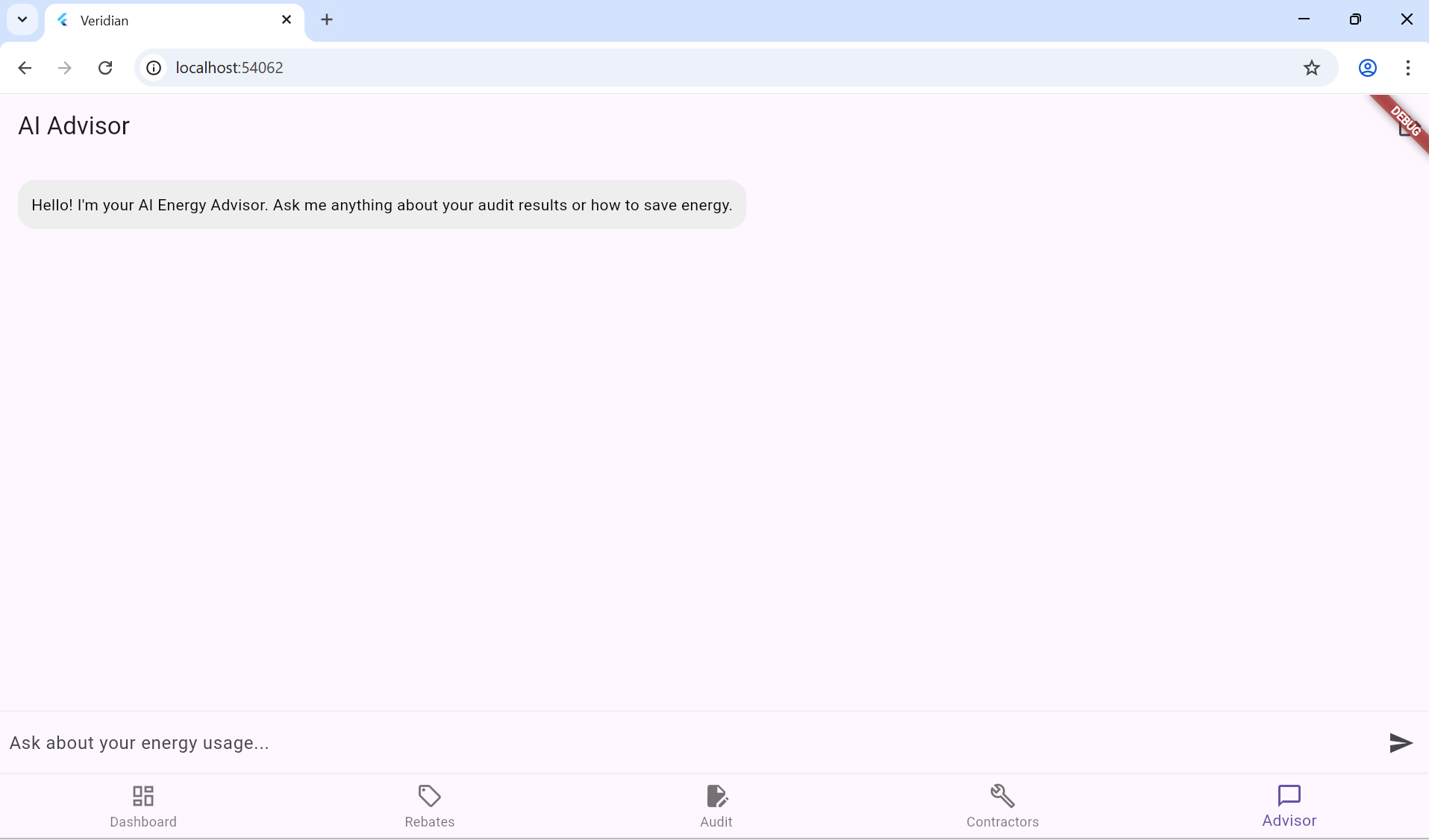
AI Advisor
-
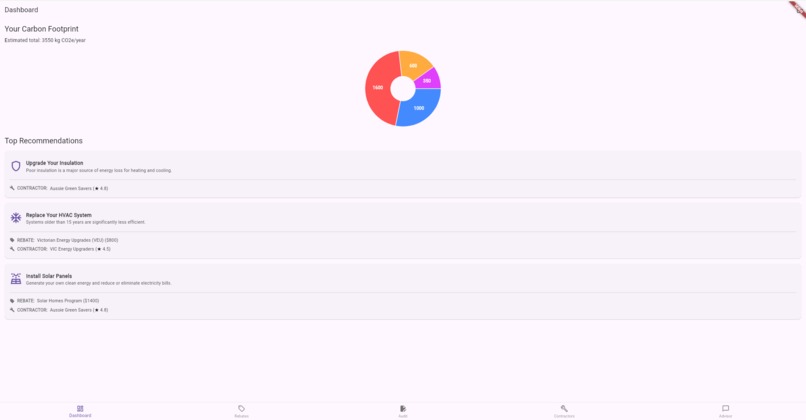
Dashboard
-
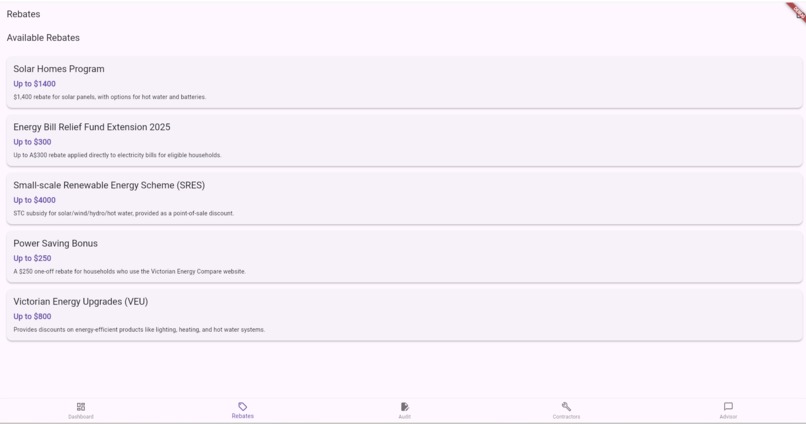
Rebates
Inspiration
We were inspired by a common dilemma: many people want to live more sustainably and reduce their energy bills, but they're often overwhelmed by the complexity of it all. It's difficult to know which changes have the biggest impact or how to navigate the world of government rebates and qualified contractors. This "analysis paralysis" often leads to inaction. Our motivation was to create Veridian, a tool to cut through the noise and act as a personal energy advisor, empowering homeowners with a clear, simple, and actionable path from a home audit to real-world savings and a smaller carbon footprint.
What it does
Veridian is a full-stack mobile application that serves as a personal AI assistant for home energy efficiency. It starts by guiding the user through an intuitive multi-step audit of their home. Based on these answers, Veridian:
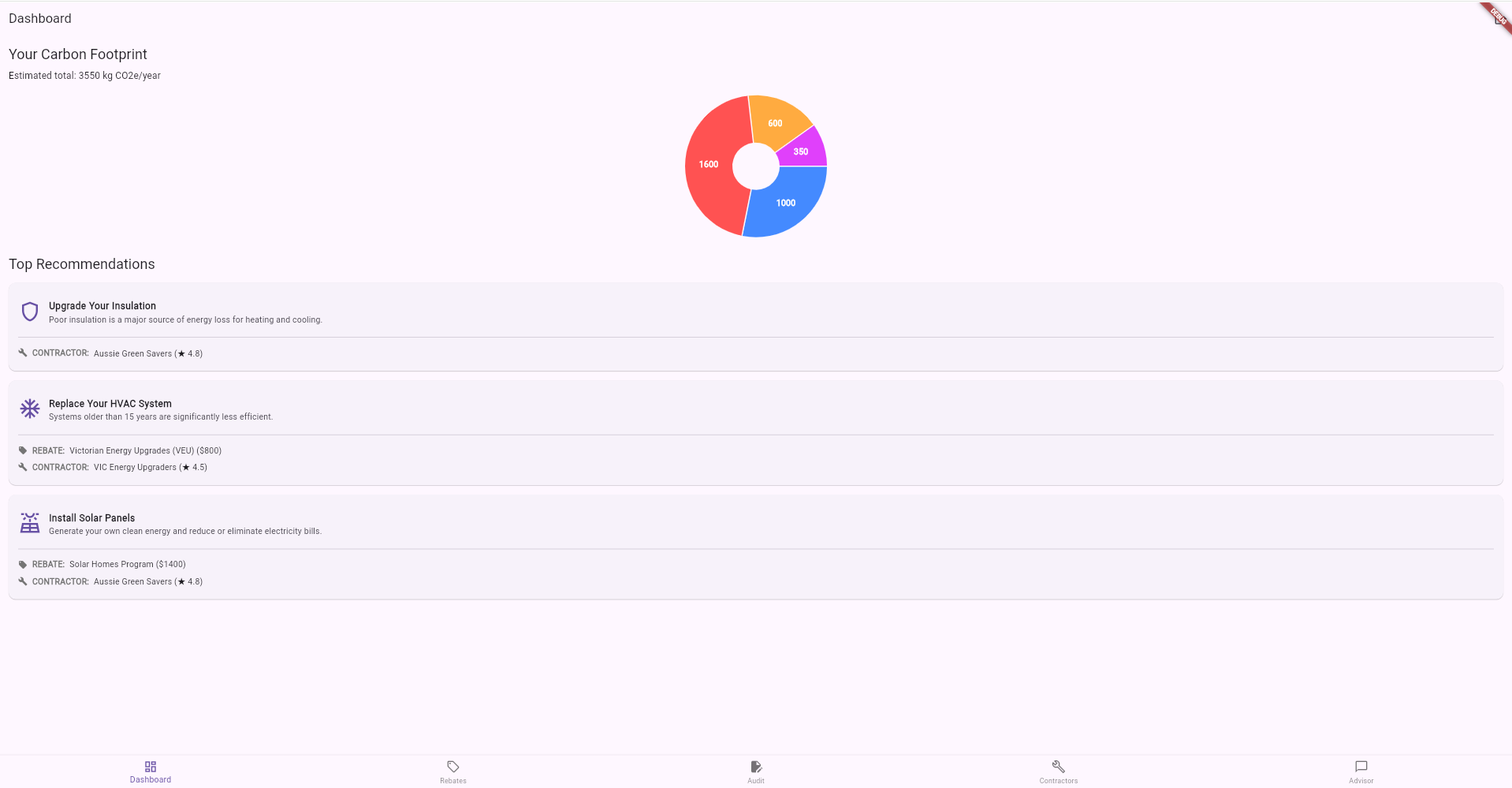
Calculates a detailed carbon footprint, visualizing the results on a dynamic dashboard so users can immediately see their primary sources of emissions.
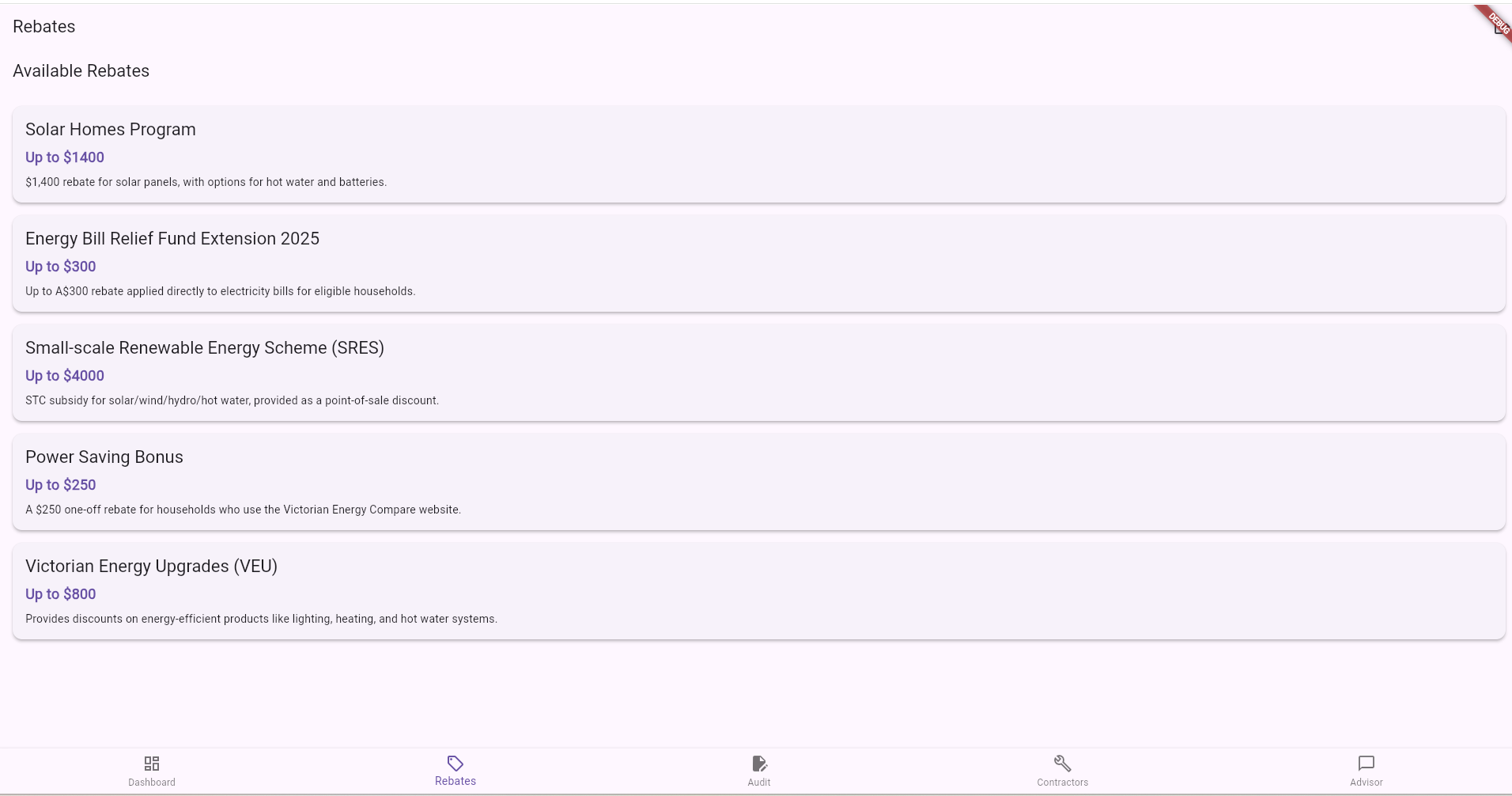
Powers an intelligent recommendation engine. This is the core of Veridian. It analyzes the audit to identify key areas for improvement and then directly links those issues to specific, personalized government rebates and certified local contractors.
Integrates an AI Energy Advisor, powered by the Google Gemini API. The chatbot has full context of the user's audit results, allowing it to provide truly personalized advice and answer specific questions about their home's energy profile.
How we built it
Veridian is a full-stack application built with a modern, scalable tech stack to ensure a responsive and powerful user experience.
The frontend is a Flutter mobile application, chosen for its ability to create a beautiful, high-performance, cross-platform UI from a single codebase.
The backend is a FastAPI (Python) server deployed on Render. It handles all the heavy lifting: performing carbon calculations, running the filtering logic for rebates and contractors, and securely interfacing with the AI model.
We used Firebase for core infrastructure, leveraging Firebase Authentication for secure user login and Firestore as our flexible NoSQL database to store user profiles and audit data.
The intelligent chatbot is powered by the Google Gemini API, which we integrated into our backend to provide personalized, context-aware responses.
Challenges we ran into
We ran into several real-world challenges that required us to be resilient and adapt. Our biggest challenge was navigating the complex landscape of third-party AI APIs. After an initial plan was blocked by a billing wall, we switched to the Gemini API, only to face a "grace period" expiration that required a full billing setup. This led to a long and difficult debugging detour with an alternative service that proved unreliable, with persistent 404 errors due to model unavailability. We ultimately solved this by returning to our original choice and properly configuring the Google Cloud project. We also overcame deployment issues on Render, learning how to debug live environments by managing environment variables and clearing build caches to solve persistent configuration errors.
Accomplishments that we're proud of
We are incredibly proud of building a complete, end-to-end full-stack application that solves a real problem. Our biggest accomplishment was successfully navigating the frustrating "API hell" and integrating a powerful AI model (Gemini) that provides genuine, personalized value to the user. We are also proud of the intelligent recommendation engine, which goes beyond just displaying data to create actionable links between a user's problems (identified in the audit) and their real-world solutions (specific rebates and certified contractors).
What we learned
This project was a phenomenal learning experience in practical, end-to-end software development. We learned how to architect and connect a mobile app, a cloud-hosted backend, a database, and an external AI service. Critically, we learned the importance of robust server configuration and how to debug live production environments. Our journey taught us that development is not a straight line; encountering roadblocks with third-party services is a normal part of the process, and the ability to diagnose problems, research alternatives, and pivot is one of the most valuable skills a developer can have.
What's next for Veridian
The future of Veridian is focused on making the user experience even more engaging and effortless through two key innovations: gamification and AI-powered image recognition.
We plan to introduce a points and rewards system where users earn "Green Points" for completing their audit and implementing recommendations. These points can be used to unlock achievement badges and compete on community leaderboards, fostering a sense of shared purpose and friendly competition in saving energy.
To make the audit process radically simpler, we will develop an "Appliance Scanner." Users will be able to take a photo of the energy label or model number on their appliances. Our app will then use image recognition and OCR to automatically identify the appliance, look up its energy efficiency data, and populate the audit, removing the need for tedious manual entry. By integrating these features, we believe we can make the path to a sustainable home not only easy but also genuinely fun and rewarding.

Log in or sign up for Devpost to join the conversation.