
inspiration Every one of us has signed a contract we didn't fully understand. Founders sign vendor agreements between meetings, freelancers accept MSAs they can't afford to have a lawyer read, and small teams click "agree" on terms that quietly give away their data, lock them into auto-renewals, or cap the other side's liability at $100. Legal review is slow and expensive, so most contracts get signed unread — and the risky clauses only surface when something goes wrong. We built VeriClause so that anyone can get a fast, honest first read of what they're about to sign, in words they actually understand, before a lawyer ever needs to get involved.
What it does VeriClause is a verified contract risk review app for vendor contracts and NDAs (PDF, Word, or plain text):
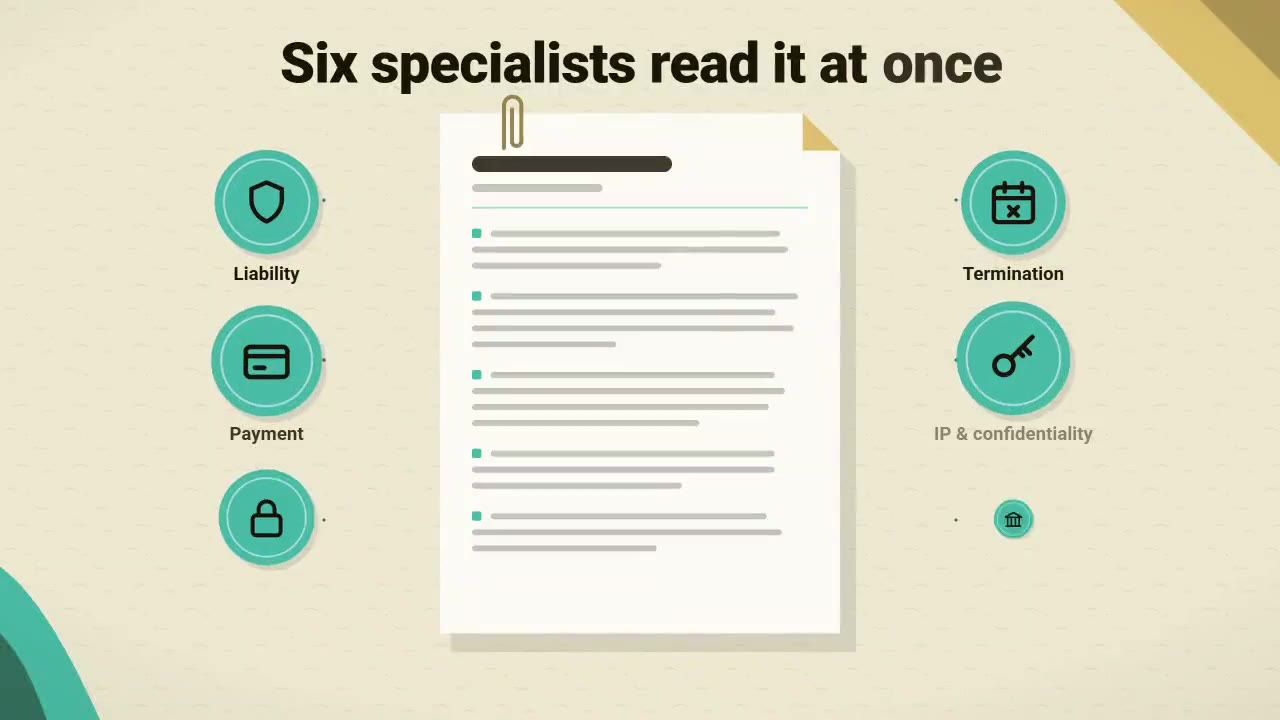
Plain-language reading every clause is restated in everyday words, side by side with the original, so you can compare line by line. You can also listen to the reading, and read it in 8 languages: English, Français, Español, Deutsch, Português, العربية, हिन्दी, and 中文. Your playbook VeriClause checks the contract against your own rules (liability capped at 12 months of fees, no surprise price increases, termination on 30 days' notice, and more). Signed-in counsel can edit the rules, and a compiler turns the plain-English rules into structured checks. Six specialist AI agents liability, payment, privacy & security, termination, IP & confidentiality, and governing law review the contract in parallel, each flagging clauses that break your playbook. A code verifier every quote in every finding is checked by plain code against the source document, word for word. If a quote can't be found in your contract, the finding is dropped. No invented clauses. One clear verdict a supervisor agent combines everything into Red (stop don't sign yet), Amber (talk to the vendor first), or Green (it fits your rules), with findings sorted by severity. Suggest Fix for any clause, VeriClause drafts a safer rewrite as a redline next to the original, plus a short negotiation note you can send the vendor. Reviews are saved in your browser history, findings can be filtered by severity, and "Show in contract" jumps straight to the exact clause. Two built-in demo contracts let anyone try it instantly including a "trap" agreement with 13 planted risks. VeriClause is a reading aid, not legal advice: a verified first read, so you know before you sign.
How we built it VeriClause is a Next.js + TypeScript app with Supabase for accounts and counsel data, and Auth0 / email sign-in. Reviews work without an account and are stored in the browser; signed-in counsel can also edit the playbook.
The review pipeline is a multi-agent system:
The uploaded document is extracted and split into numbered sections. A playbook compiler converts the user's plain-English rules into structured, testable checks. Six specialist agents (routed through OpenRouter) each receive only the sections and rules in their domain and run in parallel, streaming progress to the UI. A verifier written in plain code (no LLM) normalizes the document text and confirms every quoted clause actually exists in the source; unverifiable findings are discarded. A supervisor (Grok / xAI) merges the surviving findings, resolves overlaps, and issues the Red / Amber / Green verdict, while the redliner generates suggested rewrites and negotiation notes. We seeded the app with two demo contracts — a clean vendor agreement and a trap agreement with 13 planted problems (unlimited liability, Cayman Islands arbitration, a perpetual data licence, and more) so judges and users can verify the system's behaviour against a known answer key.
Challenges we ran into Hallucinated quotes. Our first prototype produced confident findings quoting clauses that didn't exist. For a legal tool that's fatal, so we moved trust out of the model entirely: quotes are now verified by deterministic code, and anything unverifiable is silently dropped. Making "your rules" computable. A rule like "auto-renewal needs 30 days' notice" sounds simple, but the direction of the comparison matters — during testing, a contract offering more notice than required was flagged as a violation. Catching that taught us to test every rule against known-good and known-bad contracts, not just eyeball the output. Six agents, one story. Parallel specialists can overlap or contradict each other. We added the supervisor pass to deduplicate findings, reconcile severities, and produce a single verdict a non-lawyer can act on. Plain language without losing meaning. Summarizing legalese in 8 languages — and reading it aloud — risks drifting from the source text. Keeping the original clause beside every restatement, and the verified quote attached to every finding, keeps the plain words accountable. Knowing our limits. VeriClause must never pretend to be a lawyer. We built the "reading aid, not legal advice" boundary into the product copy, the verdict language, and how the app handles user documents (browser storage, no training on submitted contracts). Accomplishments that we're proud of A complete, working multi-agent review pipeline: upload → plain-language reading → playbook check → six parallel specialists → code-verified quotes → verdict → redline fixes. Our trap demo is caught end to end: 13 findings (7 Red, 6 Amber) in about 21 seconds — including offshore arbitration, a class-action waiver, and a perpetual licence to the customer's data. The verifier pattern: pairing LLM findings with a plain-code quote check is what makes the output trustworthy enough to act on. Accessibility as a feature, not an afterthought: plain-language readings in 8 languages with listen-aloud, so the person signing can understand the contract in the language they're strongest in. A full product surface around the core engine playbook editor, history, filters, clause jump-to, FAQ, and help not just a one-off demo script. What we learned LLMs need guardrails written in code. The most important component in our system is the one with no AI in it: the verifier. Specialization beats one big prompt. Six narrow agents with clear jurisdictions produced sharper, more consistent findings than a single "review this contract" prompt. Plain language is an engineering problem. Restating a clause faithfully and checking a document against rules a user wrote in their own words is as hard as the AI itself. Test with adversarial documents. Our trap contract, with a known answer key, found more bugs than any amount of manual testing. Trust is a feature. Verifiable quotes, clear verdicts, and honest limits ("not legal advice") are what turn a demo into something people would actually rely on. What's next for VeriClause More document types employment contracts, leases, and freelance agreements, each with its own specialist playbook defaults. Exportable redlines download the suggested rewrites as a tracked-changes Word document you can send straight back to the vendor. Team playbooks shared, versioned rule sets for companies, with approval flows for counsel. Lawyer handoff send a verified review (findings, quotes, and redlines) directly to a lawyer, so their paid time starts from our first read instead of from zero. More languages and voices for the plain-language reading and listen-aloud. Deeper integrations e-signature and CRM tools, so the review happens exactly where the signing does. Our goal stays the same: nobody should have to sign what they don't understand. VeriClause — know before you sign.
One submission tip: your Devpost "try it out" link should be a permanent URL — the trycloudflare tunnel address changes, so if you deploy to Vercel/Netlify before submitting, use that link instead.nto
Built With
- auth0
- figma
- next.js
- openrouter
- react
- shadcn-ui
- supabase
- tailwind-css
- typescript
- xai-grok
