-
-
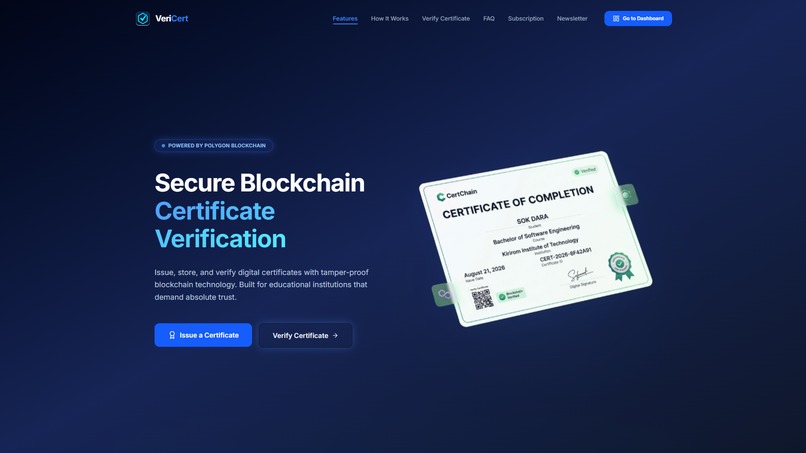
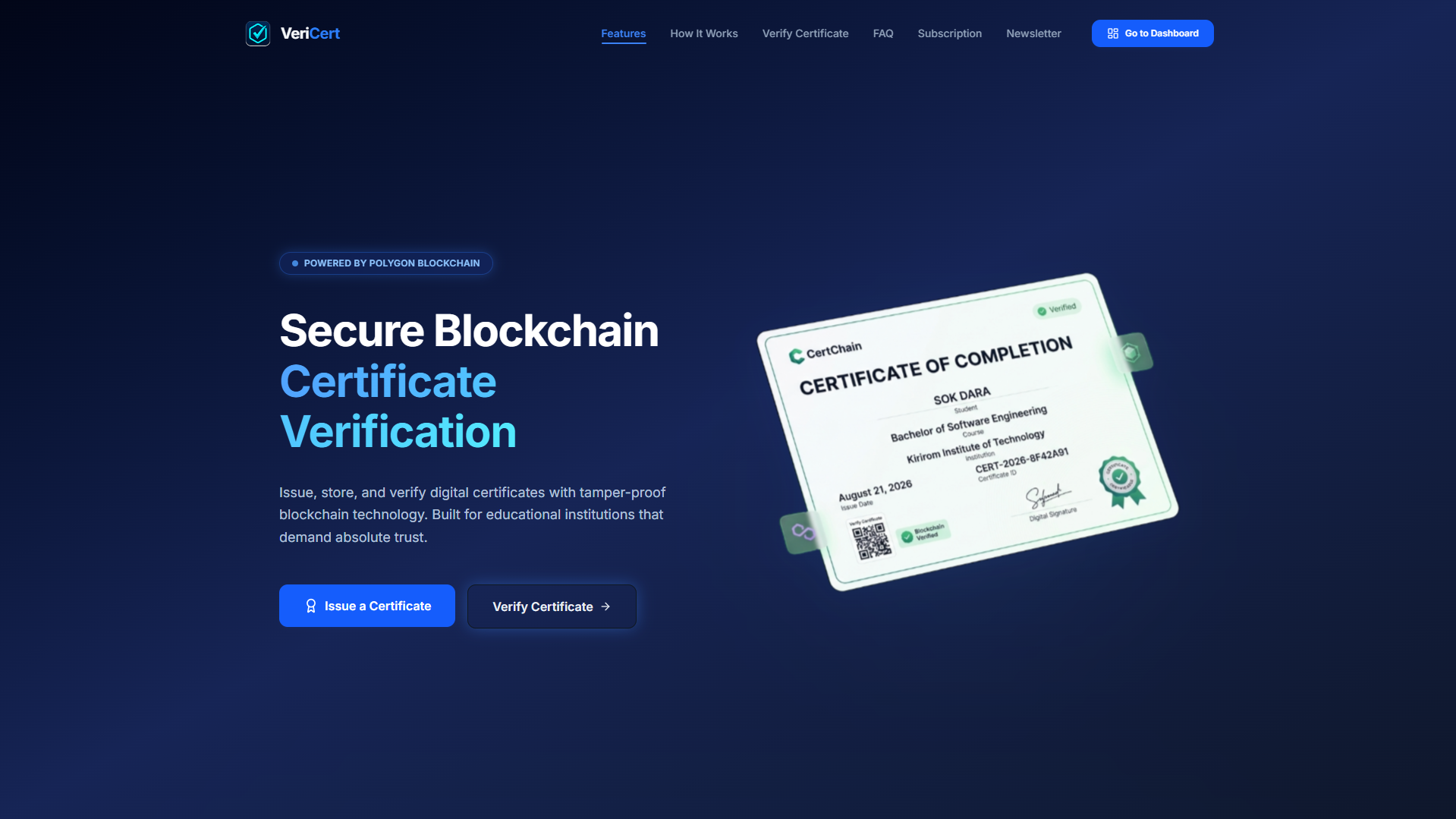
Landing Page
-
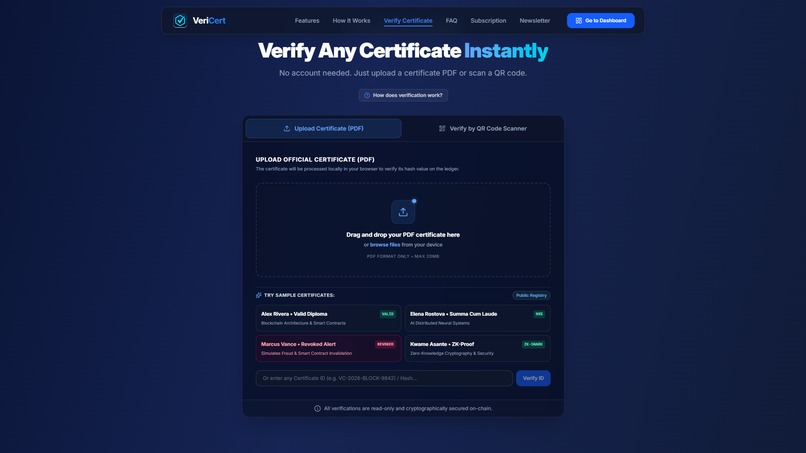
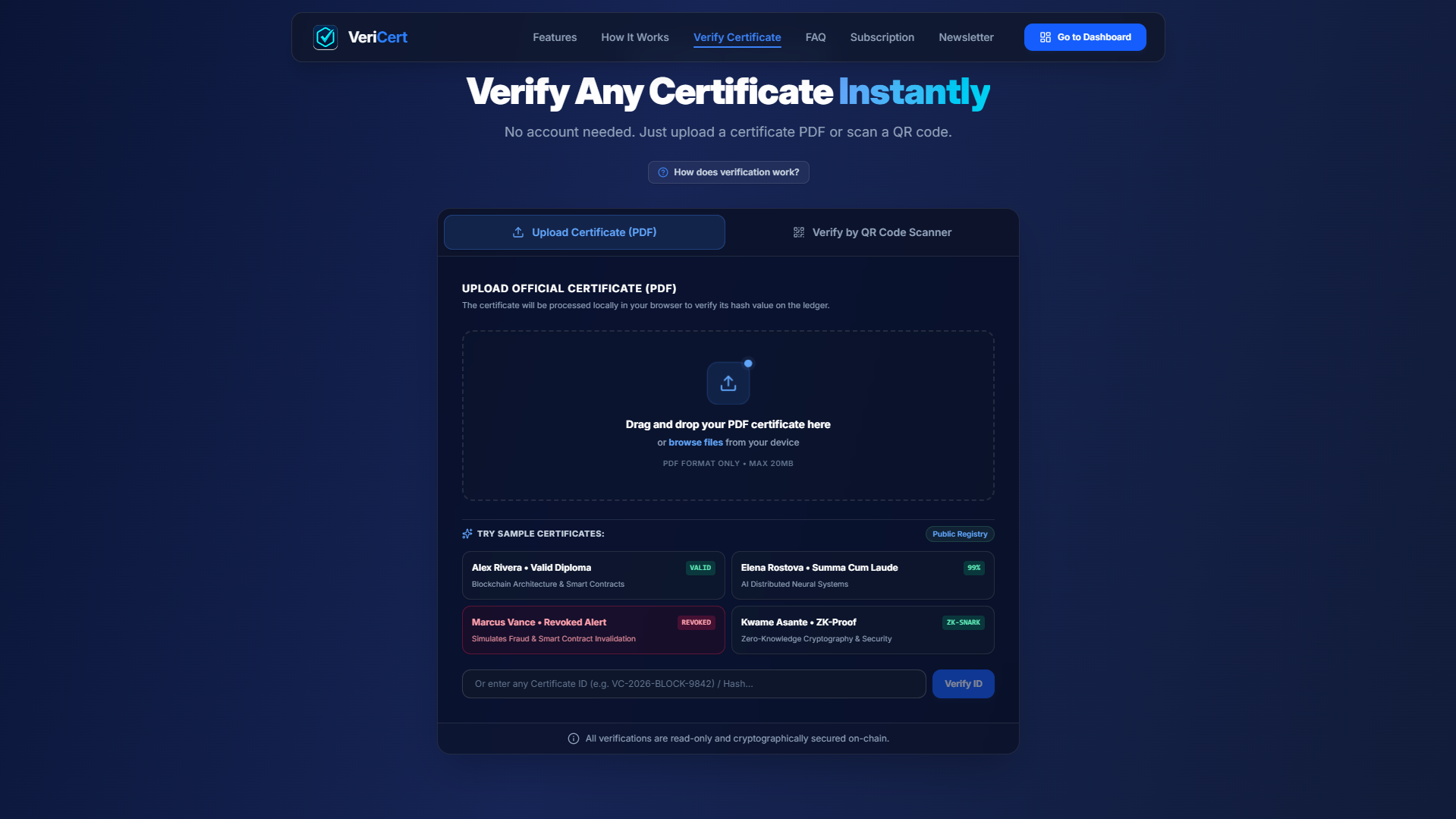
Verify Section
-
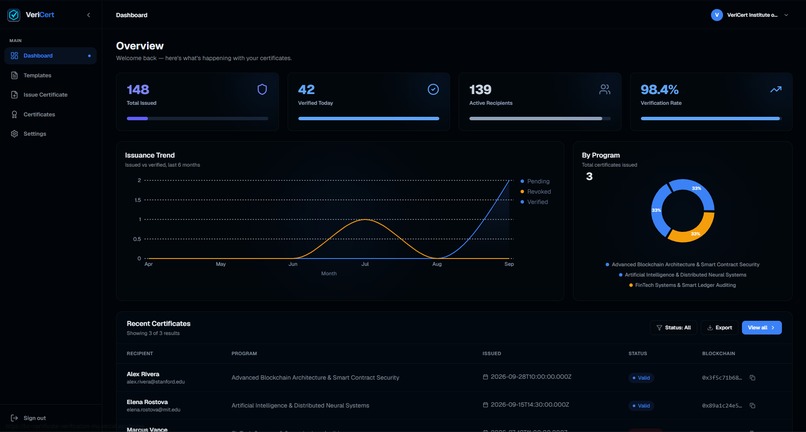
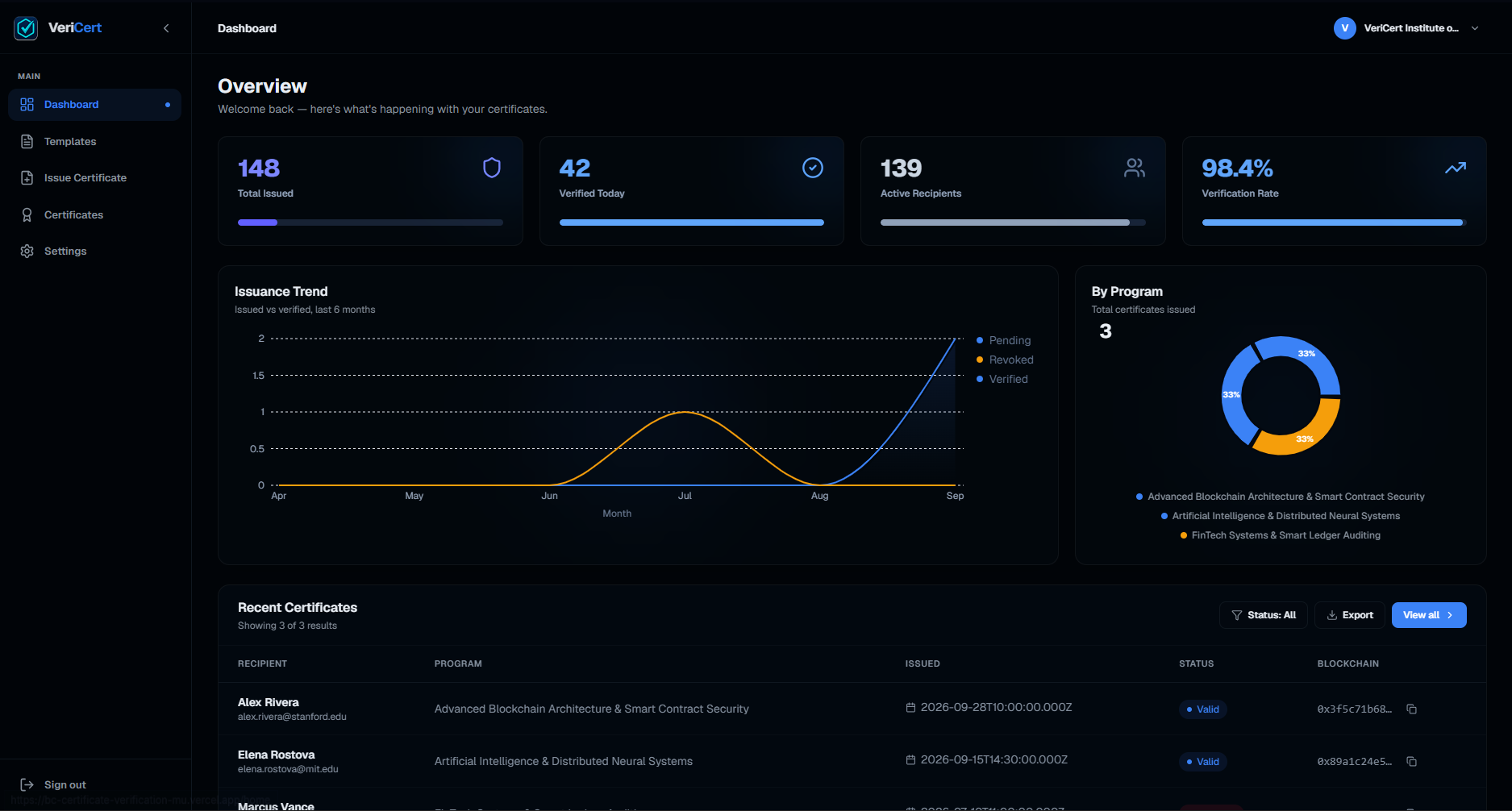
Dashboard Page
-
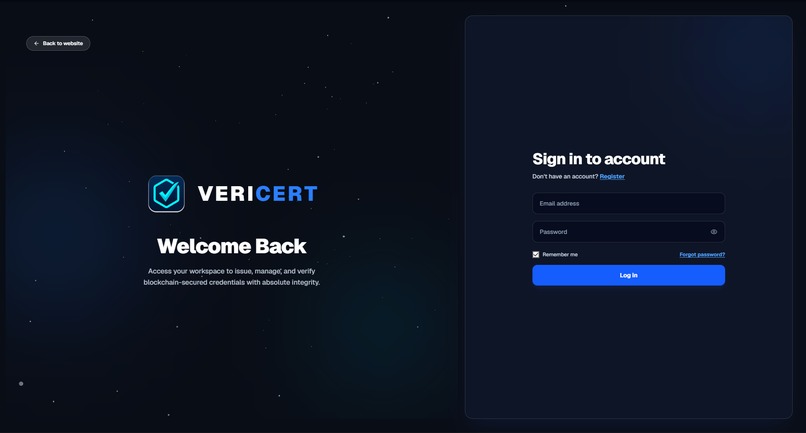
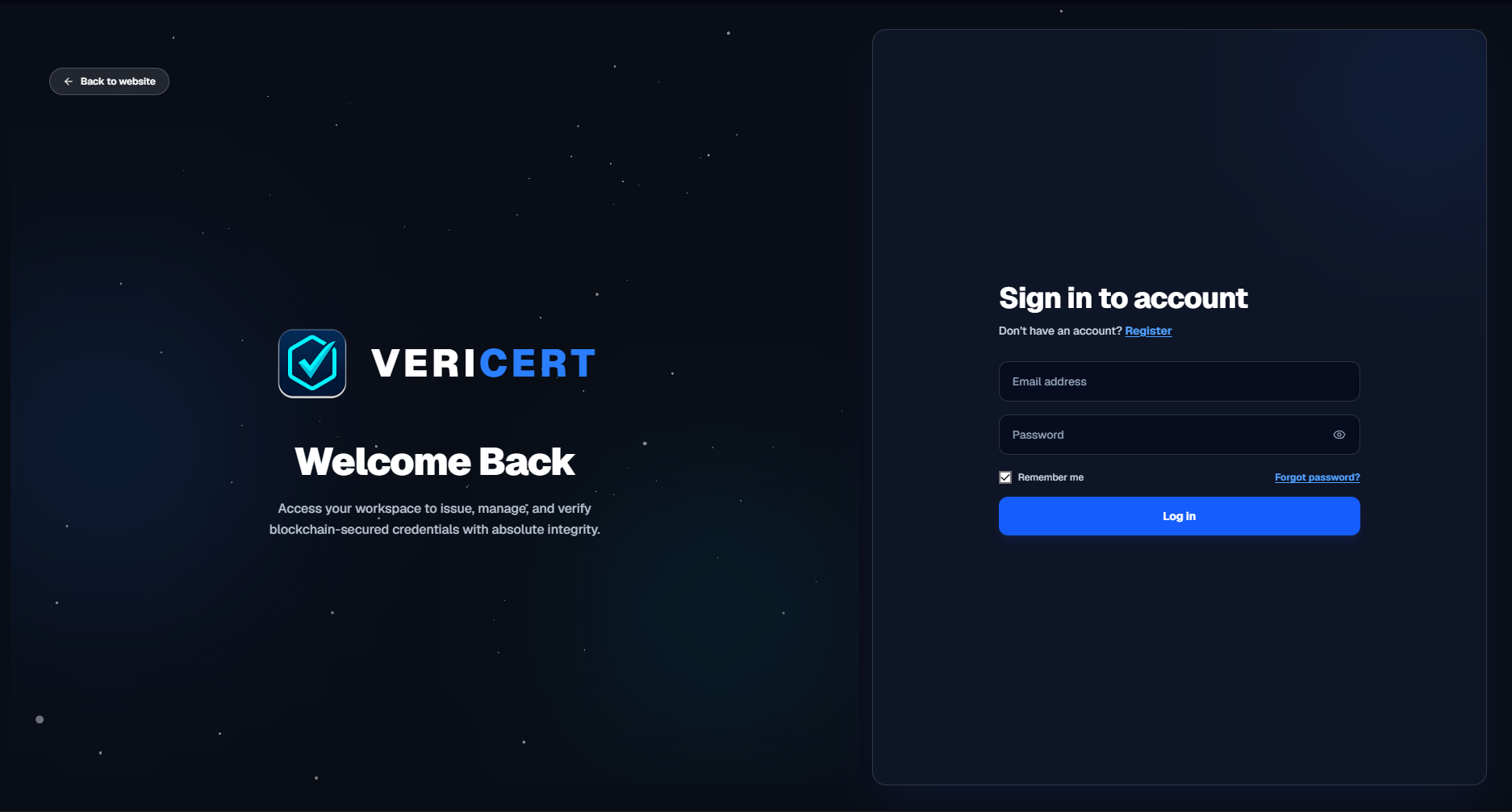
Login Page
-
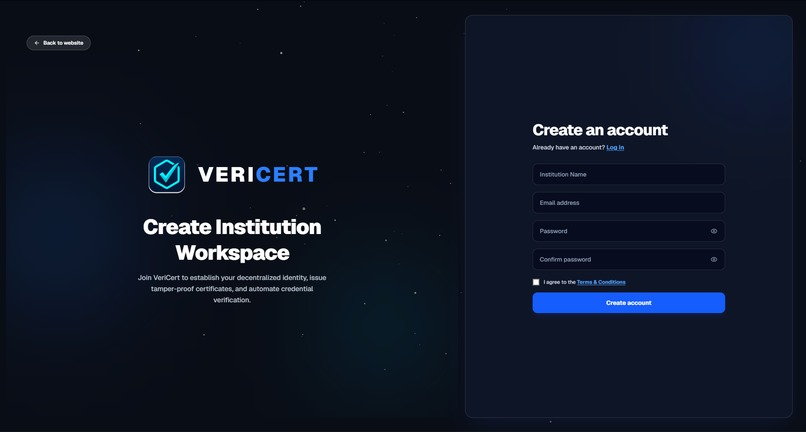
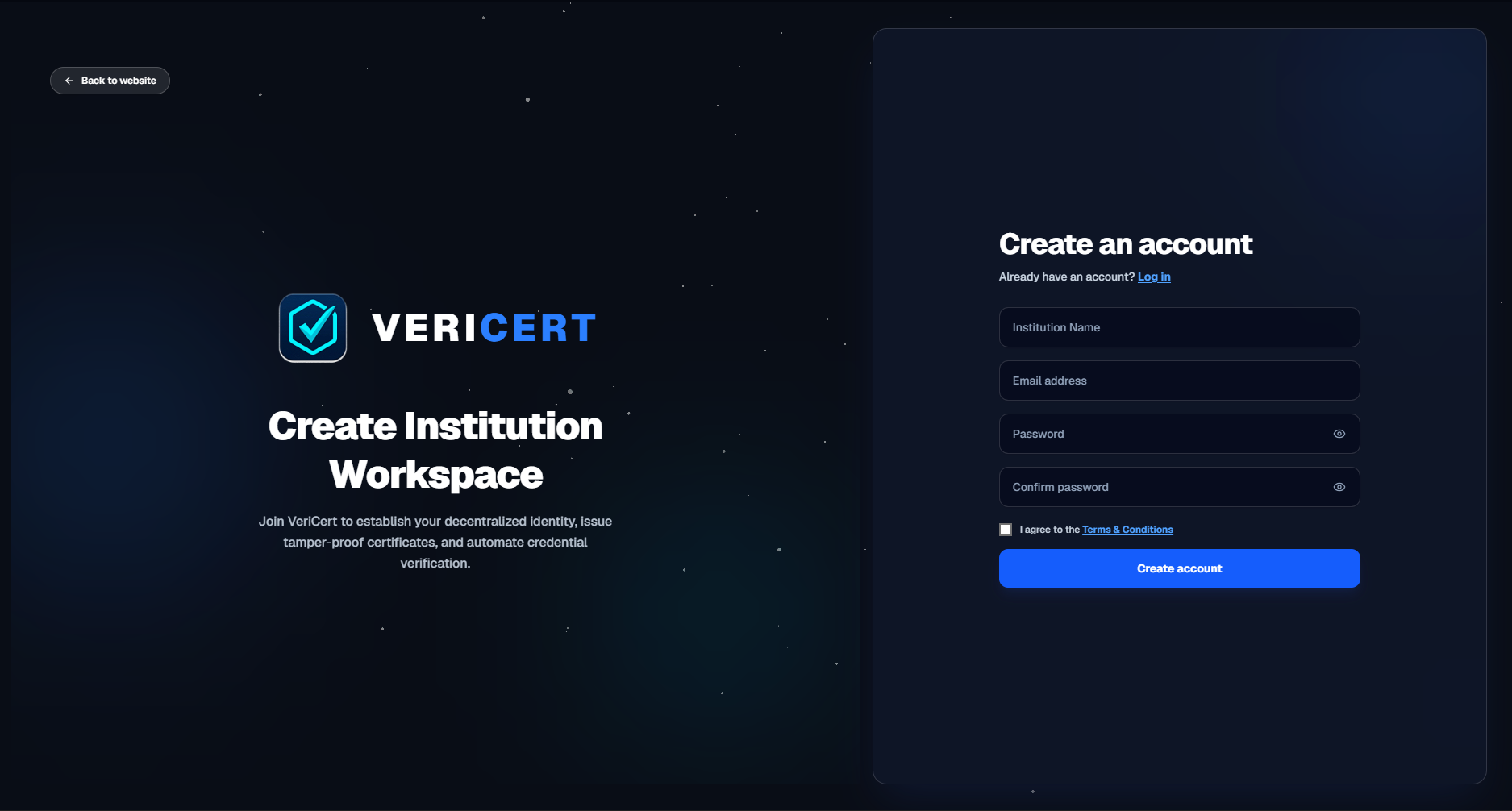
Sign Up Page
-
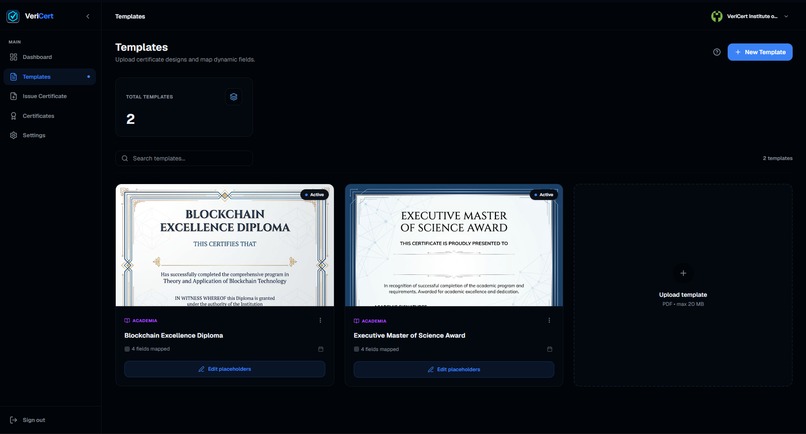
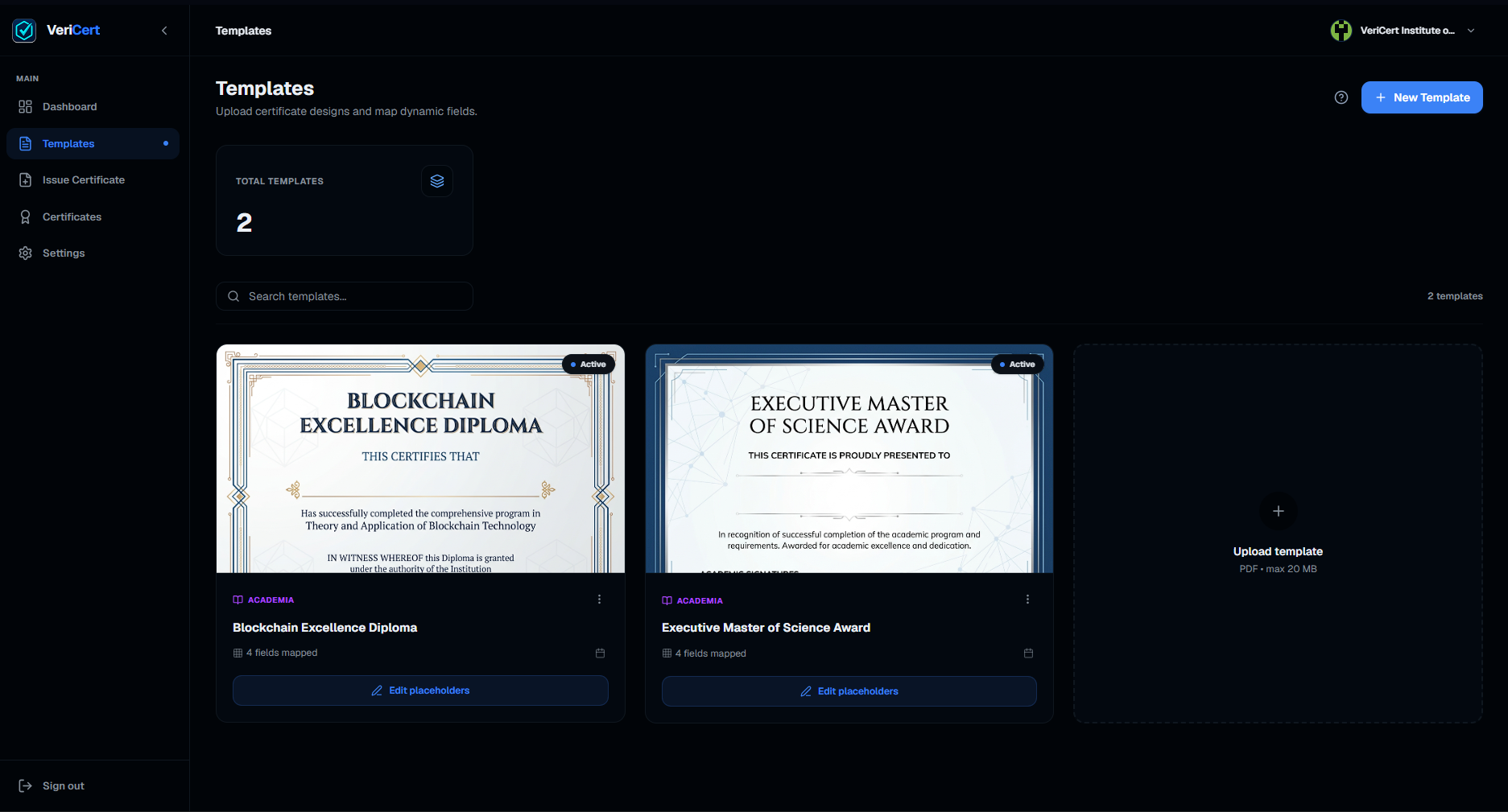
Templates Page
-
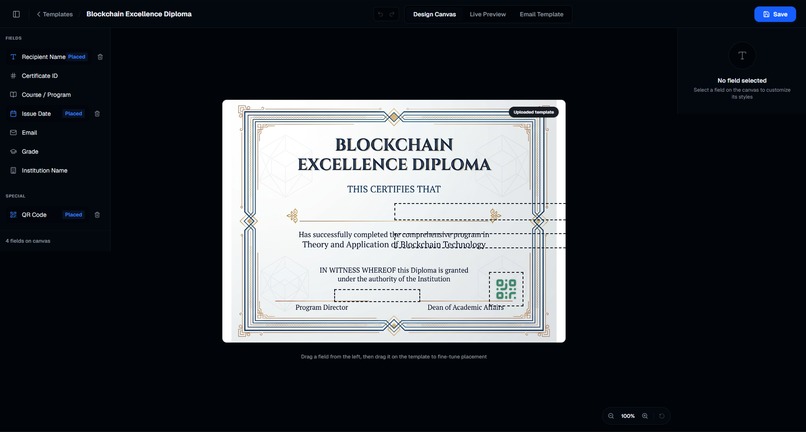
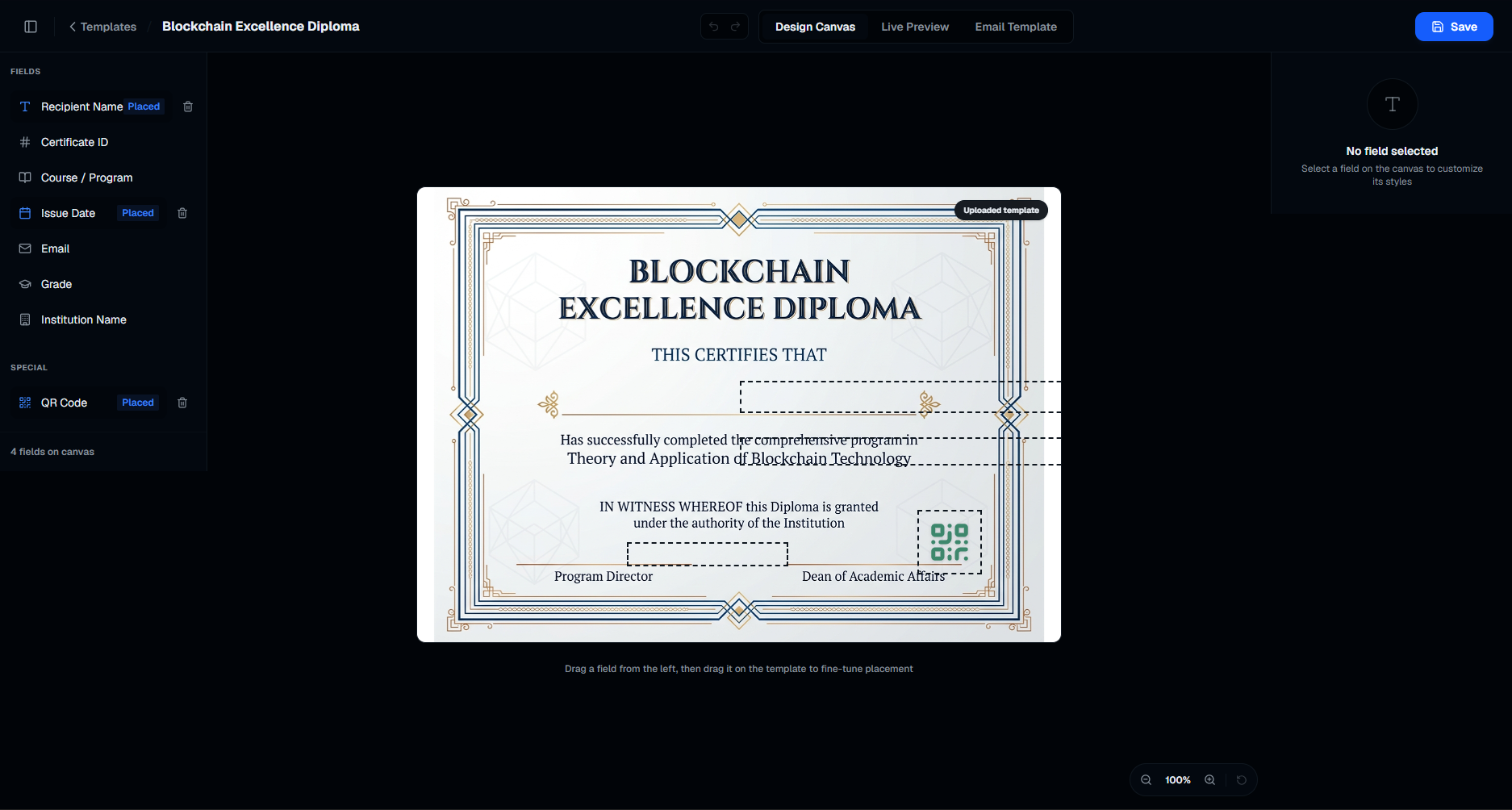
Configuration Template Page
-
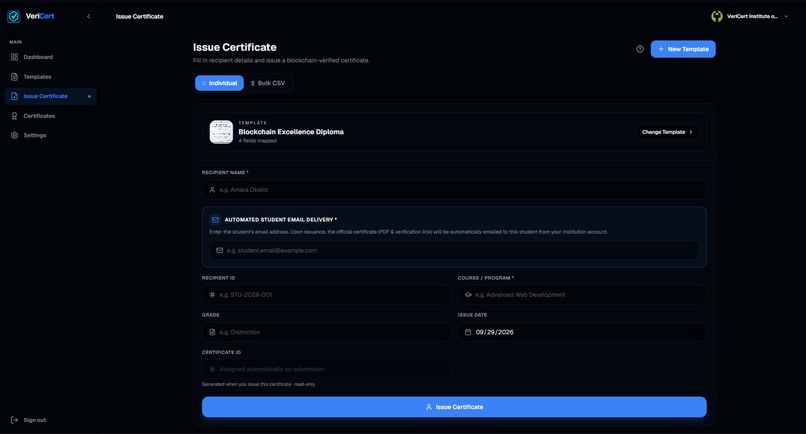
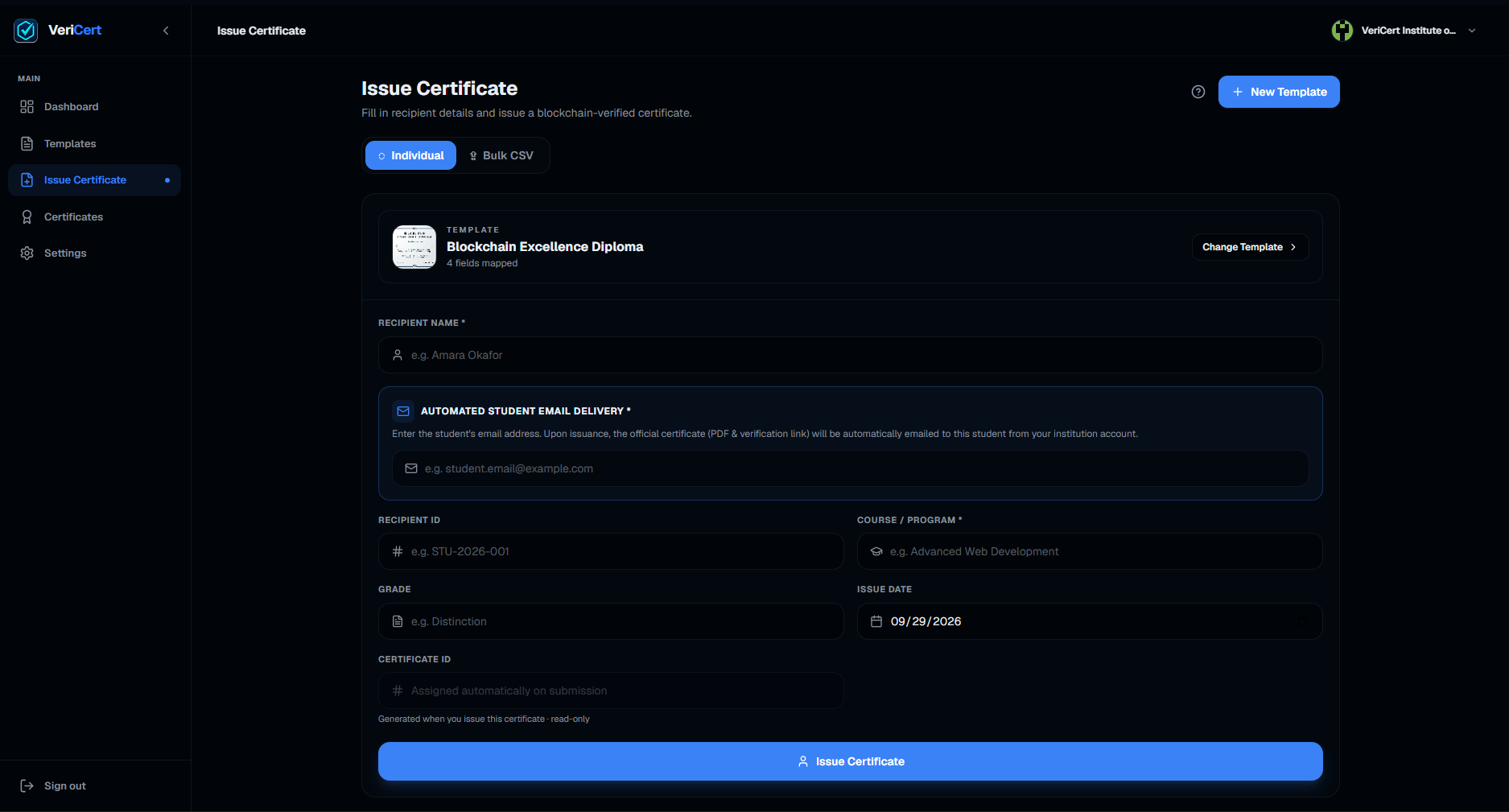
Issue Certificate Page
-
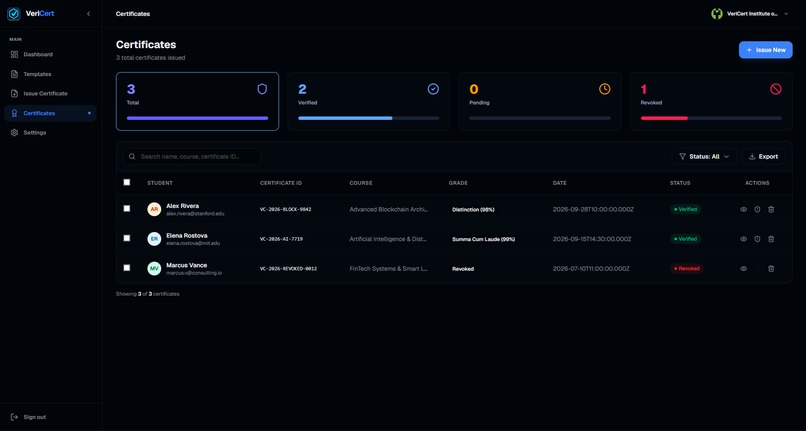
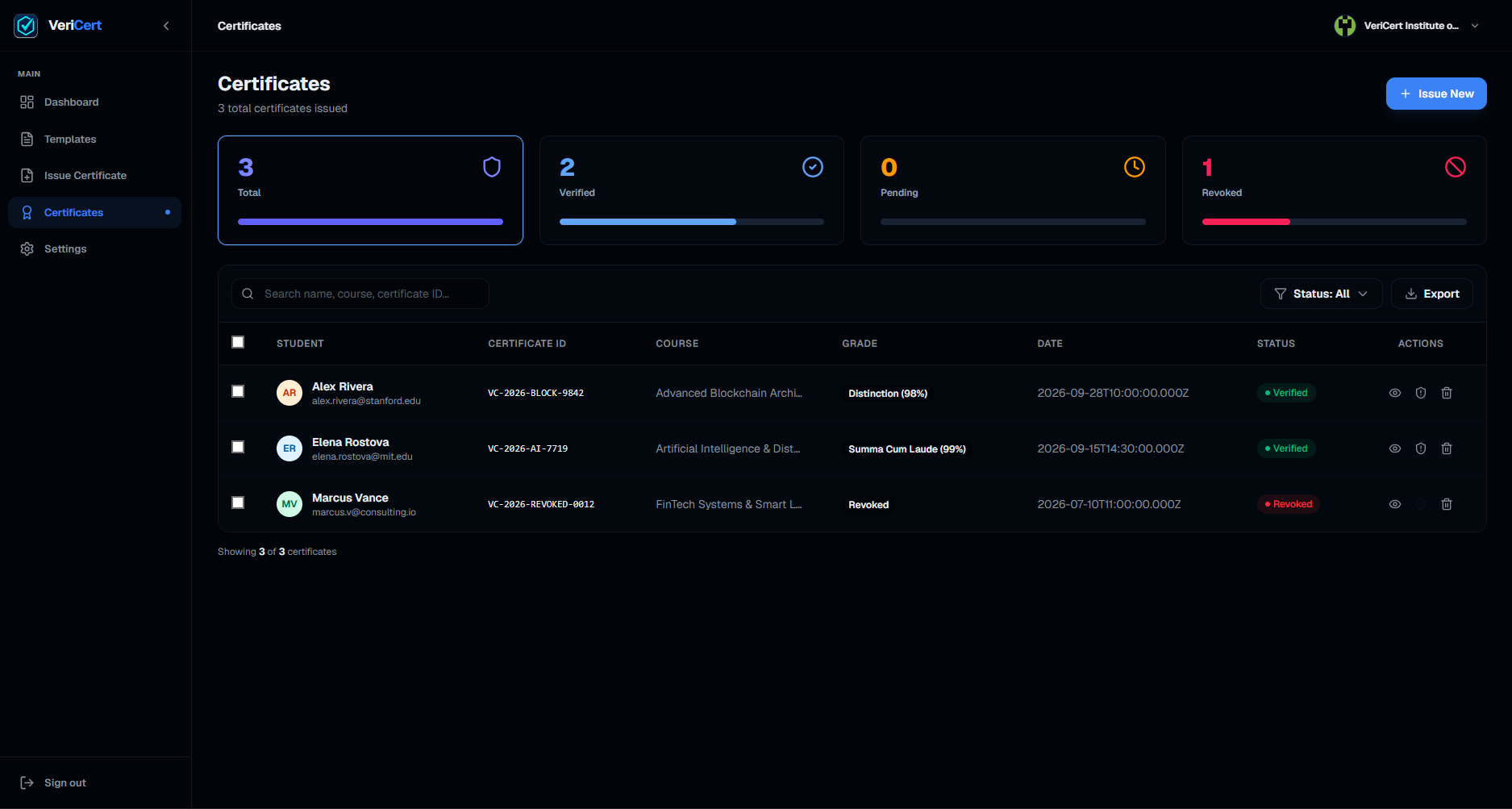
Certificates Page
Inspiration
Credential fraud is a massive and growing problem globally. Traditional paper certificates are easily forged, and centralized digital databases can be tampered with or become inaccessible. We realized that educational institutions, bootcamp programs, and corporate trainers needed a modern, cryptographically secure way to issue credentials. We were inspired by the immutability of decentralized ledgers and wanted to bridge the gap between complex Web3 technology and a beautiful, intuitive Web2 user experience.
What it does
VeriCert is an end-to-end platform for issuing, managing, and verifying digital academic and professional credentials using blockchain technology.
- For Institutions: A beautiful dashboard allows educators to upload custom certificate designs, use a drag-and-drop template editor to dynamically place text fields (names, dates, grades), and issue certificates in bulk.
- On-Chain Security: When a certificate is issued, a cryptographic hash of the credential data is anchored to a smart contract on the blockchain.
- For Employers & Verifiers: Certificates are issued with a unique QR code. Anyone can scan the code or enter the Certificate ID into our public verification portal to instantly check the credential against the immutable blockchain record, ensuring it hasn't been tampered with or revoked.
How we built it
We built VeriCert with a focus on a highly polished, premium user experience.
- Frontend: Built with React, TypeScript, and Vite. We used Tailwind CSS to craft a stunning, dark-mode-first aesthetic with subtle micro-animations powered by Framer Motion. State management and data fetching are handled by Redux Toolkit (RTK Query).
- Certificate Editor: We built a custom interactive canvas editor that allows users to place, drag, and style dynamic text fields directly over blank template images.
- Backend: Powered by Node.js, Express, and Prisma ORM, connected to a PostgreSQL database (Supabase).
- Blockchain Integration: Smart contracts written in Solidity handle the on-chain anchoring of certificate hashes and revocation statuses.
Challenges we ran into
One of the biggest technical hurdles was building the custom drag-and-drop template editor from scratch. Calculating logical X/Y coordinates that scale perfectly whether you are editing on a small laptop screen or viewing the final generated PDF required a lot of complex math and state synchronization. Additionally, ensuring that the transition between the Web2 API and the Web3 smart contract execution felt seamless and fast for the end-user required careful asynchronous handling.
Accomplishments that we're proud of
We are incredibly proud of the UI/UX design. Web3 applications often feel clunky and unapproachable for non-technical users. We successfully abstracted away the complexity of the blockchain—users just hit "Issue," and the platform handles the cryptographic hashing and transaction signing behind a beautiful, polished interface.
What we learned
We learned a tremendous amount about canvas coordinate mapping, generating high-quality PDFs dynamically on the client side, and seamlessly integrating decentralized ledger data with traditional relational databases.
What's next for VeriCert
We plan to introduce multi-chain support so institutions can choose which ledger they want to anchor their credentials to (e.g., Polygon for lower fees). We also want to implement "Verifiable Credentials" (W3C standard) support so that students can easily export their certificates directly into digital identity wallets.
Built With
- ethereum
- express.js
- node.js
- postgresql
- prisma
- react
- redux-toolkit
- solidity
- supabase
- tailwind-css
- typescript
- vite

Log in or sign up for Devpost to join the conversation.