-
-
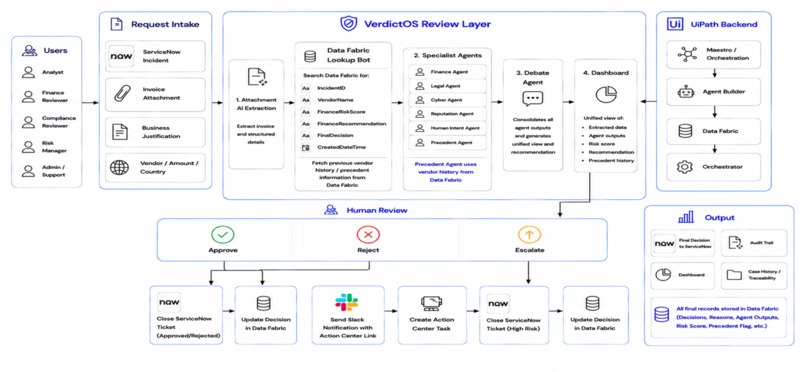
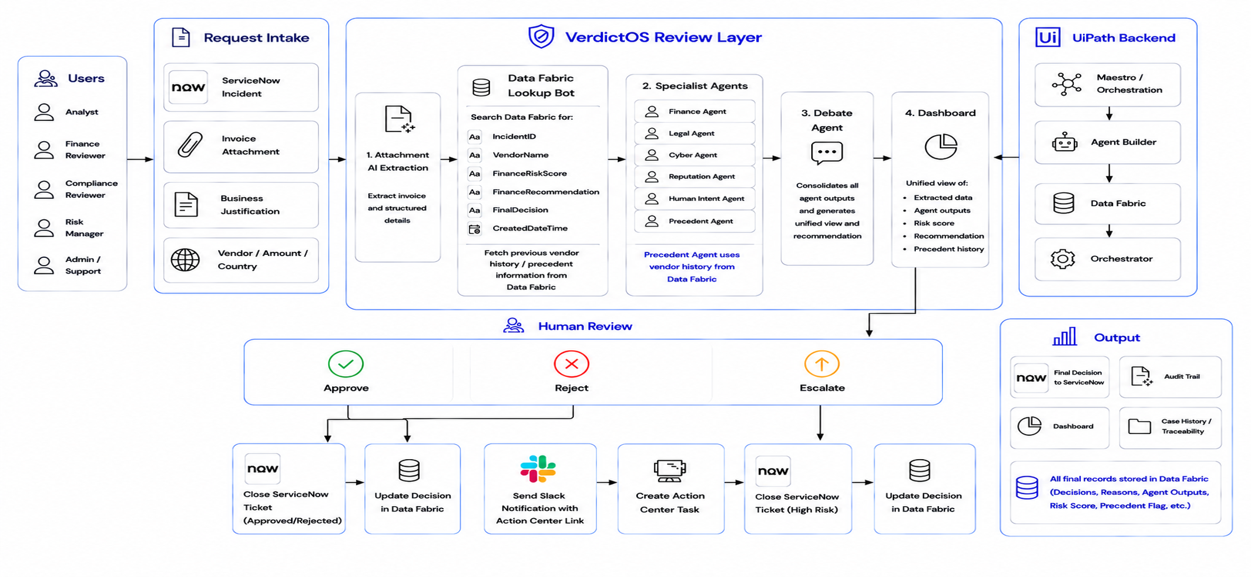
Architecture
-
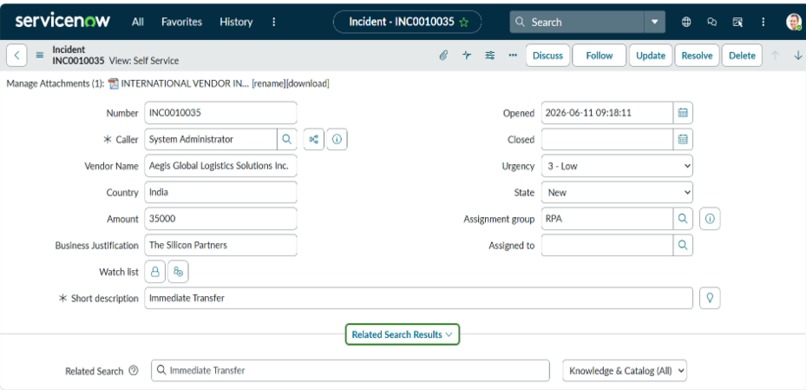
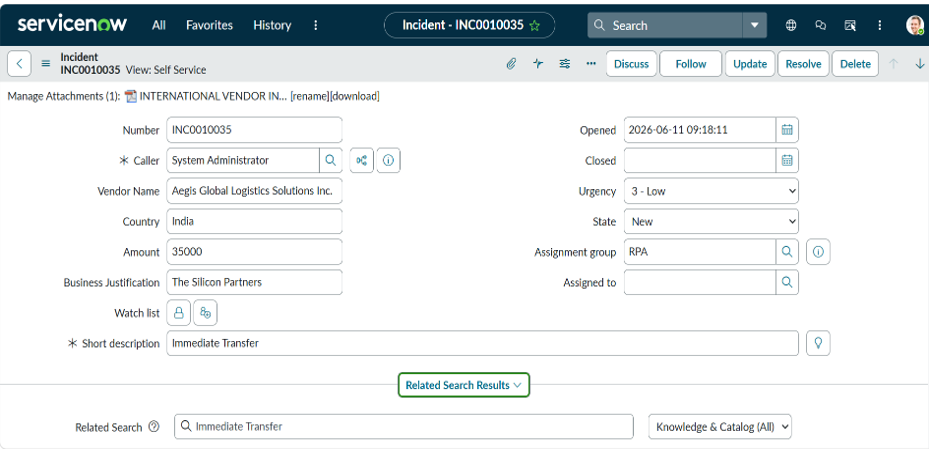
ServiceNow
-
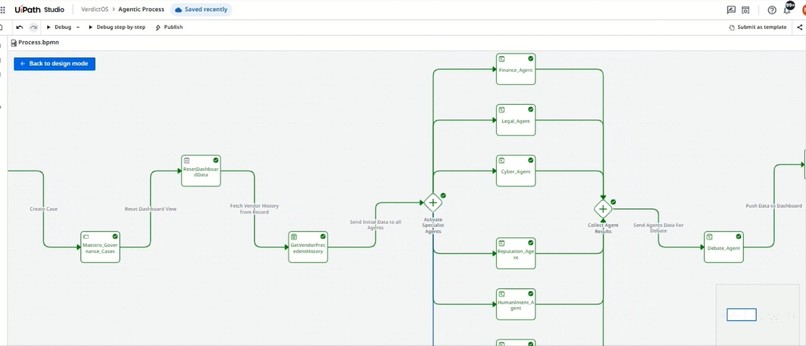
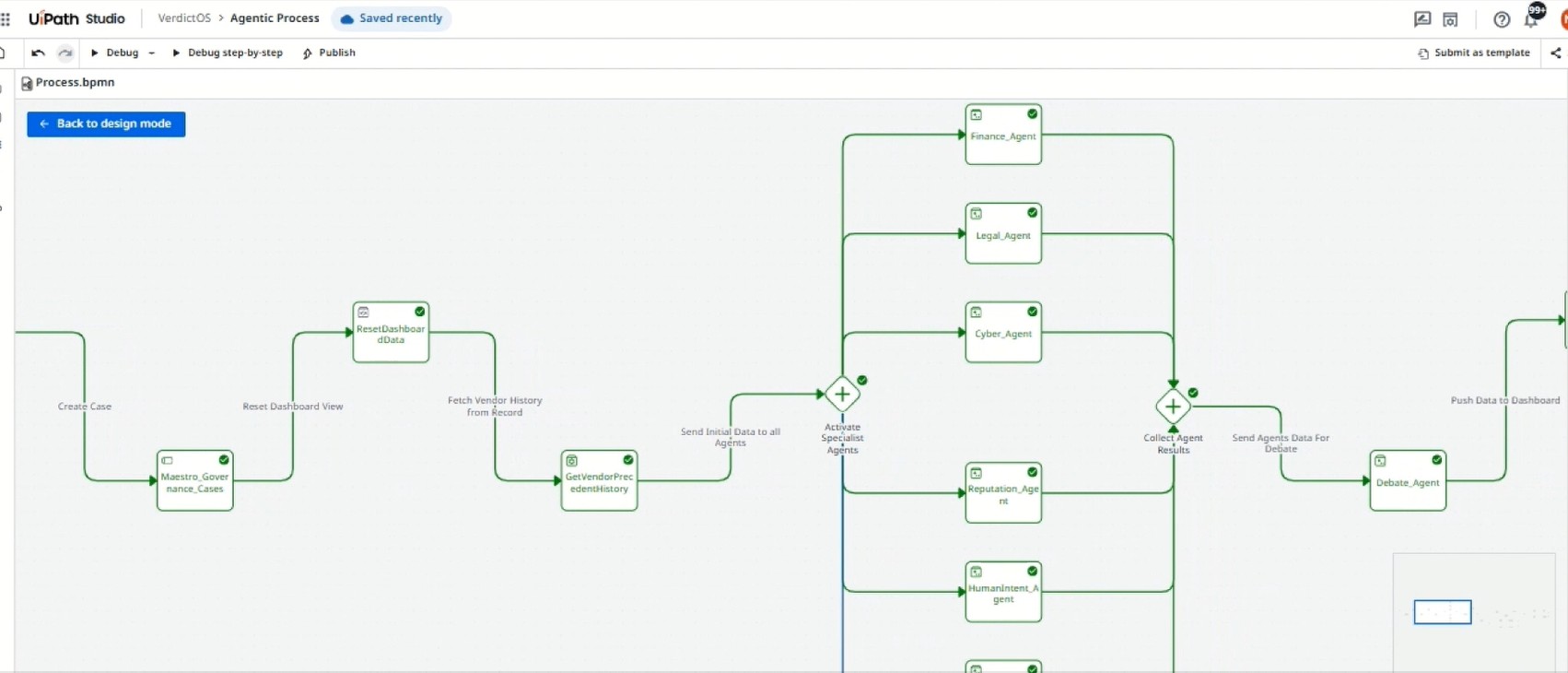
BPMN
-
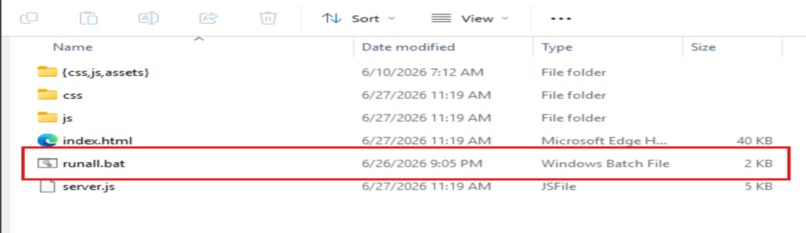
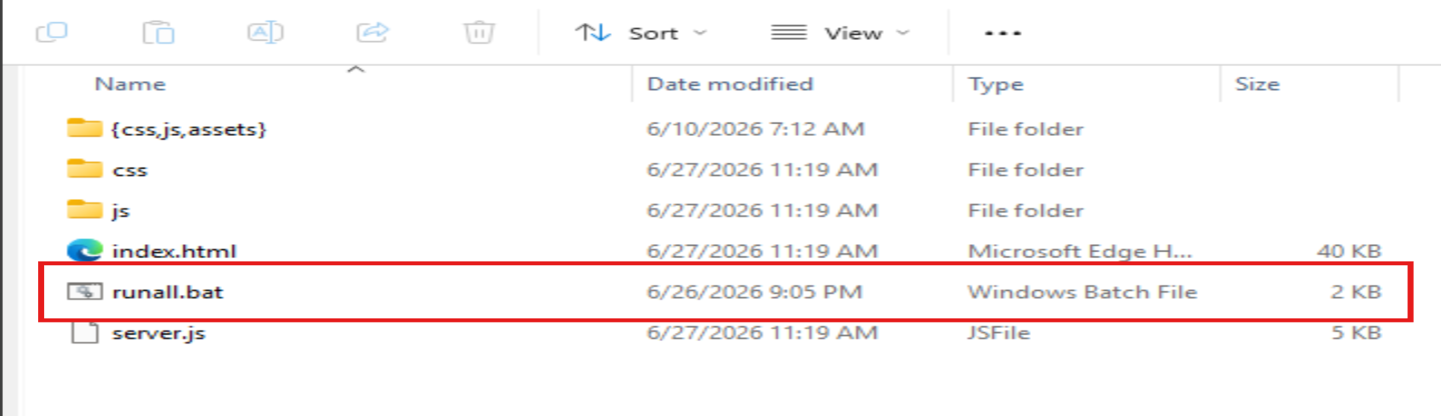
Dashboard Bat File
-
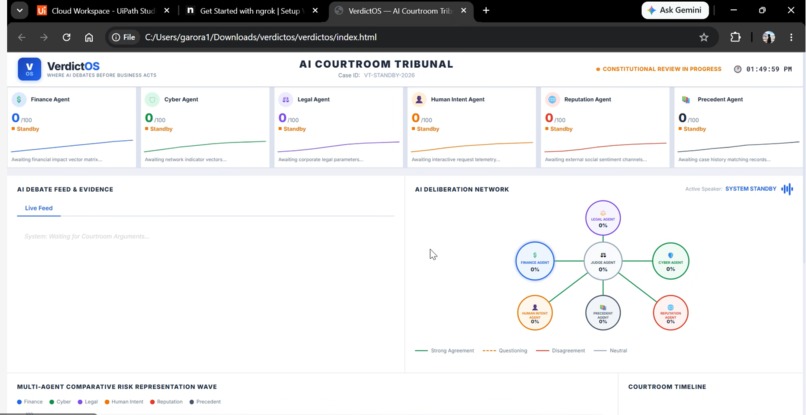
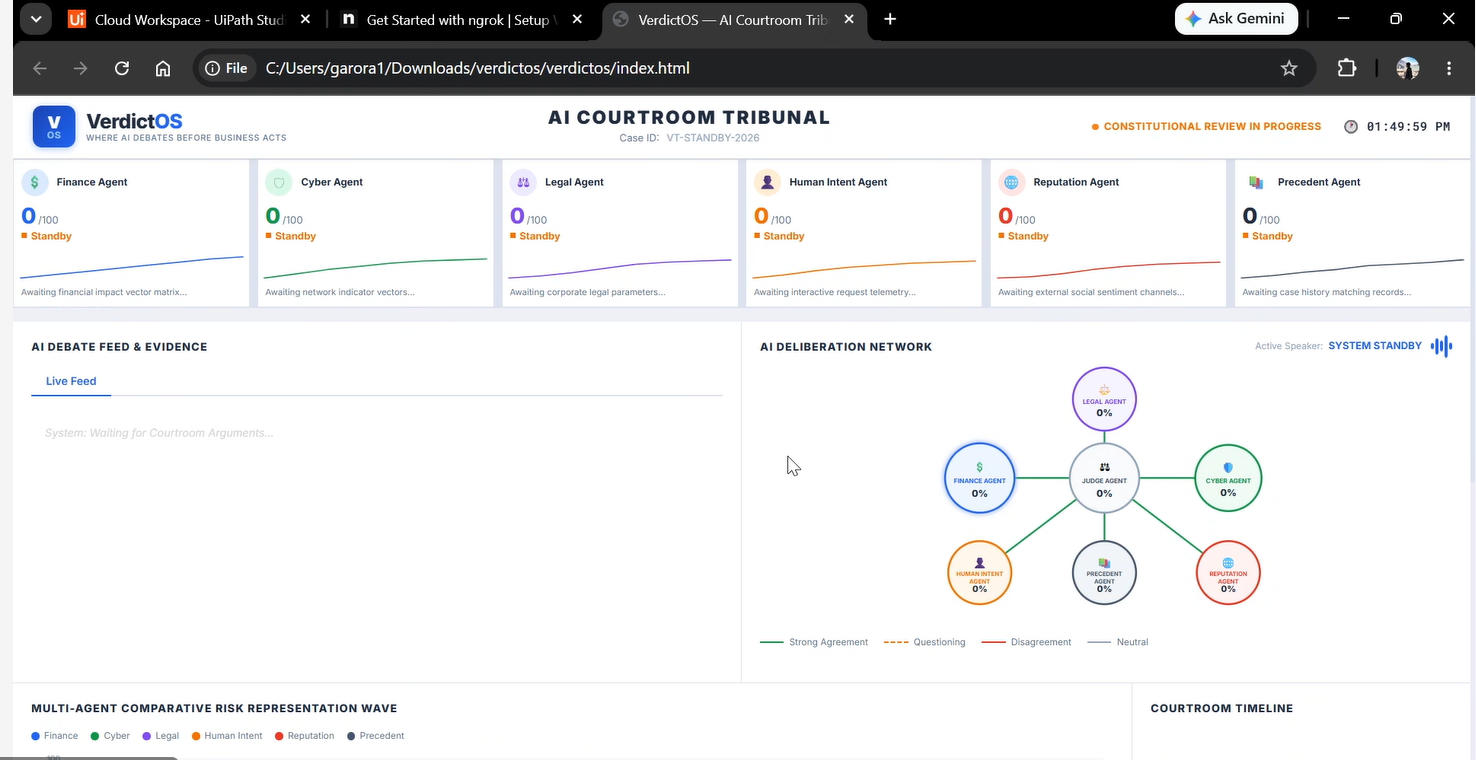
Dashboard1
-
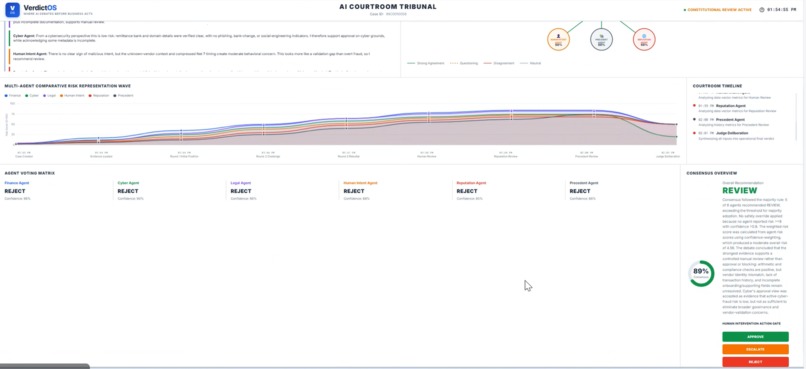
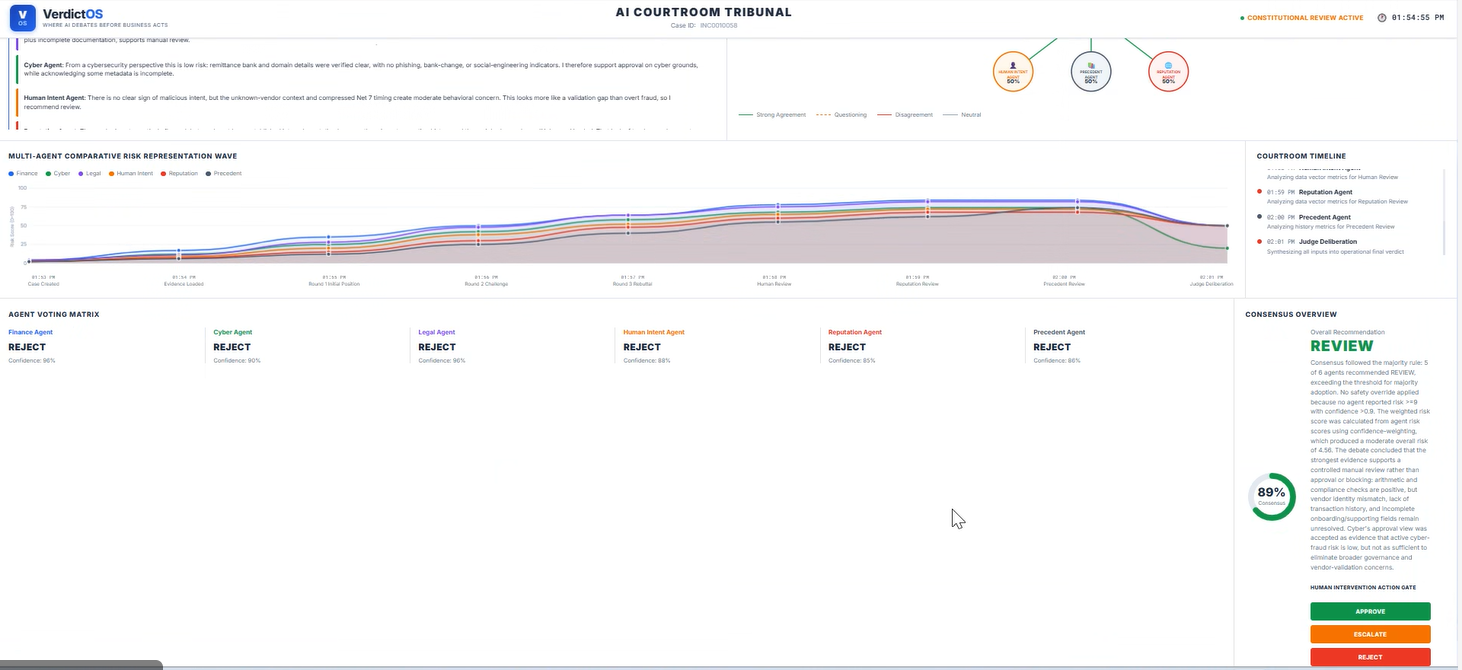
Dashboard2
-
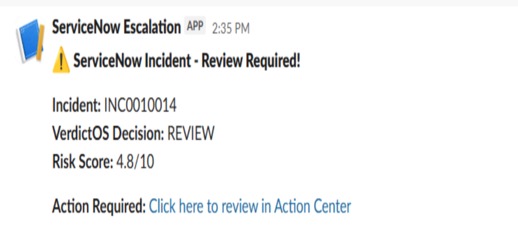
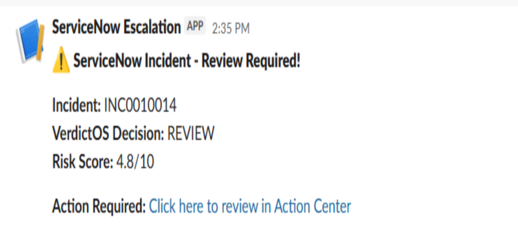
Slack
-
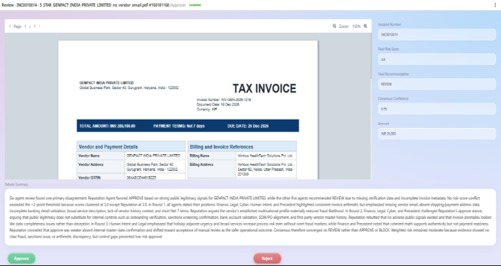
Action Center
-
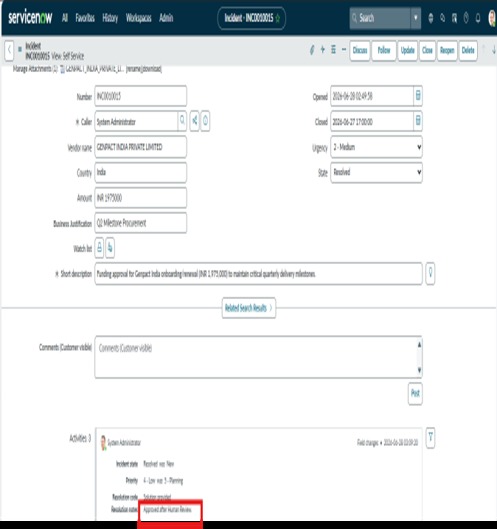
ServiceNow Ticket Update
Inspiration
Traditional enterprise incident management often relies on a single analyst or isolated teams to evaluate complex issues. Security, legal, finance, and compliance teams frequently work independently, leading to delays, inconsistent decisions, and limited transparency.
We wanted to reimagine this process by creating an AI-powered collaborative decision platform where specialized AI agents debate, analyze, and justify their recommendations before arriving at a final governance decision. Inspired by the way expert committees and courtrooms operate, we built VerdictOS - an AI Courtroom that brings together domain experts to make faster, more transparent, and evidence-based enterprise decisions.
What it does
VerdictOS is an intelligent multi-agent governance platform that automates enterprise risk assessment and decision-making.
When a ServiceNow incident is created, the platform automatically:
- Ingests incident details and supporting documents.
- Enriches the incident with contextual information.
- Routes the case to specialized AI agents including Finance, Legal, Cybersecurity, Compliance, Reputation, and Precedent agents.
- Grounds every agent using enterprise SOPs, policies, and historical knowledge.
- Enables each agent to produce an independent, explainable risk assessment.
- Conducts an AI debate where agents challenge and validate each other's findings.
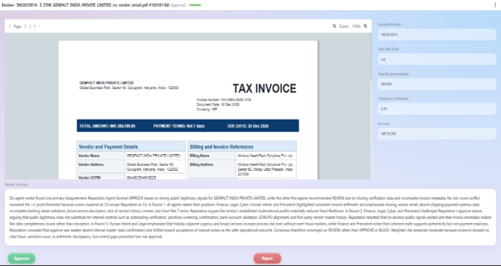
- Consolidates recommendations through an AI Governance Judge.
- Escalates uncertain or high-risk decisions to human reviewers using Human-in-the-Loop workflows.
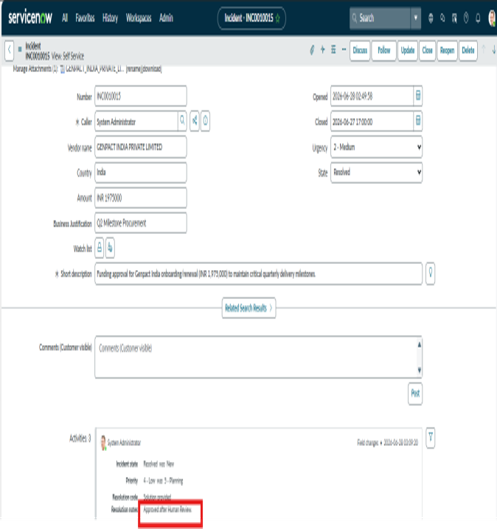
- Creates and updates ServiceNow incidents automatically with a complete audit trail and justification.
The result is faster, more consistent, transparent, and explainable enterprise decision-making.
How we built it
VerdictOS was built using the UiPath Agentic Automation platform and modern AI governance capabilities.
Key technologies include:
- UiPath Maestro for multi-agent orchestration
- UiPath Agent Builder for creating specialized AI agents
- Studio Web for workflow and process design
- ServiceNow integration for incident lifecycle management
- Context Grounding using enterprise knowledge bases and SOPs
- Guardrails to ensure grounded, policy-compliant reasoning
- Human-in-the-Loop via Action Center for governed approvals
- BPMN-based orchestration for end-to-end enterprise workflows
Each specialist agent is equipped with its own knowledge base, memory, and domain-specific guardrails, allowing it to make decisions based on organizational policies rather than generic AI reasoning.
Challenges we ran into
Building a collaborative AI system introduced several technical and architectural challenges.
Some of the key challenges included:
- Designing reliable communication between multiple specialized AI agents.
- Preventing hallucinations while ensuring agents remained grounded in enterprise policies.
- Structuring high-quality knowledge bases and context grounding for each domain.
- Balancing autonomous AI decisions with human governance requirements.
- Creating explainable and auditable AI reasoning rather than black-box outputs.
- Integrating ServiceNow workflows seamlessly with AI agents.
- Fine-tuning prompts, memory, and guardrails to achieve consistent decisions.
These challenges ultimately strengthened the architecture and improved the robustness of the solution.
Accomplishments that we're proud of
We're proud of building a complete enterprise-grade Agentic AI governance platform rather than a simple chatbot.
Key accomplishments include:
- Developed six specialized AI agents representing different enterprise domains.
- Implemented an AI Courtroom that enables collaborative decision-making through structured debate.
- Successfully integrated ServiceNow for automated incident handling.
- Implemented Context Grounding using enterprise SOPs and knowledge documents.
- Added Agent Memory to improve consistency using historical precedents.
- Built guardrails to ensure safe, explainable, and policy-driven decisions.
- Incorporated Human-in-the-Loop governance for high-risk cases.
- Designed an end-to-end BPMN orchestration that mirrors real enterprise governance processes.
- Delivered explainable AI recommendations with complete reasoning and auditability.
What we learned
This project reinforced that successful enterprise AI is not about using a larger language model—it is about building the right architecture.
We learned the importance of:
- Domain-specific specialized agents instead of a single general-purpose assistant.
- Context Grounding to minimize hallucinations and improve decision quality.
- Guardrails for trustworthy enterprise AI.
- Human oversight for critical business decisions.
- Multi-agent collaboration to solve complex problems more effectively than isolated agents.
- Designing AI systems that are transparent, auditable, and aligned with enterprise governance.
What's next for MindMesh
This hackathon represents the first step toward a broader vision for enterprise Agentic AI.
Our roadmap includes:
- Expanding VerdictOS to support HR, Procurement, IT Operations, and Regulatory Compliance.
- Introducing autonomous learning from historical governance decisions.
- Integrating real-time threat intelligence and financial risk feeds.
- Enhancing AI debate with adaptive reasoning and confidence calibration.
- Providing executive dashboards with governance analytics and explainability metrics.
- Building reusable enterprise AI agent templates for rapid deployment across industries.
- Enabling cross-platform integrations with SAP, Salesforce, Microsoft 365, and other enterprise systems.
- Evolving VerdictOS into a comprehensive AI Governance Operating System that empowers organizations to make faster, safer, and more transparent decisions.


Log in or sign up for Devpost to join the conversation.