-
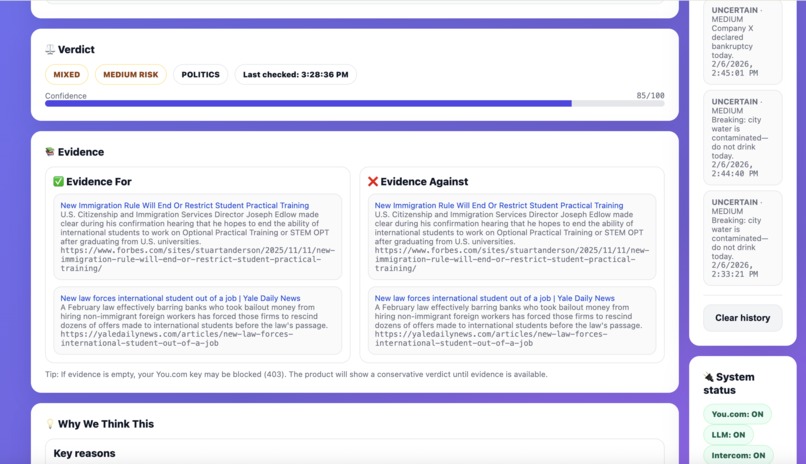
VerdictAI providing evidence in support or against using chain of debate in agents.
-
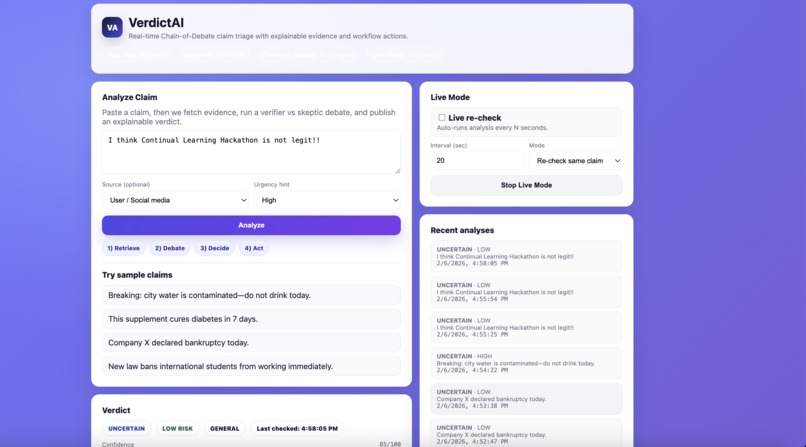
VerdictAI accepting claims manually by posting comment from Social Media/blog/Intercom ticket
-
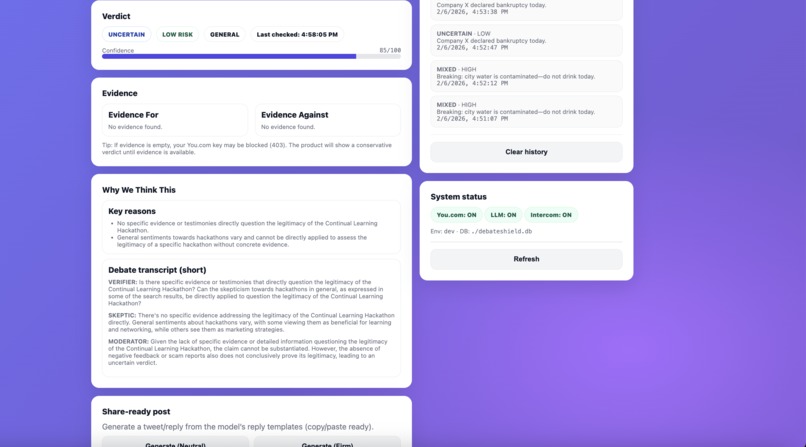
Displaying key discussion between agents
-

Generating analyzed, ready-to-publish post based on verdict and affiliating situation like urgency, source of comment.
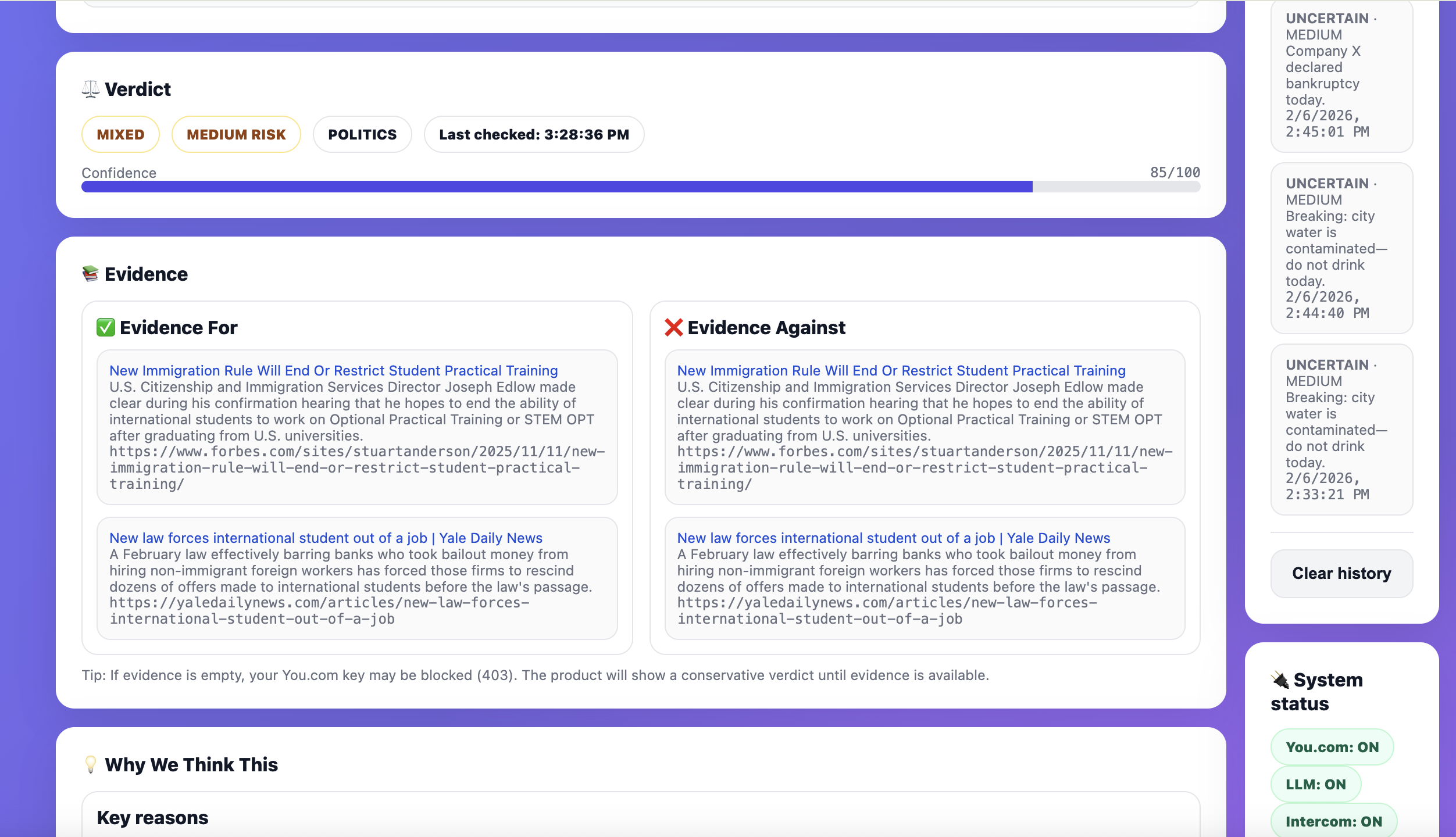
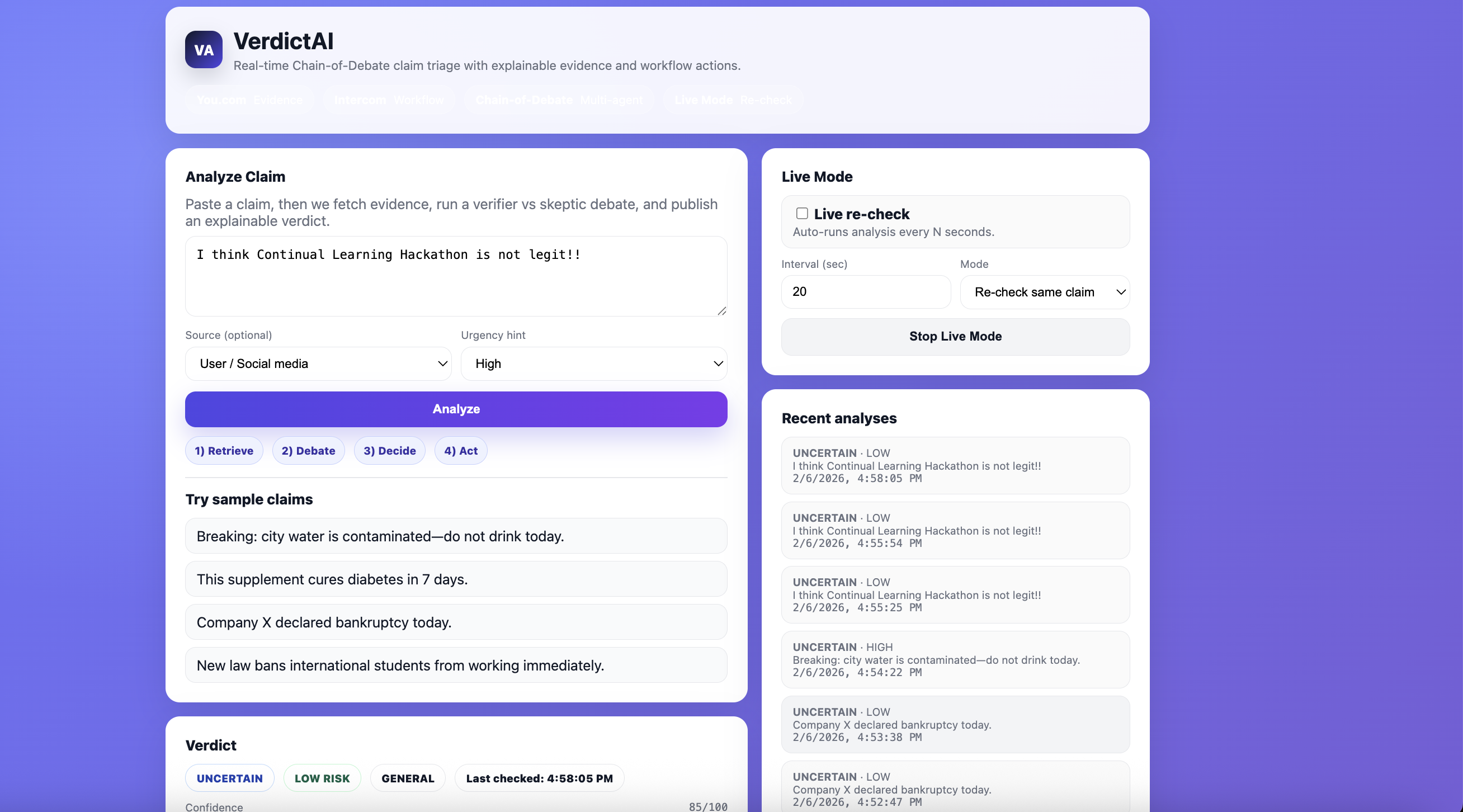
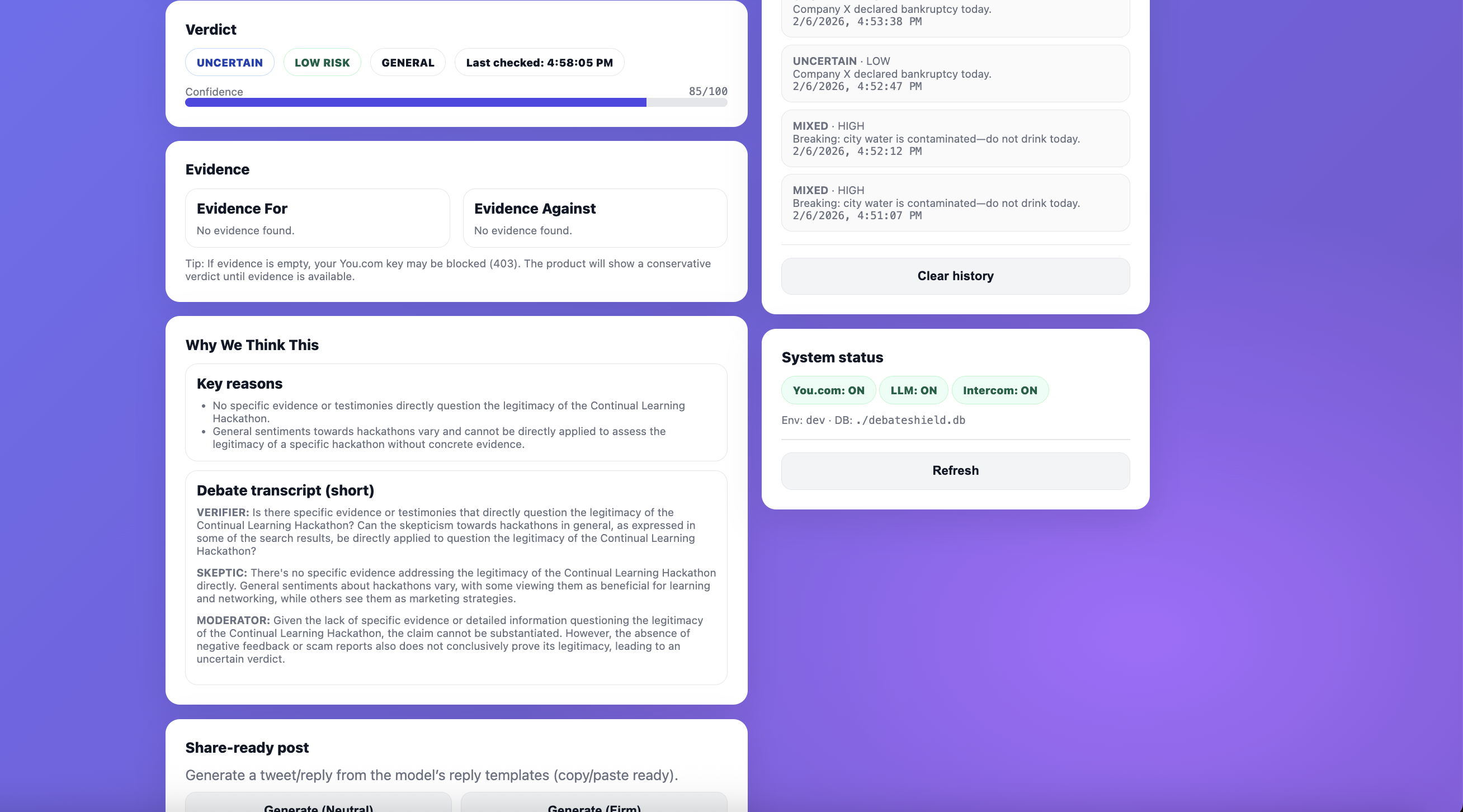
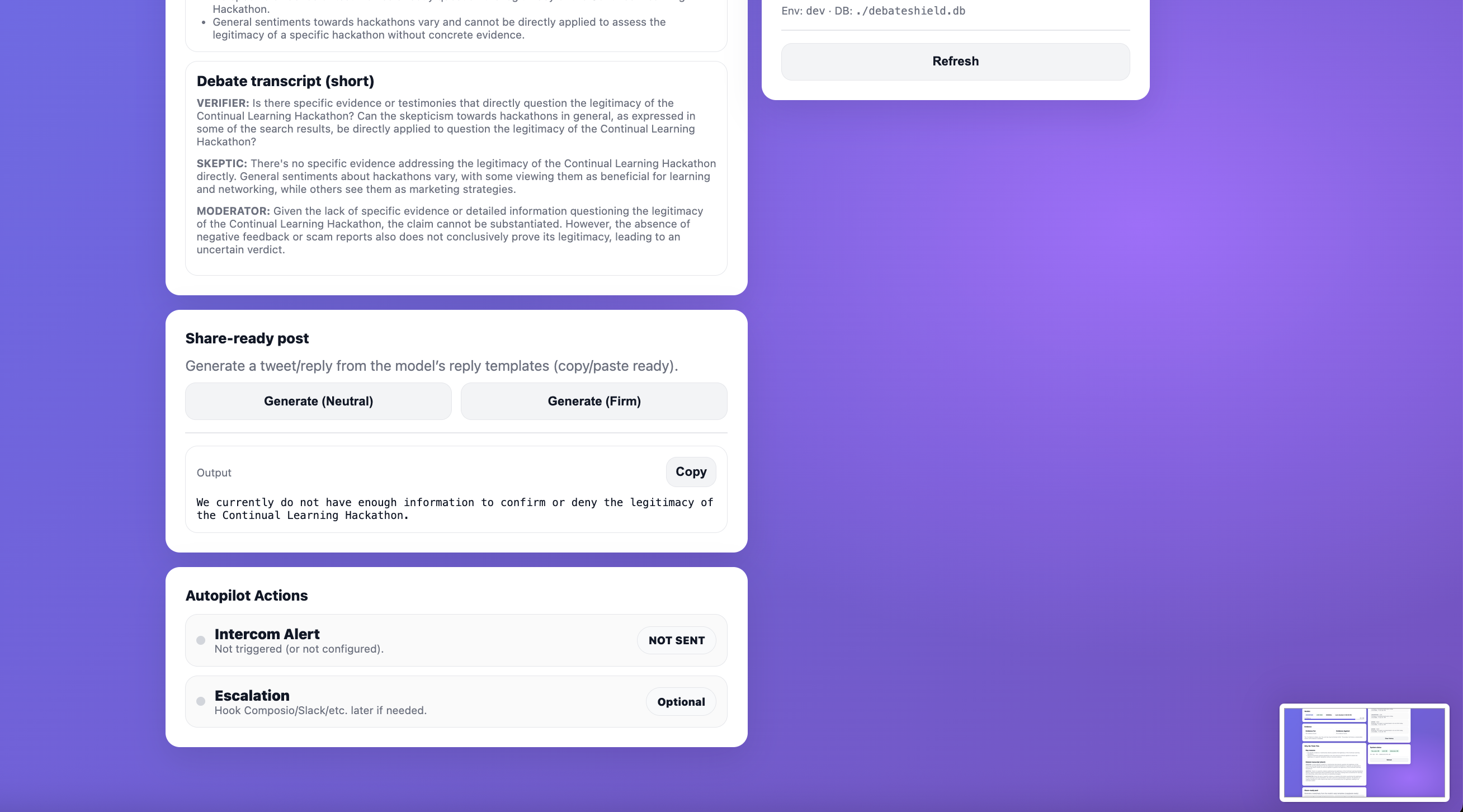
VerdictAI is a real-time claim triage agent that retrieves evidence, runs a verifier vs. skeptic debate, and produces an explainable verdict (true/false/uncertain). It generates share-ready responses and triggers workflow actions like alerts and escalations for fast, responsible moderation.
Inspiration
VerdictAI was inspired by how quickly misleading claims spread online and how hard it is for teams to respond with speed and confidence. We wanted a tool that doesn’t just “answer,” but shows evidence, surfaces uncertainty honestly, and helps stakeholders act responsibly.
What it does
VerdictAI is a real-time claim triage agent that takes any statement, retrieves supporting and opposing evidence, runs a structured verifier-vs-skeptic debate, and produces an explainable verdict (True / False / Uncertain) with citations and clear reasoning. It also supports workflow actions like escalation/alerts to help teams respond faster.
How we built it
We built VerdictAI with a FastAPI backend and an interactive web UI, integrating web evidence retrieval and an LLM-driven multi-agent debate loop (Verifier, Skeptic, Moderator). The system combines claim parsing, evidence ranking, structured JSON outputs, and optional memory/history to deliver consistent verdicts and “why” explanations.
Challenges we ran into
The toughest parts were making evidence retrieval reliable (rate limits/403 blocks and changing API response formats), keeping agent outputs structured and stable, and preventing silent failures when external services return empty results. We also had to handle deployment constraints—secrets management, environment variables, and persistent storage differences between local and Render.
Accomplishments that we're proud of
We’re proud that VerdictAI doesn’t just generate an opinion—it produces a transparent, stakeholder-ready decision with evidence, counter-evidence, and a debate trace that can be audited. We also successfully packaged it into a deployable service with a clean UI flow and production-style configuration for real-world workflows.
What we learned
We learned that trust comes from process, not just output: evidence quality, structured reasoning, and explicit uncertainty matter as much as accuracy. We also gained practical experience in building resilient AI systems—defensive coding around retrieval failures, careful prompt/format design, and deployment best practices like env-based configuration and key rotation.
What's next for VerdictAI
Next, we’ll improve evidence quality with multi-source retrieval and better ranking, add persistent storage for history and analytics, and introduce customizable policy modes for different stakeholder needs (trust & safety, customer support, compliance, journalism). We also plan to add monitoring, caching, and evaluation benchmarks so VerdictAI can scale reliably in production.
Built With
- chainofdebate
- fastapi
- html/css
- https
- intercom
- javascript
- openai
- pydantic
- python
- sqlite
- uvicorn
- vanilla
- you.com

Log in or sign up for Devpost to join the conversation.