-
-
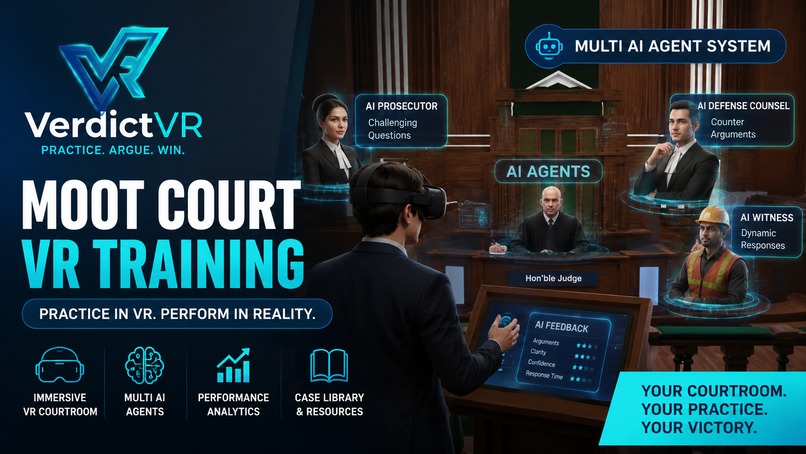
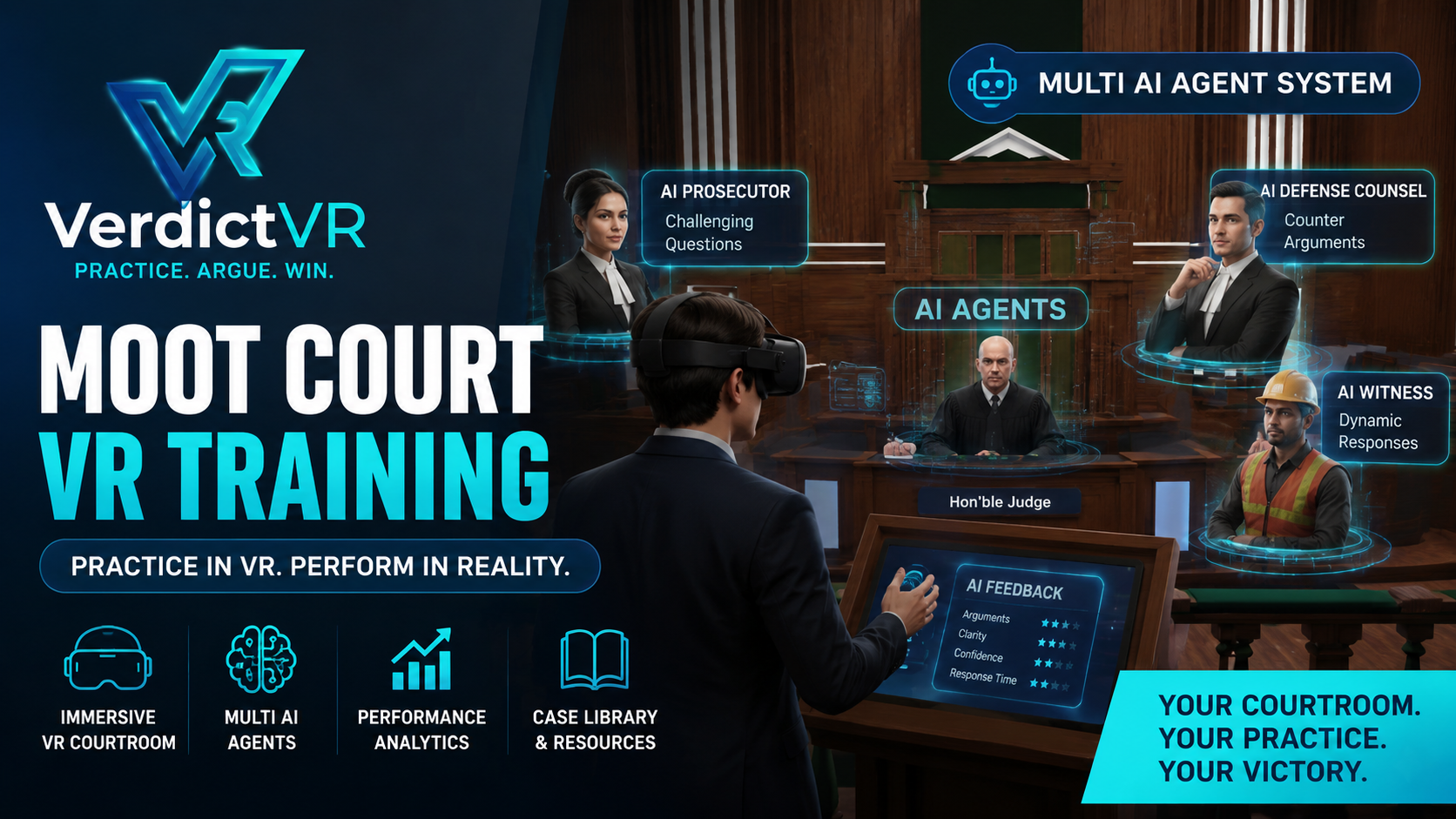
Banner
-
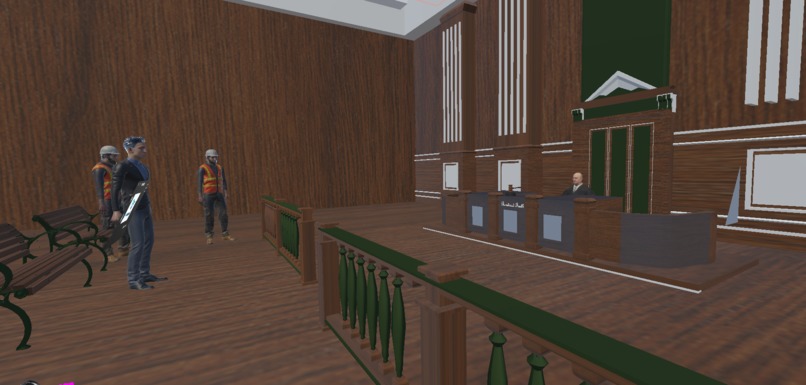
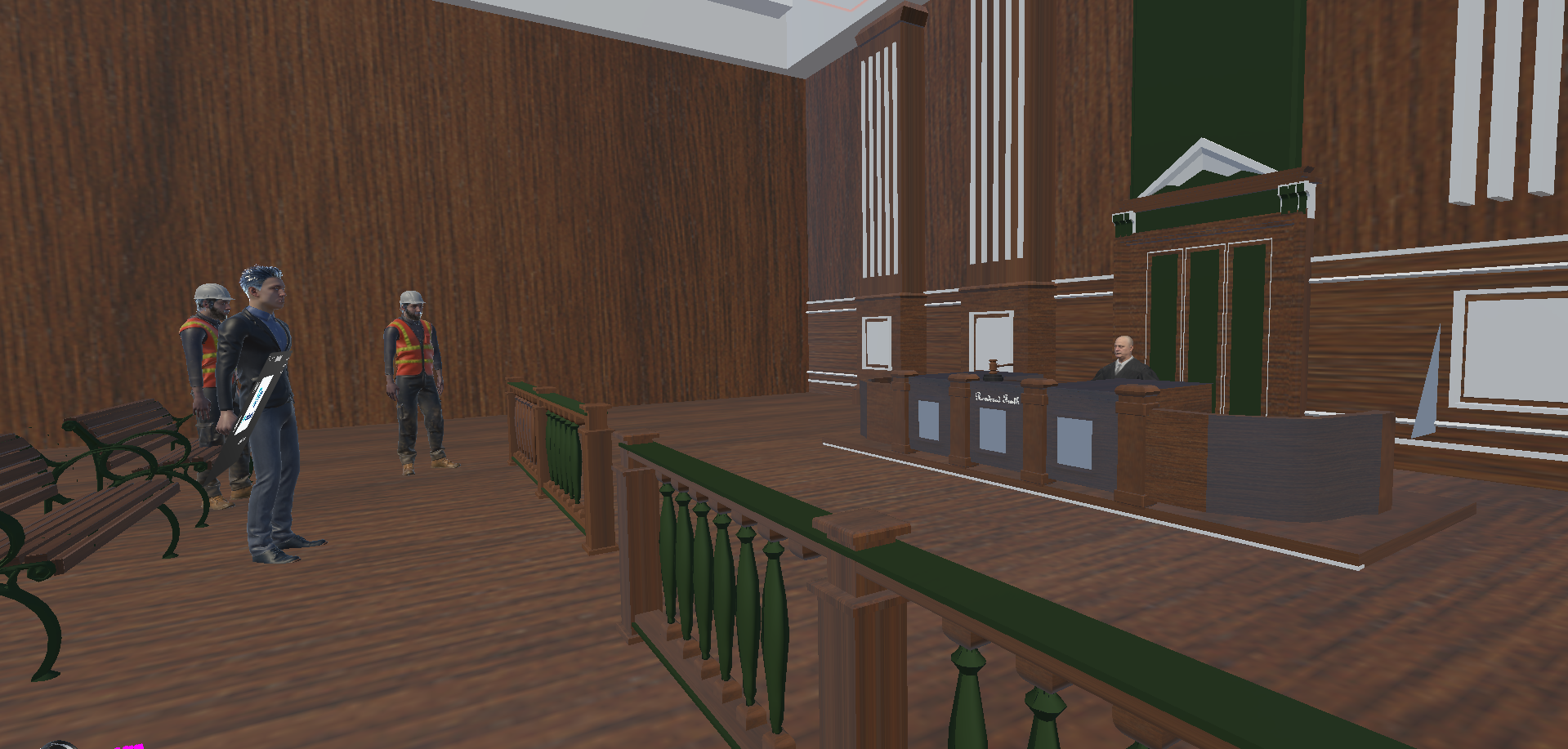
In App
-
Logo
-
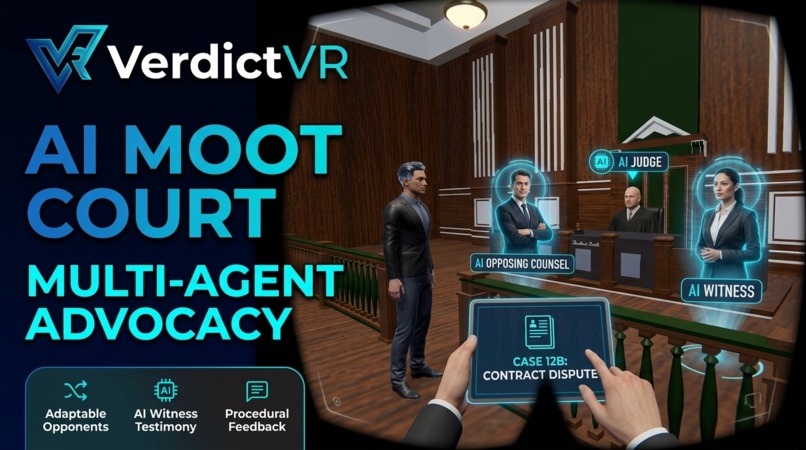
Thumbnail
-
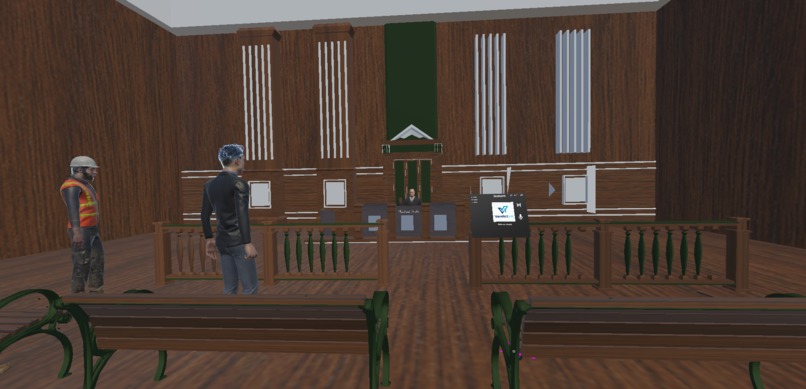
Court Room
Inspiration
Legal education is still heavily dependent on theory, textbooks, and limited courtroom exposure. Most law students rarely get the opportunity to practice realistic arguments, witness examinations, or courtroom pressure before entering real courts.
We wanted to change that.
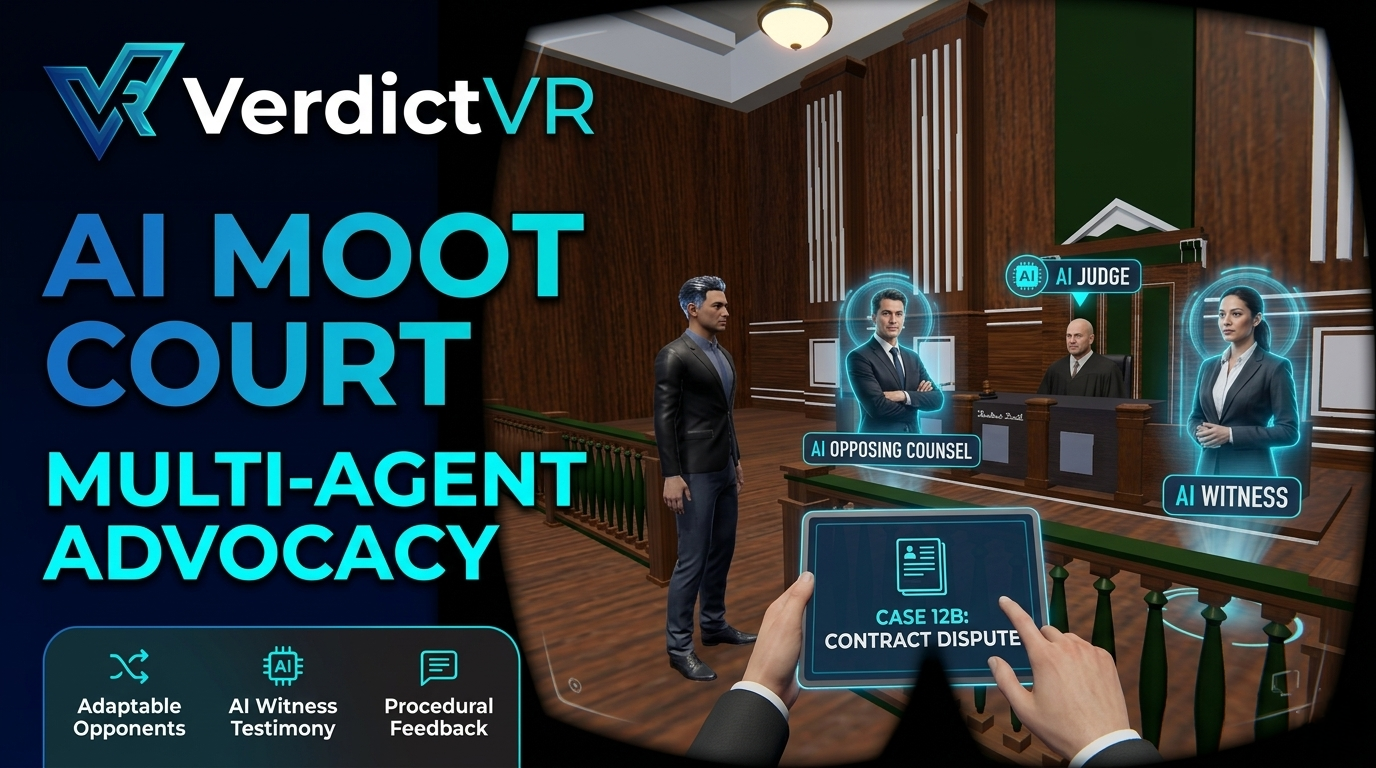
The idea behind Verdict VR was to create an immersive AI-powered courtroom where students can practice advocacy skills anytime, from anywhere. Inspired by the rise of AI agents and immersive XR learning experiences, we envisioned a virtual courtroom that feels dynamic, interactive, and realistic.
What it does
Verdict VR is a VR-based moot court and lawyer training platform powered by multiple AI agents.
Users can step into a virtual courtroom and interact with:
- AI Judge
- AI Opposing Lawyer
- AI Clients
The system allows users to:
- Practice opening statements
- Perform cross examinations
- Raise objections
- Present evidence
- Improve courtroom communication skills
- Receive AI-generated feedback after sessions
Unlike scripted simulations, the AI agents dynamically respond to arguments and questions in real time, making every courtroom session unique.
How we built it
We built Verdict VR using:
- Unity for VR development
- Meta Quest for immersive interaction
- AI-powered conversational agents using LLM APIs - Ollama
- Speech-to-text for voice interactions
- Text-to-speech for AI courtroom characters
- Multi-agent orchestration system for courtroom role management
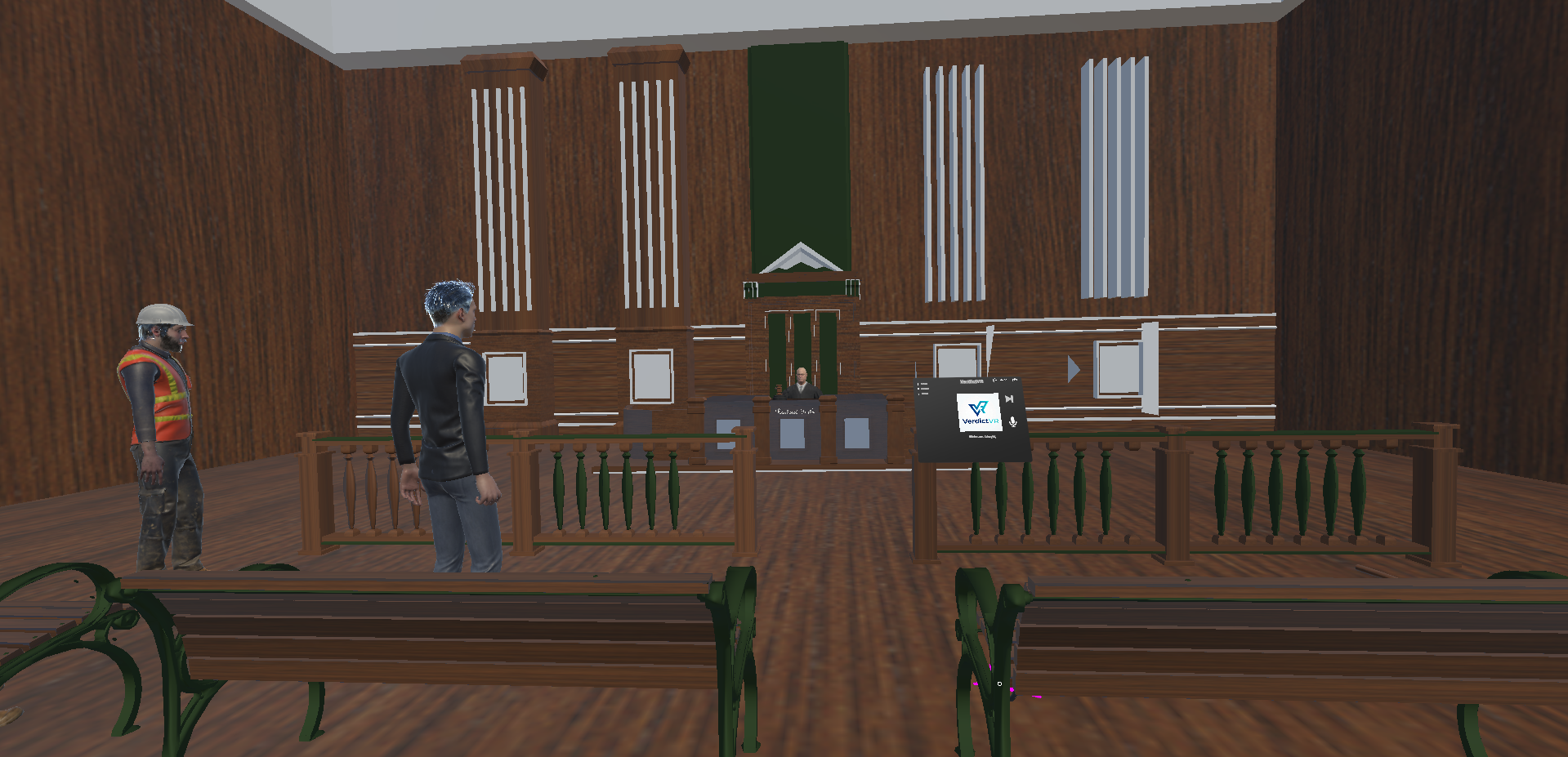
The VR environment simulates a real courtroom with interactive characters, realistic audio, and conversational flows between AI agents.
Challenges we ran into
One of the biggest challenges was coordinating multiple AI agents simultaneously while maintaining realistic courtroom flow.
We had to ensure:
- Only one character speaks at a time
- Witnesses remain context-aware
- Judges react intelligently to objections
- AI lawyers counter arguments naturally
Another challenge was optimizing voice latency inside VR to make conversations feel smooth and immersive.
Balancing realism, performance, and AI responsiveness within hackathon time constraints was also a major hurdle.
What we learned
Through this project, we learned:
- Multi-agent AI orchestration
- Real-time conversational systems in VR
- Voice interaction pipelines
- XR user experience design
- Prompt engineering for legal simulations
- Managing immersive educational environments
We also realized how powerful AI + XR can be for professional training and education.
What's next for Verdict VR
We plan to expand Verdict VR with:
- Multiplayer moot court sessions
- Real legal case datasets
- AI-generated case scenarios
- Performance analytics dashboards
- Law school integrations
- Different court environments and jurisdictions
Our vision is to make legal practice more accessible, immersive, and scalable through AI and VR.


Log in or sign up for Devpost to join the conversation.