-
-
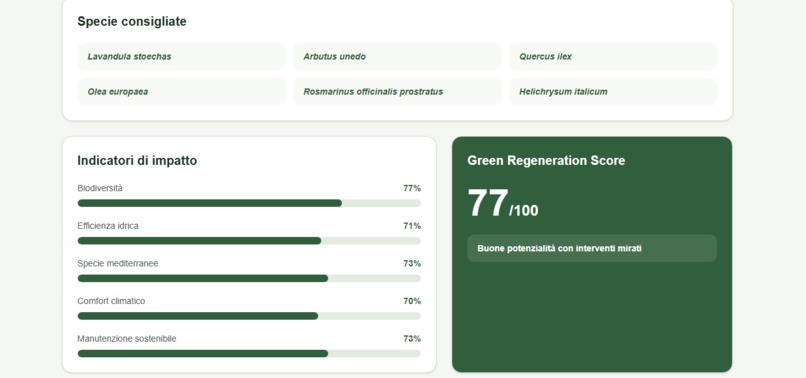
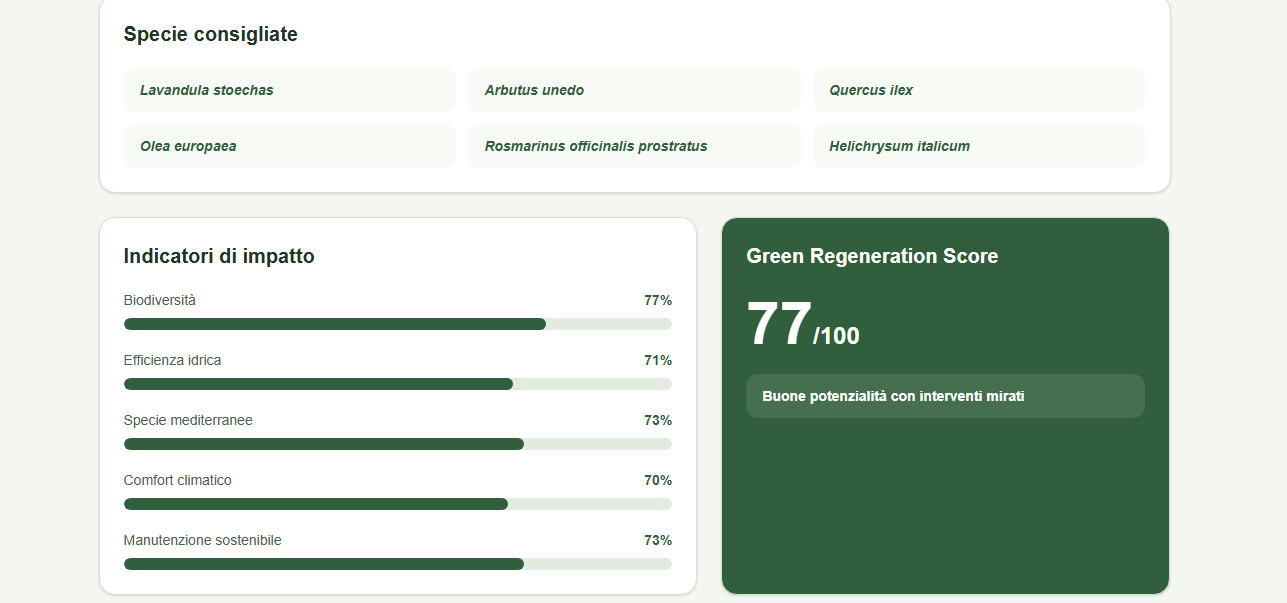
Green Regeneration Score
-
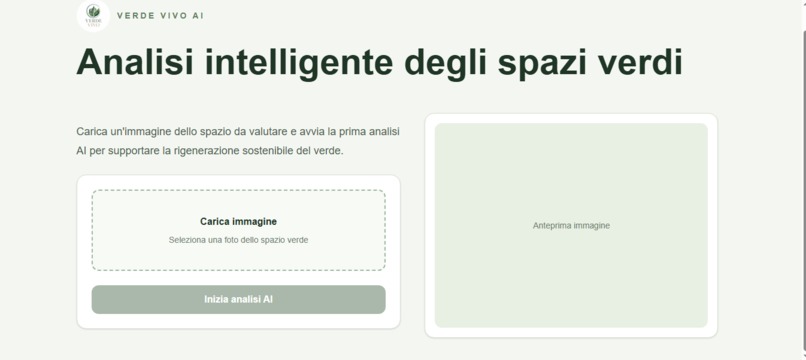
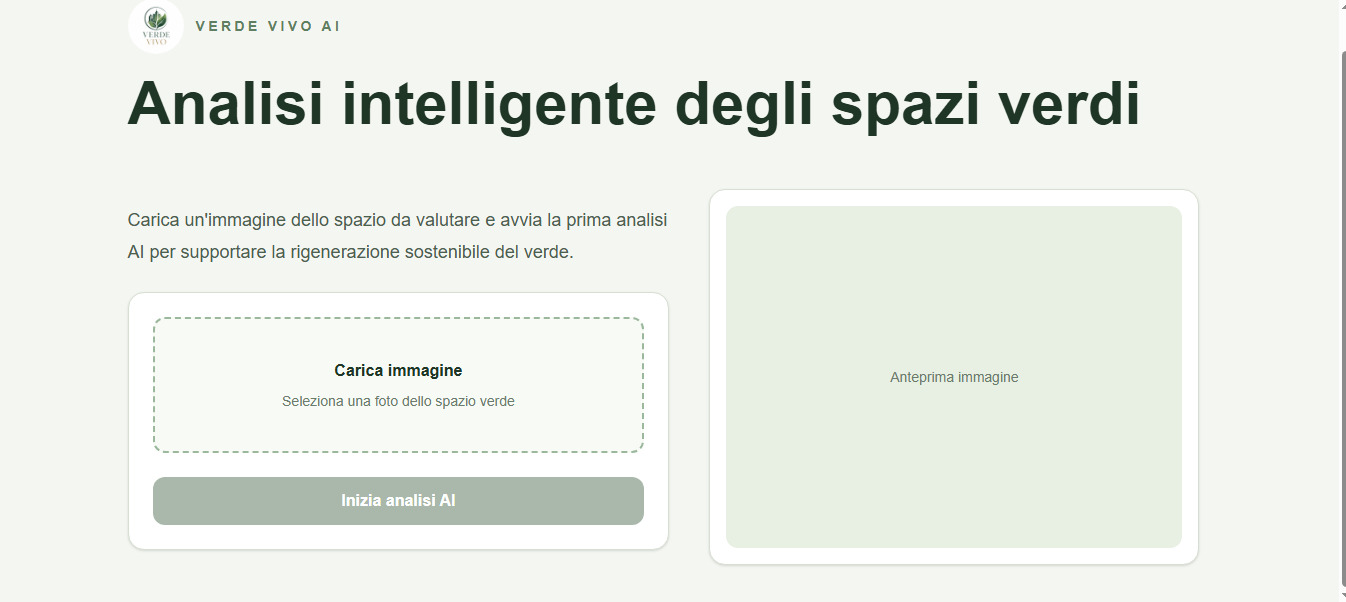
Homepage of Verde Vivo AI
-
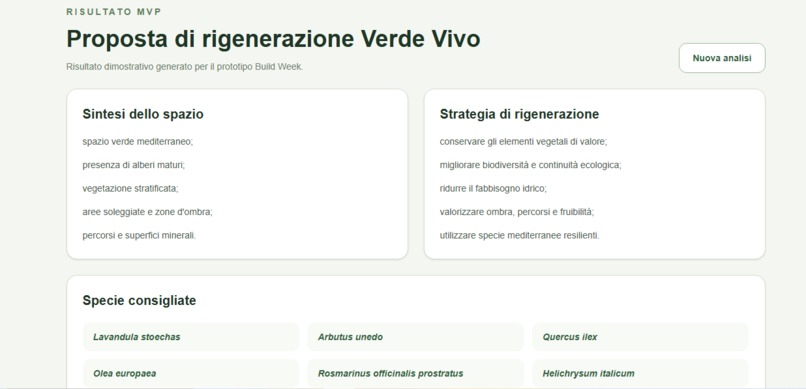
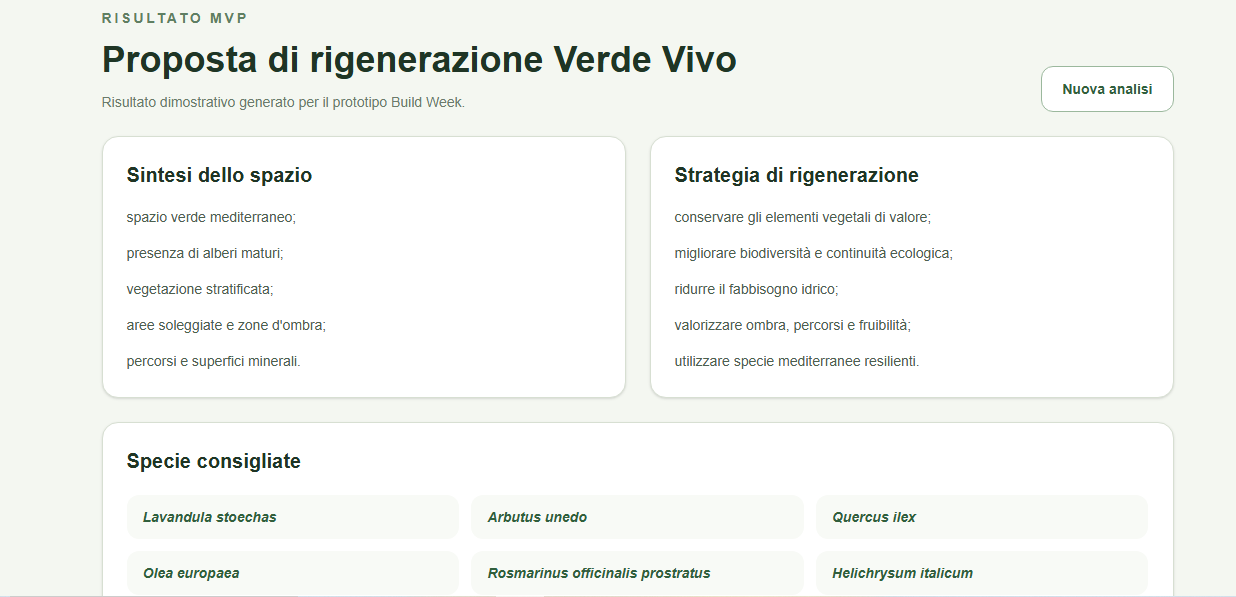
Regeneration proposal
-
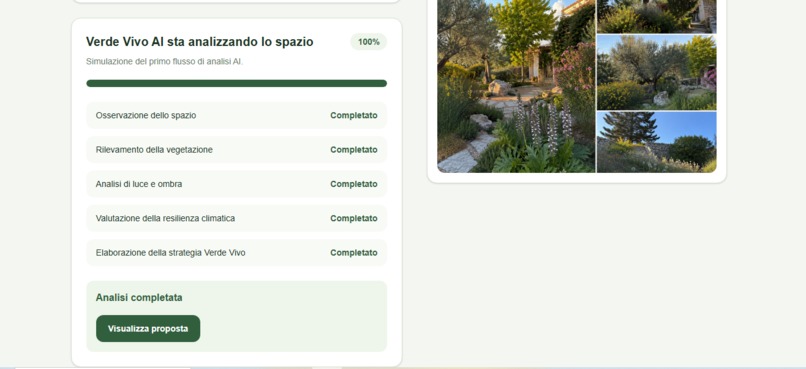
AI analysis in progress
-
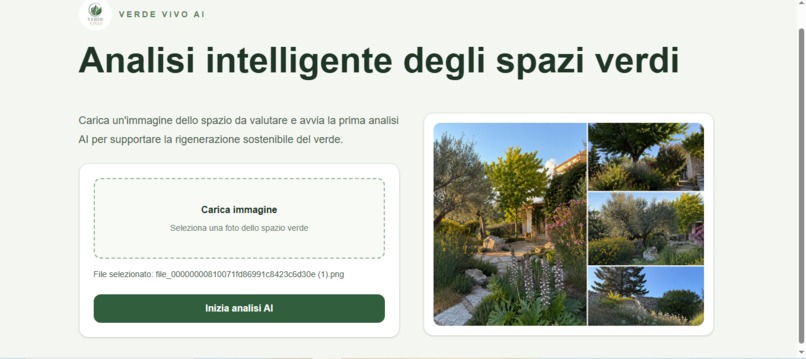
Image uploadAI analysis in progress
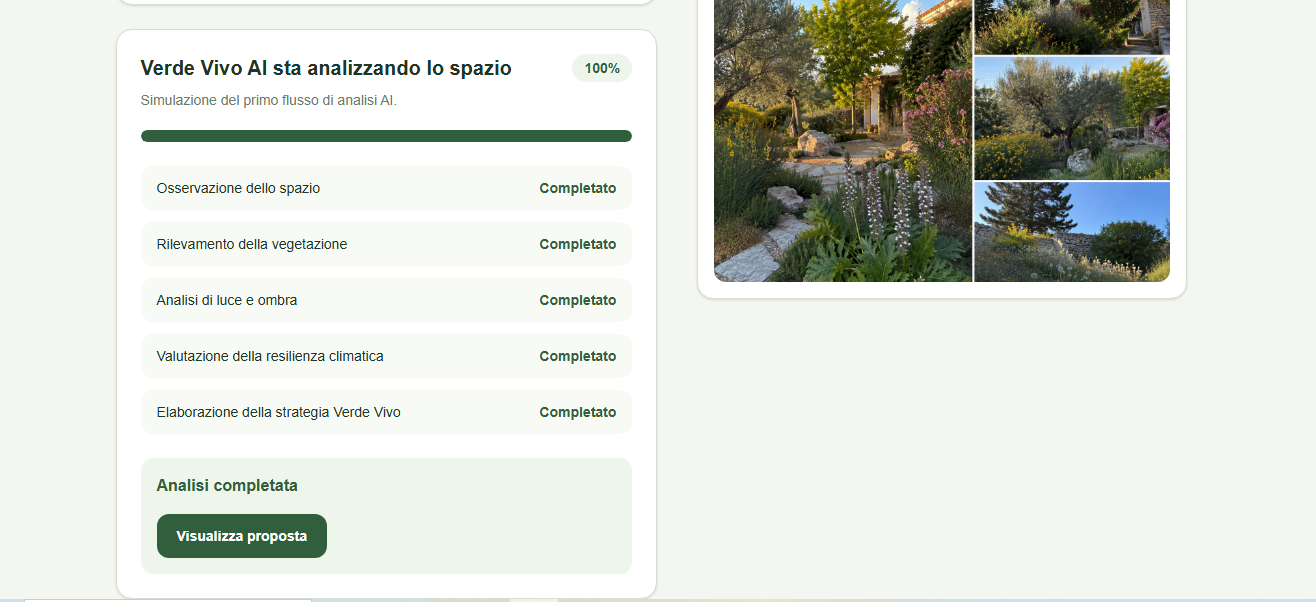
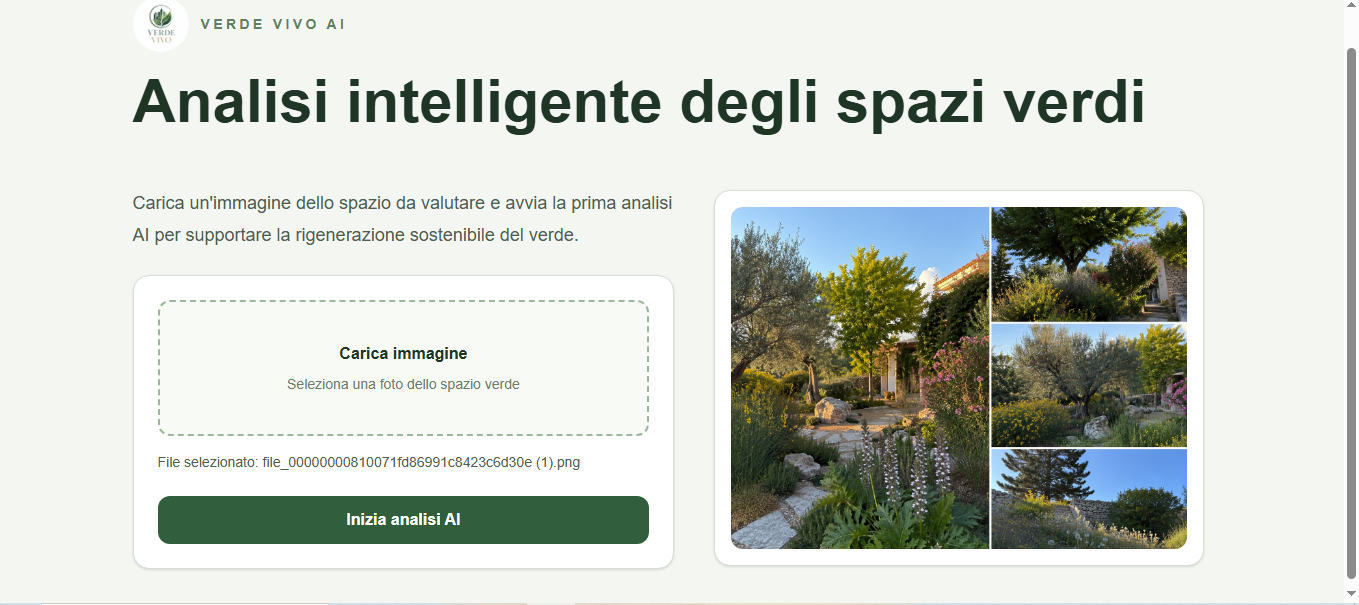
Outdoor spaces are often redesigned, maintained, or left underused without a clear understanding of their ecological potential. This matters because decisions made at the earliest stage can affect biodiversity, water efficiency, climate resilience, long-term maintenance, and the quality of life of the people who use those spaces. Verde Vivo AI was created to make this first ecological reading more accessible. It helps people transform a photograph of an outdoor space into an AI-assisted preliminary regeneration proposal. The application addresses this gap by using AI to organize ecological knowledge into a clear, structured, and usable format. The value of the AI is not simply in processing an image, but in helping translate environmental observations into information that can support better decisions. The current MVP allows users to upload a photo, start an AI-assisted analysis workflow, view a Green Regeneration Score, review environmental indicators, receive Mediterranean plant recommendations, identify priority actions, understand expected ecological benefits, and export a PDF report. The goal is not to replace landscape architects, ecologists, gardeners, or green professionals. Verde Vivo AI is designed as a decision-support tool that helps citizens, businesses, communities, and public organizations begin projects with clearer information and better questions. The MVP validates the user workflow and the value of turning a simple image into a structured ecological assessment. Advanced multimodal AI capabilities described in the roadmap represent the next development phase. In the long term, Verde Vivo AI aims to become an AI-assisted Ecological Intelligence Platform: a system that combines visual understanding, environmental knowledge, and regenerative design principles to support better decisions for outdoor spaces.
Inspiration
Verde Vivo AI was inspired by the need to make ecological regeneration more understandable, practical, and accessible. Outdoor spaces are often full of hidden potential. A neglected courtyard, an underused terrace, a dry garden, or a poorly designed green area can become more biodiverse, resilient, comfortable, and sustainable with the right guidance. The project is rooted in three main ideas: -ecological regeneration should be easier to approach; -biophilia can help reconnect people, places, and natural systems; -artificial intelligence can support professionals and users without replacing human expertise. Climate change, water scarcity, biodiversity loss, and the need for healthier urban environments make this challenge increasingly urgent. Verde Vivo AI was created to help more people see outdoor spaces not only as aesthetic areas, but as living systems with ecological value.
What it does
Current MVP
The current MVP is a functioning web application.
It allows users to:
- upload a photograph of an outdoor space;
- start an AI-assisted ecological analysis workflow;
- receive a structured regeneration proposal;
- view a Green Regeneration Score;
- review environmental impact indicators;
- receive Mediterranean plant recommendations;
- review priority intervention suggestions;
- understand expected ecological benefits;
- export the generated proposal as a PDF report;
- use the experience on desktop and mobile devices.
The current MVP validates the user workflow and the product experience. It demonstrates how a single image can become the starting point for a structured ecological assessment.
Future roadmap
Future development will focus on:
- richer contextual ecological reasoning;
- advanced multimodal AI capabilities;
- more personalized regeneration proposals;
- improved support for different outdoor environments;
- collaboration features for professionals and organizations;
- broader support for regenerative landscape planning.
These advanced capabilities are part of the roadmap and are not presented as fully implemented in the current MVP.
How we built it
Verde Vivo AI was built as a web-based MVP focused on validating the core user experience.
The application uses Next.js, React, and TypeScript to create a responsive interface for desktop and mobile devices. The frontend manages the user workflow from image upload to analysis, proposal visualization, and report generation.
The interface is styled with a clean, professional design system aligned with the Verde Vivo identity. The user flow is intentionally simple: upload an image, start the analysis, review the proposal, and export a report.
The MVP uses a structured AI-assisted workflow to demonstrate how ecological observations can be organized into clear guidance. The architecture is designed to support future integration of advanced OpenAI capabilities, including multimodal image understanding and richer ecological reasoning.
The report export is generated client-side using jsPDF, allowing users to download a PDF version of the proposal without requiring a backend.
The application is deployed online with Vercel, making the prototype immediately accessible for testing and demonstration.
Challenges we ran into
One of the main challenges was transforming a broad ecological vision into a simple and usable MVP.
Ecological regeneration involves many connected topics: biodiversity, water efficiency, climate resilience, planting strategy, maintenance, and human well-being. The challenge was to present these ideas in a way that felt accessible without oversimplifying the value of professional expertise.
Another challenge was maintaining credibility. The MVP needed to demonstrate a clear AI-assisted product experience while avoiding unsupported claims about capabilities that belong to the future roadmap.
The project also required balancing design, usability, technical implementation, document quality, PDF generation, branding, deployment, and final submission materials within the Build Week timeline.
Accomplishments that we're proud of
The project reached a complete candidate release for OpenAI Build Week.
Key accomplishments include:
- a functioning web-based MVP;
- online deployment;
- image upload and preview;
- AI-assisted analysis workflow;
- Green Regeneration Score;
- environmental indicators;
- Mediterranean plant recommendations;
- priority actions;
- expected ecological benefits;
- PDF report export;
- responsive desktop and mobile interface;
- official branding integration;
- complete Build Week documentation package;
- final QA review and candidate release freeze.
The most important accomplishment is that Verde Vivo AI demonstrates a concrete product experience: a photograph becomes the beginning of a structured ecological regeneration proposal.
What we learned
This project showed that a strong MVP does not need to solve every future problem immediately. It needs to validate the core user experience clearly.
We learned that ecological knowledge can become more approachable when it is organized into simple steps, readable indicators, practical recommendations, and shareable reports.
We also learned the importance of distinguishing between current functionality and future roadmap. This distinction makes the project more credible and easier to evaluate.
Finally, the Build Week process reinforced the value of combining ecological vision, practical experience, product design, and AI-assisted workflows into a single coherent system.
What's next for Verde Vivo AI
The next phase is to evolve Verde Vivo AI from MVP to a more advanced ecological intelligence platform.
Planned areas of development include:
- integration of advanced OpenAI multimodal capabilities;
- improved understanding of vegetation, surfaces, shade, and environmental context;
- richer ecological reasoning;
- more personalized regeneration recommendations;
- a Mediterranean botanical knowledge base;
- support for different climates and geographic contexts;
- collaboration tools for professionals, businesses, communities, and public organizations;
- more advanced reporting and project history.
Future development will remain grounded in the same principle: AI should support better ecological decisions while complementing, not replacing, human expertise.
Built With
- ai
- css
- html
- javascript
- jspdf
- next.js
- openai
- react
- typescript
- vercel

Log in or sign up for Devpost to join the conversation.