-
-
web-page
-
tasks
-
hardware
-
hardware
The Illusion of Green We are conditioned from childhood to equate "green" with "healthy." When I look out at a manicured urban park lawn or a dense roadside thicket bursting with vibrant color, my first instinct is to assume the ecosystem is thriving. But surface-level color tells you nothing about the hidden realities of soil compaction, microclimate stress, or whether that patch of land actually supports true biodiversity.
I refused to settle for visual guesswork. That realization became my driving purpose: to challenge the illusion of surface-level health and build a practical, data-driven way to measure what is actually happening beneath the surface. That is why I created VerdantLens.
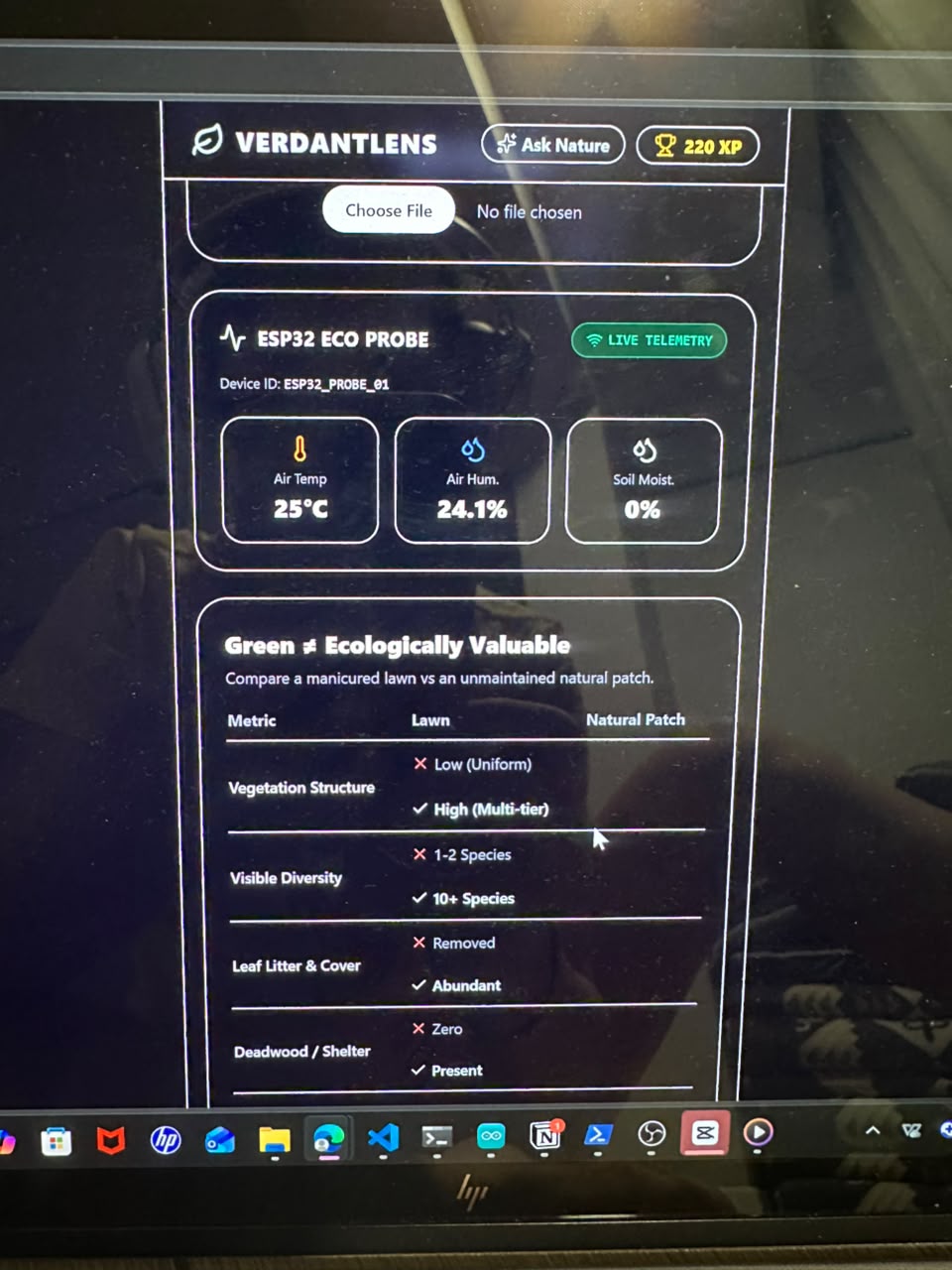
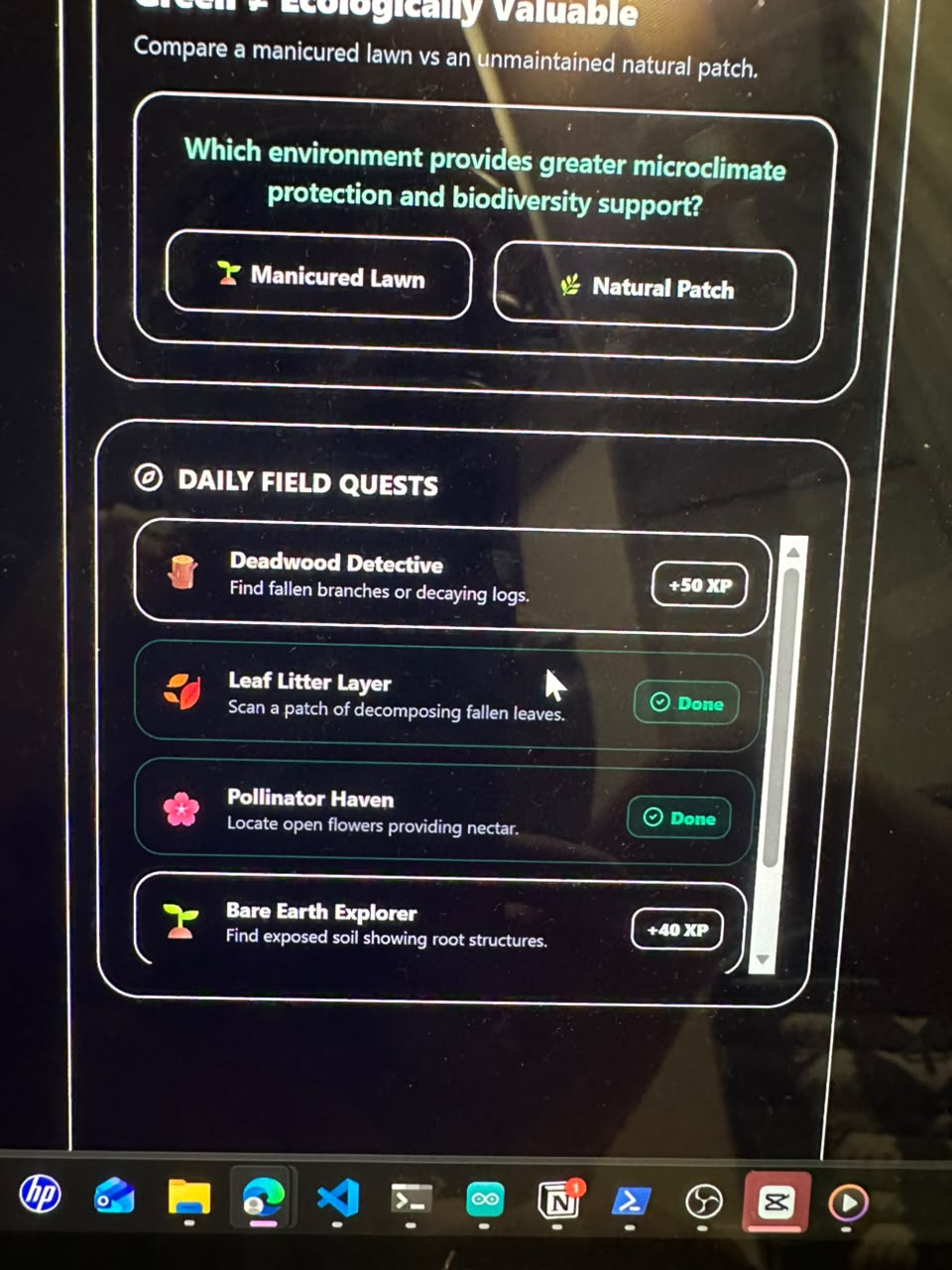
What VerdantLens Does I designed VerdantLens as a full-stack ecological monitoring platform that bridges the gap between physical environmental telemetry and multimodal artificial intelligence. It functions simultaneously as a rigorous scientific field guide and an interactive tracking game:
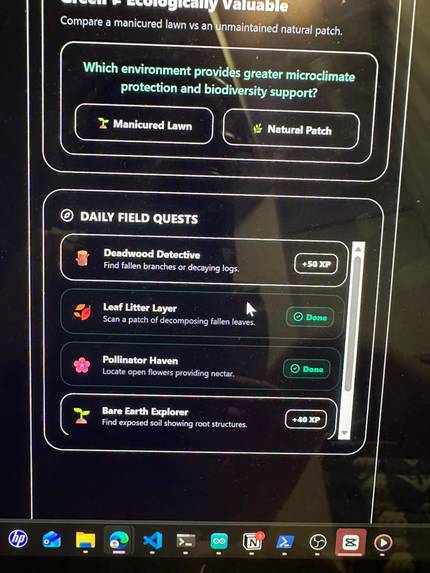
AI Field Vision: By snapping or uploading a photo of natural micro-features—like fallen deadwood, leaf litter, or wild patches—users engage an AI pipeline that parses the visual input, separates factual physical observations from ecological roles, and rewards discoveries with Nature XP.
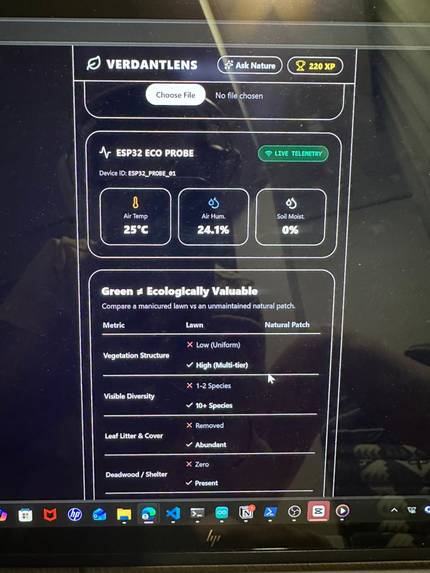
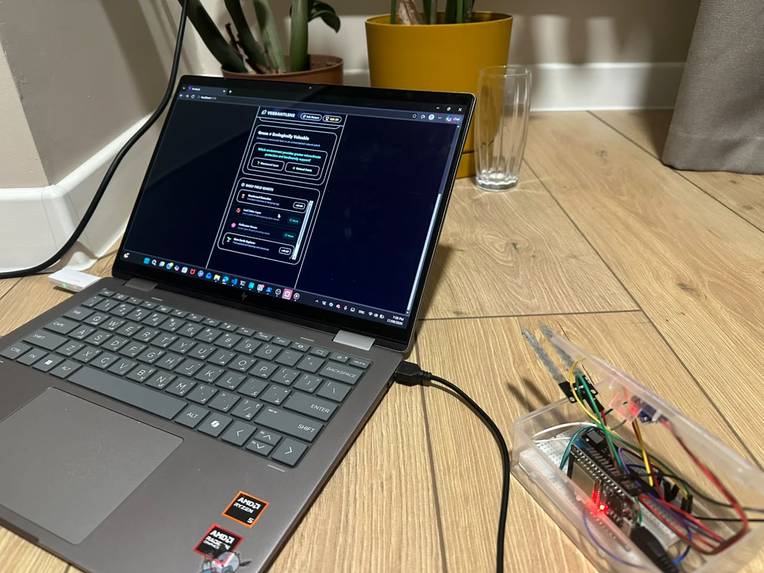
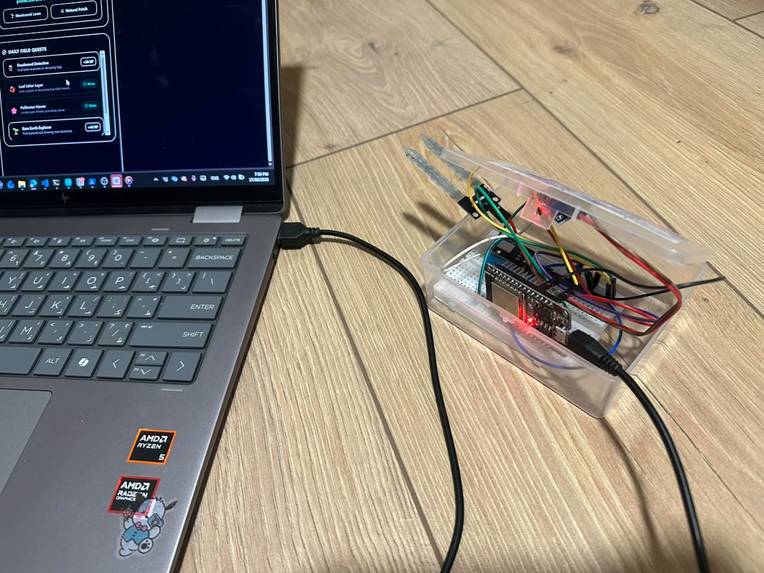
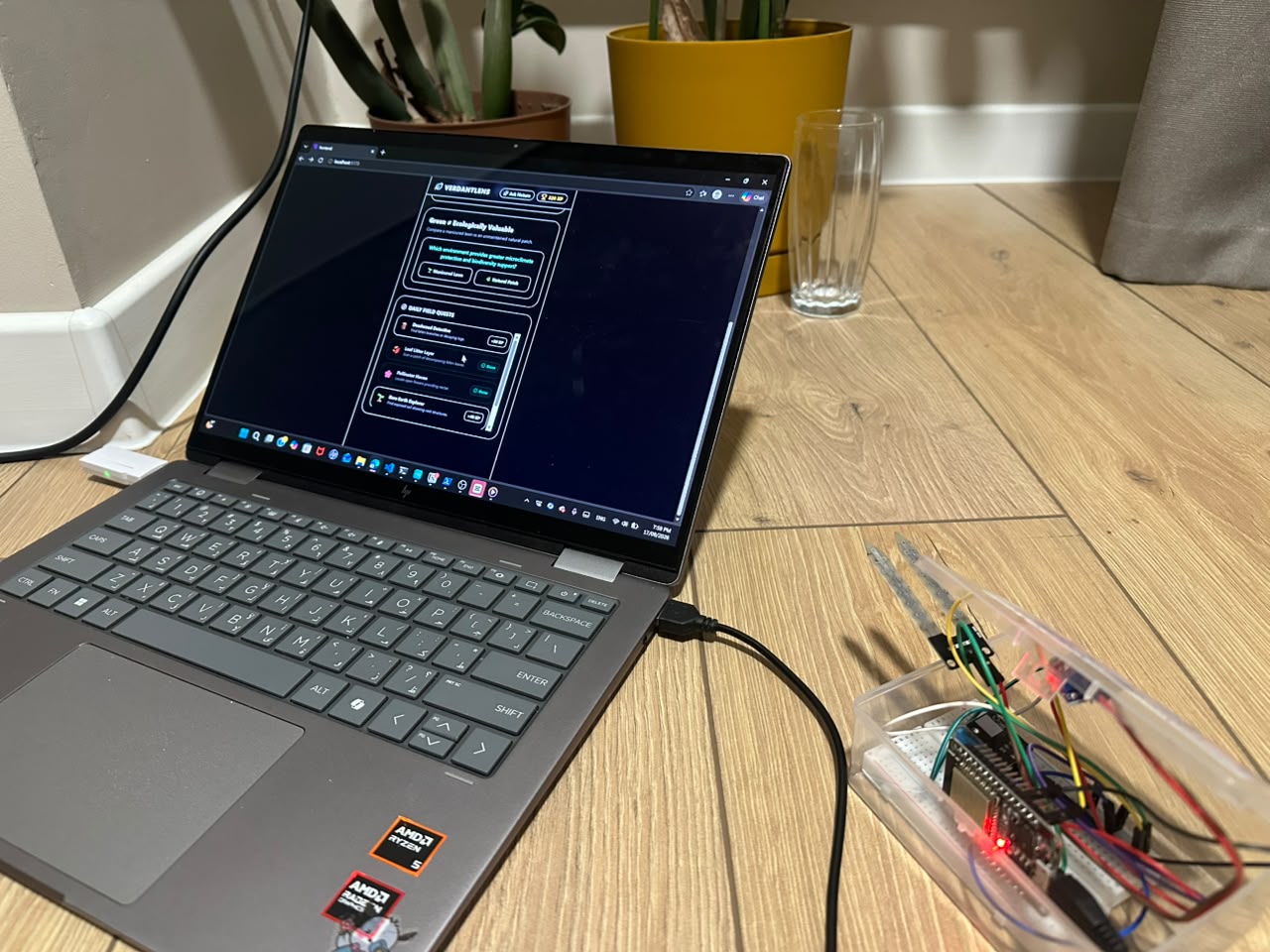
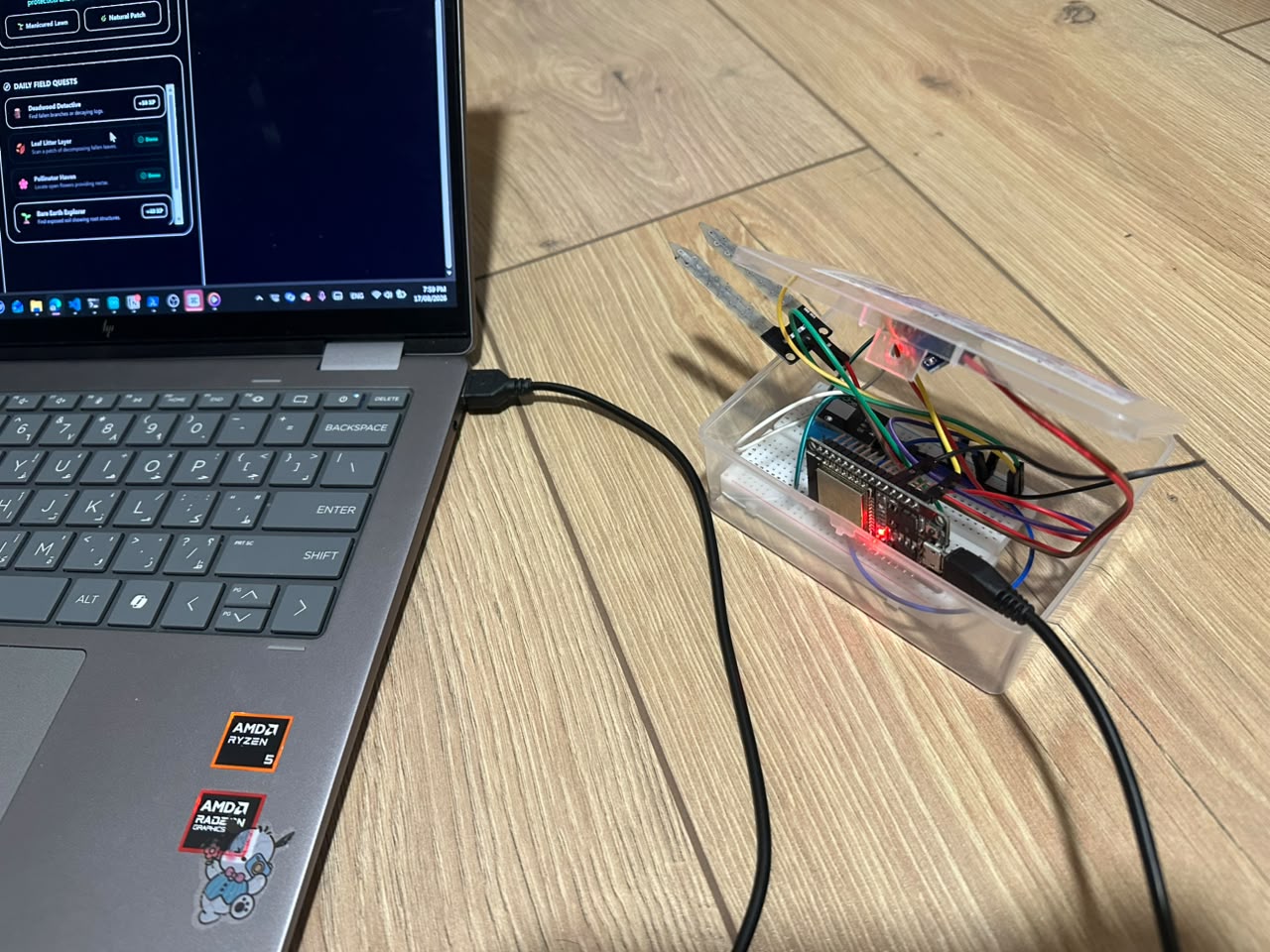
Live IoT Telemetry: I custom-built an ESP32 hardware probe that continuously measures real-time air temperature, relative humidity, and soil moisture, streaming live telemetry data straight into a cloud database.
Ask Nature Assistant: I integrated an interactive, context-driven guide that answers specific ecological questions rooted directly in what is being observed in the field.
How I Brought It to Life Building VerdantLens required me to span the entire spectrum of technology, from low-level hardware firmware to high-level cloud architecture:
Frontend: Built with React, Vite, and Tailwind CSS, featuring a mobile-first, dark/emerald design optimized specifically for outdoor field use under bright sunlight.
Backend: Powered by a Node.js and Express server that handles image processing, telemetry ingestion endpoints, and database routing.
AI & Intelligence: Utilizes the Google Gemini 1.5 Flash model for structured JSON image analysis and conversational responses via @google/genai, paired with the Open-Meteo REST API for instant ambient weather baselines.
Database & Persistence: Backed by Supabase PostgreSQL to seamlessly track user discoveries, XP levels, and historical sensor logs.
Hardware & Firmware: At the physical core is an ESP32 WROOM microcontroller coded in C++ using the Arduino framework, wired to a DHT11 temperature and humidity sensor alongside a capacitive soil moisture sensor v1.2.
Overcoming Hurdles and Unlocking Triumphs Bringing this vision to life was not without its hurdles. I had to solve complex technical bottlenecks along the way:
Analog Sensor Calibration: Translating raw analog voltage readings from the capacitive soil moisture sensor into stable, accurate percentage metrics required precise dry-air and water-submerged calibration mapping.
AI Hallucination Control: I had to tightly constrain the computer vision prompts to strictly separate factual visual observations (such as "decaying bark") from speculative ecological roles (such as "housing insects") without letting the AI fabricate false species identifications.
Network Stability: Ensuring reliable, continuous HTTP POST telemetry transmissions from the ESP32 breadboard over Wi-Fi back to my local Node.js server required rigorous loop optimization to prevent connection drops.
Despite these challenges, I am most proud of successfully fusing physical IoT hardware with a live cloud-backed dashboard, building a functional computer vision pipeline that structures raw images into clean JSON data, and creating a cohesive mobile web interface that gamifies ecological fieldwork.
What's Next VerdantLens is only the beginning of my journey to redefine how we interact with our environment. Looking ahead, my roadmap includes:
Expanded Sensor Suite: Integrating air quality (PM2.5) and light spectrum sensors directly into the ESP32 probe.
Broader Dataset Integration: Refining my AI vision models and prompt structures to accurately identify an even wider variety of regional micro-habitats.
Community Pilot Deployments: Testing the hardware probe and web platform in local school gardens and urban restoration projects for real-world impact.
Built With
- 1.5
- api
- c++
- css
- dht11
- esp-32
- express.js
- flash
- gemini
- lucide
- multer
- node.js
- open-meteo
- postgresql
- react
- rest
- sensor
- soil
- supabase
- tailwind
- vite

Log in or sign up for Devpost to join the conversation.