-
-
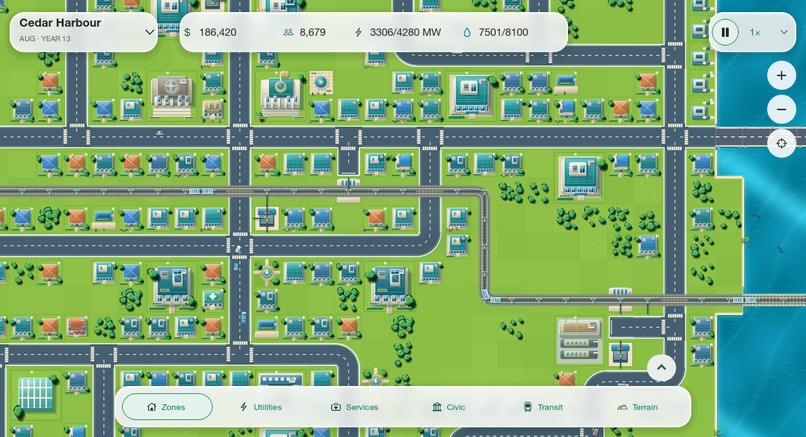
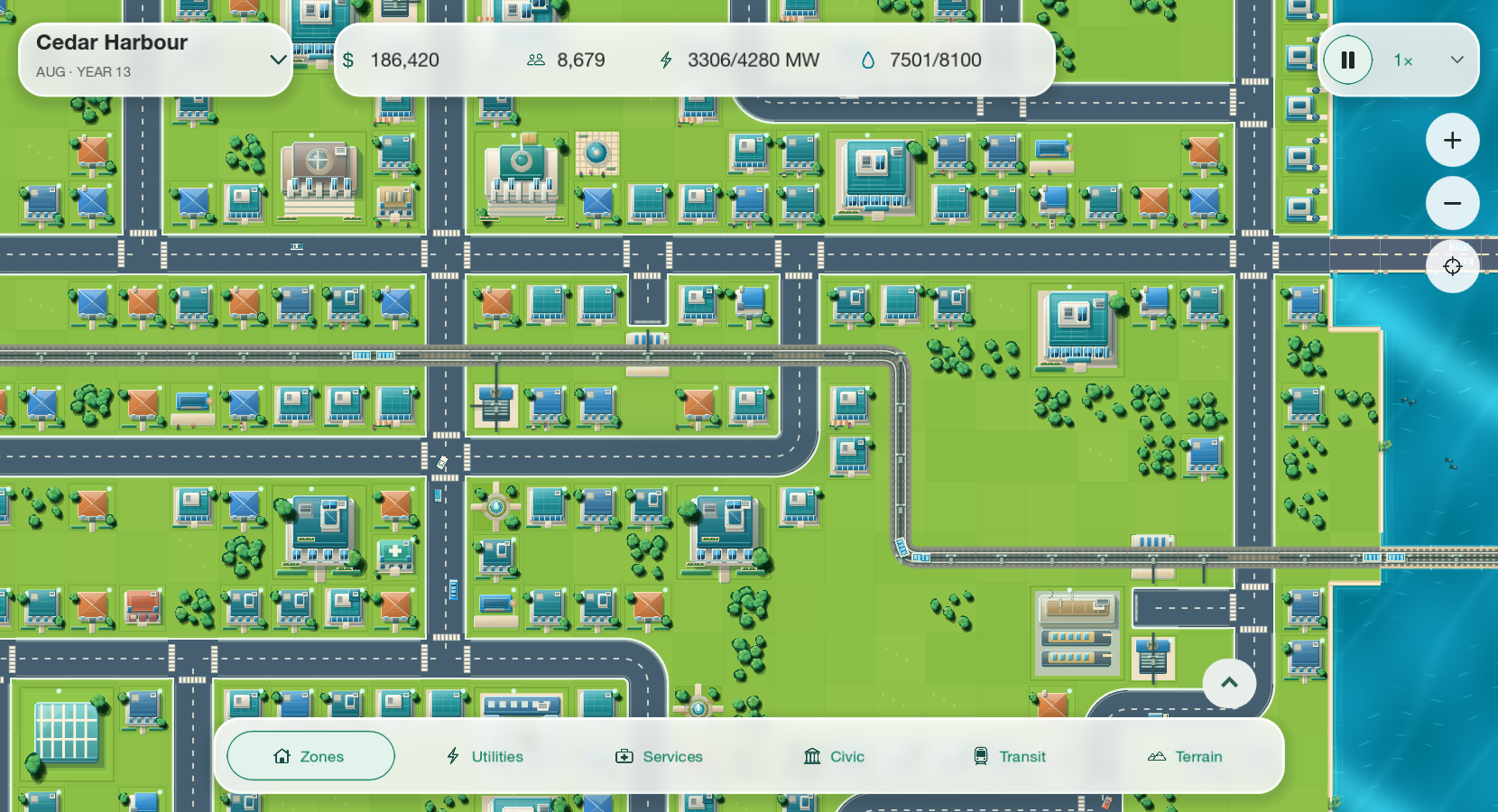
A city worth caring for. Build neighbourhoods, connect essential services, and watch your city come to life.
-
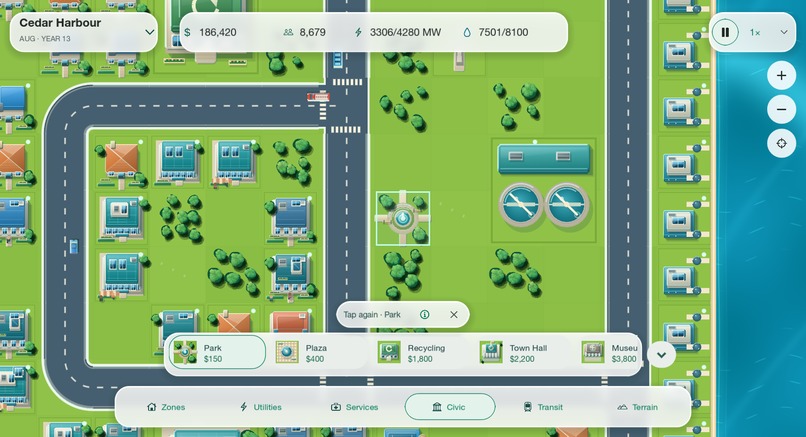
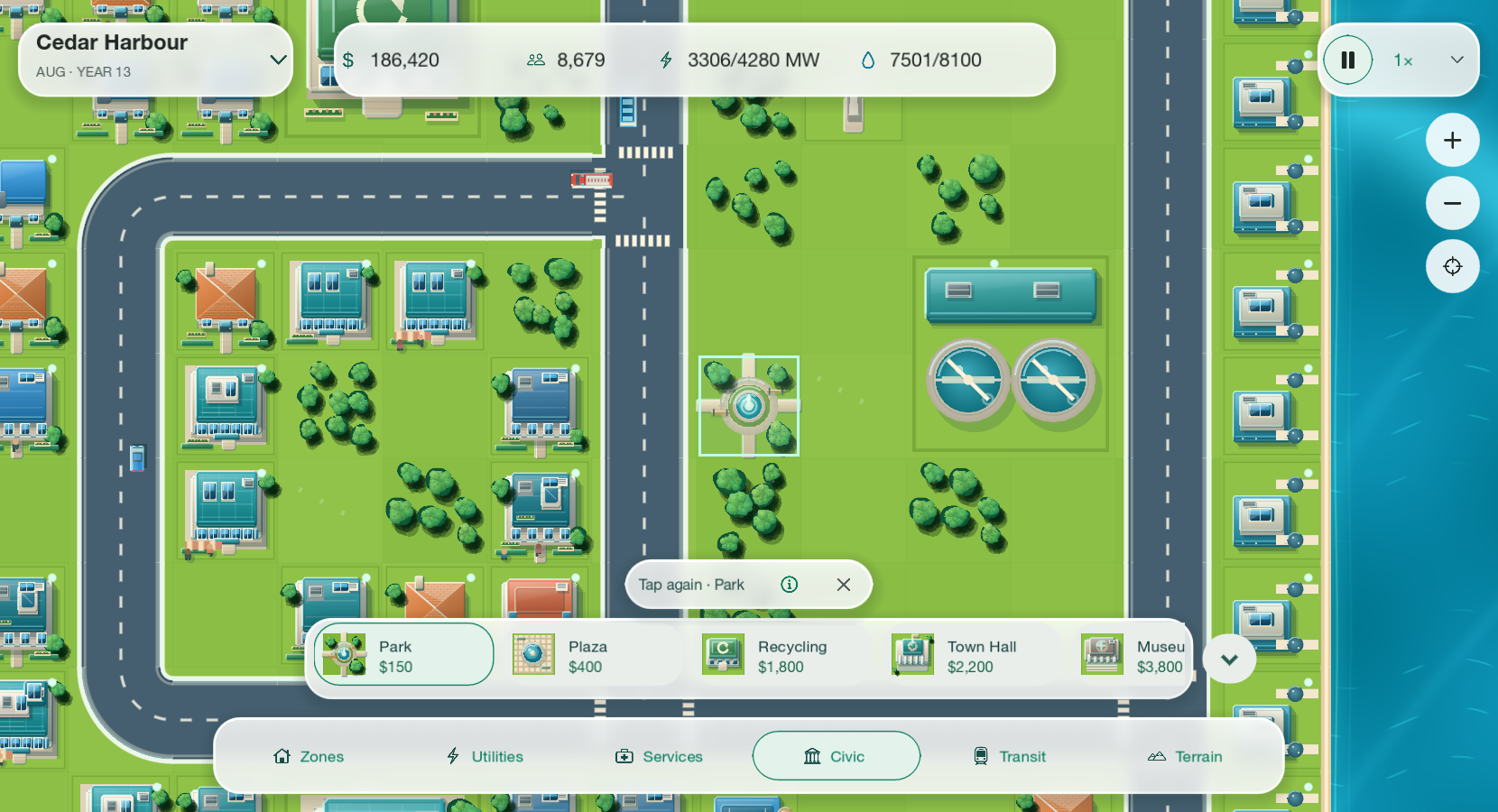
Small spaces make a difference. Turn an empty plot into a neighbourhood park, one building decision at a time.
-
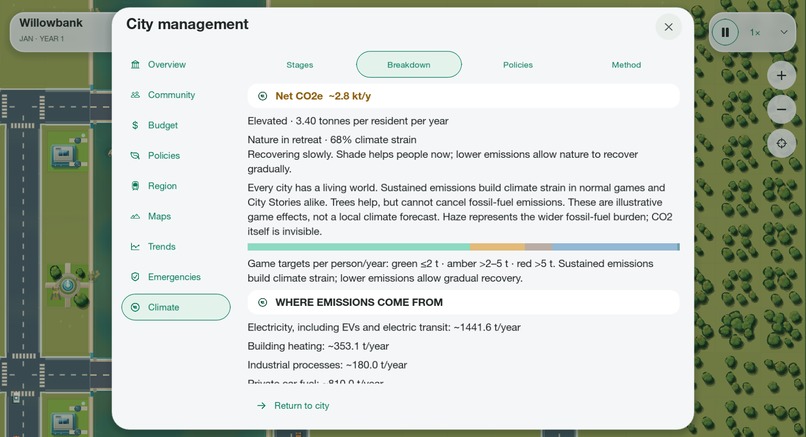
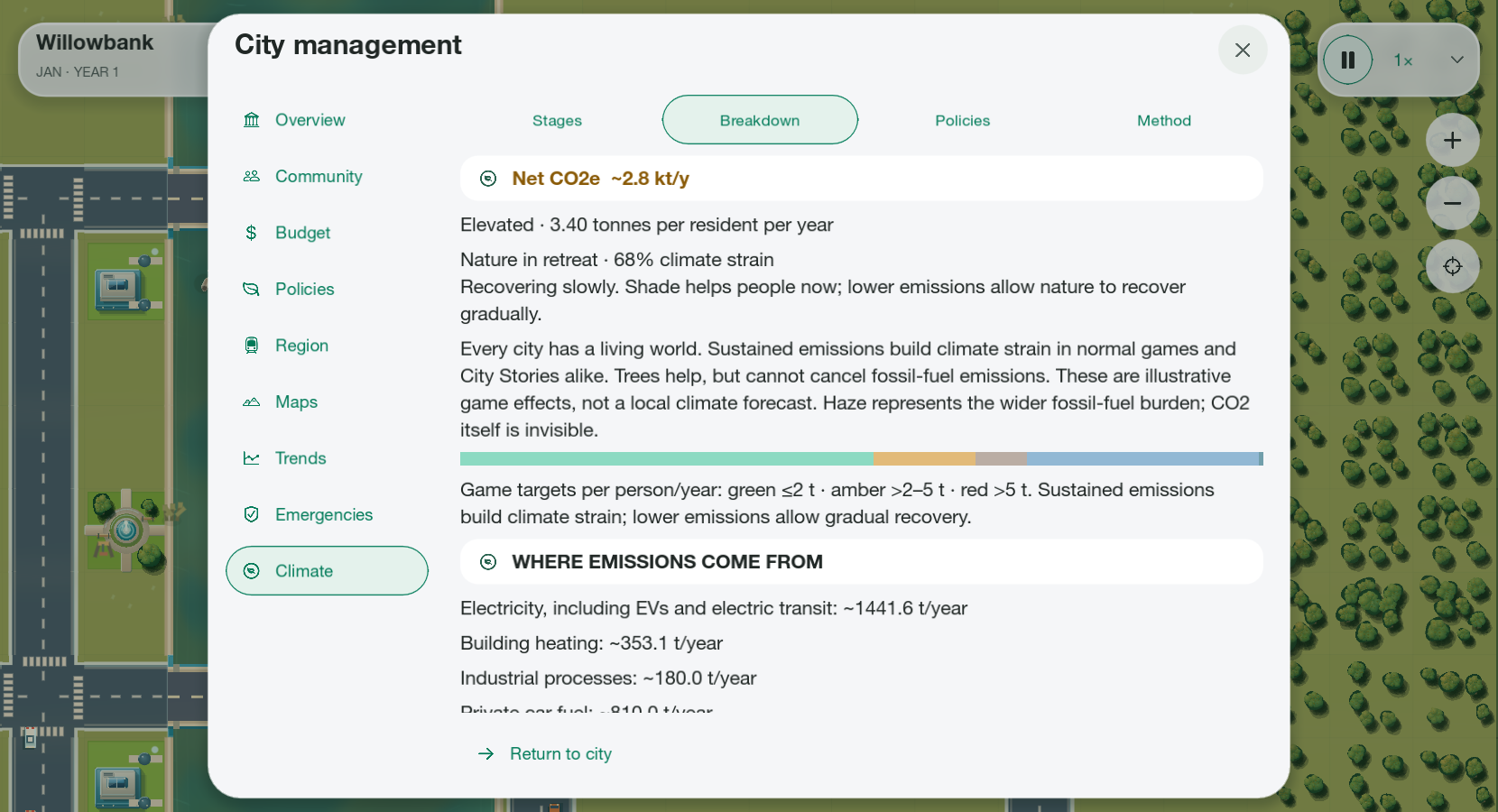
Understand your city’s carbon footprint. See how power, heating, and transport contribute to CO₂ emissions—and where changes can help.
-
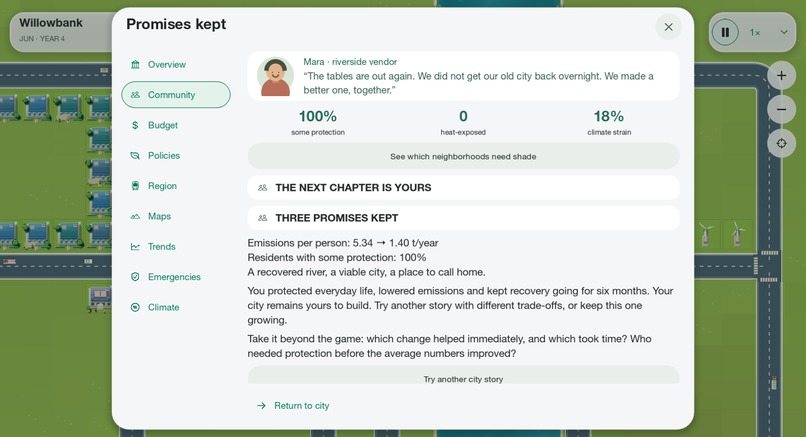
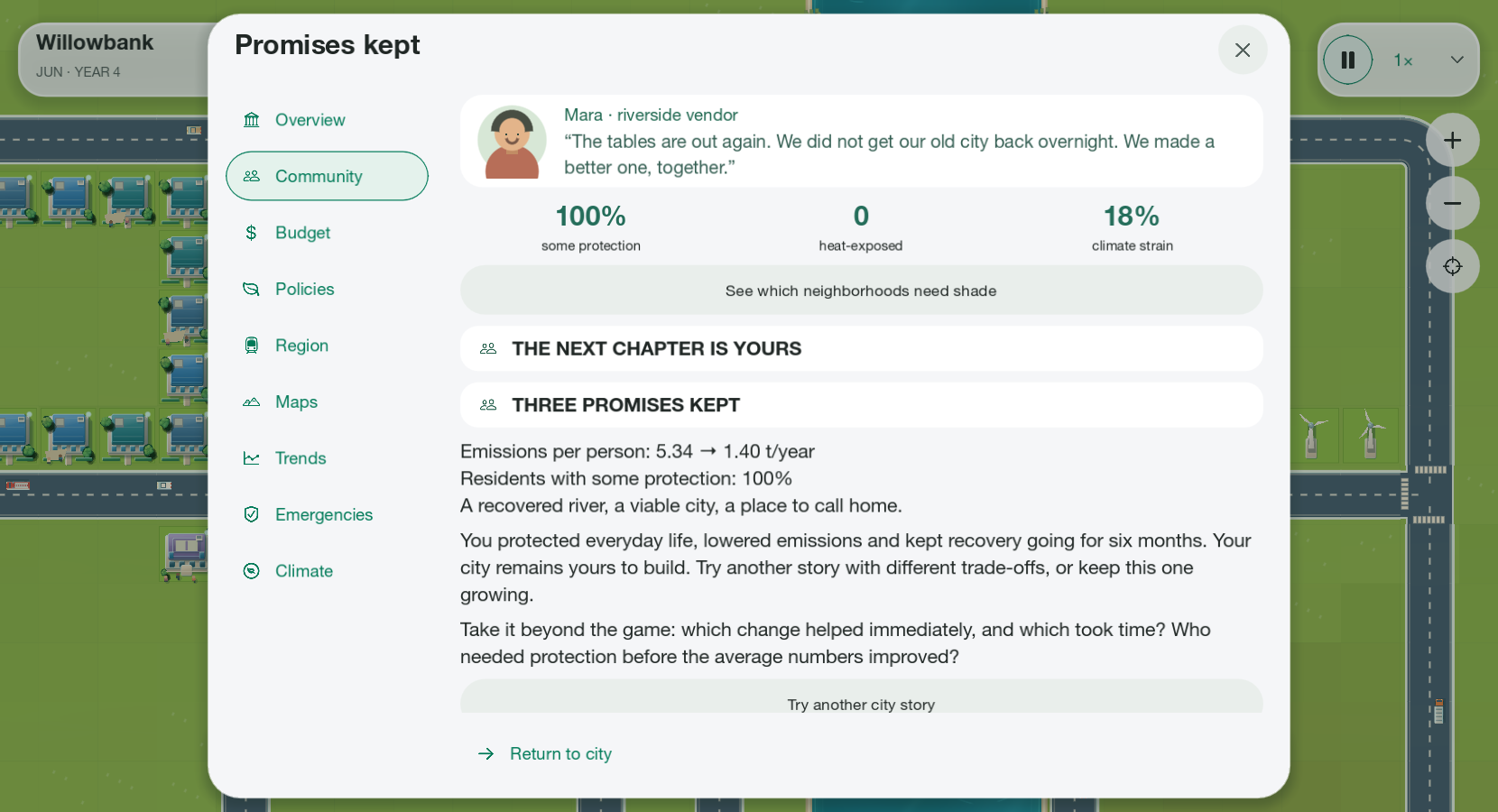
Promises kept in Willowbank. Cleaner power and support for residents bring lasting change as the city recovers over time.
-
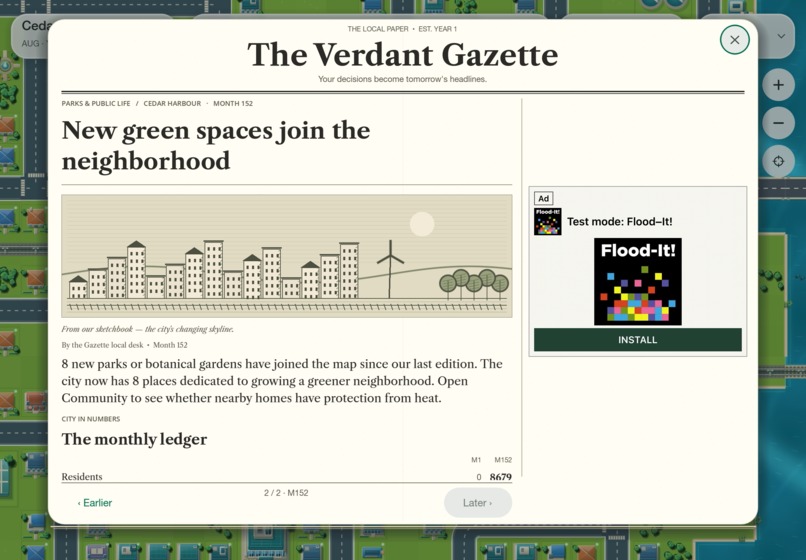
The Verdant Gazette pairs your city’s headlines with AdMob ads, while RevenueCat Ads tracks ad activity and revenue.
-
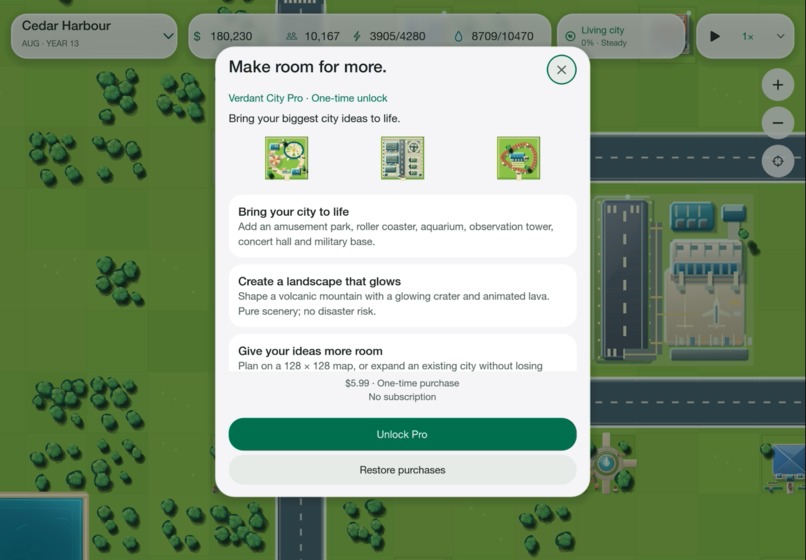
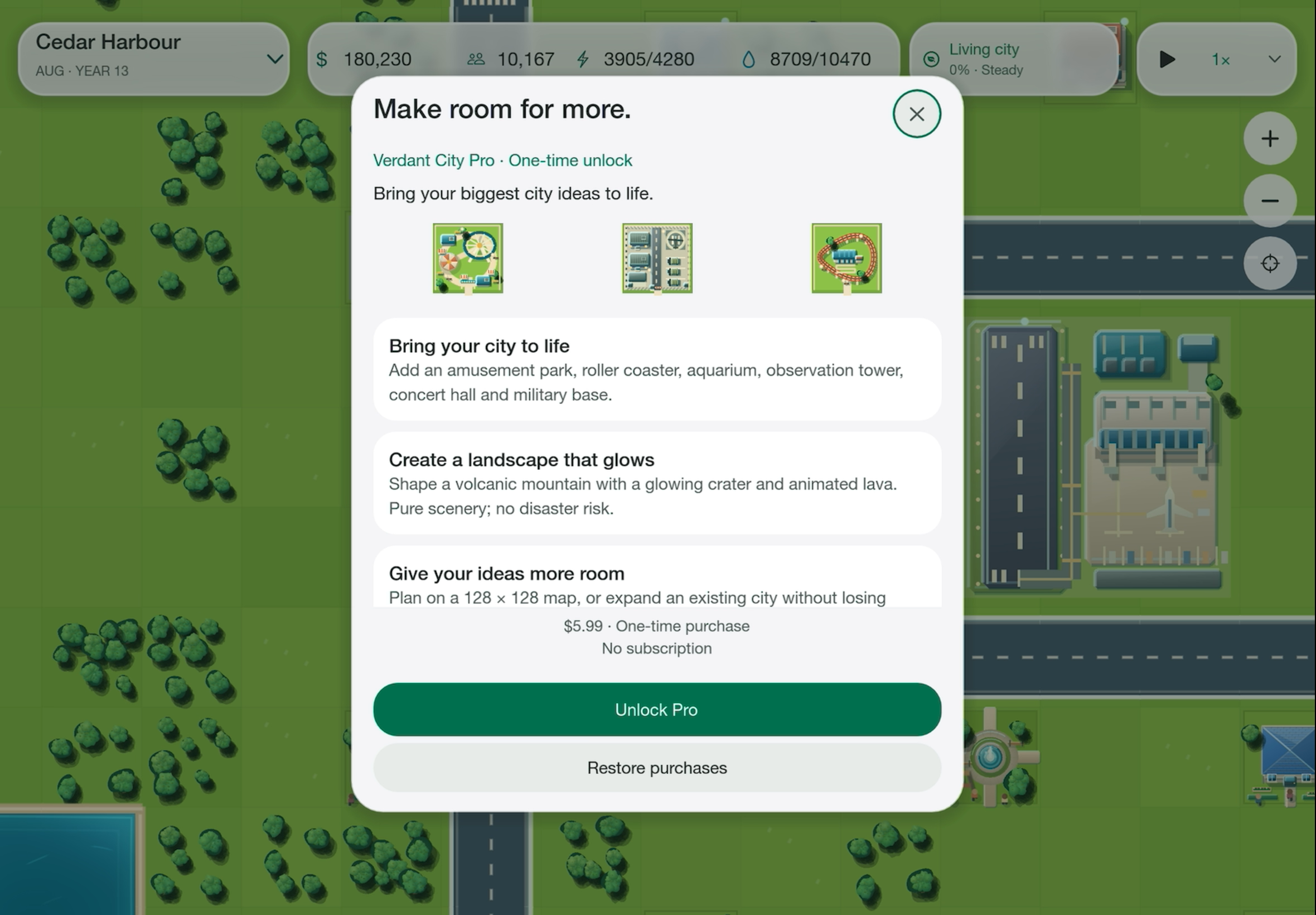
Verdant City Pro unlocks larger maps, six special buildings, volcano terrain and an ad-free newspaper with a one-time purchase.
-
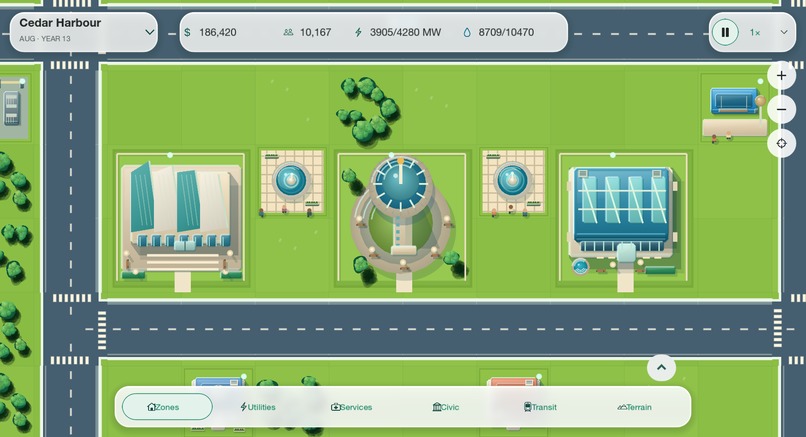
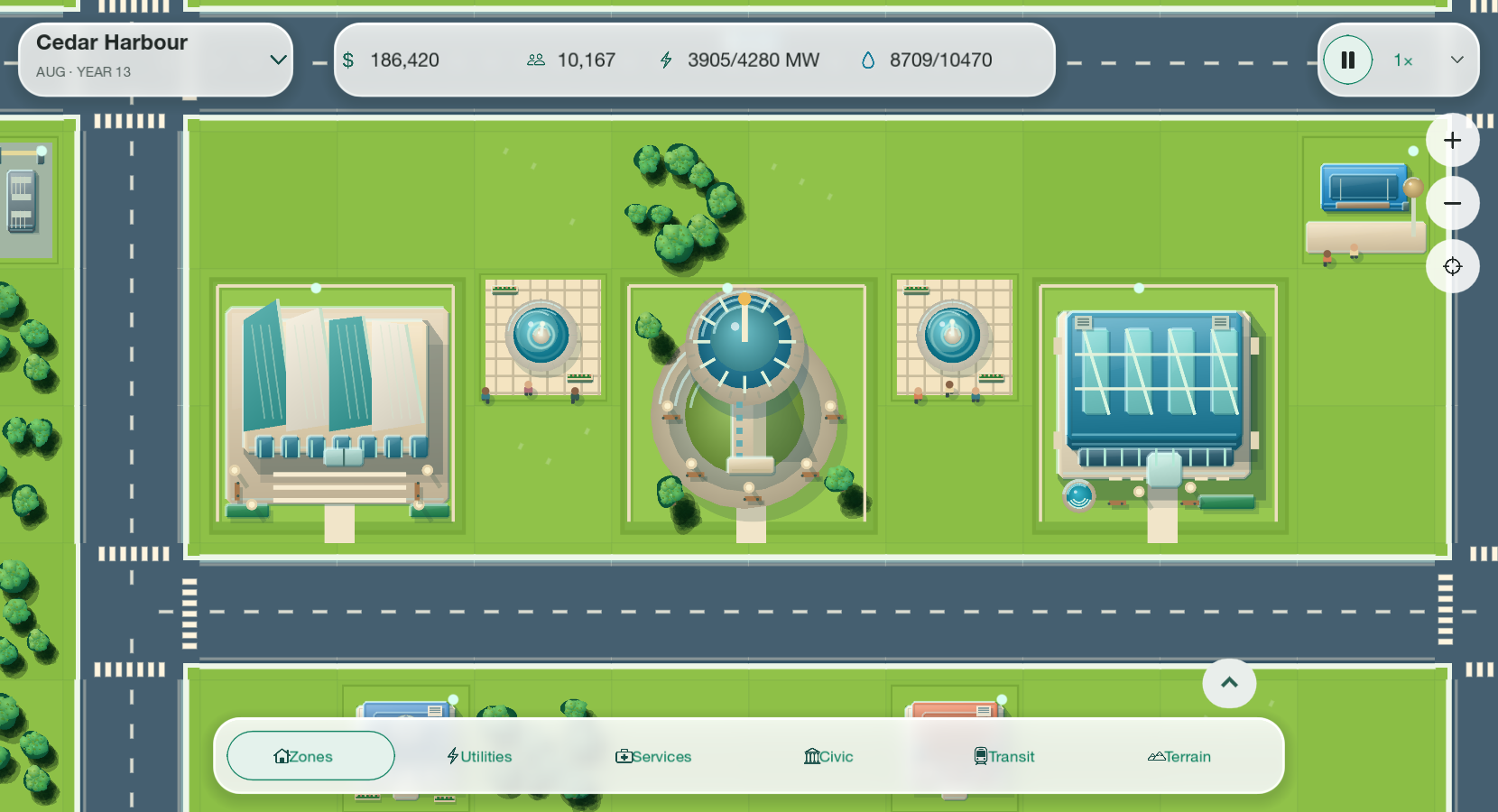
Give your city its landmarks. An aquarium, observation tower concert hall and more bring character to your city.
-
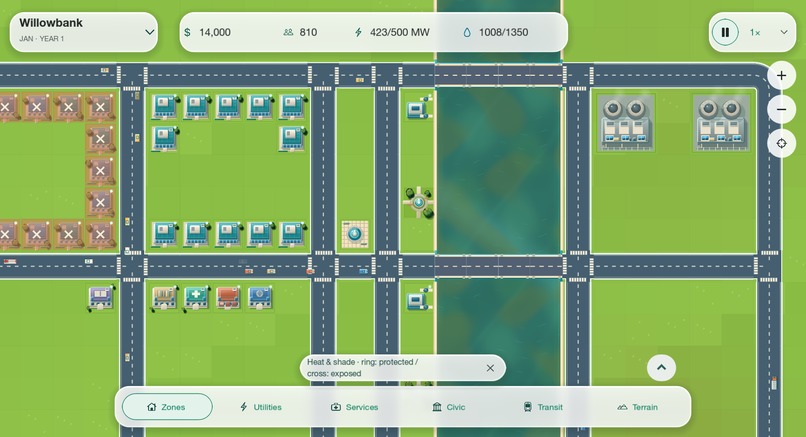
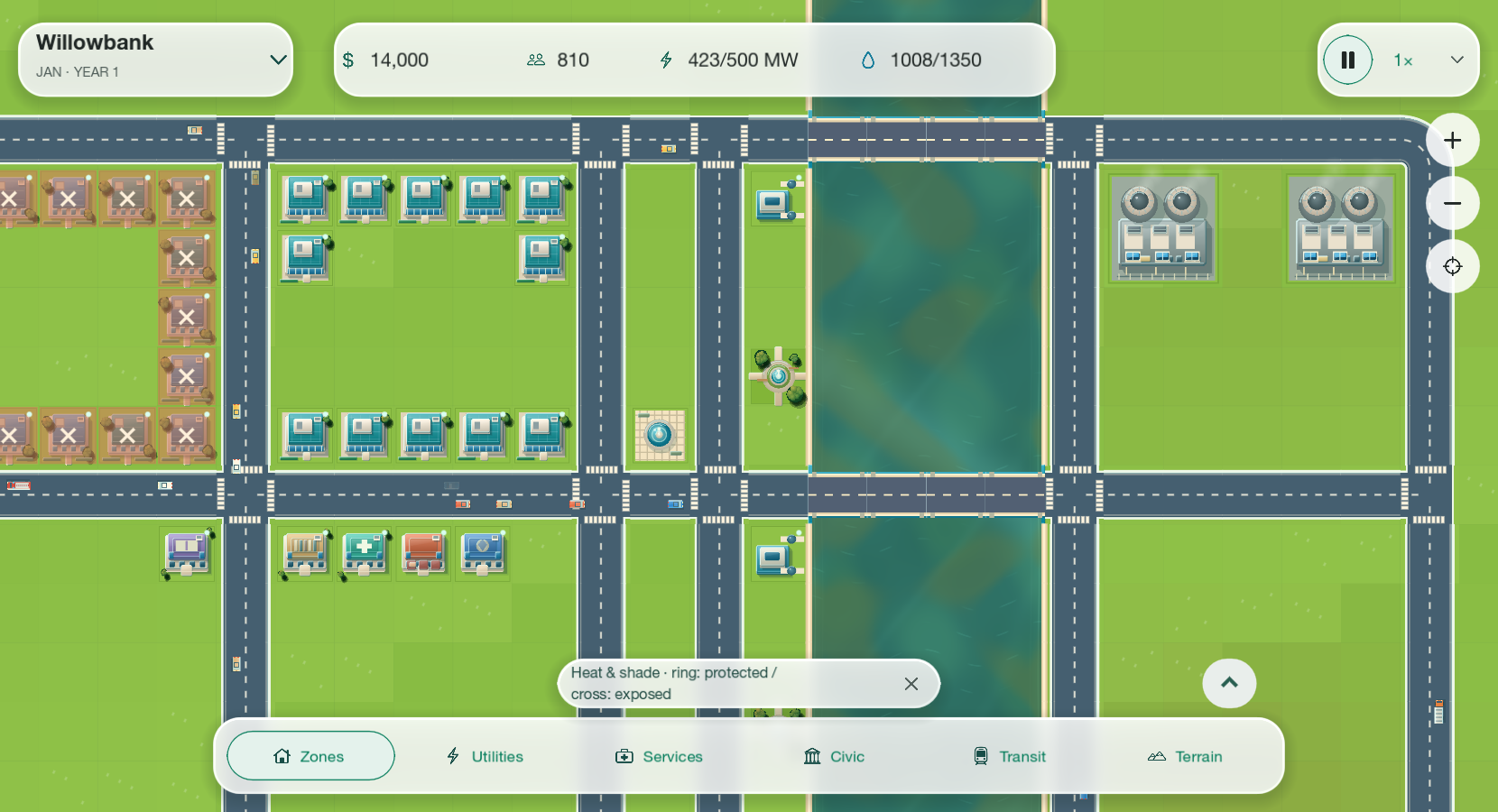
Plan for hotter days. Find heat-exposed homes and protect residents with shade, parks, and places to cool down.
-

Icon
Inspiration
We wanted to make a city small enough to hold in your hands, but interesting enough to spend hours shaping.
There’s a particular satisfaction in watching an empty map become somewhere familiar. You remember where you built the first homes, which junction needed fixing, and why you left that patch of trees beside the water.
Verdant City grew around that feeling. We wanted players to care about the place they were building, including how their decisions affect its environment and the lives of its residents.
What it does
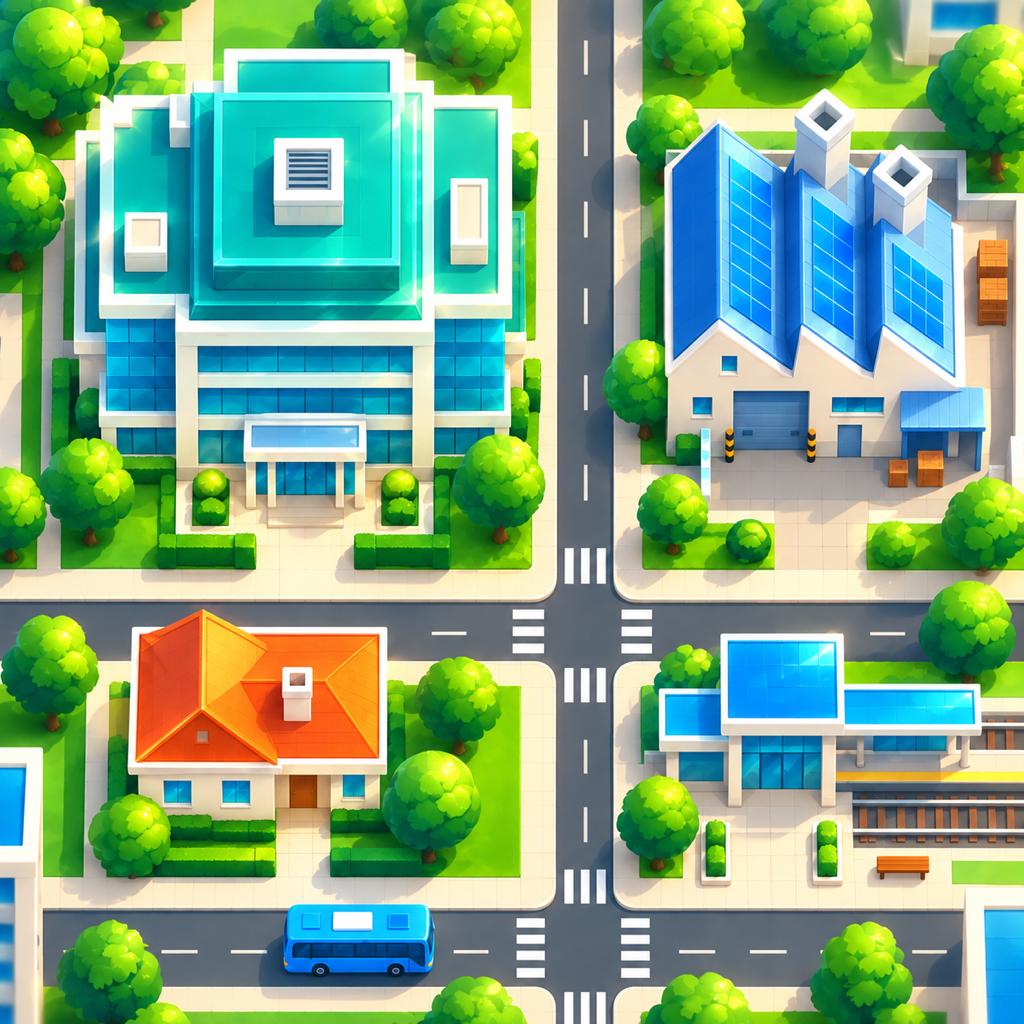
Verdant City is a city-building game for iPhone and iPad. Players develop neighborhoods, connect electricity and water, build transport networks, and manage budgets and public services.
The city’s CO₂ system connects energy, transport, buildings, trees, and policies to its environmental footprint. Players can examine the sources of emissions and change their approach as the city develops. Environmental pressure builds over time, affecting the landscape, wildlife, and living conditions. Recovery takes time too. By making these consequences visible, we aim to help players understand the impact of urban planning on the environment and residents’ quality of life, encouraging them to think beyond growth alone.
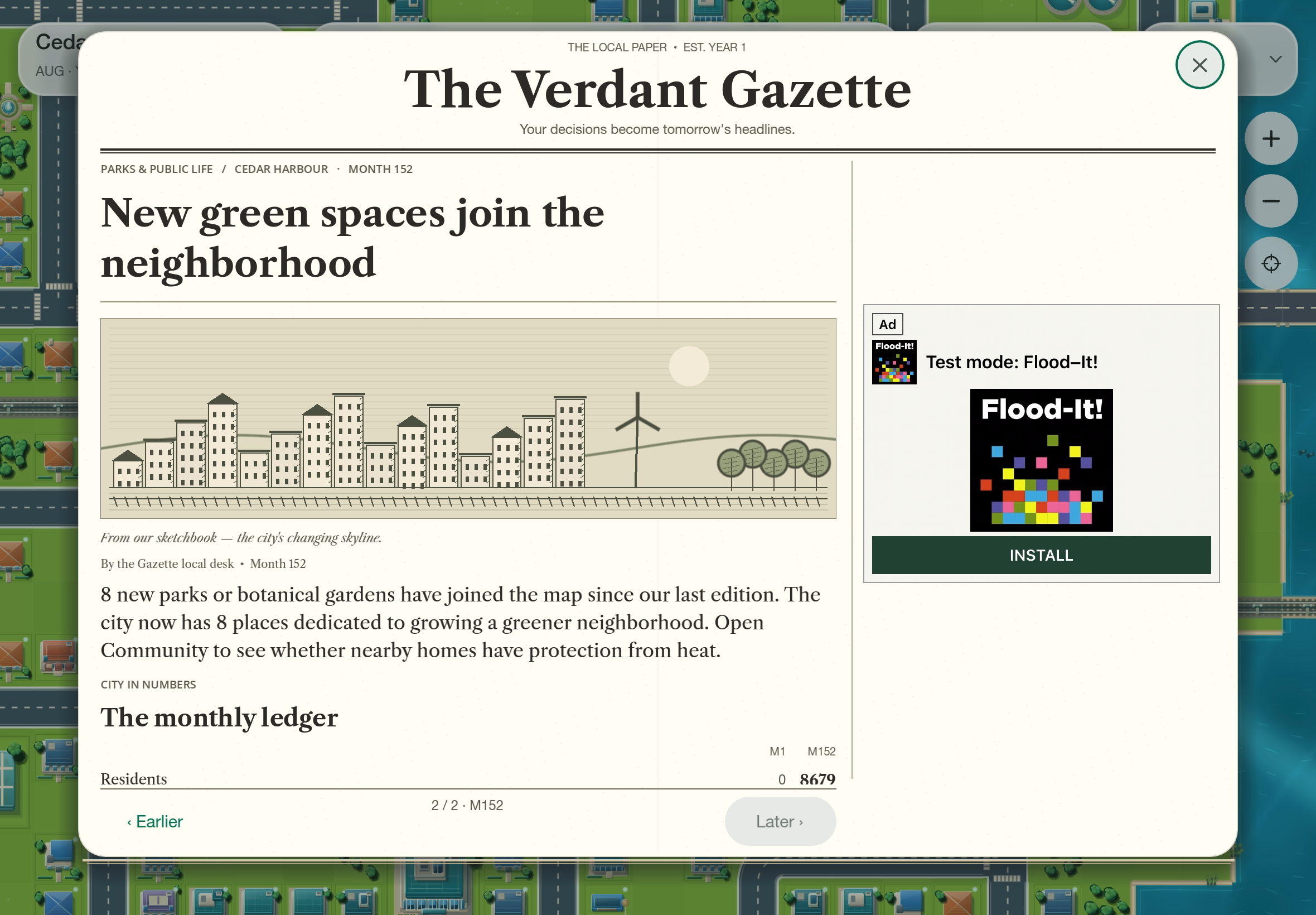
The city also has its own newspaper: The Verdant Gazette. New parks, population changes, transport improvements, and environmental setbacks become local headlines. Earlier editions preserve those moments, giving each city a history shaped by the player.
How we built it
We built the game in Godot using GDScript, with native iOS integrations for purchases and advertising.
The artwork follows a miniature-city style. Distinct building silhouettes keep neighborhoods readable, while moving traffic and animated landmarks bring activity to the map. The interface uses floating panels and translucent surfaces to keep the city visible during construction and management.
We connected the environmental simulation to scenery, music, and newspaper stories, giving players several ways to notice and understand changes.
RevenueCat manages Pro, a permanent one-time purchase that unlocks larger maps, volcano terrain, additional buildings, and an ad-free Gazette. We also integrated AdMob into a dedicated newspaper placement, with ad-event and revenue reporting connected to RevenueCat.
Challenges we ran into
Fitting a city-management game onto a phone was our biggest design challenge. Players need to place small road connections accurately, browse buildings, check utilities, and read detailed information. We repeatedly adjusted touch targets, panel sizes, text wrapping, and the construction tray around those interactions.
The artwork had to work at different scales. A building should reward a closer look and remain recognizable when the player zooms out. Even road markings needed careful attention: nearby intersections initially produced clusters of crosswalks that made streets look crowded. Fixing details like that improved the whole map.
Increasing asset detail also put pressure on iPhone memory. We worked on caching map drawing, reusing unchanged simulation results, and keeping decorative animation within limits.
Another challenge was explaining environmental change. Current emissions and accumulated damage behave differently. The interface, scenery, and Gazette needed to make gradual recovery understandable.
Accomplishments that we're proud of
We brought Verdant City from development to an App Store release, with a playable city simulation and a working RevenueCat Pro integration.
The Gazette is one of our favorite parts. It gives ordinary gameplay decisions a lasting place in the city’s story. A park built several months earlier becomes something the player can look back on.
We’re also proud of how the environmental systems connect to the rest of the game. The player can trace a decision from a power source or transport investment through to the city’s CO₂ figures and changing surroundings.
What we learned
Playing on a phone revealed things a screenshot couldn’t. A panel could look good and still cover the place where a player wanted to build. A detailed asset could improve the artwork while making the game harder to run.
We learned to evaluate design through the actions players take: placing a road, finding a water shortage, checking the budget, and returning to the map. Those everyday interactions became central to how we refined the game.
What's next for Verdant City: City Builder
We plan to bring Verdant City to Android.
We’re also developing more city stories and exploring ways to give neighborhoods stronger identities. The Gazette will grow with them, with more local stories and better ways to follow a city’s history. Performance improvements for larger cities remain a priority throughout that work.

Log in or sign up for Devpost to join the conversation.