Inspiration
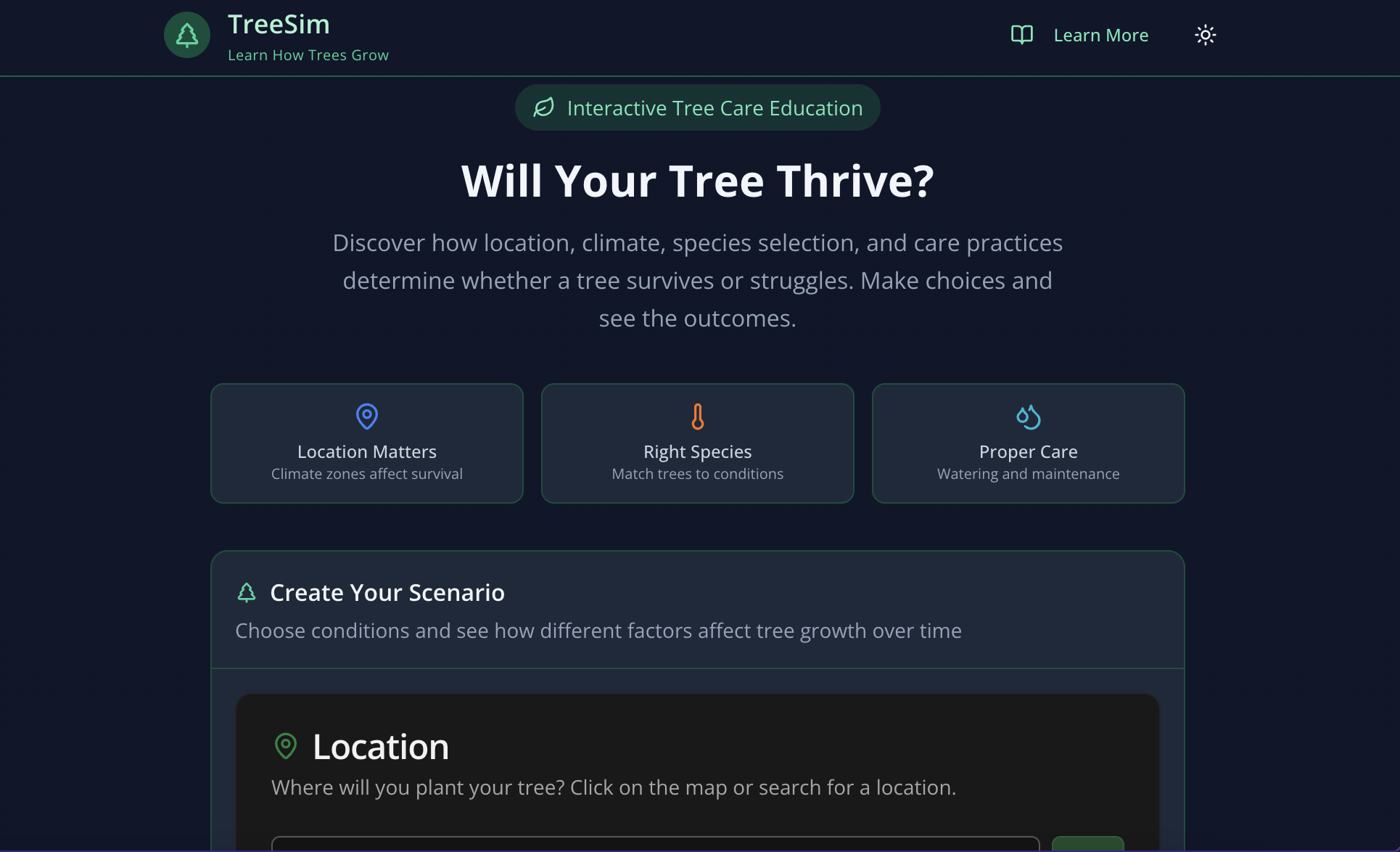
Heat waves, droughts, and weird weather are making “just plant a tree” way harder than people think. A lot of well-meaning plantings fail because of the wrong species, the wrong timing, or no early care. We wanted to make tree planting feel like a simple, interactive “what-if” game that teaches the real drivers of survival and helps people make better decisions without needing a botany degree.
What it does
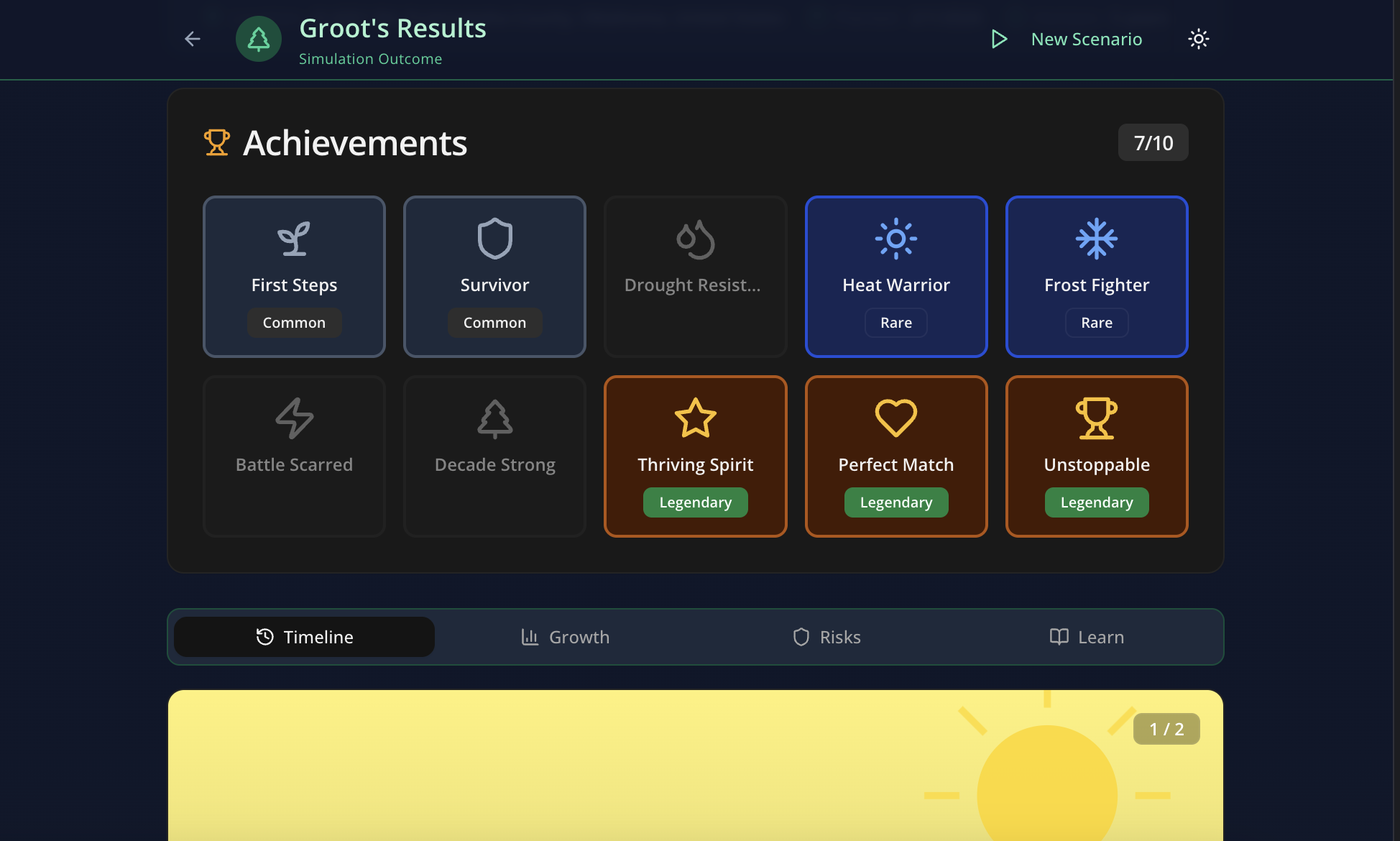
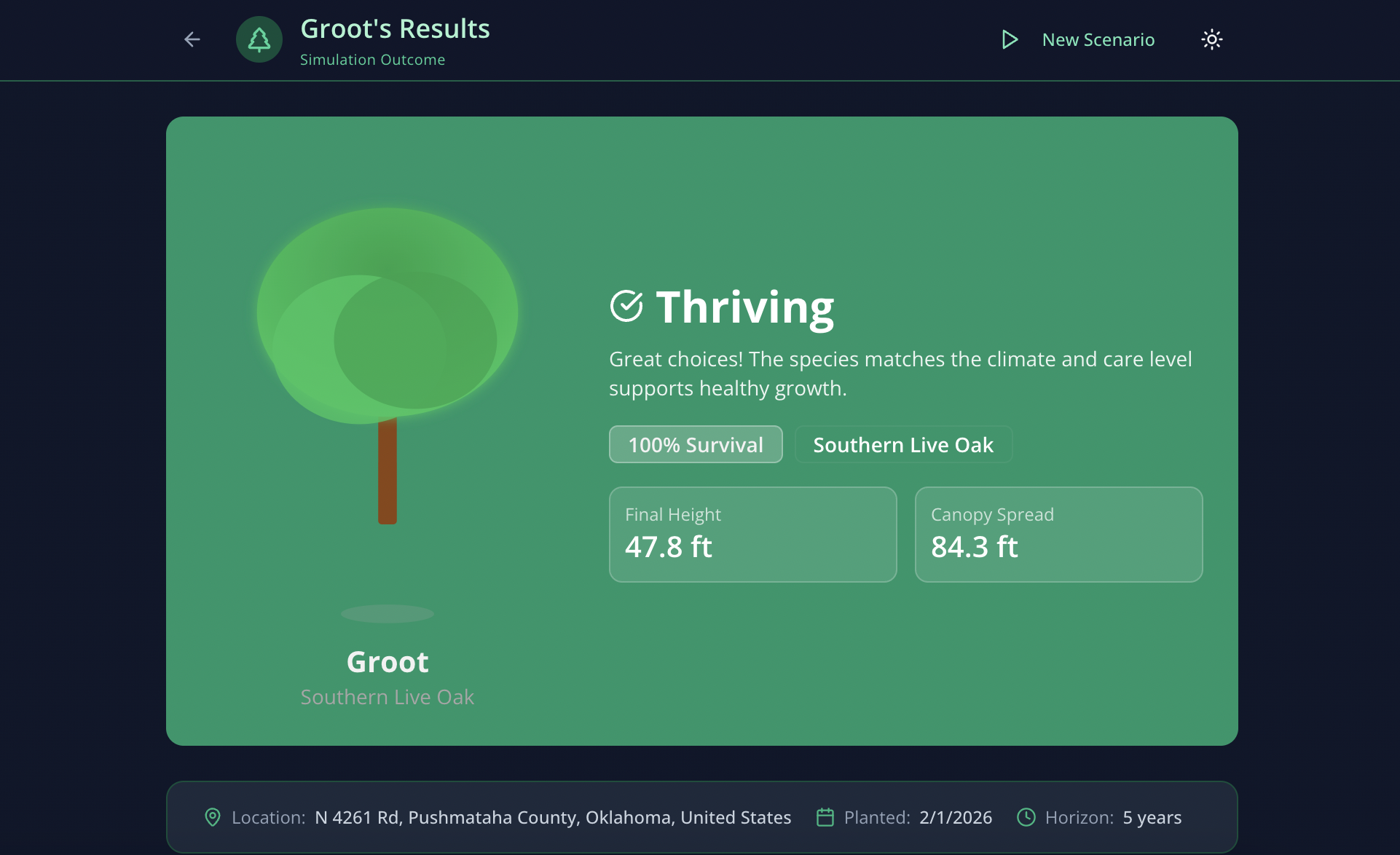
Verdant lets you pick a location, planting date, tree species, and a time horizon (months to decades), then simulates how that tree might do over time. It outputs: • an easy-to-read outcome (thriving / surviving / struggling / dead) with a probability range • a growth projection (height/canopy/trunk) over time • the biggest risks for that specific site (heat, drought, frost, soggy soil, road salt, pests) • a practical care plan (watering schedule + simple actions that improve survival) • a fun timeline of events (mostly realistic, occasionally chaotic) to keep it engaging while still teaching the core factors
How we built it
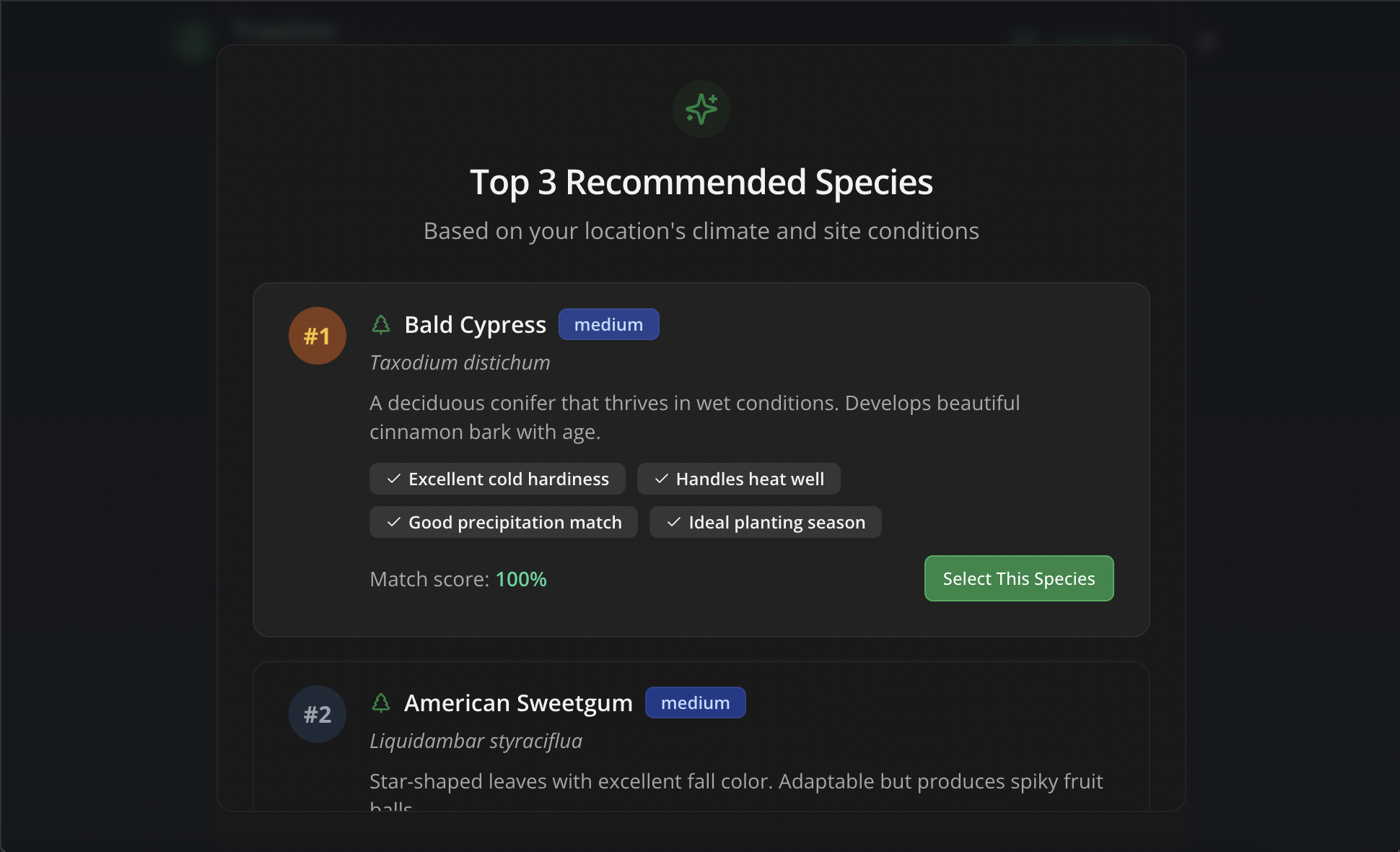
We built Verdant as a web app with: • a map/address selector to capture latitude/longitude • climate data pulled from a public weather API and summarized into features like seasonal temperature extremes and precipitation • a lightweight species database (tolerances + growth characteristics) used to score “fit” for that location and season • a simulation engine that combines suitability, planting timing, and care level to generate survival probability, growth curves, and event timelines • a results dashboard with charts and “Why?” explanations so users learn what factors mattered most
Challenges we ran into
• Not overpromising accuracy: real tree survival depends on a million local variables. We had to keep the model honest, explainable, and educational while still making it feel meaningful.
• Turning messy climate data into simple features: APIs give a lot of raw numbers; we needed understandable metrics like “heat stress risk” and “winter kill risk.”
• Balancing realism vs fun: we wanted the simulation to be mostly plausible but still entertaining, without turning into random nonsense.
• Keeping it fast: the app had to feel instant, so we optimized the simulation to return results quickly and kept the scope tight.
Accomplishments that we're proud of
• A complete, clickable flow from pin → plant → fast-forward → results
• Clear outputs that explain why a tree succeeds or fails, not just a score
• A simulation that’s simple enough to understand but rich enough to feel real
• A project that teaches climate resilience in a way that’s actually fun to use
What we learned
• Education products work better when they’re interactive and personal (your location, your date) instead of generic facts.
• Models don’t need to be perfect to be valuable, but they must be transparent and explainable.
• The hardest part isn’t coding the math—it’s designing outputs that people can understand and act on.
• Adding a small narrative layer makes users stay long enough to actually learn something.
What's next for Verdant
Expand the species database with region-specific recommendations and better tolerance data • Add optional local inputs (sun exposure, soil type, drainage) to improve accuracy • Add a “compare two scenarios” mode (species vs species, spring vs fall planting) • Include stronger climate-scenario toggles (warmer/drier futures) for education • Partner with local schools or community tree groups so people can use Verdant to plan real plantings
Built With
- css
- framer
- html
- javascript
- node.js
- open-meteo-api
- openstreemap
- postcss
- postgresql
- react
- typescript
- vite
- zod

Log in or sign up for Devpost to join the conversation.