Inspiration
What it does
How we built it
Challenges we ran into## Inspiration
Meetings generate decisions, commitments and action items every day. Modern AI can transcribe and summarize those conversations, but an important problem remains:
What happens after the meeting?
A meeting may record that someone will contact a supplier by Friday, confirm an appointment tomorrow, or resolve an outstanding issue next week. The transcript remembers the commitment, but it cannot determine whether the real-world action actually happened.
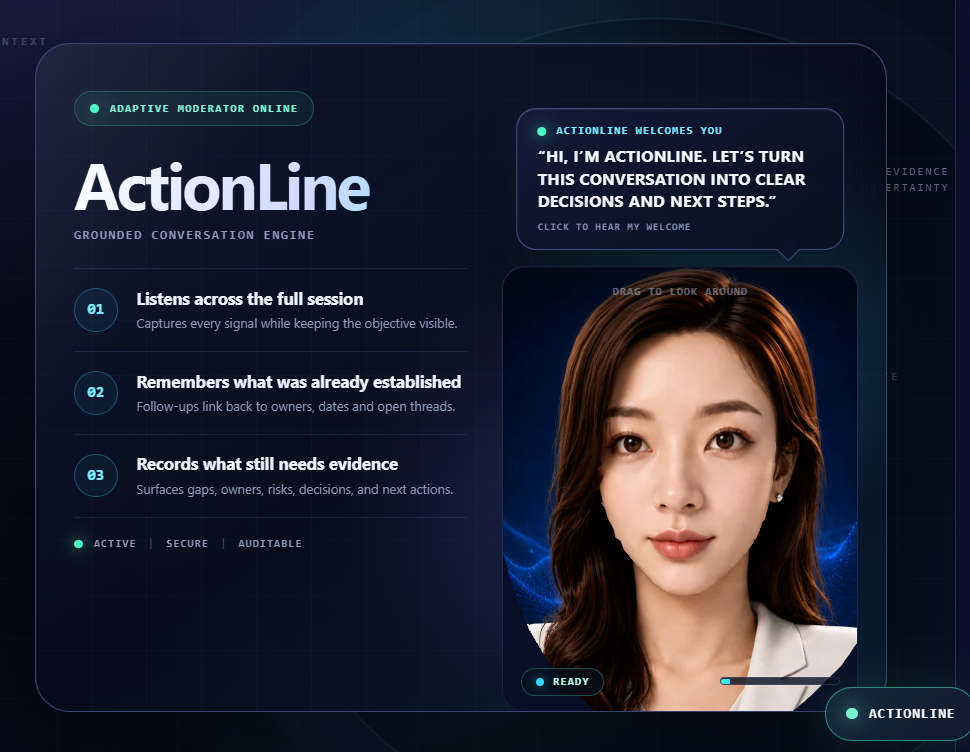
We built VerbaTrace ActionLine to close that gap.
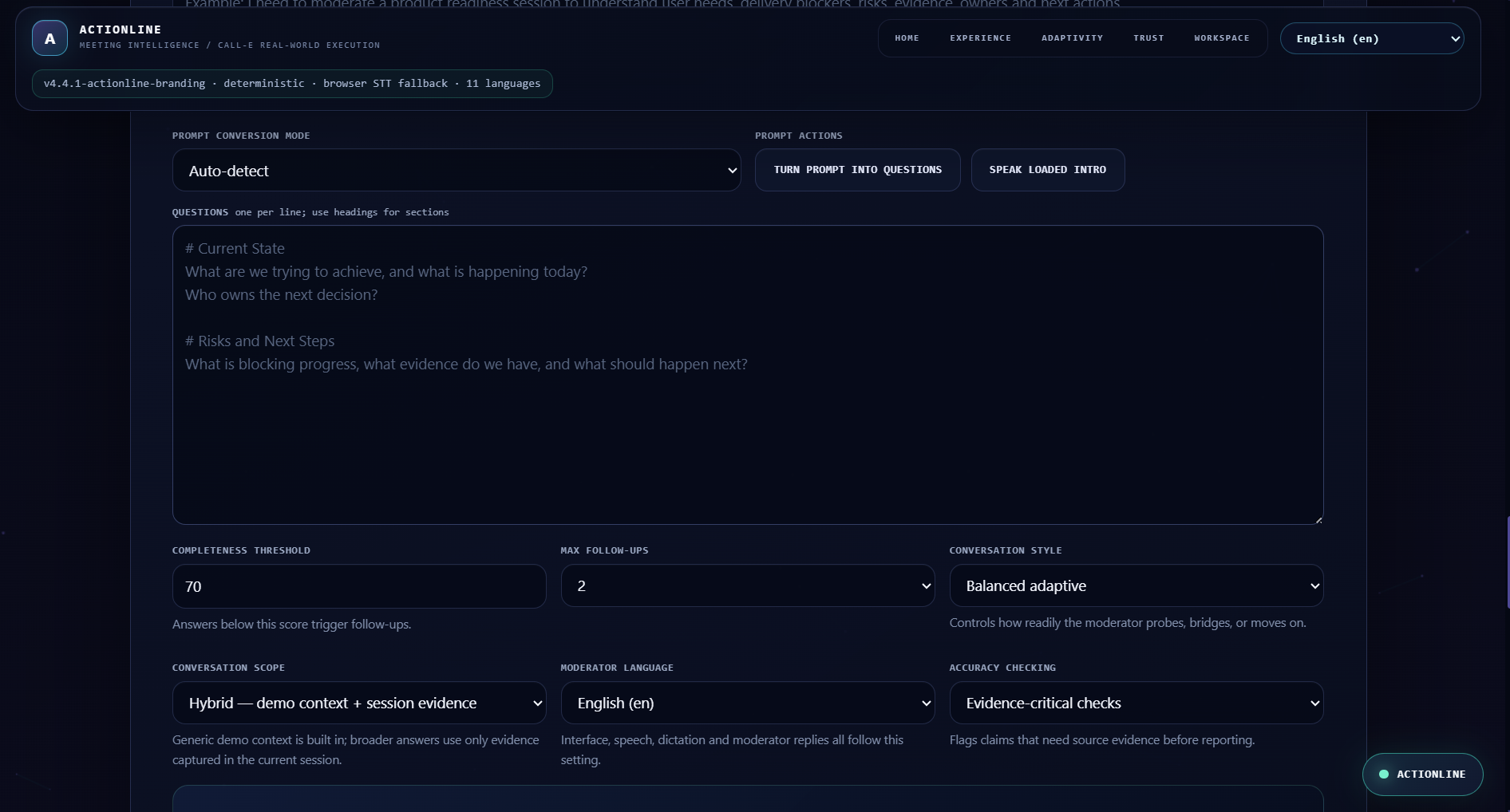
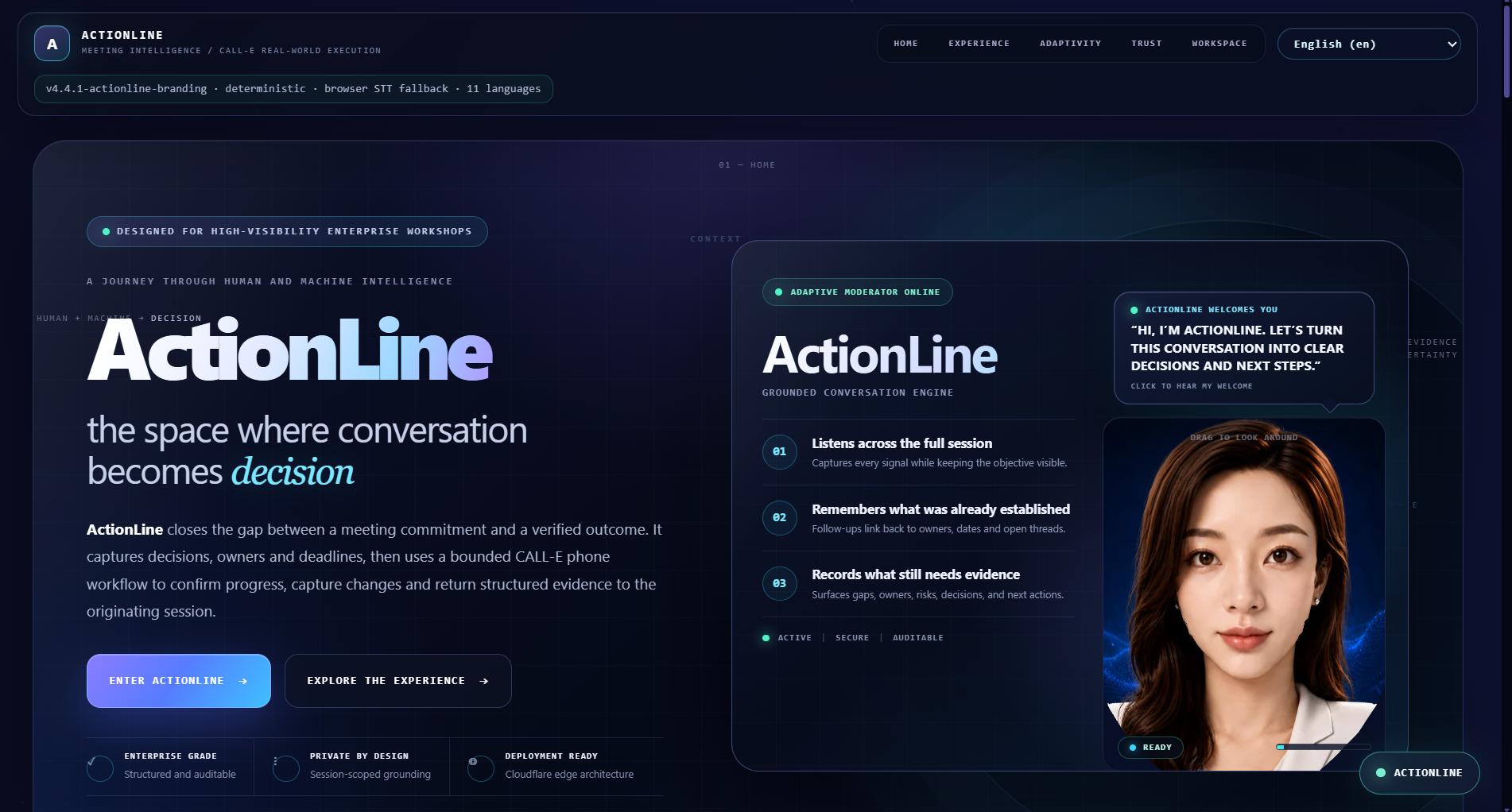
ActionLine extends VerbaTrace from meeting intelligence into an autonomous meeting-to-action agent. It identifies commitments, owners and deadlines from a conversation, then uses CALL-E to perform or coordinate real-world telephone follow-ups. The outcome of the call is converted back into structured evidence and attached to the original action.
The result is a simple loop:
Conversation → Commitment → Action → Phone Call → Verification → Evidence
What it does
VerbaTrace ActionLine turns meeting commitments into trackable, verifiable outcomes.
During or after a meeting, VerbaTrace identifies:
- decisions
- action items
- responsible owners
- deadlines
- unresolved questions
- external parties that need to be contacted
ActionLine then determines which actions require telephone follow-up.
For example, a meeting may produce:
"Sarah will obtain the supplier's revised quotation by Friday."
VerbaTrace creates a structured action:
Owner: Sarah
Action: Obtain revised supplier quotation
Due: Friday
Status: Pending
If confirmation is required, ActionLine can initiate a CALL-E workflow to make a real phone call.
The conversation can establish that the action is complete, delayed, requires escalation, or has a new commitment date.
Instead of leaving that information inside a telephone conversation, ActionLine converts the result into structured evidence and updates the original action record.
Why phone calls matter
Many important business workflows still leave the digital world.
Suppliers need to be called. Appointments need confirmation. Customers need follow-up. Contractors need status checks. Action owners sometimes need clarification.
Email and chat automation cannot reliably complete every one of these workflows.
CALL-E gives ActionLine a bridge between software and the telephone network, allowing an AI workflow to interact with people and organizations that may not expose APIs or participate in the same collaboration platform.
This makes the telephone call part of an auditable software workflow rather than an isolated conversation.
Example workflow
- A meeting is captured by VerbaTrace.
- AI identifies decisions, commitments, owners and deadlines.
- ActionLine creates structured action records.
- An action reaches its follow-up condition.
- ActionLine prepares the purpose and context of the call.
- CALL-E initiates the telephone interaction.
- The recipient provides an update.
- The result is classified as confirmed, delayed, changed, unresolved or escalated.
- VerbaTrace updates the original action and preserves the evidence trail.
For example:
Original commitment: Supplier quotation due Friday.
Phone result: Supplier cannot deliver until Tuesday.
ActionLine update:
- Status: Delayed
- Reason: Supplier delay
- Revised date: Tuesday
- Verification source: Phone interaction
- Follow-up required: Yes
The meeting record therefore evolves as the real-world situation changes.
How we built it
VerbaTrace ActionLine is designed as an event-driven workflow rather than a standalone calling bot.
The architecture separates four responsibilities:
1. Meeting intelligence
VerbaTrace extracts structured decisions, commitments, action owners and deadlines from meeting information.
2. Action orchestration
ActionLine determines which commitments require follow-up and constructs the context required for the interaction.
3. Real-world communication
CALL-E provides the telephone execution layer that allows the software workflow to communicate with people through real phone calls.
4. Evidence and outcome processing
Call results are transformed into structured outcomes and linked back to the action that caused the call.
This separation means the calling capability is not an isolated feature. It becomes another execution tool available to an intelligent workflow.
What makes ActionLine different
Most meeting assistants stop at:
"Here are your action items."
Most voice agents start at:
"Who would you like me to call?"
ActionLine connects the two.
It understands why a call needs to happen because the call originates from an actual decision, commitment or unresolved action.
It also understands what should happen after the call because the result is returned to the originating workflow.
That creates a closed-loop system:
Understand → Act → Verify → Record
Challenges
The biggest challenge is not making a phone call. It is determining how an autonomous system should make a useful call safely and with enough context to achieve a specific outcome.
We therefore treat every call as a bounded task with:
- a defined purpose
- relevant context
- expected outcomes
- structured result handling
- an evidence trail
Another challenge is translating natural conversation back into reliable workflow state. A person might say:
"It isn't ready yet, but they said they should have it Tuesday."
The system needs to understand that this represents a delay, identify Tuesday as the revised commitment date, preserve the reason, and determine whether another follow-up is necessary.
What we learned
We learned that voice becomes considerably more useful when it is treated as an execution interface for software, rather than simply another conversational interface.
APIs work well when systems are connected.
Phone calls remain valuable when people, suppliers, customers and organizations are not.
Combining both creates an agent that can cross the boundary between digital workflows and real-world operations.
What's next
Our goal is to expand ActionLine into a general execution layer for VerbaTrace.
Future workflows could include:
- supplier and procurement follow-ups
- appointment confirmations
- customer outreach
- project action verification
- service coordination
- escalation workflows
- deadline reminders
- information collection
- post-meeting commitment verification
Longer term, ActionLine could allow organizations to move from AI systems that merely describe what happened to AI systems that help ensure the agreed work actually gets done.
VerbaTrace ActionLine turns conversation into accountable action.
Accomplishments that we're proud of
What we learned
What's next for VerbaTrace ActionLine
Built With
- agents
- ai
- api
- call-e
- cloudflare
- css3
- durable
- html5
- javascript
- language
- llm
- natural
- objects
- rest
- speech-to-text
- verbatrace
- webhooks
- websockets
- workers

Log in or sign up for Devpost to join the conversation.