-
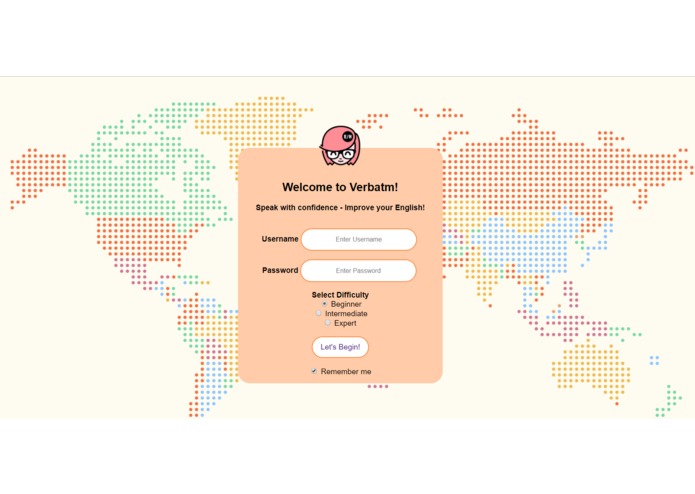
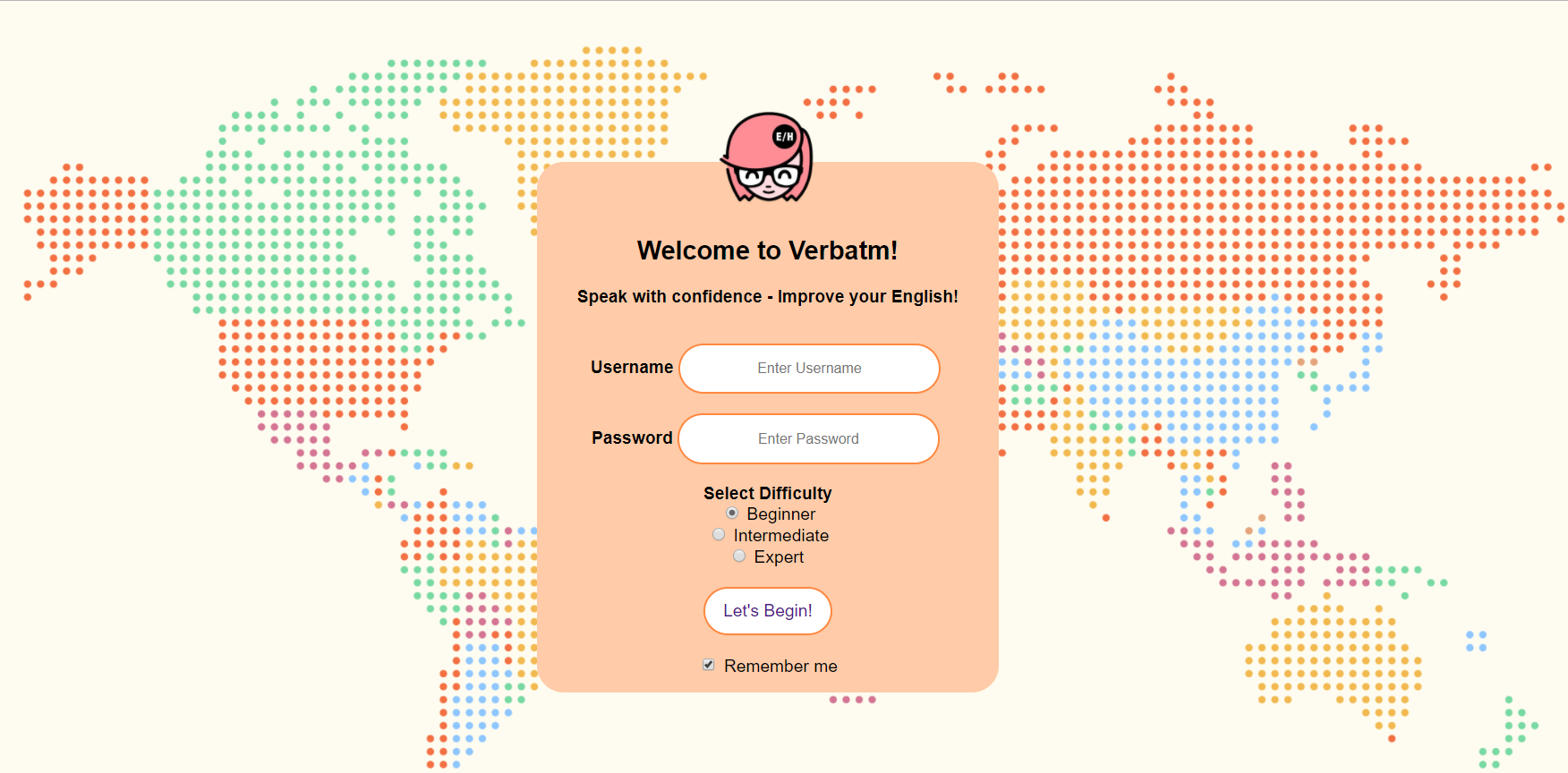
Screenshot of the welcome page
-
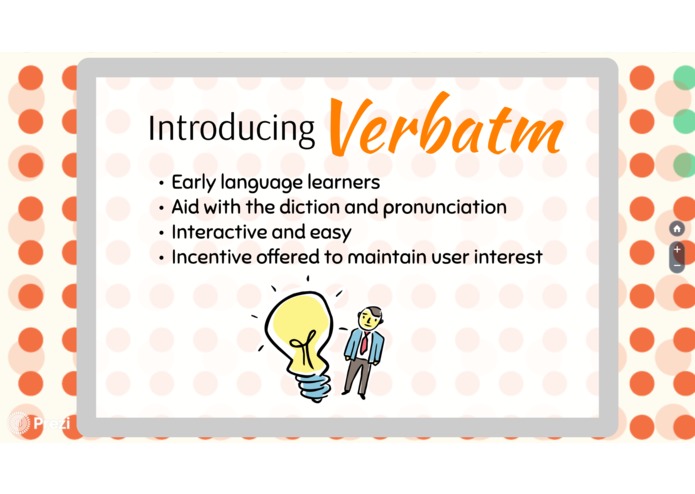
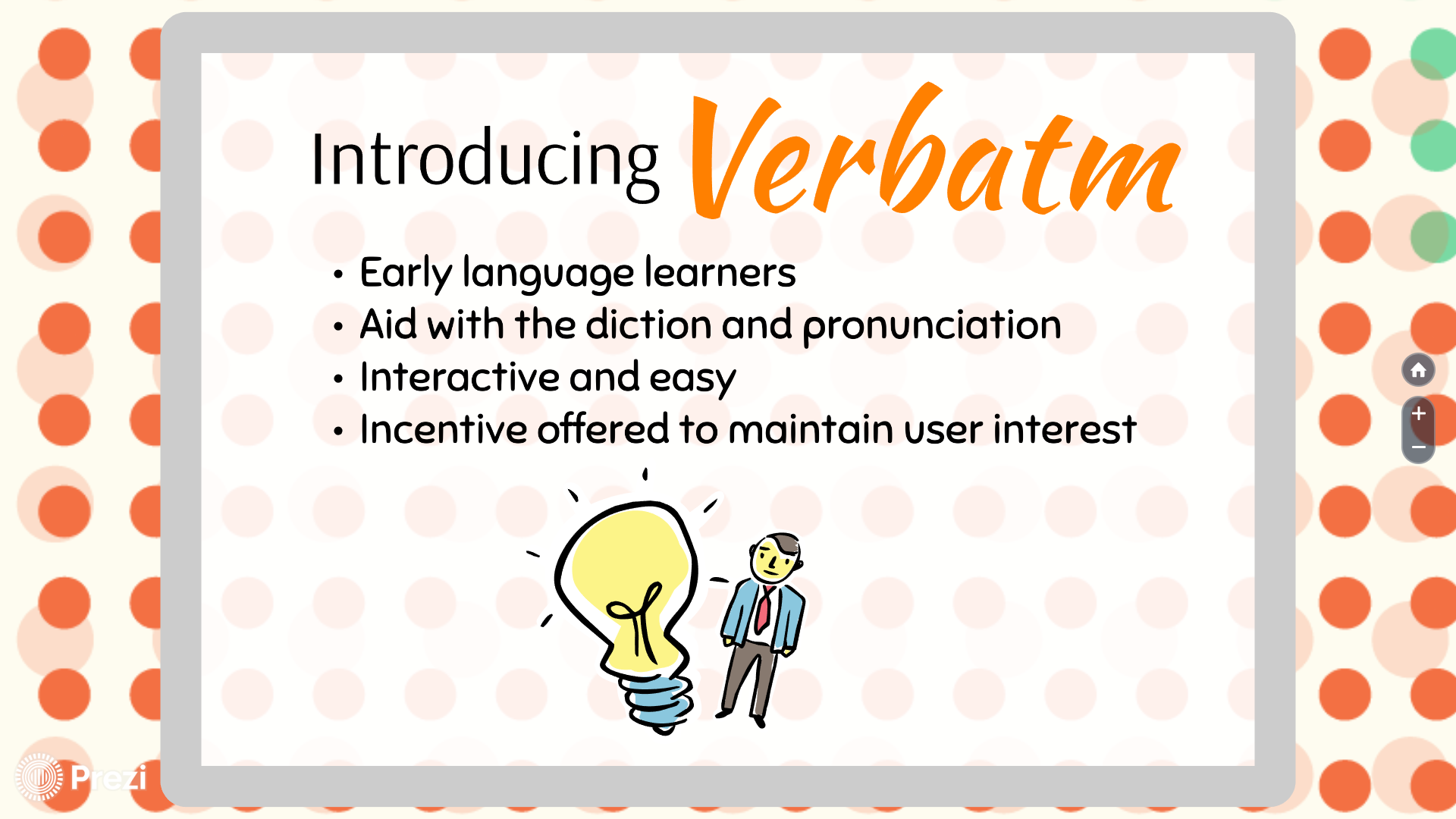
What does it do?
-
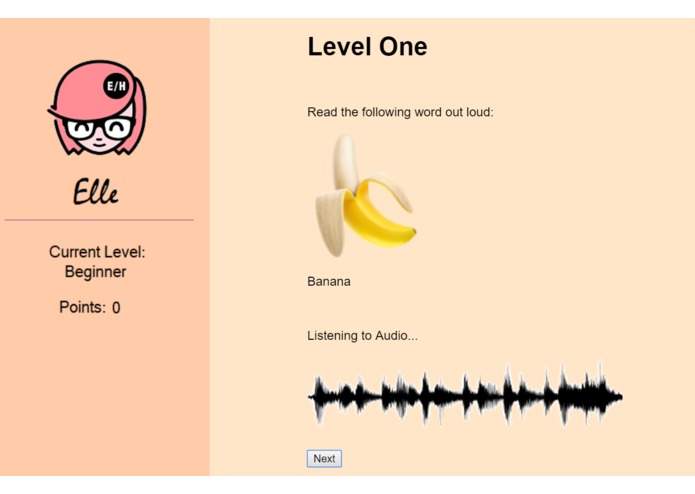
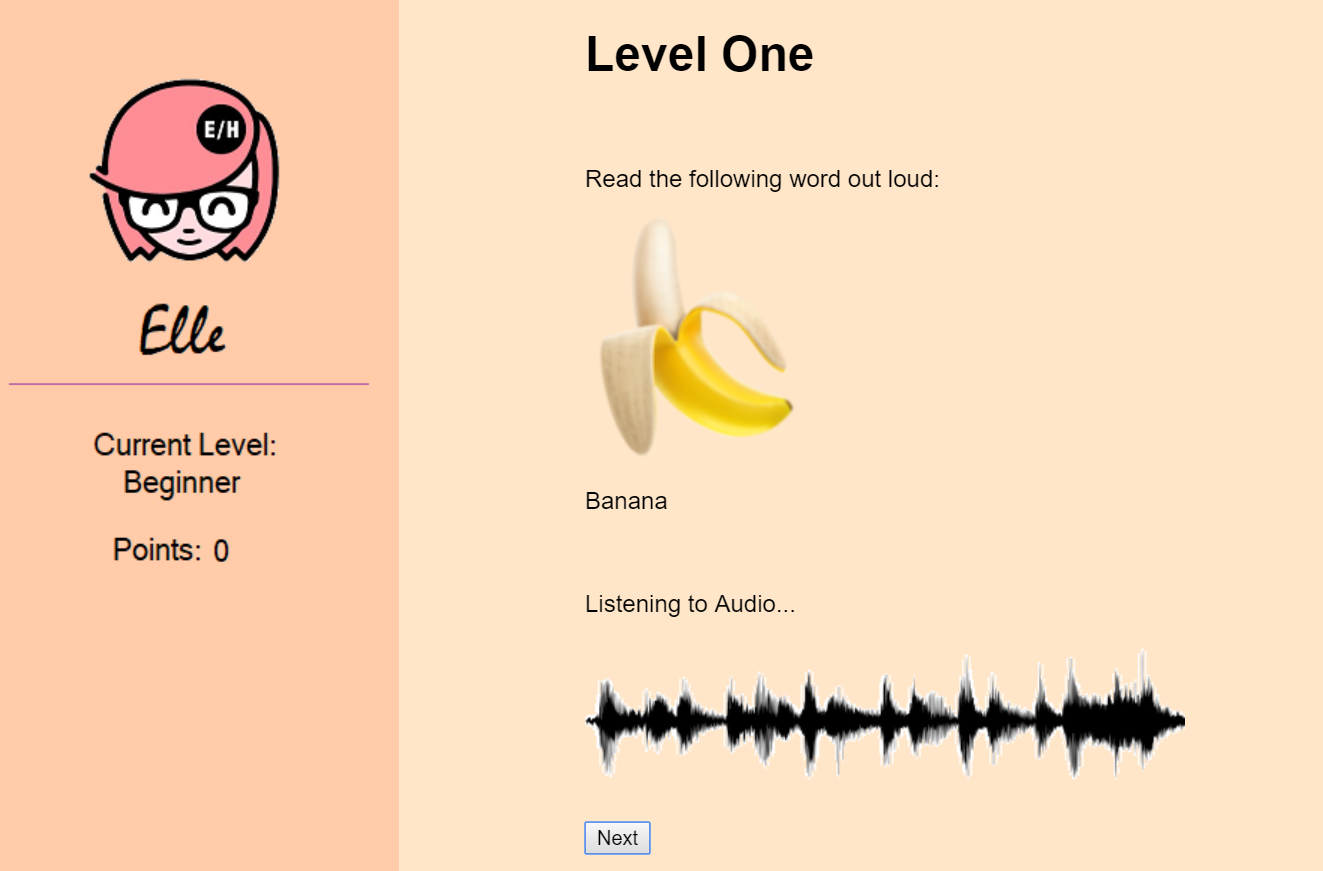
Example of Level 1
-
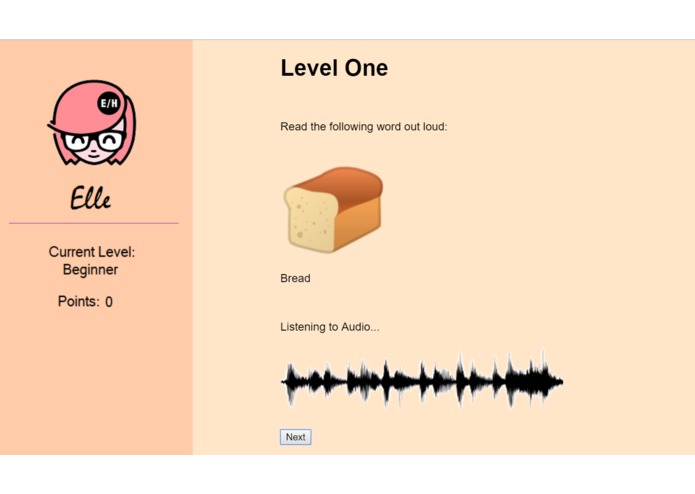
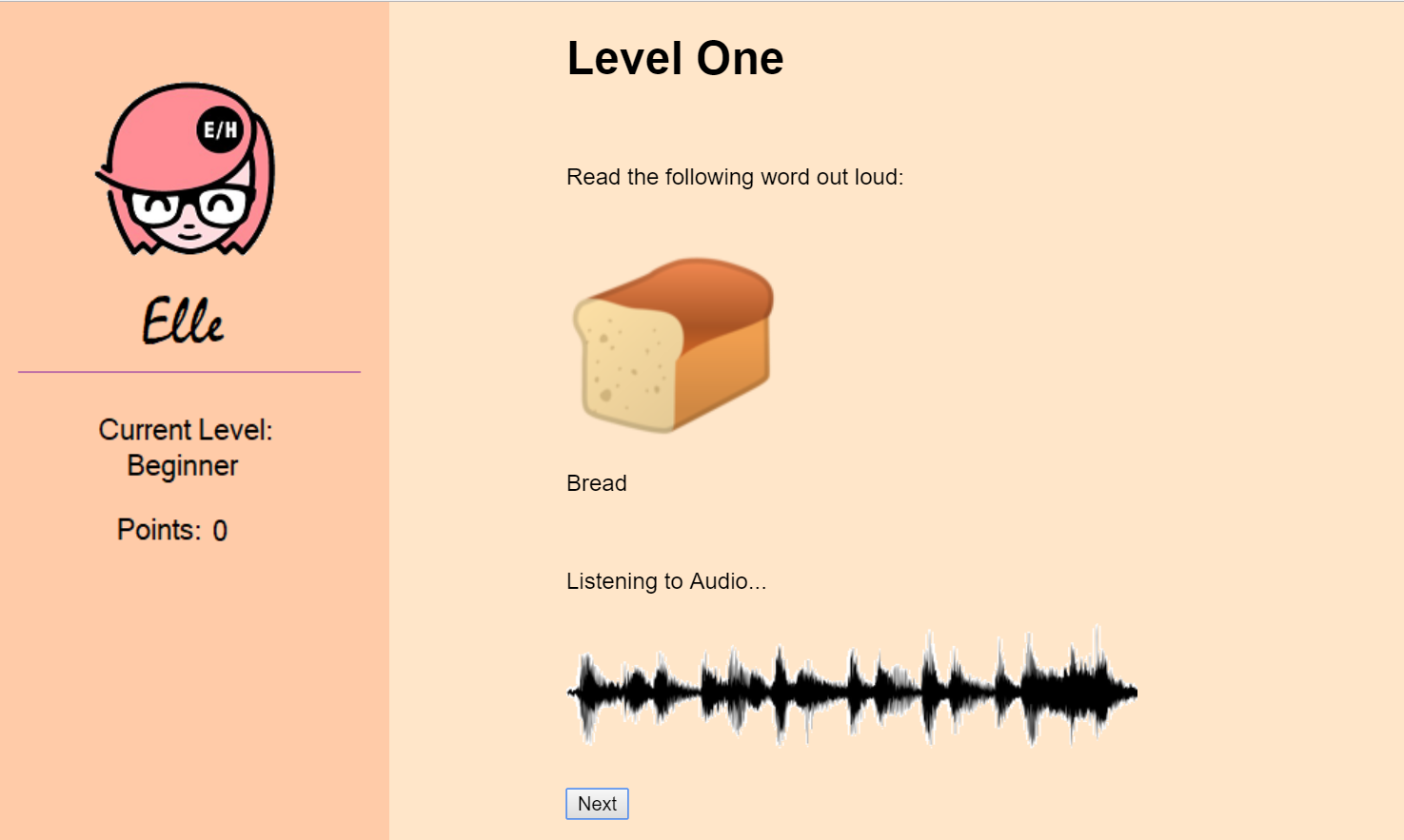
Example of Level 1b
Inspiration
Coming from immigrant families, we have seen firsthand how important it is to have correct pronunciation and diction when learning a new language. It can be tedious and bothersome to have someone validate whether you have the correct pronunciation and words. That's where Verbatm comes in. A fun and simple web application that allows users to test and improve their language skills easily, without relying on the help of anyone else.
What it does
Verbatm interacts with a user, depending on his or her difficulty level, and prompts them with relevant words or phrases that test their communication skills. It does this by displaying an image or phrase, and prompting the user to record an audio input. Verbatm analyzes the user's input and notifies the user if they have said the correct word, or said it incorrectly. It is important to speak clearly and concisely when using Verbatm, a good habit that early language learners should pick up as they communicate with others. When the user specifies the difficulty level upon creating a profile, Verbatm selects items from a wide database to test the user with. These items can be presented to the user as an image, text, or both. Verbatm strives to simulate recollection in the user, and allow them to identify commonly found items in an intensity-driven manner. That is, as the user guesses more correct words, the difficulty of the words increases. A point system allows the user to see their progress and progress through harder levels.
How we built it
We first set up and created the web server using Express.js and organized modules for our software along with utilizing Node.js for the user backend. Our code was mainly written in JavaScript, HTML, and CSS files that we then ran through the server to create the functionality on the home page of Verbatm. To integrate the IBM Watson API, we tied the speech-to-text API with the JavaScript files to allow for user audio input which was then analyzed by using the “Recognized Audio” function and a set of keywords that the software can detect in user speech. Based on the text/picture that is being displayed on the screen and the user input, the software would decide on how to proceed and what to display back to the user.
Challenges we ran into
We started off using IBM’s BlueMix and Liberty for Java to set up the server for our web app. However, we ran into difficulty as we set up the server and created the different paths for our software such as: registration, login, homepage so the user can navigate through the app. Also, we experienced some trouble implementing the Watson speech-to-text API in our program such that we can output the string representation of the audio to another JavaScript file that can then compare the input word to the correct word.
Accomplishments that we're proud of
Throughout the development of Verbatm, our team explored various aspects of frontend and backend developing. The majority of the development was done in JavaScript. This is a fairly new programming language to us, so it was fun to explore and apply it hands-on. Our team did an amazing job with implementing various aspects of JavaScript, such as Express.js and Node.js. Along with JavaScript, we familiarized ourselves with HTML and CSS to design our webpage that you see above.
What we learned
We learned to work collaboratively towards one common goal, to delegate the work based on individual skills and experience, work within a restrictive deadline, and learned a ton of new things about JavaScript, HTML, and CSS. These were fairly new programming aspects to us, but with the help of each other and internet, we were able to design Verbatm in an amalgamation of varying skills and backgrounds.
What's next for Verbatm
We believe that the drive behind Verbatm will never go out of style. As a constantly-evolving society, learning new languages and improving communication skills is something many strive to do. That's why Verbatm can be used across versatile platforms to help people from varying backgrounds improve their communication skills. We have big plans for Verbatm! They include:
- Providing Verbatm to a larger audience by incorporating other languages, in addition to English
- Introducing a conversational aspect between user and Verbatm. Users will be prompted with conversational prose, and they must reply with appropriate and context-appropriate responses
- Collaborate with government-funded programs: have a larger reach by teaming up with government-funded programs to create a more welcoming environment for new incomers (Language Instruction for Newcomers to Canada)
- Incentivize the program by allowing users to redeem points through other popular points apps such as gas(Esso), movies (Scene), or books (Plum points)


Log in or sign up for Devpost to join the conversation.