-
-
student workspace
-
architecture diagram
VerbaMagistra: Language Learning Through Literature
Inspiration
As language learners ourselves, we were frustrated with the disconnect between what we wanted to read and what language learning apps offered. We wanted to read detective novels, science articles, or poetry - not artificial dialogues about ordering coffee or asking for directions.
The inspiration was simple: What if we could learn languages through books we actually want to read? Instead of forcing ourselves through boring textbook exercises, what if we could practice translation on passages from our favorite genres while getting real AI feedback and grammar help when we need it?
What it does
VerbaMagistra is an AI-powered language learning platform that transforms any text into an interactive learning experience. Key features include:
Core Innovation: Adaptive Text Simplification
When learners struggle with complex sentences, our AI automatically simplifies them while preserving meaning:
- Original: "His assistant, Detective Sarah Chen, entered the study carrying a silver tray with afternoon tea and a collection of witness statements"
- Simplified: "His helper, Sarah, came into the room. She had a tray. The tray had tea and papers."
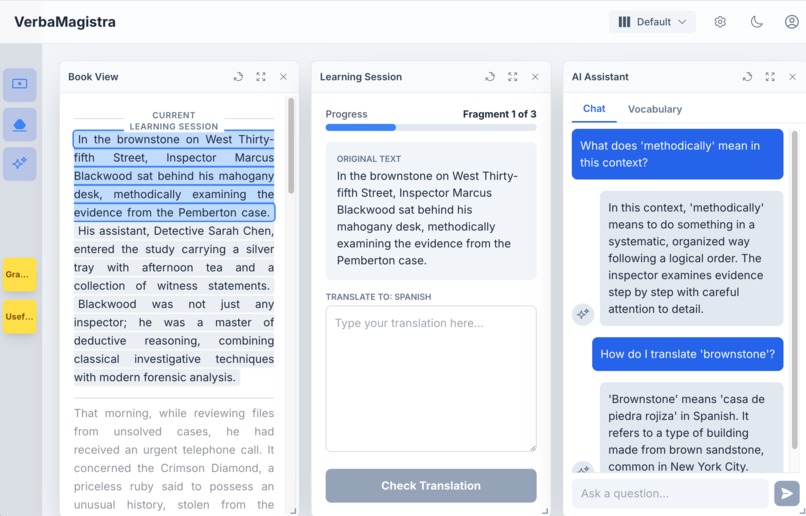
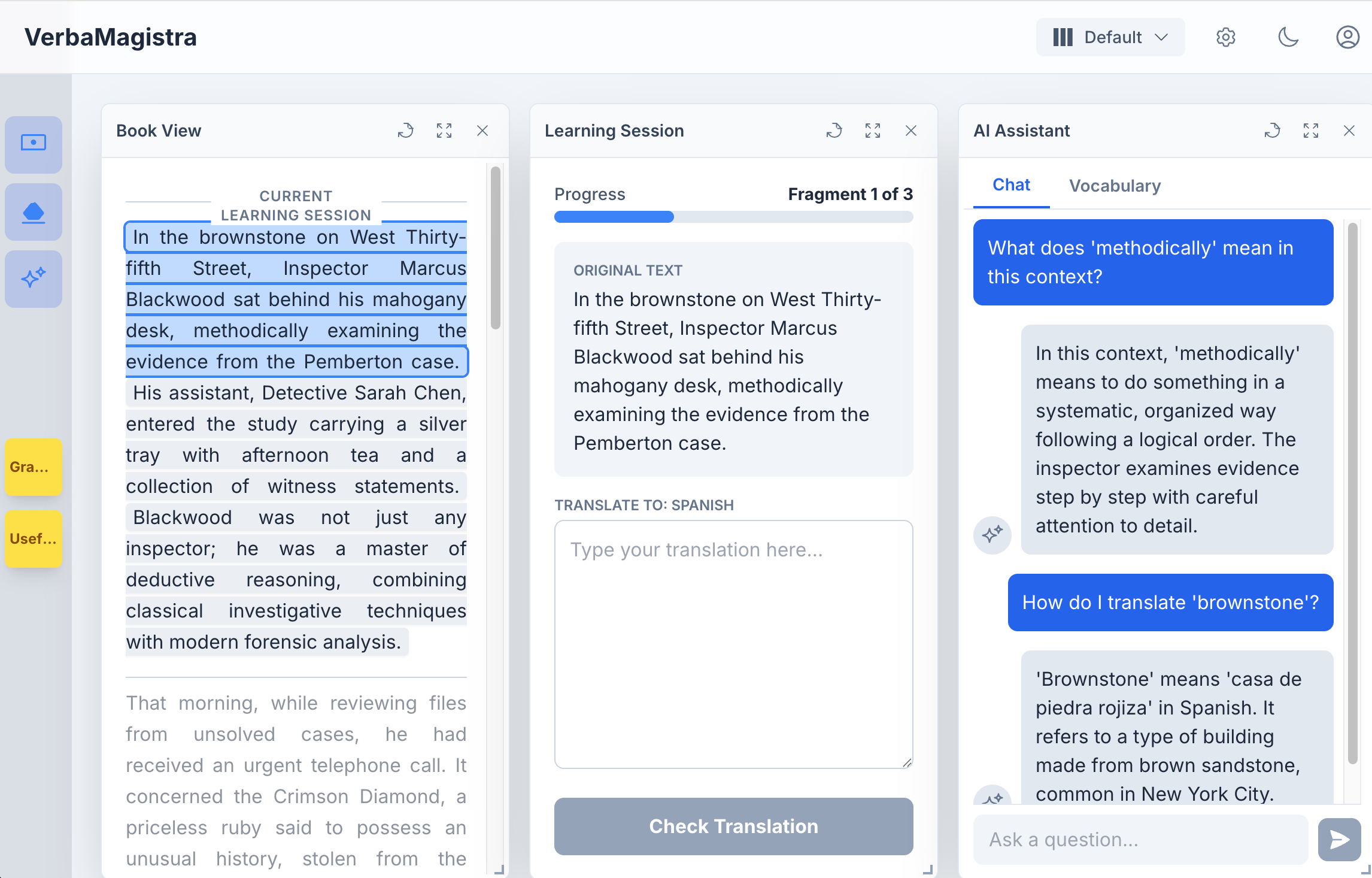
Integrated Learning Workspace
- Book View: Read your chosen text with visual progress tracking
- Learning Session: Fragment-based translation practice with real-time AI evaluation
- AI Assistant: Instant grammar help, vocabulary explanations, and reference tables
- Smart Stickers: Convert AI responses into draggable study notes
Intelligent Features
- Auto-detected source language - works with any language pair
- Professional translation evaluation with detailed feedback and scoring
- Automatic vocabulary building from practice sessions
- Text-to-speech integration for pronunciation practice
- Flexible layouts adapting to different learning styles
How we built it
Technology Stack
- Frontend: React 19 + TypeScript + Vite
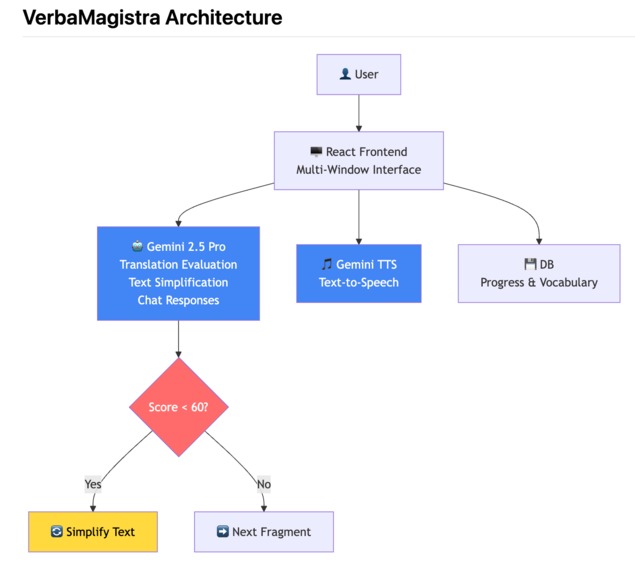
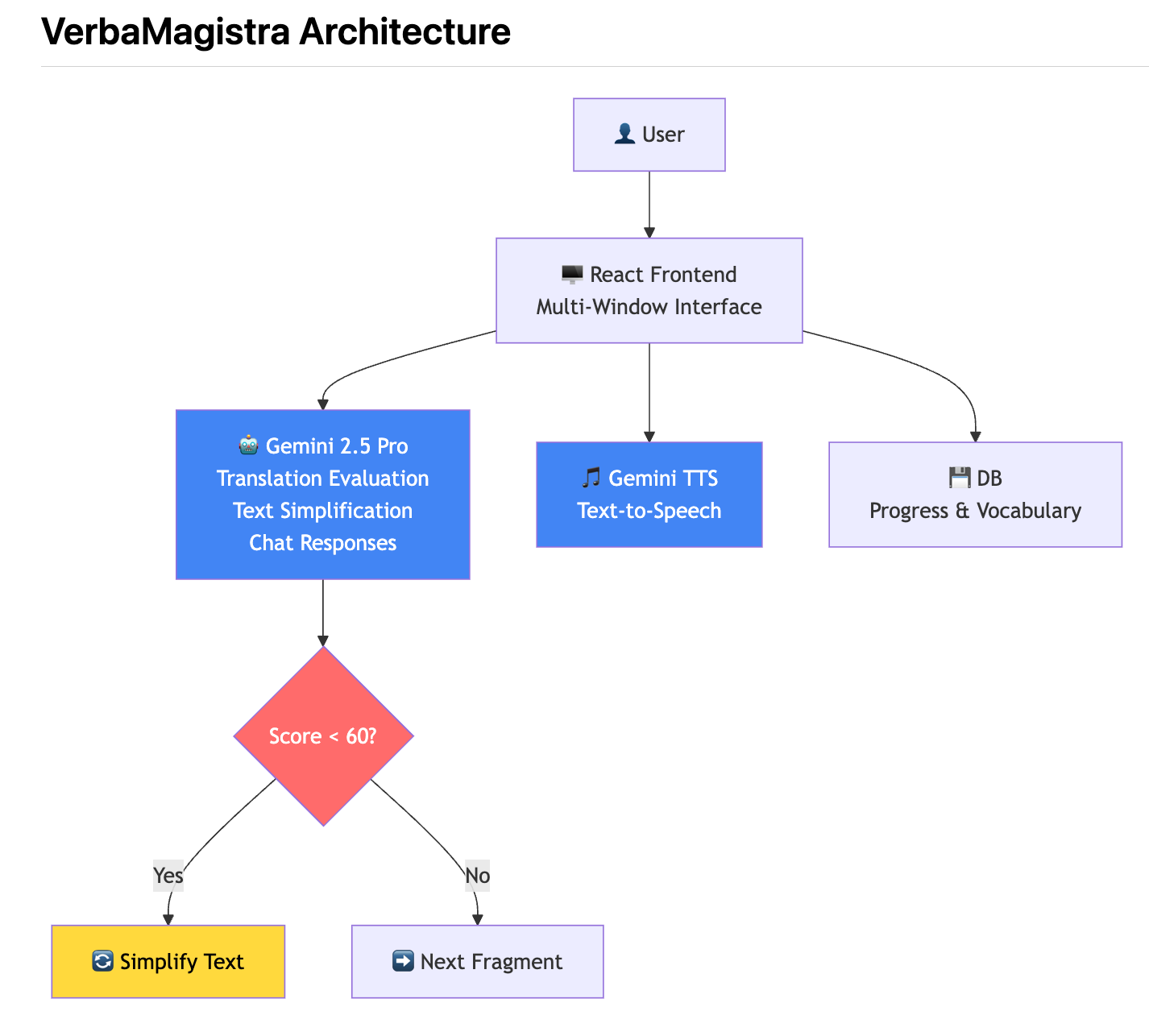
- AI Integration: Google Gemini 2.5 Pro for translation evaluation, text simplification, and chat
- Audio: Google Gemini TTS with browser fallback for pronunciation
- Testing: Playwright for comprehensive end-to-end testing
Key Technical Features
- Multi-window drag system with collision detection and layout management
- Real-time markdown parsing for AI-generated grammar tables
- Fragment-based learning sessions with progress persistence
- Adaptive UI layouts (focus, reading, compact modes)
- Smart sticky note system with sidebar minimization
Challenges we ran into
Complex State Management
Managing three interconnected windows, sticky notes, and learning sessions required careful state architecture. We solved this with React hooks and careful separation of concerns.
AI Prompt Engineering
Getting consistent, high-quality responses from Gemini required extensive prompt refinement:
- Translation evaluation needed strict scoring criteria
- Text simplification required preventing over-simplification
- Grammar responses needed proper table formatting
Real-time Audio Integration
Implementing seamless TTS with Google Gemini while maintaining fallback to browser APIs required custom audio service architecture with caching and error handling.
Responsive Multi-window Layout
Creating a desktop-class experience that adapts to different screen sizes while maintaining usability was solved through dynamic layout algorithms and keyboard shortcuts.
Accomplishments that we're proud of
- Adaptive Text Simplification: Successfully implemented AI that automatically simplifies complex sentences when learners struggle, maintaining meaning while improving accessibility
- Seamless Multi-window Interface: Created a desktop-class learning environment with draggable windows, sticky notes, and flexible layouts
- Real-time AI Integration: Built comprehensive AI evaluation system with detailed feedback, grammar tables, and pronunciation support
- Complete Learning Workflow: From text selection to session completion with vocabulary building and progress tracking
What we learned
Technical Insights
- User Experience: Multi-window interfaces need careful attention to focus management and visual hierarchy
Product Insights
- Learning Psychology: Adaptive difficulty adjustment keeps learners in the "flow state"
- Content-based Learning: Students are more engaged when learning from content they chose
- Integrated Tools: Reducing context switching between tools dramatically improves learning efficiency
What's next for VerbaMagistra
- File format support - Upload PDFs, EPUBs, and other document formats directly
- User accounts and progress tracking - Sign in to save your reading progress and let AI learn your weak points to focus practice where you need it most
- Spaced repetition system - Use simplified fragments to create targeted vocabulary drills and memorization exercises
- Interactive dialogues - Generate conversations based on your reading material for speaking practice
- Multi-language support beyond Spanish to serve more language learners

Log in or sign up for Devpost to join the conversation.