-
-
DJG-Blockchain
-

DJG-Banner
-
-

Inspiration
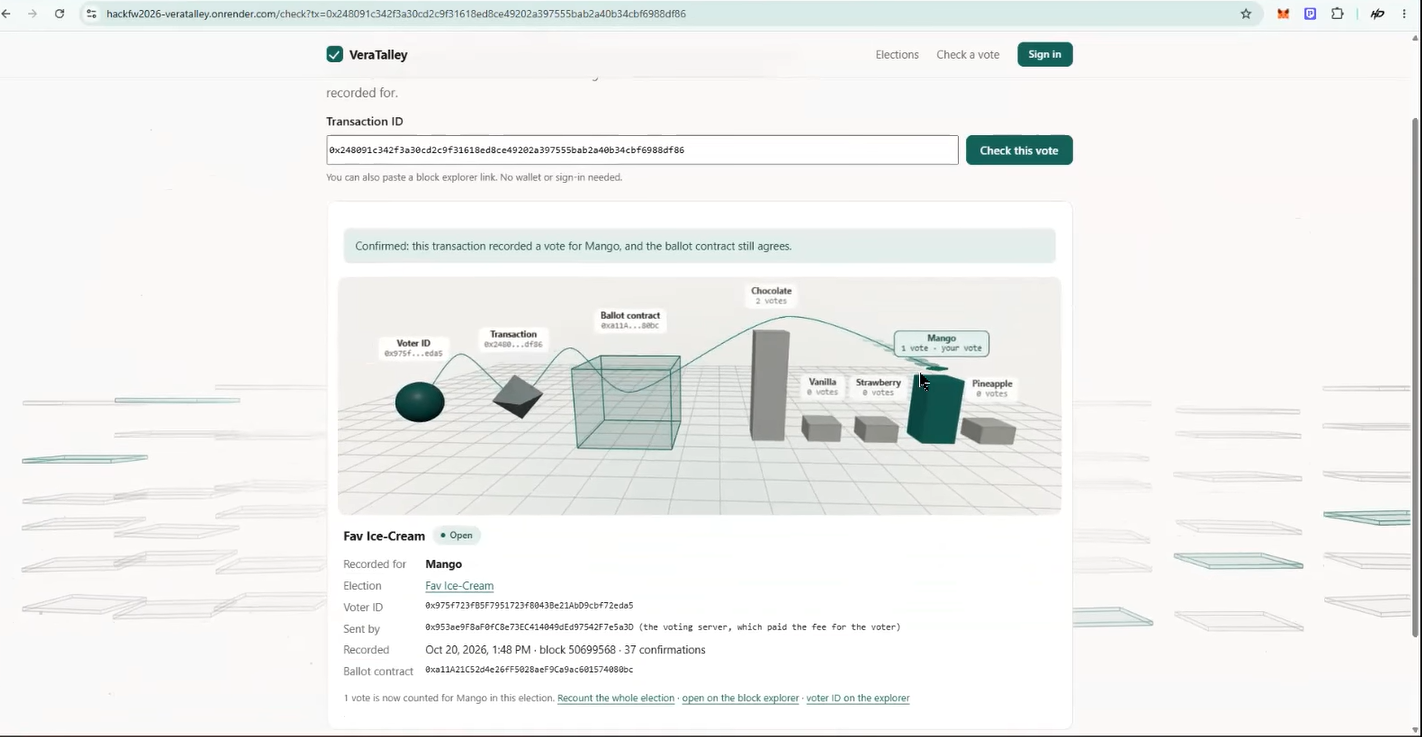
Most people vote the same way: drop a ballot in the box, trust the process, and hear the results on the news. You never really know your vote counted. We wanted to change that experience. VeraTalley lets every voter see their own vote and watch the results come in.
We started with the elections people run every day, like clubs, boards, and associations, because that's where verifiable voting can be useful right now. But our bigger goal is to show that blockchain can be a better foundation for elections of every size, including civic ones.
What it does
- Organisers create an election and invite voters.
- Voters cast their ballot from a simple web page, with no wallet and no cryptocurrency needed.
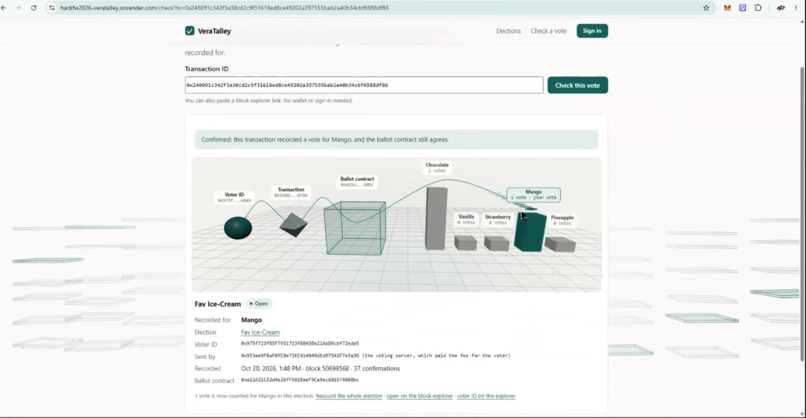
- Each vote is recorded on a public blockchain, so voters can look up their own vote and confirm it was logged exactly as cast.
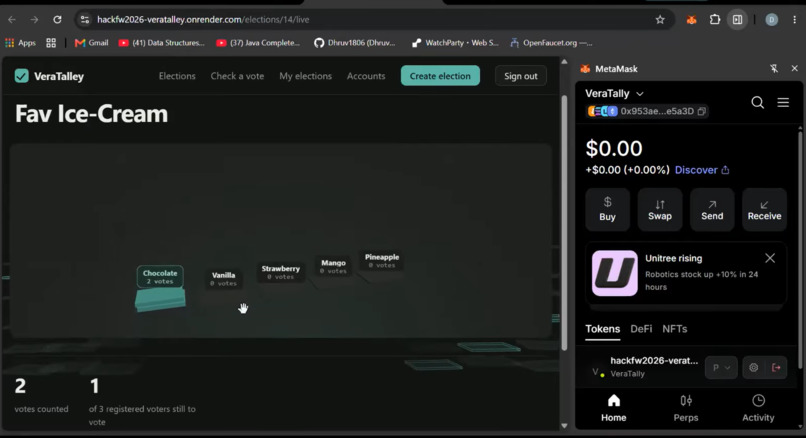
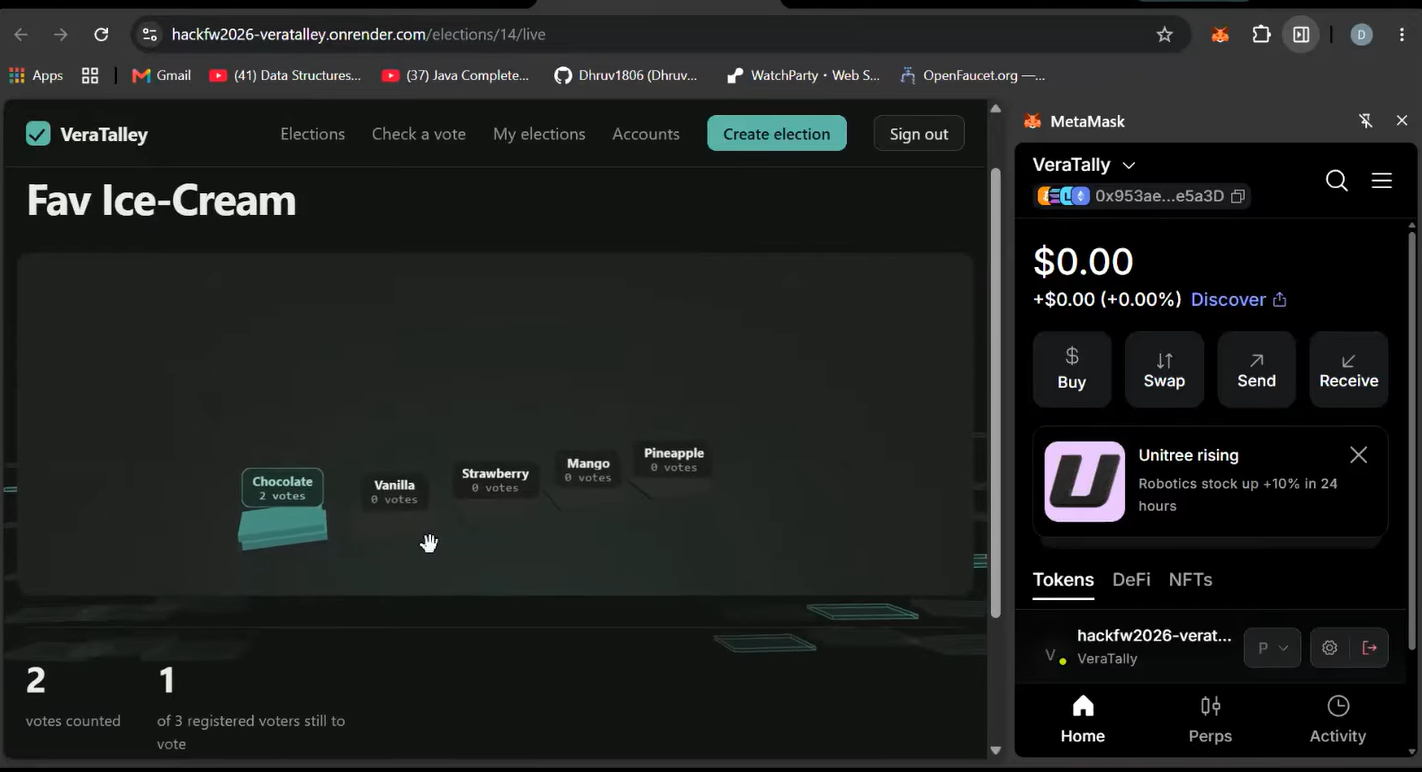
- Anyone can watch the tally update live as votes arrive. No waiting for an announcement, and no black box.
How we built it
We built VeraTalley as smart contracts on a public blockchain, with a simple web app on top. To keep voting effortless, a relayer quietly handles the blockchain side, so voters never need a wallet or cryptocurrency. They just click and vote.
We worked in short sprints, each ending with a tested release, and deployed a live version early so we could demo the real thing rather than a mockup.
Challenges we ran into
- Hiding the blockchain. The whole point is trust without friction. Asking voters to install a wallet and buy tokens would defeat that, so we built a relayer to handle fees behind the scenes.
- Transparency vs. the secret ballot. A fully public vote record makes coercion and vote-buying possible. That's acceptable for many organisational votes, but civic elections need more. We chose to be honest about this limit rather than overclaim.
- Shipping it for real. Getting a secure live deployment running, while keeping secrets out of the codebase, took as much care as writing the contracts.
Accomplishments that we're proud of
- A live, working app at veratalley.dojoga.io, not just a prototype or slides.
- Walletless voting: voters use blockchain without ever knowing they're using it. Blockchain doesn't have to be hard.
- The moment a voter finds their own vote on the public record. It's what makes people react in the demo.
- A disciplined process: every sprint produced requirements, architecture, tested code, and a report.
What we learned
- Good blockchain UX means users shouldn't have to know they're using a blockchain.
- Being able to verify your own vote changes how people feel about an election.
- Moving from "verifiable" to "verifiable and private" is the real frontier for civic voting.
What's next for VeraTalley - HFtW
- Privacy-preserving techniques so voters can verify their vote without exposing it publicly, which is the step toward end-to-end verifiable civic elections.
- A mainnet deployment and pilots with real organisations.
- Accessibility and multi-language support.
Built With
- alchemyapi
- cloudflare
- docker
- github
- hardhat
- next.js
- node.js
- polygon
- react
- solidity
- synology
- typescript

Log in or sign up for Devpost to join the conversation.