-
-
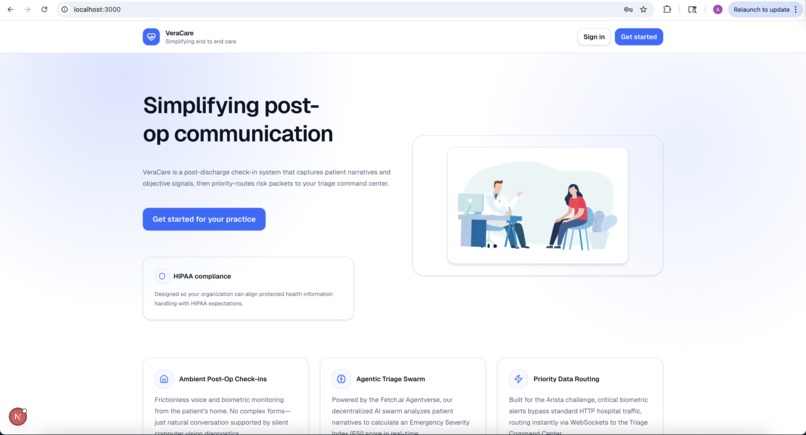
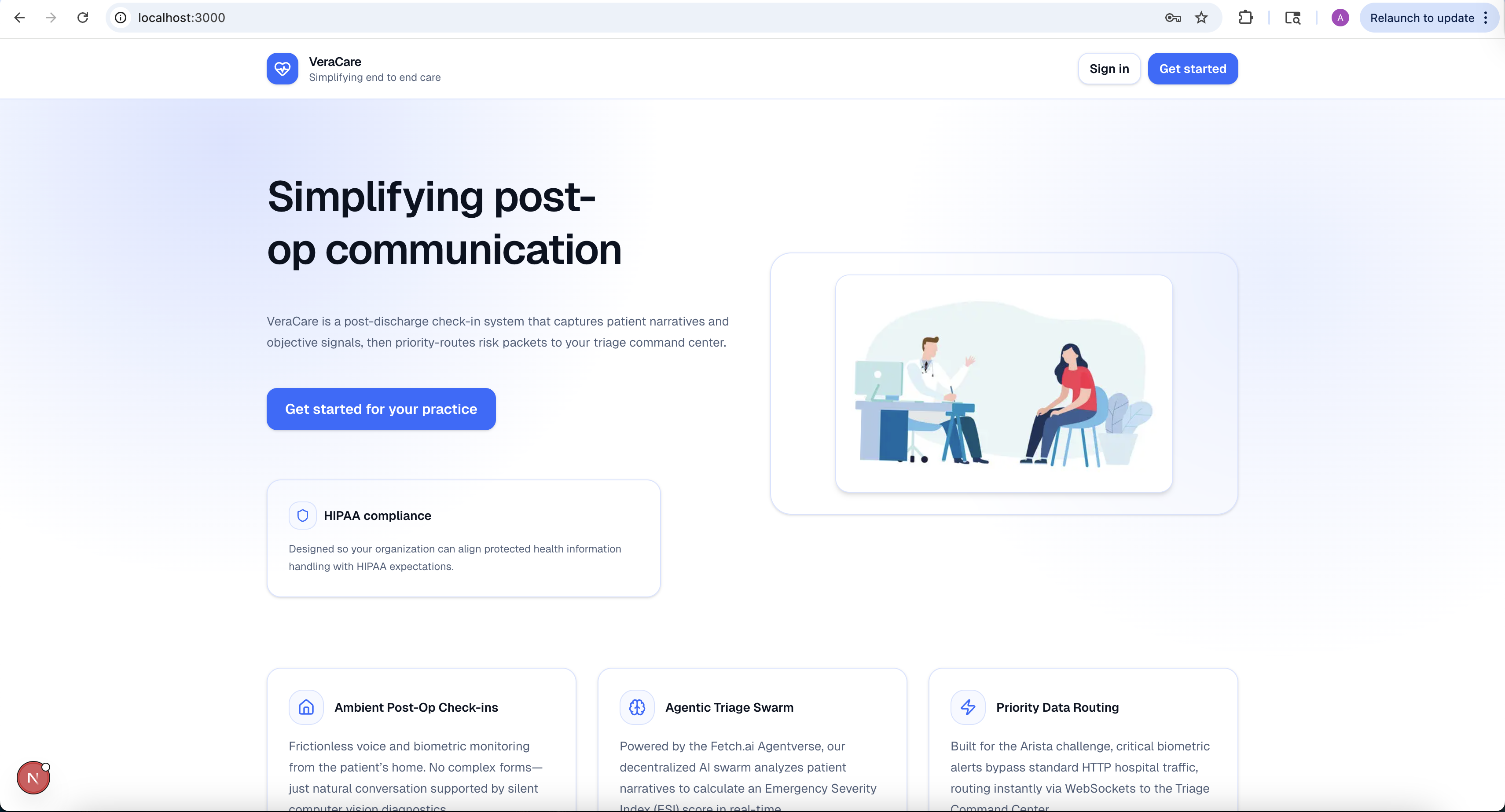
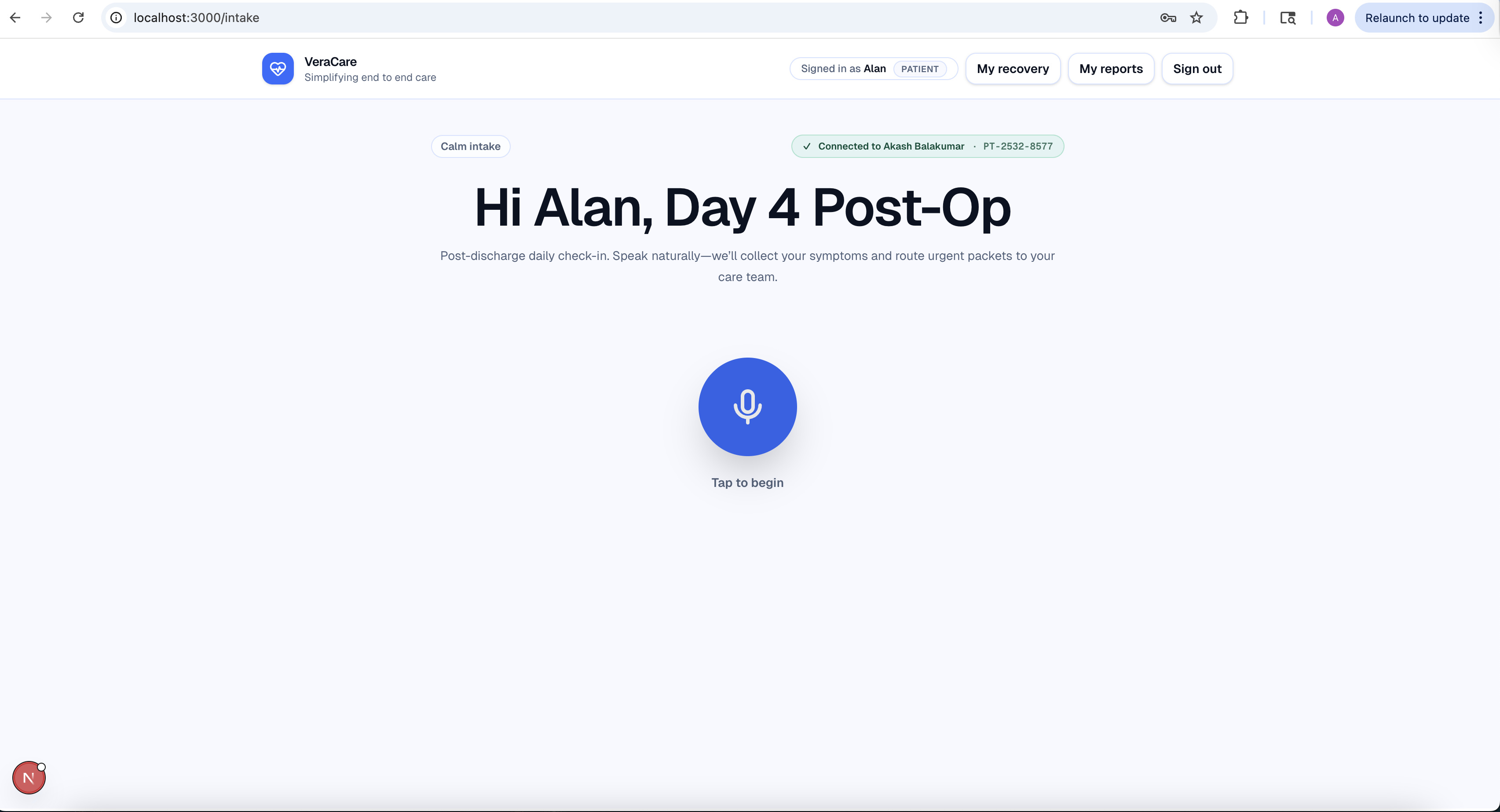
Home Page
-
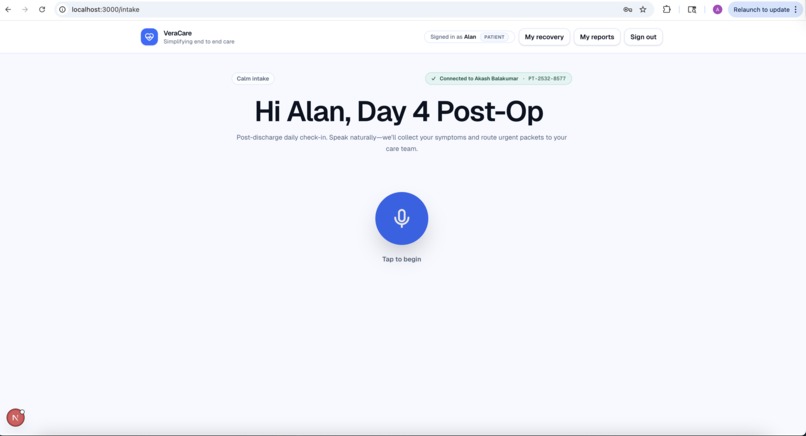
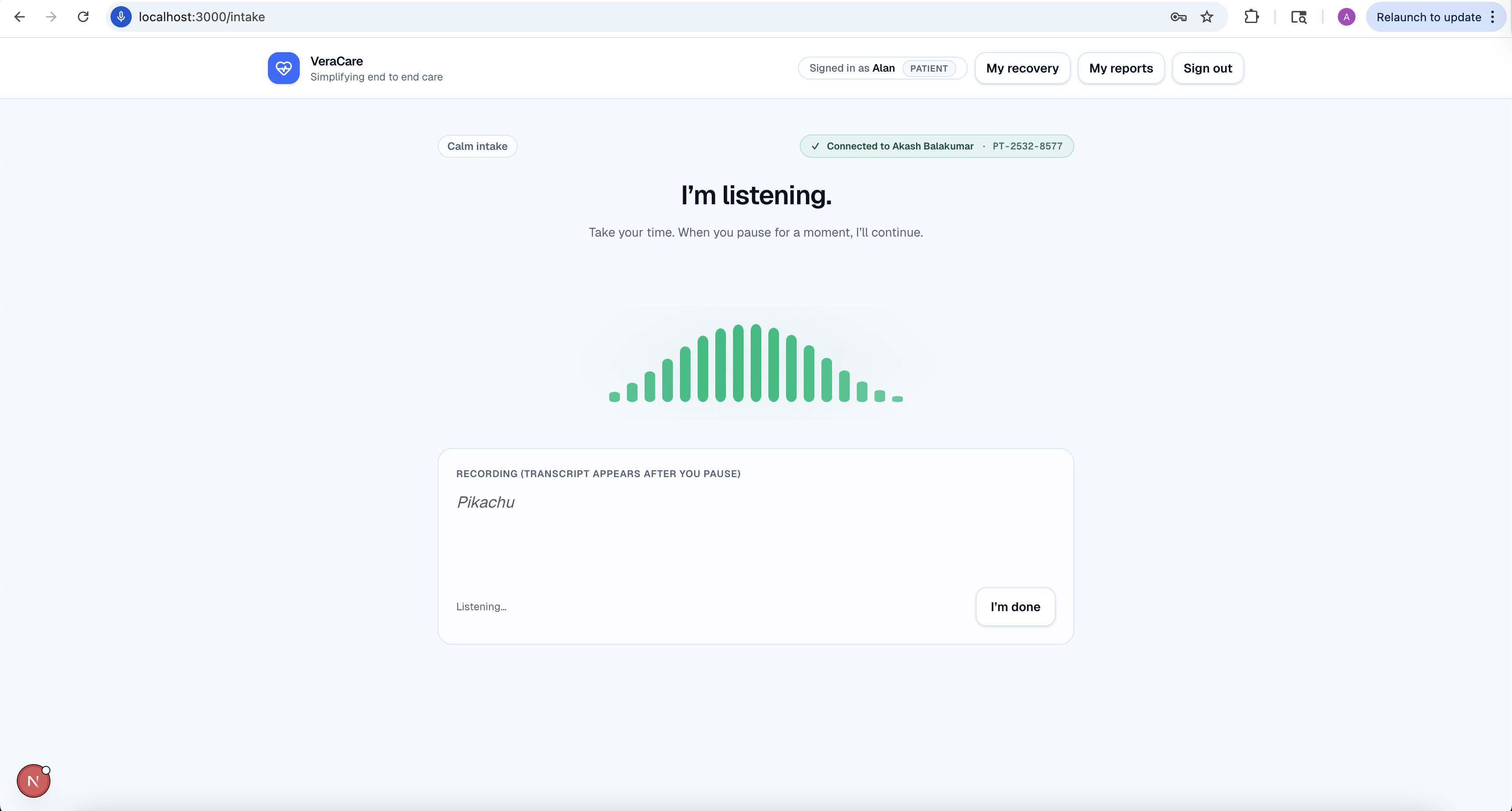
Recording a Daily Entry
-
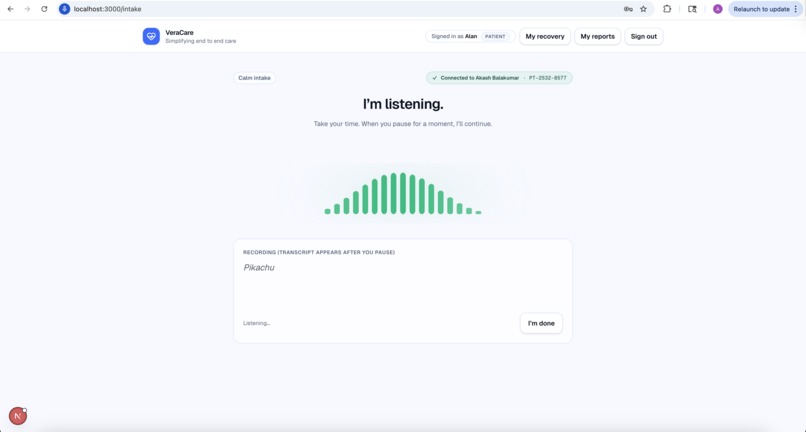
-
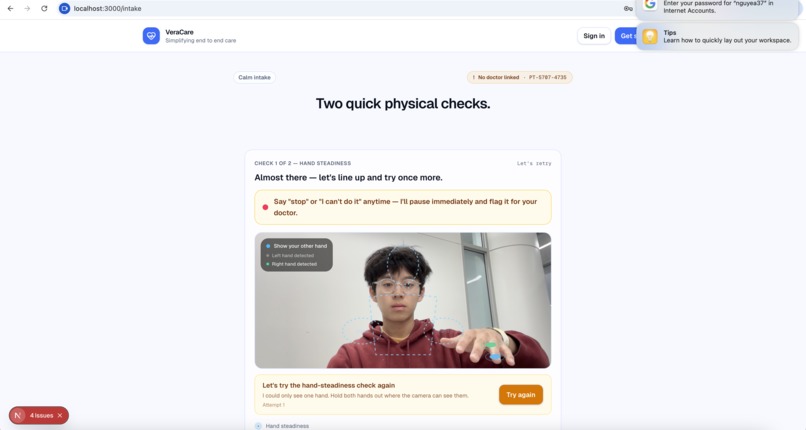
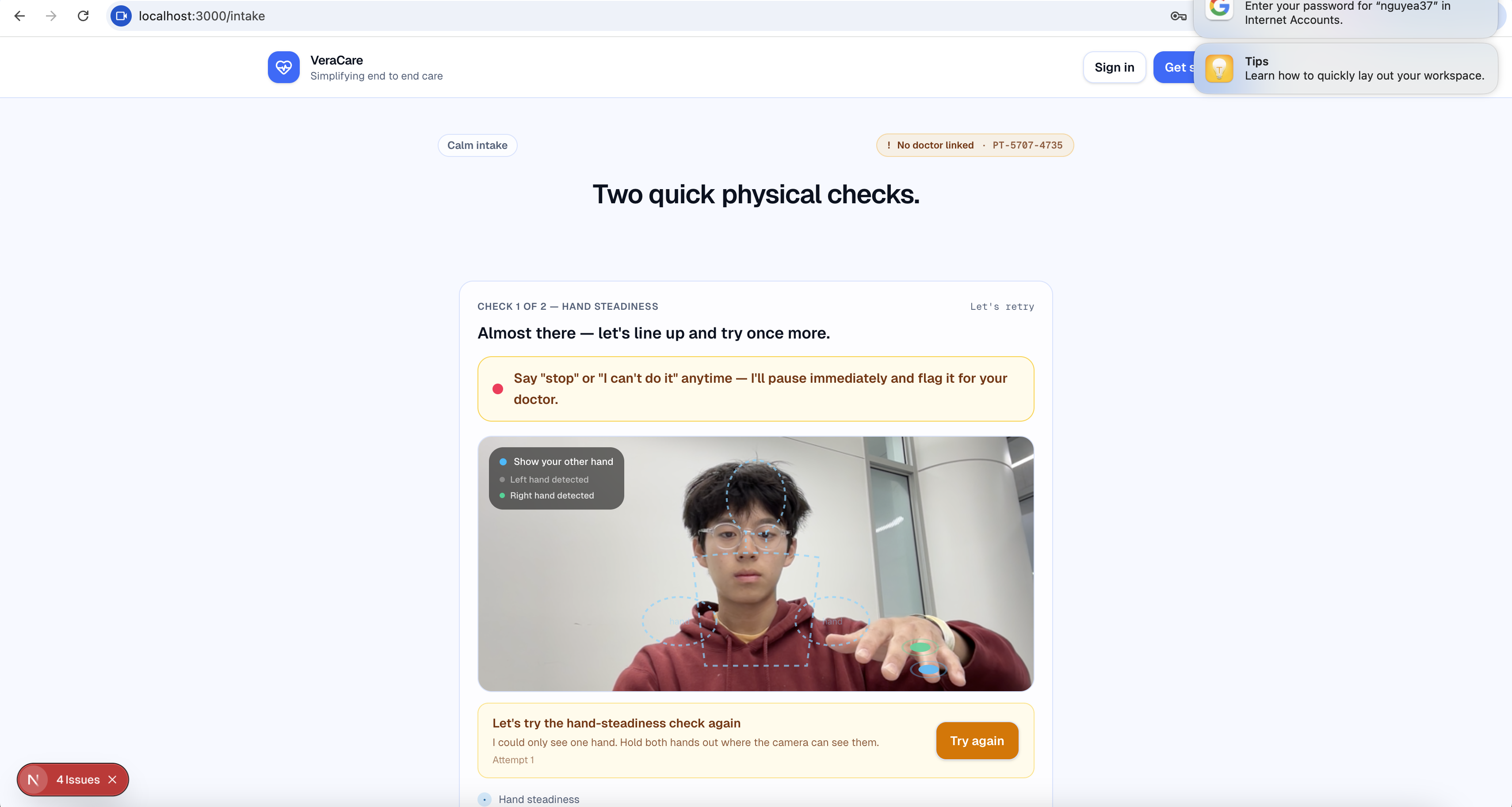
Computer Vision Health Check
-
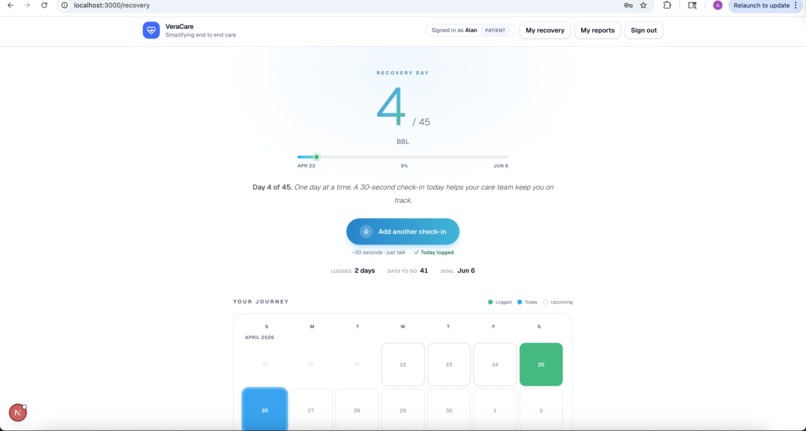
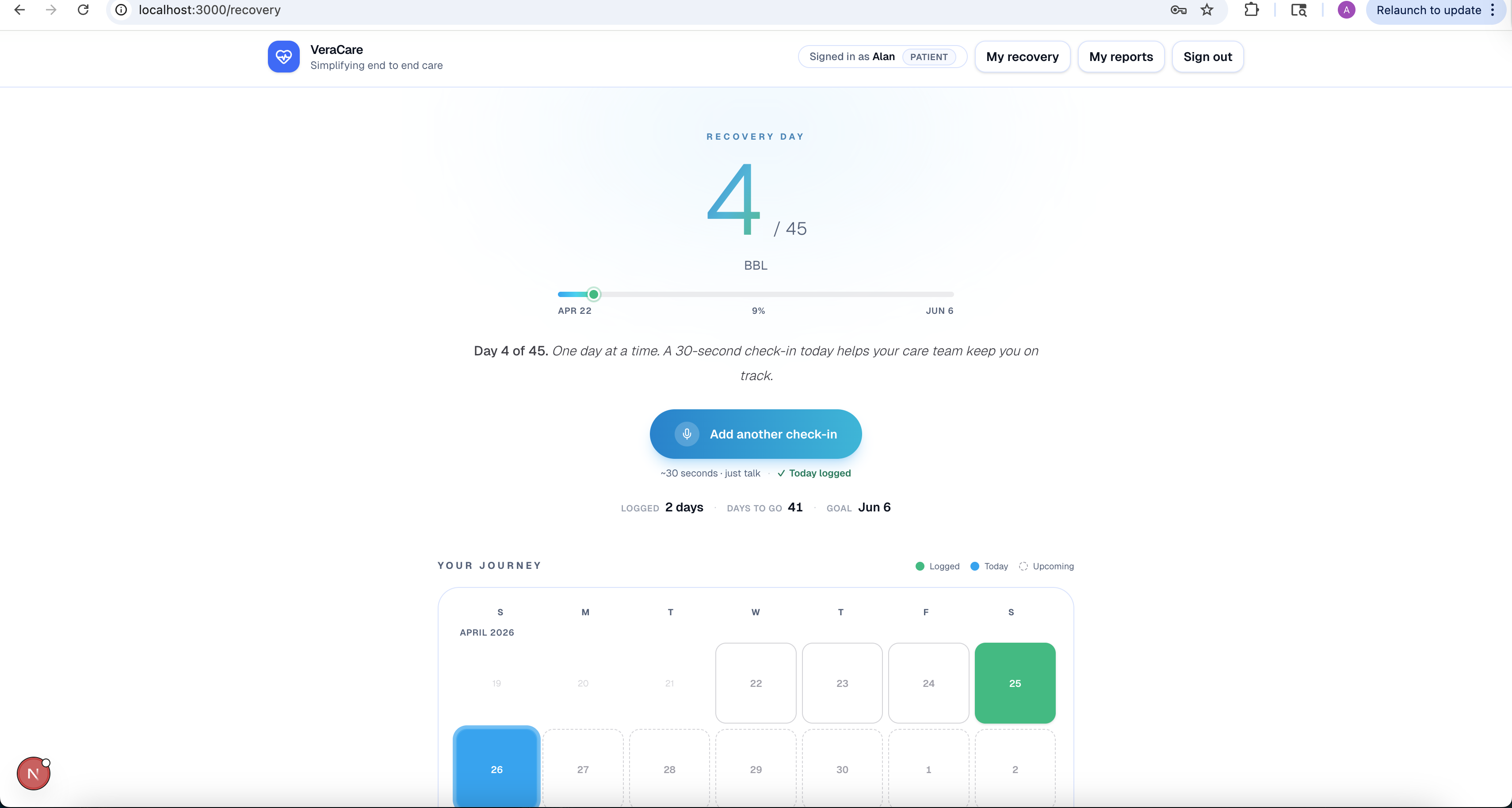
Calendar Tracker
-
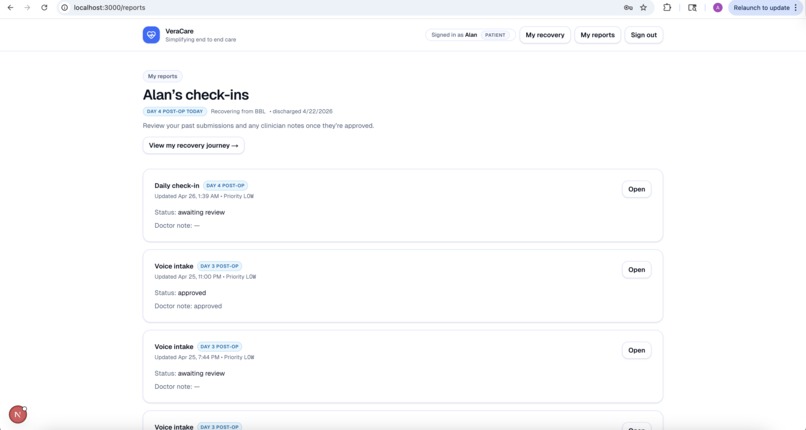
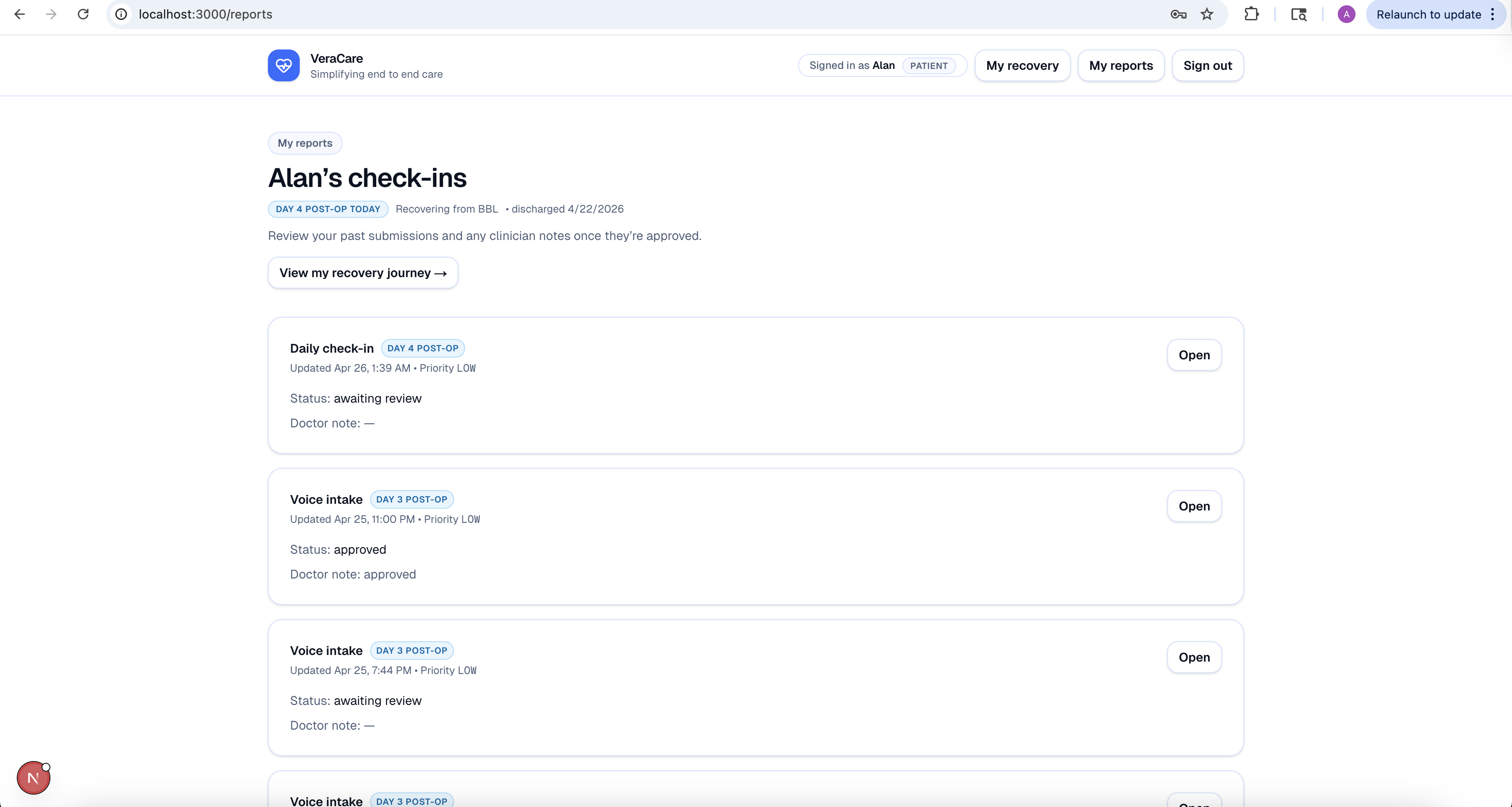
Past Daily Logs
-
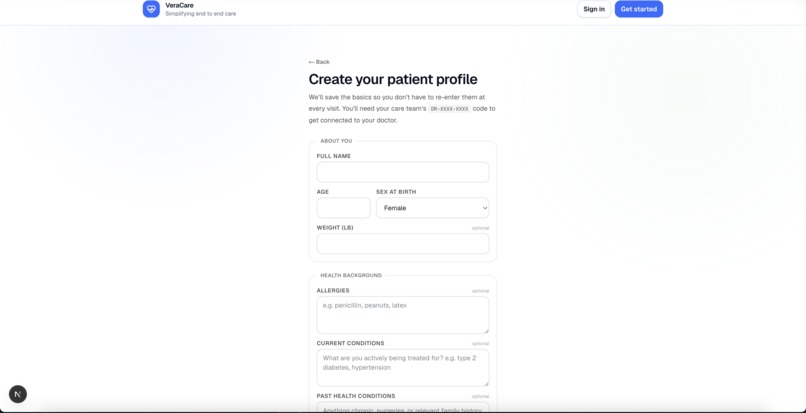
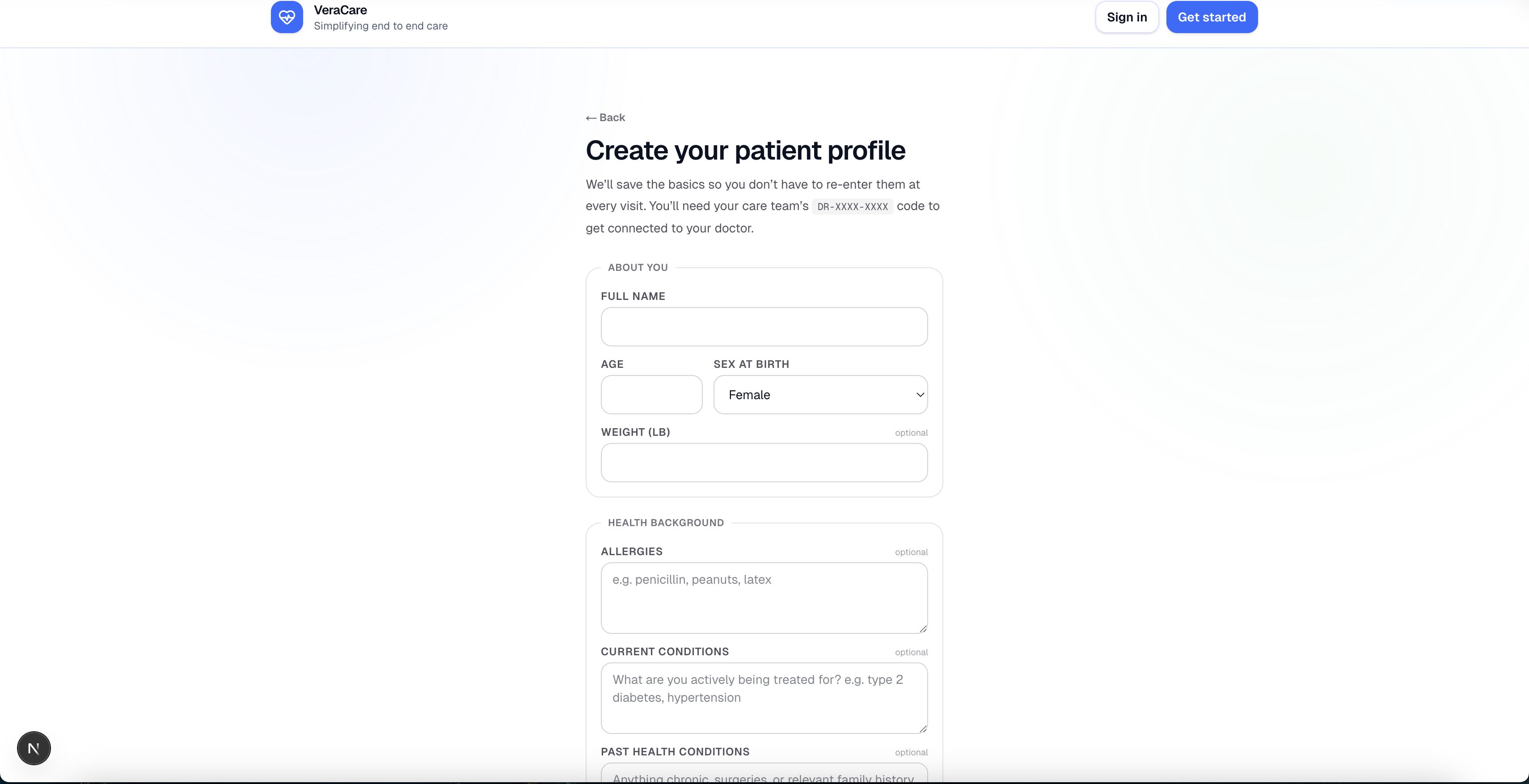
Sign Up
-
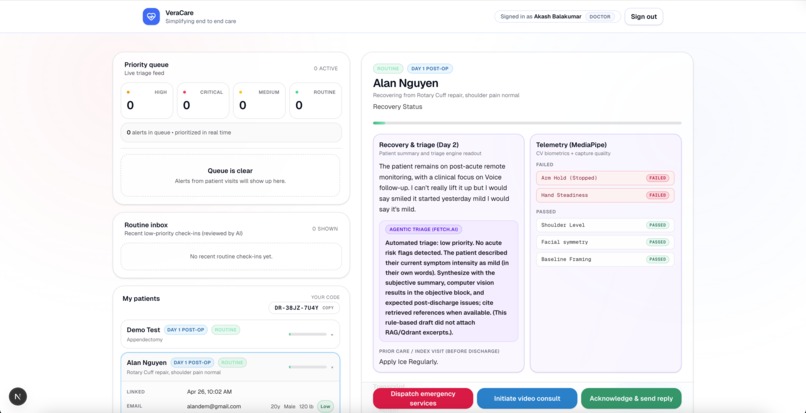
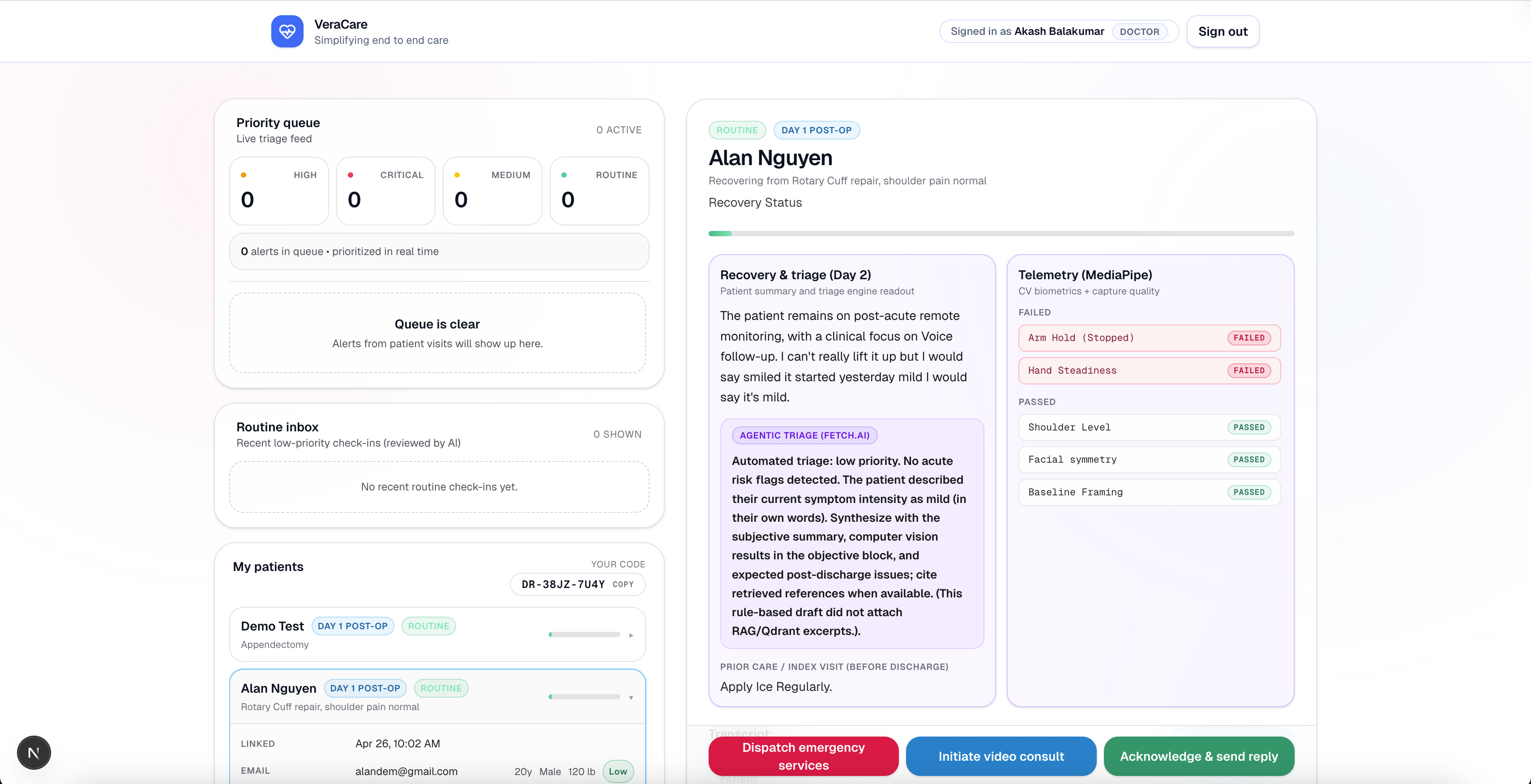
Doctor Dashboard
-
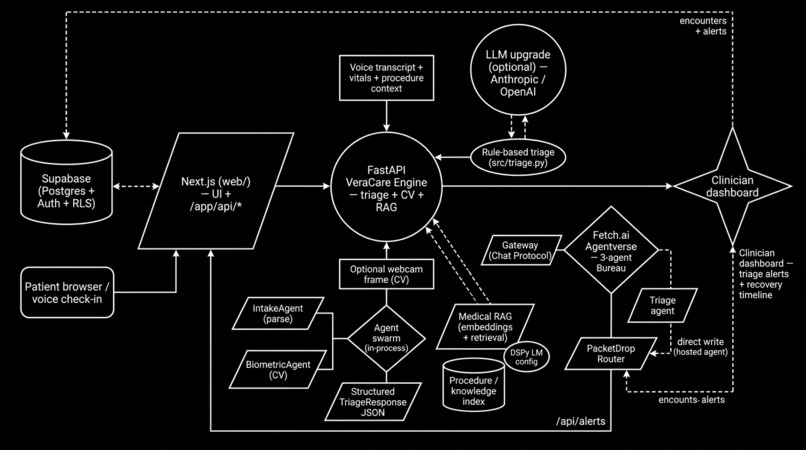
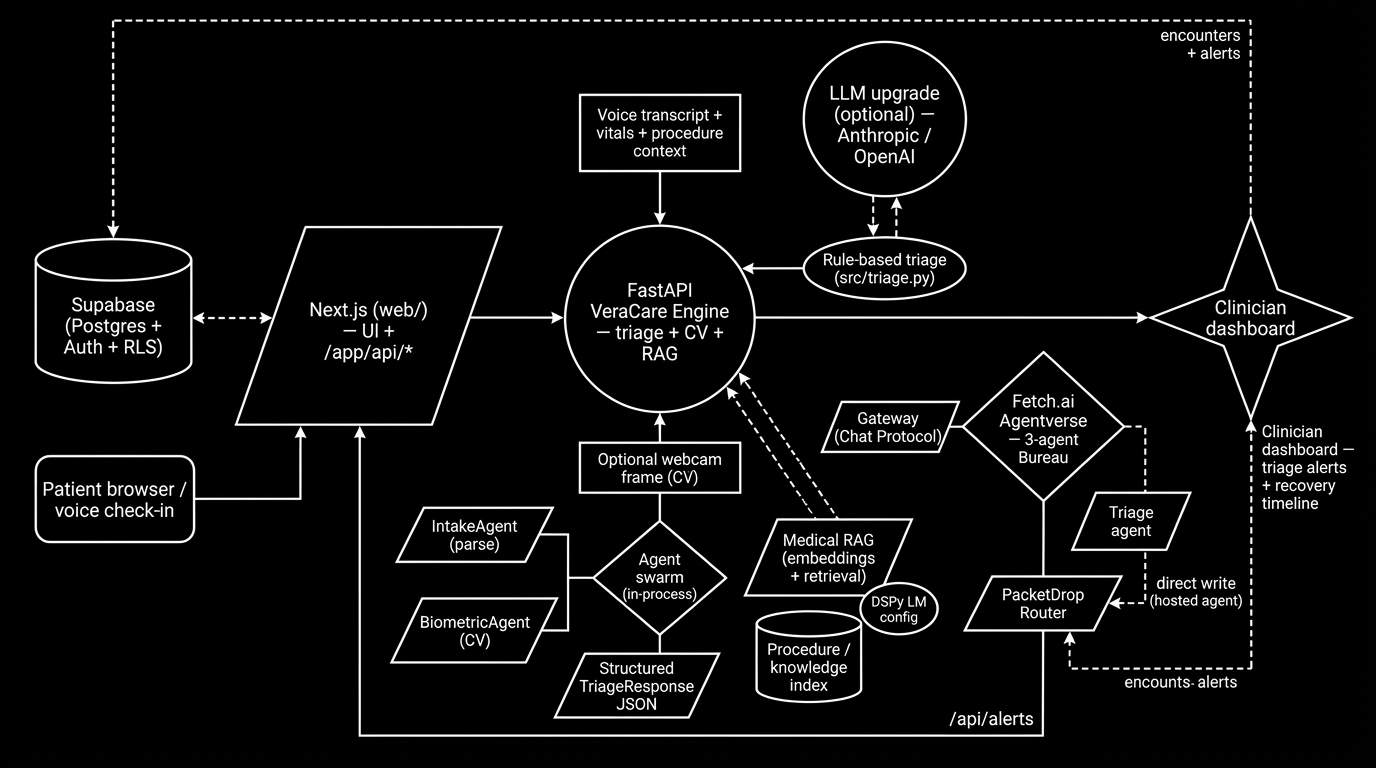
Diagram
-
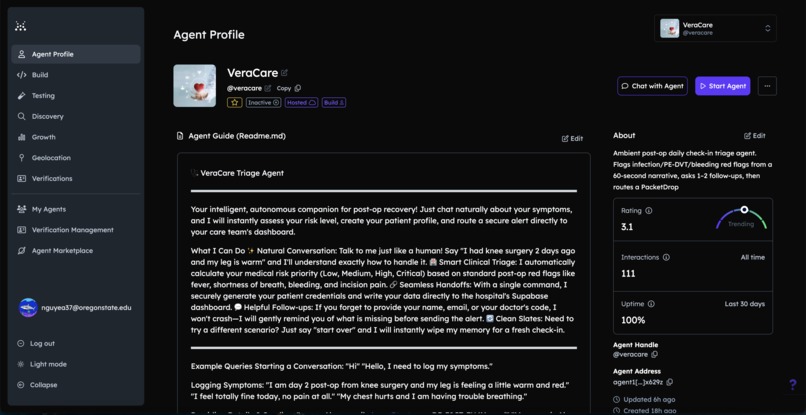
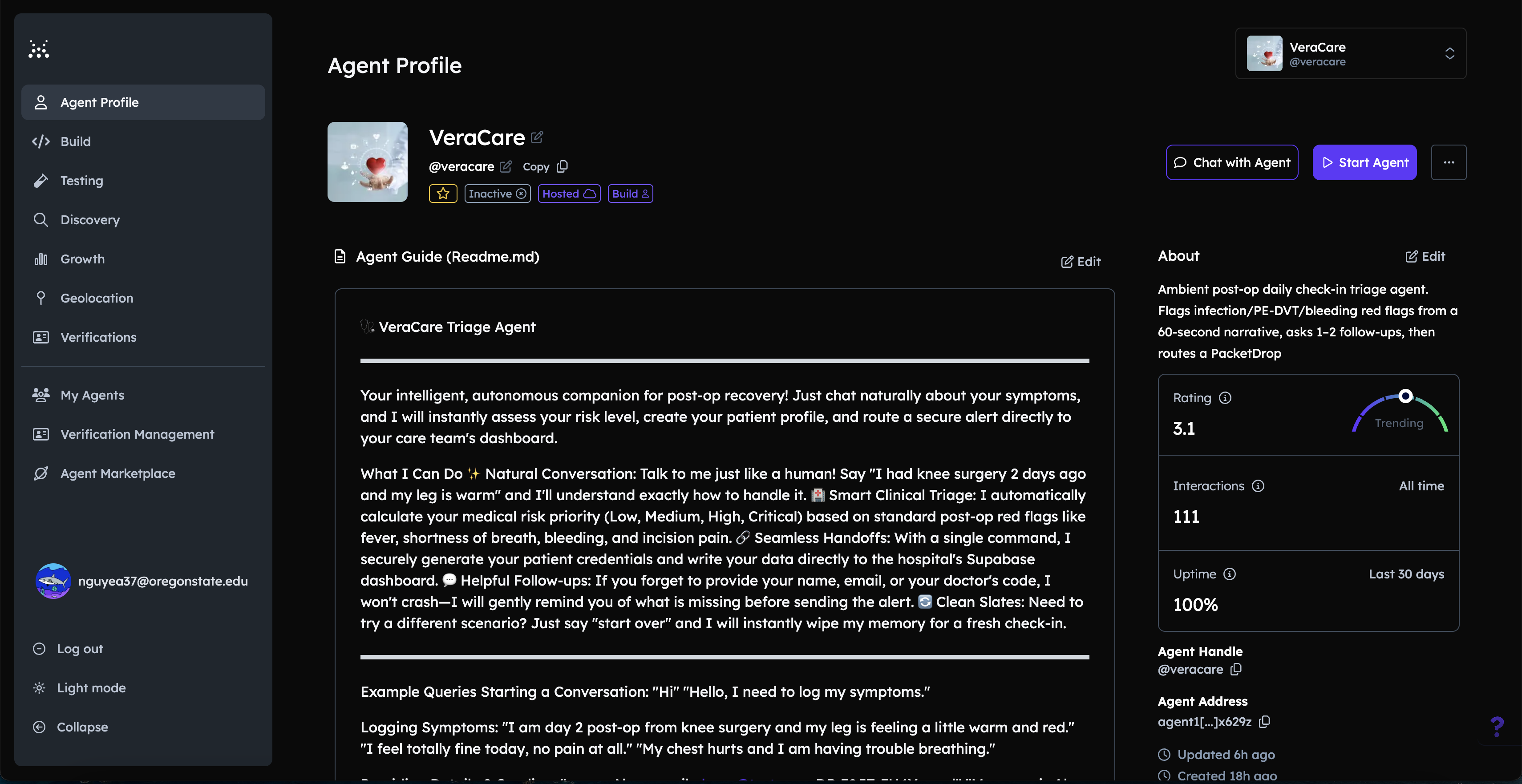
Agentverse
-
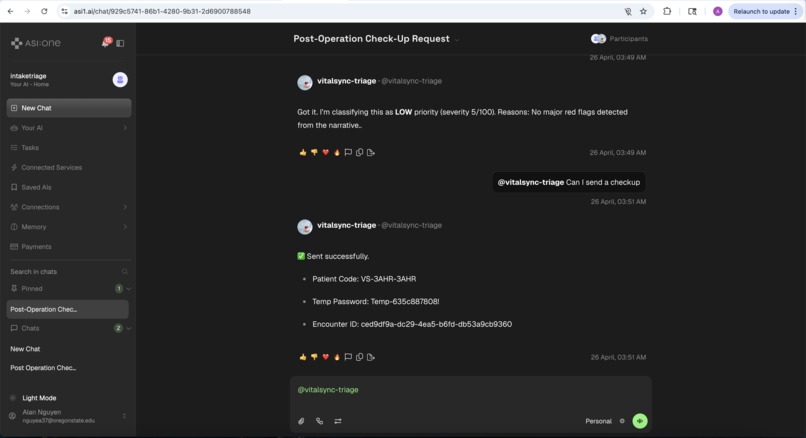
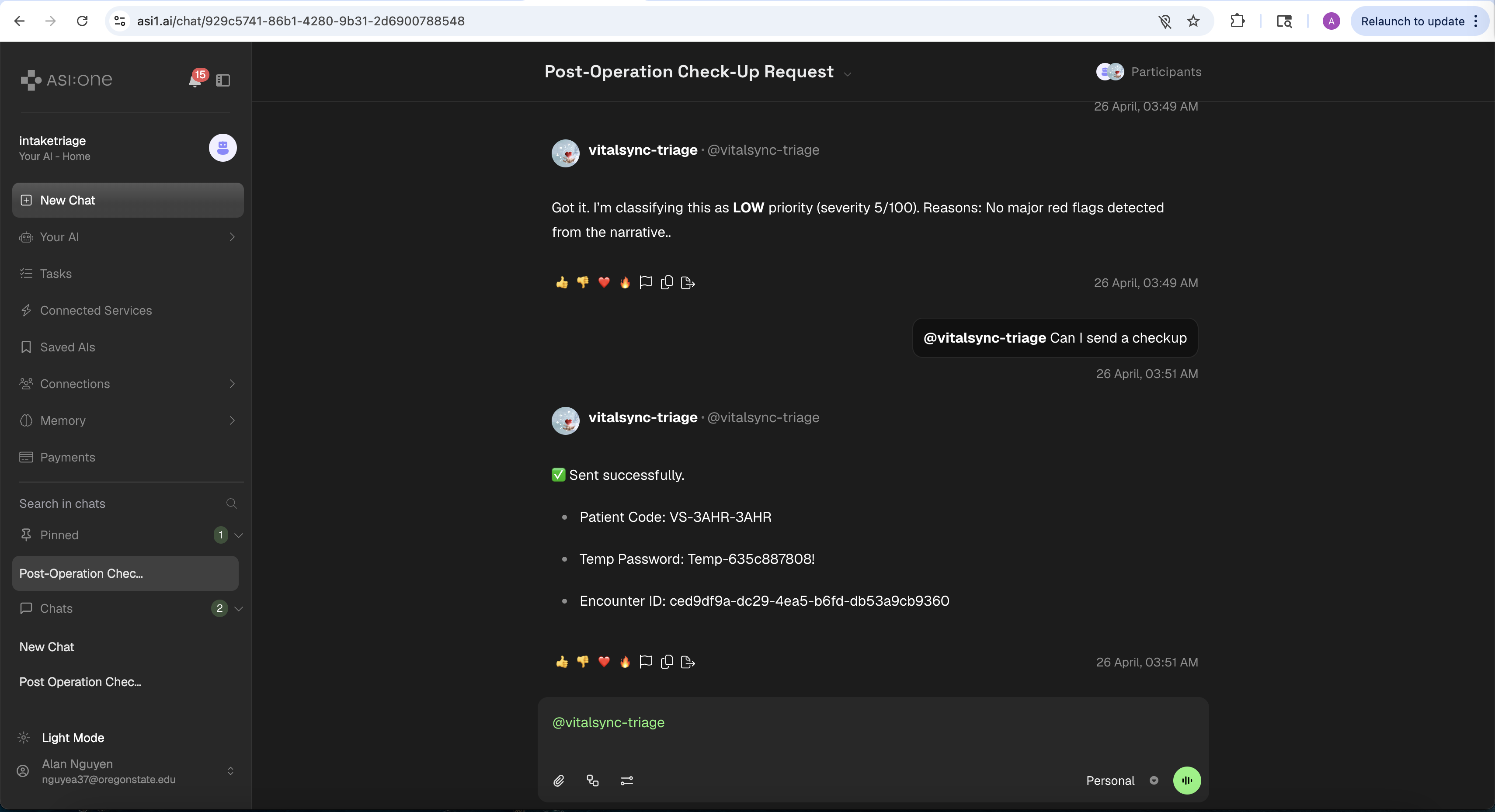
ASI:1
Inspiration
Post‑op recovery is where small issues become big emergencies. Patients are routinely dismissed when reporting pain from home, and clinics miss early signs of systemic infections until the patient is back in the ER. We wanted to eliminate medical gaslighting by providing objective proof for subjective pain. VeraCare transforms vague symptom updates into actionable, triaged alerts by combining ambient voice check-ins with silent computer vision telemetry, ensuring that when a patient is in danger, they are never ignored.
What it does
VeraCare is a post‑op recovery companion that:
VeraCare is a post‑op recovery Command Center and patient companion that:
Captures Objective Telemetry: Uses passive computer vision (MediaPipe) during check-ins to run physical motor tests (e.g., detecting rigors/tremors or arm mobility restrictions) to validate the patient's verbal symptoms.
Provides Agentic Triage: Uses a Fetch.ai Agentverse swarm with deep clinical context to cross-reference the patient's voice transcript, computer vision data, and specific surgical history to calculate a strict severity score.
Executes Priority Routing: Implements a "two-lane highway" routing system. Routine updates are quietly filed to prevent alarm fatigue, while critical anomalies (like a sepsis risk) trigger an Arista-inspired priority WebSocket, instantly bypassing the inbox and flashing into the clinician's Priority Queue.
Reduces Burnout: Auto-drafts clinical SOAP notes from the ambient check-in, keeping the human firmly in the loop to review, edit, and approve the final medical decision.
How we built it
- Frontend: Next.js (App Router) + Tailwind UI for the recovery calendar, reports, and voice check‑in flow.
- Backend/Data: Supabase (Auth + Postgres + RLS) to store patients, encounters, messages, and triage alerts.
- Computer Vision: MediaPipe integrated into the browser to capture live kinetic data and physical mobility restrictions without requiring patients to upload video files.
- AI Engine: Python FastAPI service to run triage logic and generate follow‑up questions using recent context.
- Fetch.ai / Agentverse: uAgents Chat Protocol agent that can chat, reason about risk, and on send write real records to Supabase.
- Networking / “Connect the Dots”: we built a routing pipeline that moves data across services (voice/chat → Next.js APIs → Supabase → clinician alerts), reliably connecting the right person to the right resource at the right time.
Challenges we ran into
- Designing a UI that felt calm and motivating instead of cluttered—especially the recovery calendar and daily CTA.
- Making voice check‑ins feel different each day while still being structured enough for clinicians.
- Agentverse hosted-agent constraints (single-file runtime, state persistence) and getting reliable “send” behavior.
- Ensuring writes are safe and correctly scoped (patients can only delete their own reports, clinician routing is controlled). -Making the routing reliable end‑to‑end (state, retries, and safe writes) so alerts don’t get dropped.
Accomplishments that we're proud of
- A recovery experience that’s calendar-first, easy to navigate, and actually encourages daily adherence.
- Adaptive check‑ins that remember prior context (feels less like a form, more like a conversation).
- An end‑to‑end workflow where a chat/voice update becomes a triaged alert with real database records.
- A working Agentverse / ASI:One demo path that shows reasoning + execution (not just chat).
What we learned
- The hardest part of healthcare UX is reducing friction without losing clinical signal—structure matters.
- “Agentic” systems need strong foundations: state, extraction, and reliable tool execution matter more than fancy prompts.
- Tight feedback loops (UI iteration + real user flows) improve outcomes faster than adding new features.
What's next for VeraCare
- Expanding the computer vision suite to include gait analysis and facial asymmetry for post-stroke remote monitoring.
- Stronger triage with procedure-specific pathways and trend detection (worsening swelling/pain over time).
- Add photo-based wound tracking with change detection and clinician review workflows.
- Push alerts through real channels (secure in-app inbox, SMS escalation rules, on-call routing). Expand the Agentverse agent into a multi-agent workflow (intake → triage → routing → follow-up scheduling).
Built With
- fastapi
- javascript
- python
- react-native
- restapi
- supabase


Log in or sign up for Devpost to join the conversation.