Inspiration
I go to the office three days a week. On my commute, I often see people with visual impairments and low vision navigating busy roads and everyday obstacles.
It made me ask:
If AI is moving forward so quickly, could it make everyday life a little easier for them too?
The starting point did not have to be crossing a road. It could be finding a towel at home, recognising a familiar person, or asking what is nearby.
I wanted to explore what more the phone they already carry could do. Meeting the community turned that idea into a commitment.
What it does
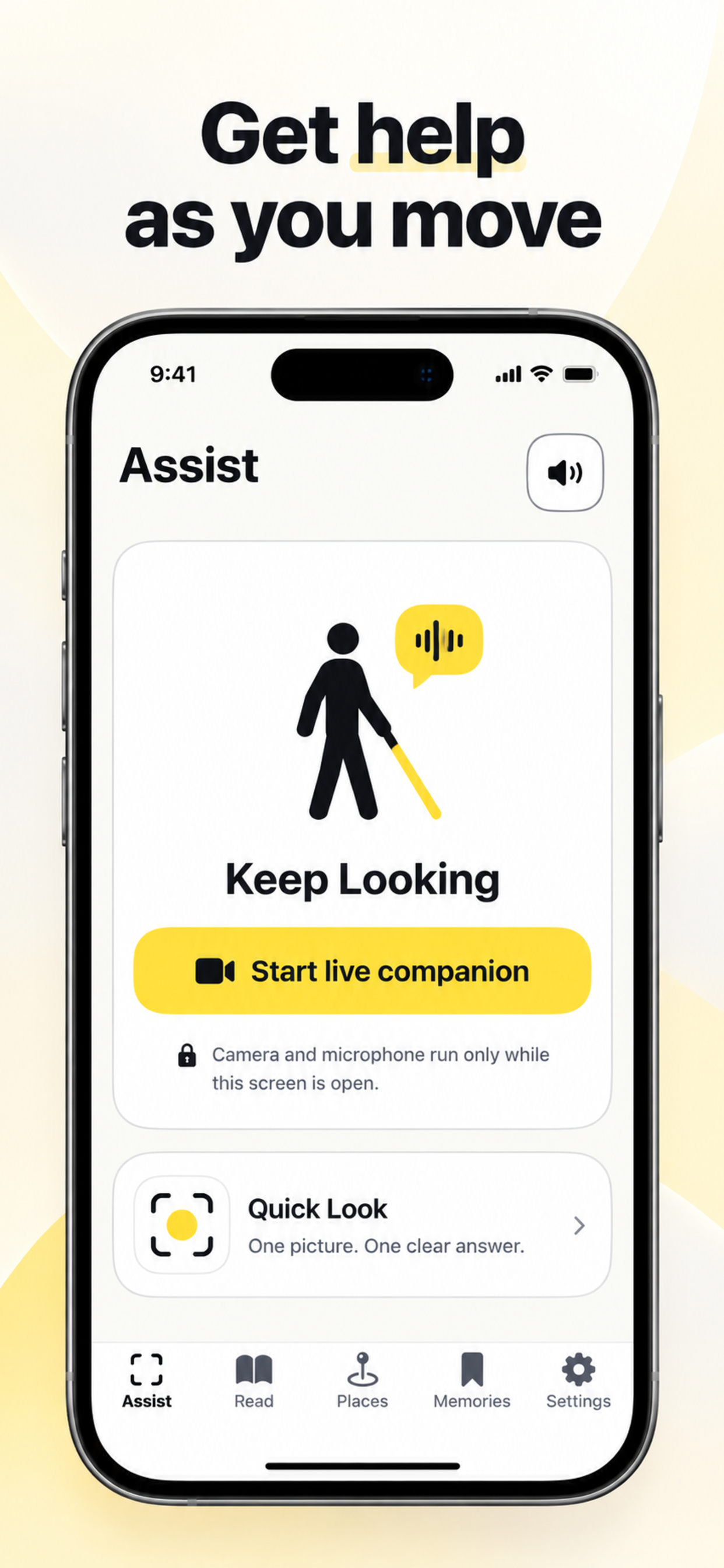
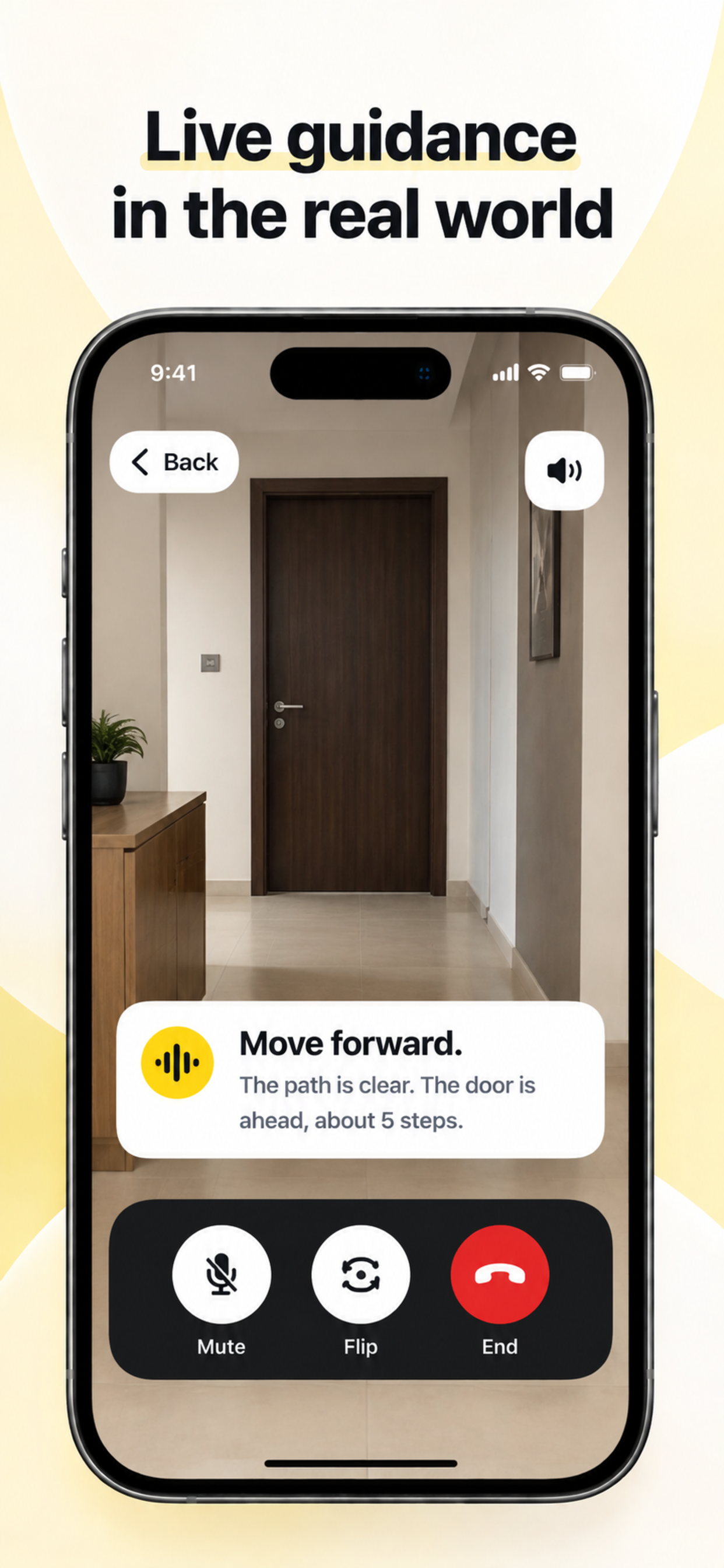
Vera is a live camera-and-voice companion for people with visual impairments and low vision. The iPhone app supports English and Hindi, with English as its primary language.
- Assist: Ask questions about your surroundings, hear spoken answers, and continue the conversation with follow-up questions.
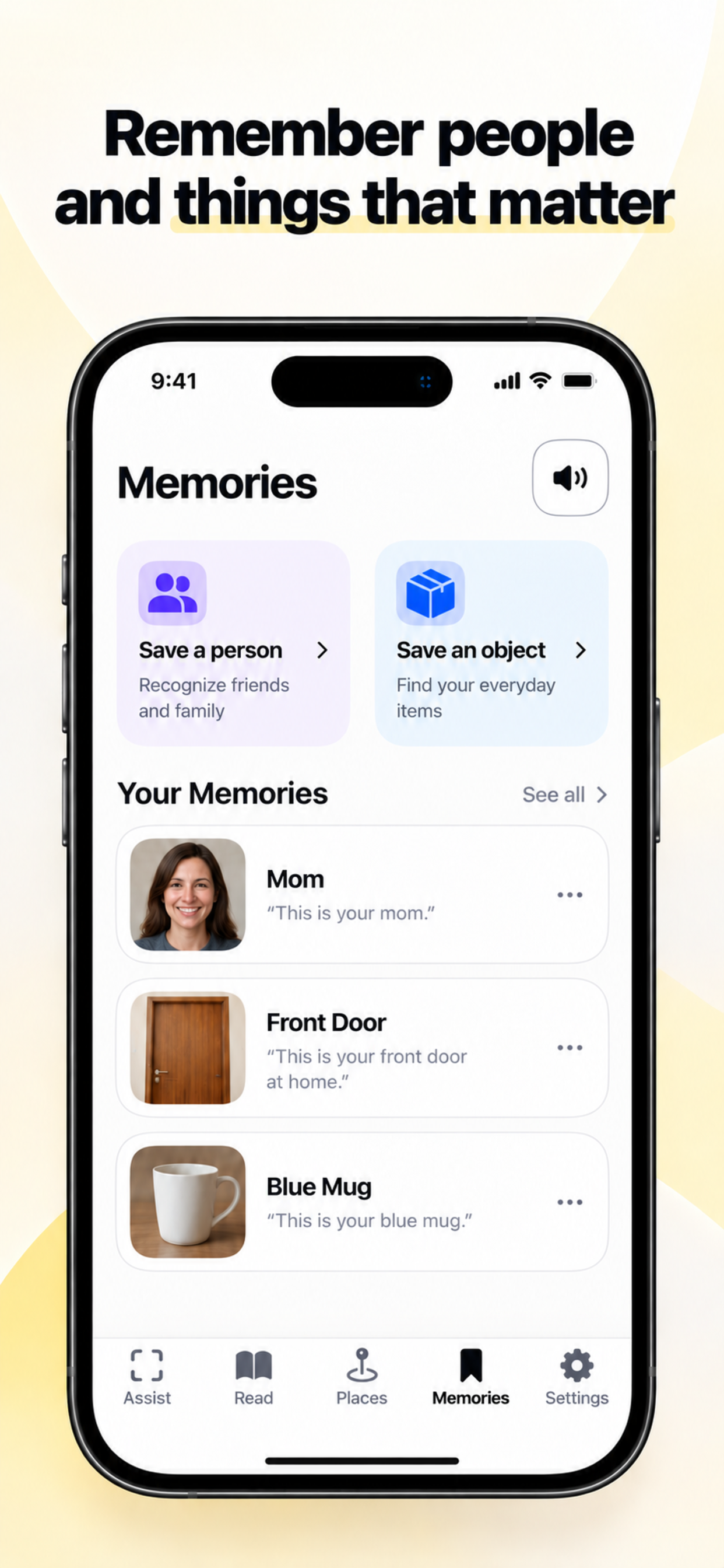
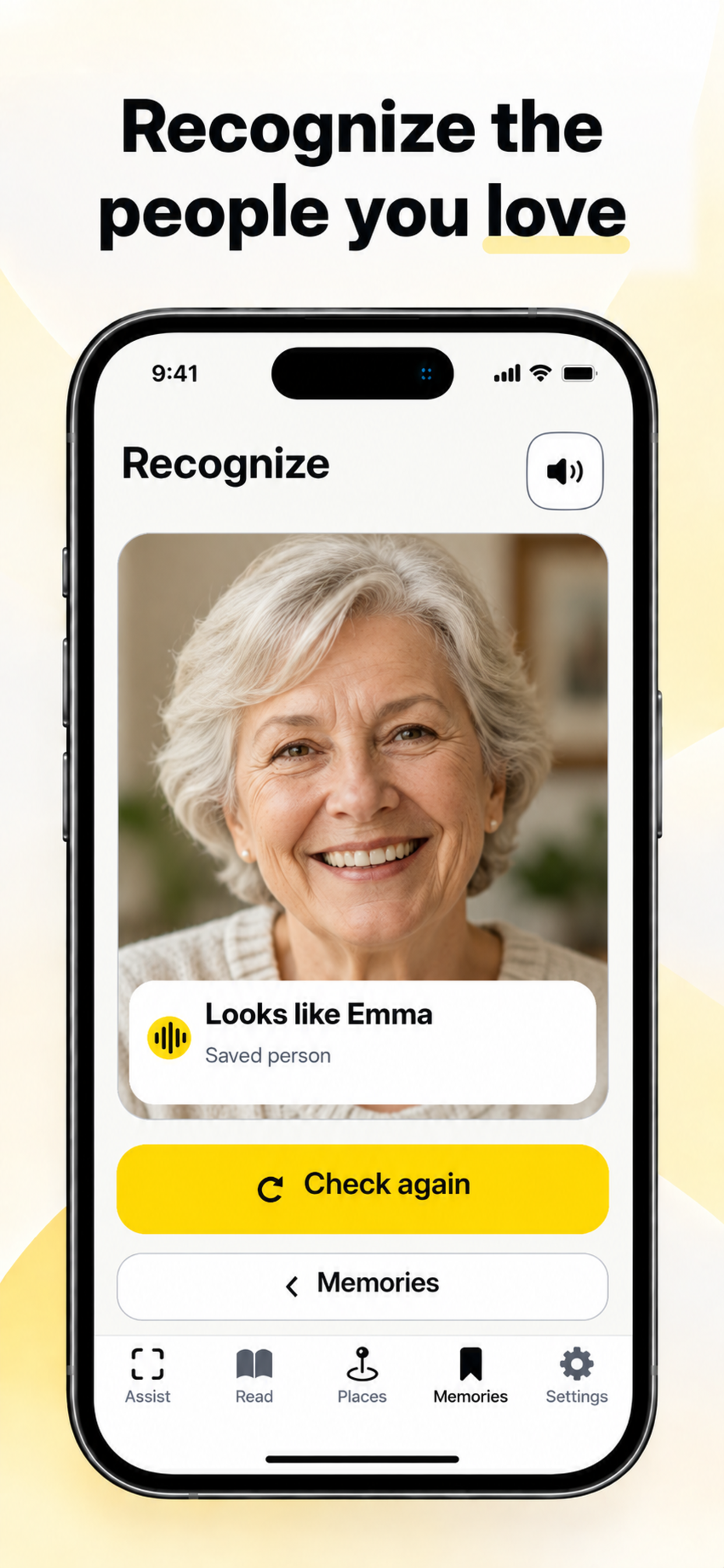
- Memories: Save familiar people and meaningful objects so Assist can help recognise them through the camera.
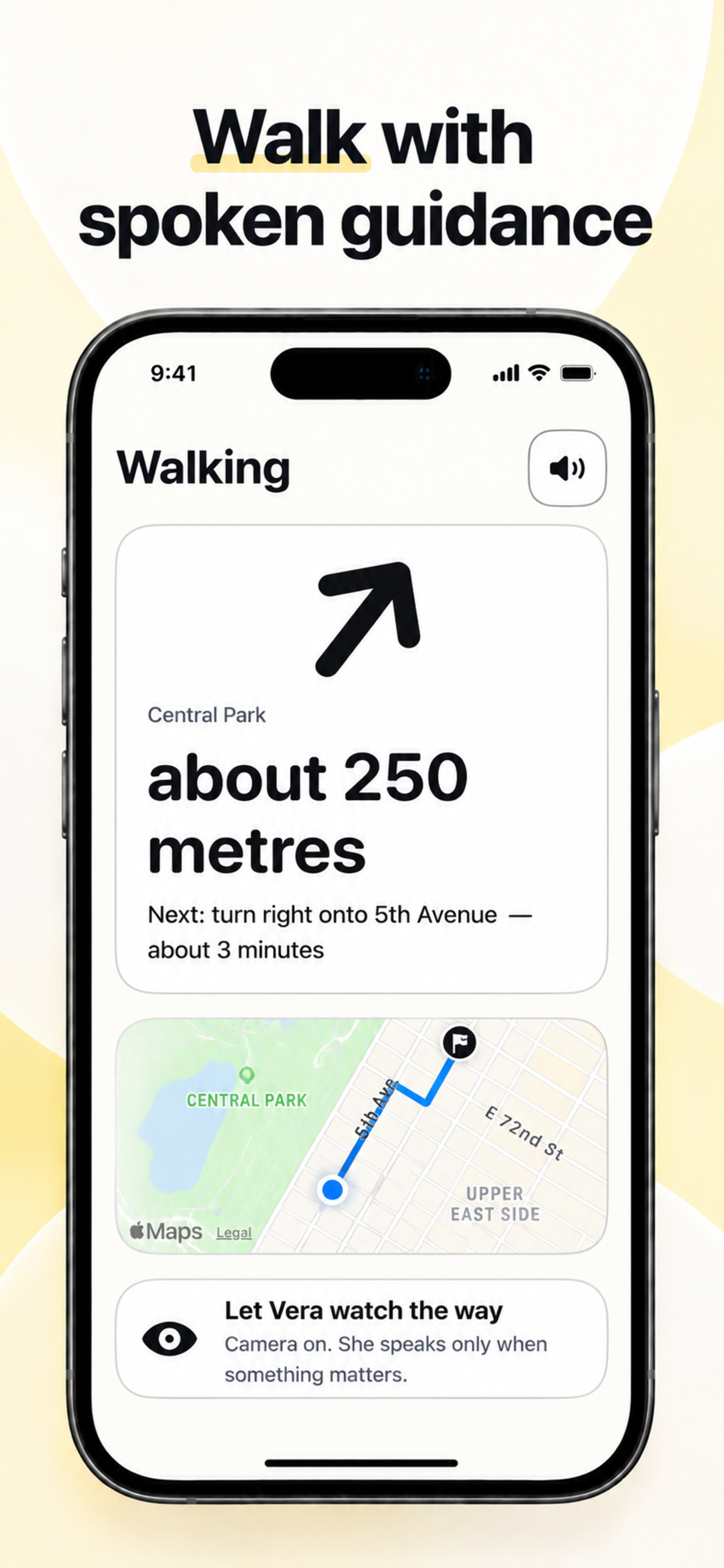
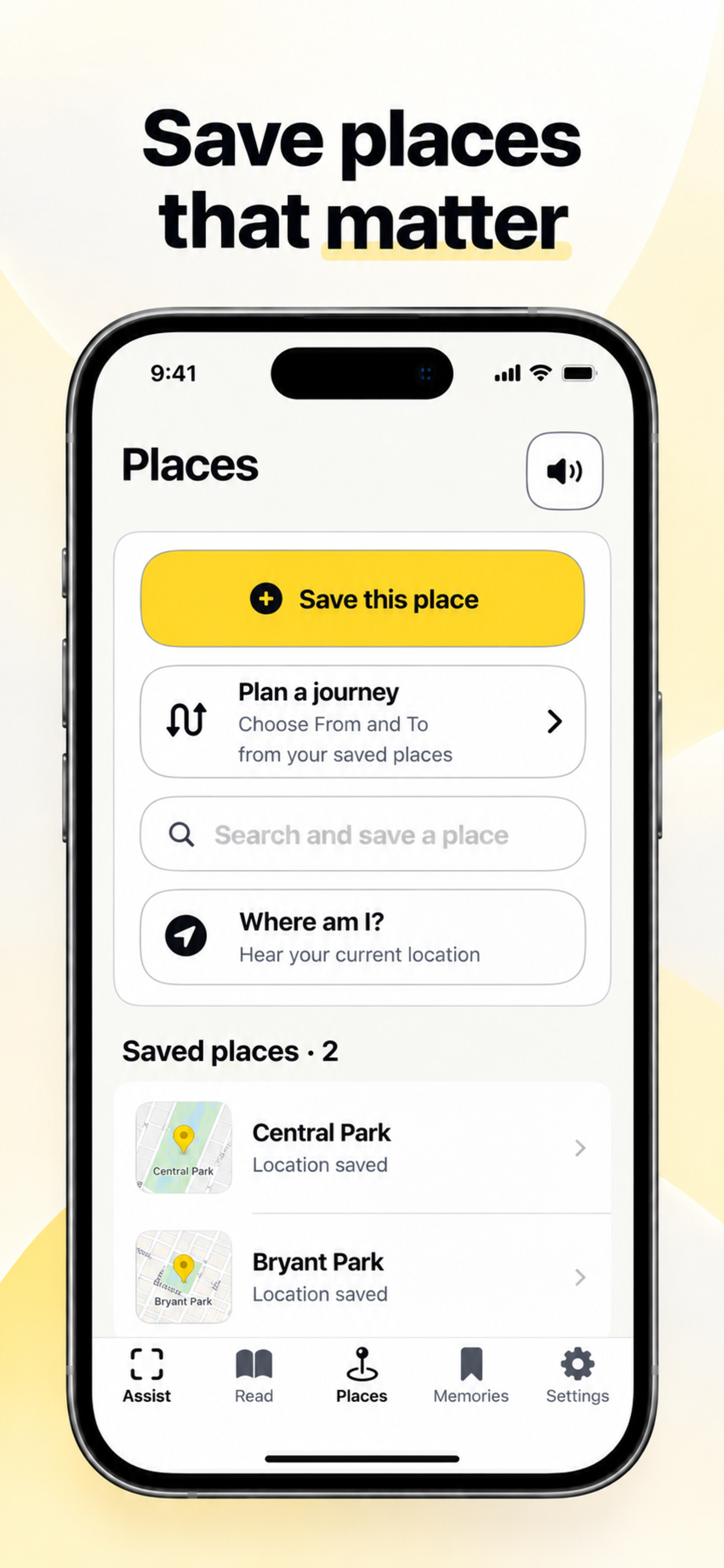
- Places: Save destinations and photos of doors or entrances to help recognise the entrance you are looking for.
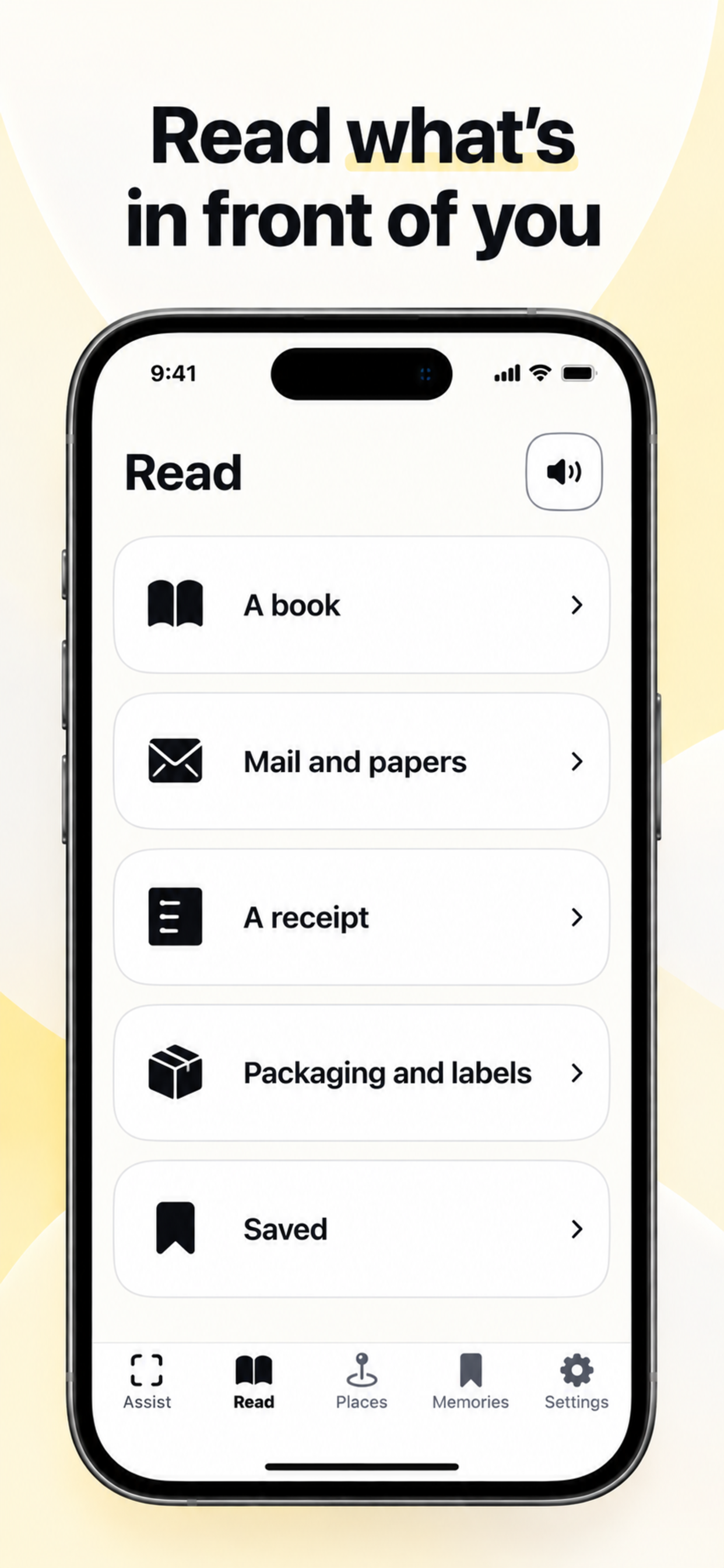
- Read: Listen to books, signs, and other printed text. Early Braille support is also included.
Assist came first. Reading tools followed because people told us they were switching between several apps for everyday tasks.
How we built it
Camera and conversation: Combined camera input, AI-based visual understanding, voice questions, and spoken responses.
Accessible interaction: Designed around voice-first use, VoiceOver navigation, and large, clear controls.
Personal context: Connected Assist with saved memories of familiar people and objects.
Community-led development: Demonstrated early versions at centres, made changes from feedback, and returned for further testing.
Careful prioritisation: Focused on the core experience rather than trying to build every requested feature at once.
The iPhone app is live. Android development is underway.
Challenges we ran into
Understanding everyday life. Our biggest challenge was not writing code. It was understanding how people use technology, which tools they already trust, and where they still need help. We could not learn that through research behind a laptop alone.
Earning time and trust. Visits required introductions, permissions, and appointments. Participants have jobs, studies, and their own commitments. Asking them to spend hours testing our app meant earning their trust and respecting their schedules.
Testing beyond our own experience. I tried using Vera with my eyes closed. It exposed difficulties, but it could not show me how someone who relies on accessibility tools every day would use the app. We needed their direct involvement.
AI accuracy. Responses can be inconsistent. Braille recognition is particularly unreliable, and the Read section needs substantial improvement. Adding a feature was much easier than making it work reliably with real examples.
Supporting affordable Android phones. Most people we met use Android, often on devices costing ₹10,000–₹15,000. Building a good camera-and-voice experience on this hardware is a different challenge from making it work on an iPhone.
Language quality. Listing a supported language is not enough. People need their questions understood accurately and answers spoken clearly. Hindi still needs improvement, and Gujarati is one of the strongest requests we received.
Reliability and time. There are known bugs, unfinished flows, and many suggestions we have not addressed yet. Fixing these while building Android alongside my full-time job requires careful prioritisation.
Keeping access free. People and centres told us ongoing app fees were not affordable. We need to understand real running costs and find a sustainable way to cover them without asking these users to pay.
Accomplishments that we're proud of
I have built around 11 apps, mostly through research behind a laptop. Vera is the first I have built through this much direct community involvement.
Getting out and listening. I am naturally shy. Visiting centres, introducing Vera, and asking people for honest criticism was a personal achievement.
Receiving 50+ pieces of feedback. Individual conversations and group demonstrations gave us specific problems to work on. We have not solved them all, but we now have a much clearer understanding of what people need.
Learning from Rahul. Rahul is an accessibility trainer and developer in Ahmedabad who teaches others to use technology and helps evaluate digital accessibility he also helps big MNCs to test A11Y and also open source contributor. He tested Vera and was giving time to us from last few months and joined our video with honest feedback—including what needed fixing. His guidance gave us clearer priorities.
Building ongoing relationships. Three centres have offered regular feedback time, subject to their schedules. Having people we can return to for testing matters more than a one-time demonstration.
Receiving conditional interest. Those centres together serve around 800 people. They have expressed interest in Vera if we deliver free Android access, the required languages, and sufficient reliability. That gives us concrete requirements to work toward.
Seeing people offer support. Around seven people, including friends and other visitors helping at the centres, offered monthly contributions of roughly $10–$15. These early offers encouraged us to explore community-supported funding.
The biggest achievement was people giving us their time, honest feedback, and a reason to keep improving.
What we learned
You cannot build this kind of product from behind a laptop alone.
- Adding accessibility does not finish the work. People can use several apps and still face missing features, language barriers, and unreliable results.
- Not every problem needs more AI. Sometimes the missing piece is a simple way to connect people and coordinate support.
- Launching is not enough. Participants described unresolved issues and long waits for improvements, even in apps from large companies. Good intentions need follow-through.
- This applies to every app I build. Accessibility is not something to add once. It needs continued attention from developers and feedback from the people who depend on it.
What's next for Vera: Visual Assistant
Improve the current experience first. Fix known bugs and unreliable flows. Strengthen Assist and improve Read and Braille recognition through testing with real examples.
Build exam-writer coordination. Almost every centre we asked described difficulty finding volunteer writers, or scribes, for exams. We are building a form where volunteers choose a centre, an admin panel for staff to manage assignments, and in-app details so candidates can connect with their assigned writer before exam day. This is not live yet.
Target Android by December 30, 2026. Focus on affordable devices and older Android versions so Vera can reach the people we have been meeting.
Improve Hindi and add Gujarati. Test both in real conversations before expanding to more Indian languages with help from their speakers.
Maintain regular community contact. Aim for weekly feedback with Rahul and the centres, and up to two centre visits a week, subject to appointments and availability. Continue creator outreach to raise awareness and encourage volunteer registrations.
Make Vera free—and keep it free. Work toward permanently free access through my own contributions, voluntary support, and careful management of running costs. The people and centres we are building with should not have to pay to benefit.
Work toward a January 2027 rollout. Our goal is to reach 300+ people, but only if we meet the centres’ requirements for Android, languages, reliability, and free access—and they choose to proceed.
Step 0.1 toward a more accessible everyday life.
Built with the community—not just for it. The work continues after this submission.


Log in or sign up for Devpost to join the conversation.