Inspiration
Some nights you don't know what you want to watch. You only know what you feel.
I'm an independent filmmaker and farmer from Nabua, Camarines Sur, Philippines. I make films under the name VER-DÉ. My films are real, finished, and free or affordable to watch — but almost nobody finds them. Streaming apps are built around browsing posters and genres, and independent films get buried under catalogs of thousands.
So I asked: what if the TV asked how you feel, instead of what genre you want?
What it does
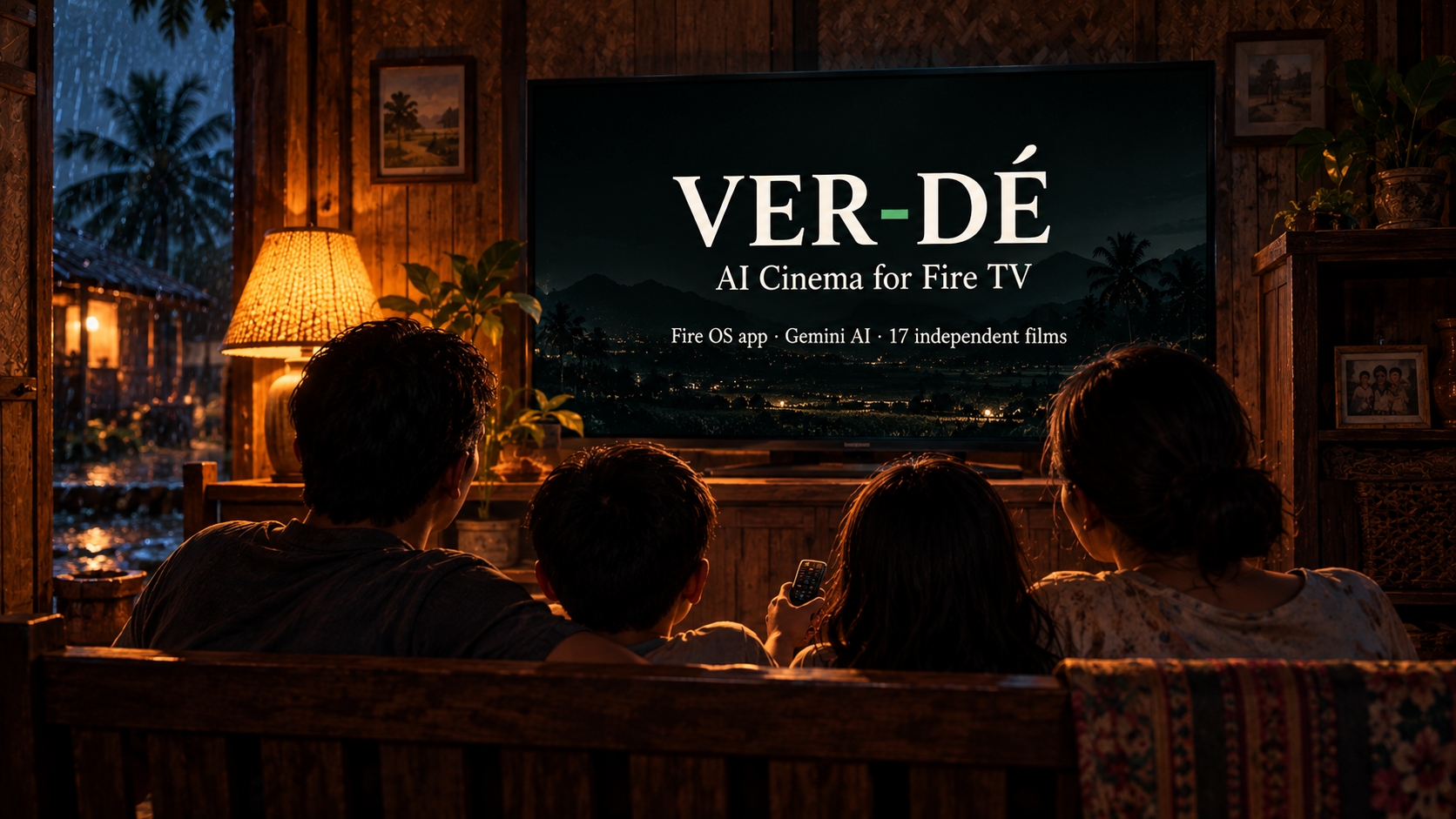
VER-DÉ for Fire TV is a remote-first, AI-powered way to discover independent films on the television.
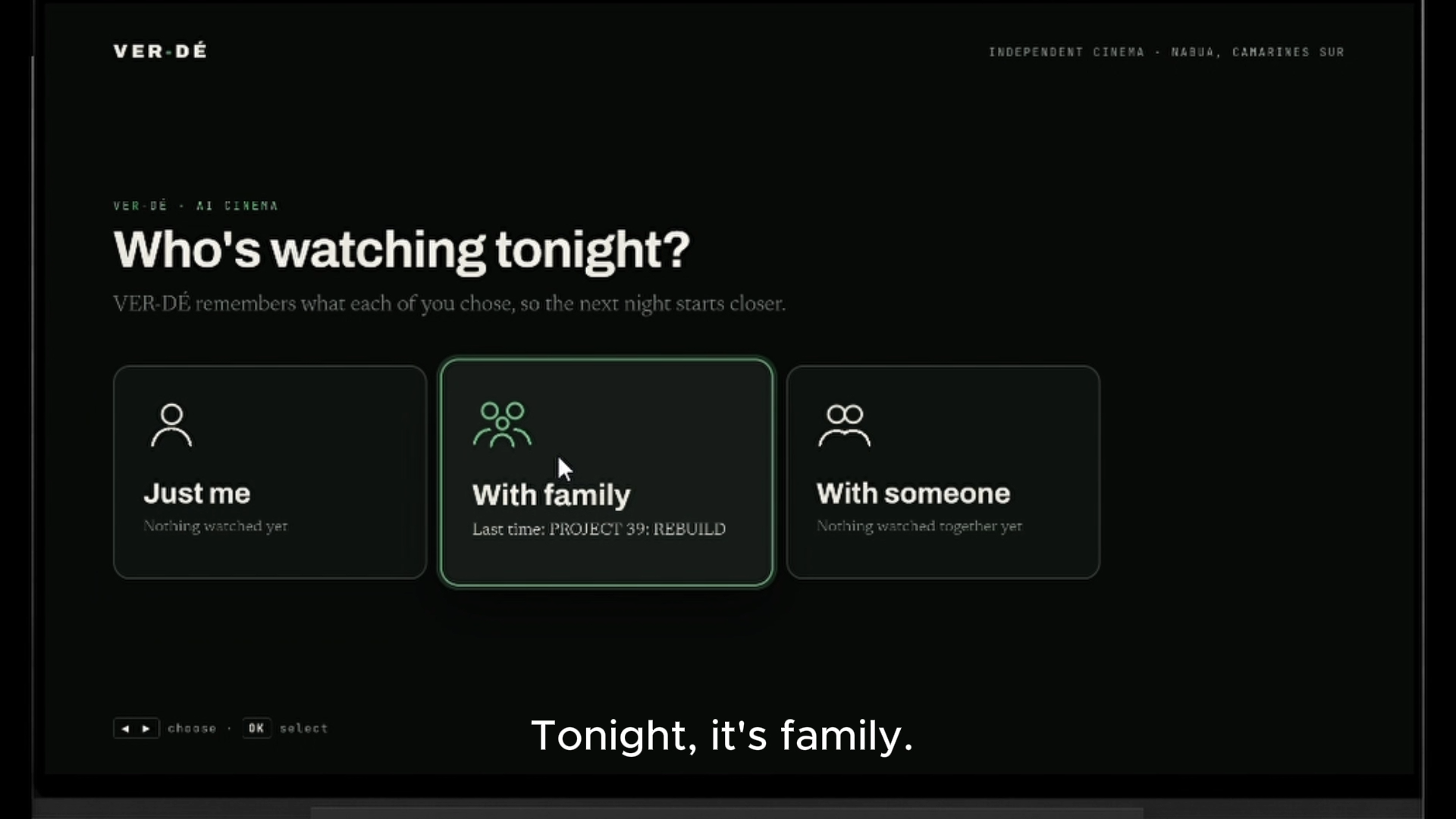
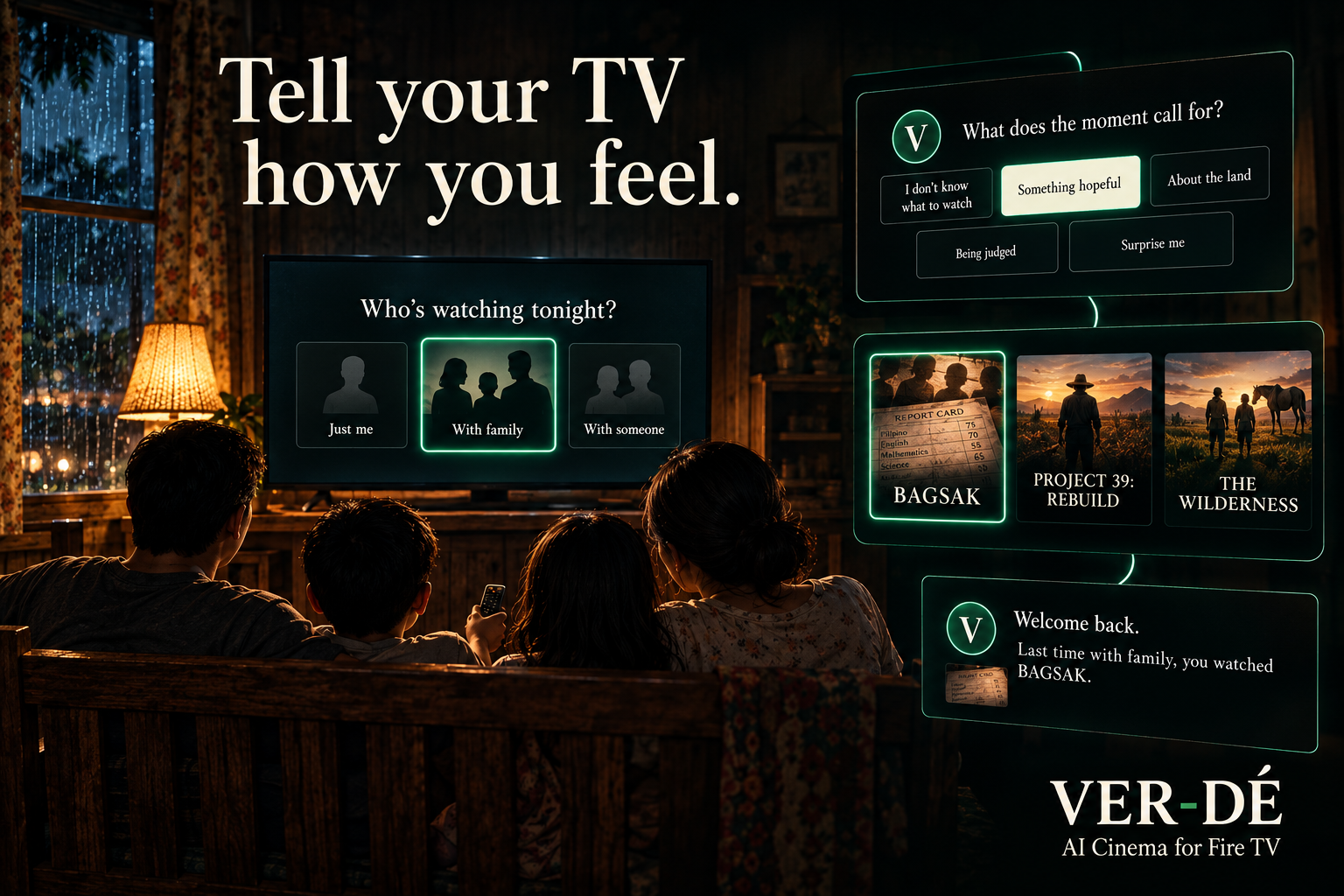
- Who's watching? — Just me, With family, or With someone.
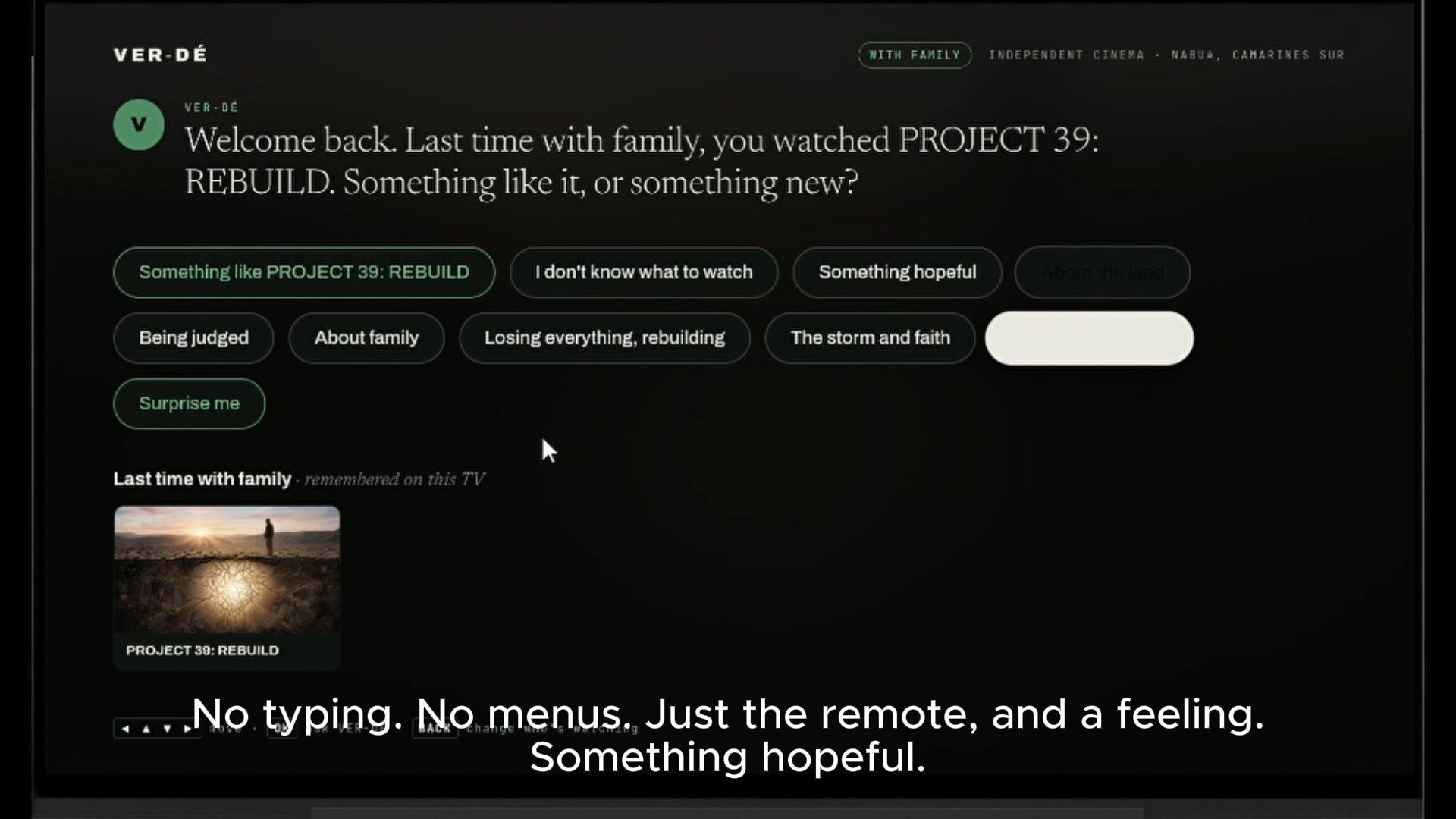
- What does the moment call for? — pick a mood with the D-pad: Something hopeful, About the land, Being judged, Surprise me… No typing, no menus.
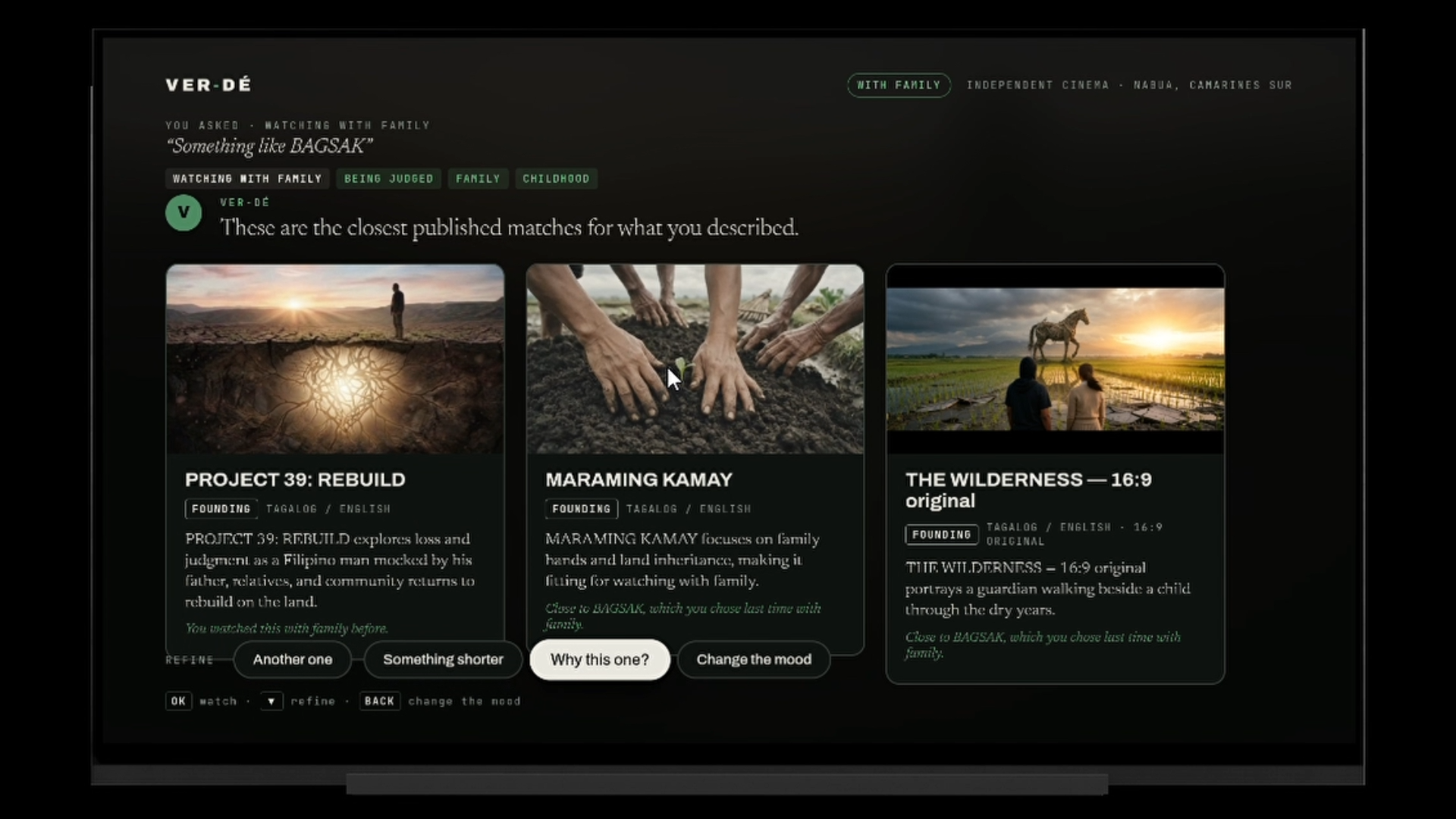
- VER-DÉ understands — the request is interpreted into concepts, moods, runtime and language, and shown back as tags so the viewer sees what VER-DÉ heard.
- Three films, three reasons — not three hundred. Each card explains why it fits, grounded only in real catalog facts.
- Refine — Another one, Something shorter, Why this one?, Change the mood.
- Watch — free films play full screen. Founding Access films show a QR code so the viewer can support the filmmaker directly from their phone.
- The next evening, it remembers — each household's choices are remembered on the TV. VER-DÉ greets the family with what they watched last, offers "Something like it," and re-ranks recommendations toward what that household enjoys while favoring films they haven't seen.
How I built it
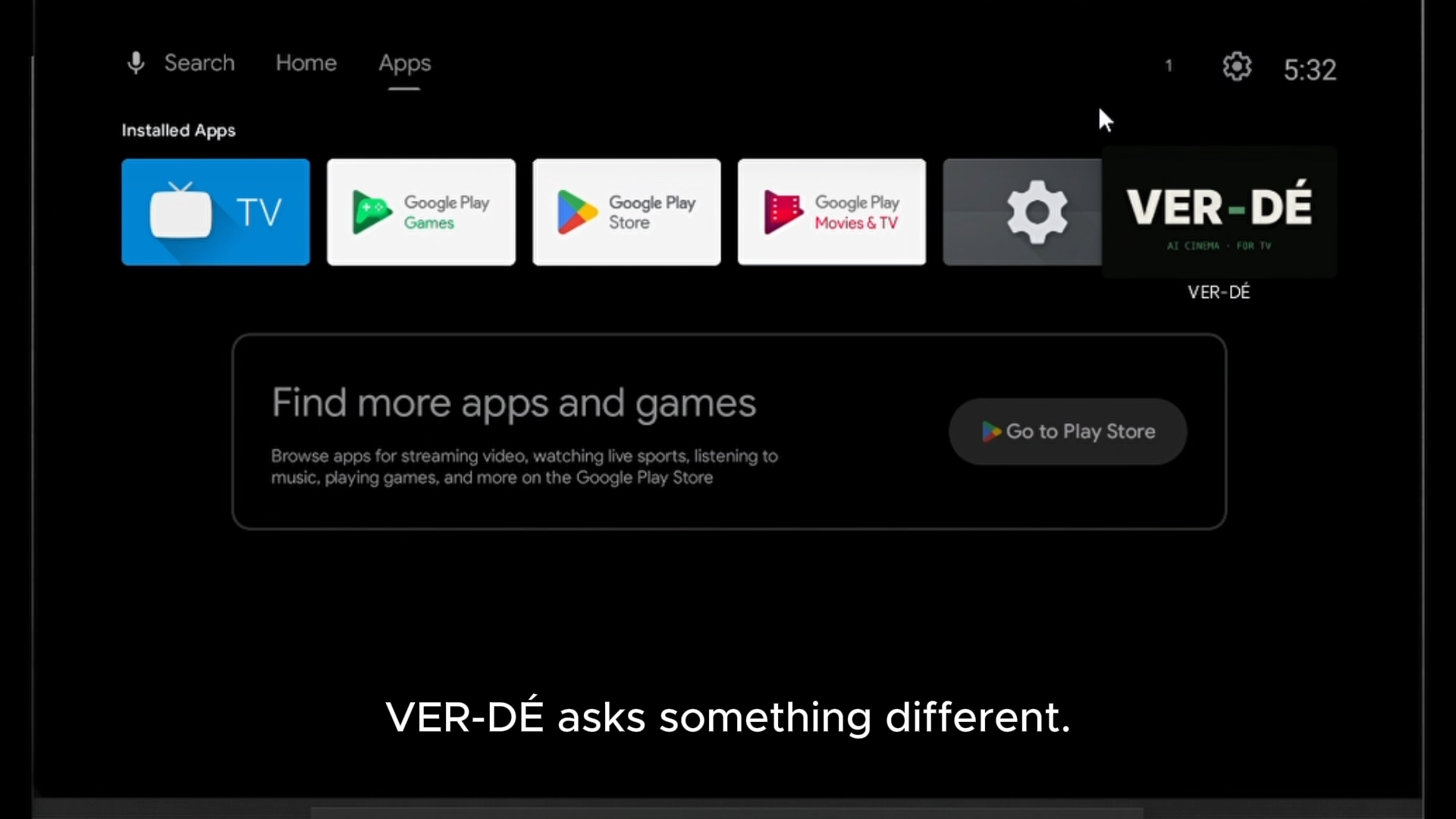
- Fire OS app (Java, Android) — a full-screen WebView host with a home-screen banner, leanback launcher support, autoplay for playback, an offline screen, and a Back-key bridge that steps back through VER-DÉ's own screens before exiting.
- 10-foot TV interface (HTML/CSS/JS) — spatial D-pad navigation with clear focus states, layout that scales from 960×540 to 4K, film stills as live backdrops, and household memory stored on the device.
- AI engine (Vercel serverless + Gemini) — Gemini classifies intent and extracts structured fields; film selection is deterministic against the catalog; Gemini then writes reasons using only catalog fields. It is instructed never to invent runtimes, awards or facts. The API key never leaves the server.
- Resilience — if the AI is busy or unreachable, the engine retries, falls back to backup models, and finally to a keyword engine, so discovery always returns films.
- GitHub Actions builds the APK on every push and publishes it to a release.
One engine serves both the web (engine.ver-de.com) and the TV.
Challenges
- No device, no budget. I don't own a Fire TV or a smart TV, and buying one wasn't possible. I built and recorded on the Android TV emulator in Android Studio — the APK is a standard Fire OS app that sideloads onto Fire TV.
- Infrastructure availability. My first planned AI provider didn't support billing in the Philippines, so I rebuilt the engine around Gemini.
- A real PC with real limits. A full C: drive, virtualization disabled in the BIOS, and a model returning "high demand" errors the night before recording — each one solved with a fallback rather than a workaround that hides the problem.
- Designing for a remote. Conversation usually means typing. On a TV it had to become a few honest choices that still feel personal.
What I learned
On a TV, intelligence should feel like fewer choices, not more features. Three films with a reason beat a wall of posters. And memory — knowing who is watching together — matters as much as what they asked for.
What's next
Install on a physical Fire TV device, add more VER-DÉ films with full runtimes, open the catalog to other independent filmmakers, and explore Alexa voice requests as a second way to ask.
A VER-DÉ Film · Music by Green Ralph · Nabua, Camarines Sur
Built With
- android
- android-studio
- android-webview
- css3
- fire-os
- gemini
- github-actions
- gradle
- html5
- java
- javascript
- serverless
- vercel

Log in or sign up for Devpost to join the conversation.