-
-
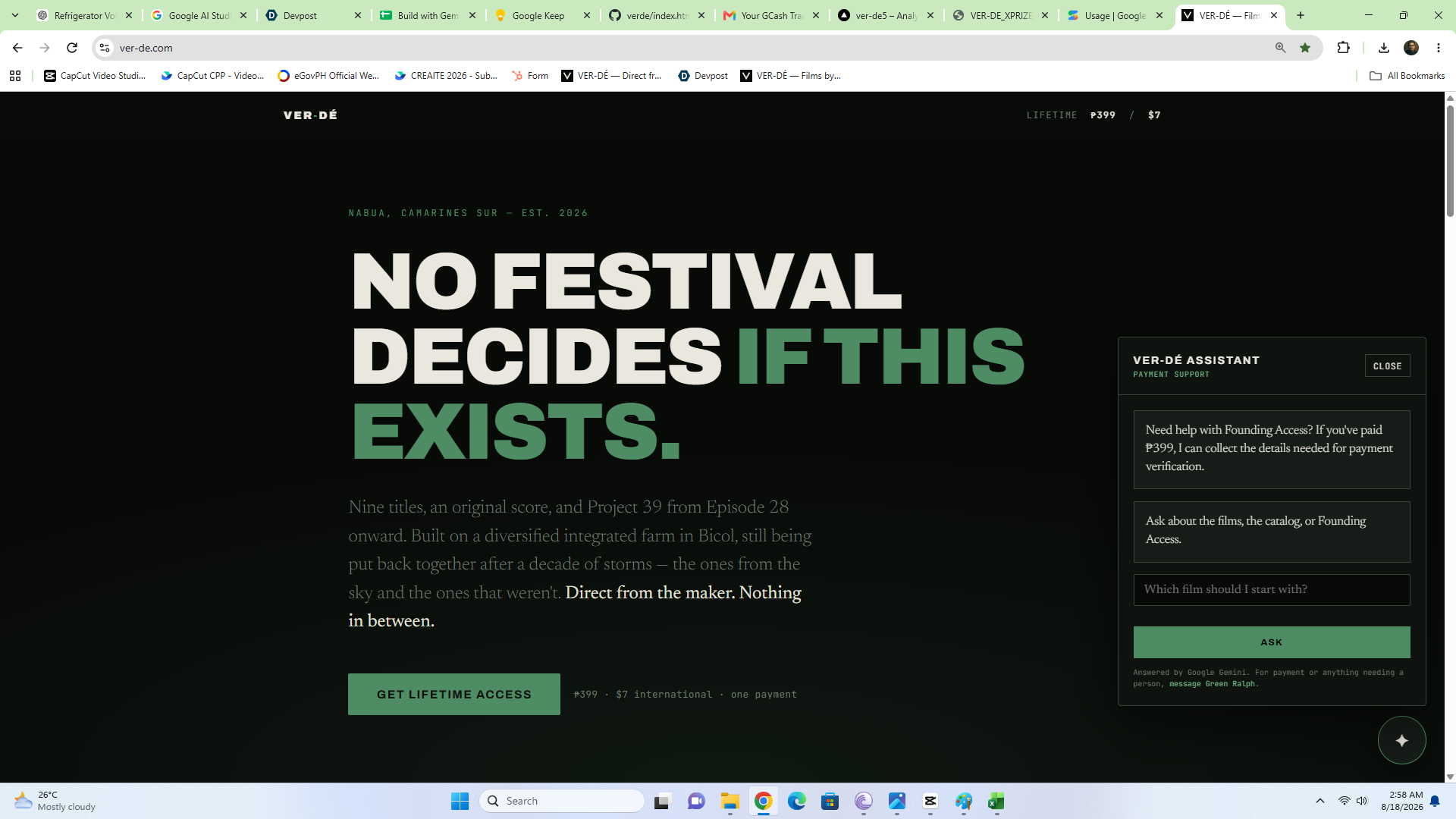
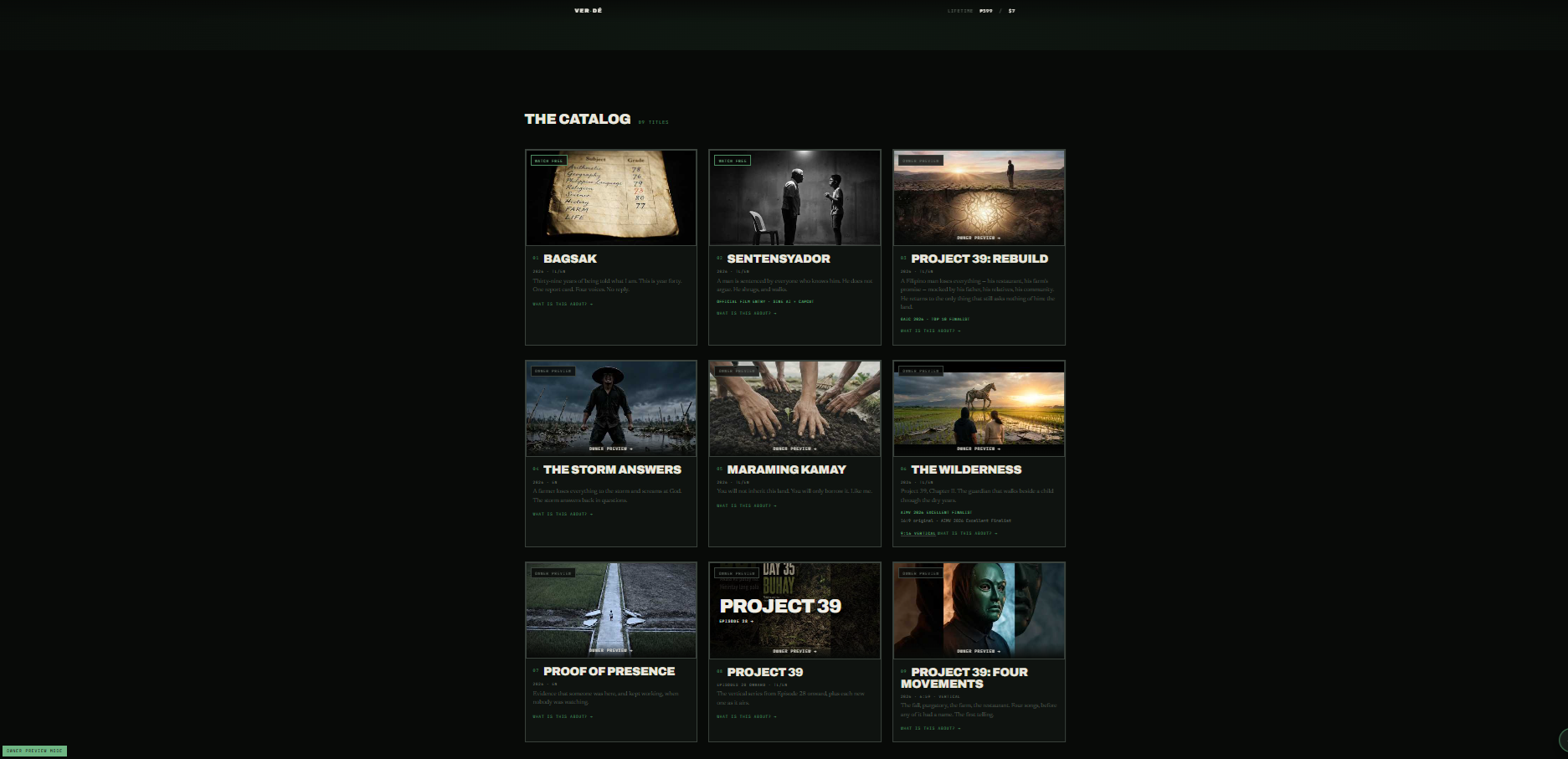
ver-de.com — nine films sold direct from a farm in Nabua, Camarines Sur. No festival, no platform, no gatekeeper.
-
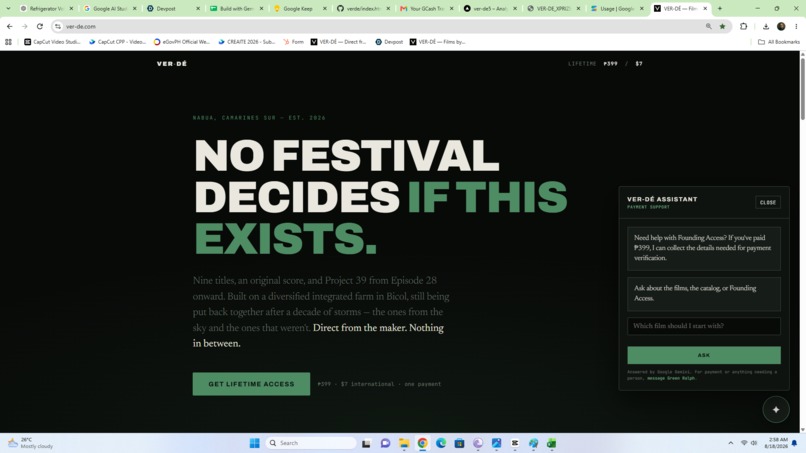
VER-DÉ — direct-to-audience film storefront.
-
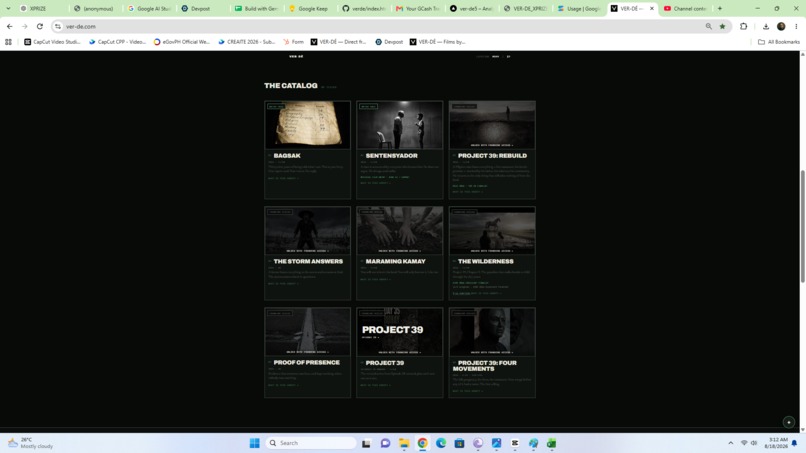
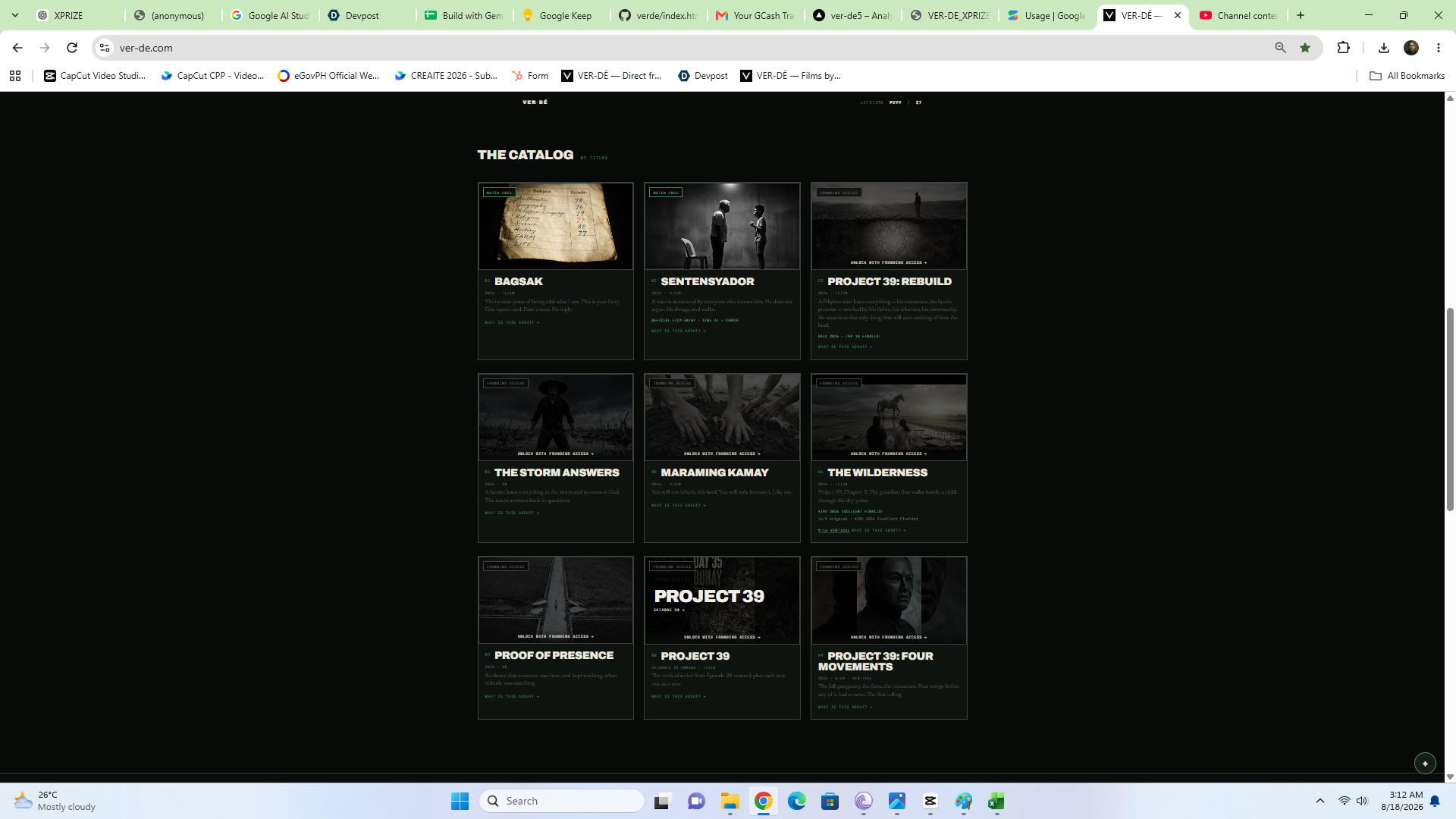
Catalog — all nine films
-
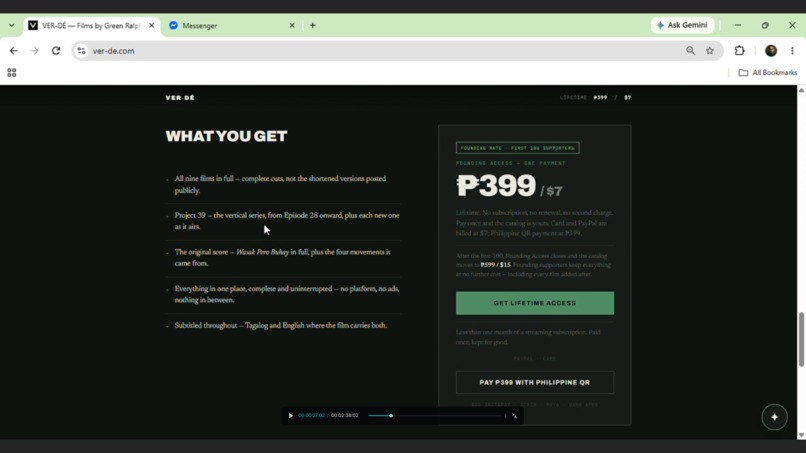
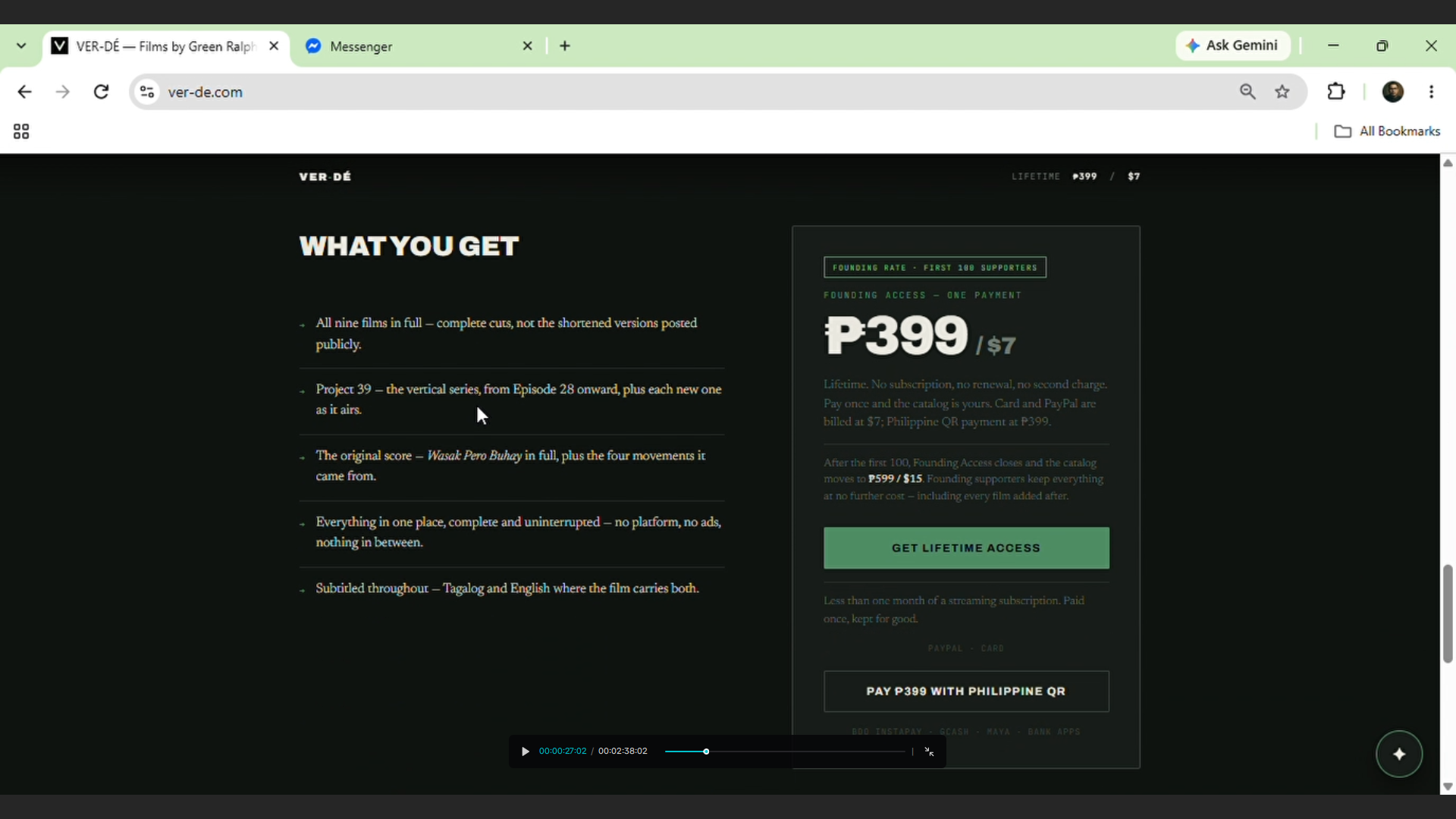
One-time payment for lifetime access.
-
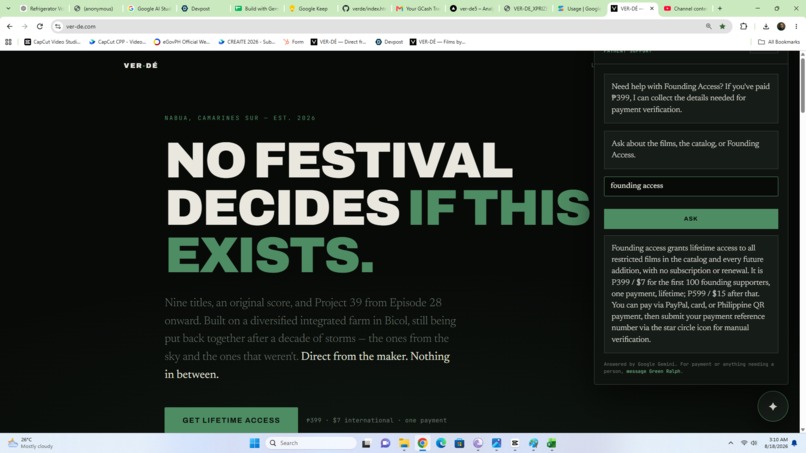
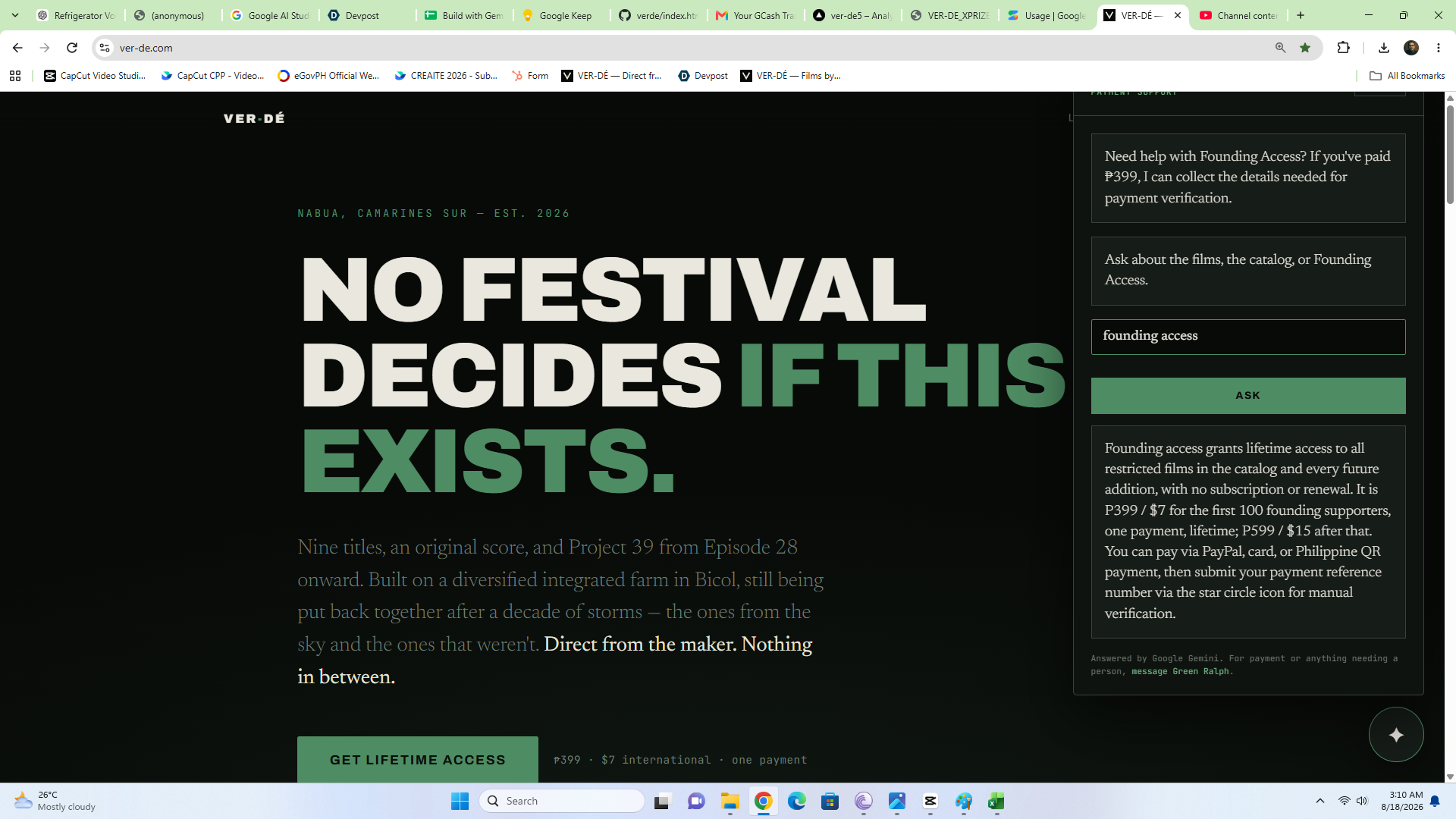
emini operates customer support directly from the production site.
-
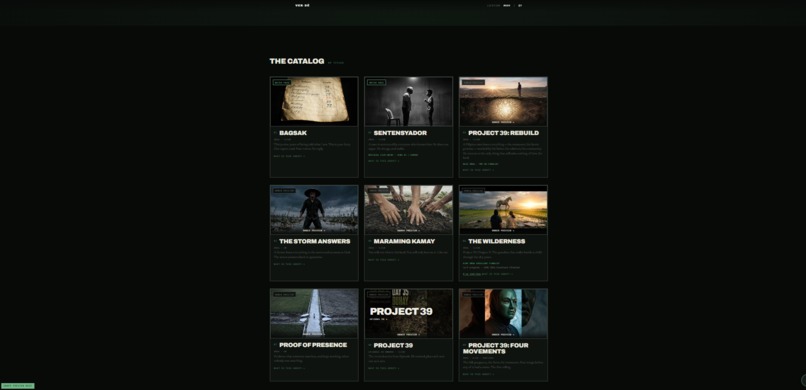
Owner-controlled fulfillment unlocks the paid catalog.
-
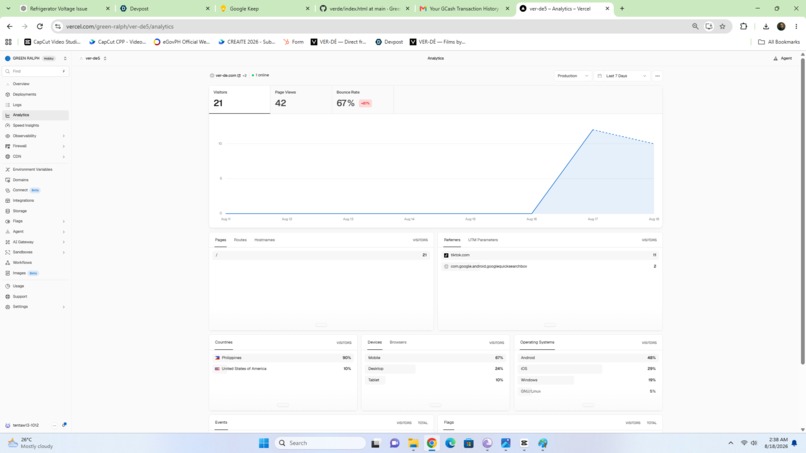
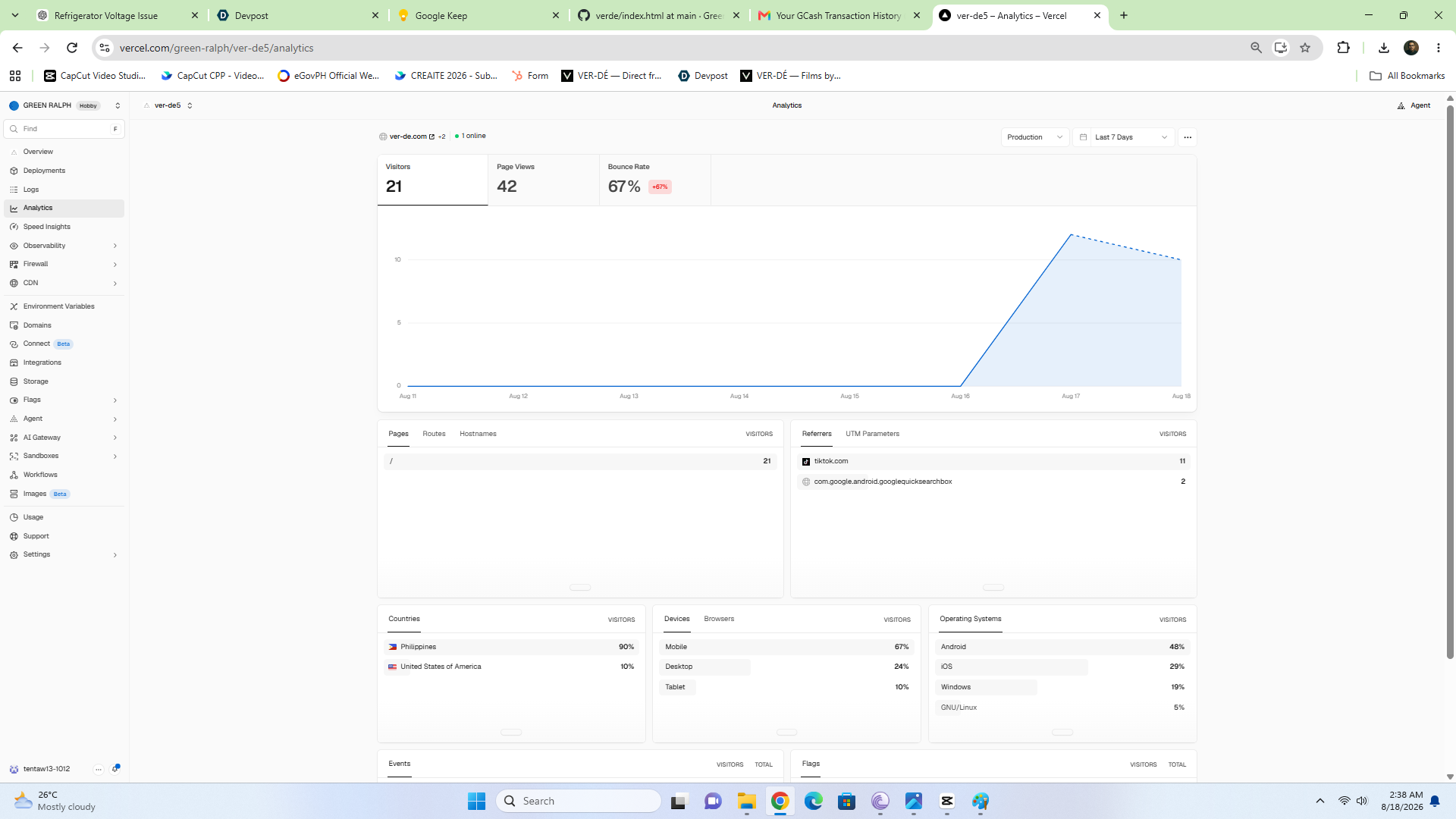
Production traffic and Gemini API usage.
Inspiration
I spent ten years working under my father before breaking away to make films. Since then I have submitted to eleven festivals and been rejected by every one. The films were never the problem — the gate was.
So I stopped asking permission. VER-DÉ is my own cinema: nine films sold directly from a farm in Nabua, Camarines Sur, to anyone who wants them. No festival, no platform, no gatekeeper.
What it does
VER-DÉ is a direct-to-audience film catalog that takes money. Two films are free. Seven are behind Founding Access — one payment of ₱399 / $7, lifetime, capped at the first 100 supporters, after which it moves to ₱599 / $15.
Gemini runs the customer-support layer of the storefront. A visitor who does not know the work can ask the catalog anything — what a film is about, what they get, how payment works — and get an answer grounded only in the real catalog. It is instructed never to invent a title, a festival credit, or a price, never to spoil an ending, and never to claim how many founding places remain, because it has no way to know. Anything needing a human is handed to me on Messenger.
How AI transforms the workflow
I am one person. There is no support team, no marketing department, and no distributor. AI is not a feature here — it is the staff.
Customer support runs on Gemini. Visitor questions about the catalog, films, and payment are answered by a Gemini API call in production from the live site. Questions requiring human intervention are routed to me on Messenger. The films themselves are AI-produced from real farm footage and a decade of family photographs. My working method is “inevitable realism”: nothing invented, everything continued from real captured material.
- The original score was written and produced by me and released through DistroKid to Spotify, Apple Music, and YouTube Music.
A studio would need a dozen people to do what runs here from one farmhouse.
How I built it
Static HTML/CSS/JS, no framework. Hosted on Vercel, source on GitHub, domain through IONOS. The assistant is a Vercel serverless function that proxies the Gemini API — the key lives in an environment variable and never touches the browser. Payments run on PayPal for card and international, and Philippine QR (BDO InstaPay / GCash / Maya) for local buyers, verified manually before access is issued.
Total project expenses to date: approximately ₱3,220 (~$56), including infrastructure/development costs and paid TikTok promotion.
The business is registered with the Philippine Department of Trade and Industry as VER-DE FILM PRODUCTION (Business Name No. 8373501, Nabua, Camarines Sur, valid July 24, 2026 to July 24, 2031).
Challenges
Typhoons, power cuts, and a budget measured in hundreds of pesos. The farm this is all built on is still being rebuilt after a decade of storms.
The hardest technical problem was the one that matters most: making the assistant refuse. An assistant that invents a festival credit to make a sale is worse than no assistant, because the buyer finds out. Most of the prompt engineering went into what it must not say.
What I learned
That distribution was never the hard part. Building the storefront took days. Getting a stranger to pay for something a Filipino farmer made is the actual work, and it is still ahead of me.
Why this scales
VER-DÉ is not competing with streaming platforms. It is a proof that one person can operate a complete distribution business — storefront, customer support, catalog, and payment rails — with AI as the entire staff.
The problem is global. Independent filmmakers everywhere hold work that nobody can buy, because distribution runs through festivals, platforms, and distributors with limited slots and their own economics. My own record is eleven festival submissions and eleven rejections. That is not a complaint; it is the market functioning as designed.
Every filmmaker on the wrong side of that gate has the same three gaps: no storefront, no support staff, no payment rail. AI has just made all three nearly free. That is the fundamental change — not that AI can generate a film, but that it collapses the cost of being your own distributor to almost nothing.
This was built for roughly ₱3,222 (about $56), from a farm in Bicol, during typhoon season, by one person with no engineering background. If the model holds under those constraints, it holds anywhere. The path to scale is not more buyers for my films — it is this same stack in the hands of the makers standing behind me.
Pre-existing work disclosure
Some films in the catalog were completed before the submission window opened. Everything that constitutes the business — the company, the domain, the site, the catalog, the payment rails, the Gemini assistant, and the pricing structure — was built new during the hackathon period. The business is DTI-registered; BIR registration is pending.
What's next for VER-DÉ
Selling. The rails are built; the customers are not yet there. After that, opening the stack so other independent filmmakers can run their own catalog on it.

Log in or sign up for Devpost to join the conversation.