-
-
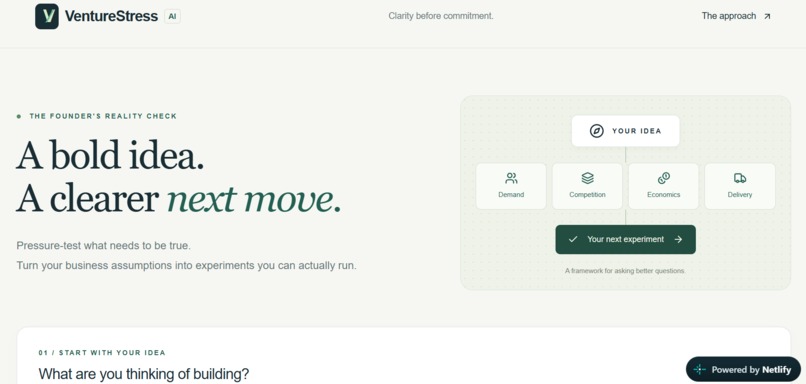
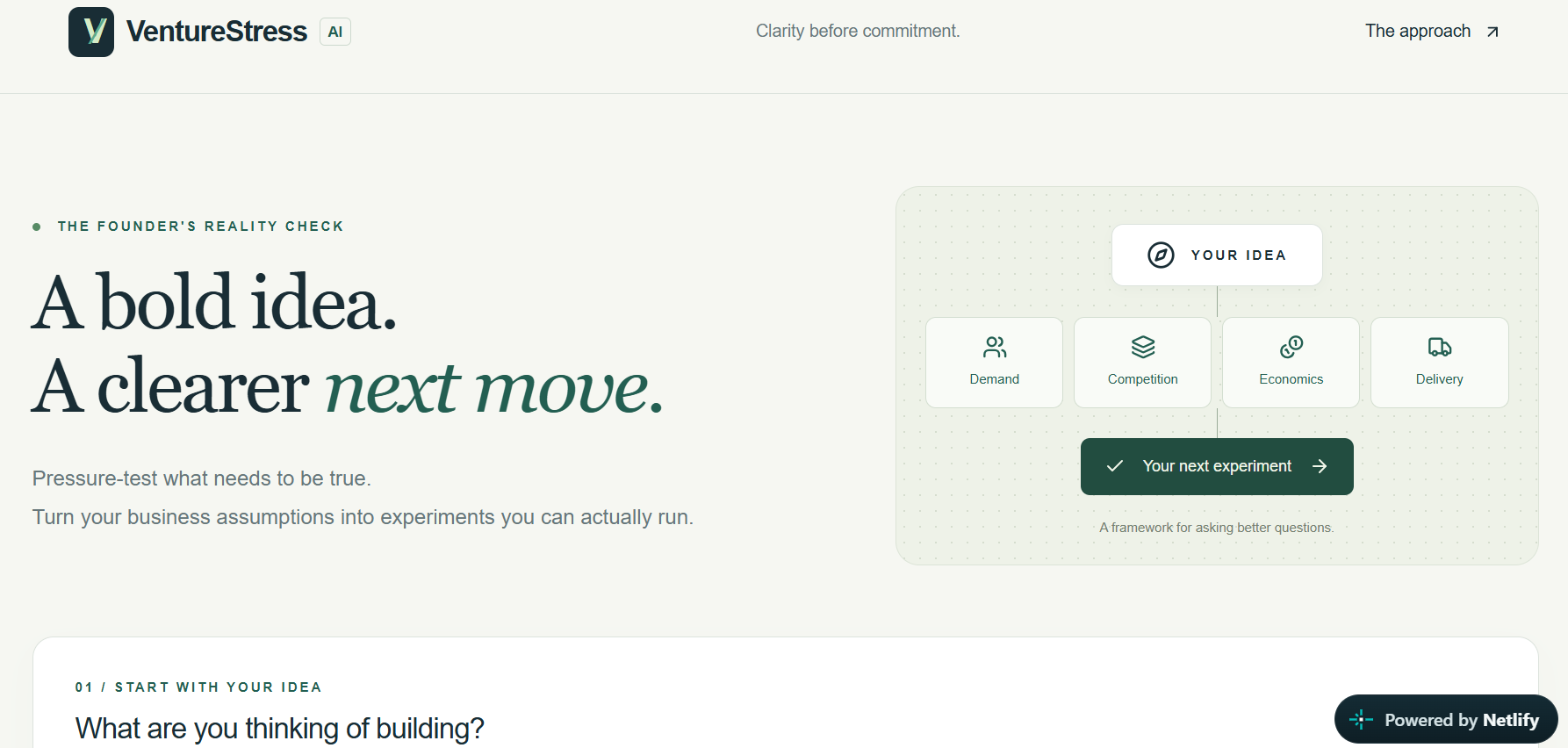
Hero Section
-
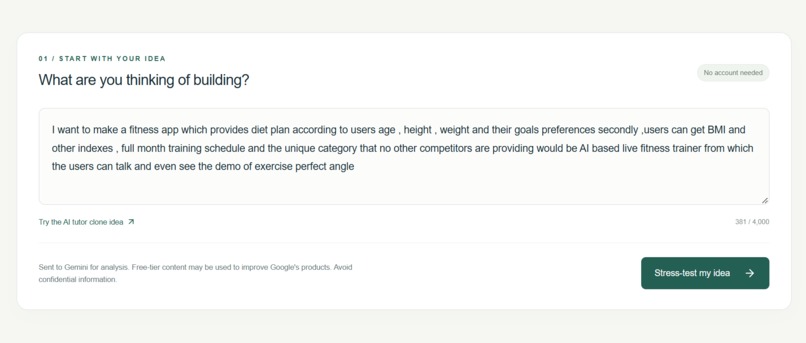
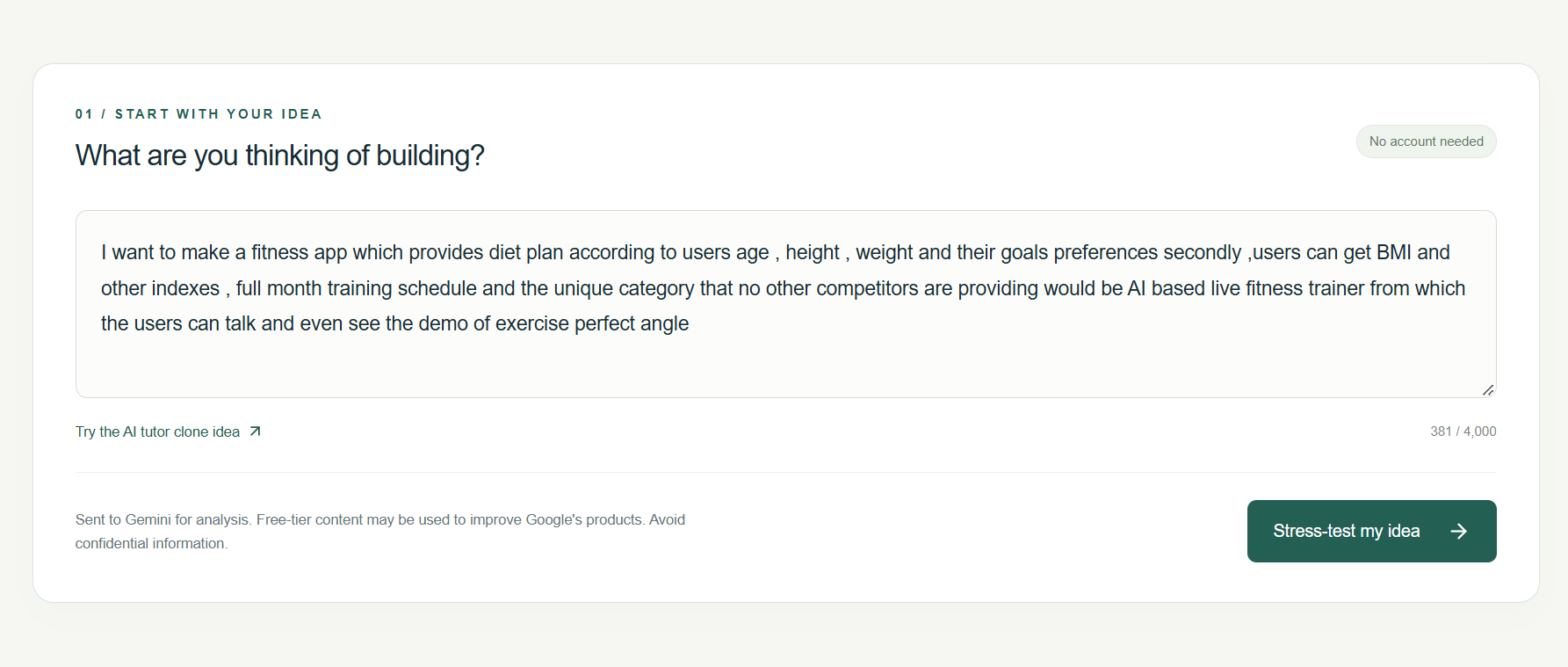
Writing Idea
-
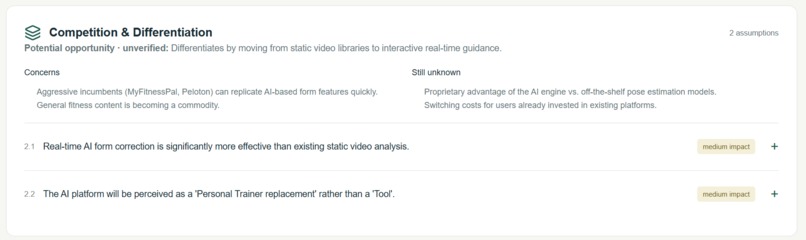
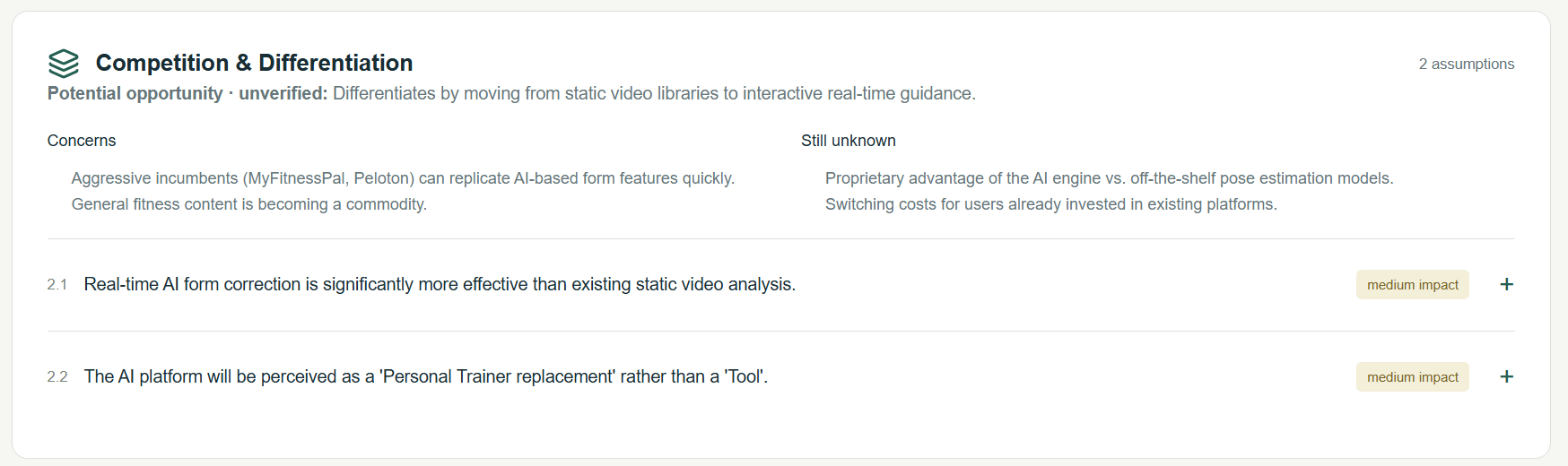
Then on competition
-
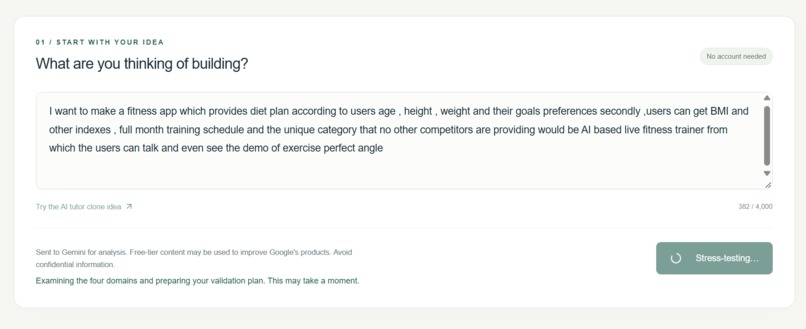
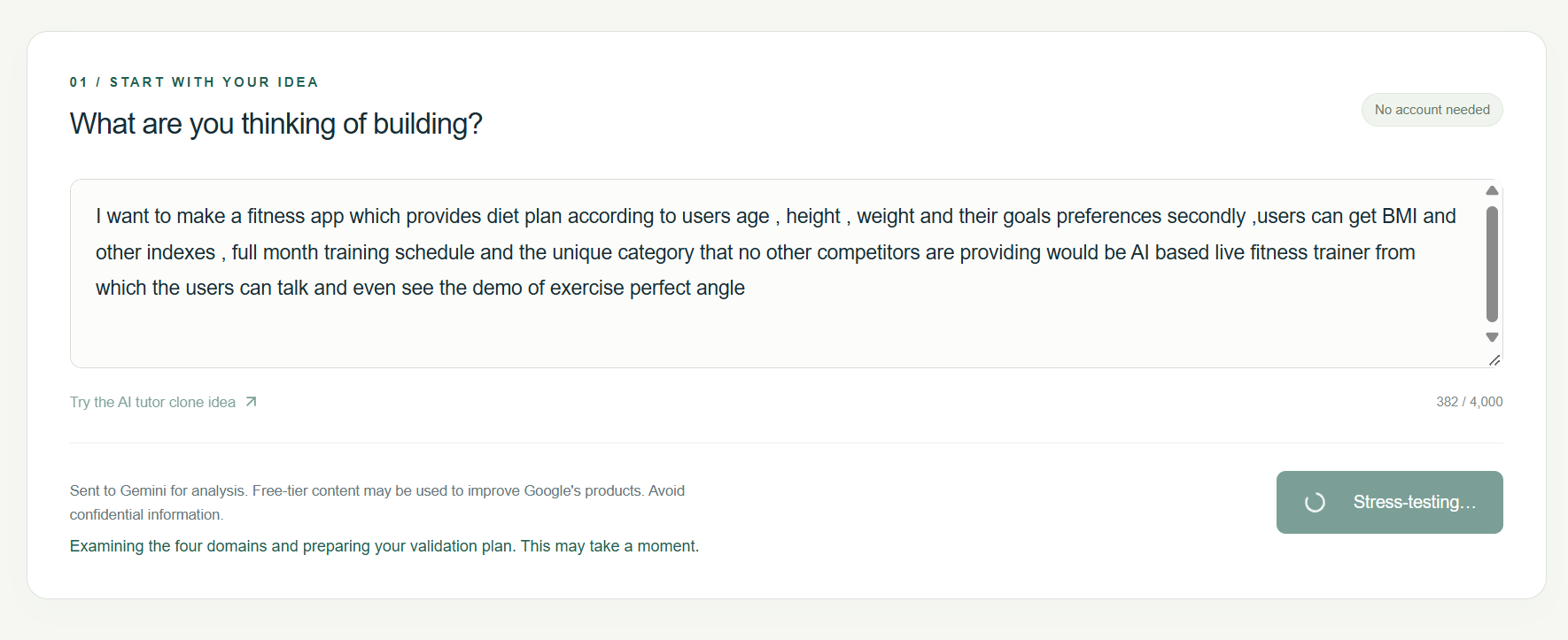
Functionality Starts
-
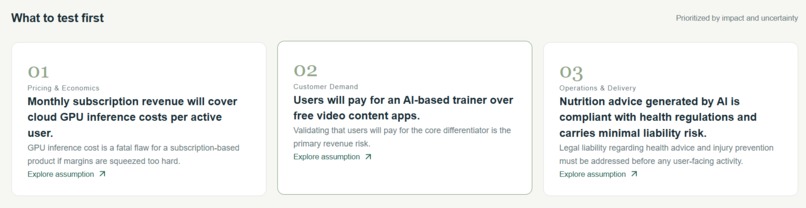
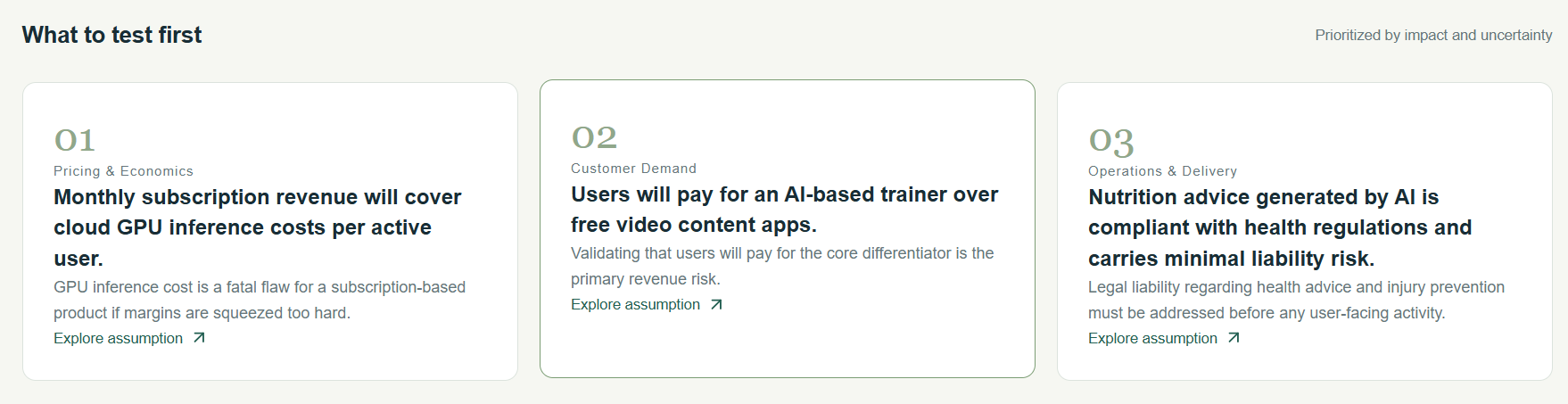
First 3 factors to test first
-
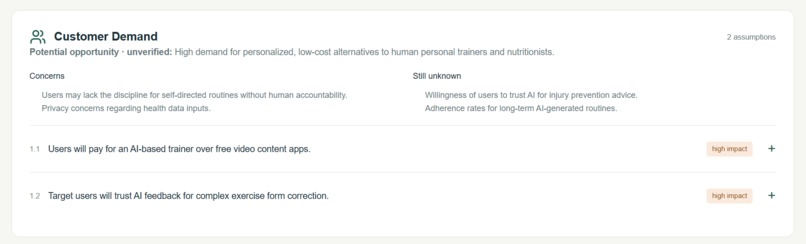
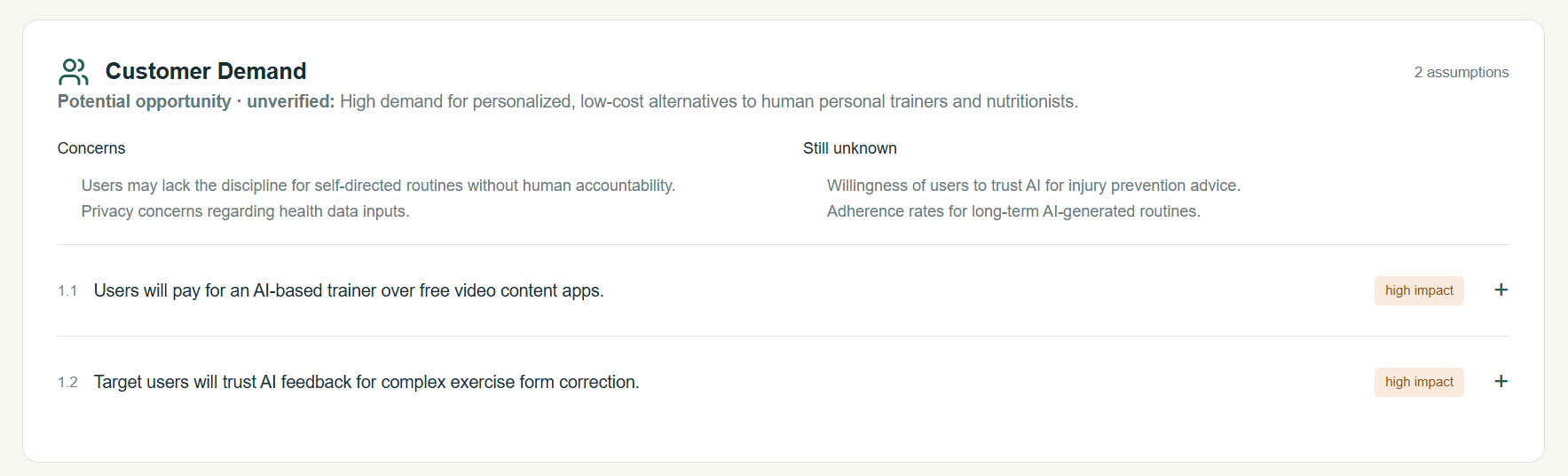
Detailed Summary on Customer Demand
-
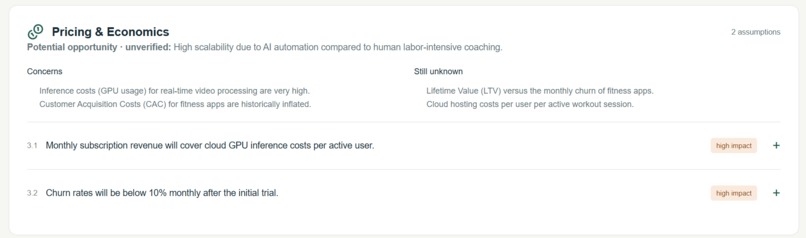
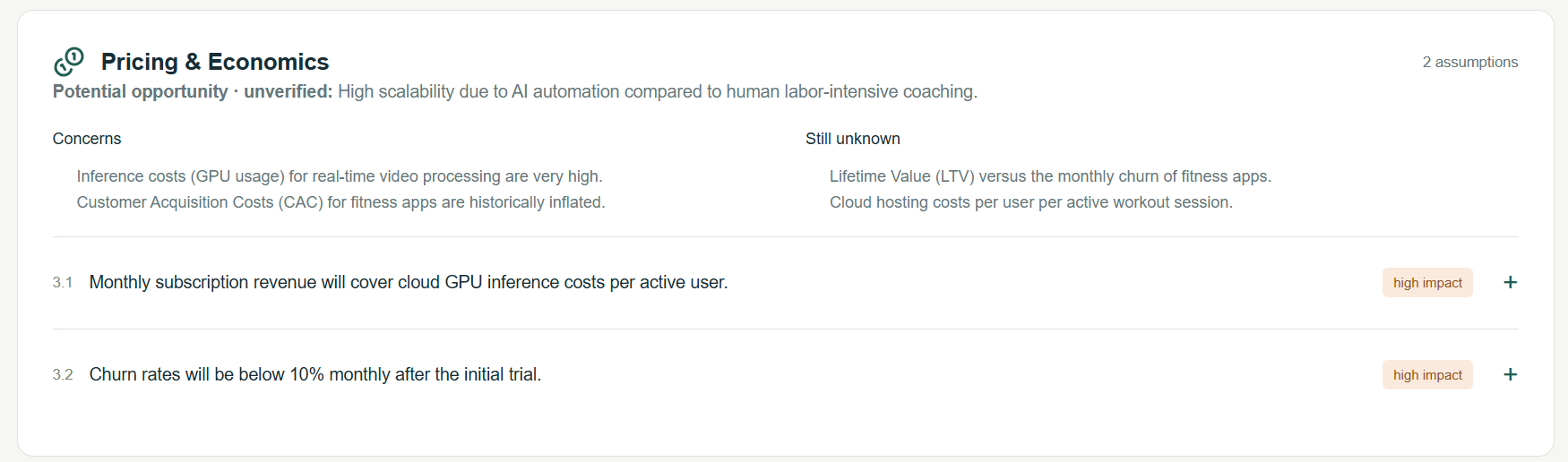
Discuss about pricing
-
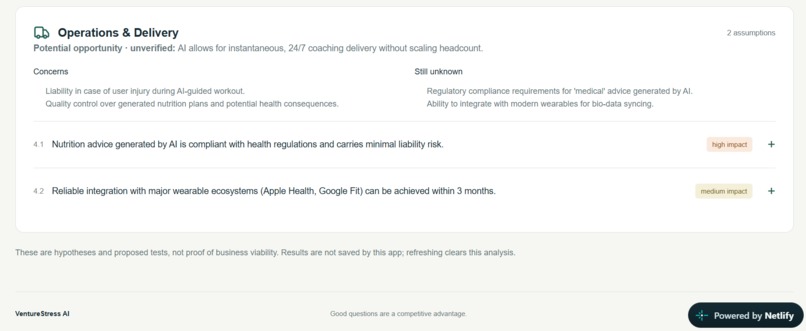
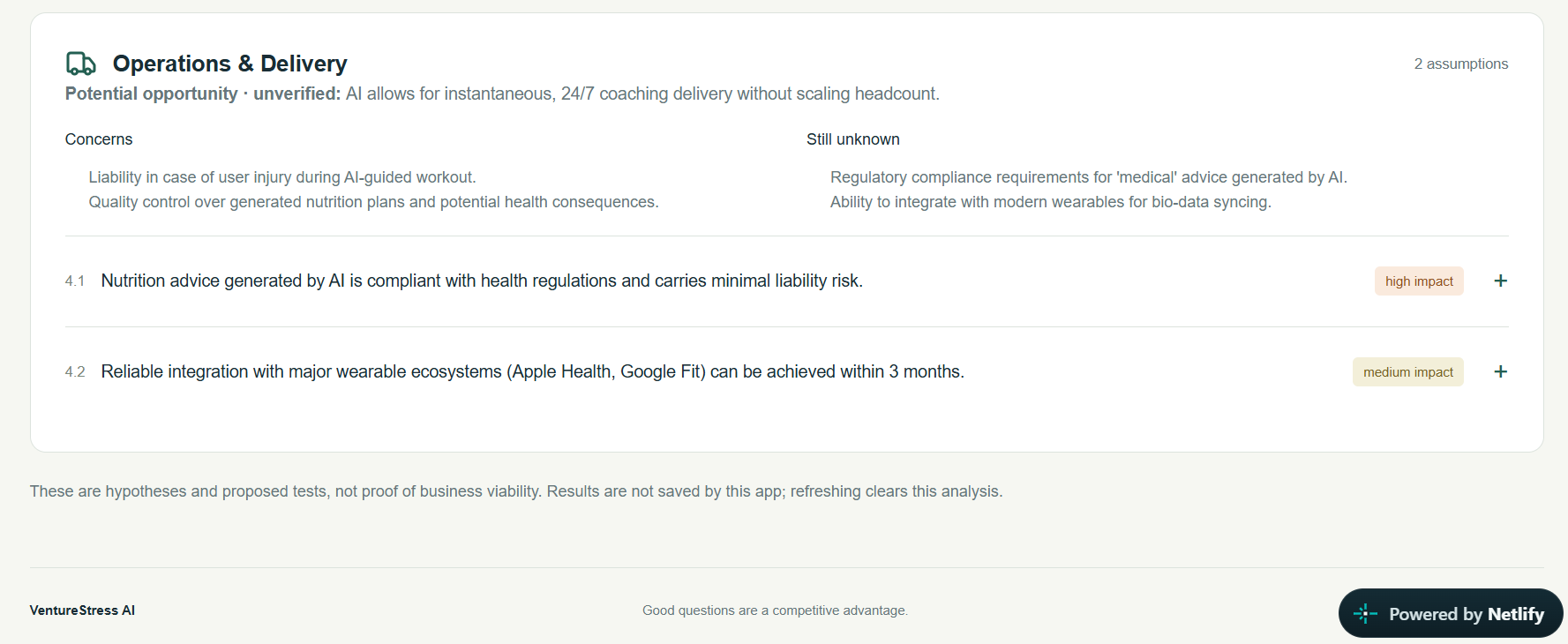
In the last Operations
Inspiration
Many startup ideas sound promising at first. The real problem is discovering which assumptions behind the idea are actually risky.
Founders can spend weeks or months building a product before seriously questioning whether customers want it, whether existing alternatives are already good enough, whether the economics make sense, or whether the product can realistically be delivered.
That inspired VentureStress AI.
Instead of asking AI, "Is this a good startup idea?", VentureStress AI asks a more useful question:
What must be true for this idea to work, and how can we test those assumptions?
The goal is not to predict whether a startup will succeed. It is to help founders move from assumptions to evidence before committing significant time and resources.
What it does
A founder describes their startup idea, and VentureStress AI analyzes it from four perspectives:
- Customer Demand — Who has the problem, how painful is it, and why would they adopt the solution?
- Competition & Differentiation — What alternatives already exist, and why might customers choose this solution instead?
- Pricing & Economics — Who pays, what costs exist, and what assumptions must hold for sustainable delivery?
- Operations & Delivery — Can the product or service actually be delivered reliably, at sufficient quality and scale?
For each area, VentureStress AI identifies critical assumptions, highlights uncertainty, and proposes practical experiments that could generate real-world evidence.
Each experiment can include participants, steps, metrics, proposed decision rules, required resources, duration, and recommended next actions.
Finally, the system identifies three assumptions worth prioritizing so the founder knows where validation effort could be focused first.
The important distinction is that these results are hypotheses, not proof. VentureStress AI does not claim that an idea is viable simply because an AI model analyzed it. Real validation still requires customer interviews, experiments, observations, pricing tests, and other evidence.
How we built it
VentureStress AI is built with Next.js, React, TypeScript, Tailwind CSS, Google's GenAI SDK, and Zod.
The analysis happens server-side.
When a user submits an idea, the application validates and bounds the input before sending it to Gemini together with carefully designed analytical instructions.
Gemini returns structured JSON containing the four analysis domains, assumptions, experiments, and priority references.
However, generating an AI response was only part of the problem.
We also needed to make sure the application could safely consume that response.
We therefore created a structured output contract and use Zod runtime validation to verify that the generated result contains the expected domains, valid assumption counts, required fields, allowed labels, and valid priority references.
If the AI produces invalid or incomplete output, the application returns a readable error instead of silently generating fallback results.
The API key remains on the server and is never intentionally exposed to browser code.
The application is deployed on Netlify, and the production API was tested with a real analysis request to verify that the complete structured response passes validation.
Challenges we ran into
One of the biggest challenges was defining the boundary between AI-generated reasoning and real-world evidence.
It would have been easy to build a system that gives a startup idea a convincing-looking score or declares whether it will succeed. But an LLM cannot establish real customer demand, willingness to pay, competitive behavior, or operational feasibility simply from a written description.
We therefore designed VentureStress AI around uncertainty and experimentation rather than artificial certainty.
Another challenge was handling structured LLM output reliably.
LLM responses are probabilistic, while application code expects predictable structures. We addressed this by defining explicit schemas, validating responses at runtime, checking references between generated assumptions and priorities, bounding user input, and safely handling invalid model output.
Prompt injection and untrusted user input were another consideration. The submitted startup idea is treated as data rather than trusted instructions, while the analytical behavior is defined separately by the system prompt.
Accomplishments that we're proud of
We're proud that VentureStress AI does more than generate generic startup advice.
It converts an idea into a structured validation process:
Idea → Assumptions → Uncertainty → Experiments → Evidence
We also built clear engineering boundaries around the AI. The system does not silently substitute fake results when generation fails, and it distinguishes model-generated hypotheses from actual market evidence.
The production deployment successfully processes a startup idea into four analytical domains, structured assumptions, experiments, and priority references while validating the complete response contract.
What we learned
The biggest lesson from building VentureStress AI was that useful AI products are not only about choosing a powerful model.
A reliable AI application also needs:
- clear problem framing,
- carefully designed prompts,
- structured outputs,
- runtime validation,
- safe error handling,
- explicit uncertainty,
- and clear boundaries around what the model actually knows.
We also learned that AI can be especially useful when it helps people ask better questions rather than pretending to already know the answers.
For startup validation, that means moving away from:
"Will my startup succeed?"
and toward:
"What assumptions could make this startup fail, and what evidence would help me test them?"
What's next for VentureStress AI
The current version is a hackathon proof of concept.
The next step is to evolve VentureStress AI from an AI assumption generator into a broader evidence-driven startup validation workspace.
Future versions could allow founders to record experiment results, compare evidence against assumptions, revisit assumptions as new information arrives, and track how confidence changes throughout the validation process.
Another important direction is incorporating real external evidence rather than relying only on model-generated hypotheses—for example, connecting market research, competitor information, customer feedback, and completed experiments to the analysis.
Ultimately, the vision for VentureStress AI is simple:
Don't tell founders whether an idea will work. Help them discover what they need to prove before they build it.
Built With
- gemini
- generative-ai
- google-genai-sdk
- llm
- netlify
- next.js
- node.js
- prompt-engineering
- react
- restapi
- tailwind-css
- typescript
- zod

Log in or sign up for Devpost to join the conversation.