Inspiration
Promising founders should not be invisible because they lack a warm introduction. Traditional venture sourcing relies on closed networks, scattered databases, unverified claims, and long email threads. VentureMatch explores a more accessible path from discovery to a meaningful first conversation.
What it does
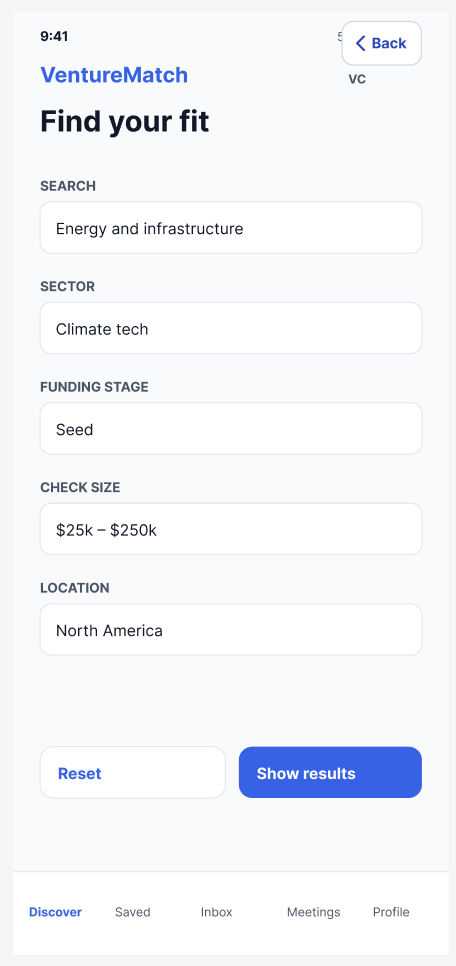
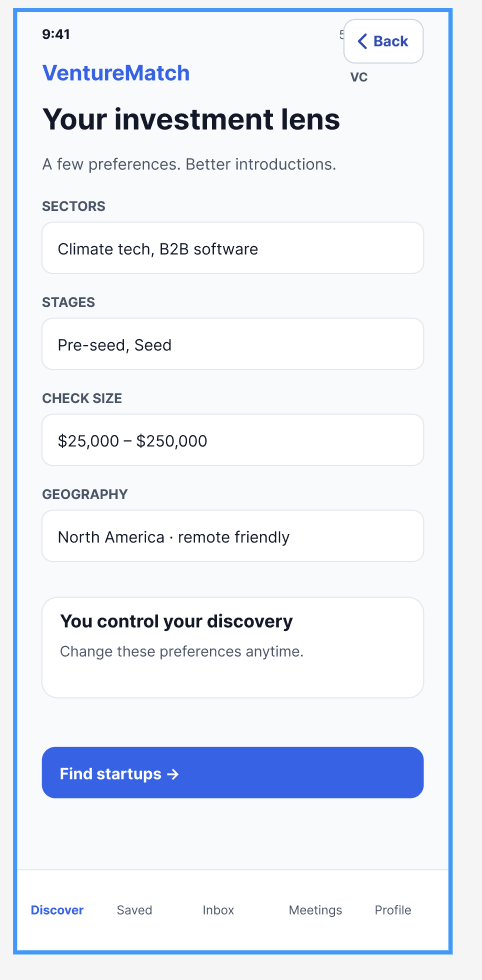
VentureMatch is a trust-first discovery and relationship platform for venture capital. The proposed workflow is simple: Discover → Verify → Compare → Connect → Meet.
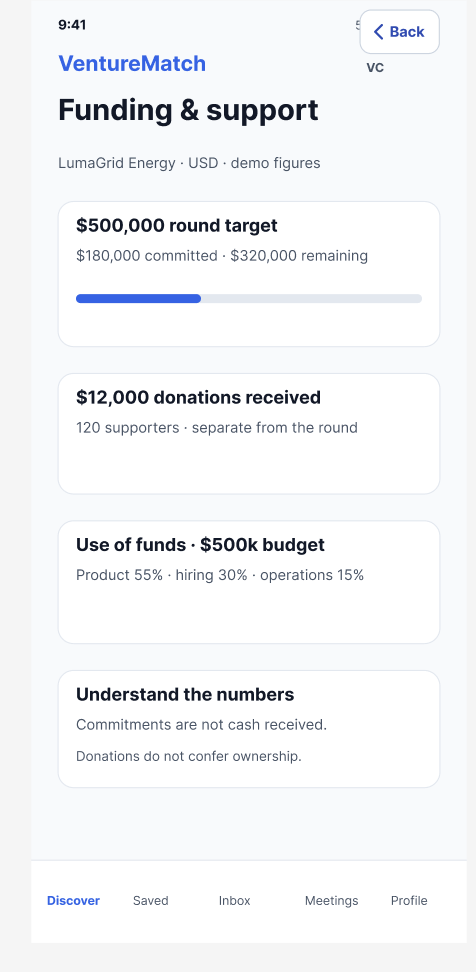
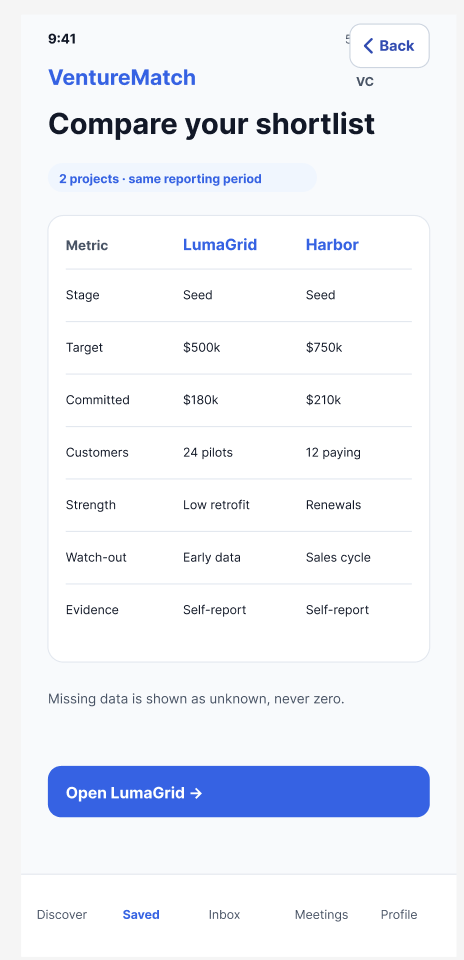
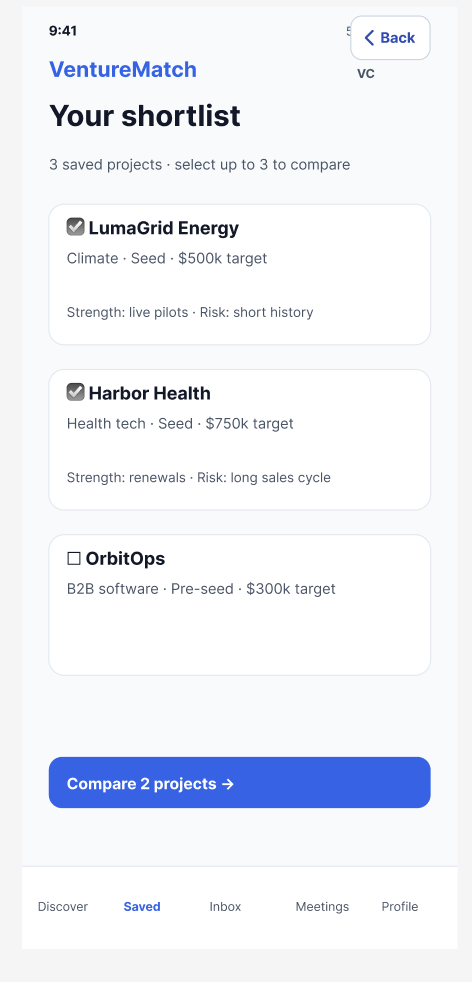
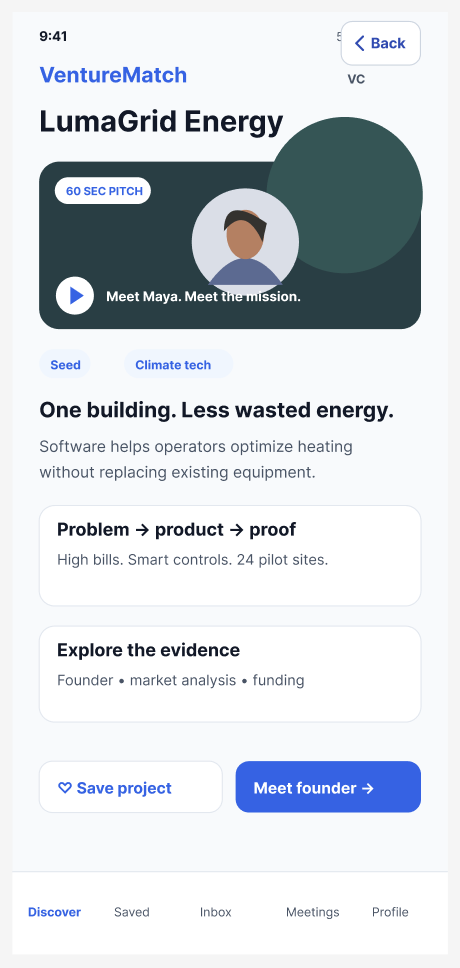
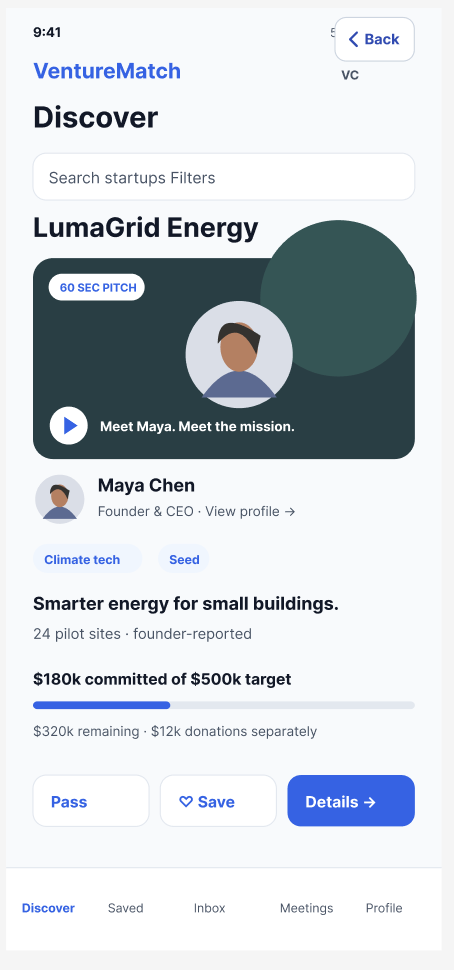
Investors explore concise founder pitch videos, traction summaries, and fundraising status, then compare startups side by side. The design distinguishes verified, self-reported, and pending-review claims so that a polished pitch does not substitute for evidence.
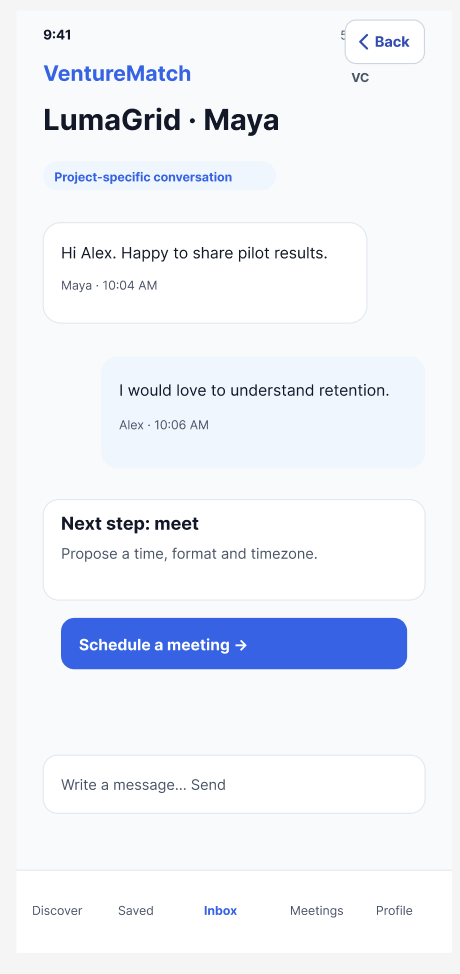
Two-way coffee-chat scheduling lets founders and investors publish 15-, 20-, or 30-minute slots and move toward mutually accepted meetings. The calendar integration design uses free/busy information only, keeping calendar details private.
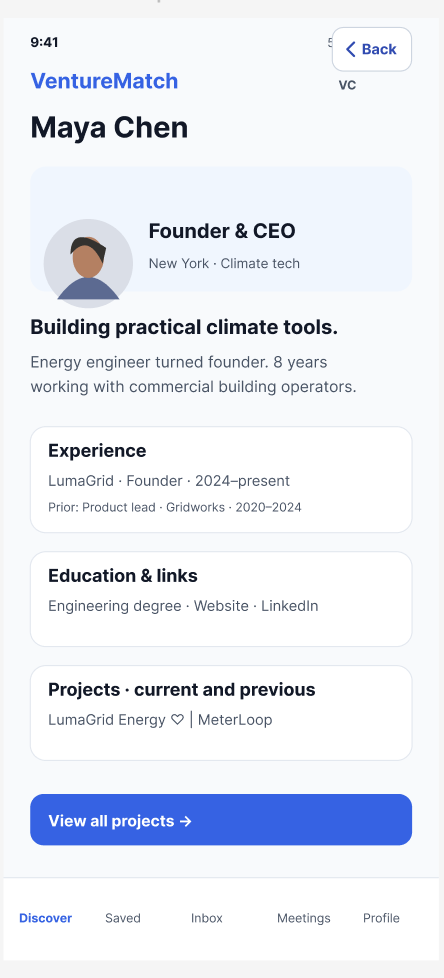
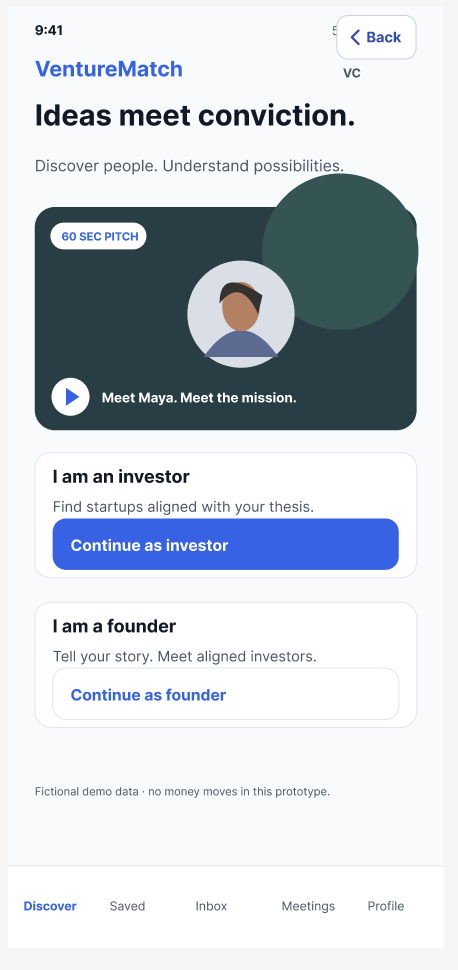
Role-based experiences are central to the concept: investors discover and compare startups; founders manage their own startup presence and connect with investors. Founders do not get access to competing founders' private profiles or data rooms.
How we built it
We created an interactive Figma prototype for mobile and desktop and a Google Slides pitch deck. We organized the experience around video-first discovery, investment intelligence, startup comparison, and coffee-chat scheduling.
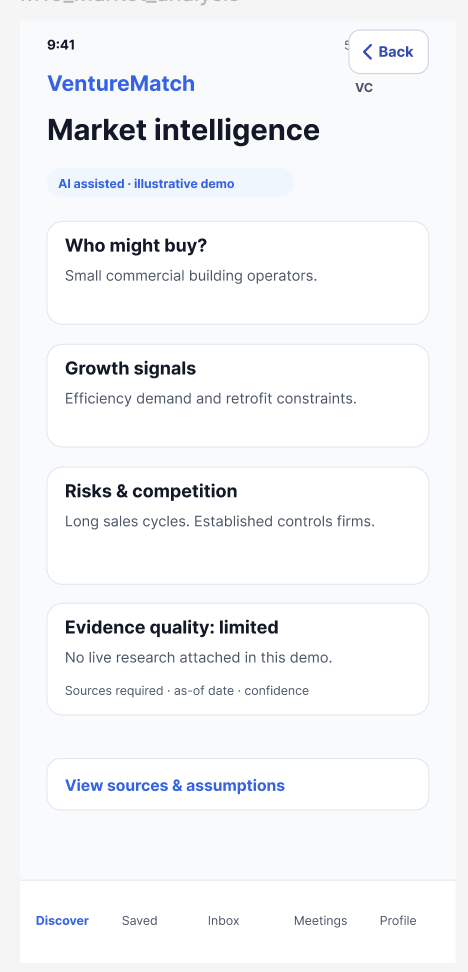
The hackathon deliverable is a low-fidelity product prototype: the core discovery feed, comparison dashboard, simulated AI evaluation, and two-way scheduling flow. It demonstrates the intended experience rather than a production investment or verification service.
Challenges
The central design challenge was balancing fast discovery with trust and privacy. We needed to make evidence status understandable, give founders control over disclosure, and keep the path to a meeting simple without exposing full calendars.
Accomplishments
We brought discovery, comparison, trust indicators, and meeting planning into a connected mobile and desktop experience. The prototype also presents a progressive verification model, from email verification through identity, professional affiliation, company registration, and supporting evidence.
What we learned
Trust needs to be visible throughout the workflow. Identity checks and evidence checks serve different purposes, and self-reported information needs clear labels. A useful sourcing experience should help people decide what to investigate next while preserving human judgment.
What's next
The next release would add identity verification, backend-enforced permissions, live Google/Outlook free/busy sync, and meeting reliability tracking. Longer-term plans include firm-wide collaboration, deal-flow integration, thesis matching, and automated claim-audit integrations.
We are seeking pilot conversations with NYC venture investors and startup founders. AI outputs, verification states, and scheduling interactions in the current prototype are illustrative; live integrations and production security remain future work.
Built With
- figma

Log in or sign up for Devpost to join the conversation.