-
-
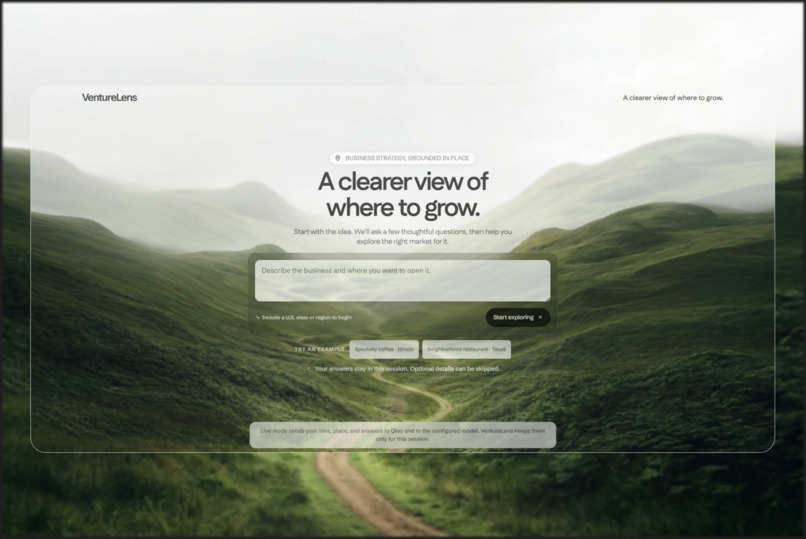
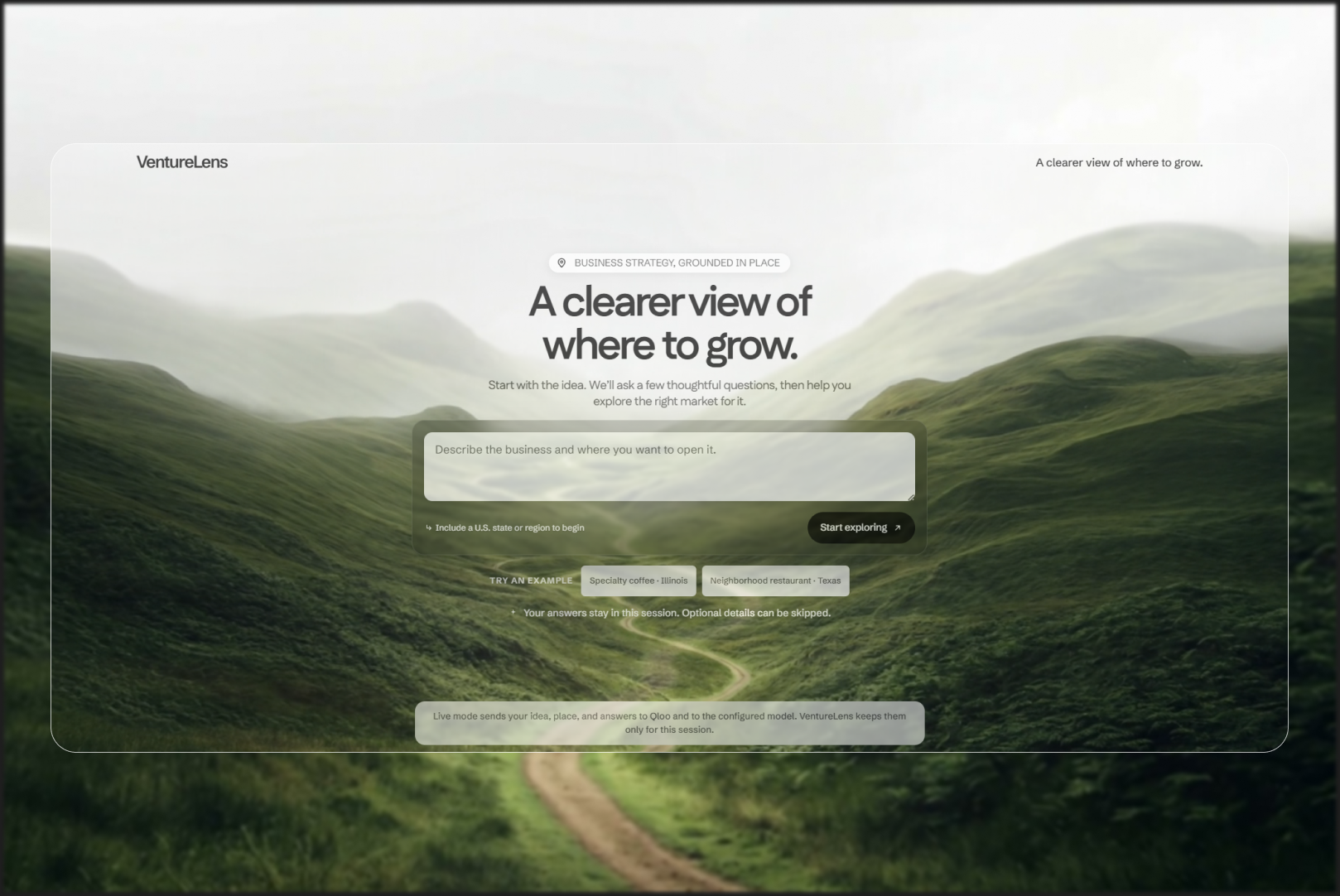
Hero
-
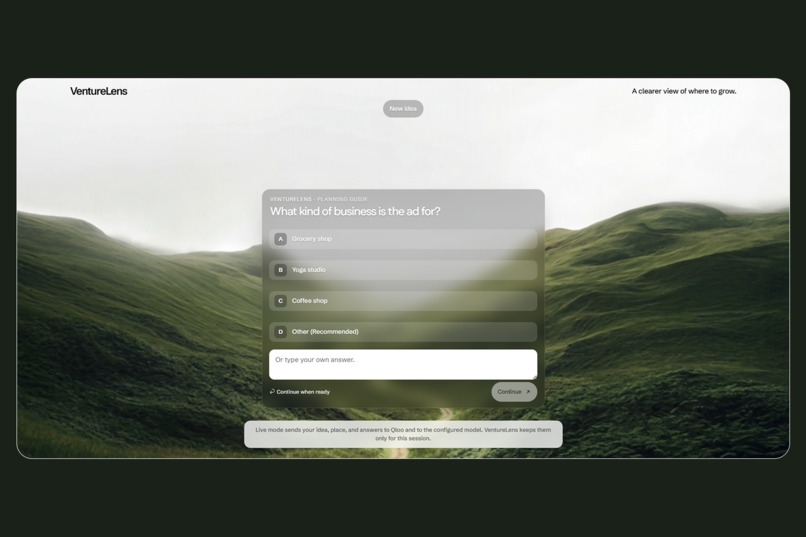
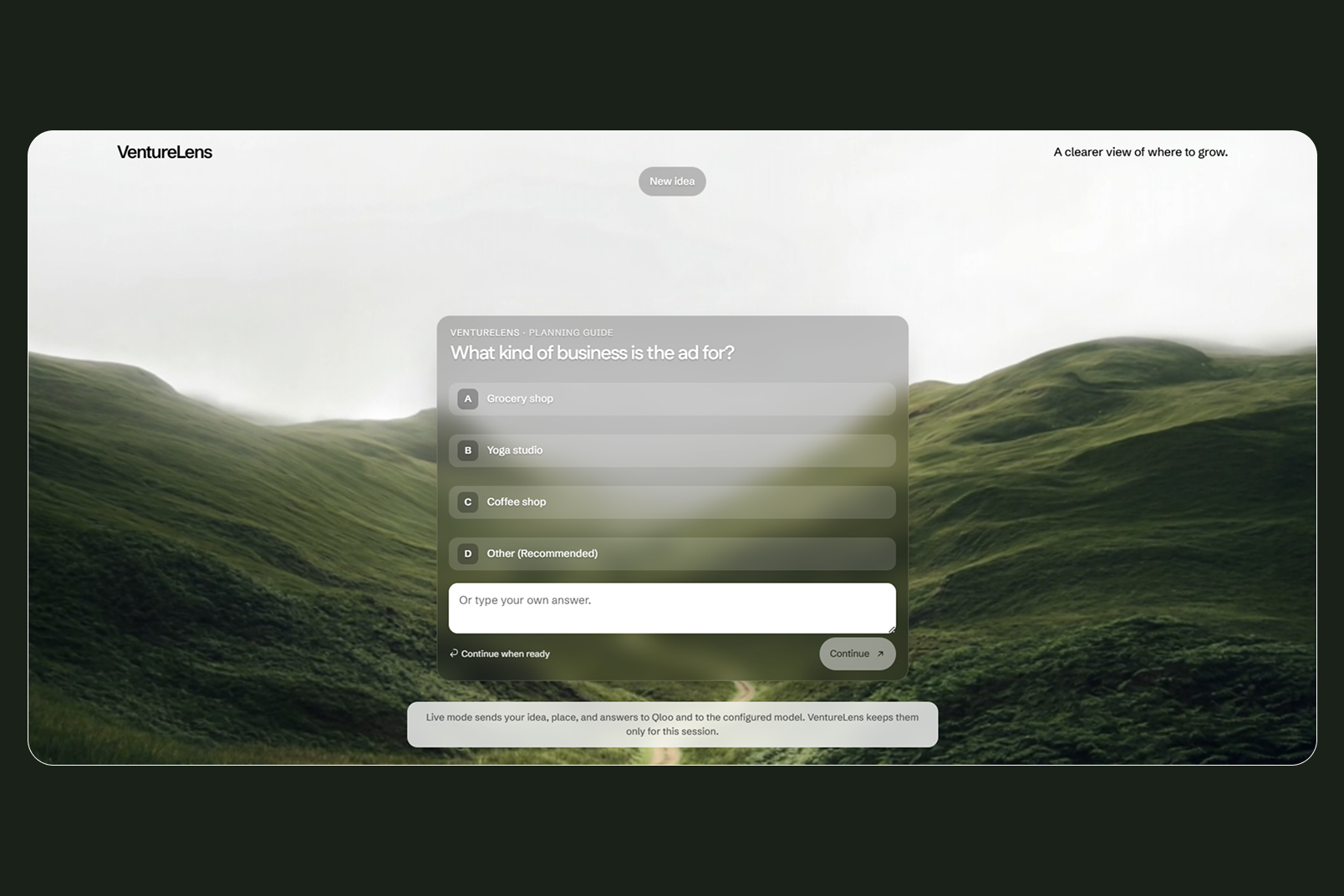
Grilling Sesssion
-
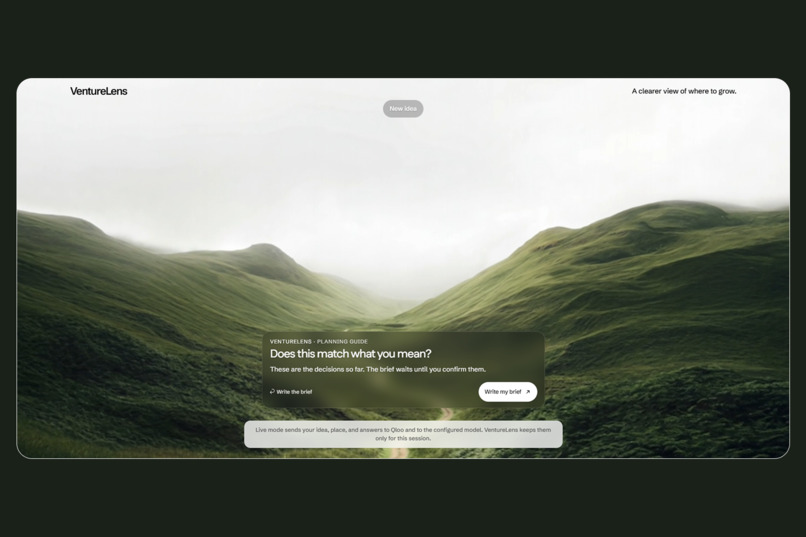
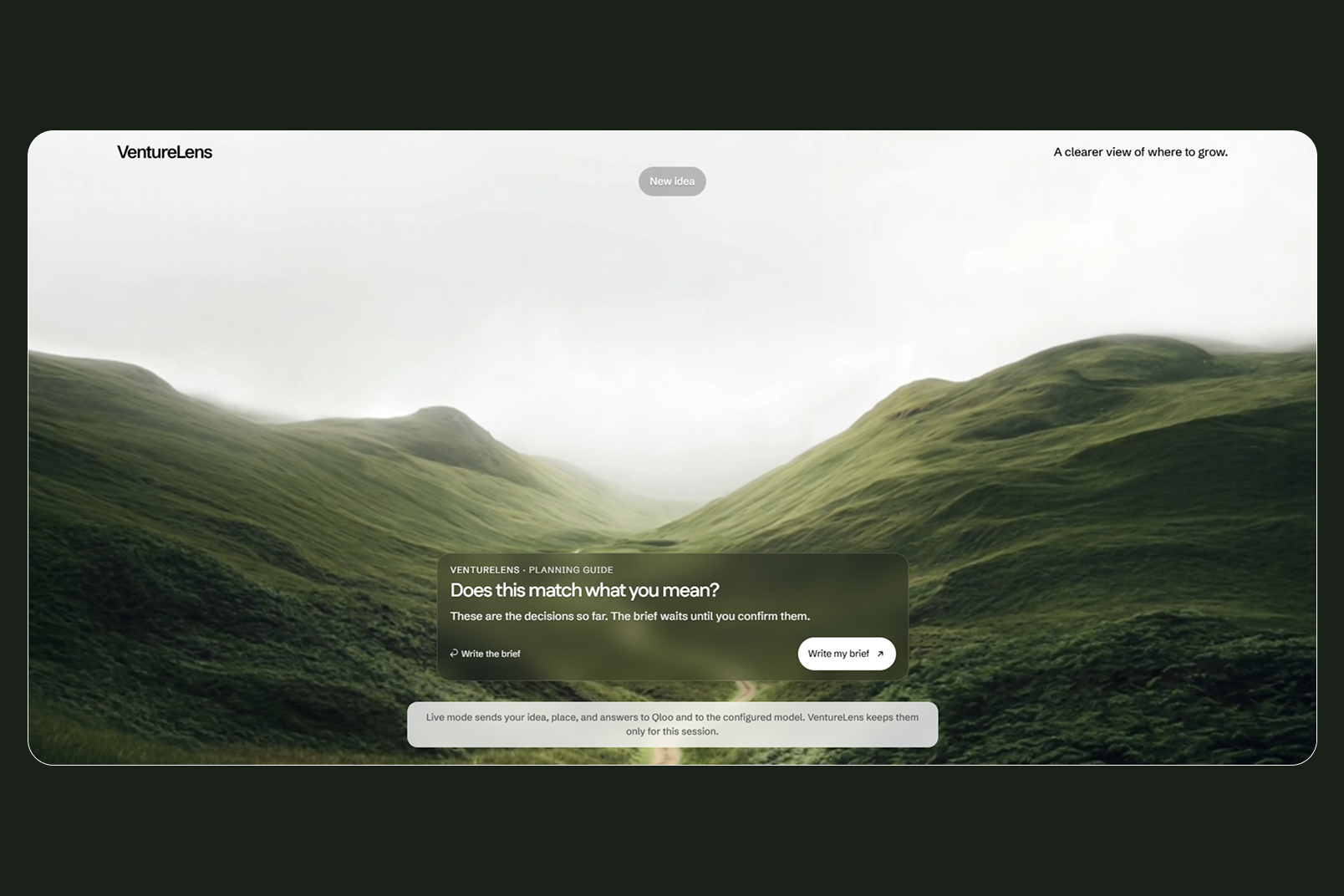
Create Report
-
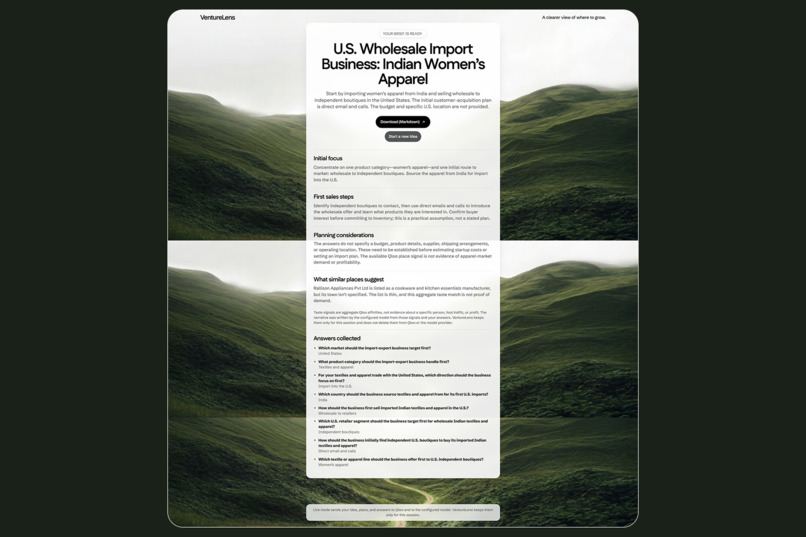
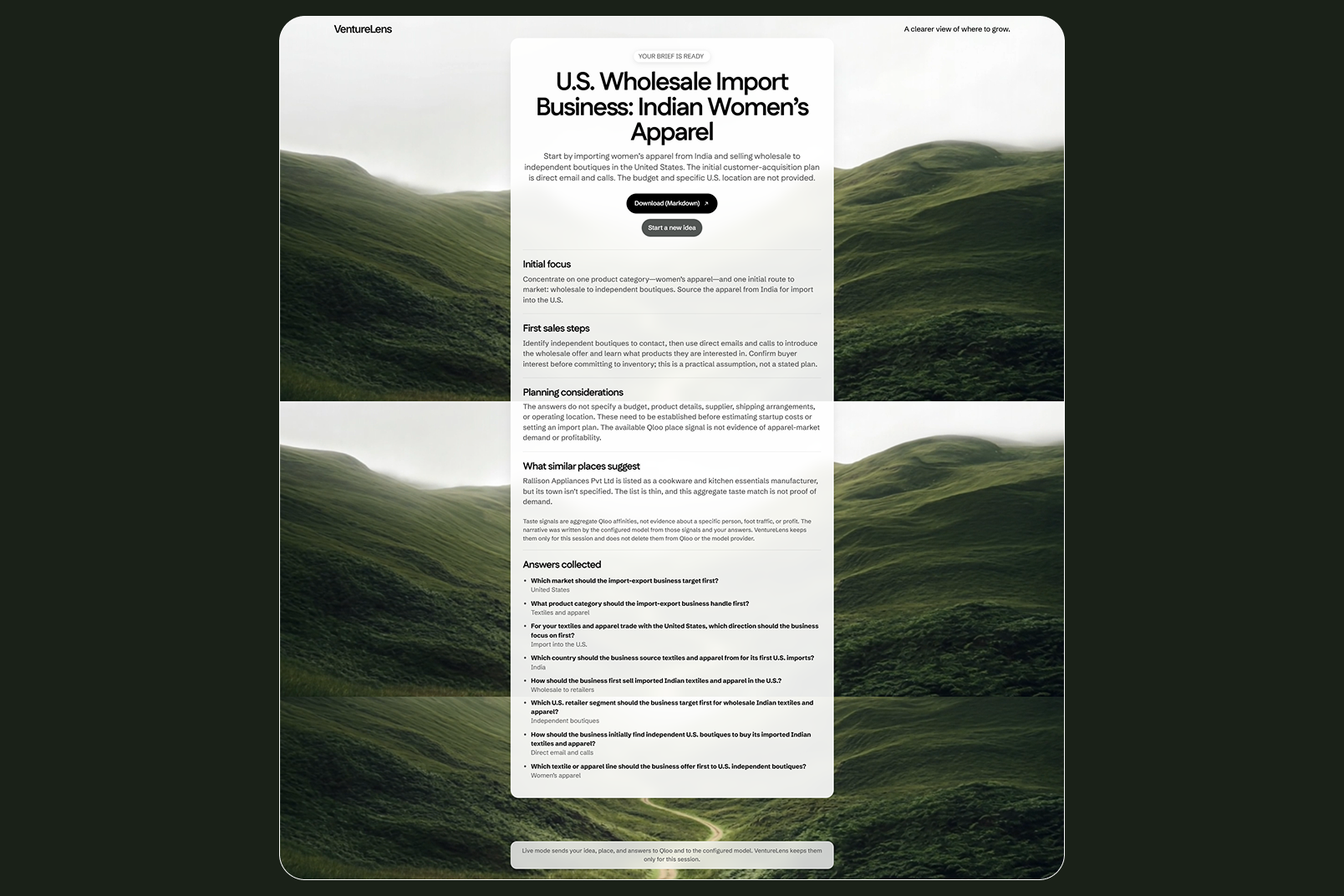
Markdown Report
💡 Inspiration
Whenever people discuss using AI for business, the models always sound generic—they give you textbook advice that could apply to any city on earth. I found myself asking: why can't AI actually understand local taste and what real people in a specific neighborhood actually like? 🌍
When starting a business, location and culture make or break you. A concept that thrives in Austin might fall flat in Chicago. I decided to build a tool that bridges that gap by combining adaptive conversational reasoning with Qloo's cultural taste and place intelligence. 🧠📍
🚀 What it does
VentureLens is an AI agent that takes your raw business idea and acts as an evidence-backed sparring partner. 🎯
Instead of forcing you through a rigid 20-question questionnaire, it dynamically "grills" you one question at a time skipping things you already answered and offering shortlisted recommendations. It then pairs your answers with Qloo's curated taste data and place insights to generate a comprehensive, structured business brief that you can immediately review and download as Markdown. 📊📄
🛠️ How we built it
I designed the agent orchestration around the lightweight, linear execution principles of mini-SWE-agent keeping the loop fast, predictable, and inspectable rather than relying on heavy, bloated agent frameworks. ⚡
Architecturally, VentureLens operates as a hybrid system:
- ⚙️ FastAPI & Jinja2: A clean, server-rendered frontend with a blurred glass aesthetic and in-memory session lifecycles for complete user privacy.
- 🤖 GPT-6 Luna (OpenAI-compatible): Handles dynamic grilling, parses founder assumptions, and synthesizes the written narrative.
- 🌐 Qloo API: Powers the real-world place and cultural affinity engine, identifying category-matched venues (
urn:tag:category:place:*) in the founder's target region. - 🧪 Decoupled Provider Seam: I engineered the provider with an injected transport layer, allowing 100% of our test suite to run end-to-end offline without consuming live API tokens.
🧩 Challenges I ran into
My biggest hurdle was getting high-precision responses from the Qloo API and translating raw taste graph data into an intuitive, readable format for everyday founders. 🔍
Early on, place searches would easily drift into broad interest tags or unconstrained global searches. We had to enforce strict category tag resolution so that an idea for a café stays laser-focused on local cafés within the requested region. (It Still doing that but not because I didn't fix it, it's just that their is lack of data available on qloo's side, if the data is not present the agent will tell you that.) ☕📍
I also tackled the temptation of "hallucinated precision" deciding to present an honest, cohesive prose brief rather than assigning arbitrary numeric scores when local data wasn't comprehensive enough. ✅
🏆 Accomplishments that I'm proud of
I didn't just build a throwaway hackathon prototype I have built production-ready software. 💪
VentureLens features full CSRF and origin security, per-IP rate limiting, per-session and global query budgets to bound API costs, and a comprehensive test suite. It's stable, resilient, and ready for real founders to use today. 🚀
📚 What I learned
Building plan-first using the Devpost Learn workflow taught me the power of clear proof-of-concept boundaries. By writing our scope, PRD, and technical spec before touching code, I could avoid rabbit holes and feature creep. 🗺️
Technically, I also learned how to seamlessly combine two very different kinds of AI probabilistic LLM reasoning and deterministic cultural graph data into one cohesive user experience. 🔗🧠
🔮 What's next for VentureLens
This proof of concept proved that taste-aware business planning works. Here's what's next on my roadmap:
- 🌆 Multi-city comparison within a target state to help founders choose between candidate markets.
- 📍 Neighborhood-level shortlists with inline clickable source citations.
- 💬 Follow-up conversational research that lets founders drill deeper without altering their baseline exported brief.

Log in or sign up for Devpost to join the conversation.