Venture Jury
Inspiration
Let’s be honest: early-stage startup validation is usually a mess. Founders pitch an idea, receive contradictory opinions from mentors, investors, online communities, and social media, then spend weeks trying to separate genuine market signals from noise. Before any meaningful investment conversation can begin, someone has to manually gather evidence, research competitors, analyze customer sentiment, and validate market assumptions.
We wanted to explore whether GPT-5 could help transform that process.
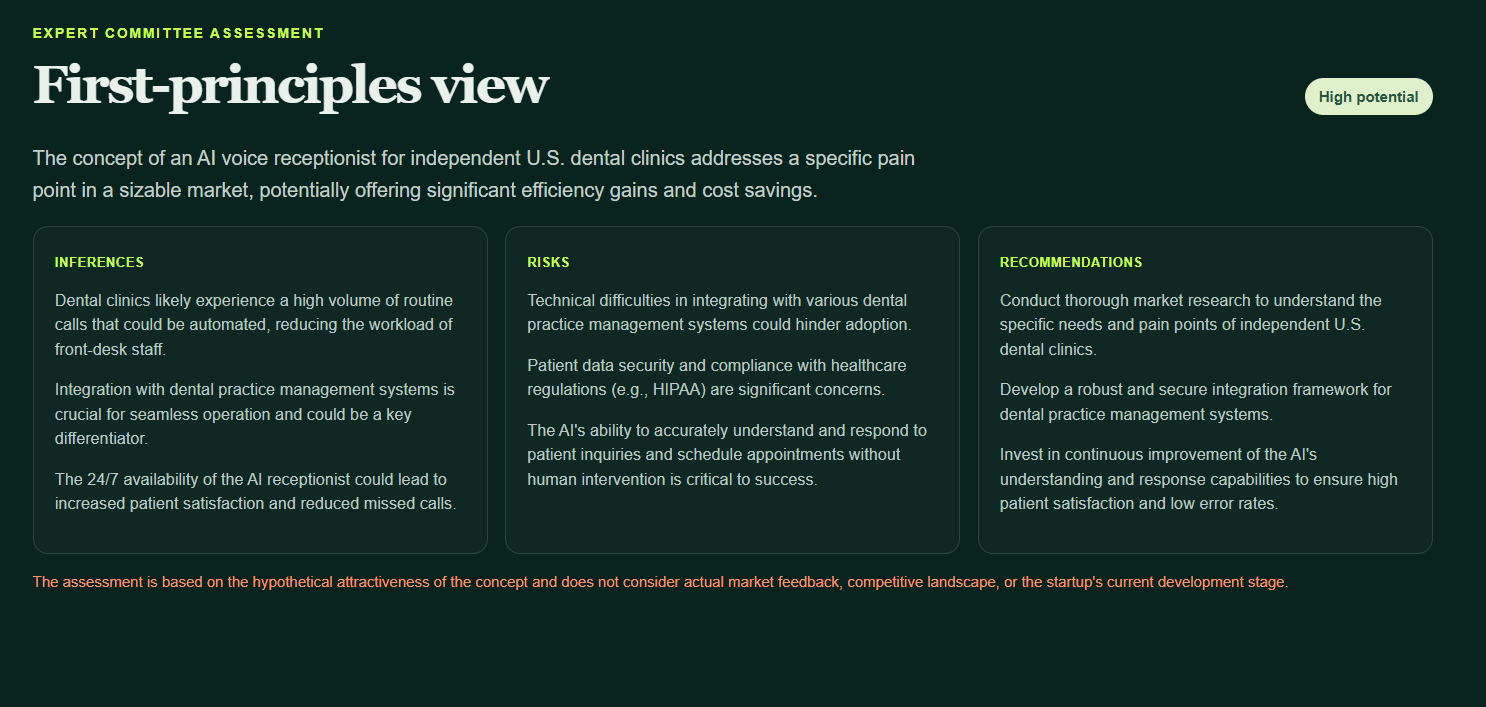
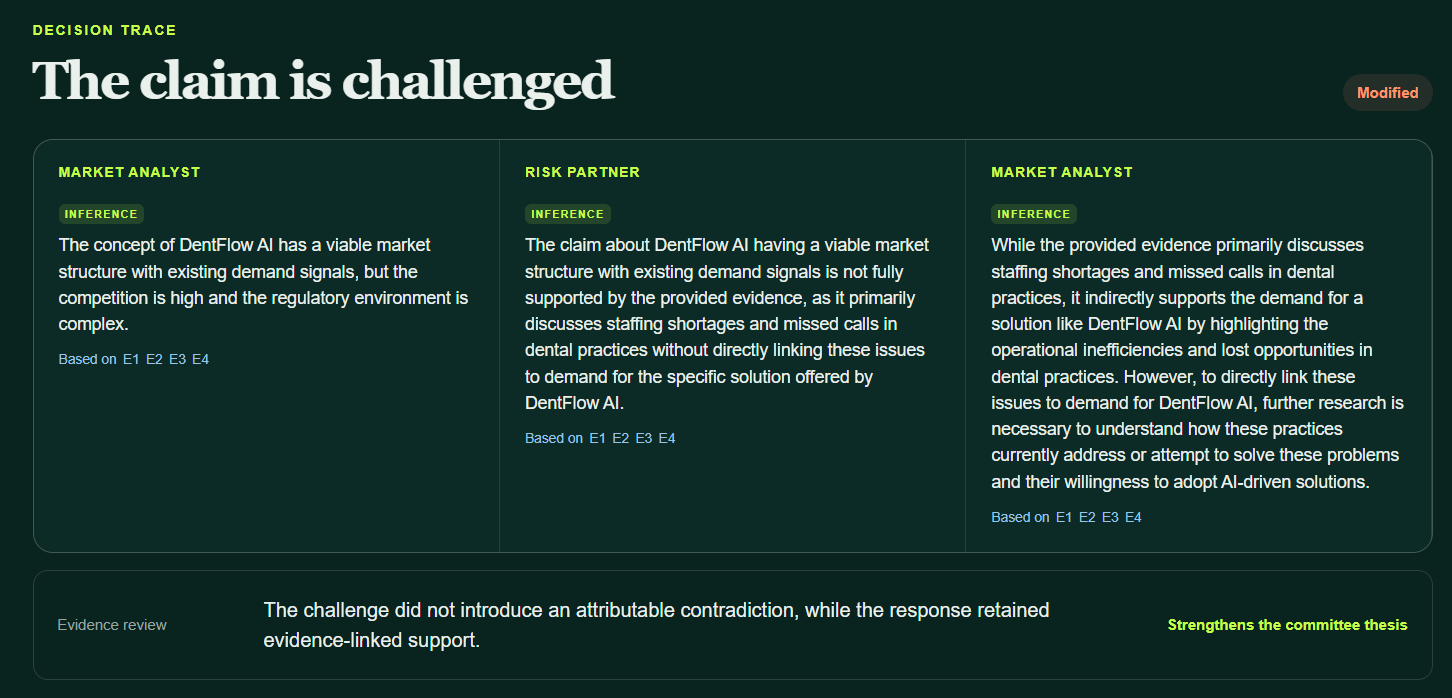
Instead of building another chatbot that simply agrees with a business idea, we envisioned an explainable AI investment committee that behaves like a rigorous due diligence team. Every conclusion should be grounded in publicly verifiable evidence, every disagreement should be transparent, and every recommendation should clearly distinguish between facts, inferences, and assumptions.
Our goal isn't to replace investors—it's to help founders and investors spend less time collecting information and more time making informed decisions.
What it does
Venture Jury is an AI-powered multi-agent due diligence platform that evaluates startup ideas through structured, evidence-backed reasoning.
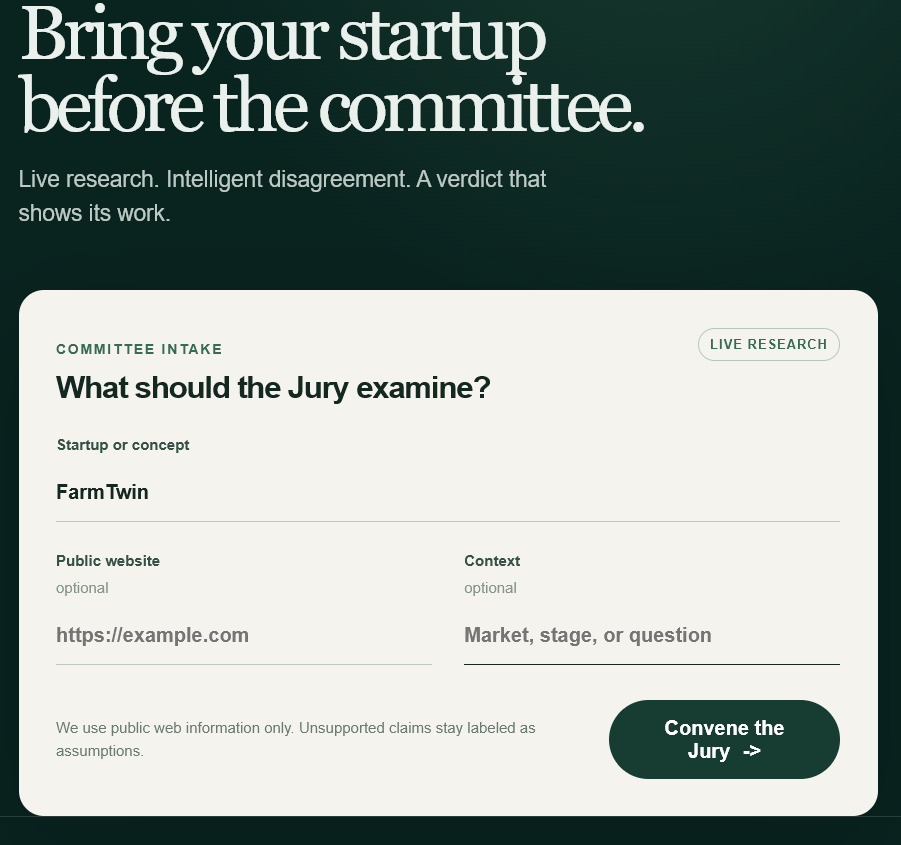
A founder submits a startup name, website, and business context. Venture Jury then:
- Researches public information across multiple trusted sources.
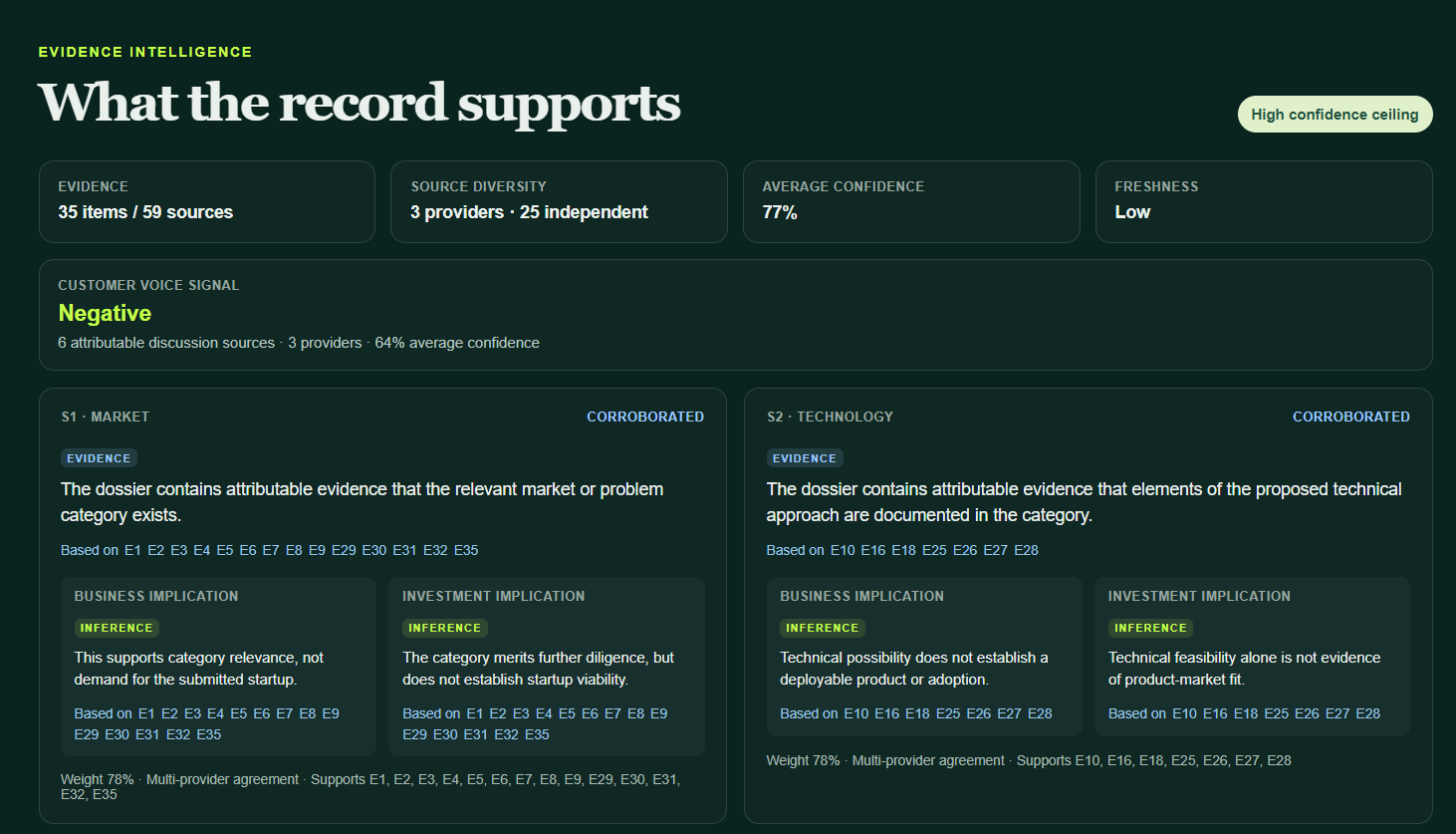
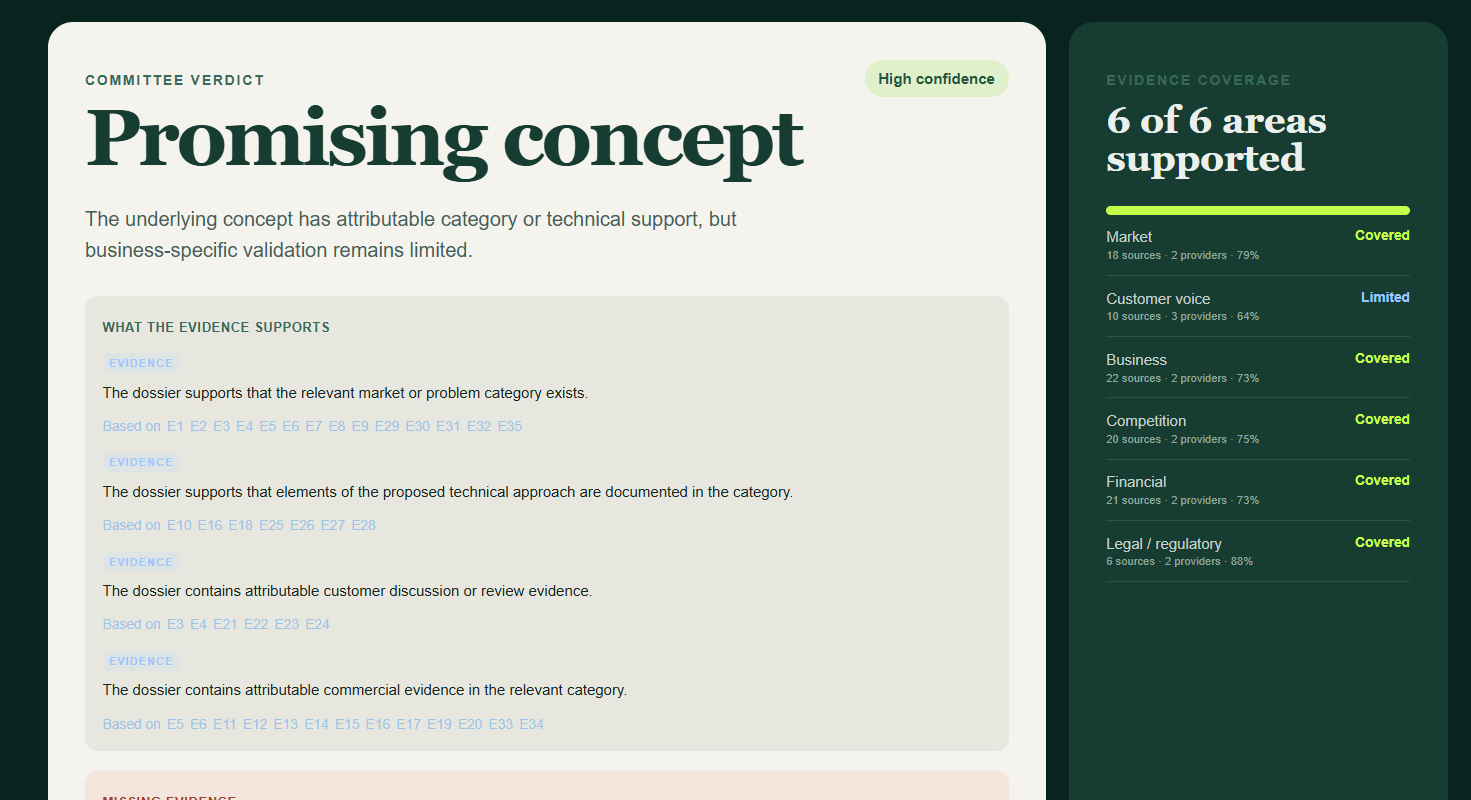
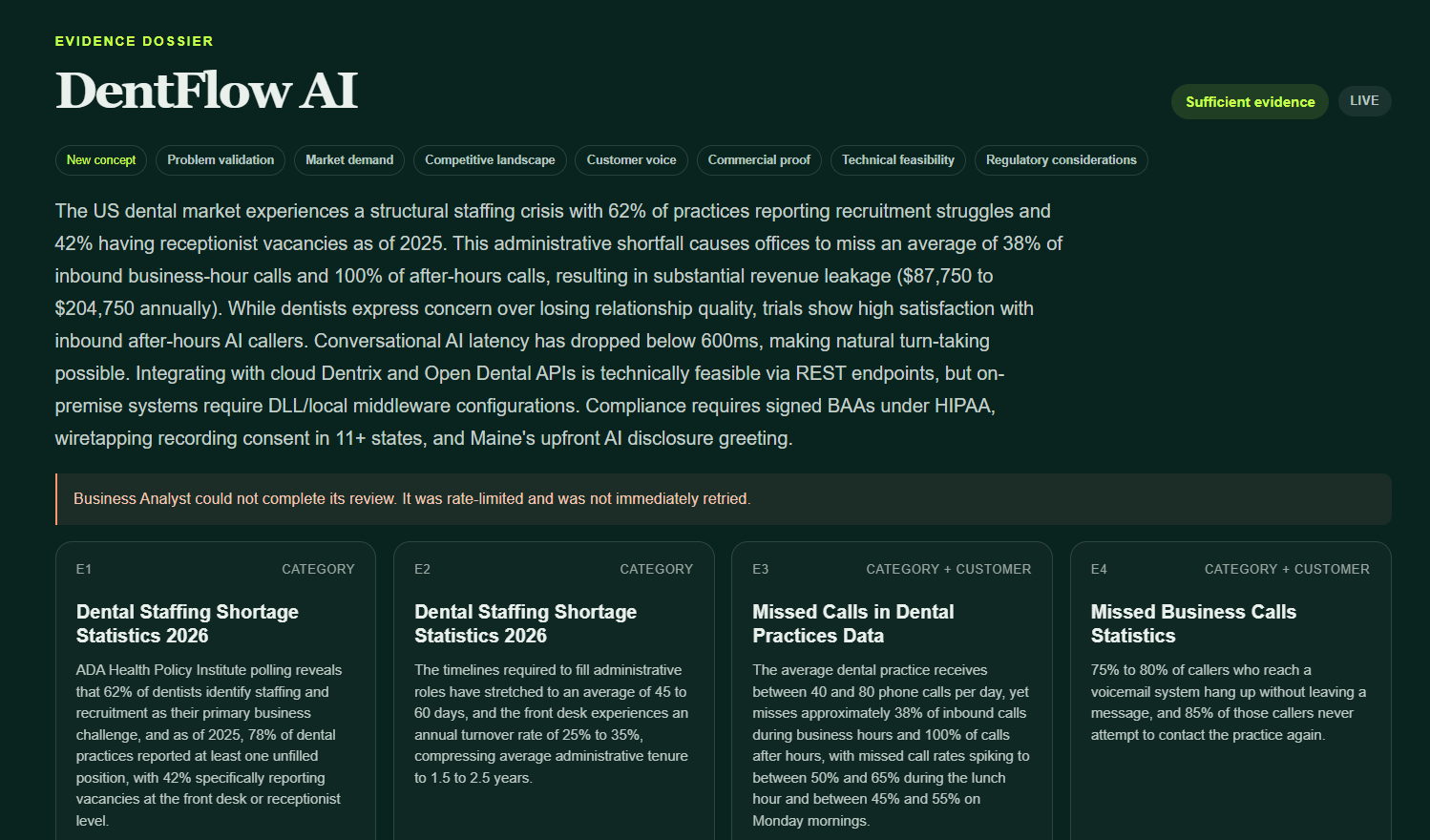
- Builds a structured evidence dossier covering market demand, competition, customer sentiment, commercial signals, technology feasibility, and regulatory considerations.
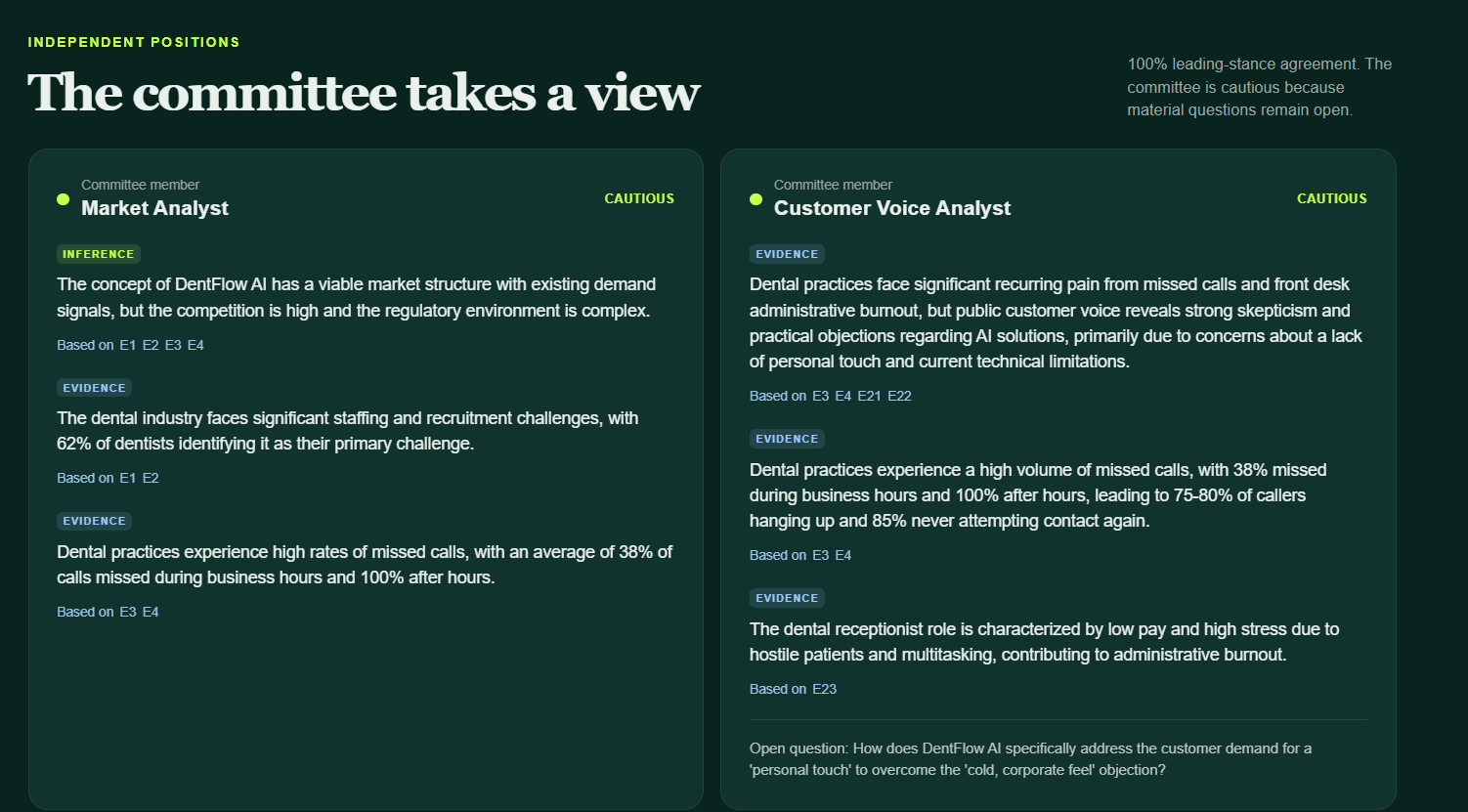
- Deploys specialized AI committee members, including:
- Market Analyst
- Business Analyst
- Customer Voice Analyst
- Risk Partner
- Allows specialists to independently evaluate the evidence and challenge one another's conclusions.
- Produces a final investment verdict complete with confidence levels, supporting evidence, and clearly identified areas requiring additional diligence.
Rather than simply answering whether an idea is good or bad, Venture Jury explains why it reached its conclusion and highlights the assumptions that still need validation.
How we built it
We built Venture Jury using Next.js, React, and TypeScript, with Server-Sent Events (SSE) enabling users to watch the committee deliberate in real time.
The research pipeline orchestrates multiple information providers, including:
- Gemini with Google Search Grounding
- Tavily Search
- Reddit customer discussions
To ensure reliability, we designed an Evidence Intelligence layer that:
- Normalizes research collected from multiple providers
- Removes duplicate information
- Preserves source attribution
- Assigns confidence scores
- Separates evidence from inference
Every committee member receives the same structured evidence rather than raw search results, encouraging independent reasoning while maintaining a shared factual foundation.
Throughout development, we also leveraged GPT-5 and Codex to accelerate architectural design, refine prompt engineering, and implement complex reasoning workflows across the multi-agent system.
Challenges we ran into
Building a trustworthy multi-agent AI system turned out to be significantly more challenging than chaining together a few prompts.
One of our biggest challenges was preventing unsupported claims from entering the committee discussion. We designed strict validation layers so every argument produced by the committee remains tied to identifiable evidence instead of unsupported reasoning.
Another major challenge involved orchestrating multiple asynchronous research providers while maintaining consistent context across several reasoning agents. Balancing streaming performance, evidence provenance, API reliability, and long-context reasoning required extensive engineering throughout the project.
Finally, designing specialists that could disagree constructively—rather than converge toward identical answers—required careful prompt engineering and role separation.
What we learned
This project reinforced that trustworthy AI depends on much more than powerful language models.
Reliable reasoning requires strong evidence, transparent provenance, confidence calibration, and clear separation between observations and conclusions.
We also learned that multi-agent systems become significantly more valuable when each participant has a distinct responsibility and is encouraged to challenge the others using evidence rather than opinion. Constructive disagreement consistently produced richer insights than asking a single model for a summary.
What's next for Venture Jury
This hackathon prototype demonstrates the foundation of what we hope becomes a comprehensive AI due diligence platform for founders, accelerators, angel investors, and venture capital firms.
Our roadmap includes:
- Pitch deck and financial document ingestion
- Data room analysis
- Financial modeling and valuation support
- Industry-specific investment committees
- Founder and team assessment
- Competitive benchmarking
- Continuous monitoring of startups after investment
Our long-term vision is to make startup due diligence faster, more transparent, and more evidence-driven—helping founders strengthen their businesses while enabling investors to make better-informed decisions with explainable AI.

Log in or sign up for Devpost to join the conversation.