-
-
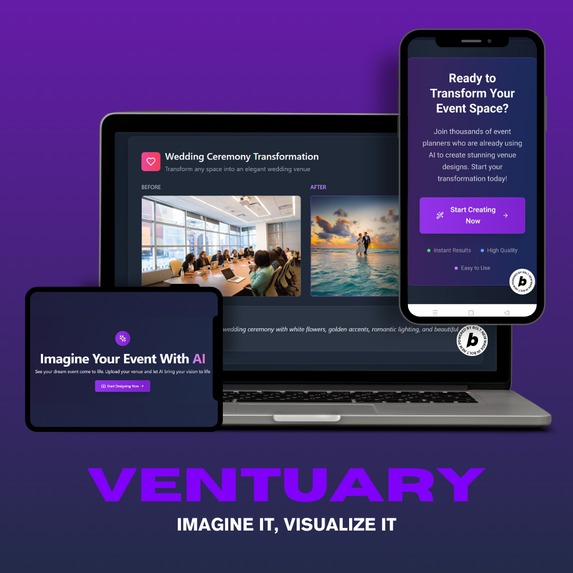
Mockup
-
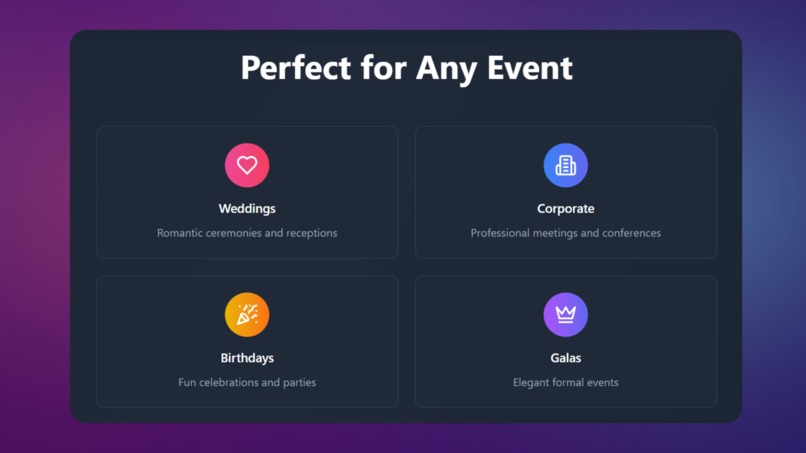
Category
-
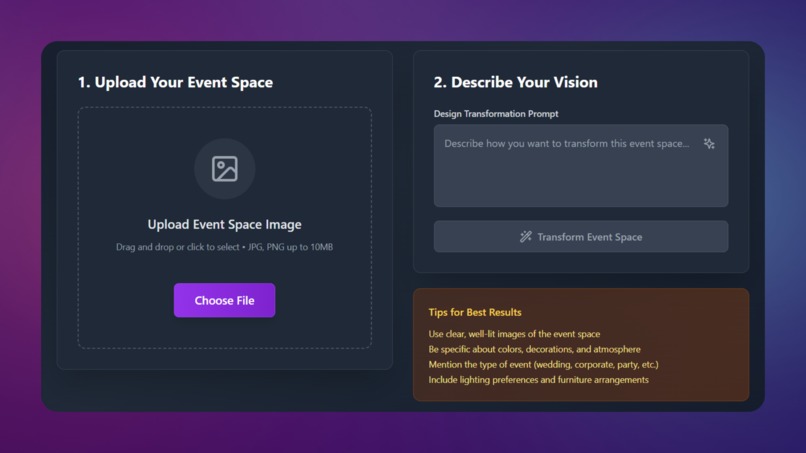
Making Image Page
-
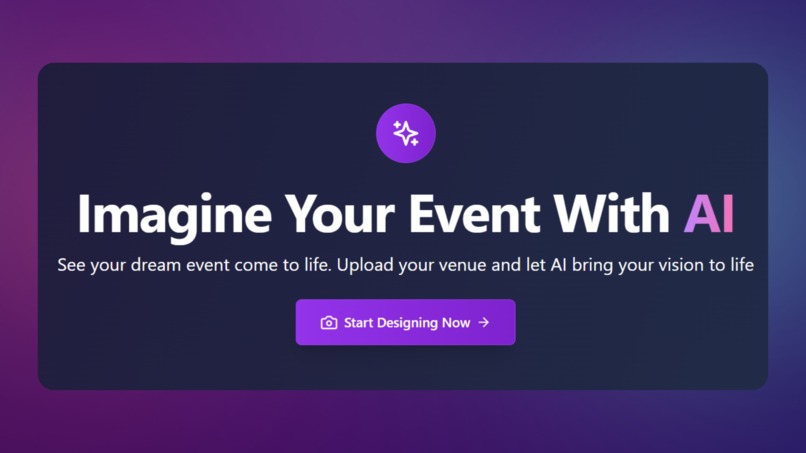
Hero Section
-
Example
Inspiration
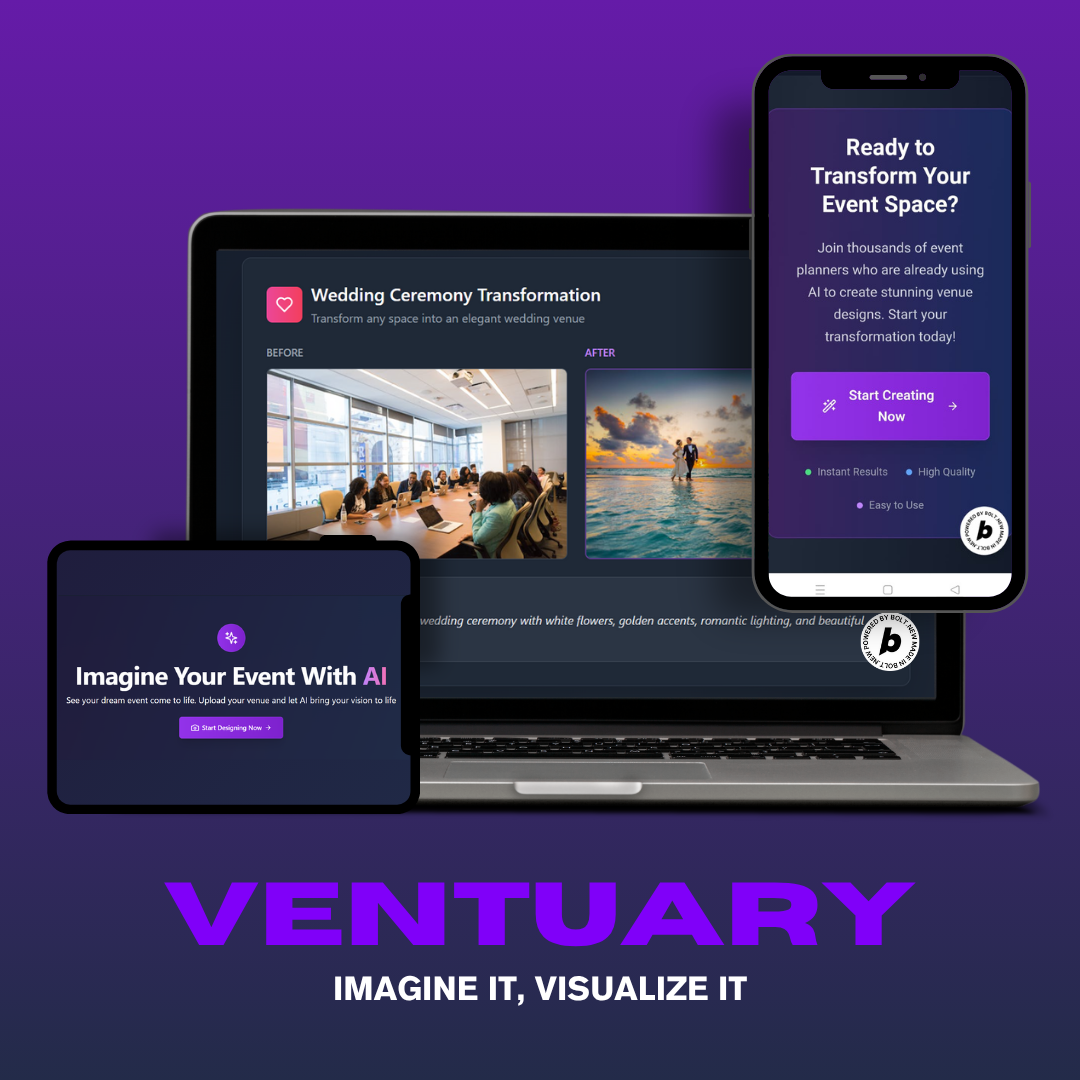
As a second-year university student, I was assigned to help organize a promotional event for my academic department a relatively new program still in the process of building public awareness and interest. My classmates and I were tasked with choosing a venue and designing the overall event concept. To support this effort, we consulted several local Event Organizers (EOs). However, despite receiving detailed explanations and sample images, my team and I found it difficult to visualize the proposed layouts. The lack of immersive, visual representation made it challenging to make confident decisions. Ultimately, we selected an EO based on time constraints, but during planning discussions, I expressed my difficulty in fully understanding the visual concept. The EO acknowledged that this was a common issue among clients, it’s often difficult to visualize a venue setup based solely on descriptions and static references. This challenge led to the idea behind Ventuary a platform that leverages AI-powered image inpainting to help users visualize customized event concepts directly on their chosen venues.
What it does
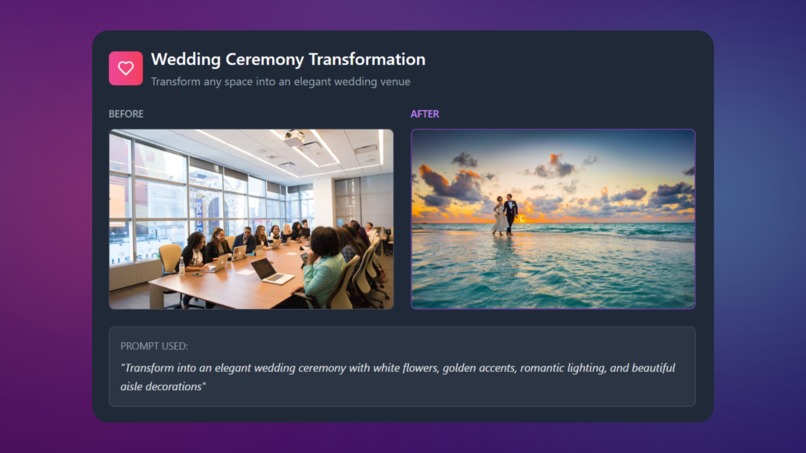
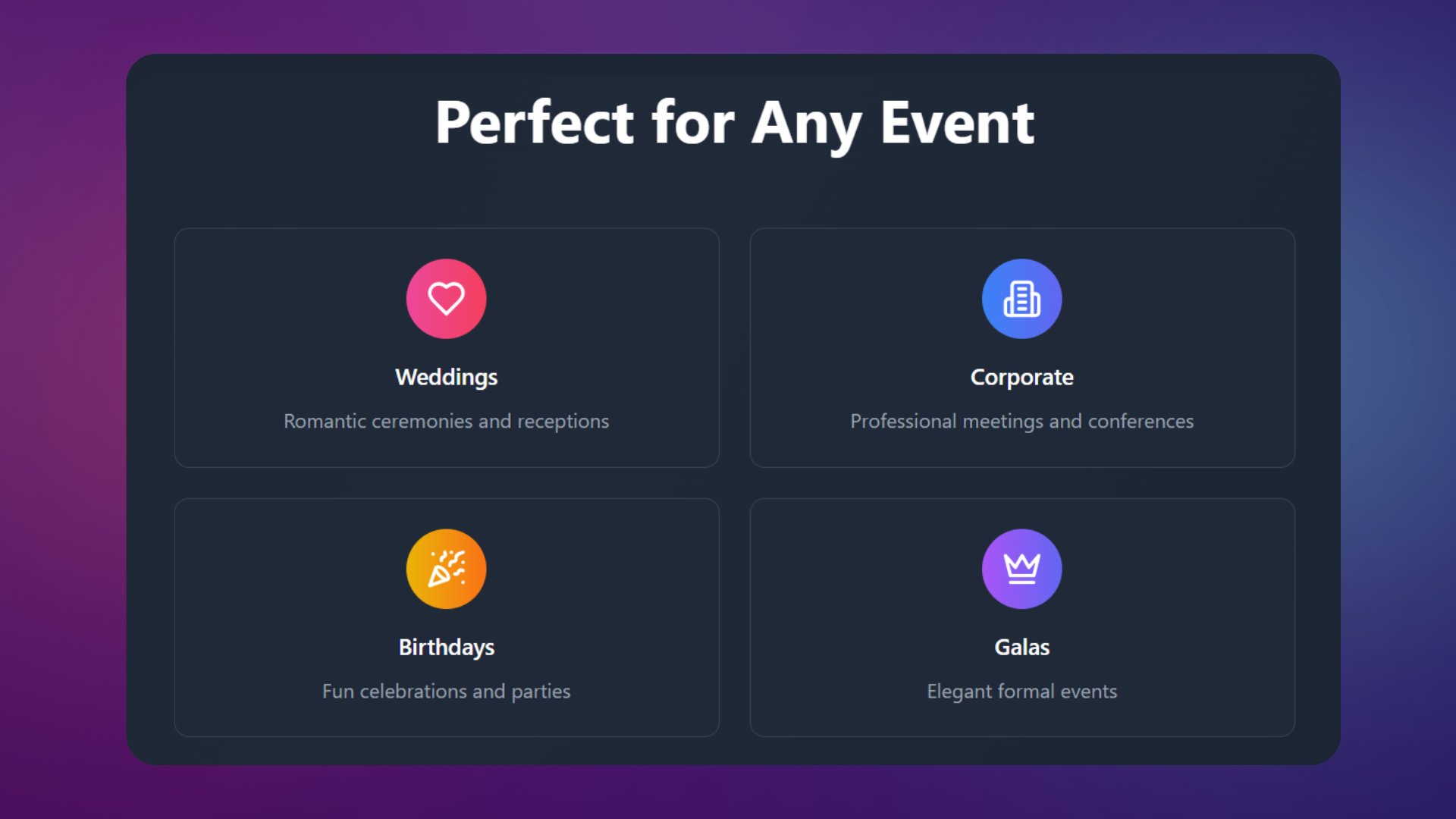
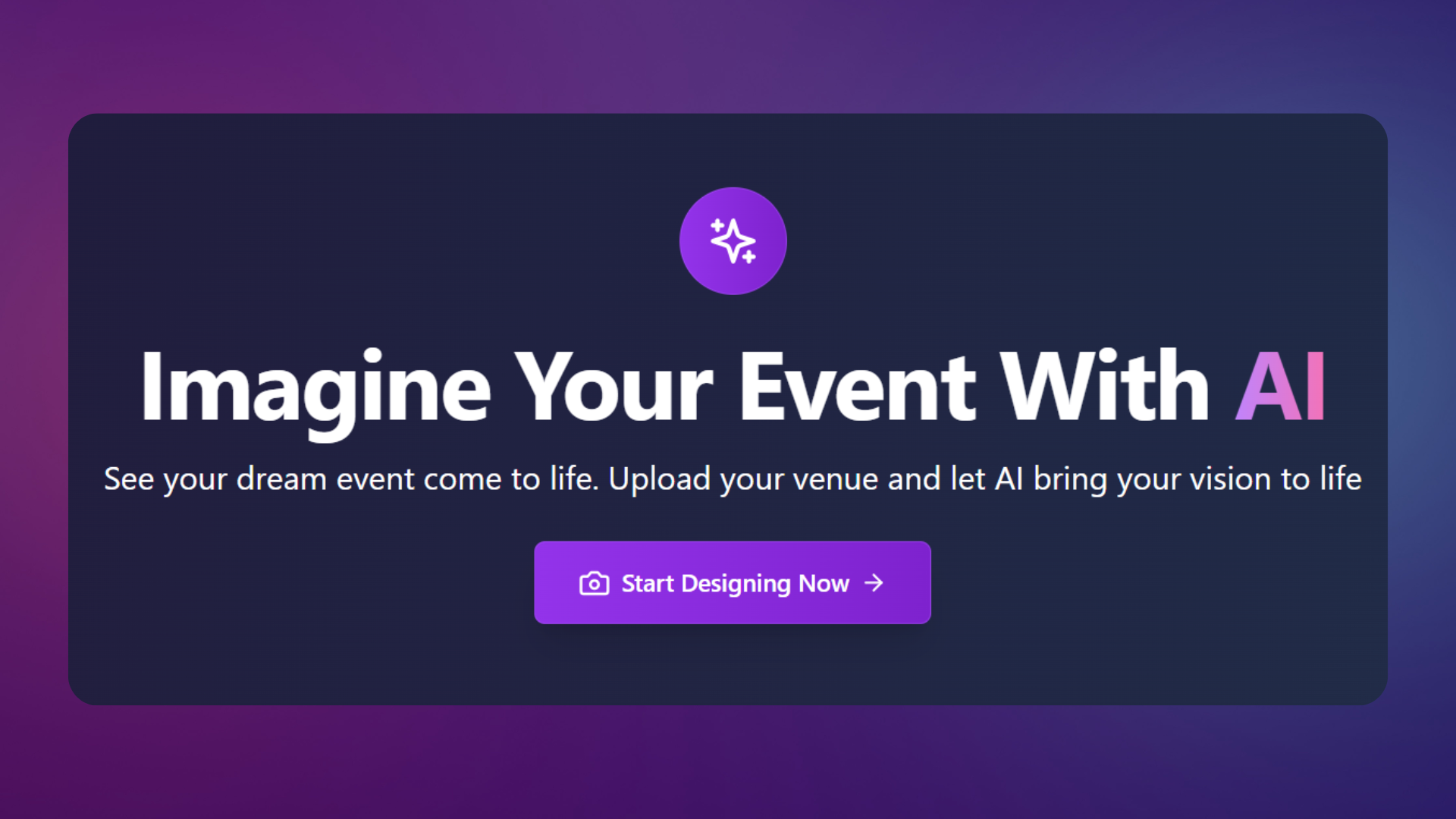
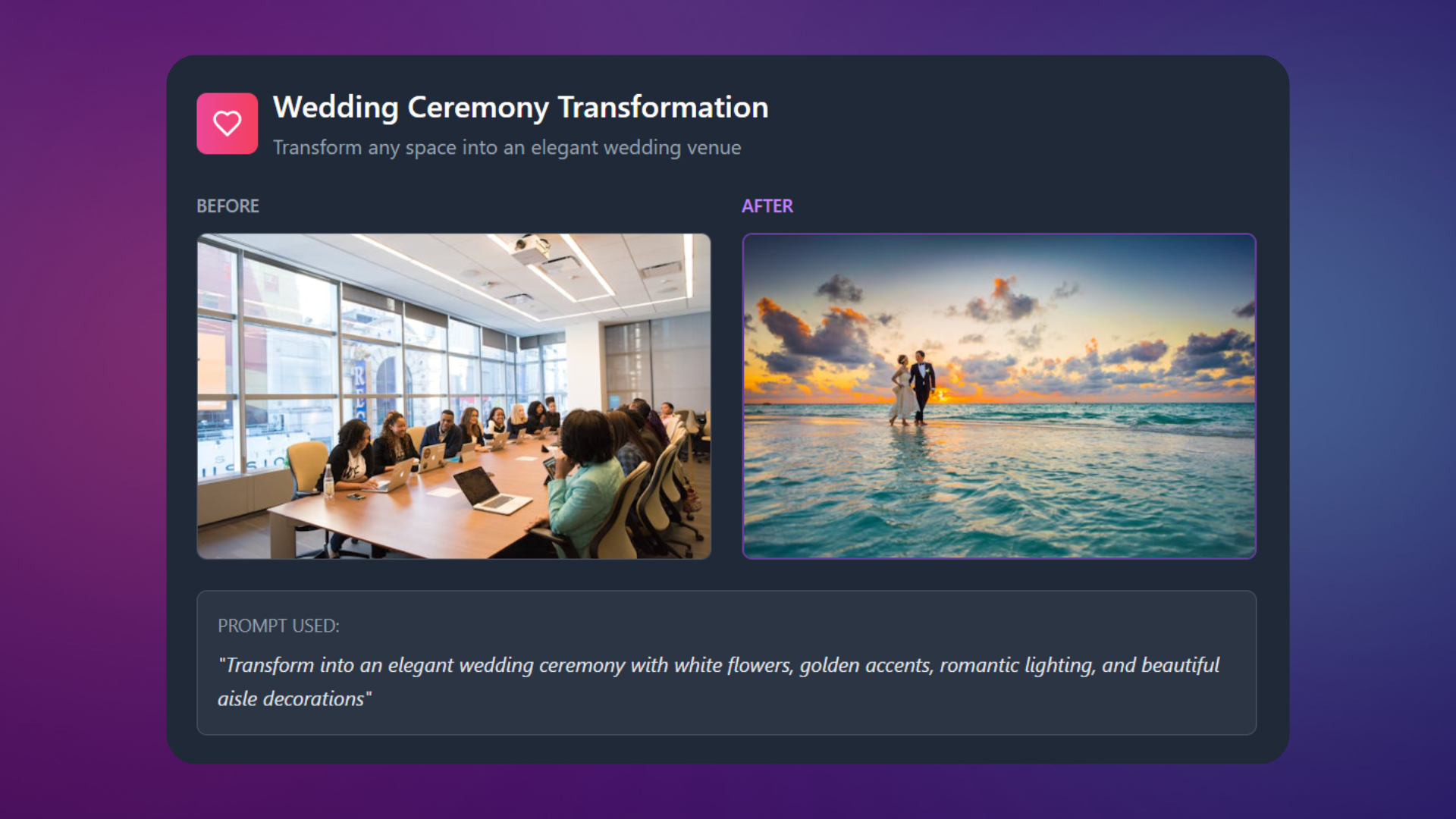
Ventuary enables users to upload images of real-world event venues and generate AI-enhanced visualizations that reflect their envisioned event setup whether it's decorations, lighting, stage layout, or furniture placement. The platform simplifies the creative process for clients and teams who struggle to conceptualize abstract ideas. It also serves as a valuable tool for Event Organizers, allowing them to present more concrete, tailored design proposals that improve client understanding and decision-making.
How we built it
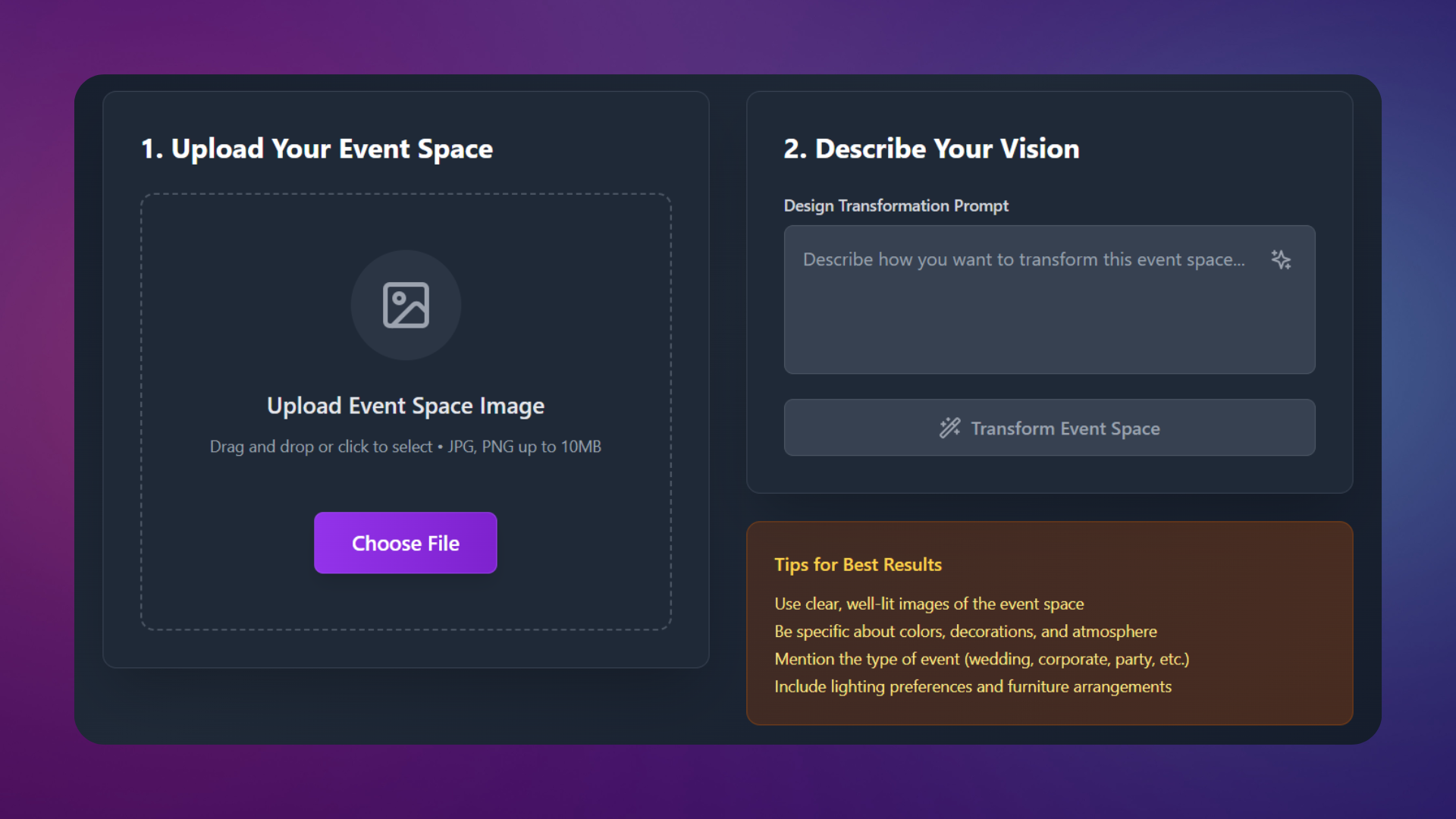
The development process began with designing prompt templates that align with common event use cases, followed by integration with the Stable Diffusion API for AI-driven image inpainting. I then built the user interface, starting with a homepage that clearly communicates the platform’s purpose and showcases sample outputs. To ensure privacy and security, I implemented a user authentication system, restricting access to the image generation features. The final step was deployment for testing and iteration.
Challenges we ran into
The initial version of the platform encountered a critical issue during the API integration phase the Stable Diffusion API failed to connect properly, resulting in non-functional image generation. After several debugging attempts, I decided to rebuild the platform from the ground up, this time starting with API integration. This restructuring resolved the issue. I also encountered challenges with user authentication, particularly with data matching between the frontend and backend. After multiple iterations, I resolved these issues, though a secondary problem emerged involving repeated user re-authentication. I later addressed this through improved session management.
Accomplishments that we're proud of
Successfully integrating the Stable Diffusion API after refactoring the architecture was a key milestone. It demonstrated the importance of prioritizing backend reliability before finalizing the frontend experience.
What we learned
This project reinforced a valuable lesson, development problems often have more than one solution, and flexibility in approach along with the willingness to restart or reframe the process is essential for overcoming complex technical challenges.
What’s next for Ventuary
Looking ahead, I plan to enhance the platform’s image generation capabilities for greater realism and detail. I also aim to introduce features that allow users to connect directly with venue providers and vendors transforming Ventuary into an end-to-end solution for planning and visualizing events.
Built With
- bolt
- stablediffusion
- supabase


Log in or sign up for Devpost to join the conversation.