
Inspiration
The idea for Ventre began close to home. Members of our team witnessed our grandparents struggle with ongoing digestive issues and saw firsthand the lack of affordable, reliable tools to monitor gut health over time. Most current options rely on expensive clinical testing or inconsistent self-reporting, making it difficult to track long-term digestive patterns or catch early warning signs. We realized there needed to be a convenient, non-invasive, and affordable way to monitor digestive health as part of everyday life without the stress of constant doctor visits.
What it does
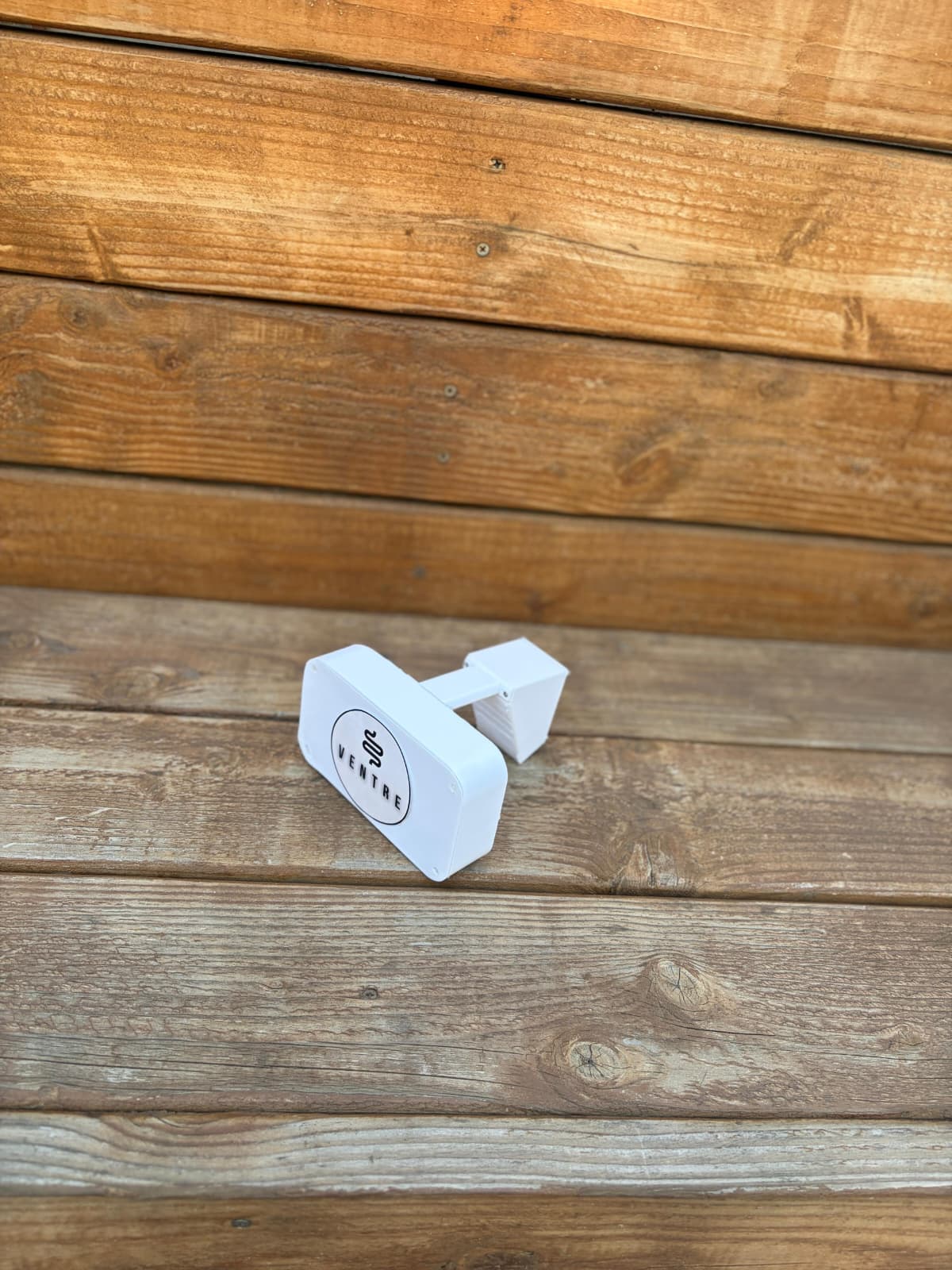
Ventre is a privacy-first smart toilet attachment that passively tracks digestive health, turning everyday bathroom use into actionable gut health insights. Instead of requiring manual logging, Ventre automatically records key indicators like bowel movement frequency, approximate volume, and visual characteristics (such as consistency and color). This data is sent securely to the Ventre companion mobile app, providing users with visual trend insights that help them understand how their diet, hydration, and lifestyle impact their gut health over time.
How we built it
Ventre combines computer vision and embedded AI hardware to analyze characteristics during normal bathroom use. The system relies on an AI vision sensor to capture images, which are processed locally using an ESP32-S3 microcontroller. This local processing ensures maximum privacy. We trained lightweight machine learning models on a dataset of synthetic stool samples for calibration. Once processed on the device, only the secure, anonymized analysis and recommendations are transmitted via Wi-Fi to the Ventre mobile application dashboard.
Challenges we ran into
One of the biggest technical hurdles was building a system capable of converting noisy, real-world sensor input from different toilet environments into consistent, comparable signals over time. Additionally, we had to ensure utmost data privacy due to the sensitive nature of the product. We overcame this by engineering the system to process all raw data entirely on the device itself, rather than sending images to the cloud. Finally, keeping the unit cost affordable compared to luxury smart toilets required careful component sourcing and lean production modeling.
Accomplishments that we're proud of
We are incredibly proud of completing our first working prototype on January 5, 2026, and proving that passive stool analysis can be done affordably without replacing an entire toilet. We successfully implemented local AI processing to guarantee user privacy, and we developed a comprehensive business plan that maps out everything from FDA Class 1 medical device registration to B2B scaling in senior living facilities
What we learned
Through this project, we gained deep insights into hardware calibration, embedded machine learning, and secure data transmission. On the business side, we learned how to navigate regulatory requirements (such as FCC, HIPAA, and FDA compliance) and how to structure strategic alliances with gastroenterologists and senior care centers to validate our technology.
What's next for Ventre
Our immediate next steps involve running small-batch pilot testing with tech-savvy volunteers to validate hardware reliability and AI accuracy in real-world environments. Looking further ahead, we plan to refine our AI models to detect more health metrics (like blood detection and basic urine analysis) and integrate our data with major third-party health platforms. Ultimately, we aim to expand Ventre into assisted living facilities and healthcare networks to serve the growing senior population.
Built With
- ai-vision-sensors
- c/c++
- c/c++-(assuming-c/c++-for-the-esp32)
- computervision
- embedded-systems
- esp32-s3
- machine-learning
- mobile-application-development
- wi-fi

Log in or sign up for Devpost to join the conversation.