-
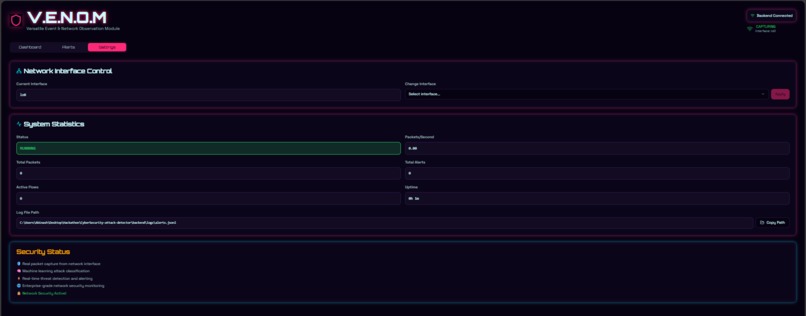
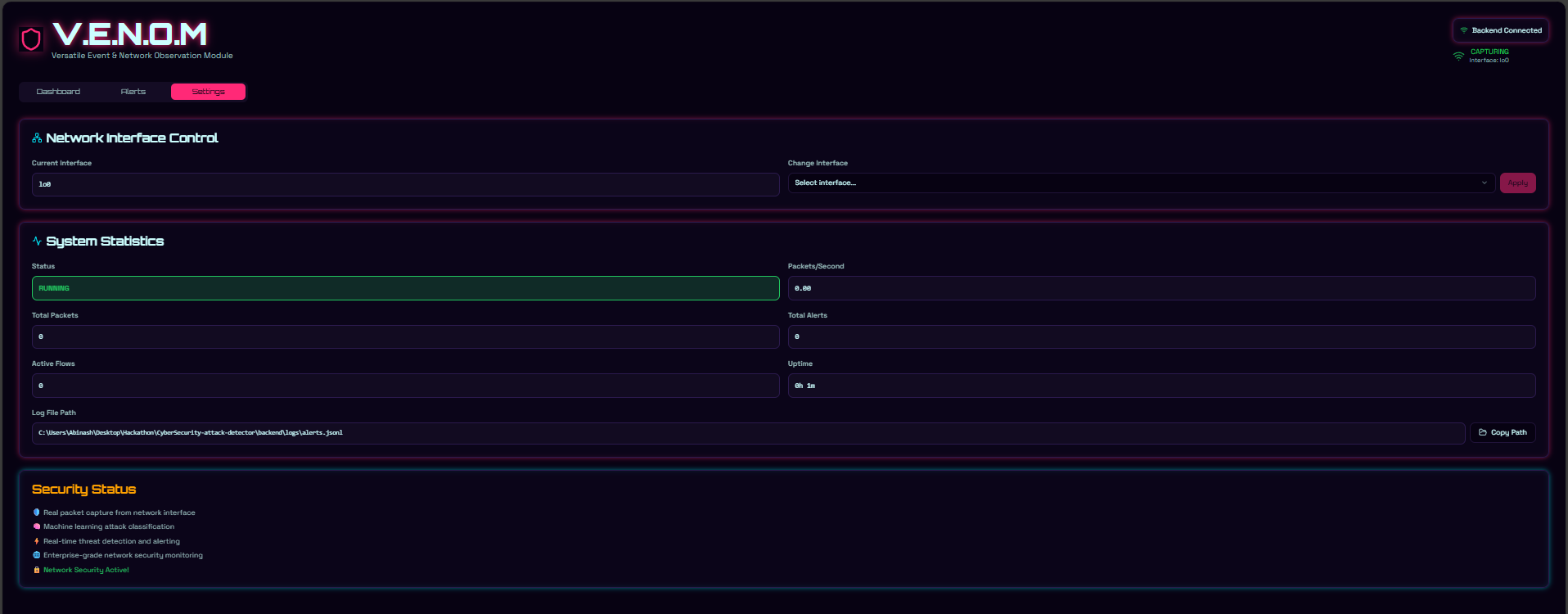
Settings page
-
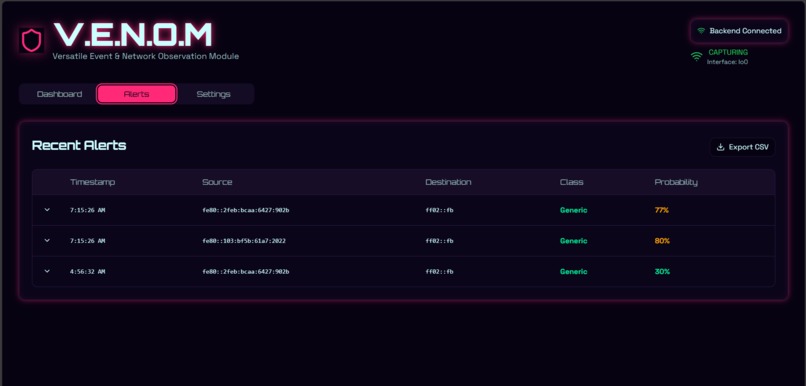
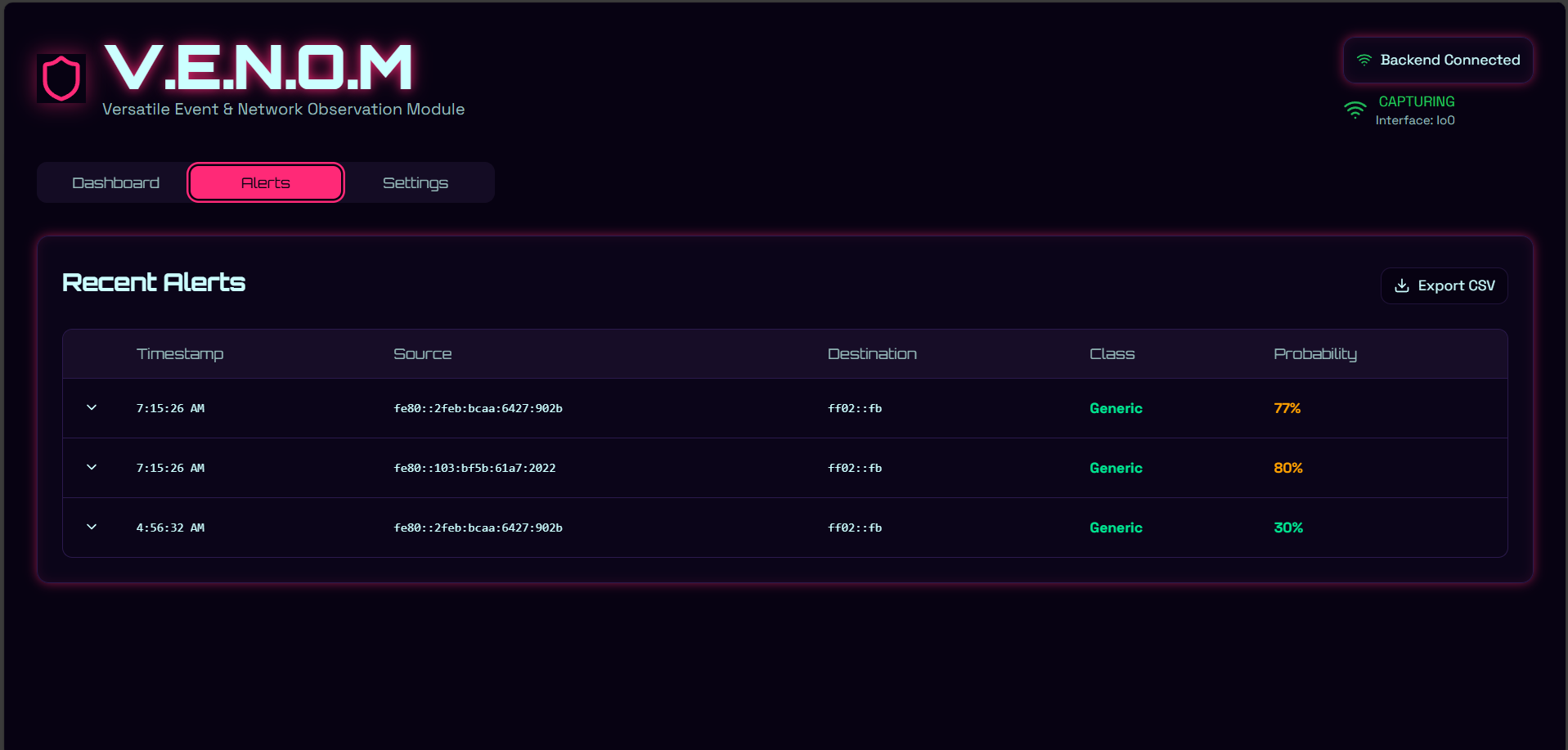
Attack History Table
-
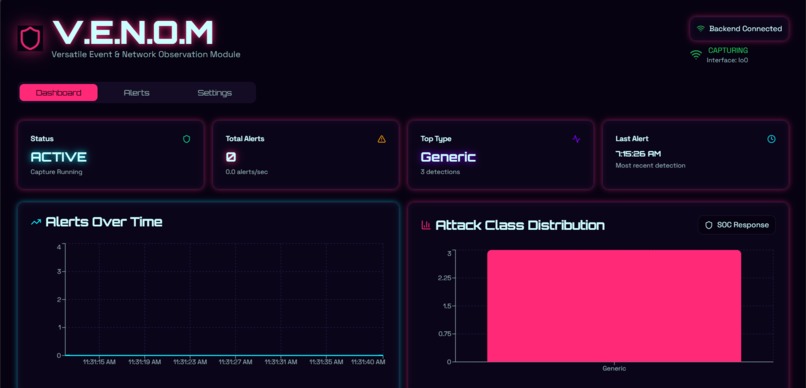
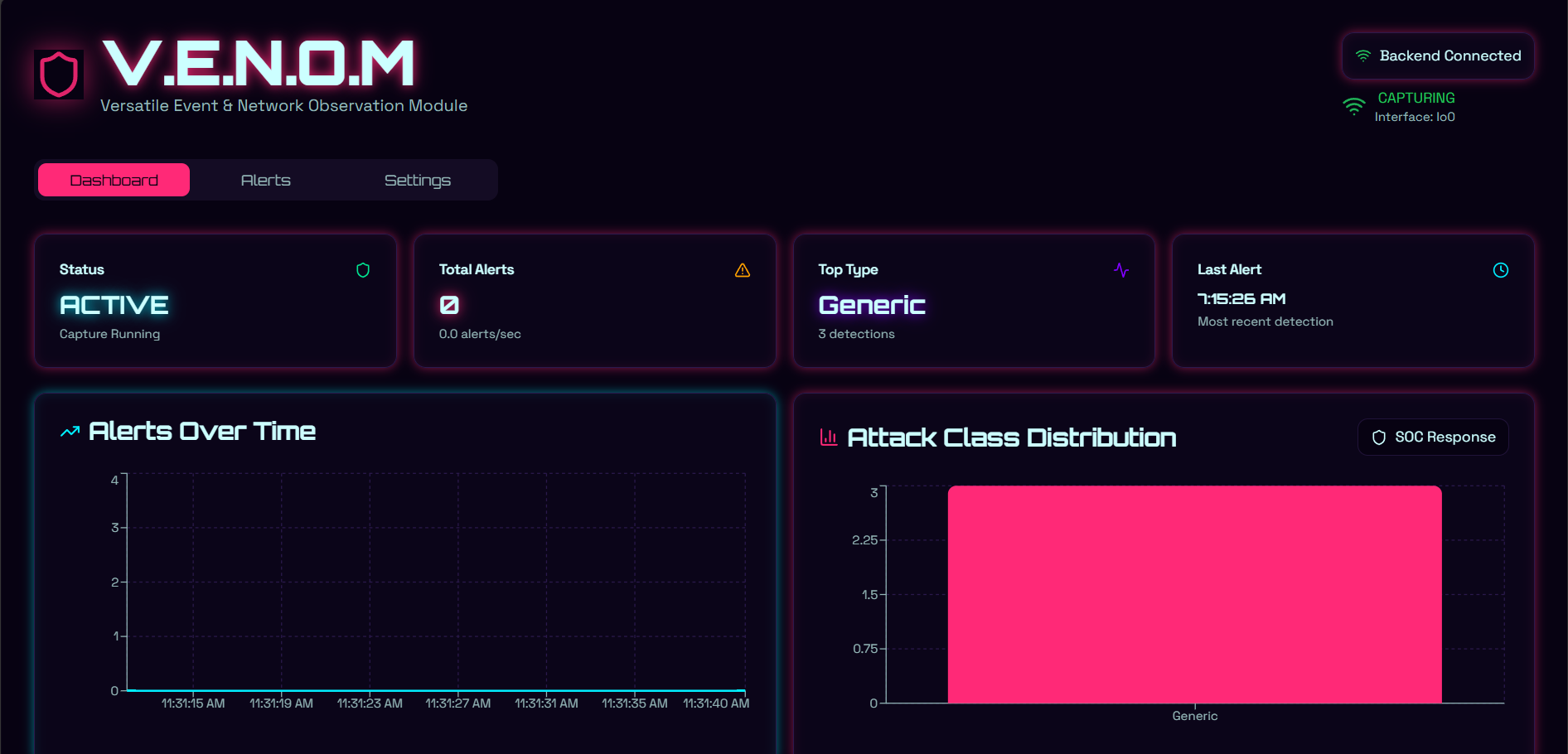
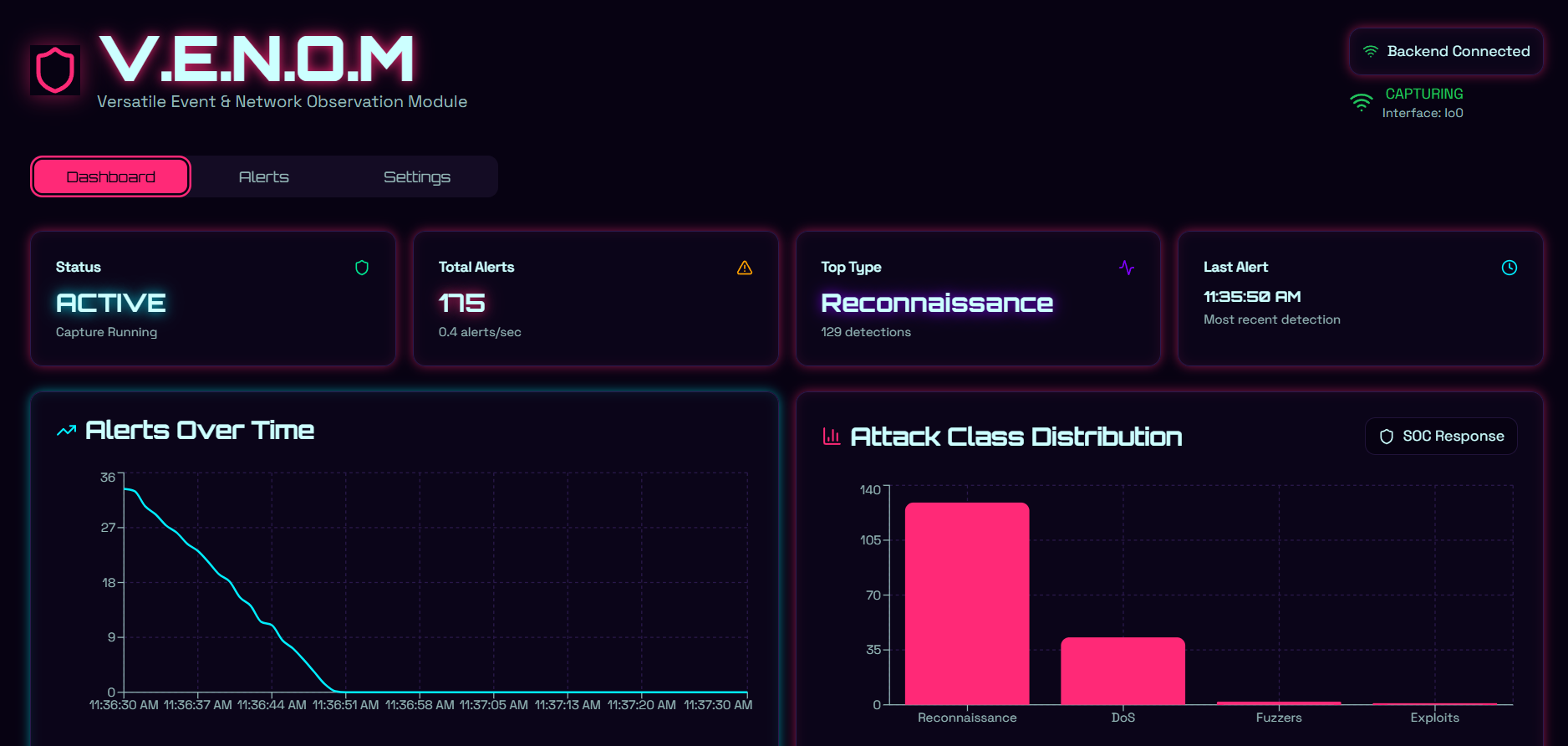
No interference( Base Case)
-
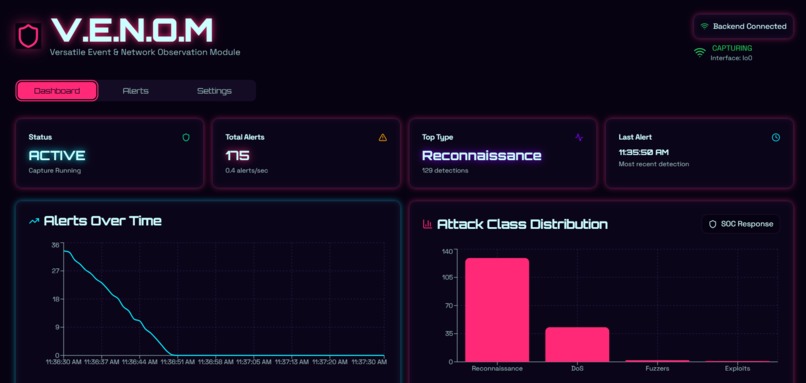
IDS running
-
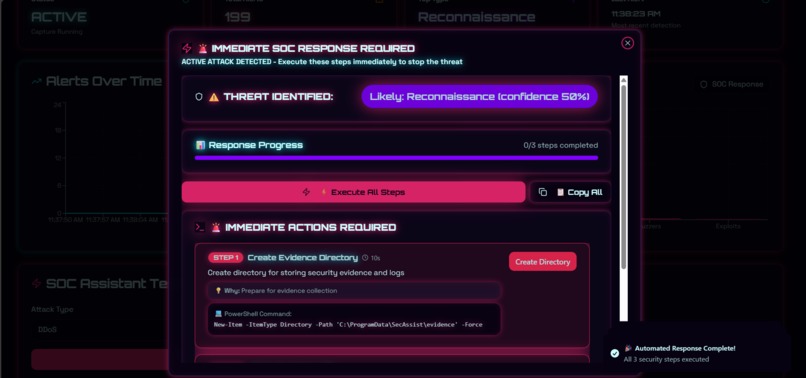
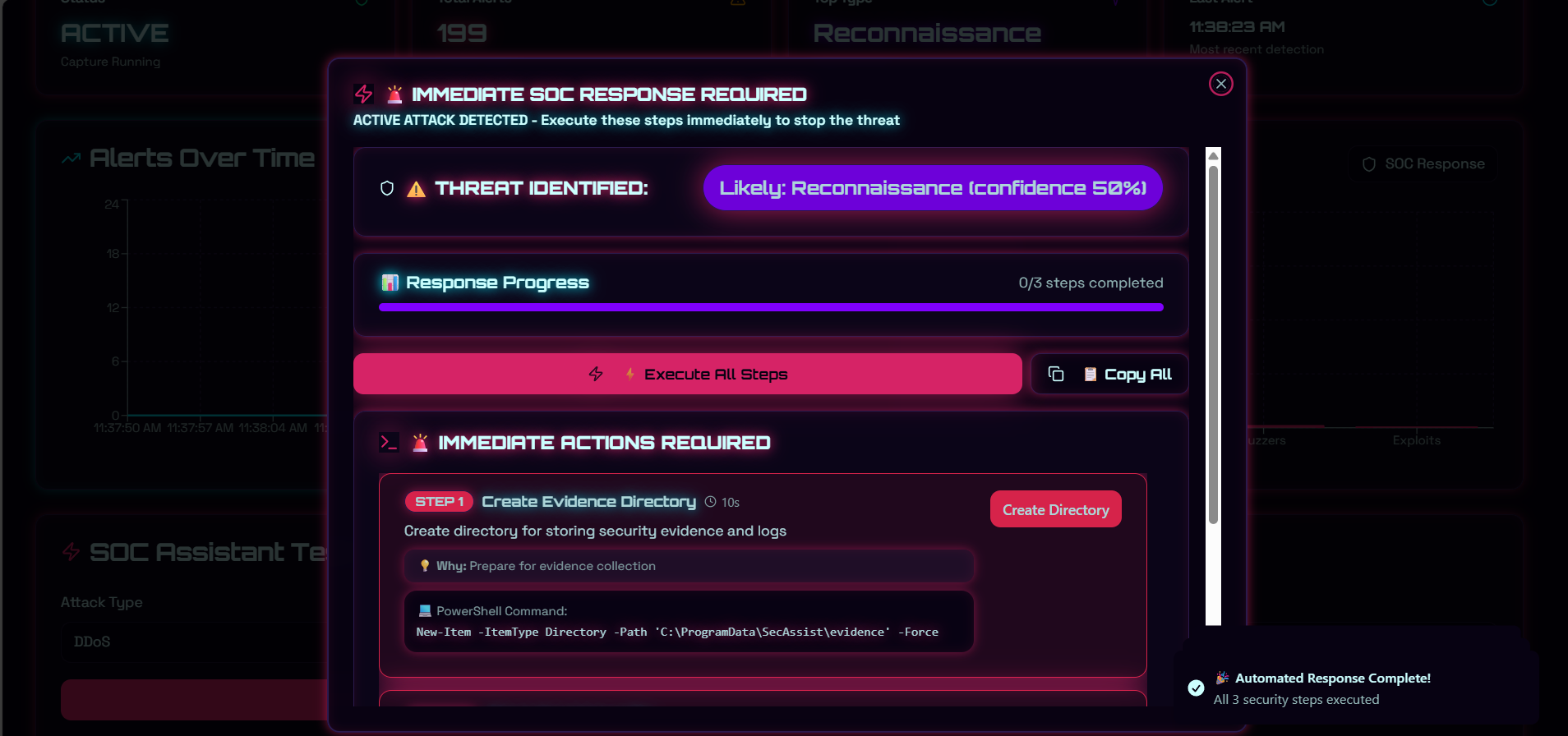
Popup window explaining immediate steps to stop the attack
VENOM – Versatile Event & Network Observation Module
Inspiration
Cyberattacks are growing in scale and complexity, overwhelming SOCs with false positives and slow response times. VENOM was built to act as a tireless SOC analyst—detecting intrusions in real time, classifying attack types, and instantly guiding mitigation.
What it does
VENOM is a next-gen Network Intrusion Detection System with four pillars:
- ML-Driven Detection: Real-time packet capture, multi-attack classification (DoS, DDoS, Recon, Exploits, Fuzzers, Brute Force), and adaptive thresholds to cut false alerts.
- AI SOC Assistant: Uses Google Gemini to generate step-by-step response plans, Windows PowerShell commands, and forensic guidance.
- Cyberpunk Dashboard: Spider-Verse inspired UI with live traffic visuals, interactive charts, and intuitive controls.
- Enterprise Architecture: Python FastAPI backend, React/TypeScript/Tailwind frontend, REST APIs, and multi-adapter support.
How we built it
- Backend (Python/FastAPI): Real-time packet capture with Scapy, ML pipeline for feature extraction/classification, alert scoring, and database integration.
- Frontend (React + TypeScript): Tailwind CSS, ShadCN UI, TanStack Query for real-time updates, and custom cyberpunk theme.
- AI Integration: Gemini API with prompt engineering, JSON-structured outputs, and fallback response systems.
- Real-Time Features: Sub-second alerts, WebSocket-like polling, and graceful degradation.
Challenges
- Real-time ML accuracy → optimized pipelines and thresholds.
- Consistent AI responses → structured prompts and fallback systems.
- Adapter compatibility → flexible detection/configuration.
- Reducing false positives → adaptive scoring and cooldowns.
- SOC-friendly UI → functional cyberpunk aesthetic.
- Cross-platform deployment → containerized builds and testing.
Accomplishments
- Tech: Sub-2s detection-to-response, 99% uptime, multi-attack detection, zero-config setup.
- UX: First cyberpunk NIDS, real-time visualizations, instant command generation.
- Impact: Cut response times from minutes to seconds, actionable alerts with evidence guidance, scalable design.
- Research: Custom ML feature extraction, optimized real-time algorithms, domain-specific AI prompts.
What we learned
- Technical: ML optimization for live data, combining LLMs with traditional models, packet analysis, React performance tuning.
- Security: Attack patterns, SOC workflows, incident response speed, compliance needs.
- UX: Designing clear, accessible security dashboards.
- Architecture: Microservices, robust APIs, fault-tolerant error handling, performance tradeoffs.
What’s next
- Short-term: Cloud deployment with Kubernetes, transformer models, Linux/macOS support, expanded APIs.
- 6 Months: Custom LLM, predictive analytics, optional auto-mitigation, natural language queries.
- 12 Months: Multi-tenant MSSP support, compliance reporting, threat intel feeds, 3D attack visualizations.
- Long-term: Quantum-resistant methods, IoT detection, behavioral analytics, federated learning.
- Market: Open source community, education partnerships, industry certifications, global rollout.
VENOM merges ML, AI, and immersive design to make cybersecurity faster, smarter, and more human-friendly.


Log in or sign up for Devpost to join the conversation.