-
-
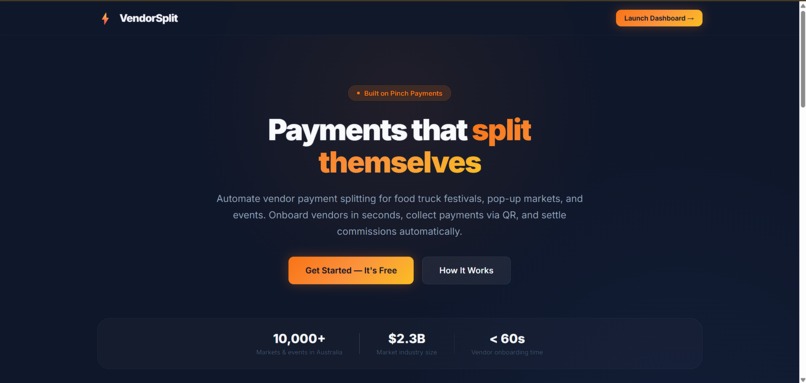
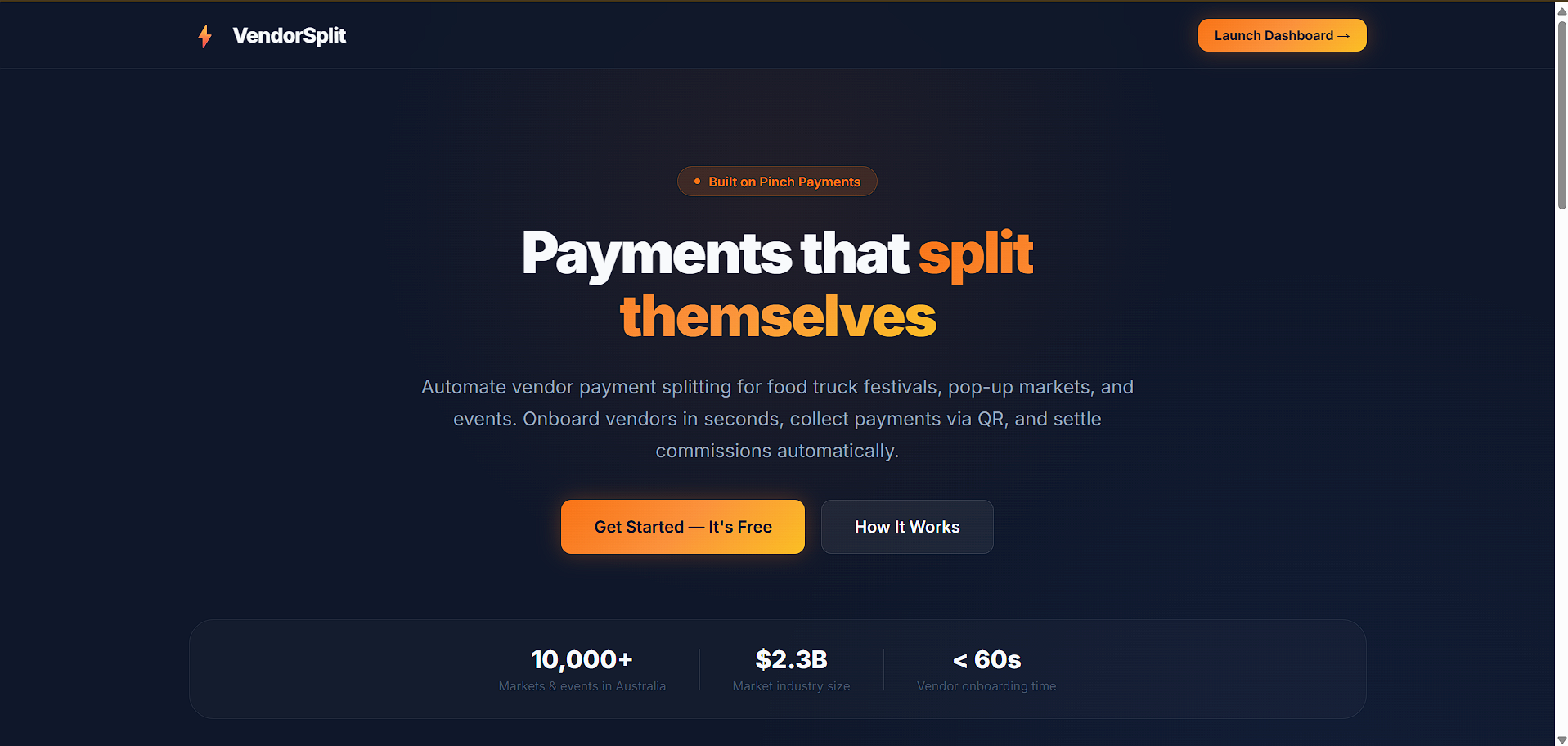
Landing Page
-
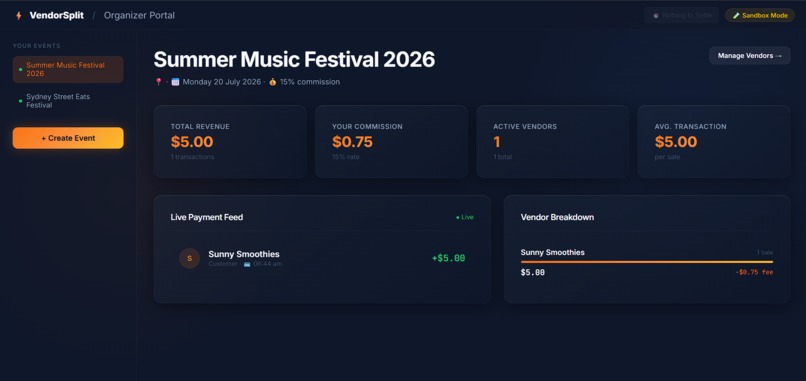
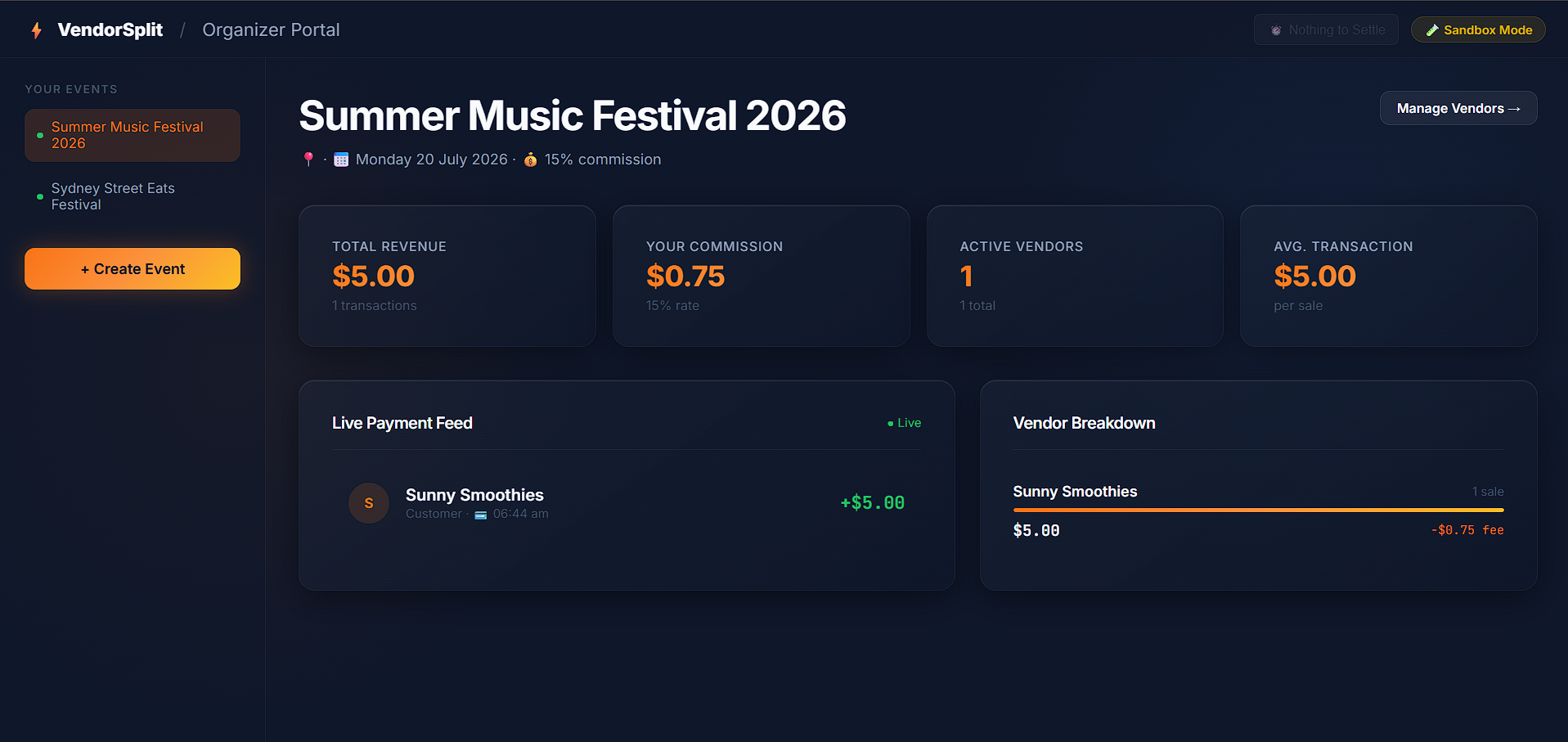
Organizer's Portal
-
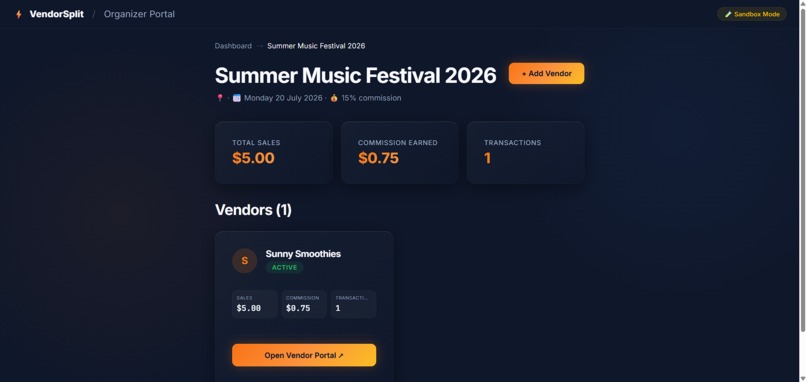
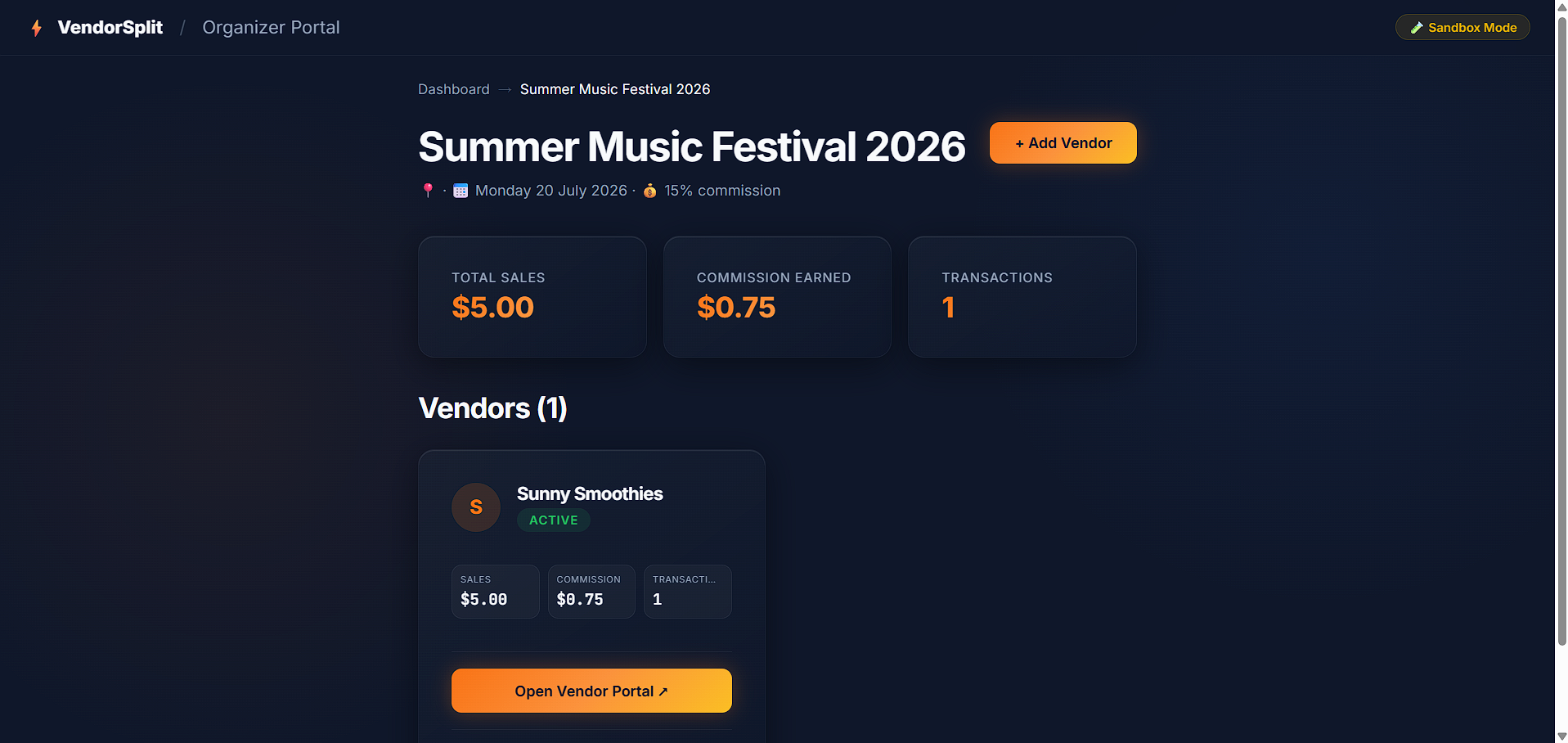
Manage Vendor
-
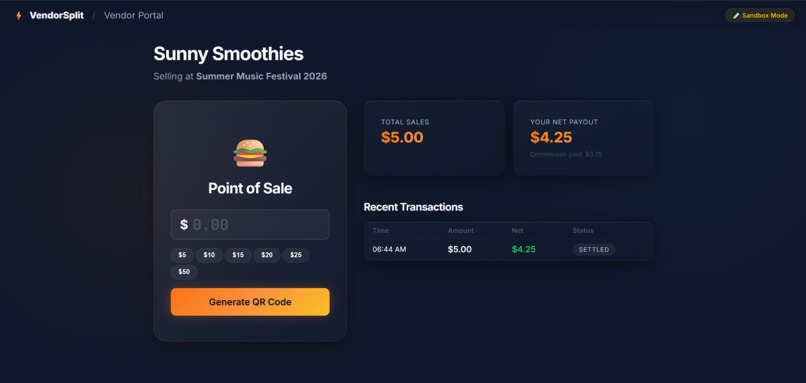
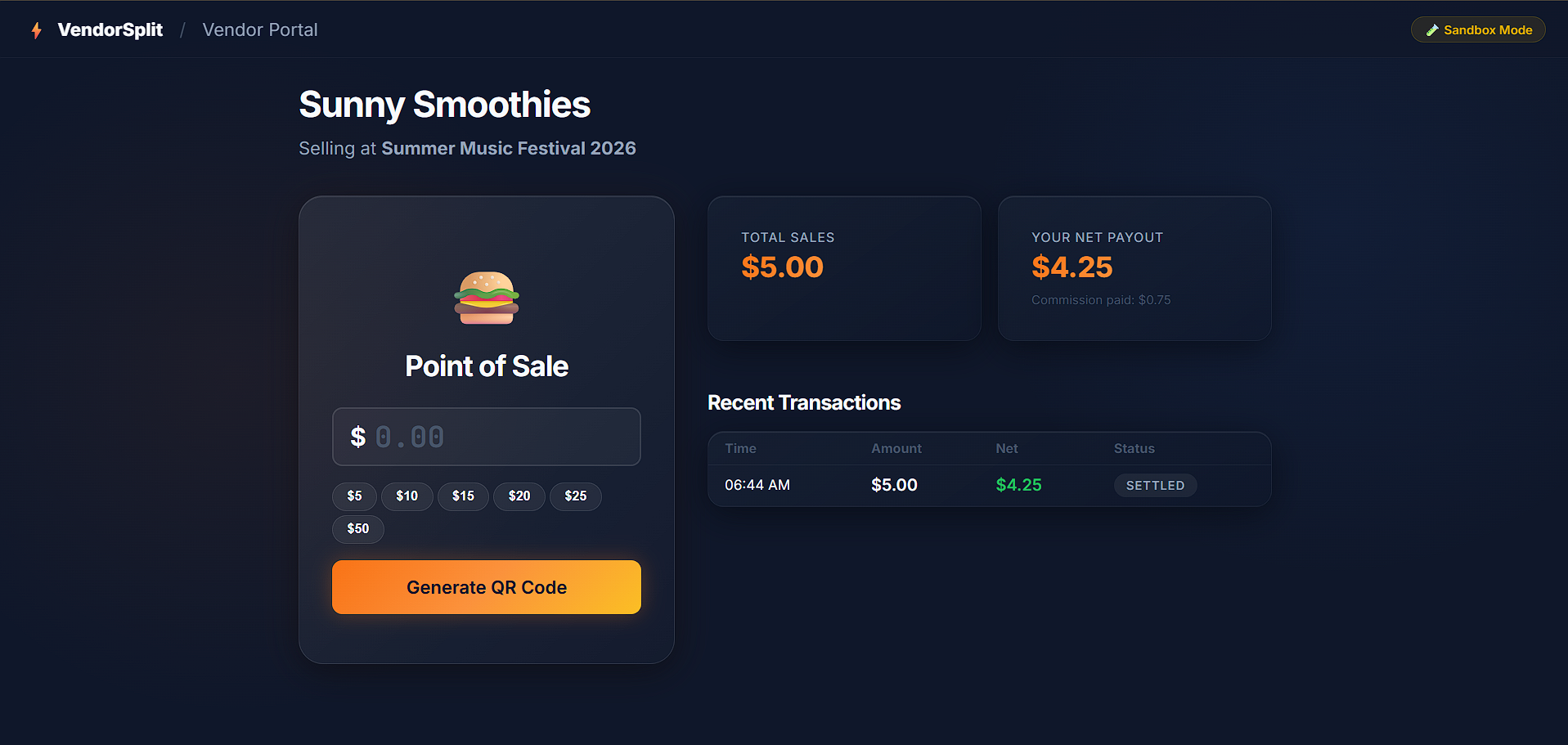
Vendor's Portal
Inspiration
Event organizers for local markets and food truck festivals have a really stressful job when the event ends. They usually charge food vendors a percentage of their total sales as a commission fee. But right now, collecting that fee is completely manual. Organizers have to wait for the event to end, ask every single vendor for their sales numbers, double check the math, and then beg the vendors to send a bank transfer. We wanted to completely automate this messy reconciliation process using modern payment infrastructure.
What it does
VendorSplit is a multi vendor payment platform built for event organizers. An organizer can create an event and set a commission rate, like fifteen percent. Then, they can onboard their vendors in under sixty seconds. VendorSplit generates a unique payment QR code for each vendor. When a customer walks up and scans the code to buy food, they pay through a secure checkout. VendorSplit automatically takes the payment, sends the vendor their eighty five percent cut directly to their bank account, and deposits the fifteen percent commission right into the organizer account.
How we built it
We built the core platform using Next.js for a lightning fast user interface, and connected it to a PostgreSQL database using Prisma. The magic of the payment splitting is powered entirely by the Pinch API. Whenever a new vendor is added to an event, our server calls the Pinch API to create a managed sub merchant account in the background. We then generate Pinch payment links for the QR codes, and use their application fee feature to automatically pull out the organizer commission on every single transaction. Finally, we hooked up Pinch webhooks to instantly update the organizer dashboard whenever a successful payment comes through.
Challenges we ran into
One of the biggest hurdles was figuring out how to handle the complex routing of money between multiple different bank accounts while staying compliant. Wrapping our heads around how to act on behalf of a managed merchant using the Pinch API required a lot of trial and error. We also struggled with the user interface, specifically trying to make the dashboard update instantly when new webhook data arrived without forcing the user to manually refresh the page.
Accomplishments that we are proud of
We are incredibly proud of how smooth the onboarding process is. A completely new vendor can be added to the system and given a working QR code to accept payments in less than a minute. We are also really proud of the live dashboard. Building an architecture that receives a background webhook from Pinch and pushes that data to a beautiful, real time user interface makes the whole product feel incredibly professional and alive.
What we learned
We learned a massive amount about financial infrastructure and how multi party payments actually work under the hood. Working with the Pinch API taught us how to manage sub merchant accounts and safely route application fees without ever needing to touch the credit card data ourselves. We also learned how to build optimistic user interfaces in Next.js to make web apps feel as fast as native mobile applications.
What is next for VendorSplit
The very next step is adding self service onboarding, where vendors can scan an invitation QR code to enter their own bank details instead of the organizer doing it manually. We also plan to introduce an end of day reconciliation report generator, which will email a clean PDF receipt to every vendor showing exactly how much they sold and the exact commission that was paid out.
Built With
- css
- html5
- neon-db
- next.js
- node.js
- pinch-api
- postgresql
- prisma
- qrcode
- react
- typescript
- vercel
- webhooks

Log in or sign up for Devpost to join the conversation.