-
-
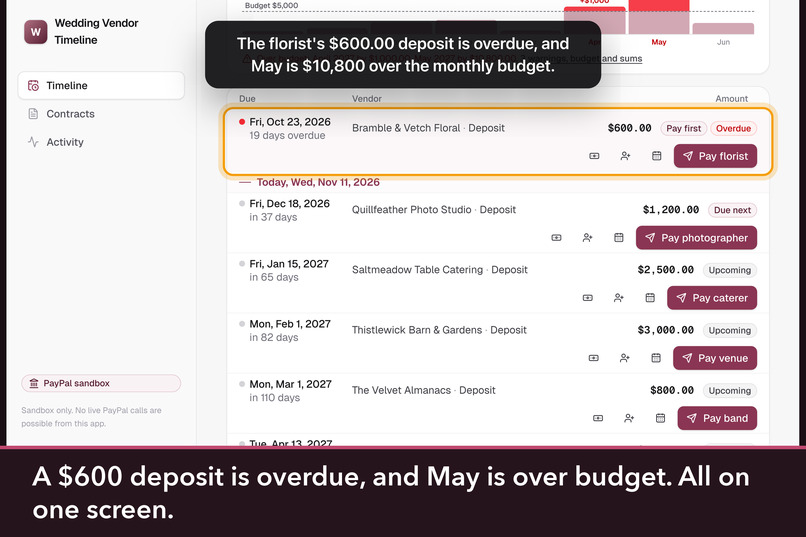
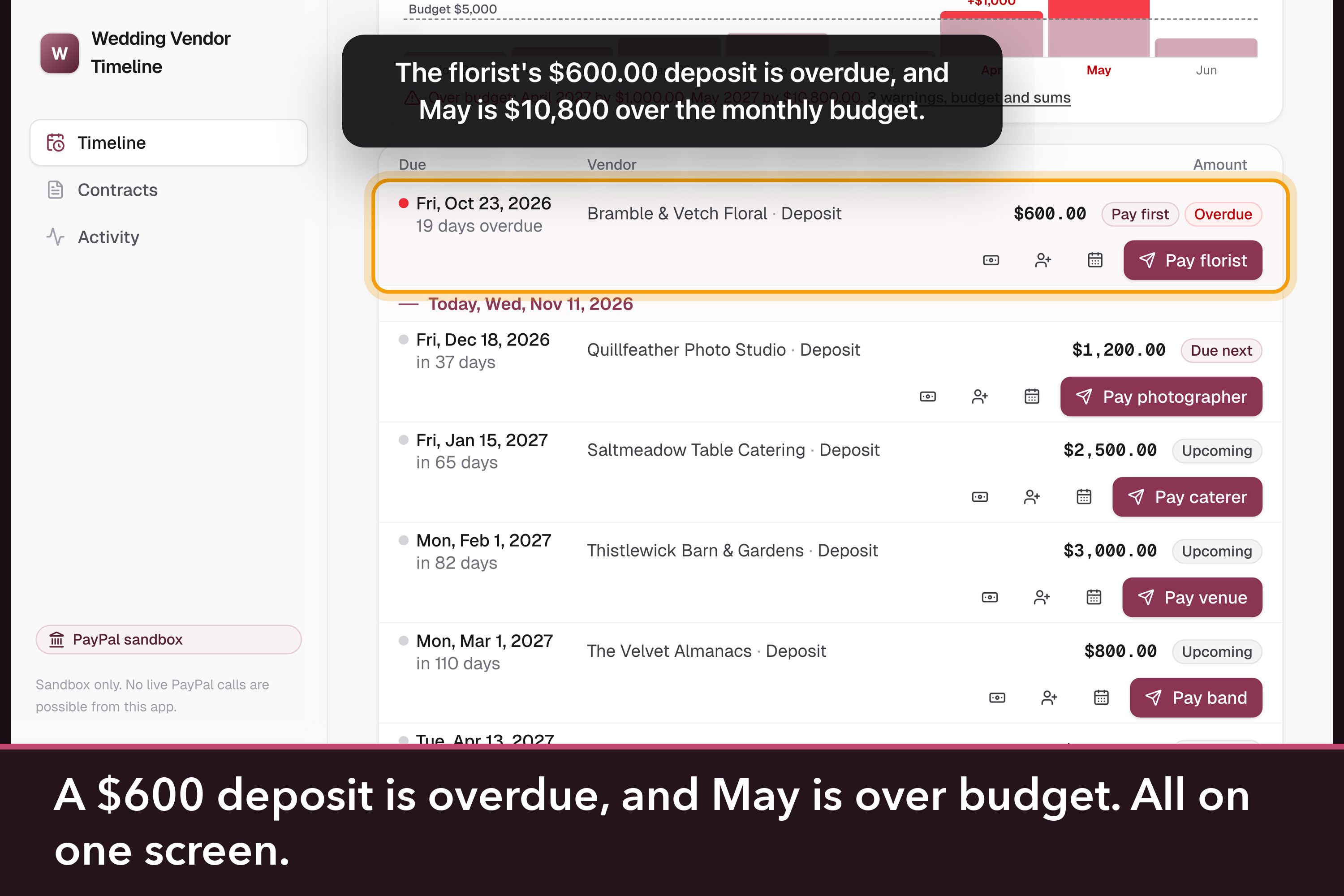
A $600 deposit is overdue, and May is over budget. All on one screen.
-
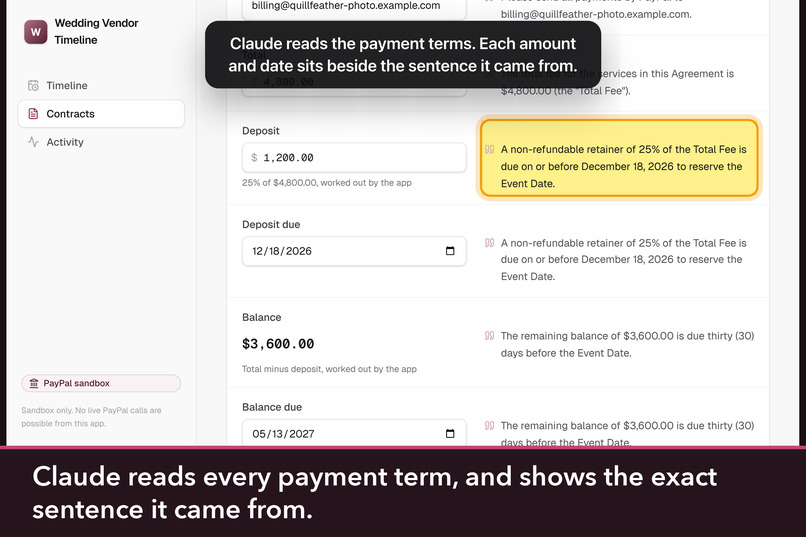
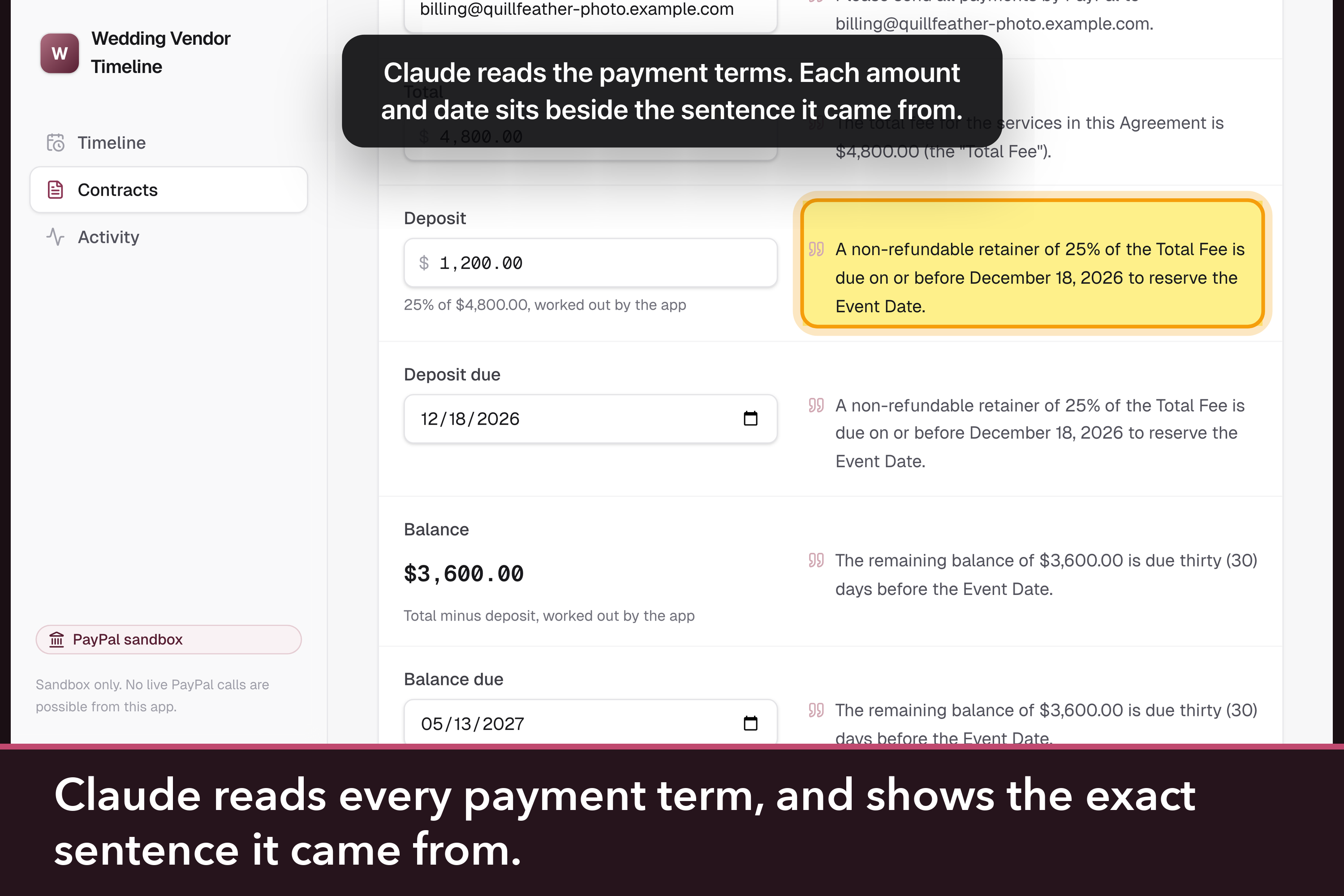
Claude reads every payment term, and shows the exact sentence it came from.
-
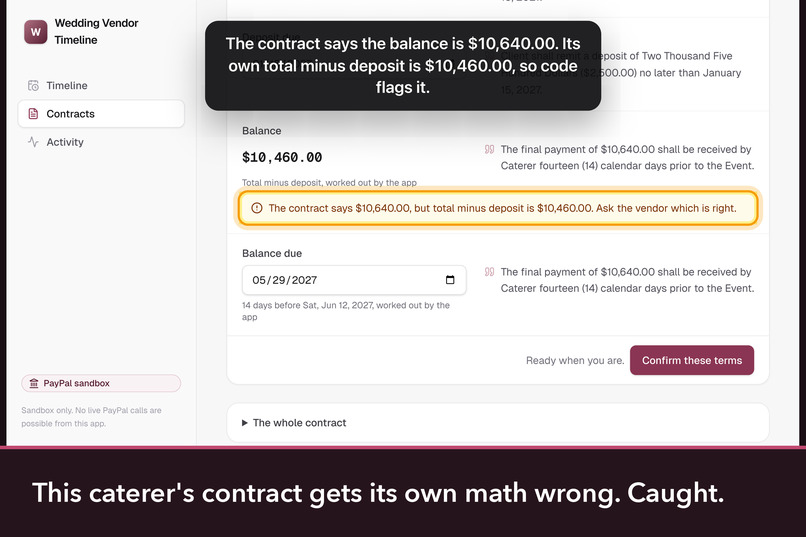
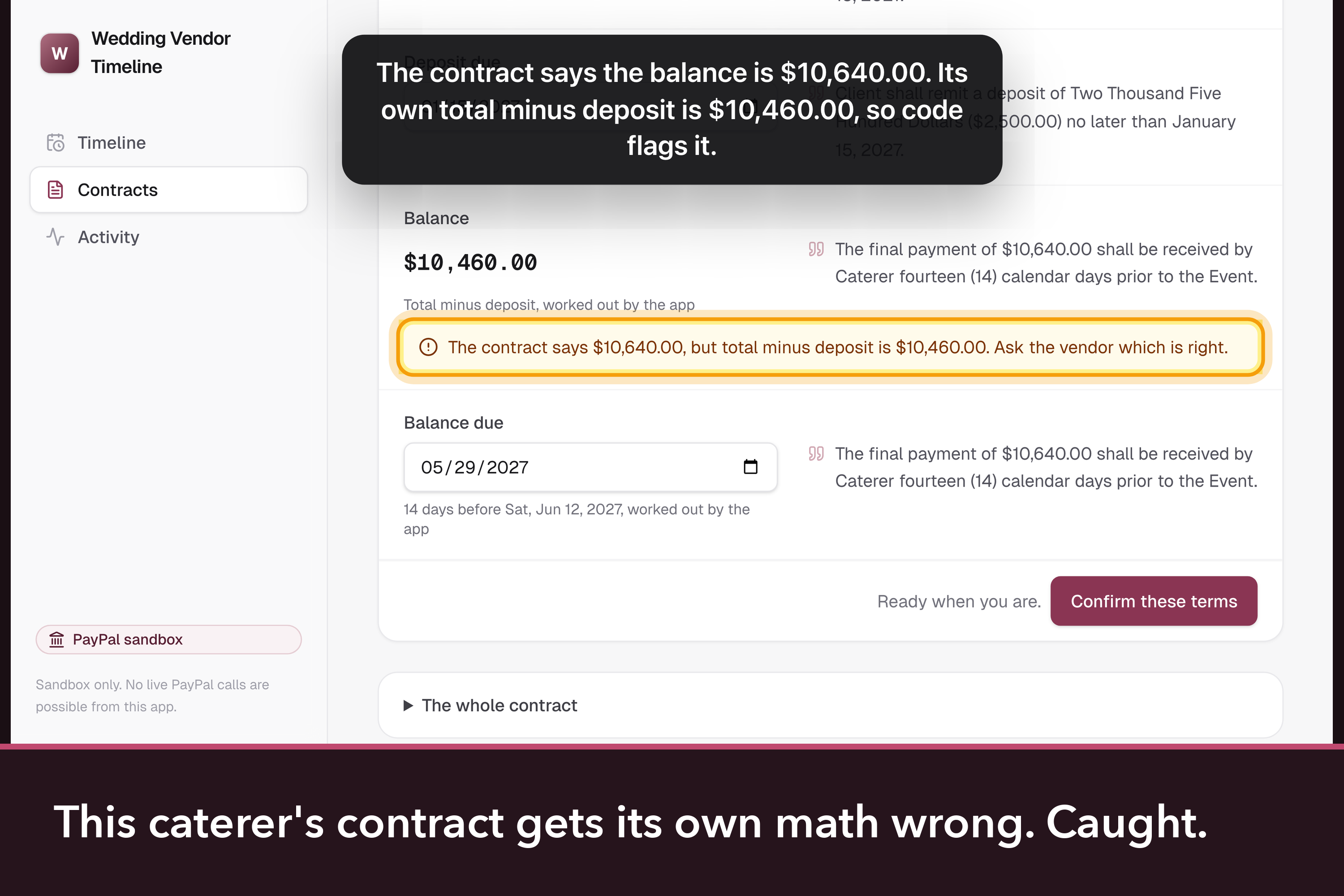
This caterer's contract gets its own math wrong. Caught.
-
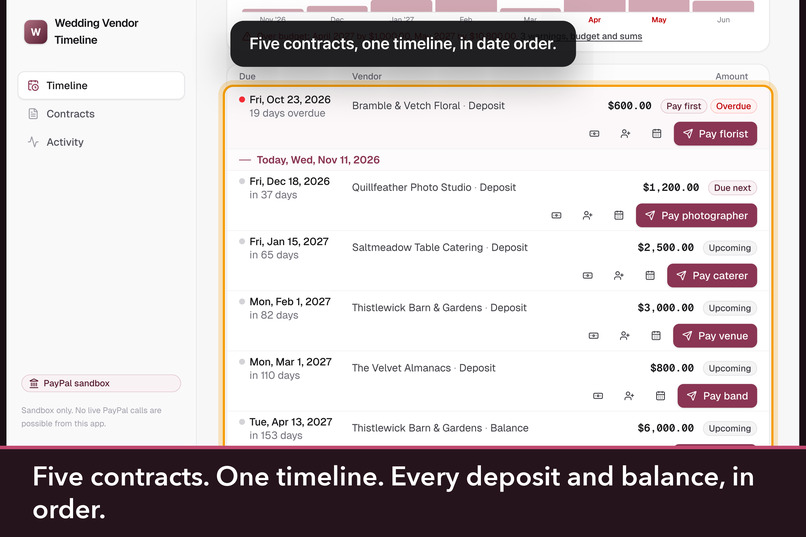
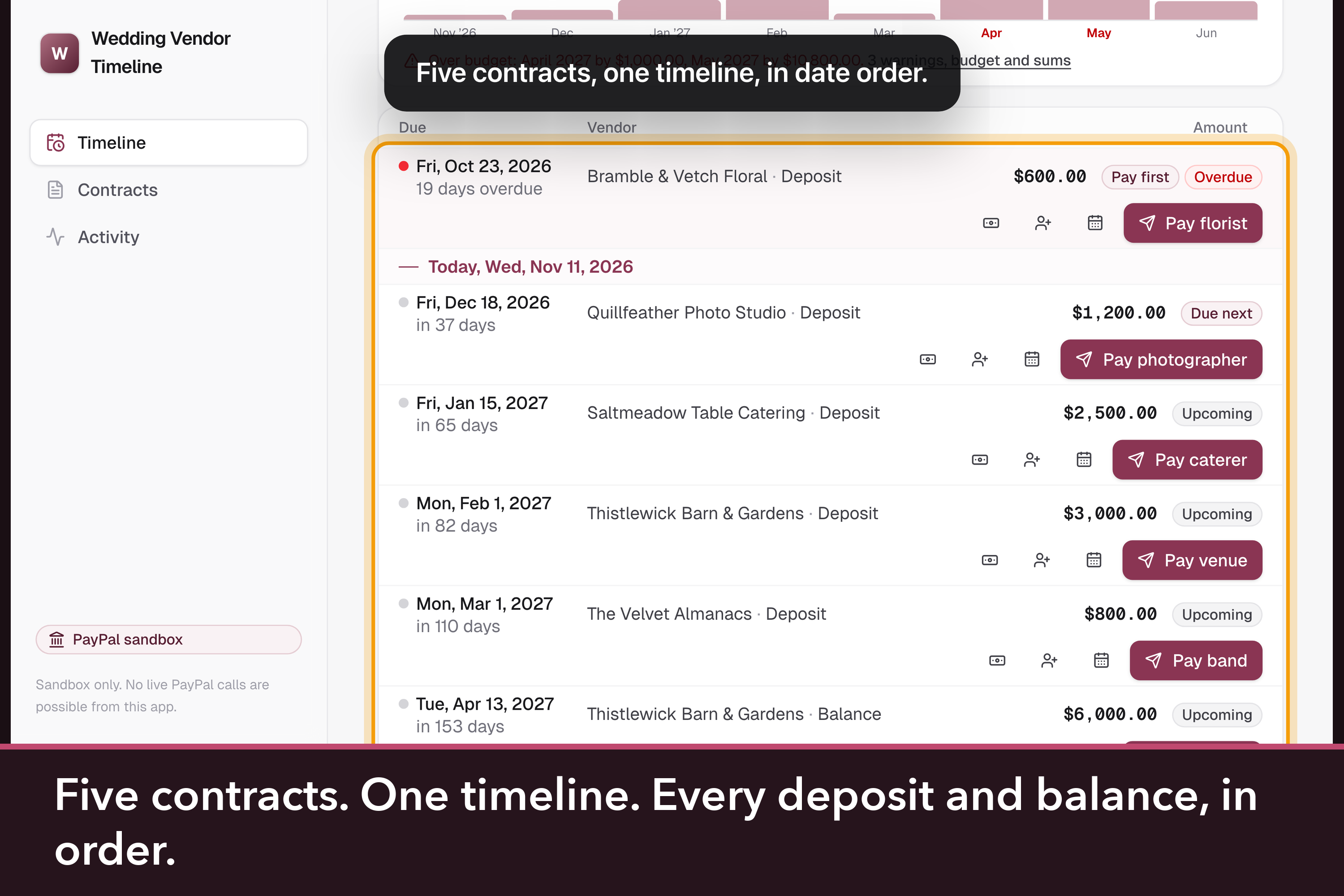
Five contracts. One timeline. Every deposit and balance, in order.
-
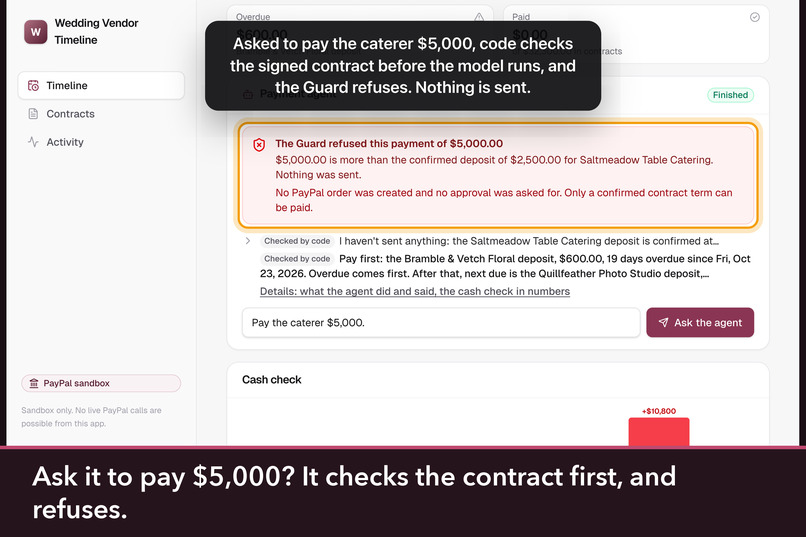
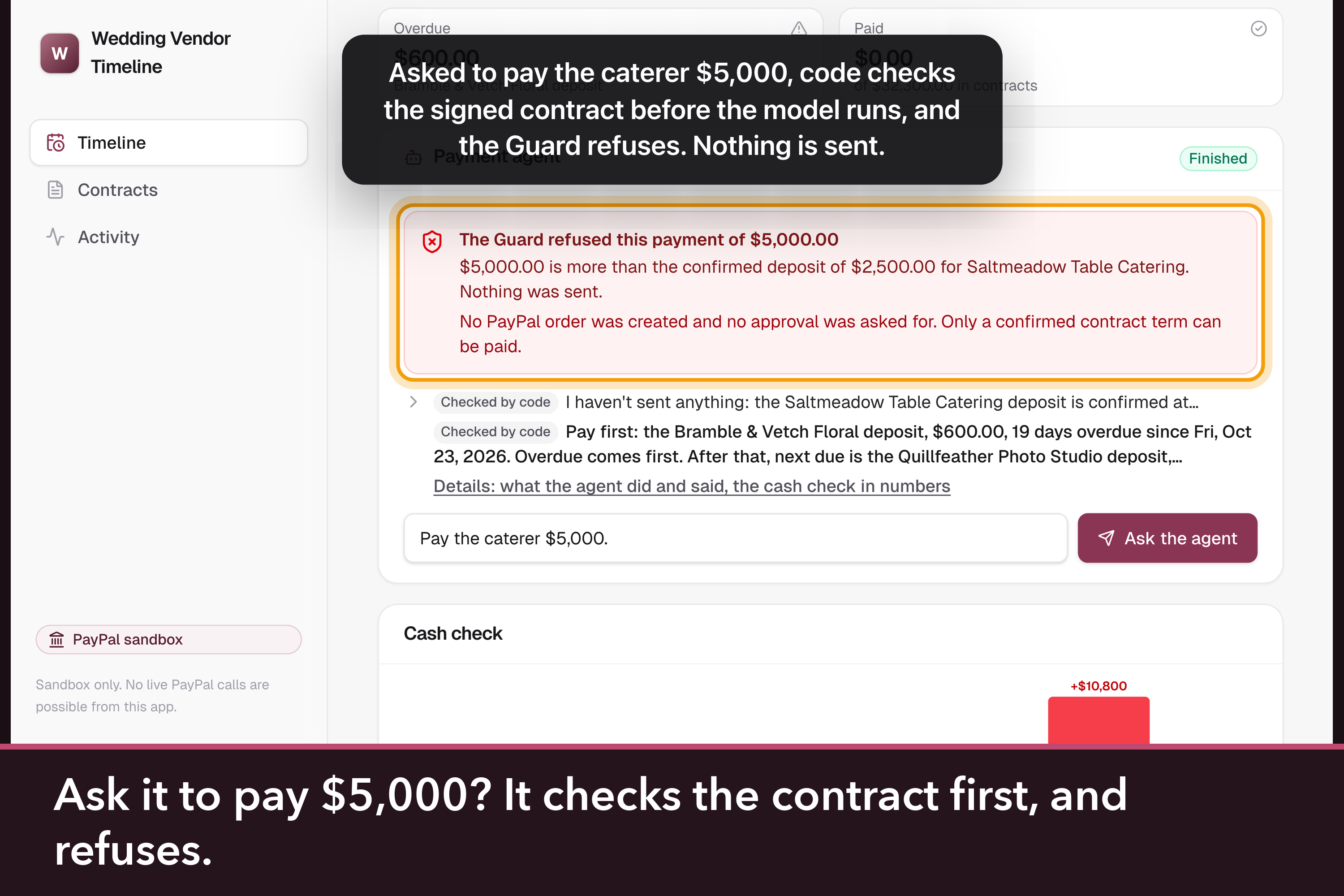
Ask it to pay $5,000? It checks the contract first, and refuses.
-
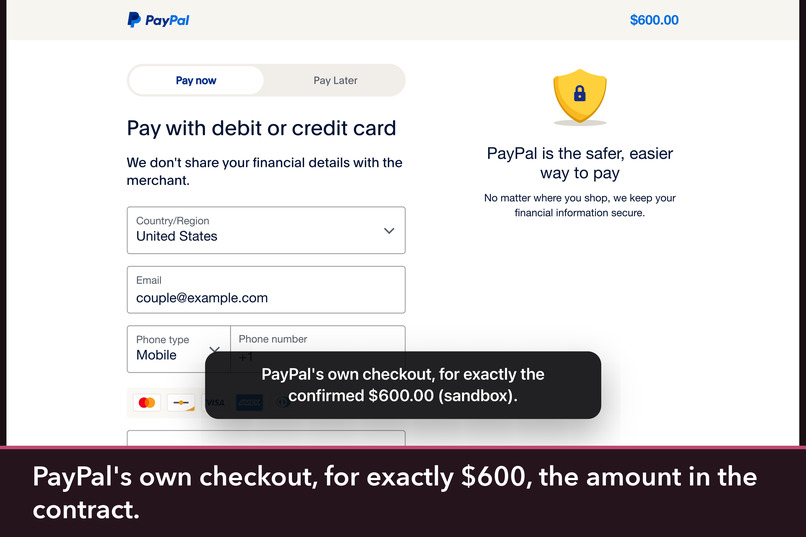
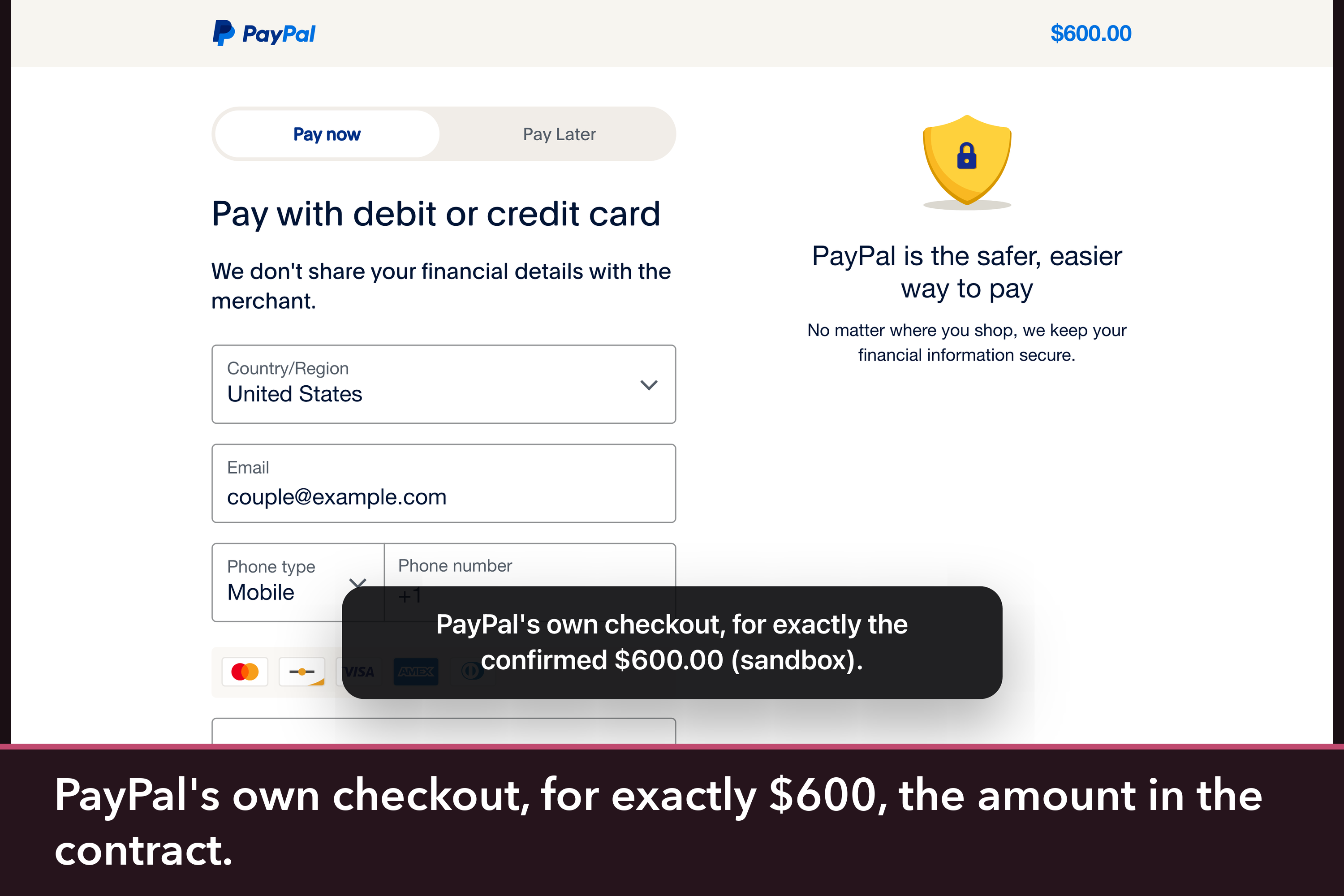
PayPal's own checkout, for exactly $600, the amount in the contract.
-
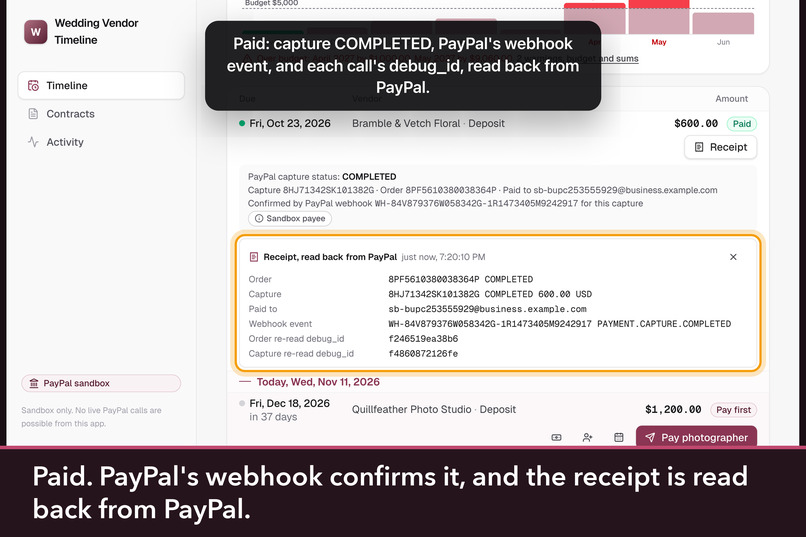
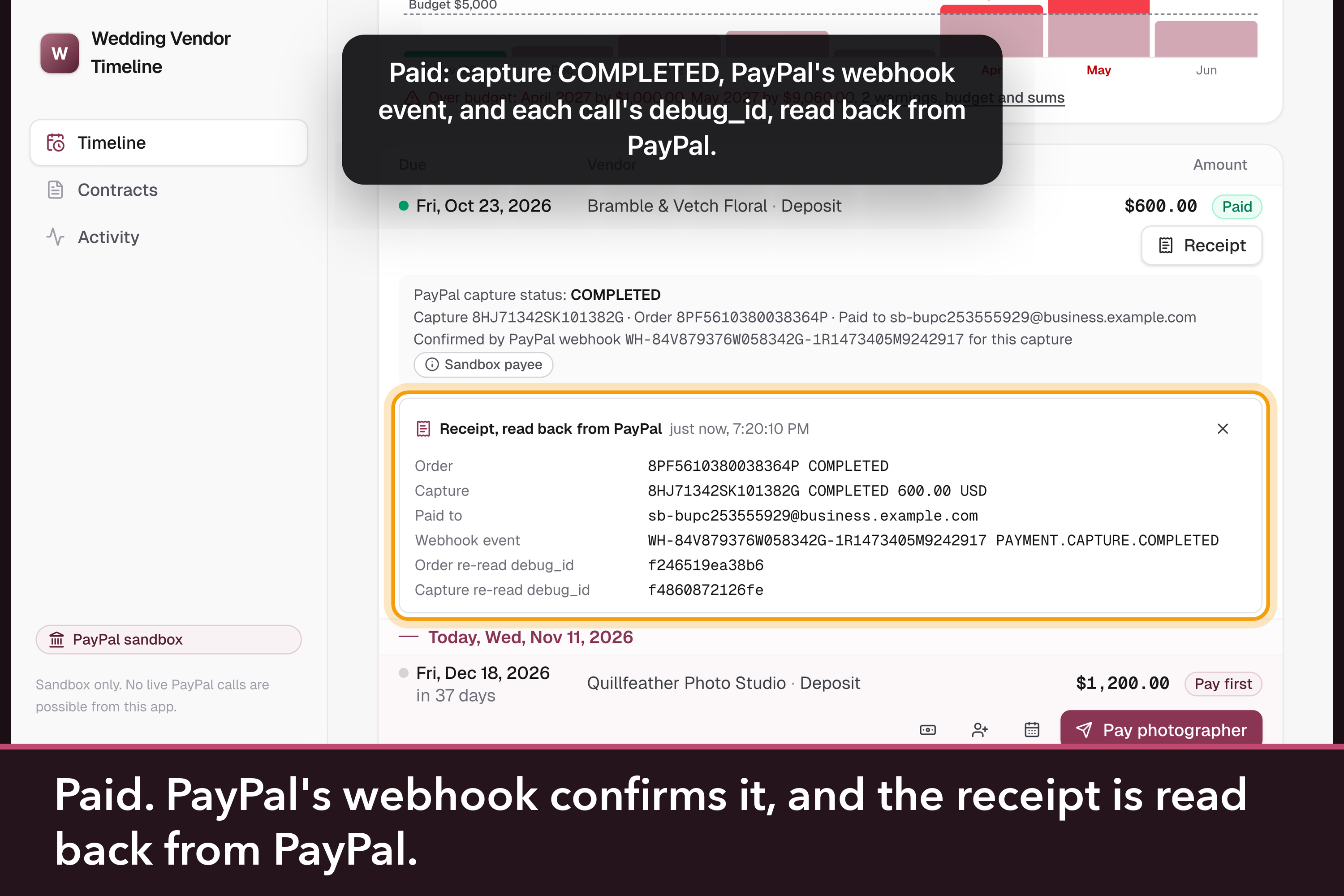
Paid. PayPal's webhook confirms it, and the receipt is read back from PayPal.
Inspiration
The average US couple hires about 13 wedding vendors. Each contract sets its own deposit and balance dates: 30 days out for one, two weeks for another. So couples keep a spreadsheet. We wanted one place that reads the contracts, shows what is due and when, and pays each vendor from the couple's own PayPal.
What it does
A couple paste in five contracts. Claude copies each payment term next to its exact sentence, and the couple confirm or edit every one. Then the timeline shows the problem: on the sample wedding, one month needs $15,800 across three balances against a $5,000 monthly budget. The plan says what the contracts allow: pay one balance early, and ask the florist for a date a week later.
- Contracts go in as pasted text, .txt or PDF. Anything unclear stays blank.
- Confirmed terms become one timeline of deposits and balances in date order, with cash warnings against the monthly budget.
- The timeline also draws as a Bryntum Gantt: drag a deposit or balance to a new date, and it saves the same way as "Change date".
- When a month is over budget, code finds the fewest moves the contracts allow.
- An agent puts the most overdue payment first, sets it up and stops. It cannot pay.
- "Ask to move" makes a reply link. The vendor taps Yes, No or another date on a phone, with no account, and gives the PayPal email they want paid.
- A parent can be given a link to pay one vendor from their own PayPal.
How we built it
All four of our entries share an open starter kit: Next.js, the PayPal Agent Toolkit behind a Guard that enforces money limits and human approval, and a timeline of every PayPal call. This entry's own work is:
- the contract reader and its checks
- the timeline and the cash plan
- the Bryntum Gantt view, loaded as its own script so the build stays small
- the vendor reply link
- the assign link
- the vendor orders
After one approval, the server creates a PayPal Orders v2 order for exactly the confirmed term, payable to the vendor. The couple pay in PayPal's own checkout, and the server reads the order back before it captures. The PAYMENT.CAPTURE.COMPLETED webhook, after signature verification, marks the item Paid once a re-read of the capture agrees. Claude Haiku 5.5 reads the contracts and runs the payment agent.
The app is hosted on Render.
Challenges we ran into
- Contracts contradict themselves. One sample states its fee two ways, so code catches it and leaves the total, deposit and dates blank.
- The vendors are fictional, so in the sandbox a test business account stands in as the payee.
- All four entries share one PayPal sandbox app, so each app keeps only the webhooks for orders it made.
Accomplishments that we're proud of
- "Pay the caterer $5,000" is refused by code against the confirmed contract, before any model call or approval.
- The model only copies. Code turns percentages into cents and dates into days, and flags a contract whose stated balance does not match.
- Each receipt re-reads the order and the capture from PayPal.
What we learned
Having the model copy text and having code do the sums made every number checkable against a sentence. Vendors reply when the link needs no account.
What's next
Splitting one payment in two, budgets by payday, and reading scanned PDFs and photos of contracts.
Built With
- anthropic-sdk
- bryntum
- claude
- claude-haiku-5.5
- next.js
- paypal
- paypal-agent-toolkit
- paypal-orders-v2
- paypal-payments-v2
- paypal-webhooks
- playwright
- react
- render
- tailwindcss
- typescript
- unpdf
- zod
