Inspiration
As a team, we noticed that freelancers and small business owners spend a lot of time creating invoices, keeping track of payments, and reminding clients when payments are overdue. These small tasks can become frustrating, especially when there are multiple clients to manage.
We wanted to build something that could make this process easier. Instead of manually creating invoices, we thought, why not let users simply describe what they need in a sentence and let AI handle the rest? That's how BillPilot came to life.
What it does
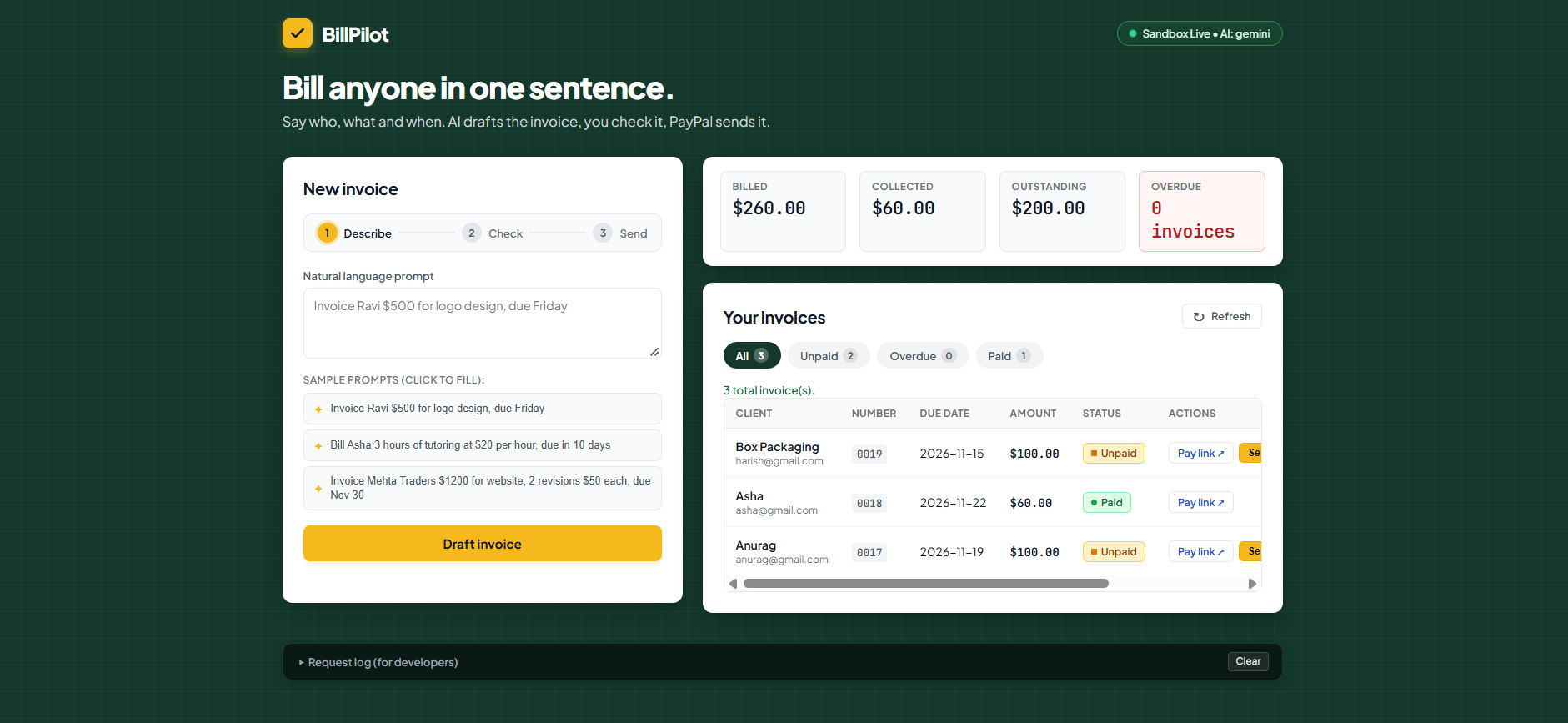
BillPilot is an AI-powered billing assistant designed to make invoicing and payment tracking easier for freelancers.
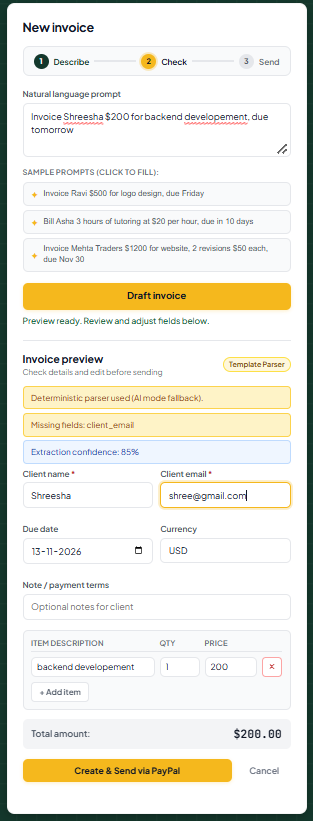
Users can simply enter a sentence such as "Create an invoice for Ravi for $500 for logo design, due Friday." The AI understands the request and converts it into a structured invoice.
Here is what BillPilot offers:
- Smart Invoice Generation: Converts simple text instructions into structured invoices.
- Invoice Preview: Allows users to review and make sure everything is correct before sending.
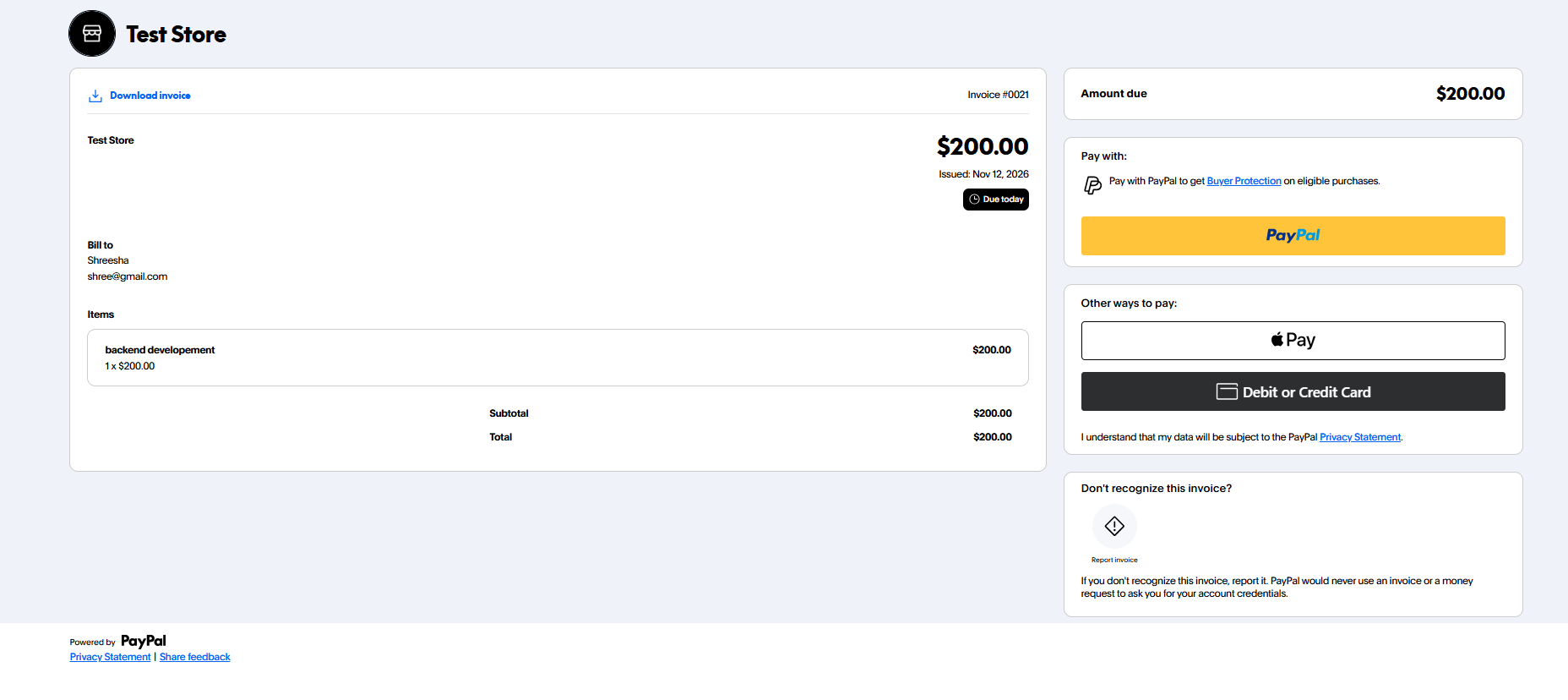
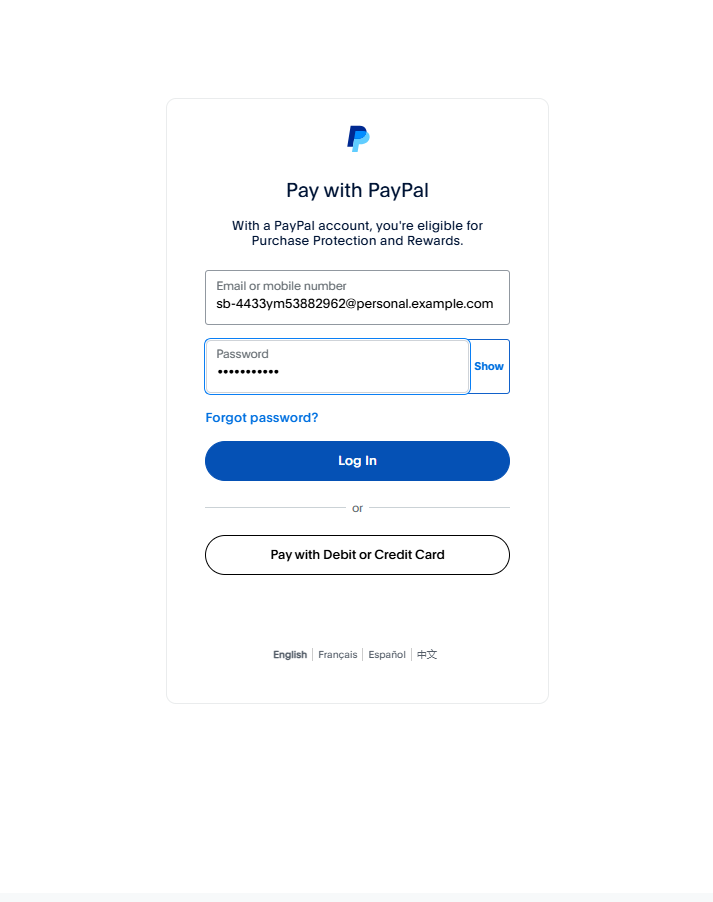
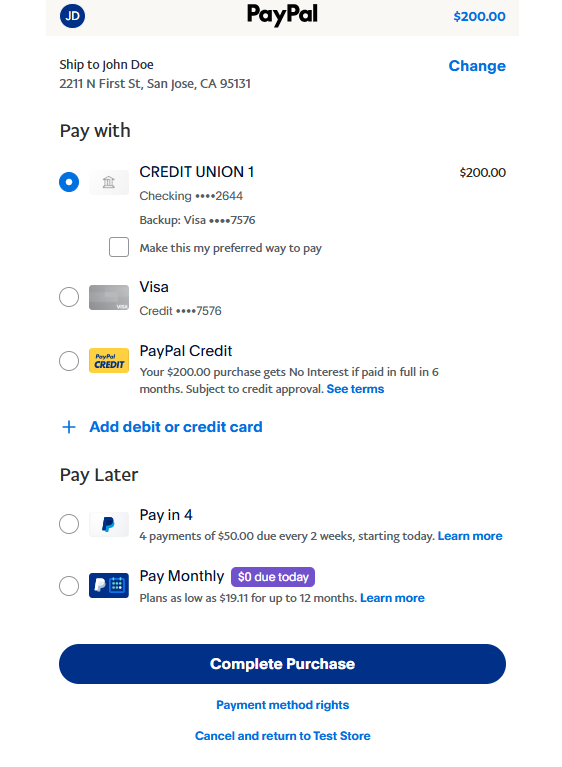
- PayPal Integration: Creates and sends invoices using the PayPal Invoicing API (Sandbox).
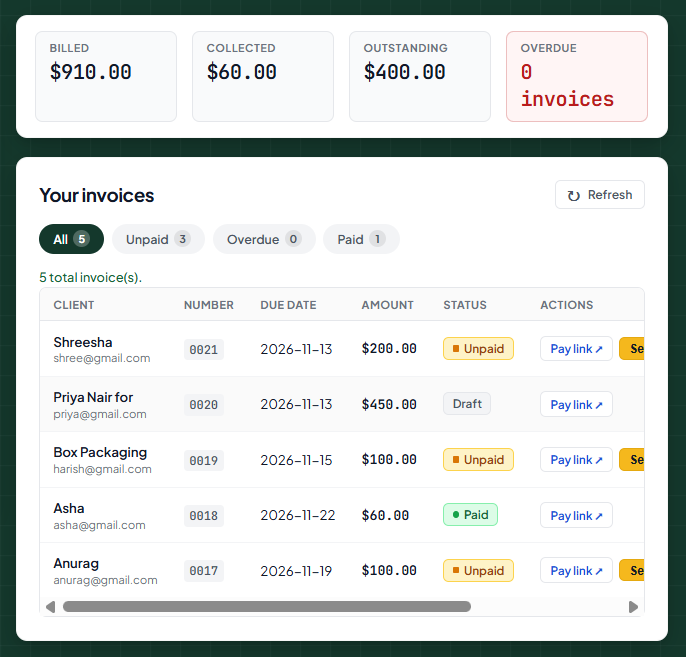
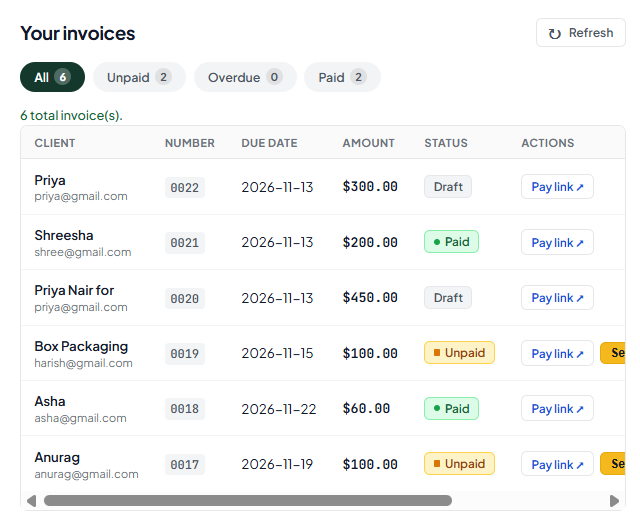
- Payment Tracking: Helps users keep track of paid, unpaid, and overdue invoices.
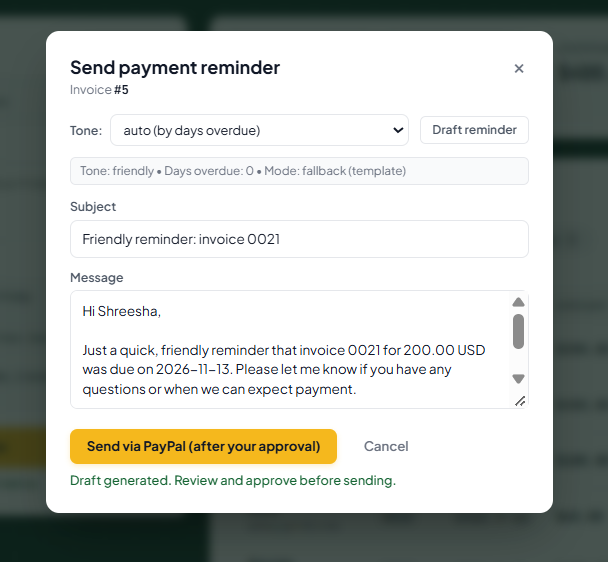
- AI Payment Reminders: Generates friendly, firm, and final payment reminders based on the situation.
- Dashboard: Provides a quick overview of total billed, collected, outstanding, and overdue amounts.
Our main goal is to reduce manual work and help freelancers spend more time focusing on their actual work.
How we built it
We built BillPilot by combining AI with PayPal's invoicing capabilities.
For the backend, we used Python and Flask to handle API requests, invoice processing, validation, and business logic. We integrated an AI provider to understand natural-language instructions and generate payment reminders.
We used the PayPal Invoicing API v2 in the Sandbox environment to create, send, and track invoices. SQLite is used to store invoice information and reminder history.
For the frontend, we used HTML, CSS, and JavaScript to build a simple interface that communicates with the backend.
We also added a fallback mechanism so that the application can still process basic invoice requests if the AI service is unavailable.
Challenges we ran into
One of the biggest challenges was making sure the information generated by AI was accurate. Since invoices involve money, even a small mistake in an amount, quantity, or due date could cause problems.
We addressed this by adding server-side validation instead of blindly trusting AI responses.
Another challenge was understanding and integrating the PayPal Invoicing API, especially handling invoice creation, sending invoices, and keeping payment statuses updated.
We also had to think about duplicate invoice requests, API failures, and protecting sensitive credentials. Working through these challenges helped us understand how important reliability is when building applications involving financial operations.
Accomplishments that we're proud of
We are proud of turning a simple idea into a practical solution that combines AI with a real payment platform.
Some things we are particularly happy about are
- Making invoice creation possible through simple natural-language instructions.
- Connecting the application with PayPal's Invoicing API Sandbox.
- Adding AI-generated payment reminders with different tones.
- Building validation and fallback mechanisms to make the application more reliable.
- Designing the workflow so users remain in control before invoices and reminders are sent.
Most importantly, we are proud of what we learned as a team while working through a real-world problem.
What we learned
This project taught us that building an application is not just about writing code. It is also about understanding the problem and thinking about how real users would interact with the solution.
We gained practical experience with AI integration, API development, Python Flask, SQLite, and PayPal's payment infrastructure.
We also learned how to handle errors, validate data, protect API credentials, and work together as a team to break a larger project into smaller tasks.
One important lesson was that AI can make applications smarter, but proper validation and human approval are still essential, especially when money is involved.
What's next for BillPilot
We see BillPilot as a project that can grow beyond its current scope.
In the future, we would like to add recurring invoices, support more currencies, introduce automated payment reminders, and integrate PayPal webhooks for better real-time payment updates.
We also plan to improve the dashboard and make the overall experience more user-friendly.
Our long-term vision is to make BillPilot a reliable billing companion that helps freelancers and small businesses spend less time managing payments and more time growing their work.
