-
-
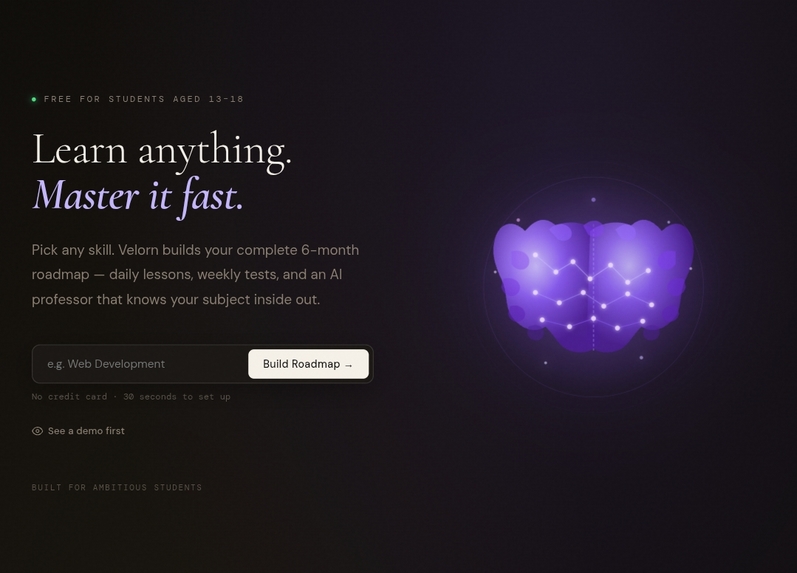
velorn.vercel.app
-
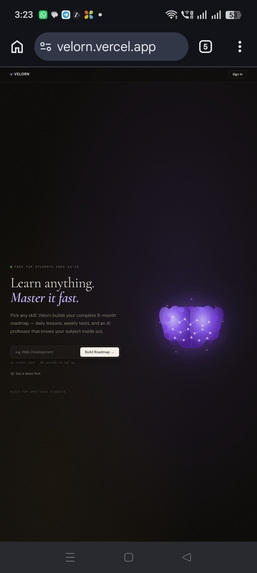
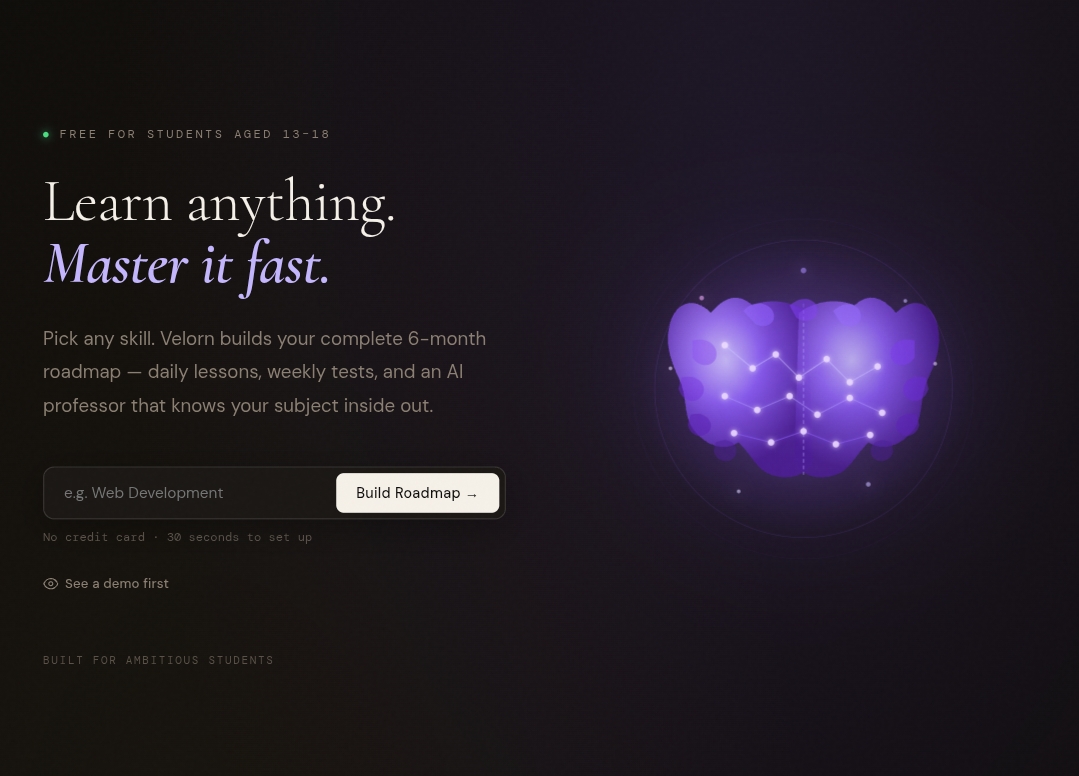
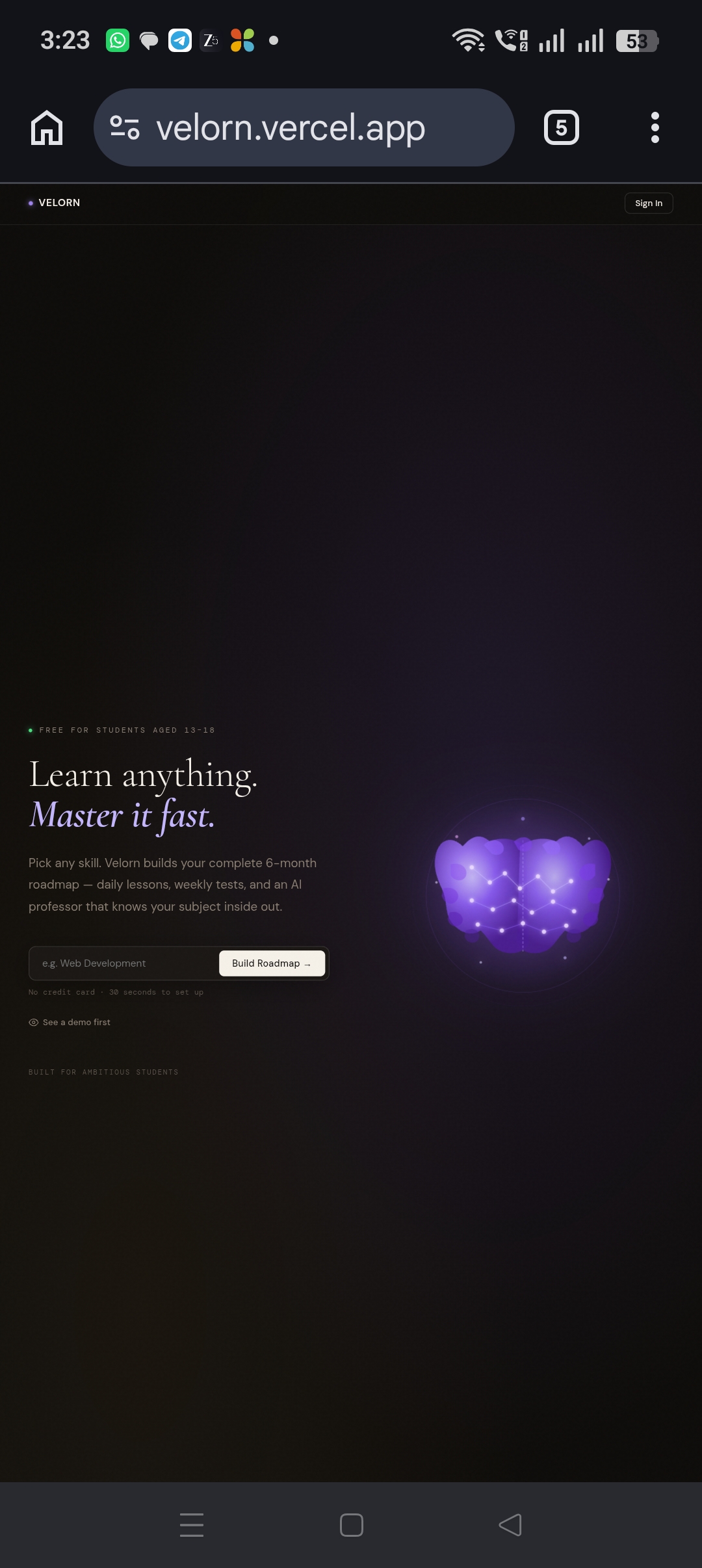
How I built an app that teaches anything — as a student with basic coding skills I wanted to learn things. Not just one thing — many things. Guitar. Python. Graphic design. How to start a business. The problem was never access to information. The internet has more than any human could consume in a lifetime. The problem was structure. Every time I tried to learn something new, I'd spend the first week just figuring out where to start. YouTube rabbit holes. Bookmarked articles I never read. Reddit threads that led nowhere. Overwhelmed before I'd even begun. The courses that existed were too expensive, too rigid, or built for someone else. I didn't want someone else's curriculum. I wanted a roadmap built for me. That frustration is where Velorn started. Not in a whiteboard session. Not in a business plan. Just a quiet moment of thinking: why does nobody build this? Here's the honest truth about where I was when I started. I knew the basics. Variables, loops, a bit of JavaScript. I'd built small things — a calculator, a to-do app — the kind of projects that teach you syntax but leave you miles away from building something real. I had never built a full application. I didn't know how to connect a frontend to a backend. Didn't understand APIs, authentication, databases, or deployment. Most people at that stage take a 6-month bootcamp or give up entirely. I did neither. I opened Claude. Claude wasn't a shortcut. It was a co-founder. I've seen people use AI the wrong way — as a crutch that generates code they don't understand, leaving them unable to fix anything when it breaks. That's not how I used it. Claude was my senior developer, my architect, my rubber duck, and my debugger — all at once. When I didn't understand something, I didn't just ask it to fix the code. I asked it to explain why. Why does this pattern exist? What are the tradeoffs here? It taught me while we built. Every conversation made me more capable. By the time the app was live, I understood what I'd built — not just that it worked. Velorn became possible not because AI wrote it for me — but because it made me capable enough to write it myself. The hardest part wasn't the code. If I tell you the hardest part was the code, I'd be lying. The code was hard — but it was solvable. Every bug had an answer. Code problems are honest. The hardest part was the voice in my head at week three saying: nobody is going to use this. The days I opened my laptop and stared at the project for twenty minutes before closing it again. Comparing Velorn to polished products built by teams of twenty and thinking: what am I even doing? I'm a student. No investors. No team. No credentials. Just an idea, a laptop, and a lot of late nights. What kept me going was embarrassingly simple: I genuinely believed the problem was real. Every time I thought about quitting, I thought about myself six months earlier — drowning in unstructured learning, wishing something like this existed. I kept building for him. Two months in, I shipped. What Velorn actually does: You tell it what you want to learn. Anything — a programming language, a musical instrument, a business skill, a creative hobby. It generates a personalised 6-month roadmap with daily lectures and homework. Every week you take a progress test so you can see yourself improving — not just consuming content and hoping something sticks. And whenever you're stuck, the AI professor is there. It knows your roadmap. It knows where you are. It answers like a teacher who actually has time for you. It's completely free. 18 people are learning on it right now. That number is small enough that every single one matters enormously. What building this taught me: Ideas are worthless until they're built. I had this idea for months before I started. Those months produced nothing. The two months I spent building produced everything. Consistency beats talent. I'm not the most skilled developer. But I showed up every day — even the bad days, even the days nothing worked — and eventually, the thing existed. The best tools don't replace your thinking. They amplify it. Claude didn't build Velorn. I did. Claude made me ten times faster and more capable — but the vision and the stubbornness to keep going? That was mine. This is just the beginning. Velorn is live. It works. 18 people are using it. If you've been sitting on an idea, waiting until you're ready, waiting until you know enough — the right moment is when you start. You'll figure out the rest as you go. I did. And if you want to learn something new — anything at all — I built something for you. → velorn.vercel.app

Log in or sign up for Devpost to join the conversation.