Velora —Life, coordinated.
Inspiration
Major life transitions can quickly become overwhelming. Whether it’s relocating abroad, starting university, changing careers, or managing a major personal transition, people often struggle with scattered information, missed deadlines, document management, financial planning, and constant stress.
Most productivity tools still expect users to organize everything manually. They store tasks, but they rarely understand the situation itself.
Velora was inspired by the idea that AI should do more than answer questions — it should actively help coordinate real-world life transitions. I wanted to build a system that feels less like a chatbot and more like an intelligent coordination agent that adapts, follows up, and helps users stay ahead during important moments in their lives.
What it does
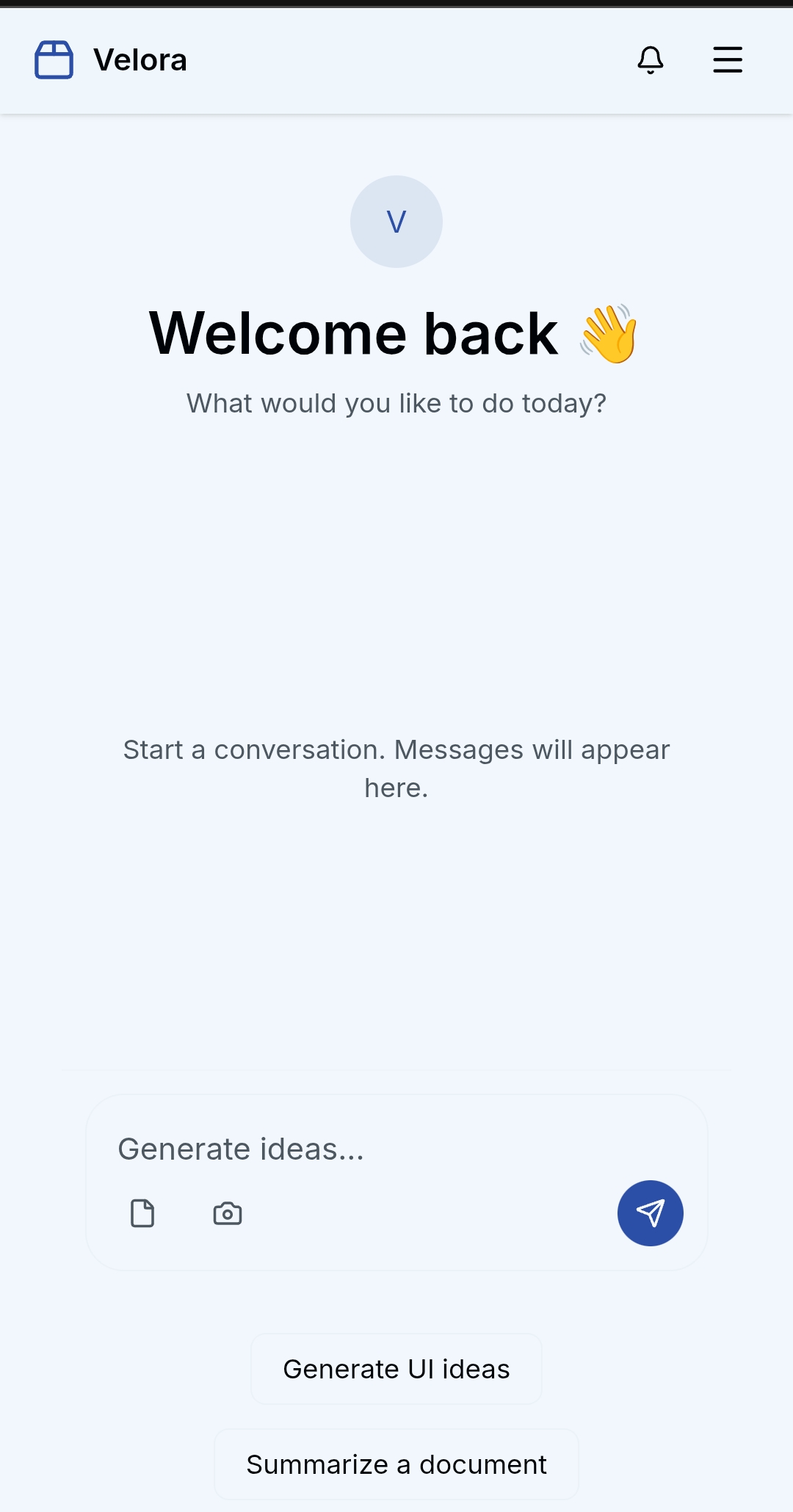
Velora is an adaptive AI coordination agent designed to help users navigate major life transitions.
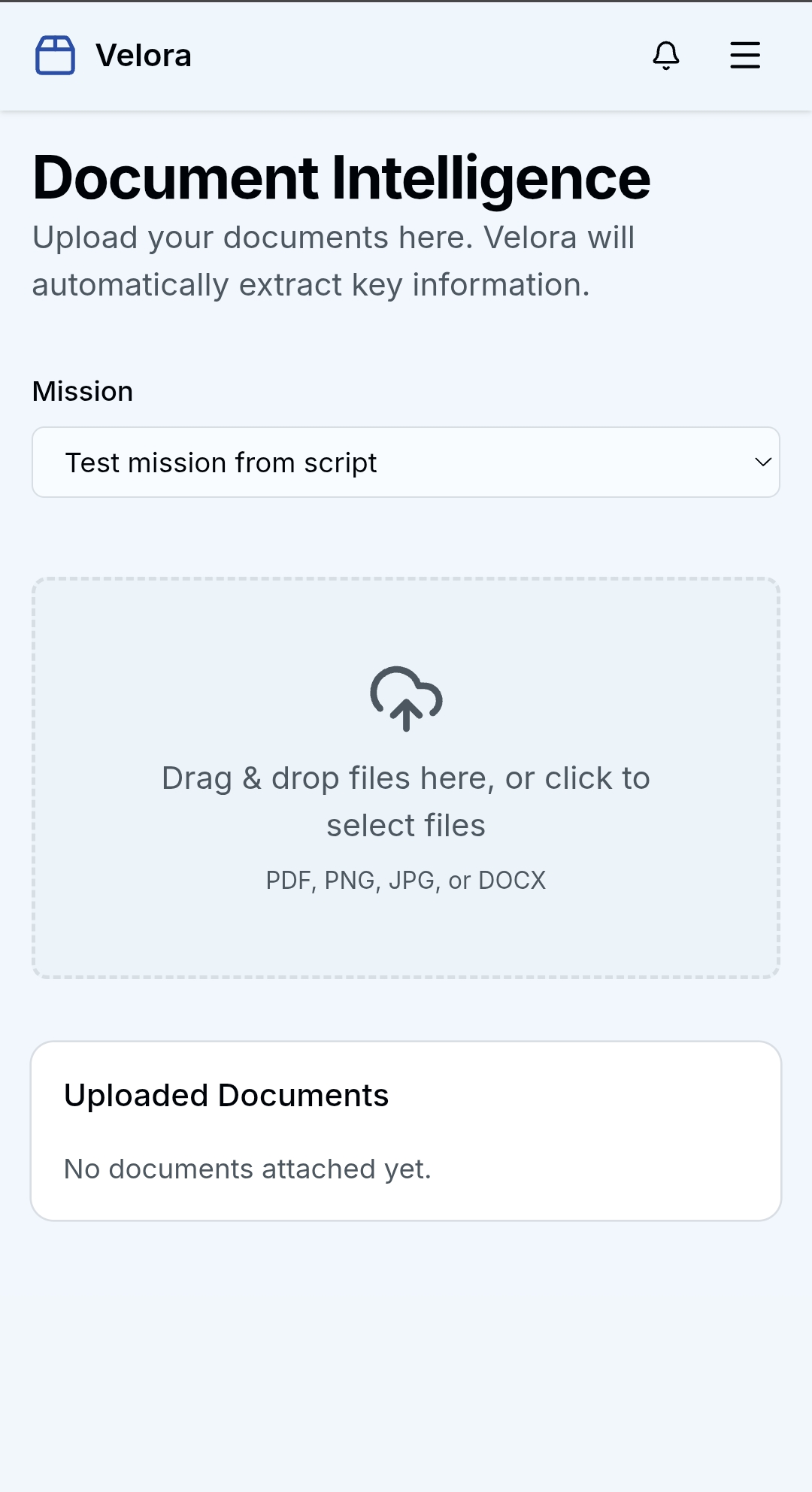
For this project, the primary focus was international student relocation. Users can upload documents such as university acceptance letters, visa requirements, or financial documents, and Velora automatically extracts important details like deadlines, fees, missing requirements, and important dates.
The platform then generates:
- personalized transition roadmaps,
- adaptive timelines,
- proactive reminders,
- financial coordination plans,
- and intelligent follow-ups.
Unlike traditional productivity apps, Velora dynamically adjusts when situations change. If a user delays a task, changes their budget, or misses a deadline, the system automatically replans dependent tasks and updates recommendations accordingly.
Velora also introduces adaptive notification styles, allowing users to choose how the system follows up with them based on urgency, accountability preference, and stress level.
How I built it
Velora was built using:
- Google Cloud Agent Builder for agent orchestration,
- Gemini for reasoning, planning, and contextual understanding,
- MongoDB Atlas as the primary memory and coordination layer,
- Elastic for intelligent document retrieval and semantic search,
- Next.js, Tailwind CSS, and shadcn/ui for the frontend experience,
- and Google Cloud Run for deployment.
The system uses a multi-agent architecture where specialized agents handle:
- planning,
- document analysis,
- reminder generation,
- financial coordination,
- and adaptive replanning.
MongoDB played an important role in enabling persistent memory, evolving task dependencies, contextual awareness, and long-term coordination throughout the transition process.
A major focus of the project was building a polished and emotionally intuitive user experience while still maintaining powerful AI-driven functionality.
Challenges I ran into
One of the biggest challenges was designing the system to feel proactive rather than reactive. I wanted Velora to behave less like a standard assistant and more like an intelligent coordination system capable of adapting to changing situations.
Another challenge was balancing flexibility with simplicity. Life transitions are unpredictable, so designing workflows that could dynamically adapt without overwhelming the user required careful planning.
Accomplishments that I"m proud of
One of the accomplishments I’m most proud of is creating an AI experience that feels genuinely helpful instead of just conversational.
Velora goes beyond static reminders by actively tracking progress, detecting risks, adapting plans, and coordinating tasks based on real-world context.
I’m also proud of building a polished interface that makes a complex AI coordination system feel approachable, intuitive, and human-centered.
Most importantly, I’m proud that the project focuses on solving a deeply relatable human problem rather than creating another generic AI productivity tool.
What we learned
This project reinforced the idea that the future of AI agents is not just conversation — it is coordination.
I learned how powerful AI systems become when reasoning, memory, adaptive execution, and contextual awareness are combined into a single workflow.
I also learned that designing emotionally intelligent user experiences is just as important as building technically capable systems, especially when supporting users during stressful or life-changing situations.
What's next for Velora
In the future, Velora could expand beyond student relocation into:
- career transitions,
- startup coordination,
- healthcare and caregiving workflows,
- emergency planning,
- and other major life events.
Future plans also include:
- deeper adaptive reasoning,
- collaborative coordination features,
- voice interaction,
- WhatsApp and mobile integrations,
- and more advanced proactive planning capabilities.
The long-term vision for Velora is to create an AI coordination system that helps people move through life’s biggest changes with greater clarity, confidence, and support.
Built With
- elastic
- gemini
- mongodb
- next.js
- typescript


Log in or sign up for Devpost to join the conversation.