-
-
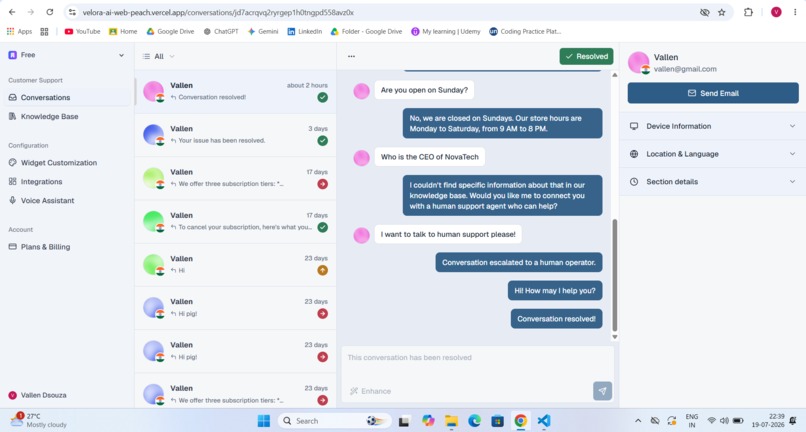
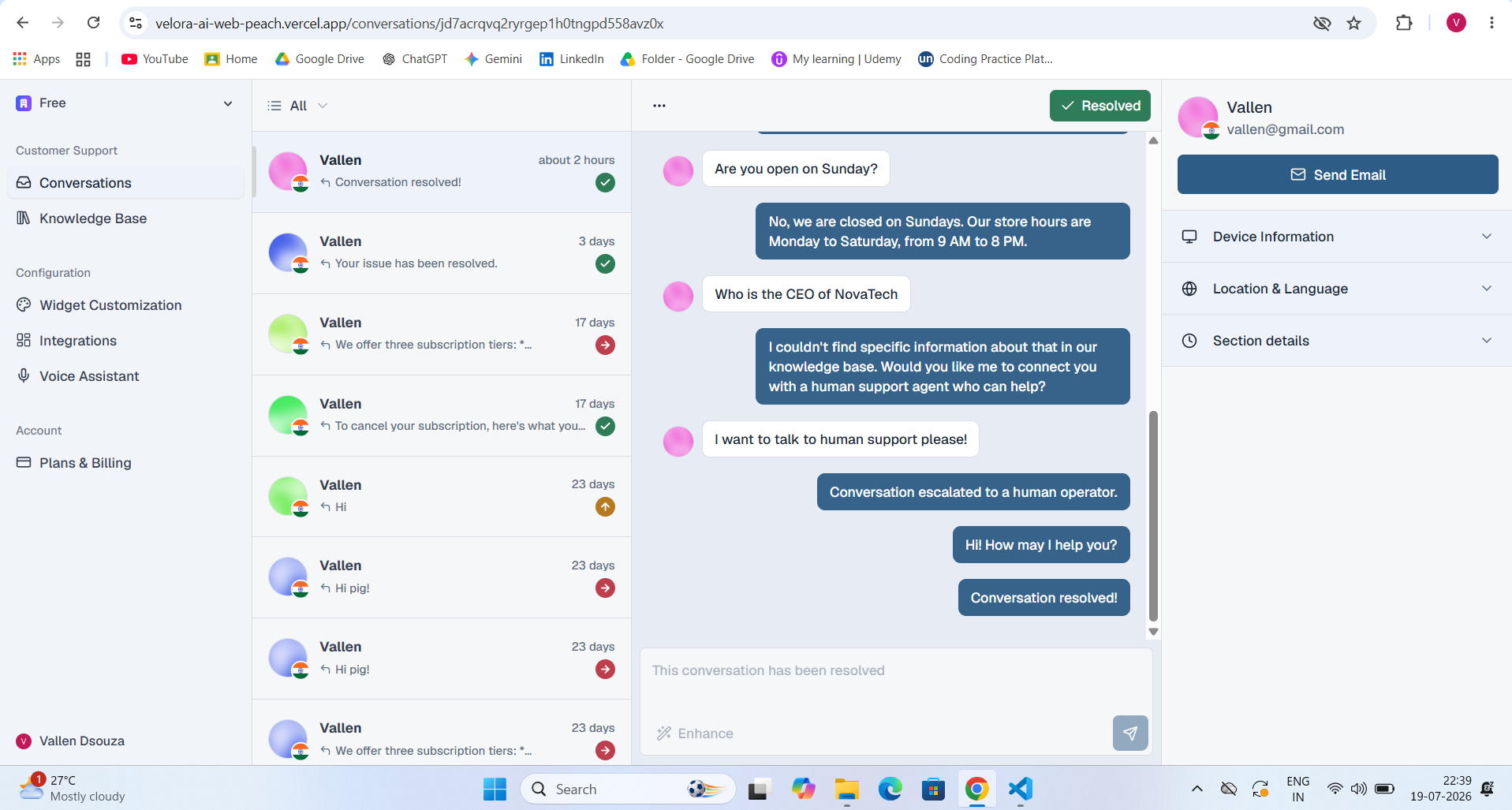
Admin Panel where customer support team can view the conversations of customers and help them to resolve the queries when escalated.
-
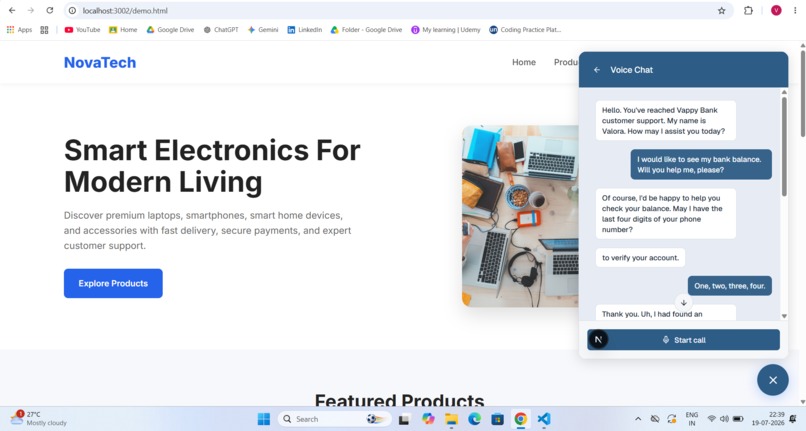
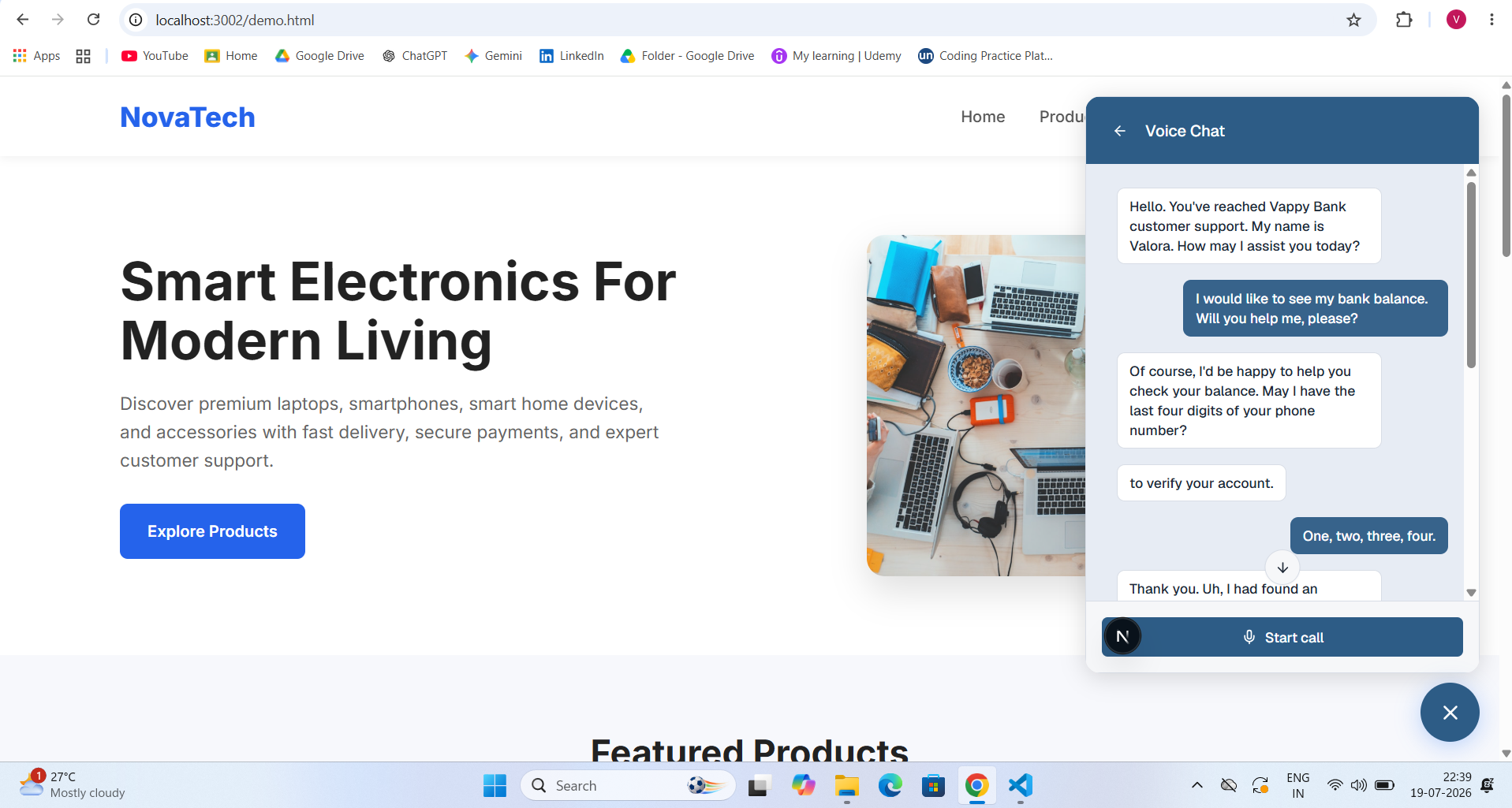
Integrated Chatbot where AI is helping the customer to resolve the query - Part 1
-
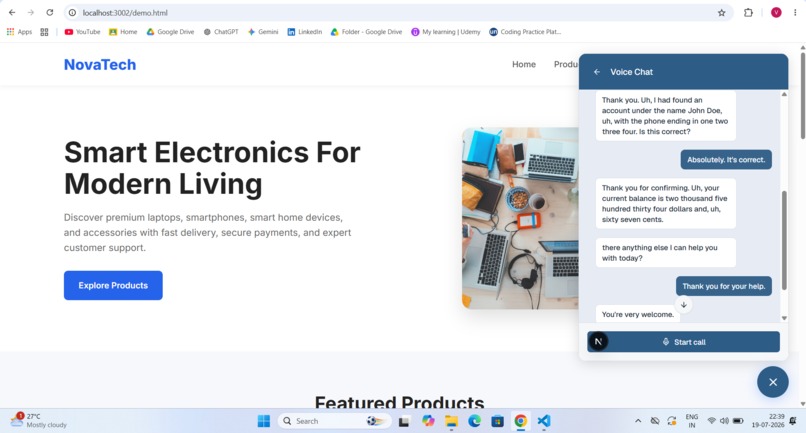
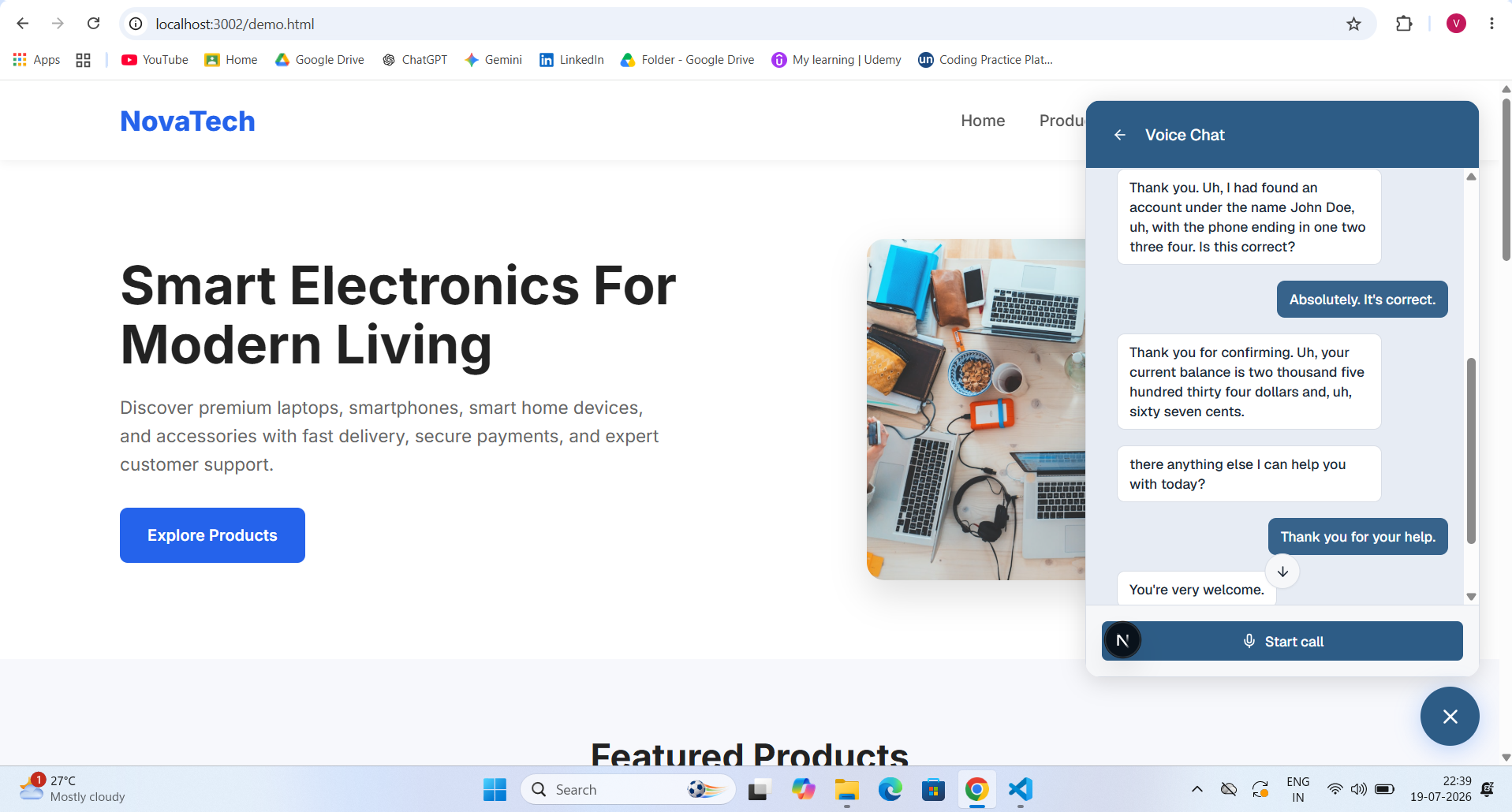
Integrated Chatbot where AI is helping the customer to resolve the query - Part 2
Velora AI
Inspiration
Customer support is one of the biggest challenges for growing businesses. Hiring and training support agents is expensive, support quality varies across teams, and customers increasingly expect instant, personalized responses 24/7. While AI chatbots have become popular, most solutions are either too generic, difficult to customize, or lack seamless human handoff when AI reaches its limits.
We wanted to build a platform that empowers businesses to create their own AI-powered customer support assistant in minutes without needing machine learning expertise. Our goal was to combine Retrieval-Augmented Generation (RAG), voice AI, and human collaboration into a single multi-tenant platform that delivers accurate, context-aware, and scalable customer support.
What it does
Velora AI is a multi-tenant AI customer support platform that enables organizations to build intelligent chat and voice assistants trained on their own knowledge base.
Key features include:
- 🤖 AI-powered chatbot trained using company-specific documents
- 📚 Retrieval-Augmented Generation (RAG) for accurate, grounded responses
- 🎤 AI Voice Agent integration for natural voice conversations
- 👥 Multi-tenant architecture where each organization securely manages its own workspace
- 🔐 Secure authentication and organization management
- 💬 AI-to-human handoff for conversations requiring manual intervention
- 📊 Conversation history and analytics for continuous improvement
- 🌐 Embeddable support widget that can be integrated into any website
Instead of providing generic AI responses, Velora AI retrieves relevant business knowledge before generating answers, significantly improving accuracy and reducing hallucinations.
How we built it
Velora AI was built using a modern full-stack architecture focused on scalability, security, and developer experience.
Frontend
- Next.js 15
- React 19
- TypeScript
- Tailwind CSS v4
- shadcn/ui
Backend
- Convex for the real-time backend and database
- Clerk Authentication with Organization support
- Multi-tenant data isolation using Organizations
- Jotai for lightweight global state management
AI Stack
- Retrieval-Augmented Generation (RAG)
- Document chunking and embeddings
- Vector similarity search for knowledge retrieval
- Large Language Models for response generation
- Vapi AI for real-time voice conversations
Infrastructure
- Turborepo monorepo architecture
- pnpm workspaces
- Sentry for monitoring and error tracking
The platform processes uploaded business documents, converts them into embeddings, stores them in a vector database, retrieves the most relevant context during conversations, and augments prompts before sending them to the language model. This allows responses to remain grounded in company-specific information instead of relying solely on general model knowledge.
Challenges we ran into
Building a production-ready AI platform introduced several technical challenges.
- Designing a secure multi-tenant architecture while ensuring complete data isolation between organizations.
- Building an efficient RAG pipeline that retrieves relevant information with low latency.
- Managing authentication across multiple applications in our Turborepo using Clerk and Convex.
- Integrating voice AI while maintaining conversational context between voice and chat interactions.
- Handling document ingestion, chunking, embeddings, and retrieval efficiently for different document sizes.
- Ensuring smooth synchronization between the website, backend, and embeddable widget.
- Debugging deployment issues across multiple applications sharing common packages.
Each challenge pushed us to improve the platform's architecture and gain a deeper understanding of modern AI application development.
Accomplishments that we're proud of
- Successfully built a scalable multi-tenant SaaS platform from scratch.
- Implemented a production-ready RAG pipeline that delivers grounded, business-specific responses.
- Integrated both AI chat and AI voice support into a unified platform.
- Developed a reusable embeddable widget that businesses can easily add to their websites.
- Created a clean and modern user experience while maintaining strong backend scalability.
- Designed the architecture to support future enterprise features without major redesigns.
What we learned
Throughout this project, we learned that building AI applications involves much more than connecting an LLM to a frontend.
We gained practical experience with:
- Retrieval-Augmented Generation (RAG)
- Prompt engineering
- Embedding generation and semantic search
- Multi-tenant SaaS architecture
- Secure authentication and authorization
- Real-time backend development
- Voice AI integration
- Scalable monorepo development
- Production monitoring and debugging
Most importantly, we learned that the quality of an AI system depends heavily on the quality of its retrieval pipeline, system architecture, and user experience—not just the underlying language model.
What's next for Velora AI
Our vision is to evolve Velora AI into a complete AI customer engagement platform.
Future plans include:
- 🧠 Autonomous AI agents capable of executing customer workflows
- 📧 Omnichannel support across email, WhatsApp, Slack, and social platforms
- 🌍 Multilingual support for global businesses
- 📈 Advanced analytics and customer insights dashboard
- 🎯 Personalized responses based on customer history and preferences
- 🔄 Continuous knowledge base synchronization from websites, documentation, and cloud storage
- 🛠️ No-code workflow automation for business processes
- 🤝 CRM integrations with platforms such as Salesforce, HubSpot, and Zendesk
Our long-term goal is to help businesses deliver faster, smarter, and more personalized customer support while reducing operational costs and enabling human agents to focus on high-value interactions.
Built With
- chatbot
- gemini
- javascript
- next.js
- node.js
- rag
- react
- vectorembeddings


Log in or sign up for Devpost to join the conversation.