-
-
https://youtube.com/shorts/70XwDllKTBI?si=xl5JWBn9aTPOGrm
-
About the Project
Why I built it
I use digital payments and apps a lot, and I started thinking about how easy it is to spend money without really noticing where it goes.
I wanted to make something that doesn't just show transactions, but actually helps you understand your spending and saving habits.
That's how I came up with VELORA — Smart money, made simple.
How I built it
I built VELORA using Python, Streamlit, and Pandas.
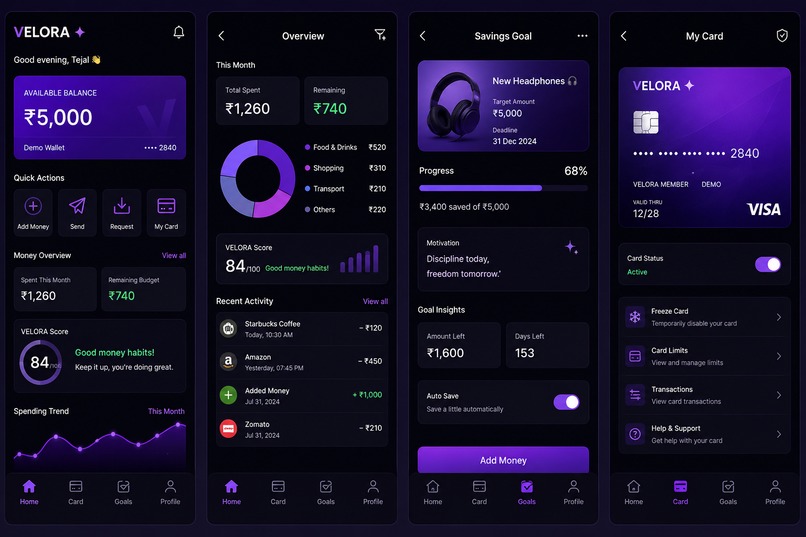
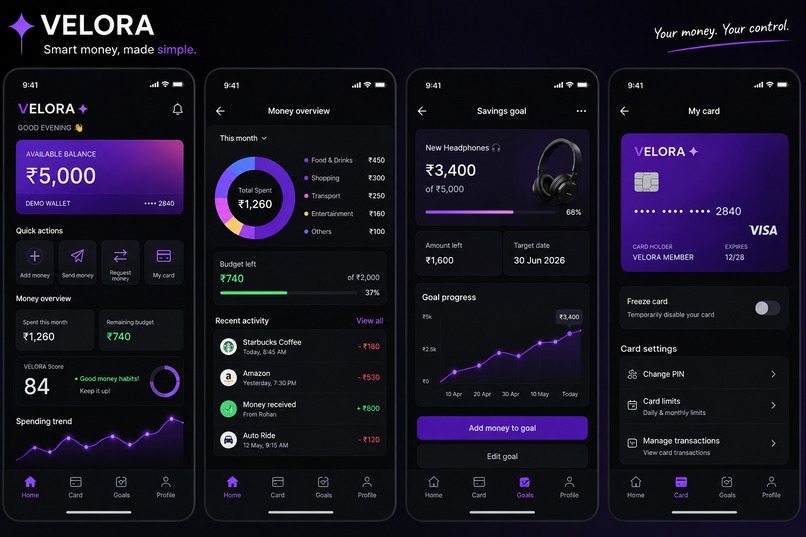
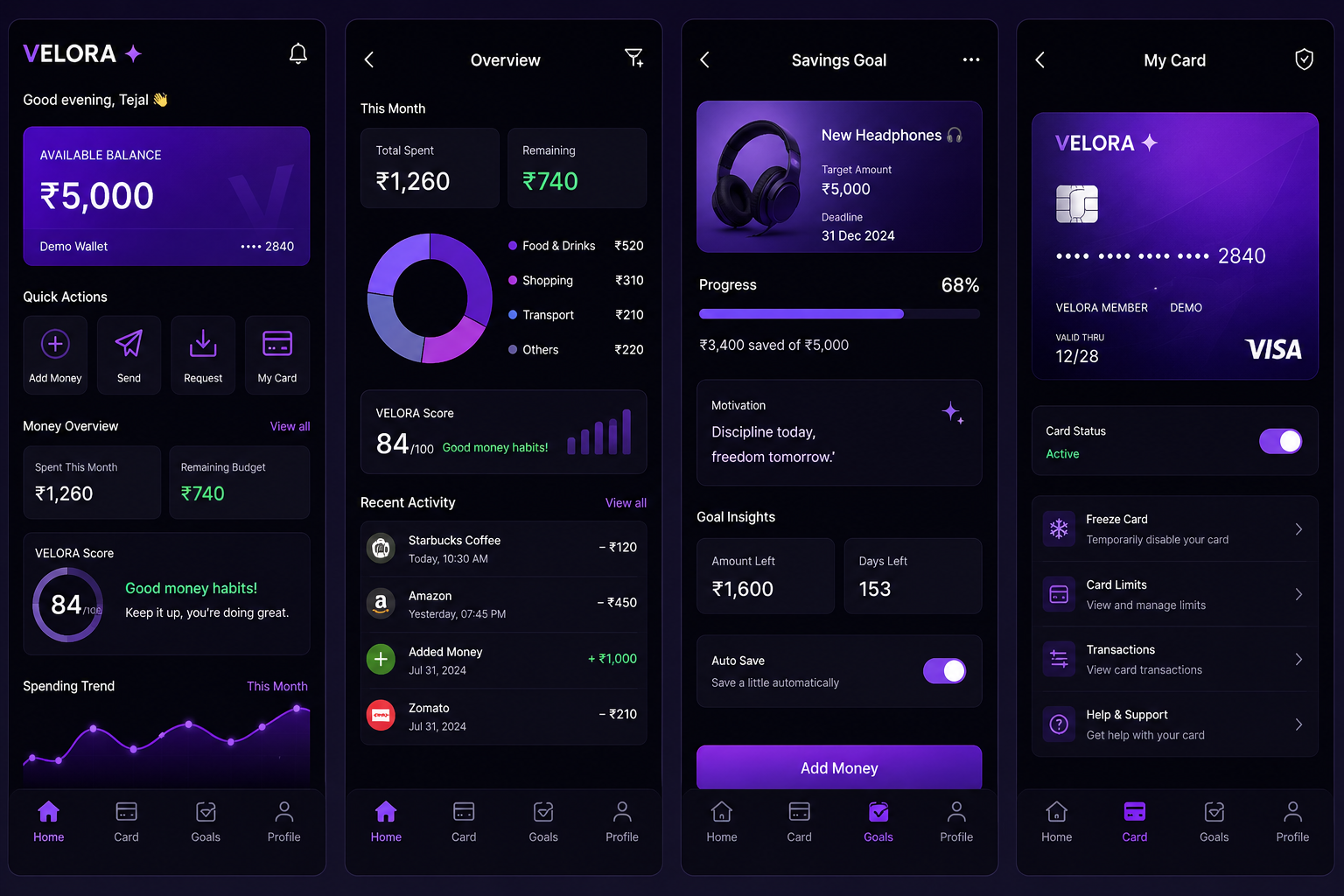
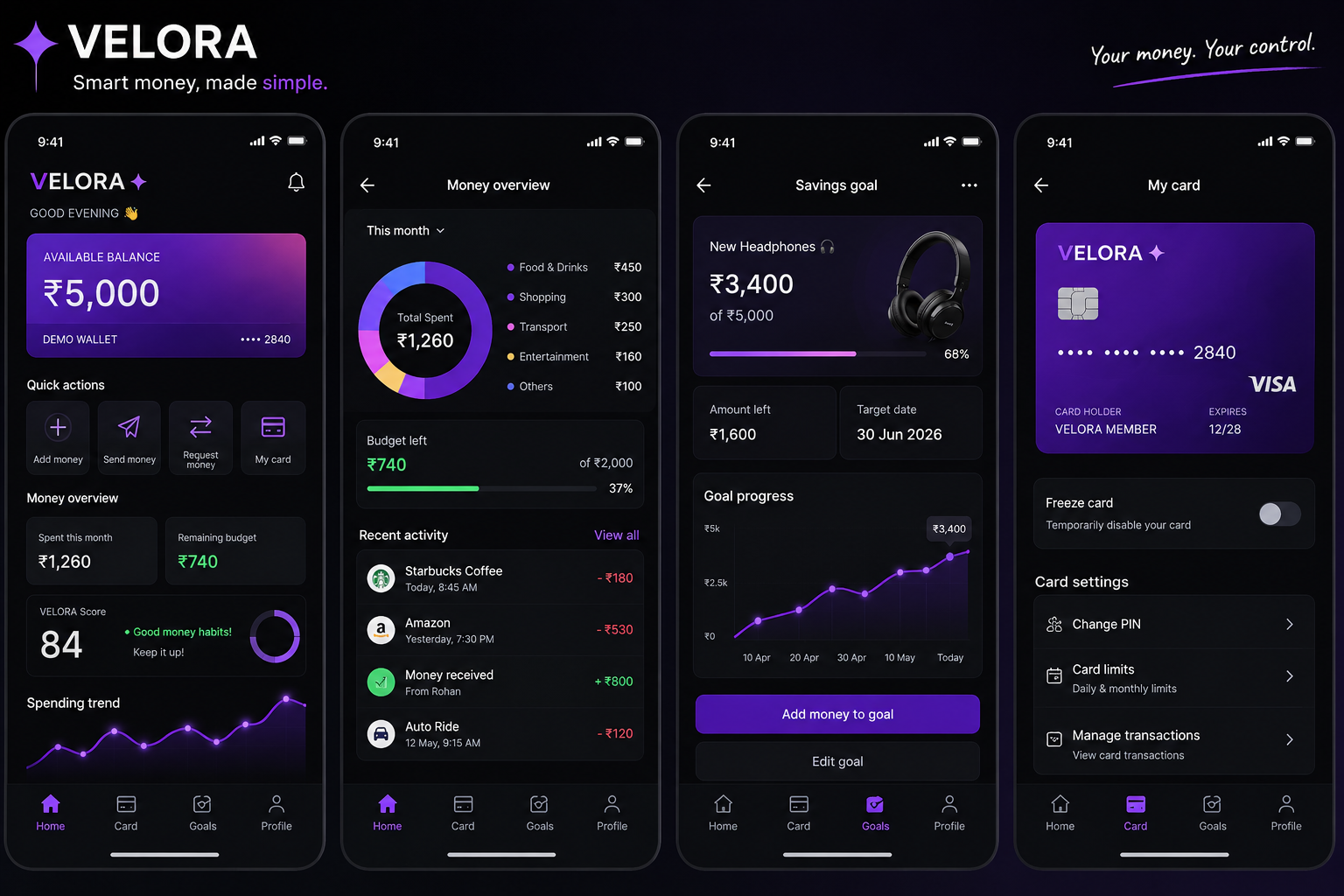
I started with a simple wallet and slowly added features like spending tracking, a savings goal, a virtual card, transaction history, notifications, a monthly budget, and spending charts.
I also spent a lot of time making the interface feel clean and more like an actual finance app rather than just a basic coding project.
What I learned
The biggest thing I learned was that building an app isn't only about making the code work.
I had to think about how someone would actually use it, what information should be shown first, and how to make the experience simple.
I also learned a lot from debugging. Some features worked individually but caused problems when I combined them, so I had to test, fix, and improve the app several times.
Challenges
Getting everything to work together was probably the hardest part.
I faced errors with Streamlit, session state, charts, and some of the interactive features. There were definitely moments when the app would run perfectly and then break after I added something new.
Instead of starting over, I kept fixing the problems and improving the structure.
What's next
VELORA is currently a working prototype using demo data.
If I continue developing it, I'd like to add proper authentication, secure data storage, better personalization, and safe real-world financial integrations.
For now, my main goal was simple:
Make money management feel easier to understand.

Log in or sign up for Devpost to join the conversation.