-
-
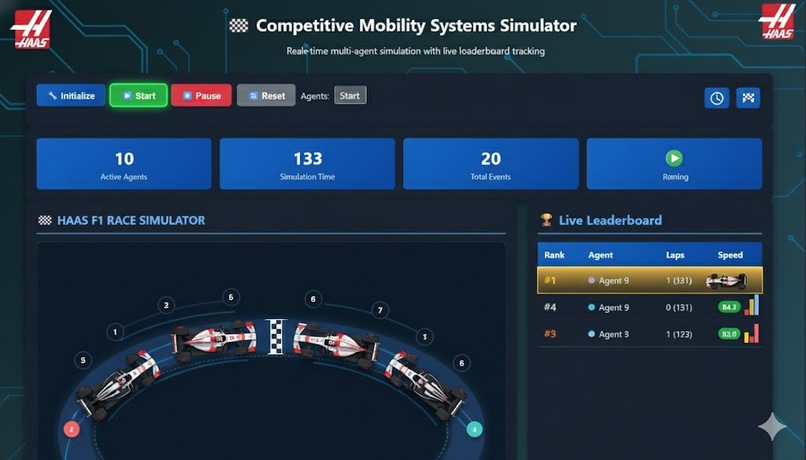
the dashboard overview
-
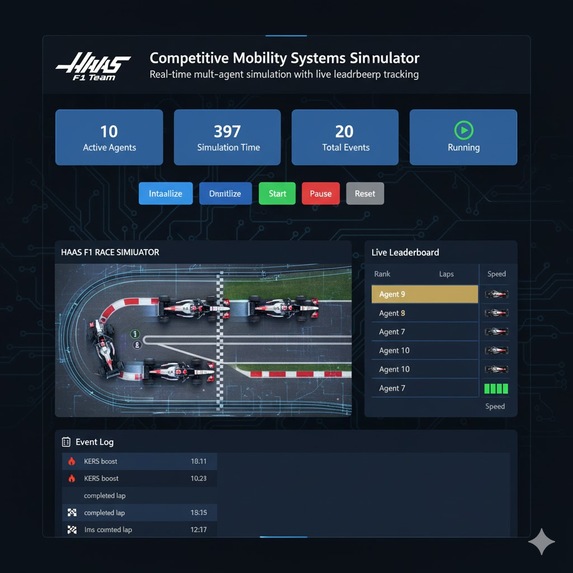
live camera dashboard overview
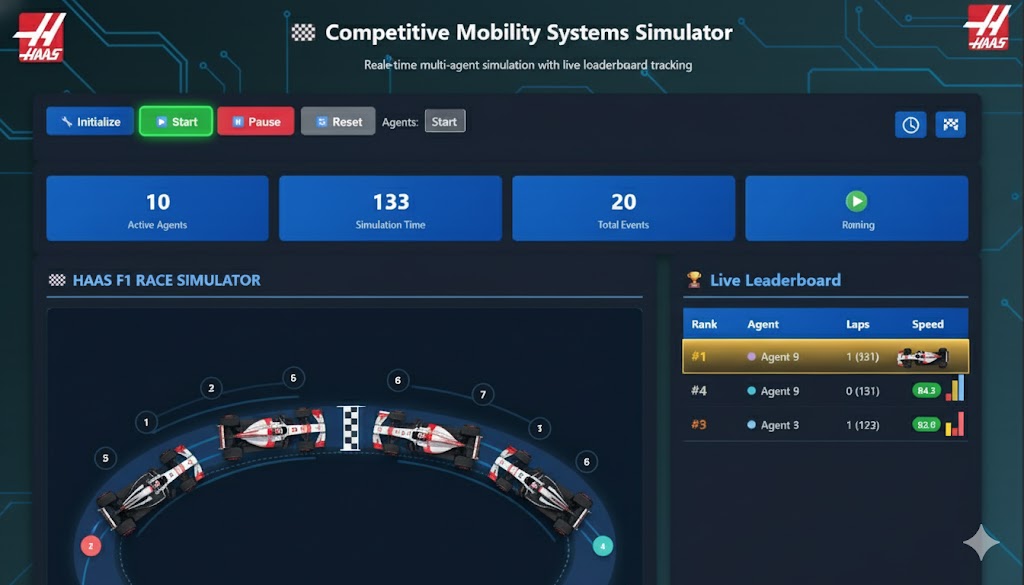
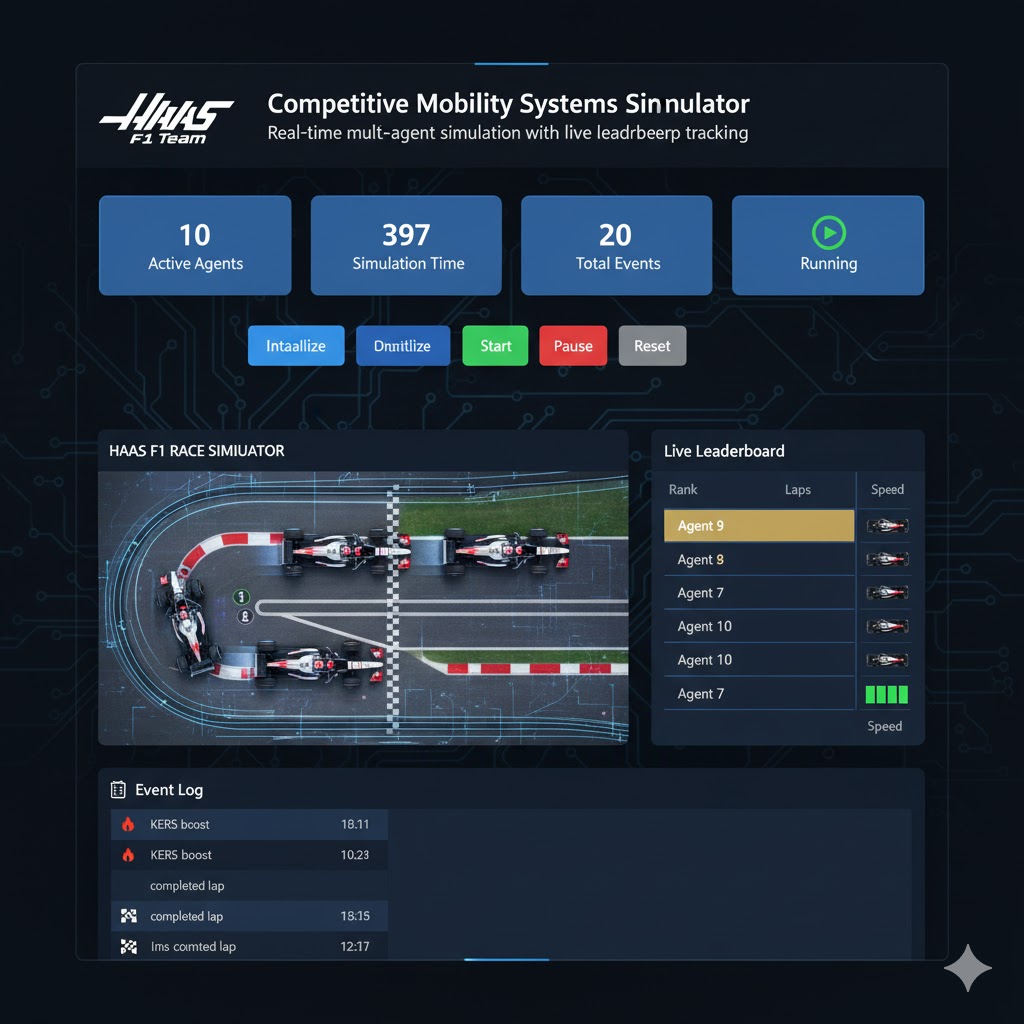
Inspiration Our journey began at the intersection of high-speed motorsports and real-world business challenges. Watching the MoneyGram Haas F1 Team make split-second decisions based on live telemetry data sparked a crucial insight: why can't all businesses operate with this level of real-time intelligence? We were driven by the Mphasis Foundation's principles of "Innovate, Include, Impact," aiming to build technology that pushes innovation boundaries while remaining accessible and driving measurable change.
What it does VelocityCore is a real-time business simulation platform that brings F1-level data agility to everyday operations. It simulates dynamic business environments—like supply chains or financial networks—where events and anomalies occur in real-time. The platform provides live telemetry data, a dynamic leaderboard, and an event log, enabling users to monitor performance and make informed, split-second decisions just like a race engineer would during a Grand Prix.
How we built it We architected VelocityCore as a decoupled, event-driven system for maximum performance and scalability. The backend is built with FastAPI and uses WebSockets for real-time communication, powered by a simulation engine that processes events using probability distributions. The frontend is crafted in Vanilla JavaScript for sub-50ms DOM updates and a sub-2-second load time, deliberately avoiding heavy frameworks. The system follows a clean architecture: [Simulation Engine] ←WebSocket→ [Broadcast Manager] ←WebSocket→ [Multiple Clients], allowing the simulation to scale independently from visualization.
Challenges we ran into Our biggest technical hurdle was synchronization; multiple WebSocket connections receiving simultaneous updates created race conditions. We solved this by implementing a robust, tick-based broadcast system. We also faced the "Lightweight Paradox"—balancing advanced feature richness with our strict performance requirements. The solution was a philosophy of progressive enhancement: a lightweight core with optional advanced modules.
Accomplishments that we're proud of We're incredibly proud of building a powerful, real-time system with a remarkably lightweight footprint. Achieving sub-50ms DOM updates and a sub-2-second load time with vanilla JS was a major victory. We successfully weaved our sponsors' identities into our core architecture—making "Innovate, Include, Impact" principles manifest in our technology, rather than just adding logos. Finally, creating a believable, dynamic simulation driven by a mathematical model was a key accomplishment.
What we learned We learned that real-time systems demand new architectures; traditional request-response cycles are insufficient for live data. We discovered that simplicity often drives supreme performance, and that constraints (like our "lightweight" requirement) breed creativity. Most importantly, we confirmed that whether for a race engineer or a logistics manager, the fundamental need is the same: the right information at the right time.
What's next for VelocityCore_Simulator VelocityCore is a vision, not just a hackathon project. Our horizon includes developing industry-specific modules for logistics, finance, and fan engagement. We plan to enhance the simulation engine with predictive analytics and machine learning to not just report the present, but forecast the future. We also aim to build out a robust historical data and analytics suite, transforming real-time agility into long-term strategic intelligence. The goal is to make VelocityCore the definitive platform for real-time operational decision-making.
Built With
- asyncio
- client-server
- css3
- event-driven-architecture
- fastapi
- html5
- in-memory
- javascript
- json
- lightweight
- no-dependencies
- performance
- pydantic
- pytest
- python
- rapid
- real-time-data
- uvicorn
- websocket-api
- websockets

Log in or sign up for Devpost to join the conversation.