-
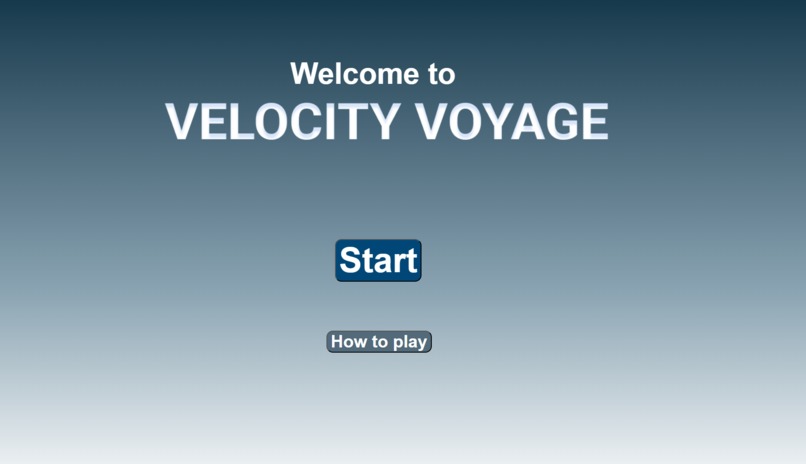
Home Page
-
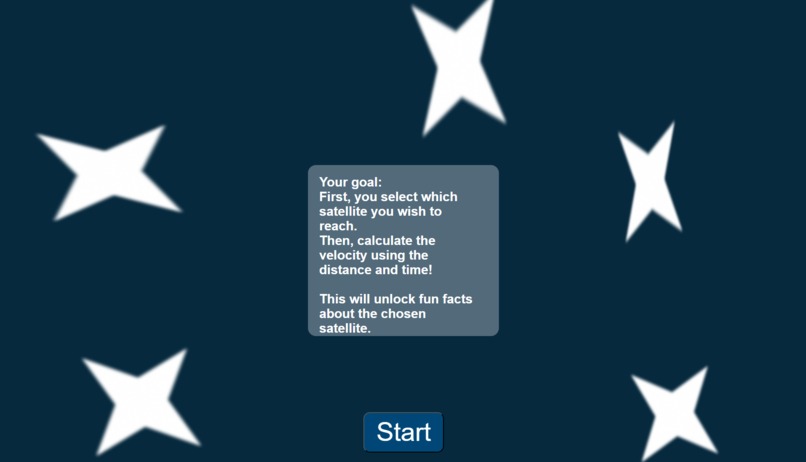
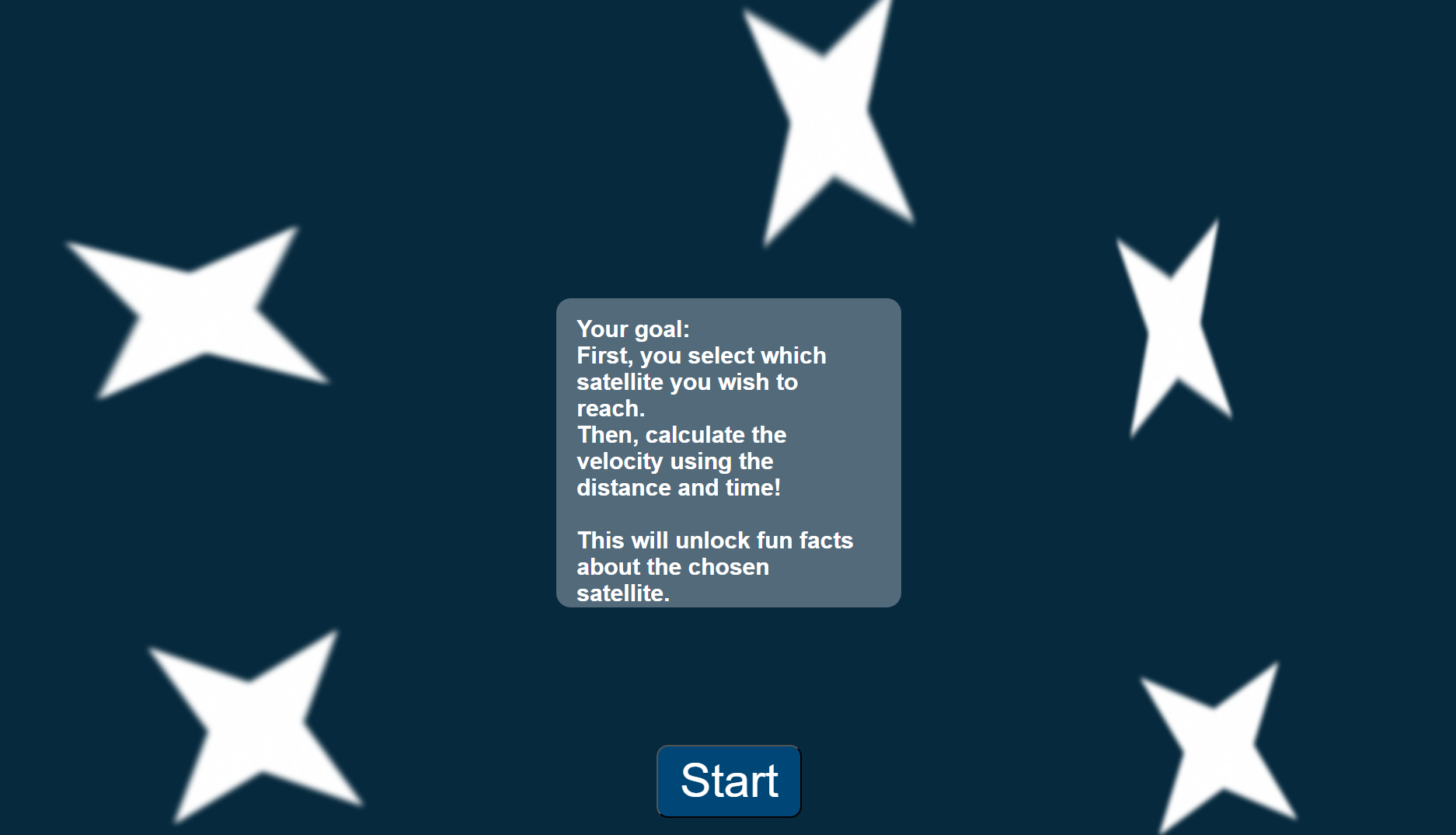
Rules Page
-
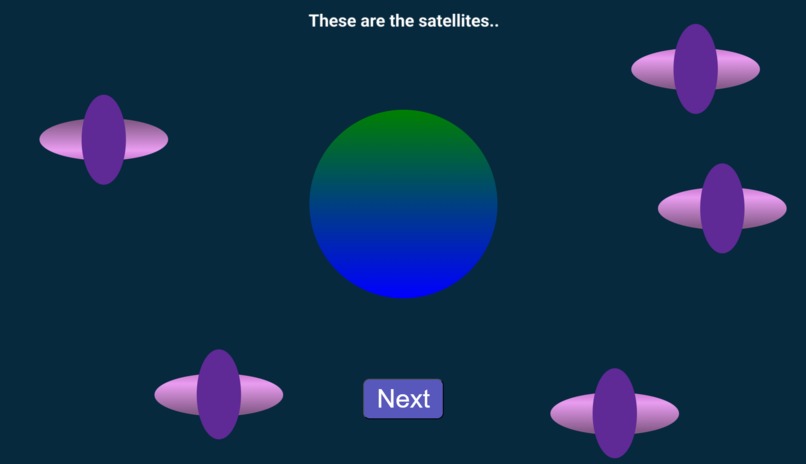
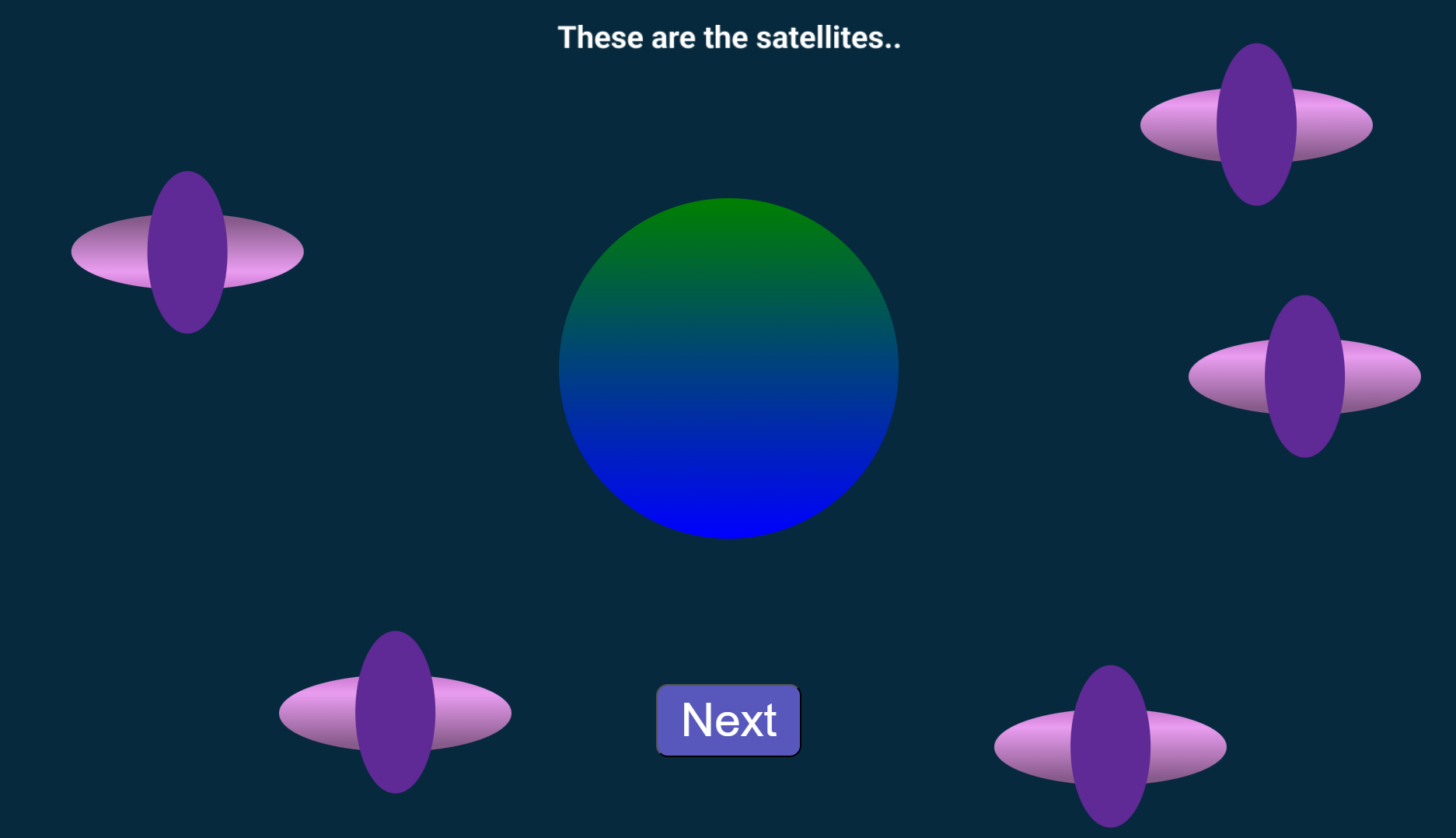
Choose a satellite to unlock!
-
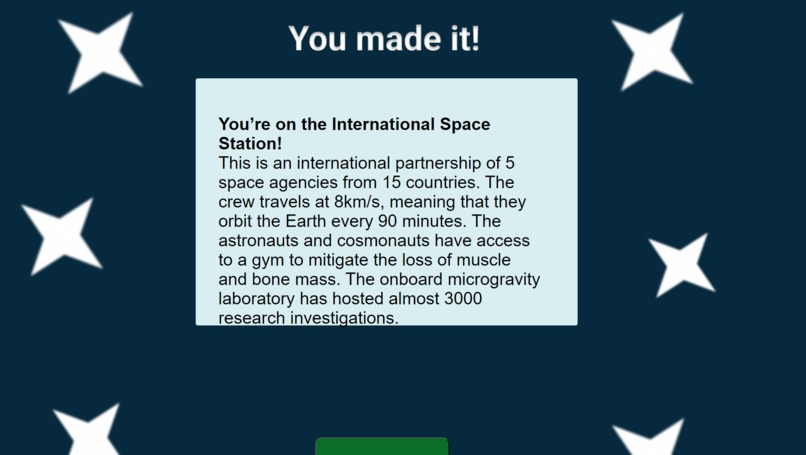
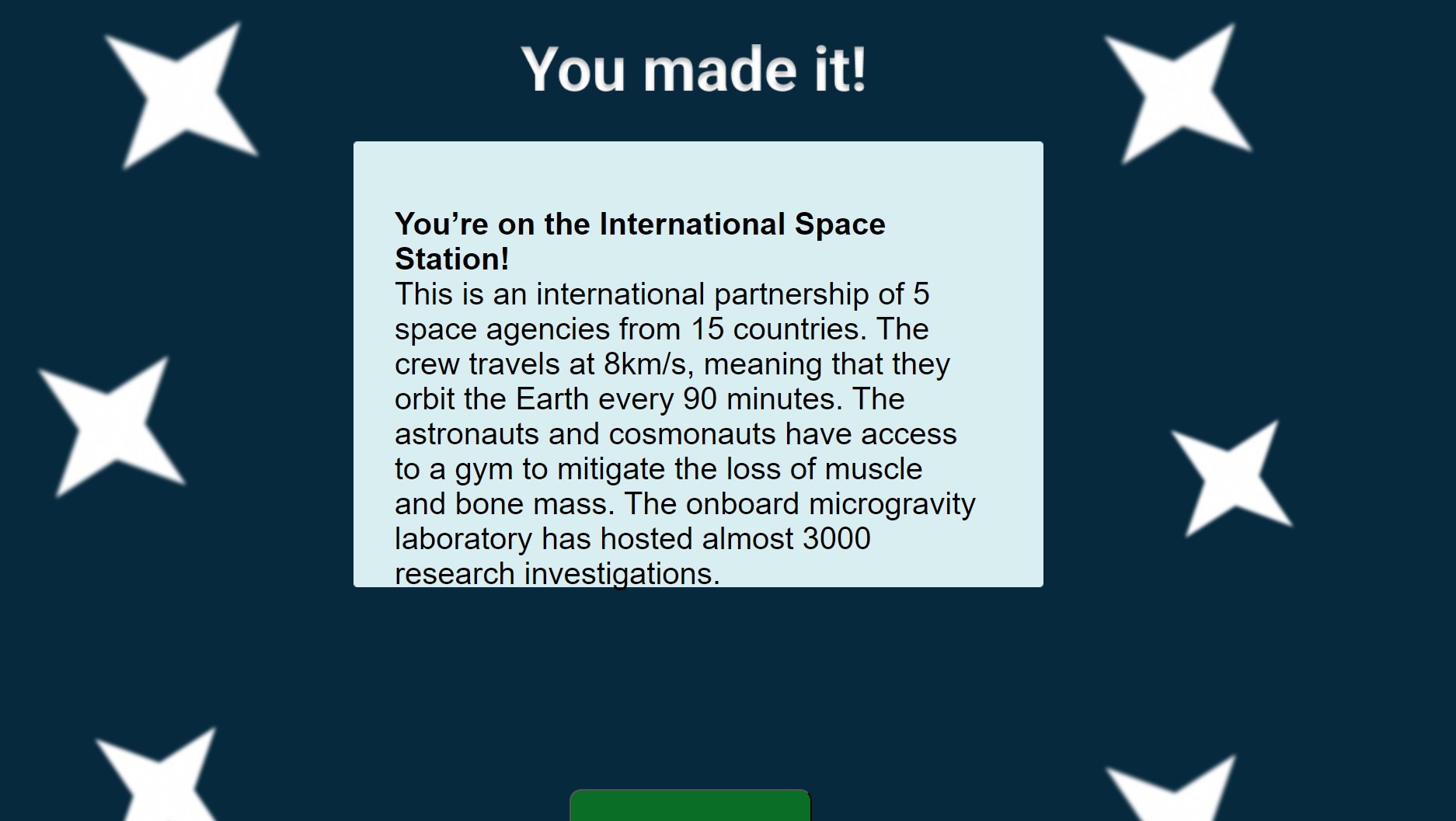
Unlocked new information!
-
Thank you for playing!
Inspiration
We wanted to push our limits during this hackathon, so we decided to tackle the challenge presented by Ultra. Equipped with Python satellite libraries provided by the organizers, we chose to simulate a space exploration game.
What it does
Velocity Voyage is an interactive educational website designed to simulate a satellite exploration mission while incorporating elementary school level physics math concepts. Students will embark on a virtual journey to explore space, collect data, and unlock information about satellites.
One of the key features is our real-time data integration. We used Skyfield, a Python library provided by the hackathon organizers, to access real-time data, like the satellites’ current location.
How we built it
We used Python for the backend coding, collecting satellite data to generate necessary information for the user. We used HTML and CSS for website design. We then integrated all the components seamlessly with JavaScript and Flask.
Challenges we ran into
Gathering data on Earth satellites proved challenging as we struggled to find the TLEs(Two-Line Elements) for the satellites. Also, we encountered complexities in integrating and linking numerous webpages. Despite these obstacles, we persevered and ultimately resolved them to advance our project.
Accomplishments that we're proud of
We have learned how to use and implement a python library, Skyfield, which was entirely new for us. Through our efforts, we have effectively employed it for real-time data and tracking.
What's next for Velocity Voyage
We aim to diversify our physics question pool, covering a broader spectrum of topics and difficulties. Additionally, we're focused on injecting more dynamism into the website, enhancing user engagement through interactive features. Our goal is to transform the learning experience into something dynamic and enjoyable for users of all backgrounds.
References for Satellite Information
About Our Agency | National Oceanic and Atmospheric Administration, www.noaa.gov/about-our-agency. Accessed 17 Mar. 2024. Agency, European Space. “Geosat-1.” Earth Online, earth.esa.int/eogateway/missions/geosat-1. Accessed 17 Mar. 2024. “Currently Flying.” National Environmental Satellite, Data, and Information Service, www.nesdis.noaa.gov/our-satellites/currently-flying#:~:text=NOAA%20owns%20or%20operates%20a,One%20deep%20space%20satellite%20(DSCOVR). Accessed 17 Mar. 2024. “International Space Station Facts and Figures.” NASA, NASA, 27 Sept. 2023, www.nasa.gov/international-space-station/space-station-facts-and-figures/. Kane, Paul. “Facts about Mars: Facts for Kids.” National Geographic Kids, 1 Nov. 2022, www.natgeokids.com/uk/discover/science/space/facts-about-mars/. “Norsat-1 and 2.” eoPortal, 11 Dec. 2015, www.eoportal.org/satellite-missions/norsat-1-2#mission-status. “Proxima 1, 2.” Gunter’s Space Page, space.skyrocket.de/doc_sdat/proxima-1.htm. Accessed 17 Mar. 2024. “Proxima-1.” Skybrokers, 9 Dec. 2021, sky-brokers.com/satellite/proxima-1/.


Log in or sign up for Devpost to join the conversation.