What it is
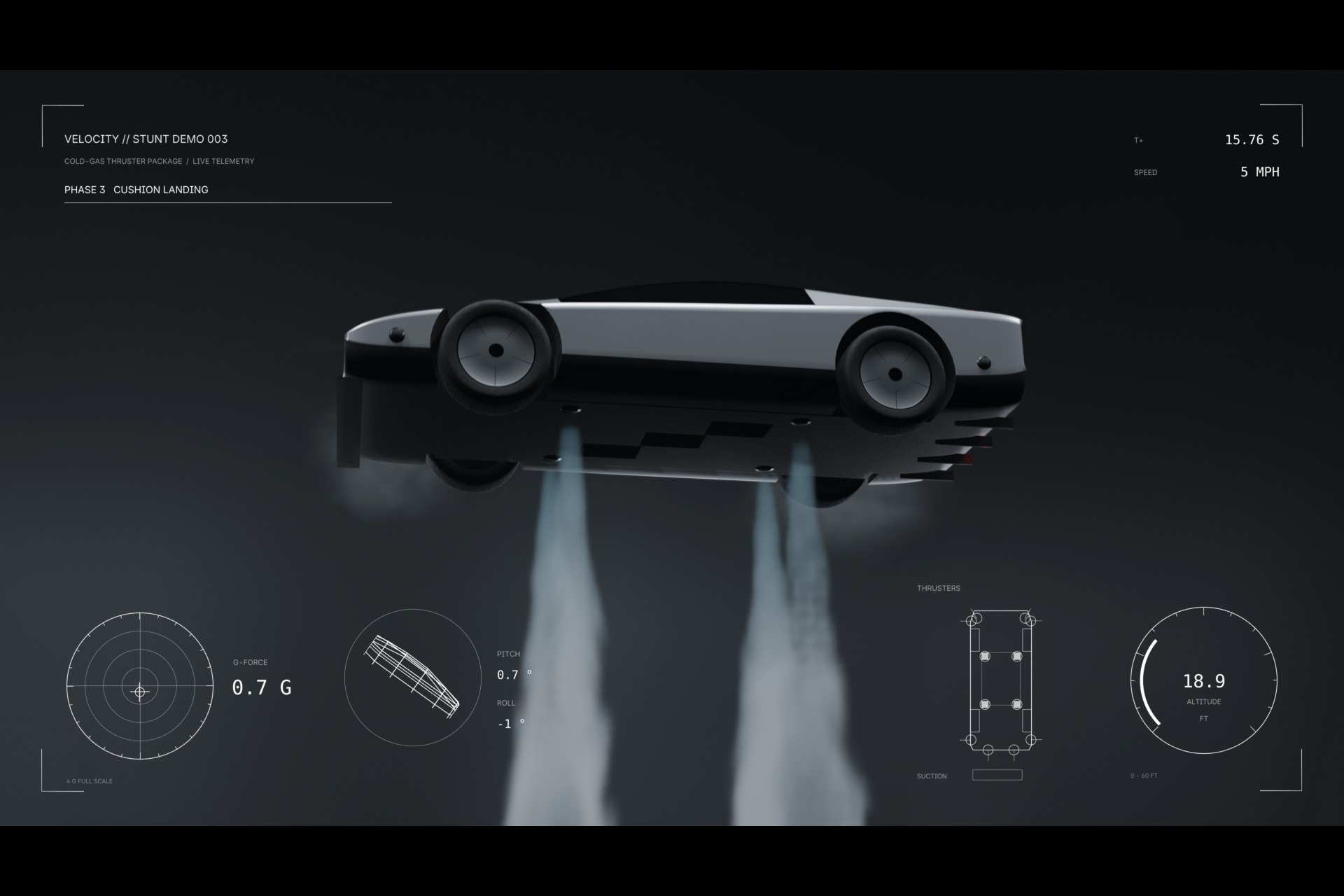
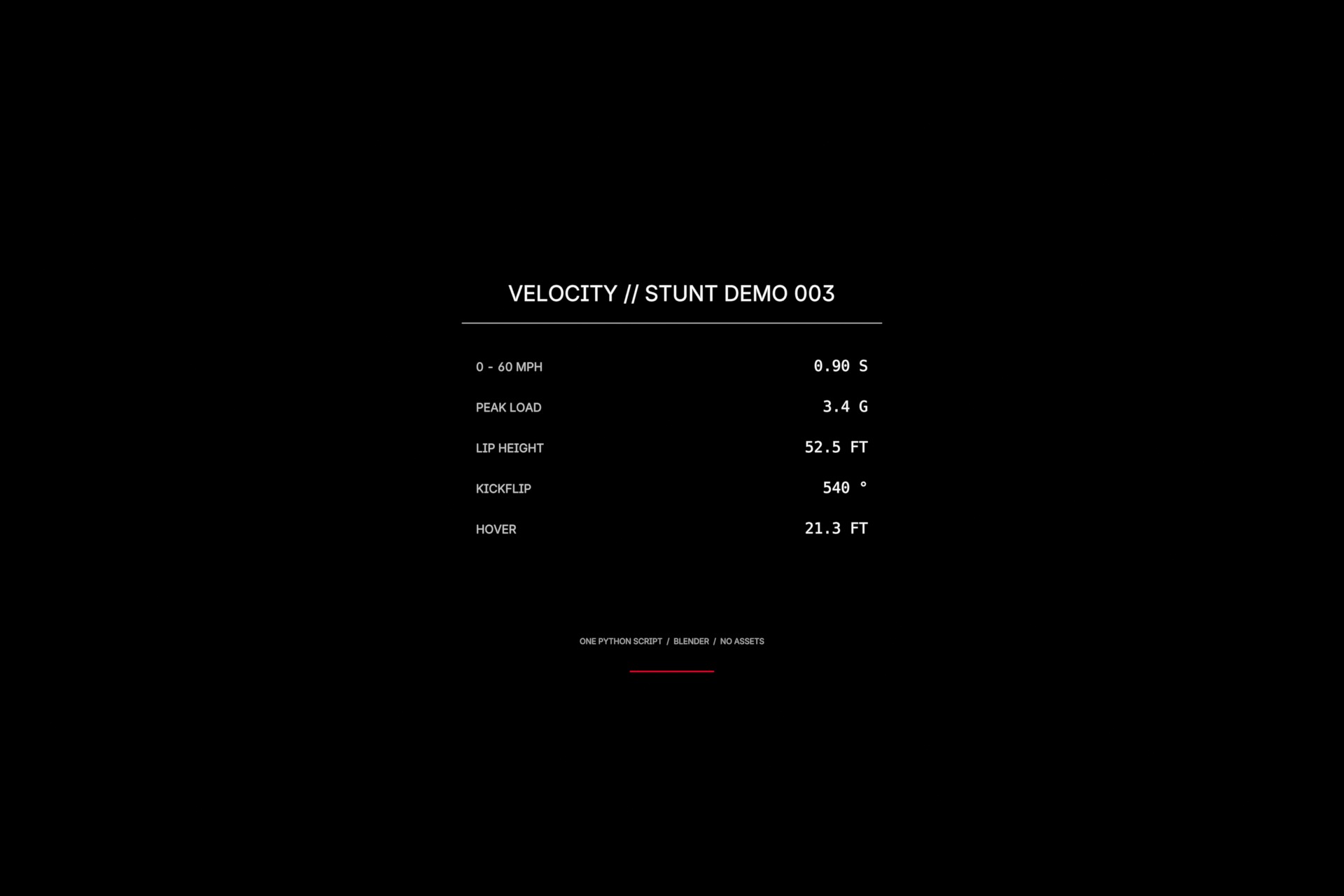
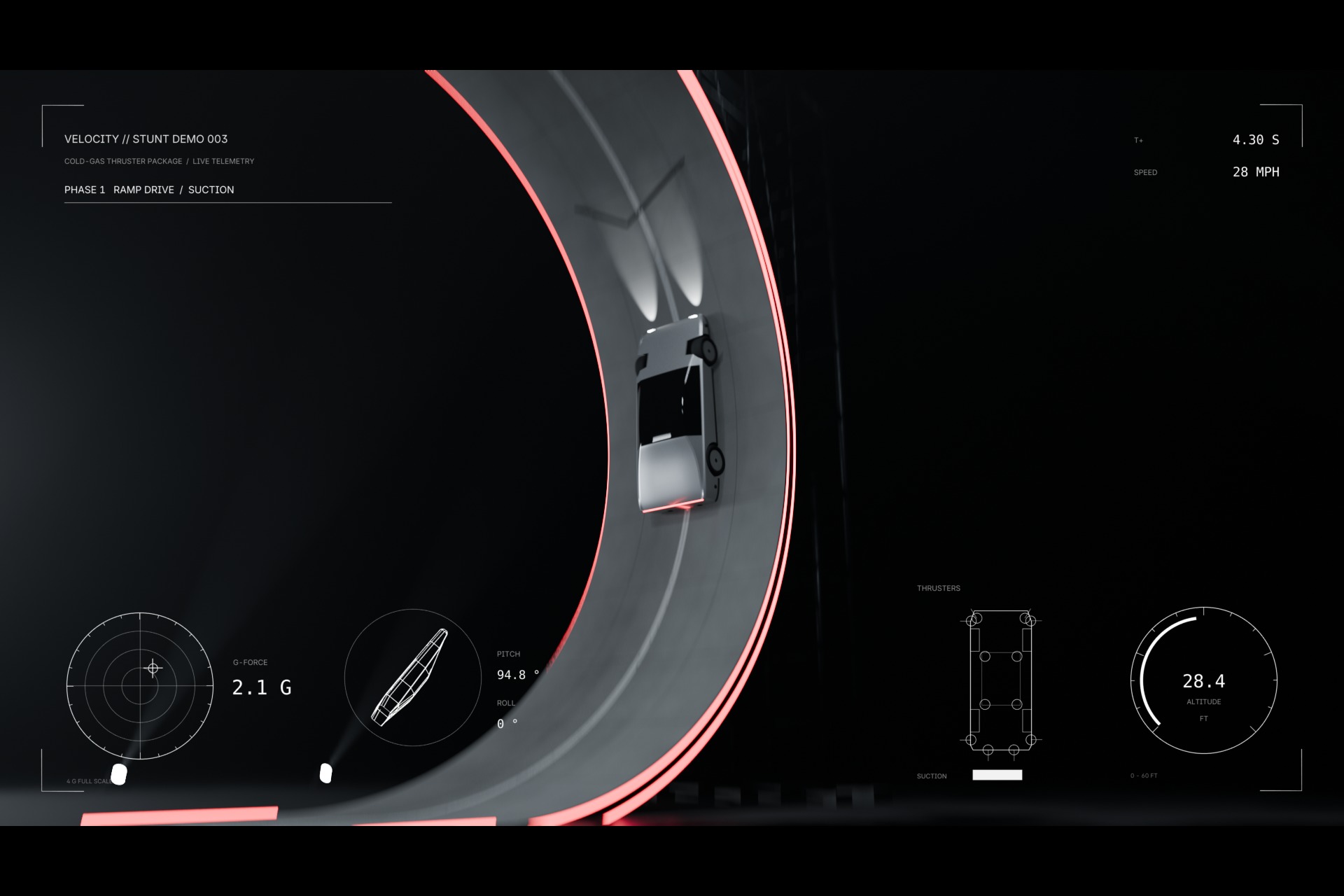
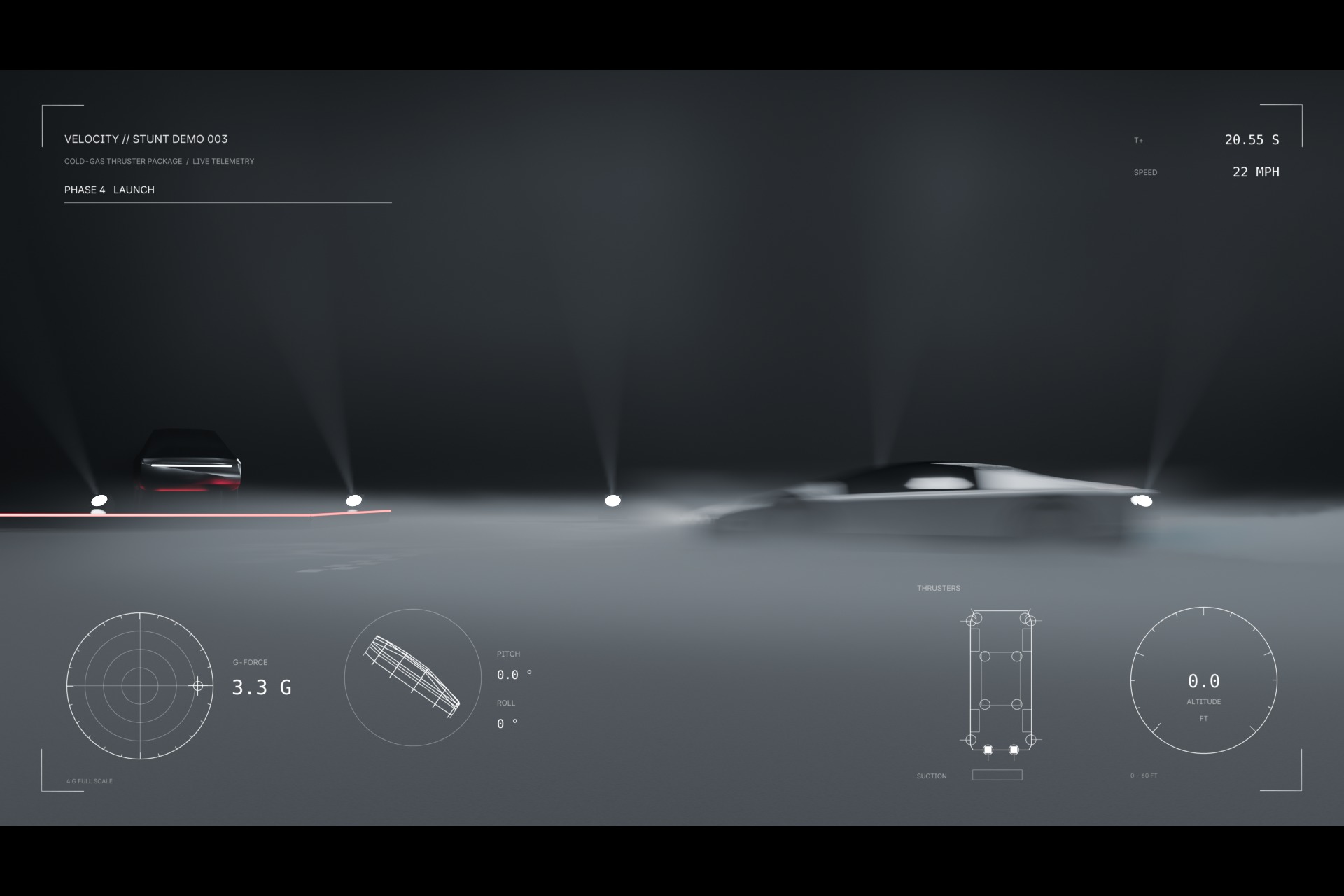
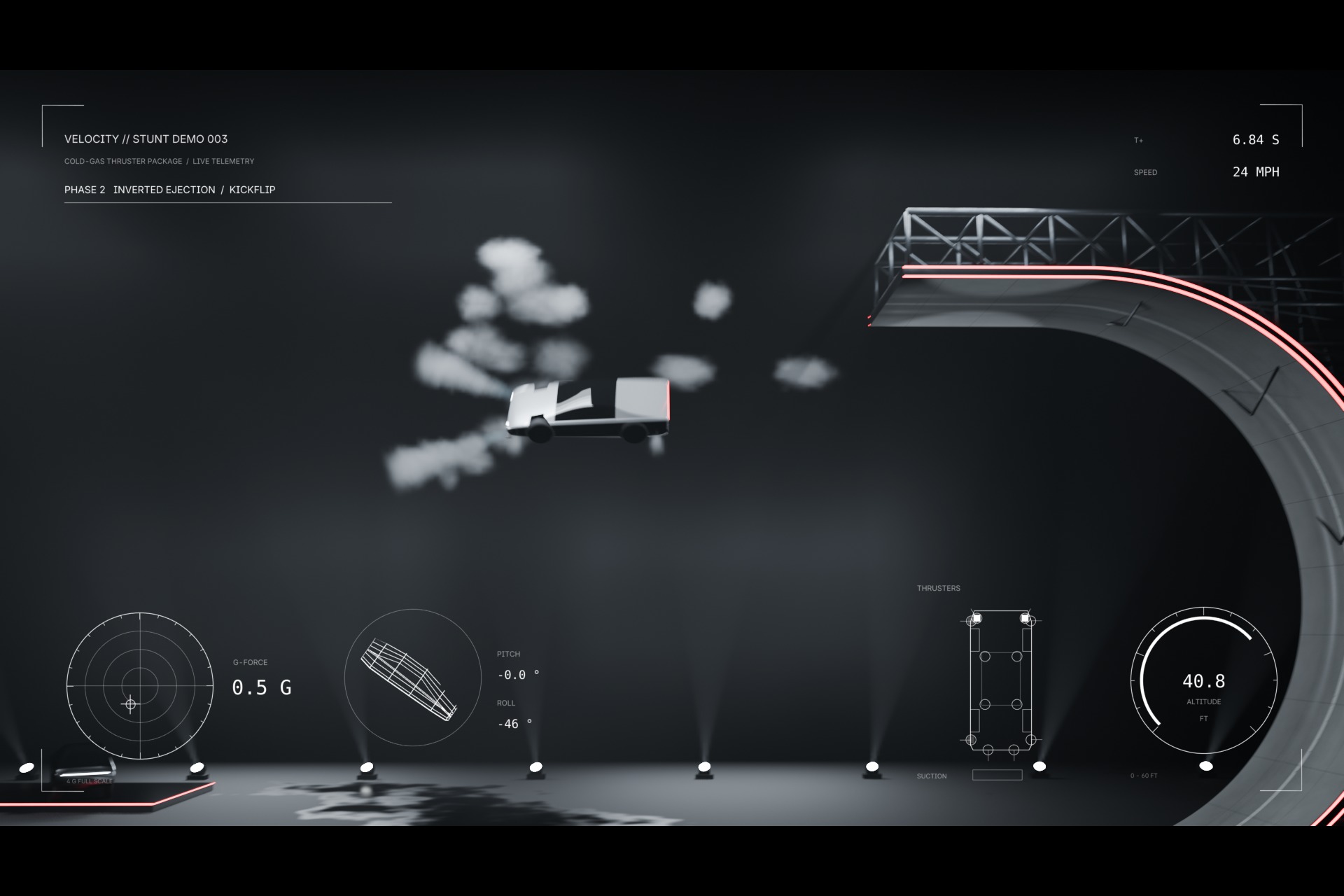
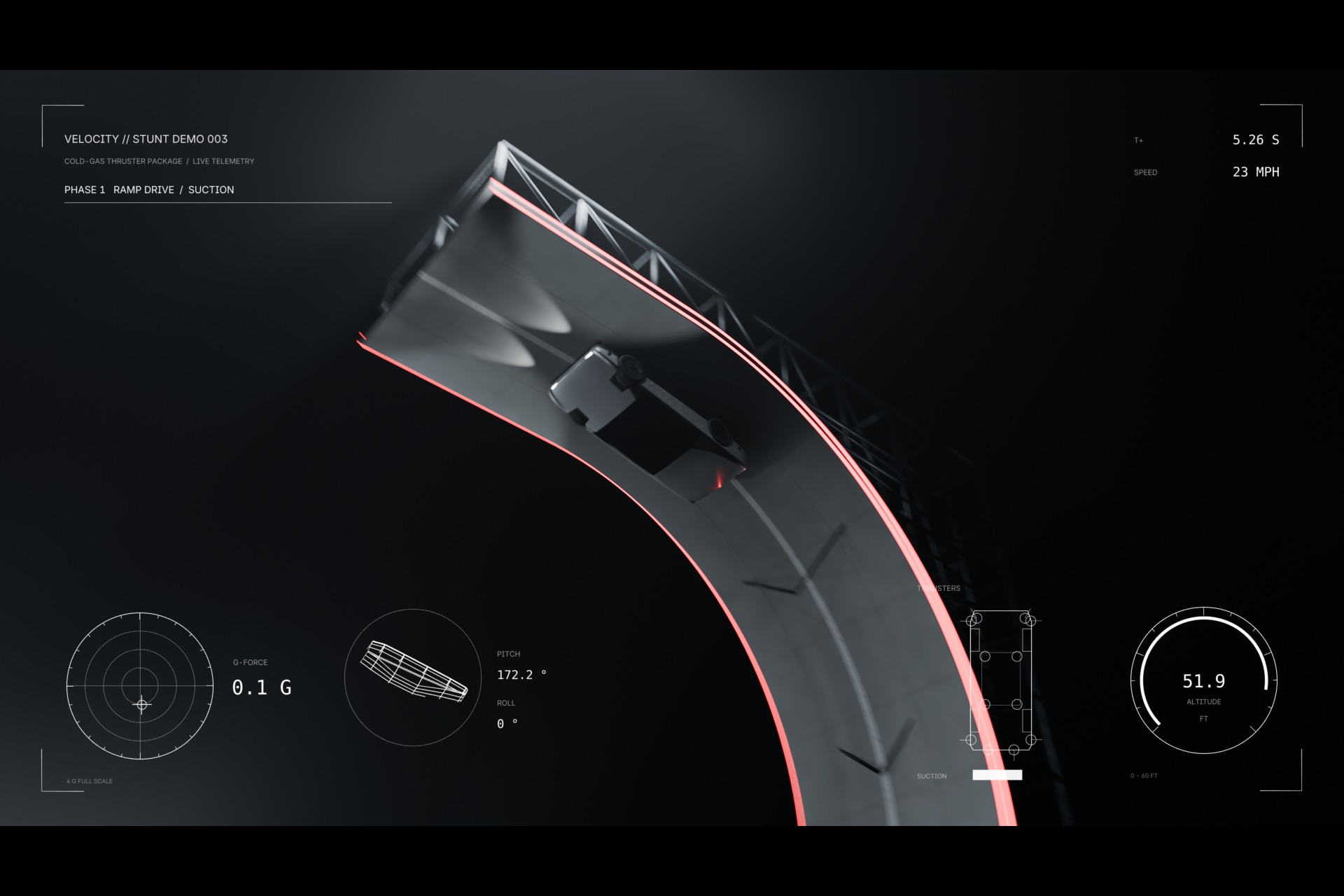
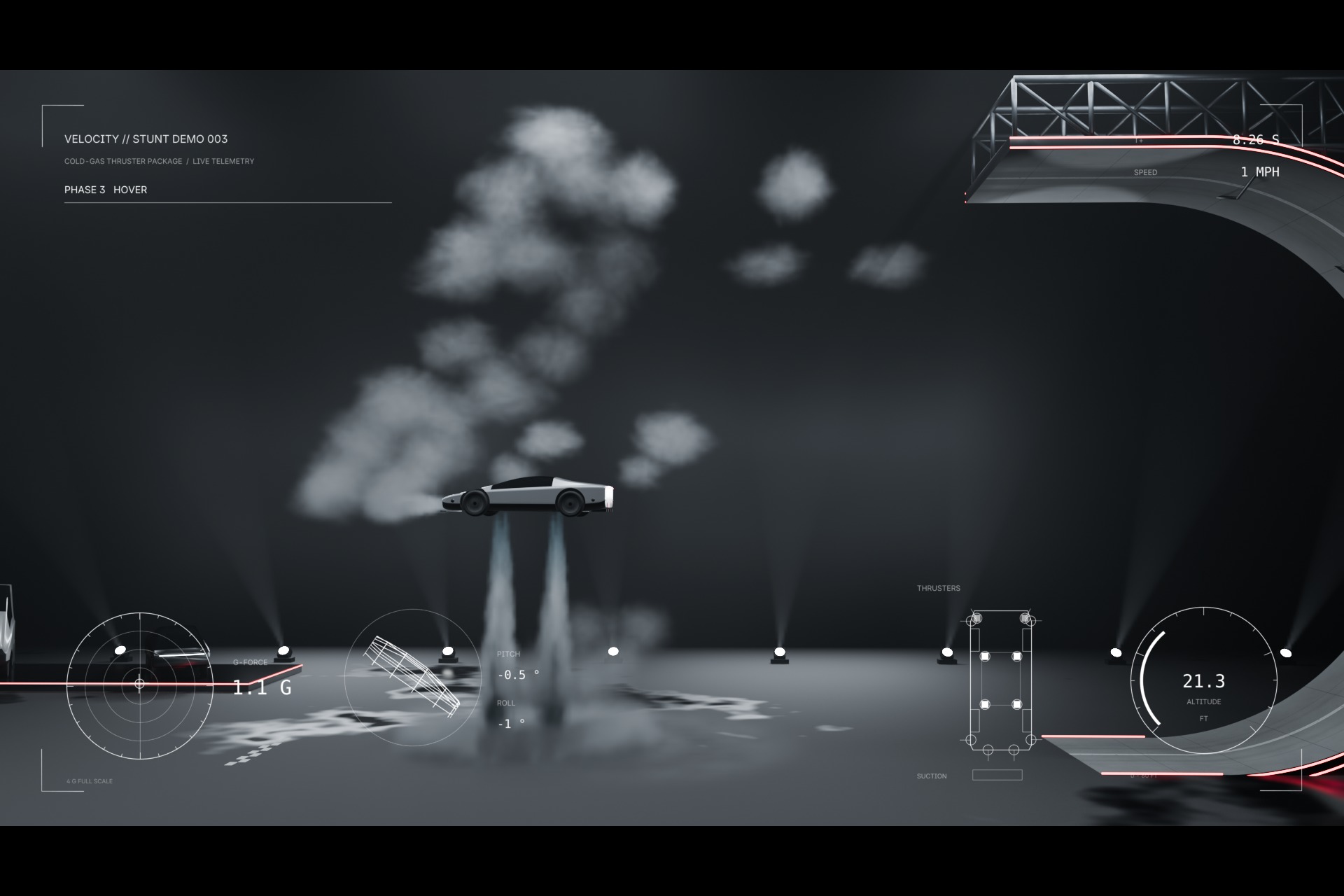
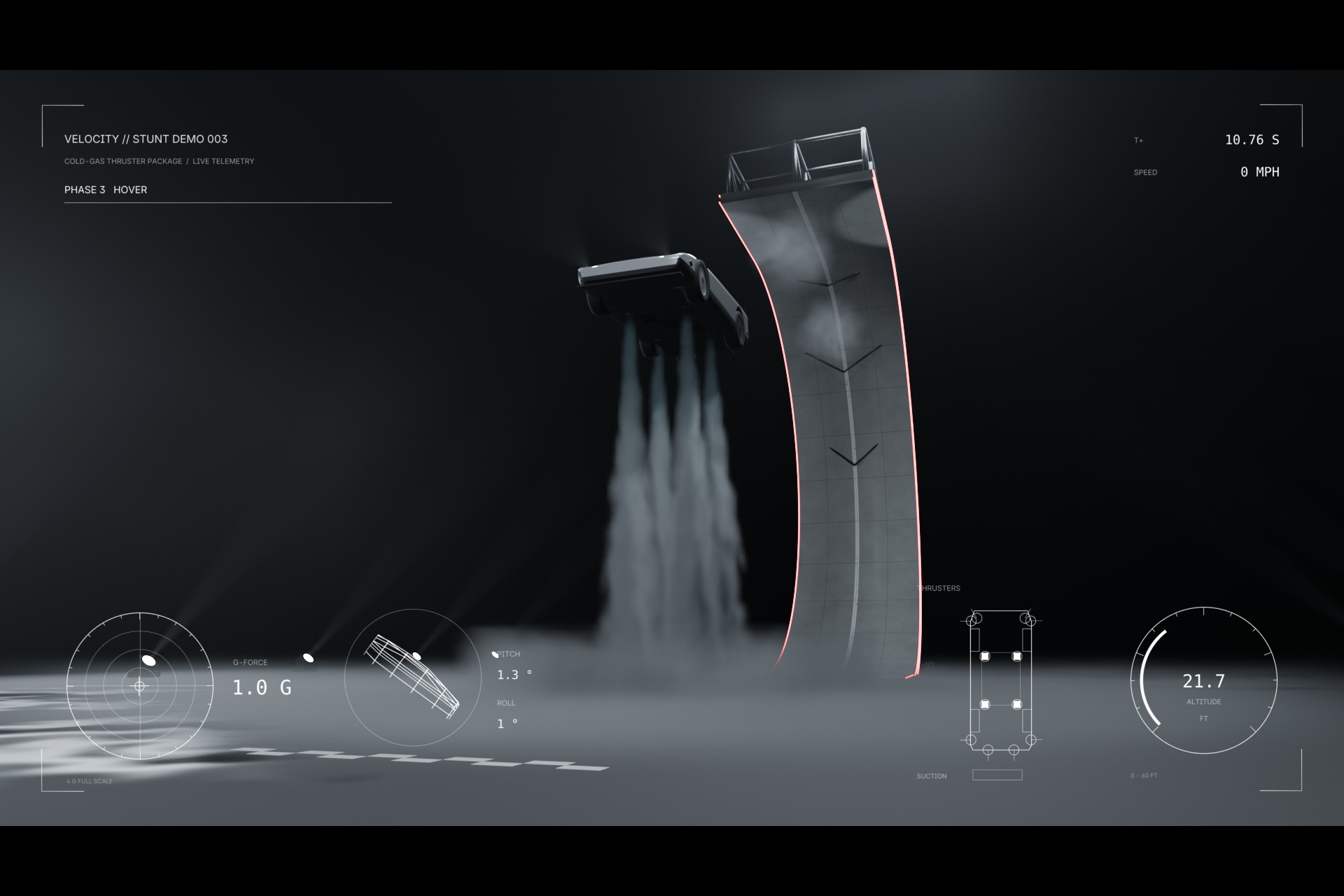
A 30 second film. A fictional playboy billionaire demonstrates his flying supercar in a dark test hall: up a quarter-pipe on suction, upside down across the lip, off the edge, a 540 degree kickflip on cold-gas thrusters, a hover at 21 ft, a soft landing, and then 0-60 mph in 0.90 s out of frame. A telemetry HUD runs on top, like on a live stream.
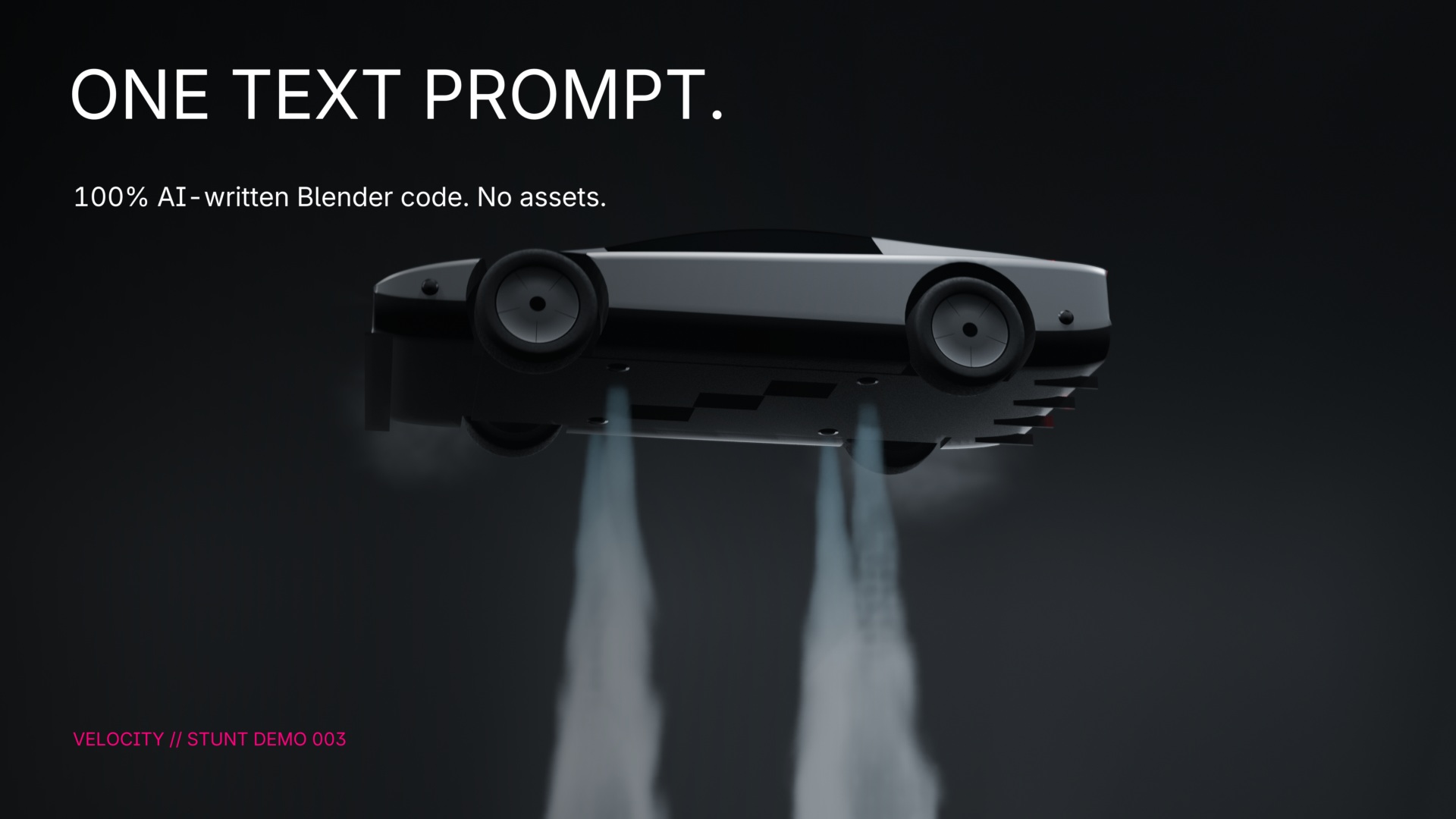
This is 100% procedural. I gave Claude Code one text prompt that described the scene: the set, the lights, the car, the thruster plumes, five shots and the HUD. No reference images, no reference video, no sketches. Claude wrote the Python, ran Blender headless, rendered test frames, looked at them, fixed them, and rendered the film. My part was the prompt, saying "commit", and uploading the video.
Why
The 100 m orbital film was done with a spec and my feedback on the renders. I wanted to see what happens if I give only one description and do not steer at all. So this is a test how far a single prompt goes.
How it was built
One script, build.py, starts from an empty Blender scene and builds everything. 13 Python files, 3,180 lines.
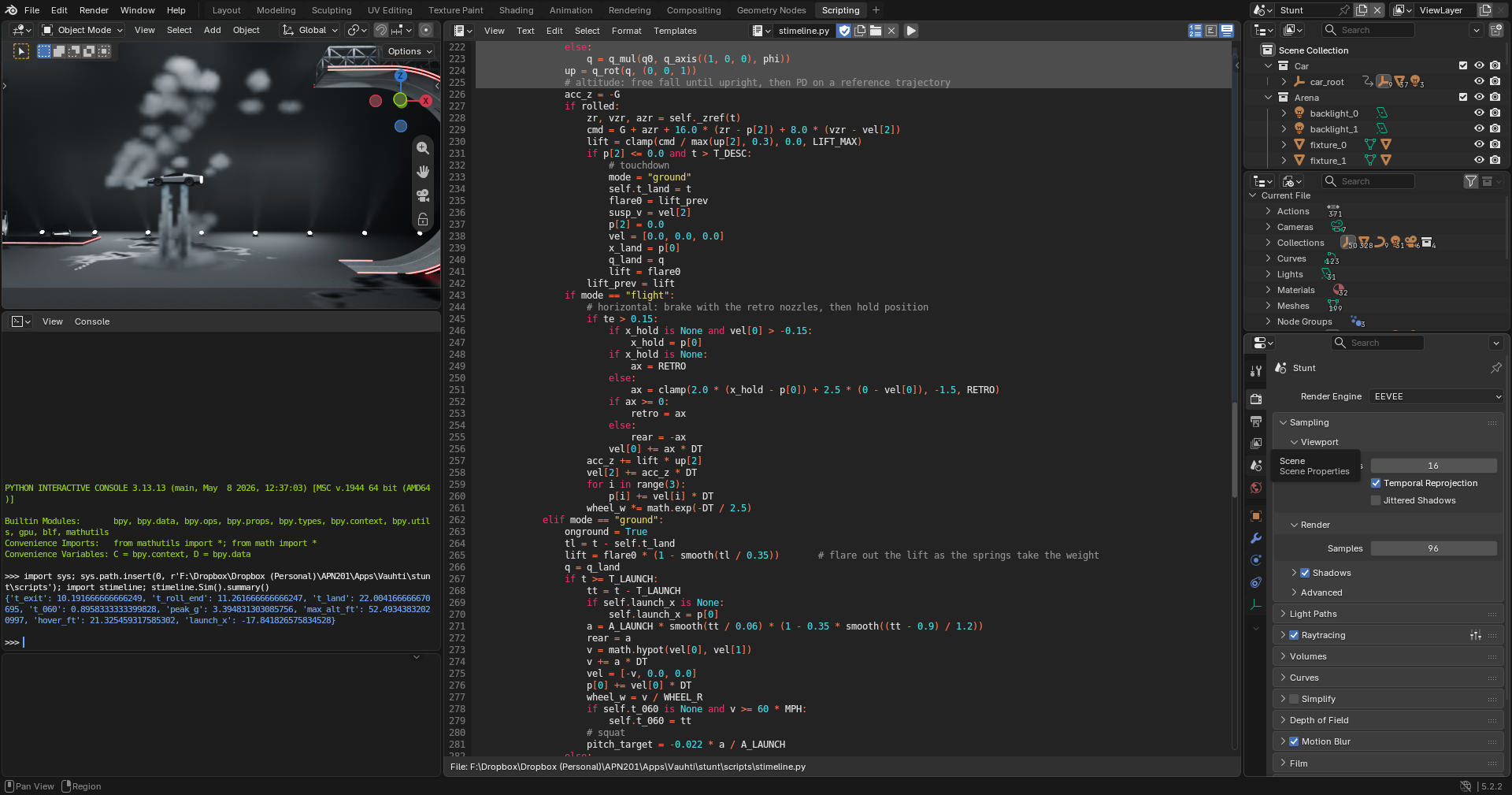
- The stunt is a simulation first (
stimeline.py, plain Python, 480 Hz). On the ramp the car is driven along the curve and its pose comes from where the two axles touch the surface. After the lip it is a point mass with gravity and thrust, flown by two PD controllers with limited thrust. The HUD numbers (G, altitude, speed, pitch, roll) are read from this same simulation, so the 3.4 G on screen is the 3.4 G that moved the car. - The car is lofted from 12 cross-sections, mirrored, subdivided with creased edges, and the wheel arches are cut with boolean cylinders. Paint, glass and carbon are assigned per face from the loft rows. 12 nozzles in the positions the prompt gave.
- The quarter-pipe is swept along the same path the simulation drives on. Concrete panels and the lane line are shader maths on the UVs. The truss is tubes between computed points. Red LED strips follow the edges.
- The vapour is shader volumes, not a smoke sim. Plumes ride on the nozzles and scale with thrust. Bursts leave puffs in the air, lift near the floor spawns rings of fog that roll outward. All of it is baked from the simulation, no cache.
- One camera per shot, bound to markers, so the motion blur does not smear over the cuts. The launch shot has a full frame shutter.
- The HUD is a second scene, orthographic, rendered transparent and stacked in the encode. Live numbers are Geometry Nodes text (Value to String, String to Curves). The wireframe car in the HUD is the real car's loft cage.
- The sound is generated from the simulation too: light contactors, motor whine from road speed, a hiss per nozzle, a thump on landing, a boom on launch.
- Render: EEVEE, 96 samples, about 16 s a frame on a GTX 1660 Ti, 3 hours for the film.
Challenges
These were found and fixed by Claude from its own test renders, I did not point them out.
- First stills were almost black. The ground uplights lit the haze and nothing else. It added overhead lights and a backlight, then the haze was too thick and everything went grey, so the haze was cut to a third and limited to the stage area.
- The HUD showed the same frame in every still. A second scene renders at the main scene's frame, so both scenes are now set before each frame.
- In the launch shot the car was hidden behind a wall of leftover fog rings. Rings now fade faster after landing and the camera went up 30 cm.
- Cycles took over 10 minutes for one frame with all the volumes, that would be days for the film. Final render is EEVEE, Cycles is still an option in the script.
- Blender 5.2 changed how Geometry Nodes modifier inputs are set from Python, so the old way failed. It probed the API and used the new one.
Honesty notes
- The car leaves the lip upside down, so the kickflip is 540 degrees, not the 360 the prompt asked. 360 would land it on the roof.
- The prompt wanted a pitch black hall with only ground uplights. With only those the car did not show, so there are also overhead lights and two backlights.
- The physics is simplified: the car is a point mass in the air, the suction is not modelled as a force, the thrusters push along fixed axes.
- The fleet in the background (sedan, crossover, semi, wedge truck) are generic shapes, no brands, no badges.
- [fill: where the prompt text came from (written by me / written with AI help / a breakdown of a real demo video), say it plainly here]
AI and assets
The code was written by AI (Claude Code, Anthropic) from one text prompt. No AI generated images, video or audio. No third party models, textures, HDRIs or sounds. The only things not generated are the fonts, Inter and DejaVu Sans Mono, which ship with Blender.

Log in or sign up for Devpost to join the conversation.