Inspiration
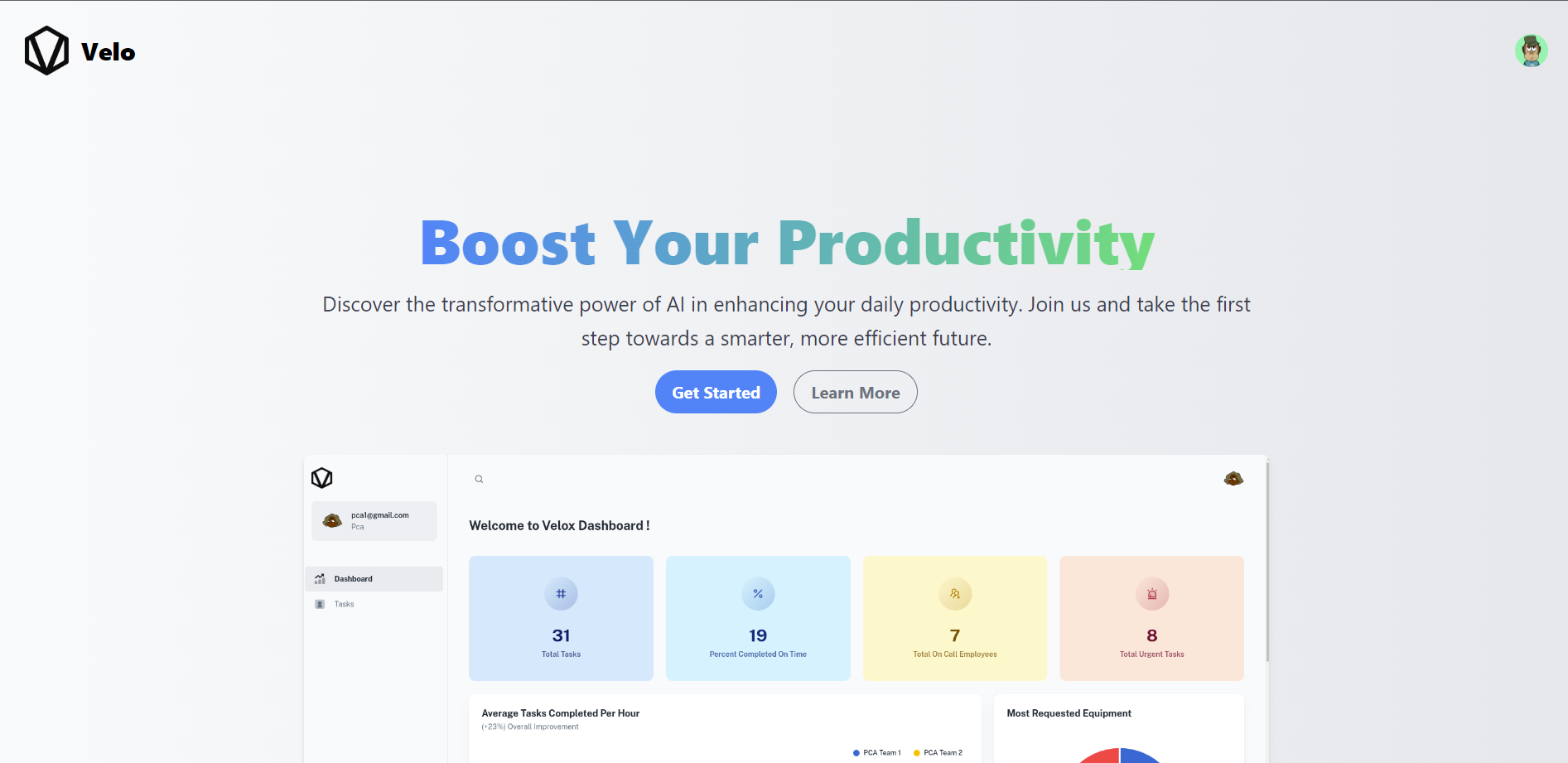
In a fast-paced world where time is of the essence, the need for streamlined, intelligent productivity tools is important. We envisioned Velo with the goal of bridging the gap between human intent and digital execution. The idea was to create a central hub where individuals and teams can manage their tasks and get guidance on anything they need. Users can interact with a personalized smart assistant to enhance productivity and reduce the workload in their lives. Unlike other AI assistants, our assistant is not just a chatbot, but something you can talk to. The integration of OpenAI's APIs fueled our imagination to develop an AI-powered companion that understands and assists in a intuitive manner.
What it does
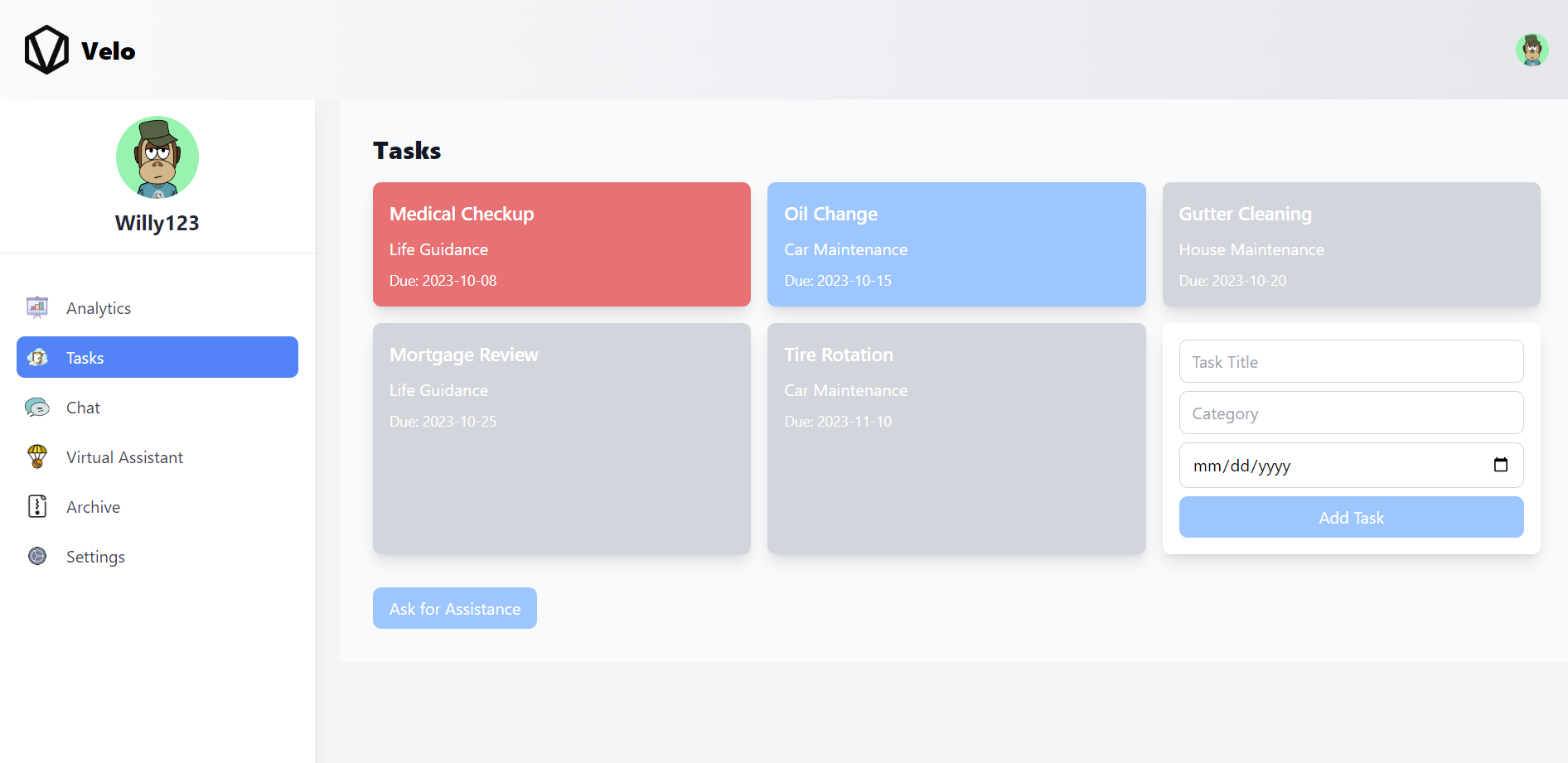
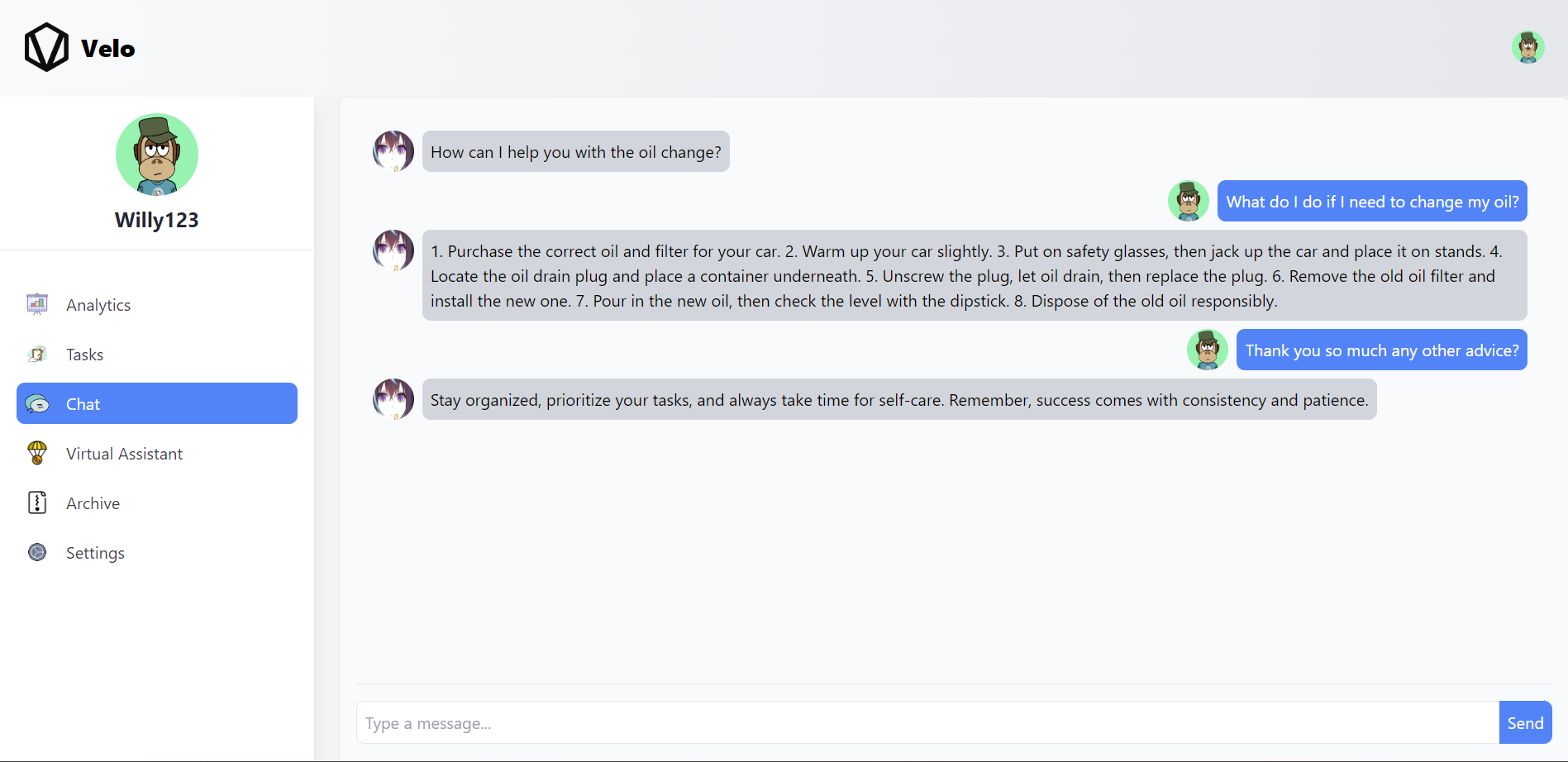
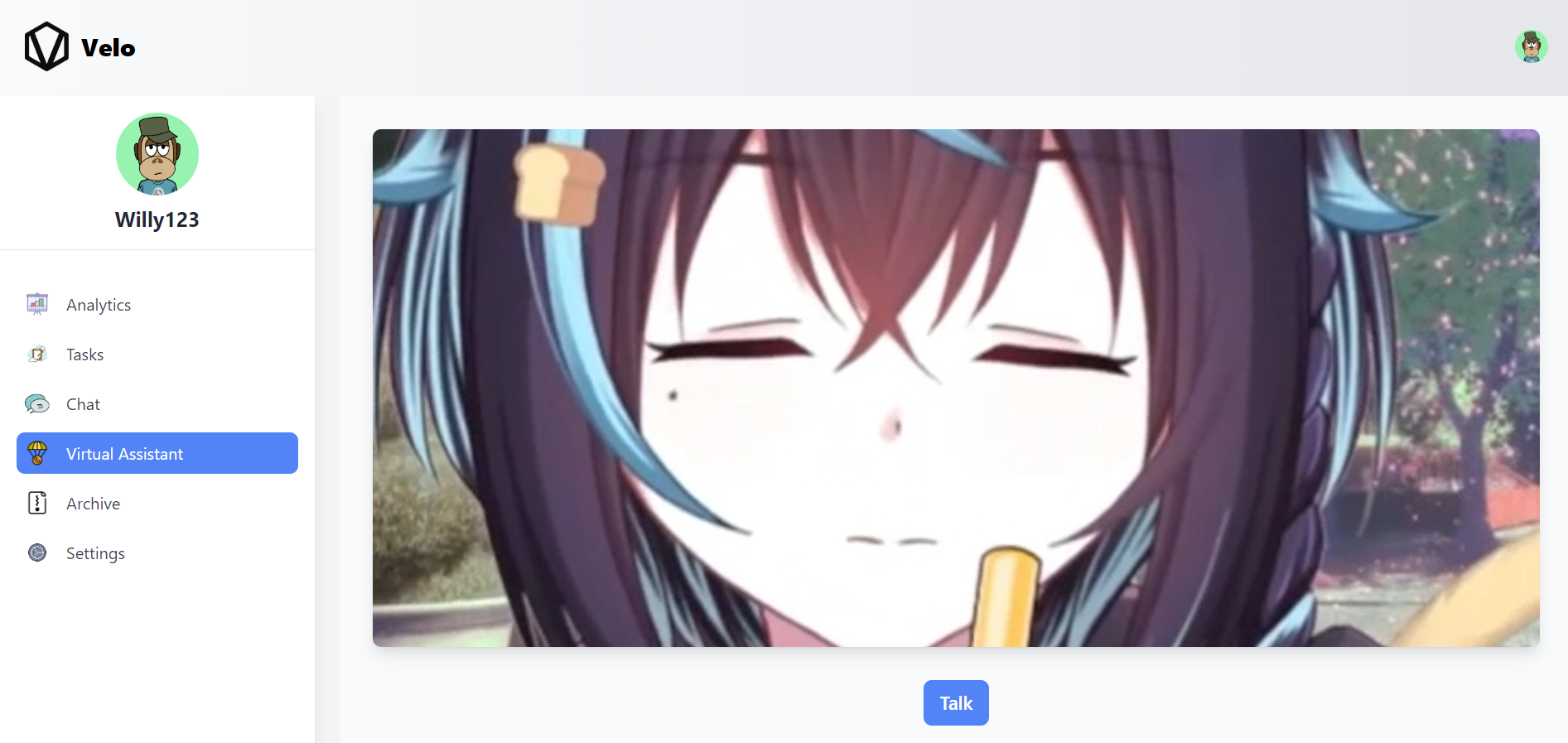
Velo is an AI-powered productivity app designed to make task management and day-to-day tasks smoother and more intuitive. At its core, Velo features a sophisticated chatbot and virtual assistant capable of understanding and processing voice commands. Through the integration of OpenAI's API, Velo provides a human-like interaction experience, allowing users to communicate their needs, set reminders, manage tasks, and obtain insights effortlessly. The blend of task management tools and AI capabilities makes Velo a powerful companion for individuals and teams aiming to elevate their productivity levels.
How we built it
The architecture of Velo was designed to ensure scalability, performance, and ease of development. We adopted a microservices architecture which allowed us to build, deploy, and scale the different components of Velo independently. Here’s a breakdown of how we leveraged various technologies to bring Velo to life:
Frontend
The user interface of Velo is built using React, a powerful library for building interactive user interfaces. This choice allowed us to create a dynamic, responsive, and user-friendly interface that operates seamlessly across various devices. Tailwind CSS, a utility-first CSS framework, was utilized to style the frontend. It facilitated rapid design iterations, enabling us to create a visually appealing and intuitive interface with ease.
Backend API Development
We used Flask, a lightweight and versatile micro web framework for Python, to develop the APIs that power Velo. Flask's simplicity and ease of use enabled us to build robust APIs that form the communication bridge between the frontend, the databases, and the various microservices. For the database, we used MongoDB's NoSQL database to store and retrieve user data.
Voice and Chat
The core voice recognition and chat functionalities are powered by the OpenAI API. By leveraging OpenAI's cutting-edge natural language processing capabilities, we were able to create a natural and intuitive communication channel between users and Velo.
Voice to chat and chat to voice
For the conversion of voice to chat and vice versa, we utilized the GTTS (Google Text-to-Speech) library and FFmpeg. GTTS enabled us to convert text into natural-sounding speech, while FFmpeg facilitated the processing of audio data, ensuring smooth conversion and playback.
Challenges we ran into
Integrating the OpenAI API for natural language processing and ensuring that the voice and chat functionalities performed optimally was a demanding task. Fine-tuning the API to understand and respond to varied user inputs accurately required significant effort. The integration of GTTS and FFmpeg for voice to text and text to voice conversion posed challenges, especially in maintaining the naturalness and accuracy of conversions, and ensuring low latency.
Accomplishments that we're proud of
We are proud of building Velo, as it has a lot of potential in today's fast-paced environment by acting as a centralized hub for task management and personal productivity. The integration of a smart virtual assistant powered by the OpenAI API, coupled with voice and chat functionalities, has the ability to provide users with a seamless way to manage their tasks, set reminders, and interact with their digital workspace using natural language.
What we learned
We learned about the immense potential and challenges that come with integrating AI in productivity tools. We gained invaluable insights into user-centric design, data security, and the intricacies of building a seamless voice-enabled interface. The iterative feedback and development process taught us the importance of flexibility and adaptation in the face of technical and design challenges.
What's next for Velo
The roadmap ahead is filled with exciting possibilities. We aim to refine and expand Velo's capabilities based on user feedback and emerging AI technologies. Enhancing the natural language processing capabilities, expanding the task management features, and exploring integrations with other productivity tools are among the top priorities. We envision Velo evolving into a comprehensive productivity hub, adapting to the diverse needs of individuals and teams, and setting a new standard in AI-driven task management.


Log in or sign up for Devpost to join the conversation.