-
-
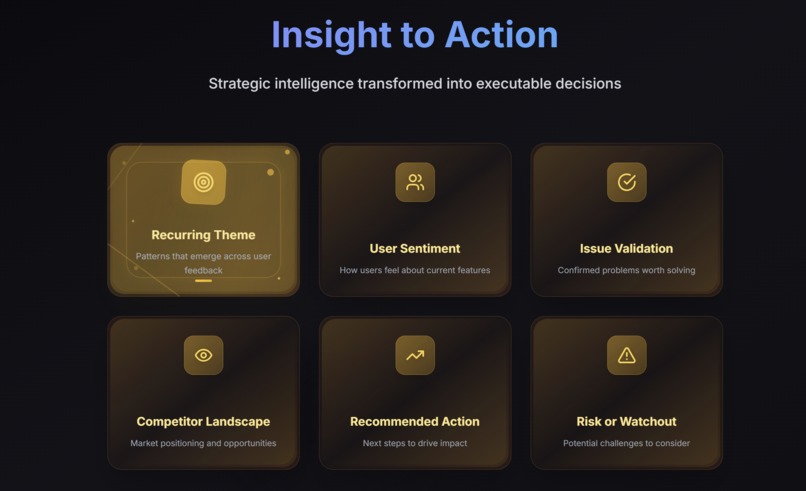
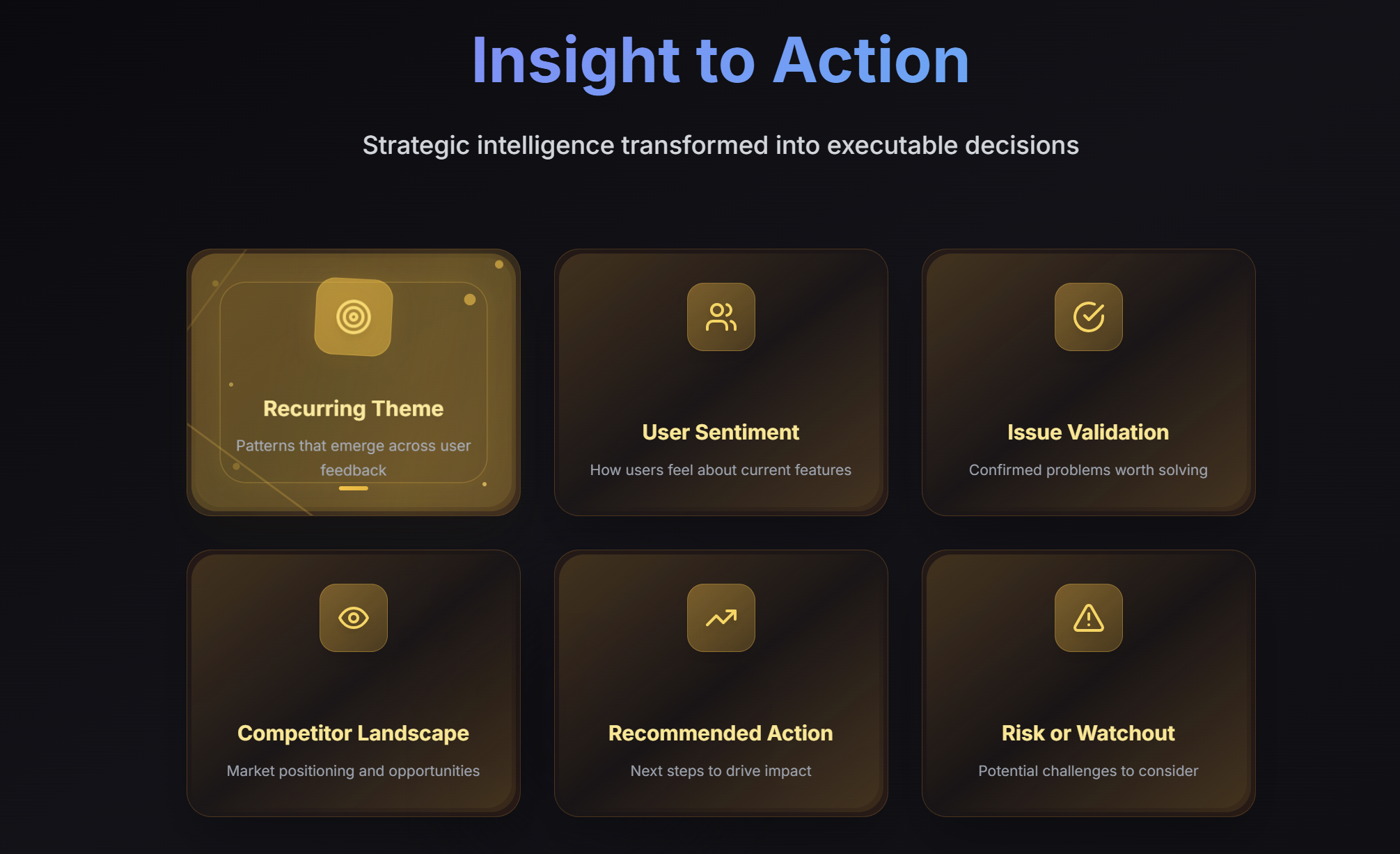
Peak into generated roadmaps!
-
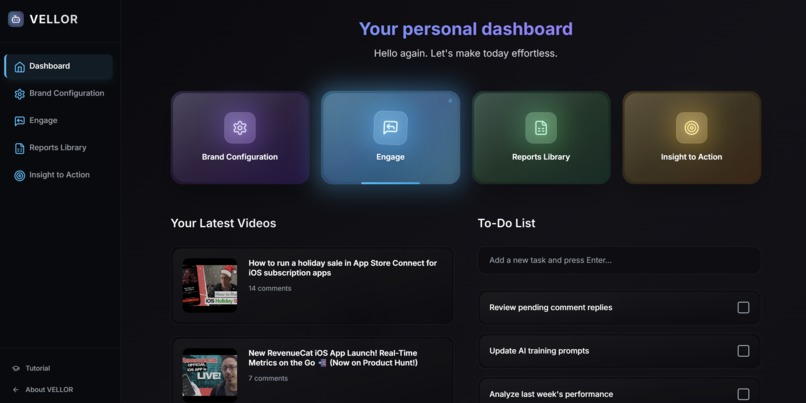
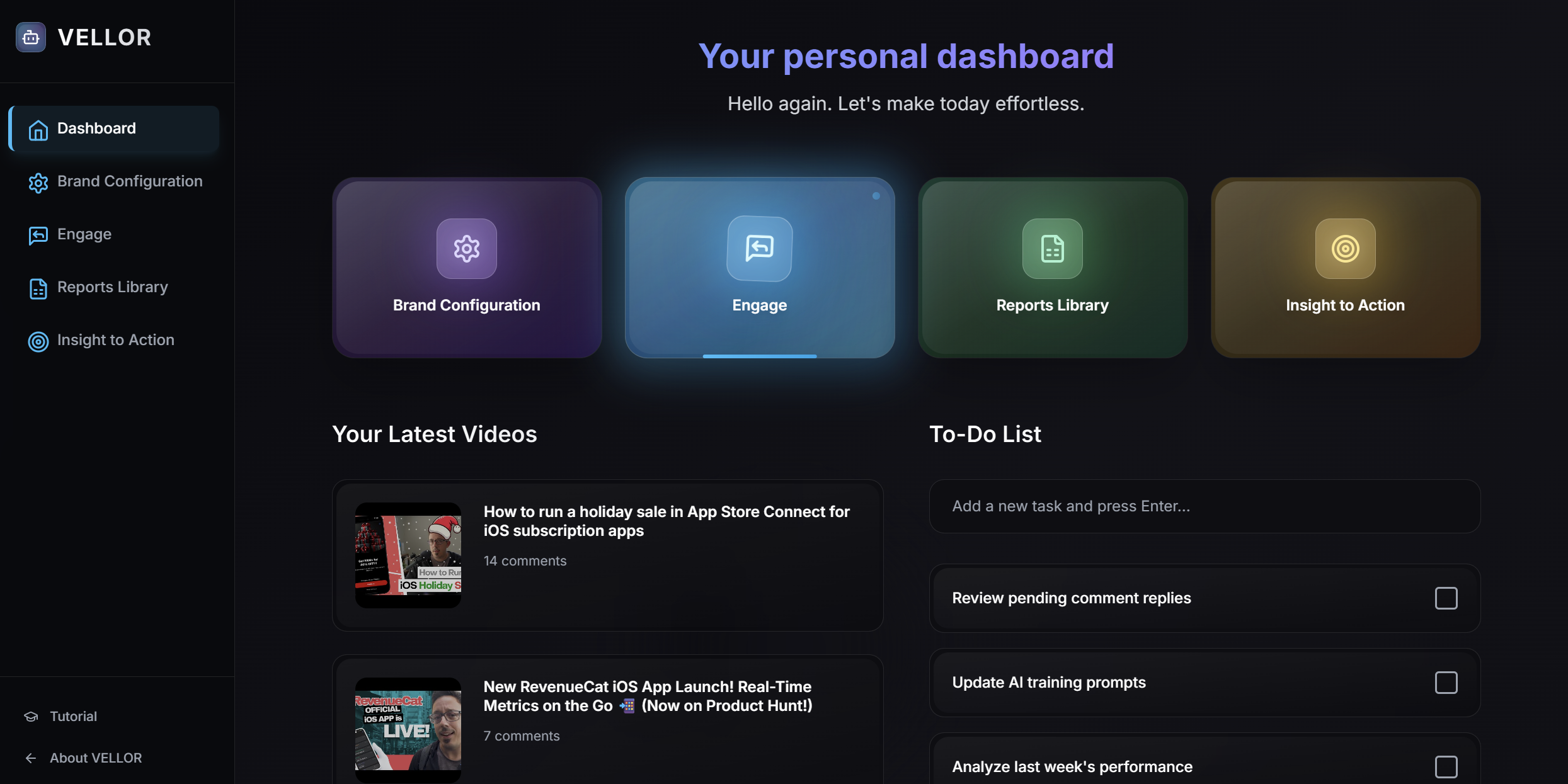
This is where your journey begins - the Dashboard
-
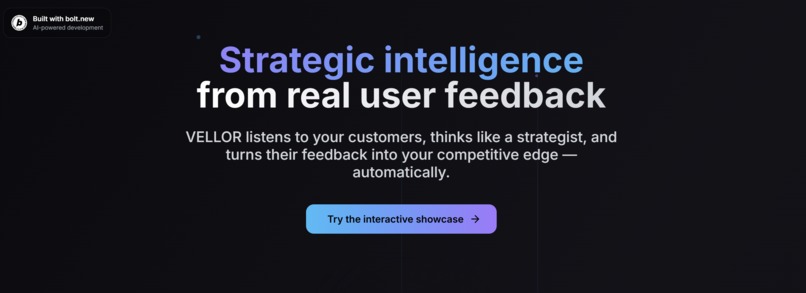
Try it out :)
Inspiration
It started at 4am, somewhere between frustration and vision.
Every product team knows the pain: feedback is everywhere — GitHub, YouTube, support tickets, review platforms — but the signal is buried in noise. Everyone collects data. No one knows what to do with it.
That night, I asked a simple question:
What if AI could turn raw feedback into product strategy?
That was the spark. No name, no plan, no clue how to build it. I had never used Supabase, n8n, or Bolt.new before. But I had one belief: feedback deserves better.
Over the next month, I taught myself everything — alone in empty university rooms, night after night. I learned, built, broke things, and rebuilt them. Real creators and community managers gave feedback. I listened. I iterated. I stayed hungry — literally and metaphorically.
At one point, Supabase Auth completely broke. I gave up. But the vision wouldn’t leave me alone. I came back and rebuilt Vellor from scratch — this time with clarity.
Originally, Vellor was just a comment responder. But I knew it could be more. So I made a promise to myself: don’t stop until it becomes something truly visionary.
And I kept that promise.
What it does
Vellor is the first fully autonomous strategy engine for SaaS product teams.
In this live showcase, we connected Vellor to real GitHub and YouTube feedback from RevenueCat — not because we’re affiliated, but because we admire their product and wanted to demonstrate real value using real data.
Vellor:
- Scrapes user feedback from GitHub, YouTube, and more
- Generates on-brand replies in natural, human tone
- Scores each message by urgency, intent, and business impact
- Detects recurring themes and emerging pain points
- Suggests new features and execution plans for product teams
- Synthesizes cross-platform feedback into clear, prioritized roadmaps
- Validates those strategies using automated web research and market analysis
- Presents all insights in clean, readable reports ready for stakeholder decision-making
It’s not just intelligent — it’s strategic.
What once took a full team weeks to analyze now takes seconds. And it gets better every time.
How I built it
- Bolt.new powers a clean, modular frontend with real-time UX
- Supabase handles data, auth, and brand configuration
- n8n orchestrates scraping, scoring, response generation, and automated validation workflows
- OpenAI GPT-4o handles language generation and high-level synthesis
- Netlify hosts the full demo experience
No-code where it accelerates. Custom microservices where it matters.
The system is modular, scalable, and future-ready.
The architecture
Vellor runs on a layered engine designed for scale:
- Scraping Engine – Collects raw user feedback from public sources
- Reply Generator – Generates brand-consistent replies to each message
- Insight Scorer – Classifies comments by urgency, sentiment, and business opportunity
- Strategy Synthesizer – Aggregates all feedback into unified strategy reports, including roadmap and feature suggestions
- Validation Agent – Conducts automated market research to confirm assumptions, discover trends, and back strategy with real-world data
Everything feeds into a centralized AI strategist — simulating what a top consulting team would do, but in real time and at scale.
The journey
I thought the hardest part would be learning the tools. It wasn’t.
The real challenge was building under pressure, alone, with no safety net.
I spent 14+ hours a day, every day, for over two weeks. I skipped everything — meals, sleep, friends, life.
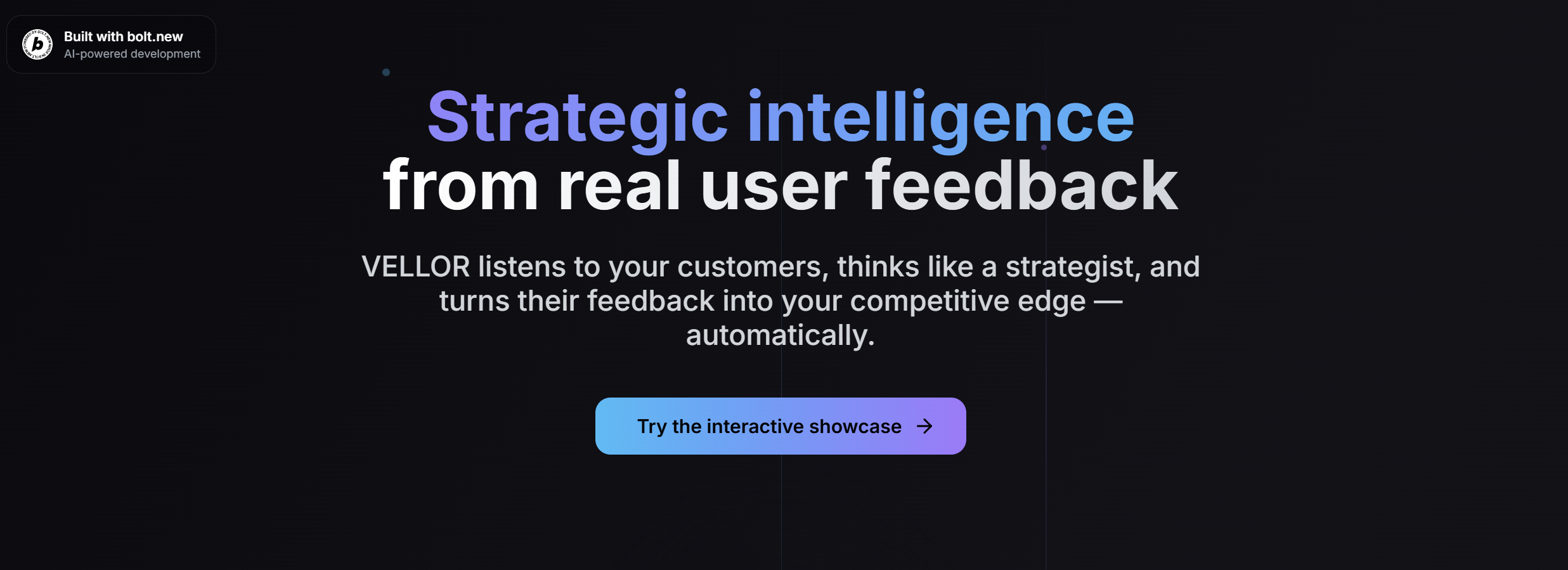
In the final 48 hours, I worked non-stop — no food, no rest, 36 hours locked in a university room because my home Wi-Fi broke. I had to convince campus security not to kick me out. I lost 2kg. I bought a CapCut Pro subscription just to export my video after a misclick. I used all 20 million tokens in one sitting. I almost submitted an unfinished build — but I didn’t. With the last 300k tokens I had, I made a request to create a "built with bolt.new" badge. This request completely changed my landing page, and left me with no more to tokens to fix it - it happens I guess.
At one point, I truly believed I had failed. But I refused to walk away one more time.
The version you see now is what came out of that madness — a system that no longer just responds to comments, but builds actionable strategy, validates its own outputs, and helps companies grow.
What we learned
- Product teams need direction, not dashboards
- GPT can rival consultants if you feed it the right context and structure
- You don’t need a team to build something world-class — just focus, obsession, and clarity
- No-code can scale, but only if you respect its boundaries and know when to switch to code
- SaaS companies are drowning in data — but starving for insight
What's next
This is just the beginning.
After the hackathon, Vellor will become a full platform:
- Login-based experience for real SaaS teams
- Production-grade microservices replacing no-code where needed
- Live alerts, team-based workflows, CRM integrations
- Competitive intelligence across public platforms (e.g., what users say about your competitors)
- Deeper integrations with Reddit, Trustpilot, Google Reviews, and more
- Real-time roadmap simulations and auto-validating execution plans
Ultimately, Vellor will be your always-on product strategist — learning your brand, tracking your market, and guiding your decisions.
Closing
Vellor isn’t a comment tool. It’s a strategy engine.
Built by one founder, in a university classroom, fueled by ramen, desperation, and belief.
No funding. No shortcuts. Just one idea that refused to die.
Whether I win or not, I’m proud of what this became.
And I’m just getting started.
Built With
- bolt.new
- n8n
- netlify
- openai
- postgresql
- supabase
- tailwind


Log in or sign up for Devpost to join the conversation.