-
-
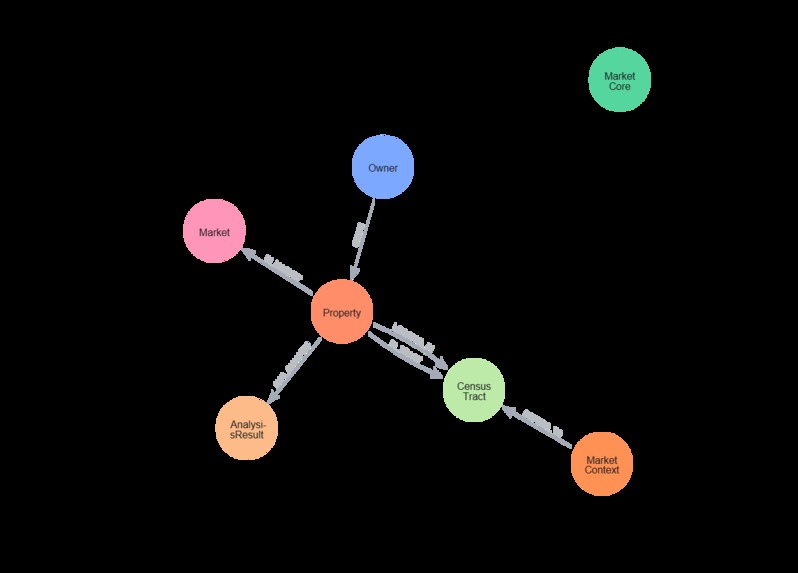
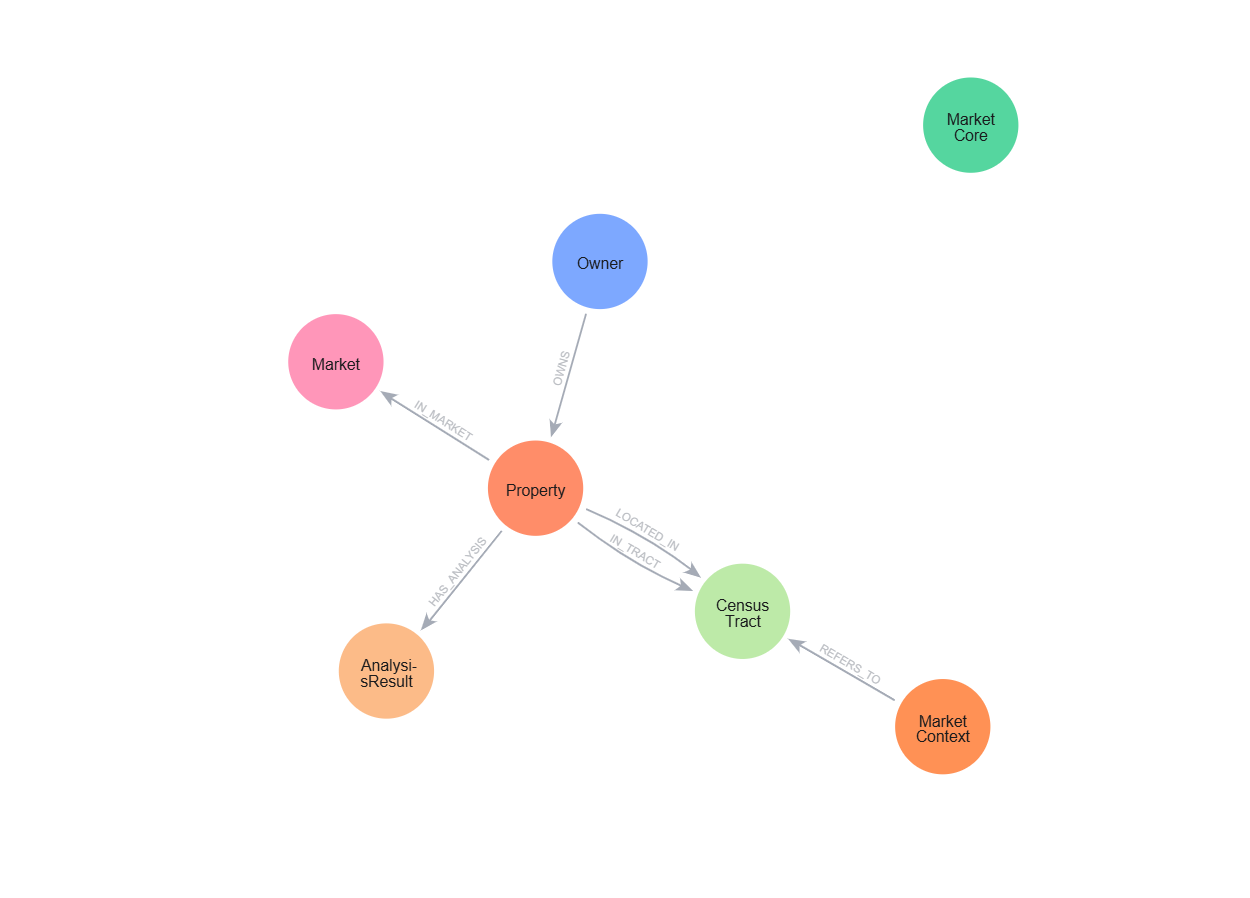
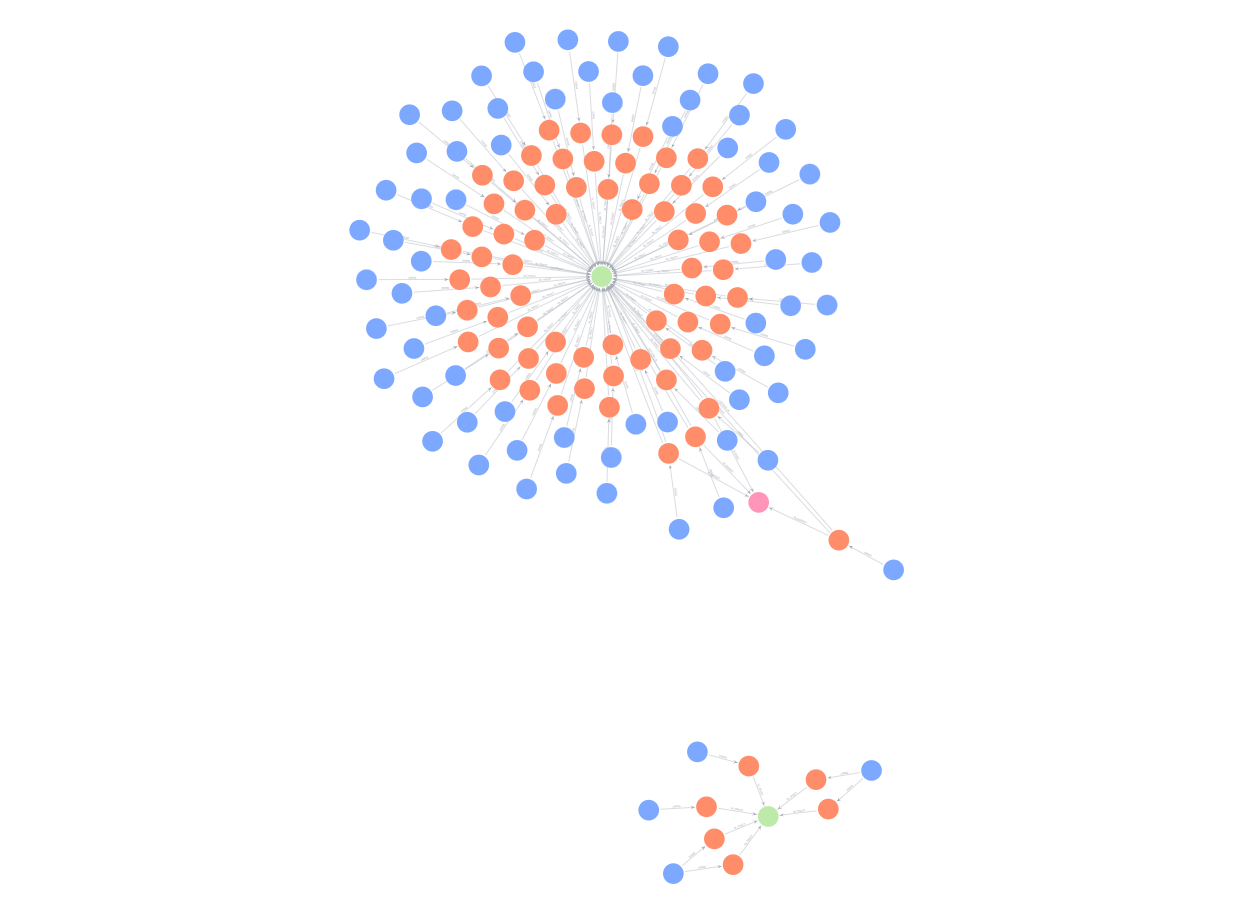
Nodes & relationships
-
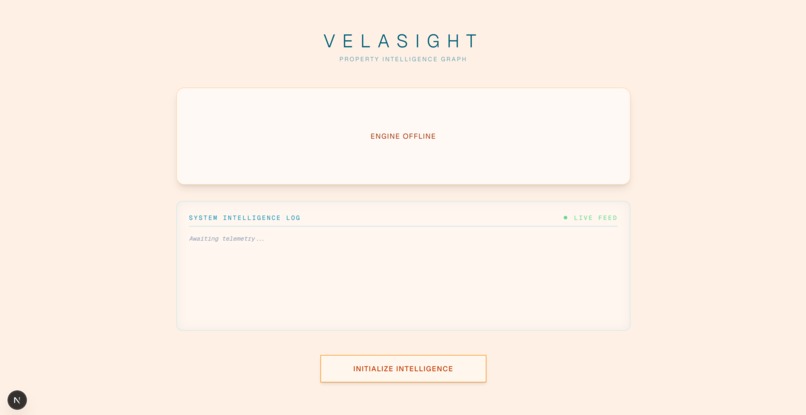
User Interface
-
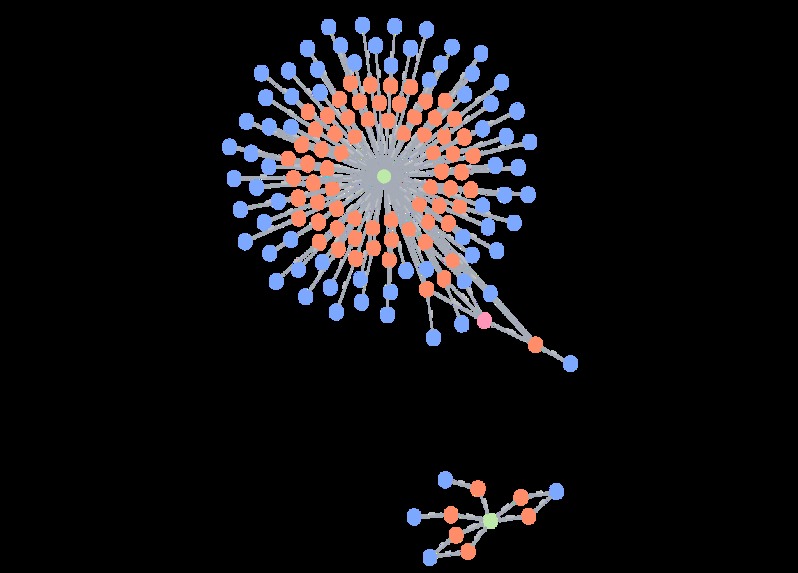
Isolating property ownership
-
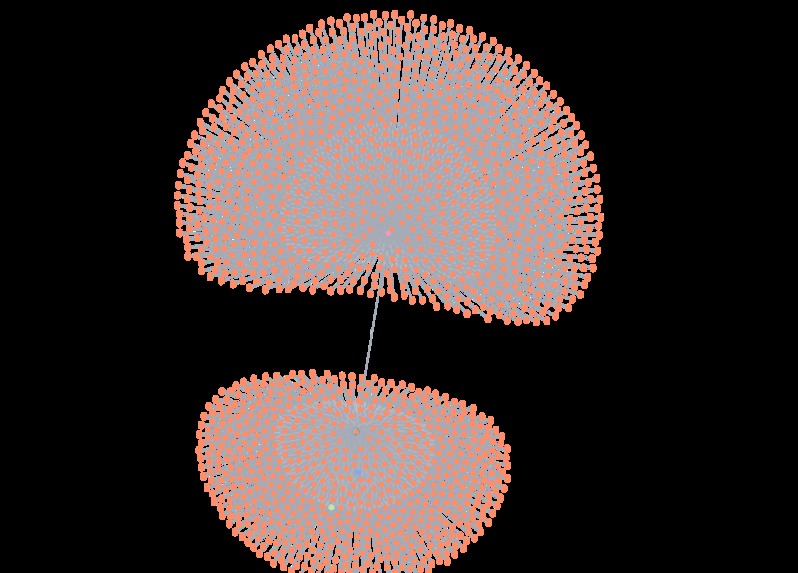
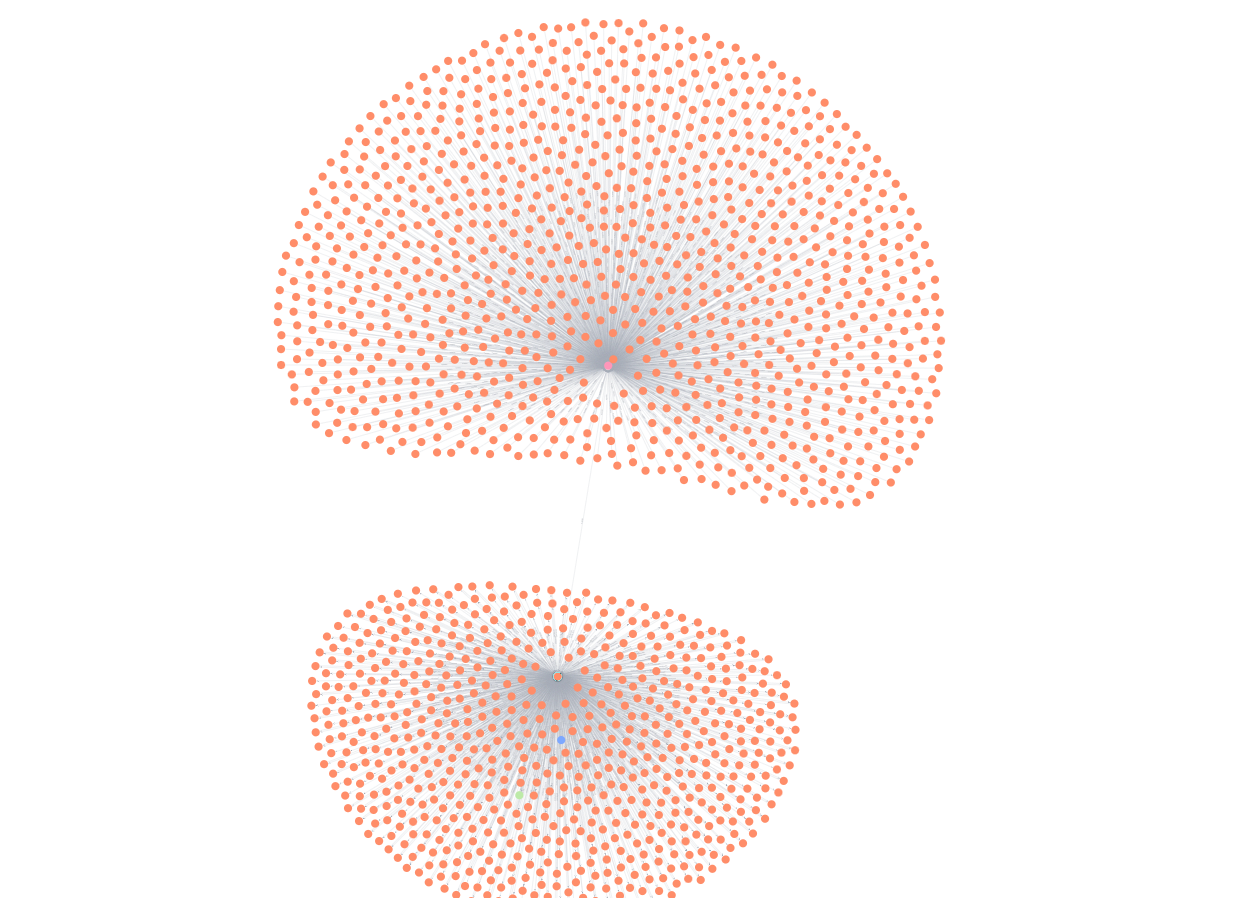
Expanded Census Tract View
-
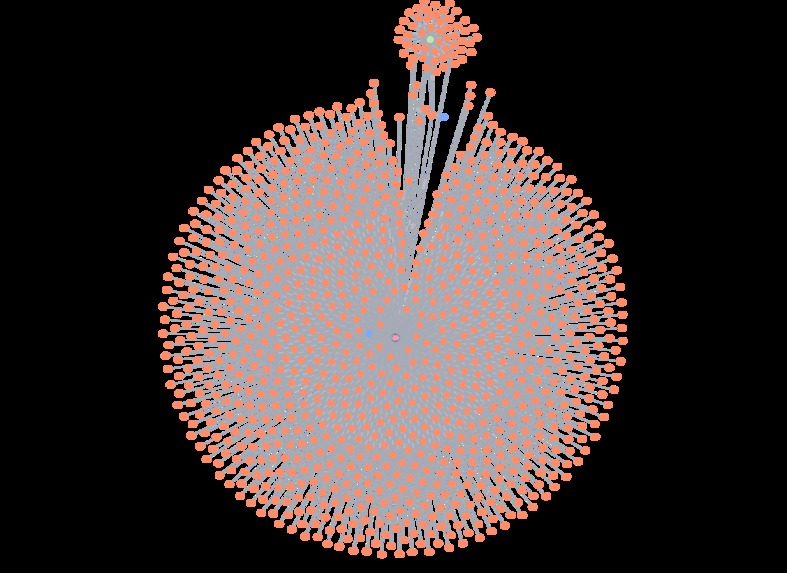
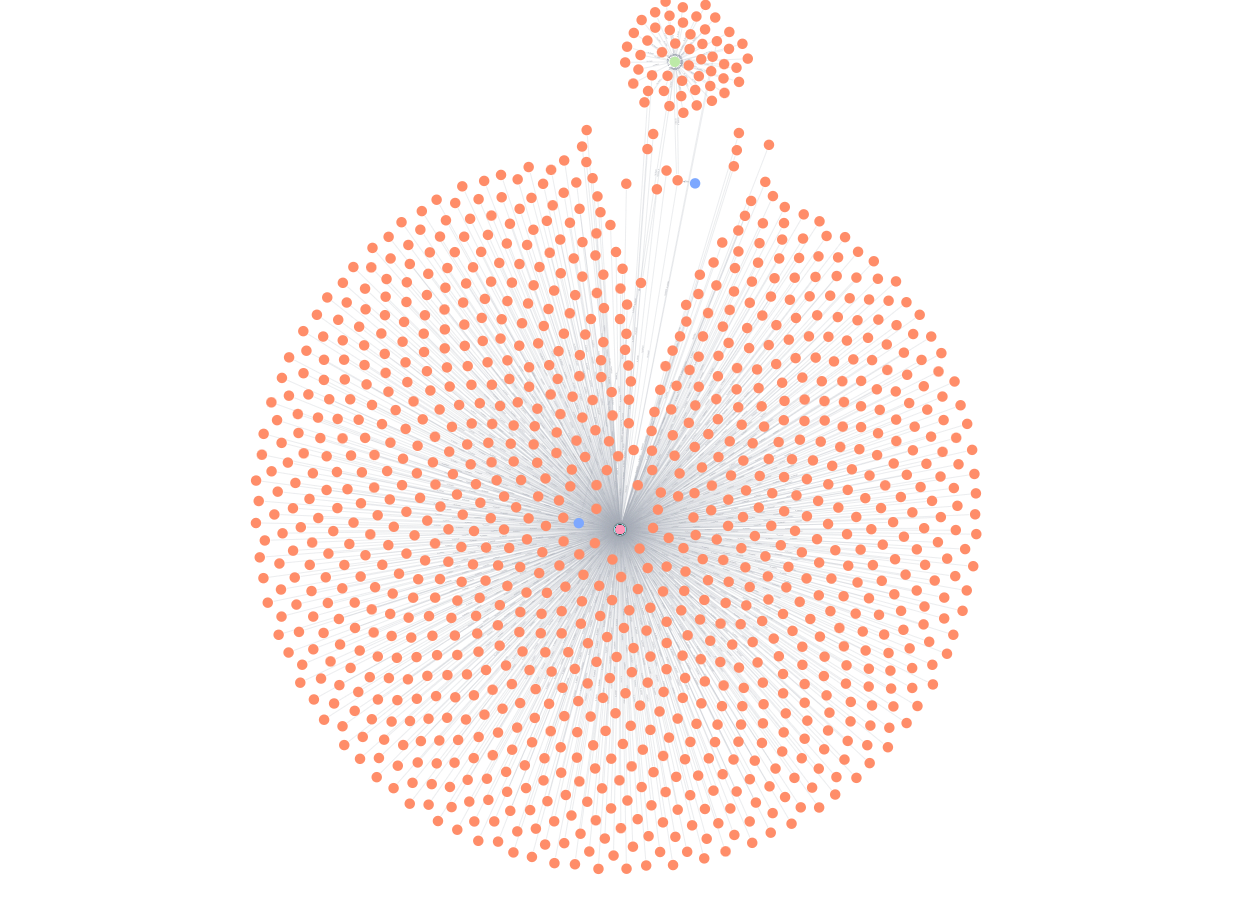
Pac Man Census Tract
-
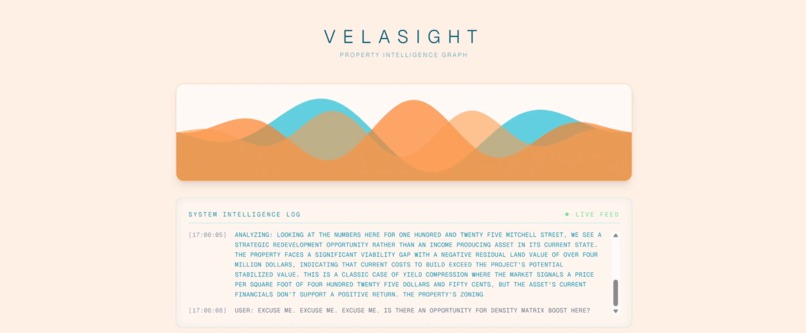
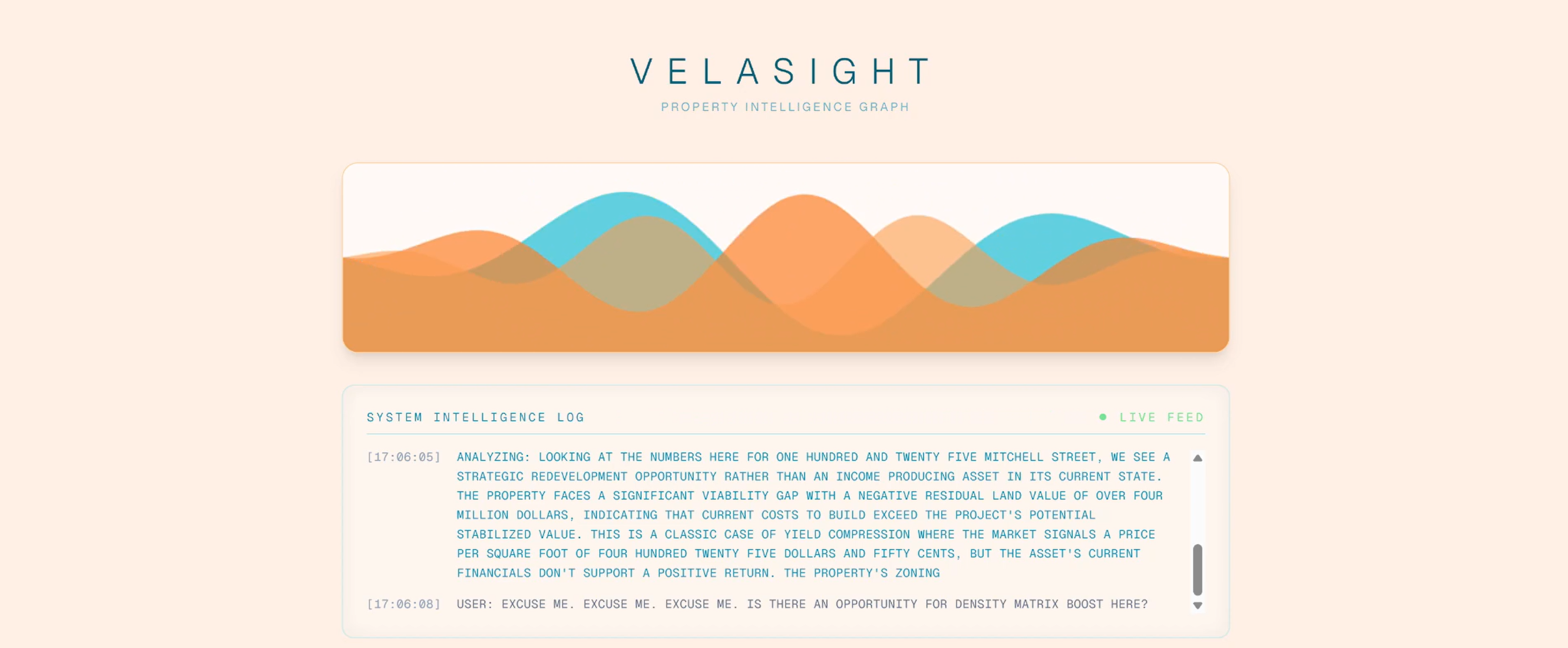
Live screen capture
💡 What Inspired Us
Housing affordability is a massive problem, not just for homeowners and renters, but for real estate developers. There are many checkpoints that derail a project from getting off the ground, but weeks or months of manual data gathering for pre-development market and feasibility analysis should not be one of them.
My work in real estate market analytics inspired me to create a tool with the "brain" of a CCIM analyst to reduce the cost of expensive feasibility studies while slashing the time it traditionally takes for the analysis to arrive to a commercial property developer. Beyond the industry impact, this project is deeply personal. A life-altering accident to a family member continues to motivate me to expand Velasight as the foundation of a real company that can help support my family.
The goal: Reduce market - feasibility friction points by a minimum of 40% and lead urban development toward "Smart City" status using Graph-Native Intelligence.
🛠️ How We Built It
We built an interactive, hybrid, multi-modal agentic framework for real estate development.
- The Orchestration Brain: Built using a modular Python backend. The main webhook acts as a "Traffic Cop," taking live voice transcriptions from Vapi (chosen for its ultra-low latency) and routing them to specialized engines: Cypher generators for the Neo4j graph, RAG search tools for the Vertex Data Store, and macro-market "Playbook" routers.
- Optimistic UI for Voice (The Crown Jewel): The biggest hurdle with voice agents is latency. To solve "dead air," we used an Asynchronous Dual-Track Pipeline.
- The Fast Track: Instantly fires a lightweight Cypher query to Neo4j to grab "Fast Facts" (Zoning, Acreage). Vapi speaks this immediately.
- The Deep Scan (Async): While the agent speaks, a background thread cross-references the property to calculate Spatial Contagion—measuring how proximity to transit and zoning shifts affects the subject property's value.
- The Enterprise Data Stack: We rely on Neo4j AuraDB to map complex spatial relationships, Redis for persistent caching (dropping latency to milliseconds for repeat queries), and Google Model Armor to ensure our multi-million dollar real estate math remains grounded, safe, and compliant.
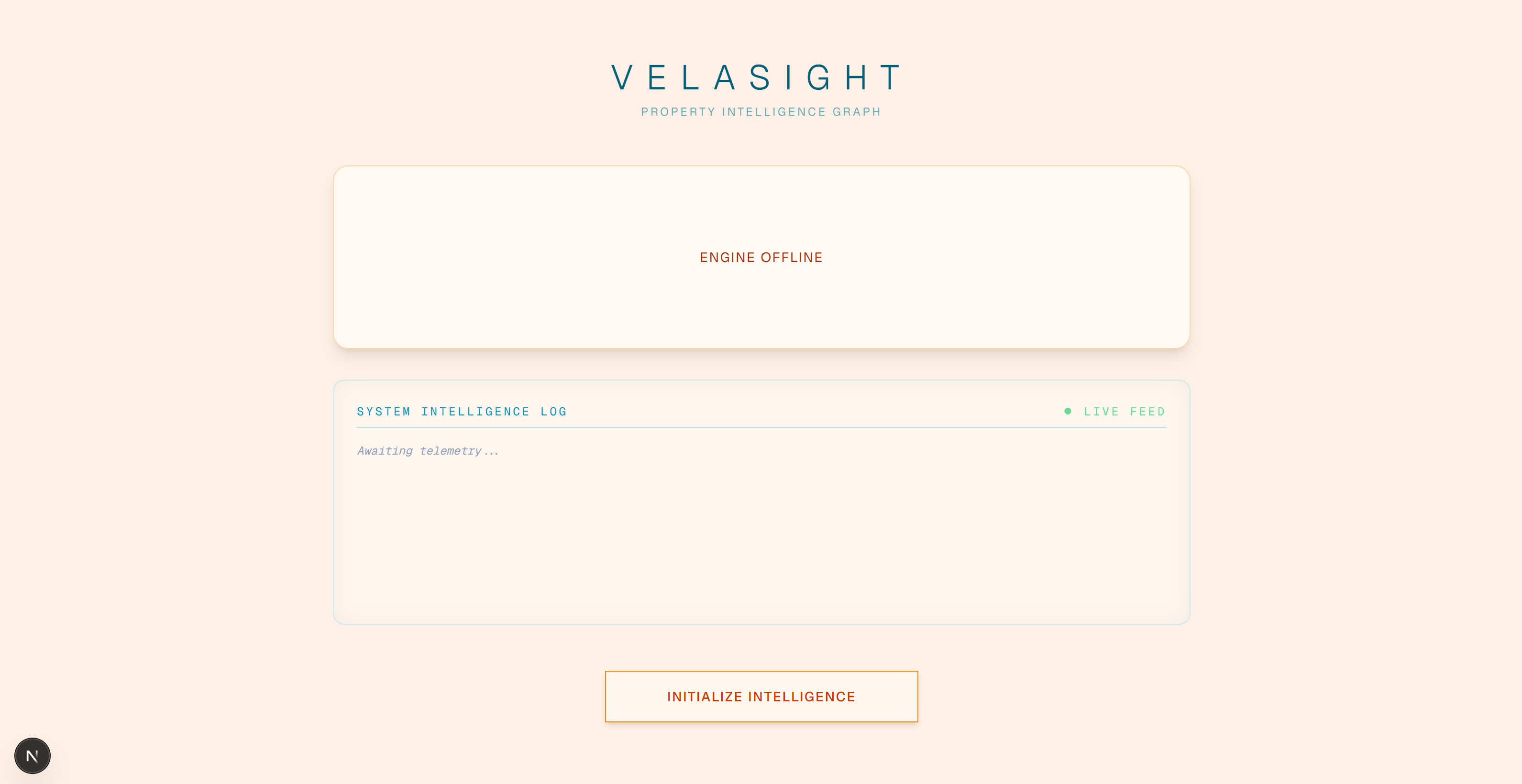
- The Interface: Inspired by minimalist editorial design, we built a highly responsive audio waveform that reacts to the live WebRTC stream, enabling a true conversation with the data.
⚠️ Challenges We Ran Into (The "War Stories")
- Context Degradation: During extended development sessions, models would sometimes get stuck in reasoning loops. We solved this by implementing strict "Summary-Buffer Protocols" to inject the logic of high-context sessions into fresh instances to maintain architectural continuity.
- Infrastructure Hardening: We overcame Error 403/404 communication hurdles by implementing ngrok reverse tunnels on our Google Cloud Vertex VMs to bypass IAM browser locks.
- Neo4j Memory Pressure: We managed heavy database indexing by implementing batch processing (5,000 records/chunk) for our 369k+ property records.
- The Pivot from Visuals: We initially experimented with video avatars (HeyGen/Simli). However, the latency and lip-sync mismatch distracted from the high-stakes financial data. We pivoted to a sleek audio waveform to keep the user’s focus entirely on the intelligence.
🧠 What I Learned
- Latency kills Voice UI: Real estate APIs (like the US Census) are notoriously slow. You cannot build a successful voice agent without a "Holding Pattern" or an Optimistic UI that speaks fast facts while the heavy math computes in the background.
- Graph over Relational: For spatial contagion and network centrality, Neo4j outperforms standard relational databases exponentially. Proximity is just as important as the property itself, and what started as a single agent knowledge graph evolved into a contextual - digital twin of the city of Atlanta.
- Caching is King: Implementing a Redis local memory store for previously scanned properties saved massive amounts of LLM tokens and brought our response times down to human-level conversation speeds.
🚀 What's next for Velasight
I am incredibly proud that the Graph-Native framework we built for Atlanta now serves as a scalable template for expansion into other major metropolitan markets, driving the growth of my company. But we are also looking beyond traditional real estate. On the horizon is a new frontier: leveraging Cesium.js to analyze spatial relationships and theoretical property valuations on the Moon. The architecture is built; the potential for scale is limitless.
Built With
- anthropic-claude
- flask
- gemini-2.5-pro
- google-cloud
- google-model-armor
- neo4j
- next.js
- python
- redis
- vapi
- vertex-ai

Log in or sign up for Devpost to join the conversation.