Inspiration
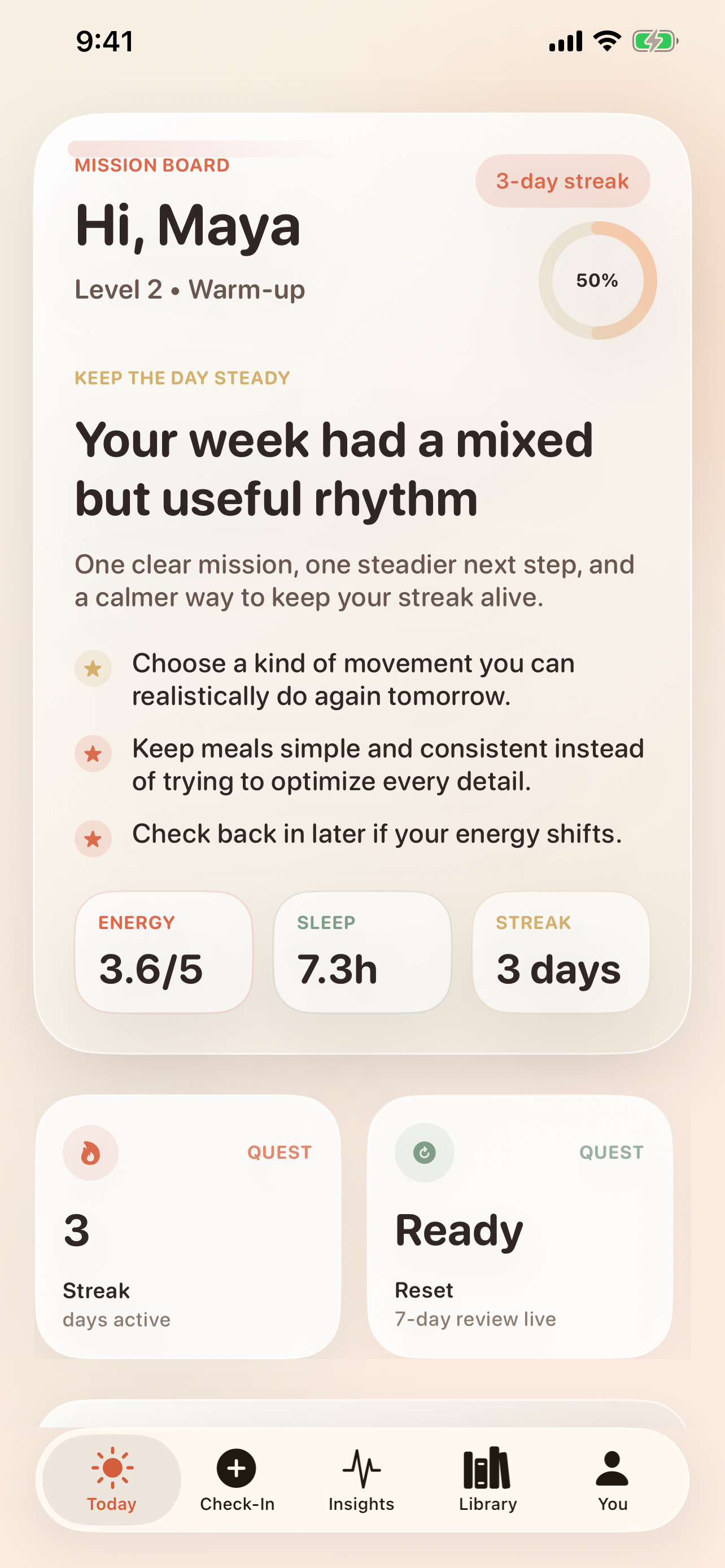
Vela was inspired by how frustrating it can be to manage PCOS with tools that feel too generic. A lot of wellness apps help you track data, but they do not always help you understand what to do with it day to day.
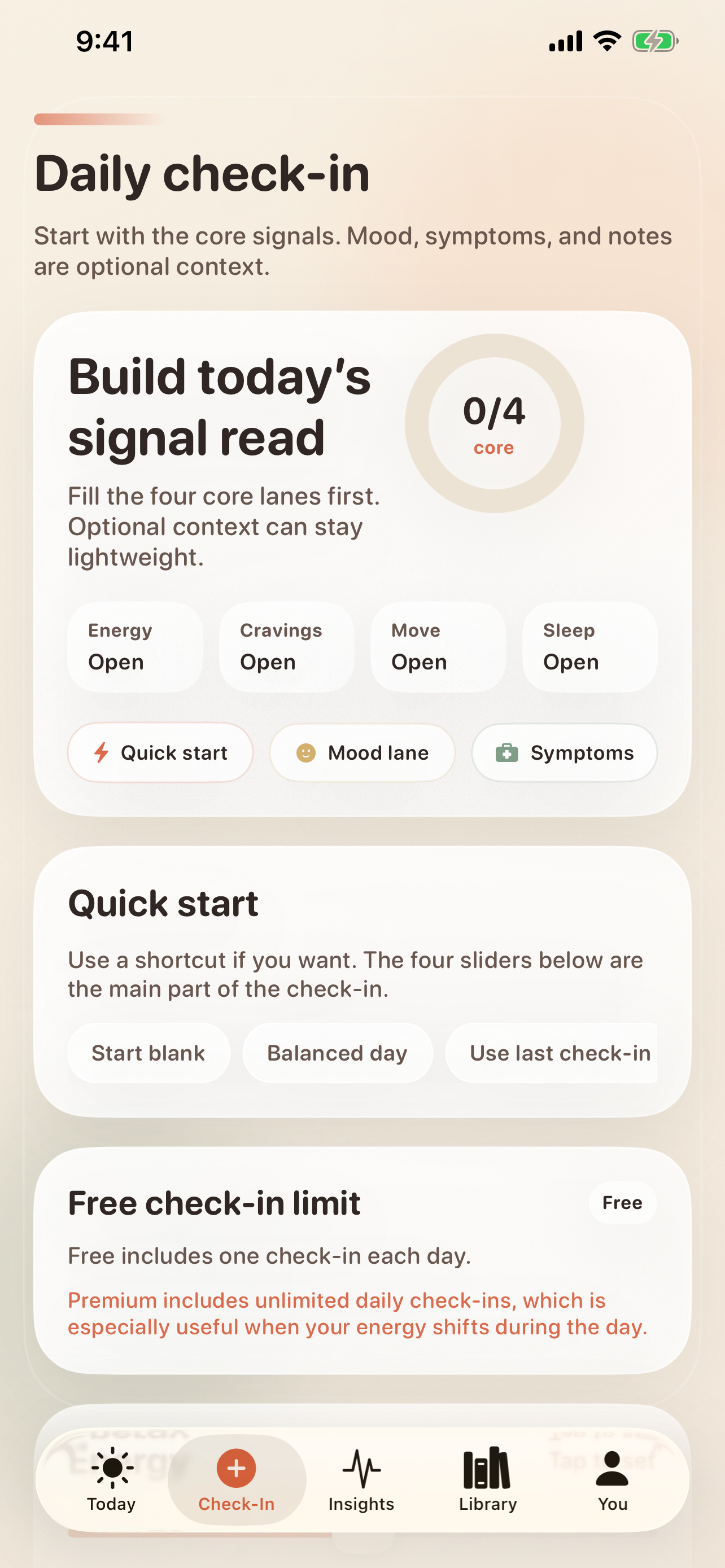
I wanted to build something calmer and more practical: an app that helps people check in, notice patterns around energy, cravings, symptoms, sleep, movement, and routines, and turn that information into clearer next steps.
What It Does
Vela is an iPhone app for people managing PCOS and insulin resistance.
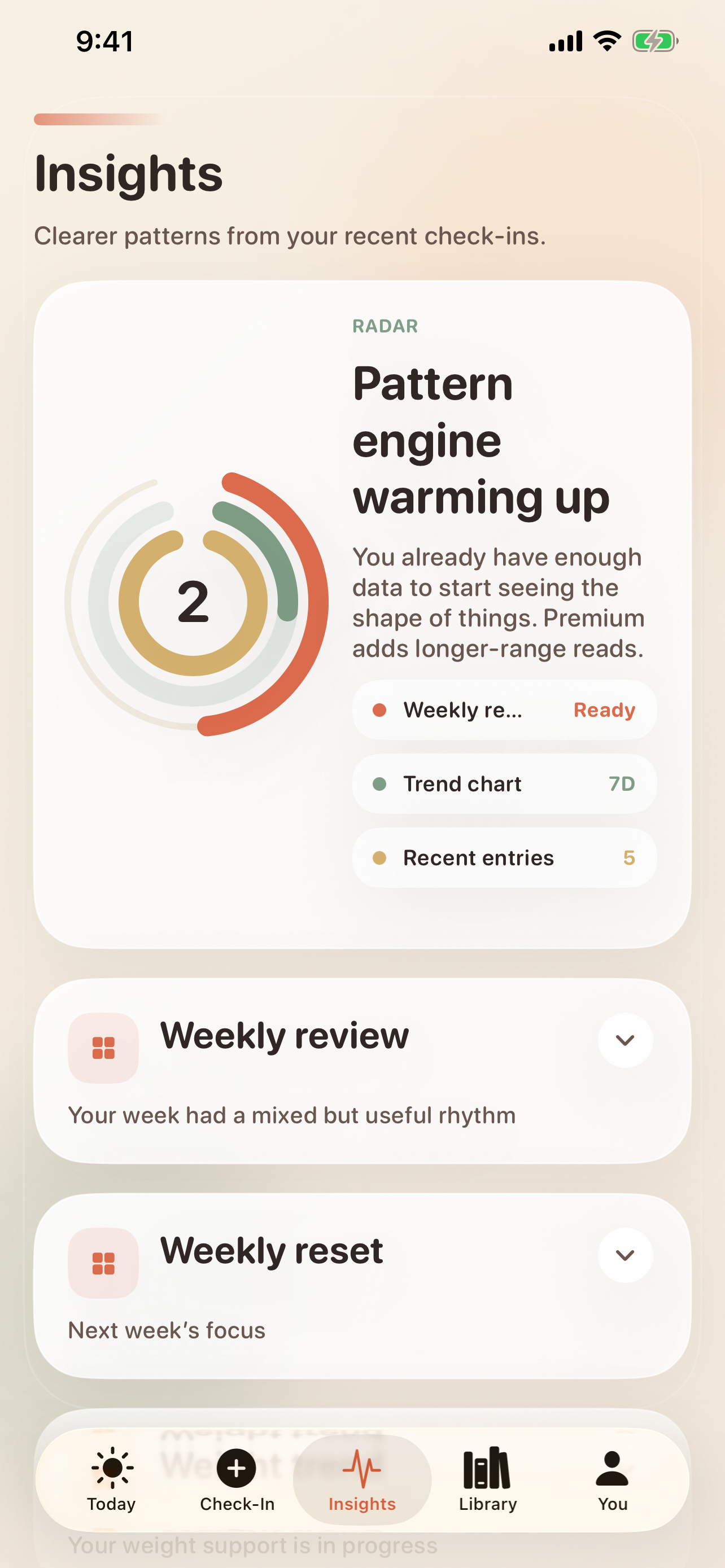
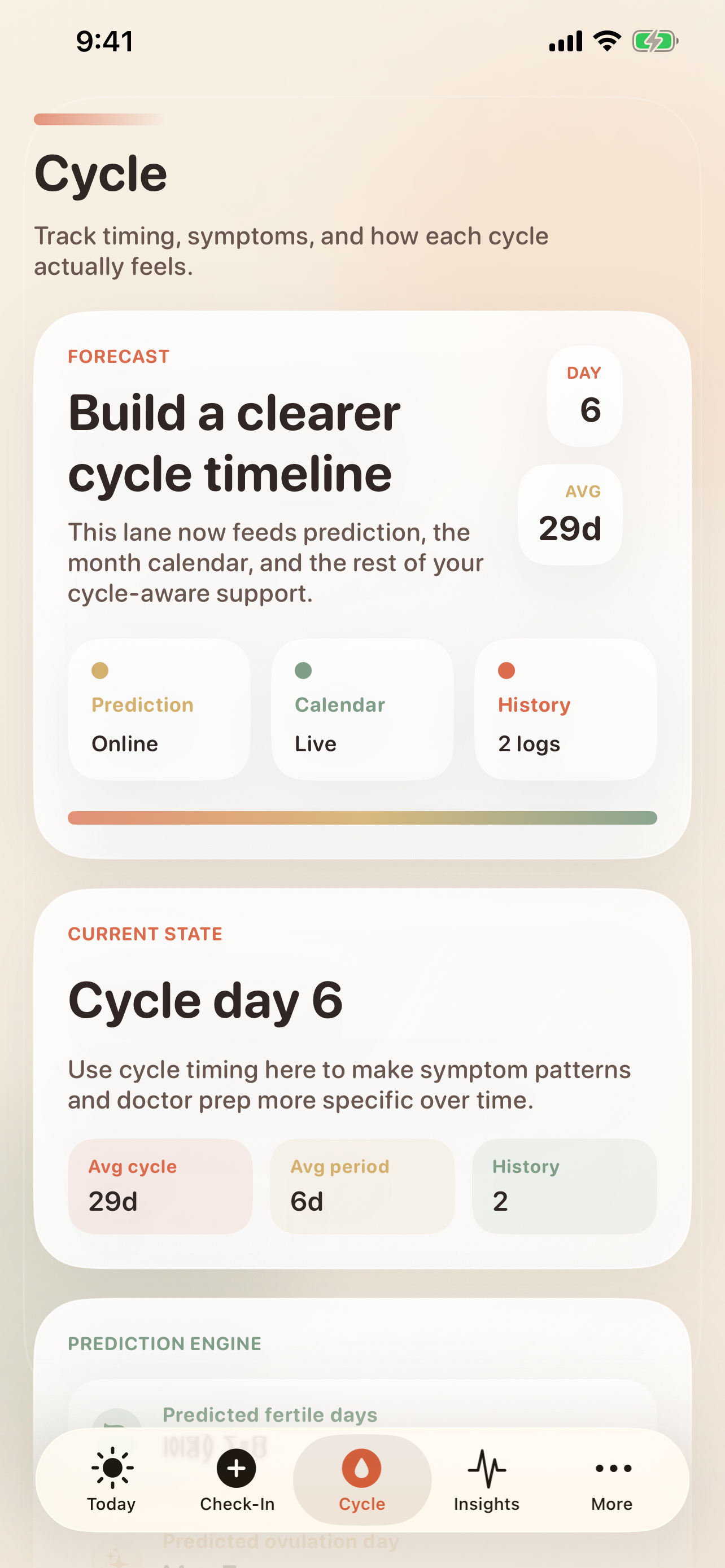
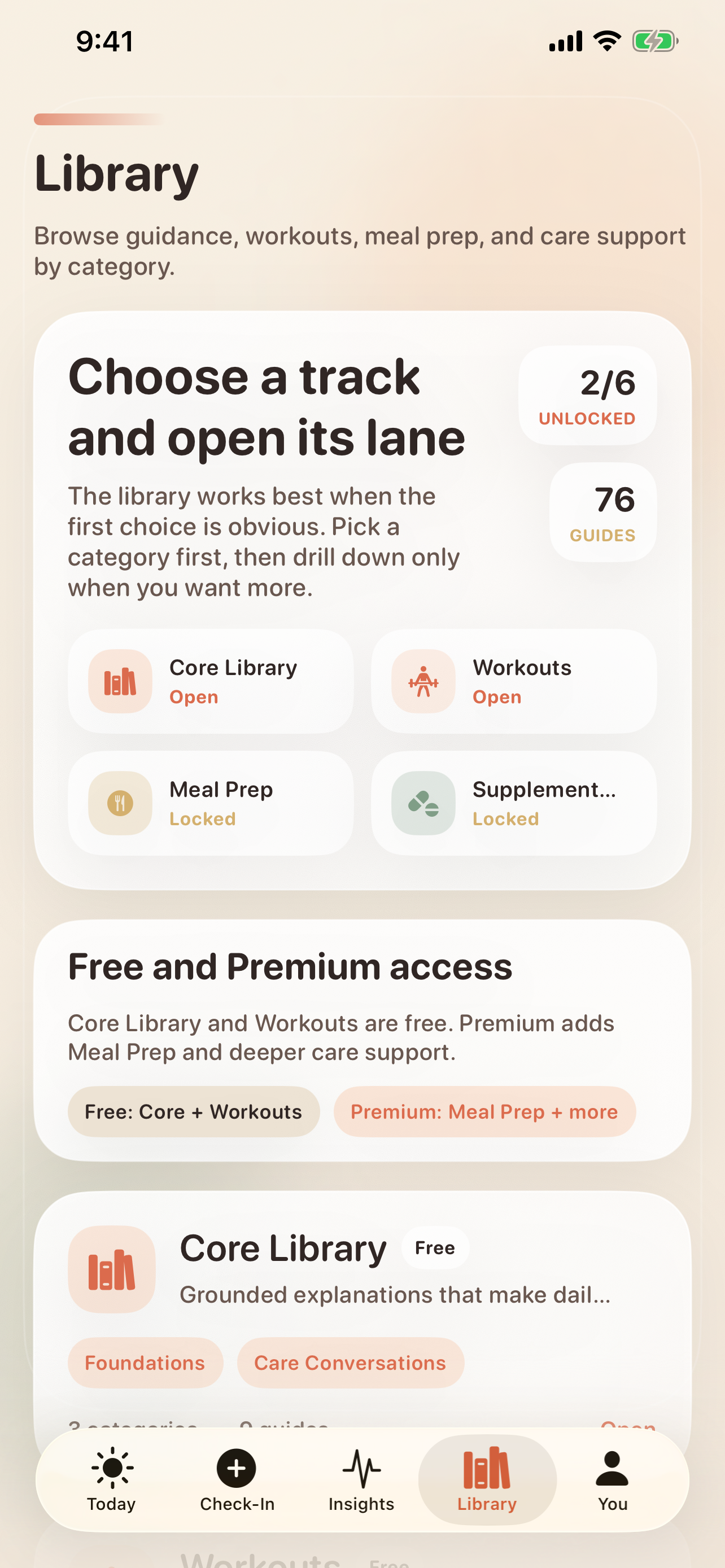
Users can complete daily check-ins, view personalized guidance, explore insights, follow realistic movement and meal-support plans, read educational library content, and prepare clearer notes for doctor appointments.
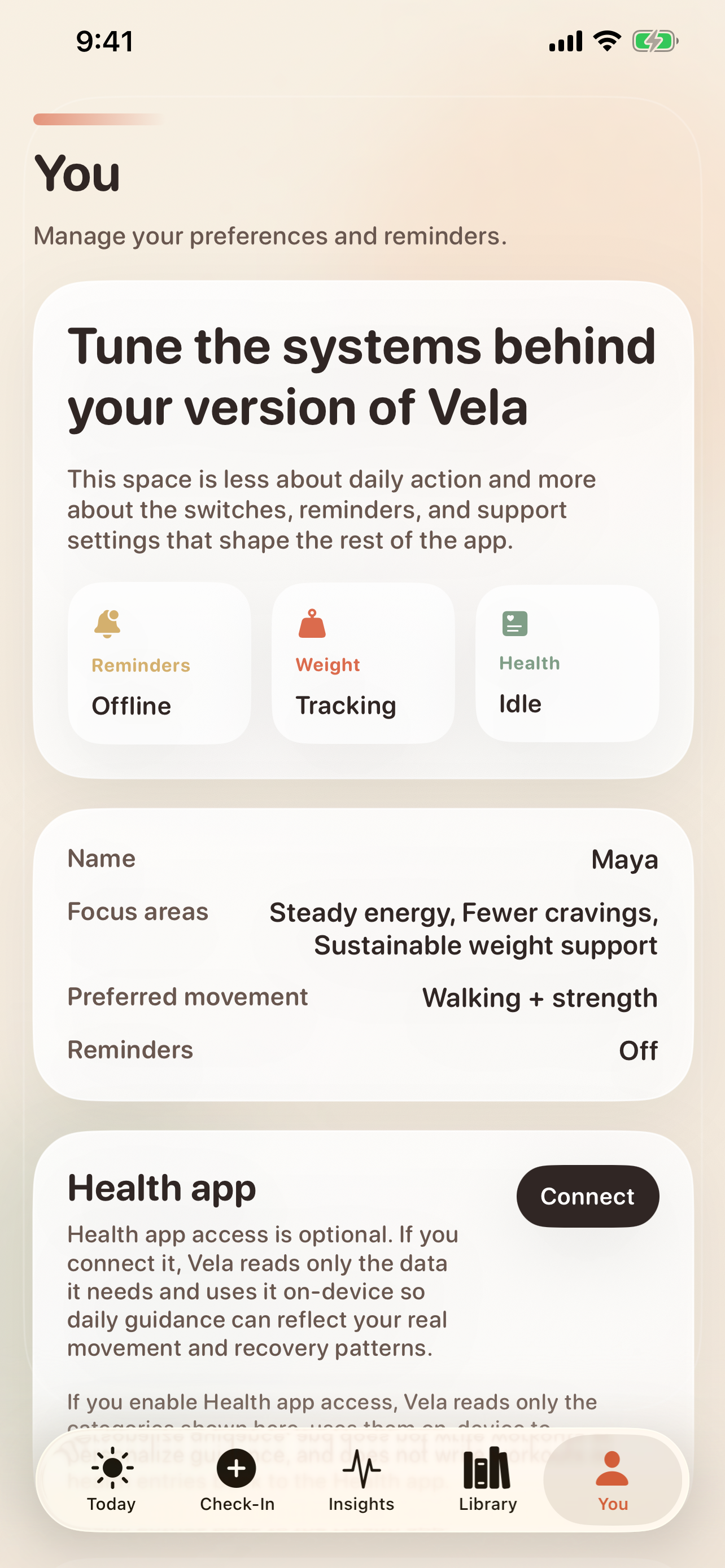
Vela can also optionally use Apple Health data, with permission, to add context around activity, workouts, steps, and sleep.
How I Built It
Vela was built as a native iOS app using Swift and SwiftUI. The app uses local user data to power check-ins, dashboards, insights, weekly summaries, and planning flows.
I also integrated HealthKit for optional Apple Health context and StoreKit 2 for Premium subscriptions. The project includes a public support/privacy site and App Store release setup.
Challenges
One major challenge was making the app feel useful without overwhelming the user. PCOS is complex, and the app needed to support patterns and planning without pretending to diagnose or treat anything.
Another challenge was layout polish. Vela has a lot of dynamic text, cards, summaries, and insight sections, so I had to make sure the UI could handle real content across different iPhone sizes without clipping or truncating important information.
The release process was also a challenge: preparing App Store metadata, privacy answers, subscription setup, HealthKit permissions, release builds, and review-safe language all required careful attention.
What I Learned
I learned how important it is to design health software with restraint. The app needs to be helpful, but also honest about its boundaries.
I also learned a lot about SwiftUI layout behavior, App Store release workflows, StoreKit 2 subscriptions, HealthKit permissions, and how much polish is required before an app feels ready for real users.
What’s Next
Now that Vela is live, the next step is learning from real users: what feels useful, what feels unclear, and what helps people come back. Future improvements will focus on better personalization, stronger insights, and making the daily support experience even more practical.
Log in or sign up for Devpost to join the conversation.