-
-
-
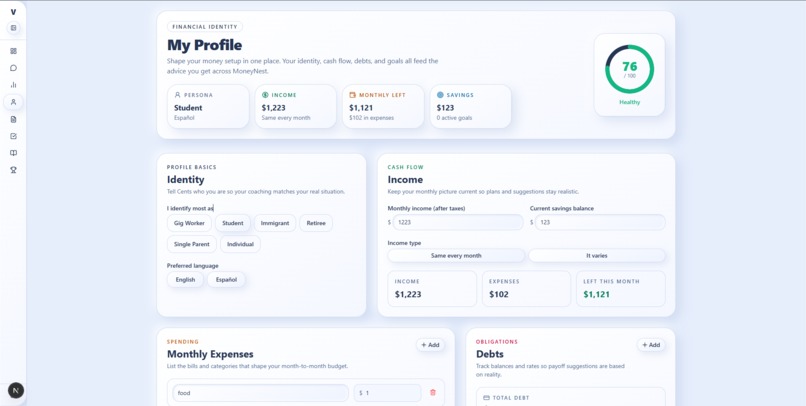
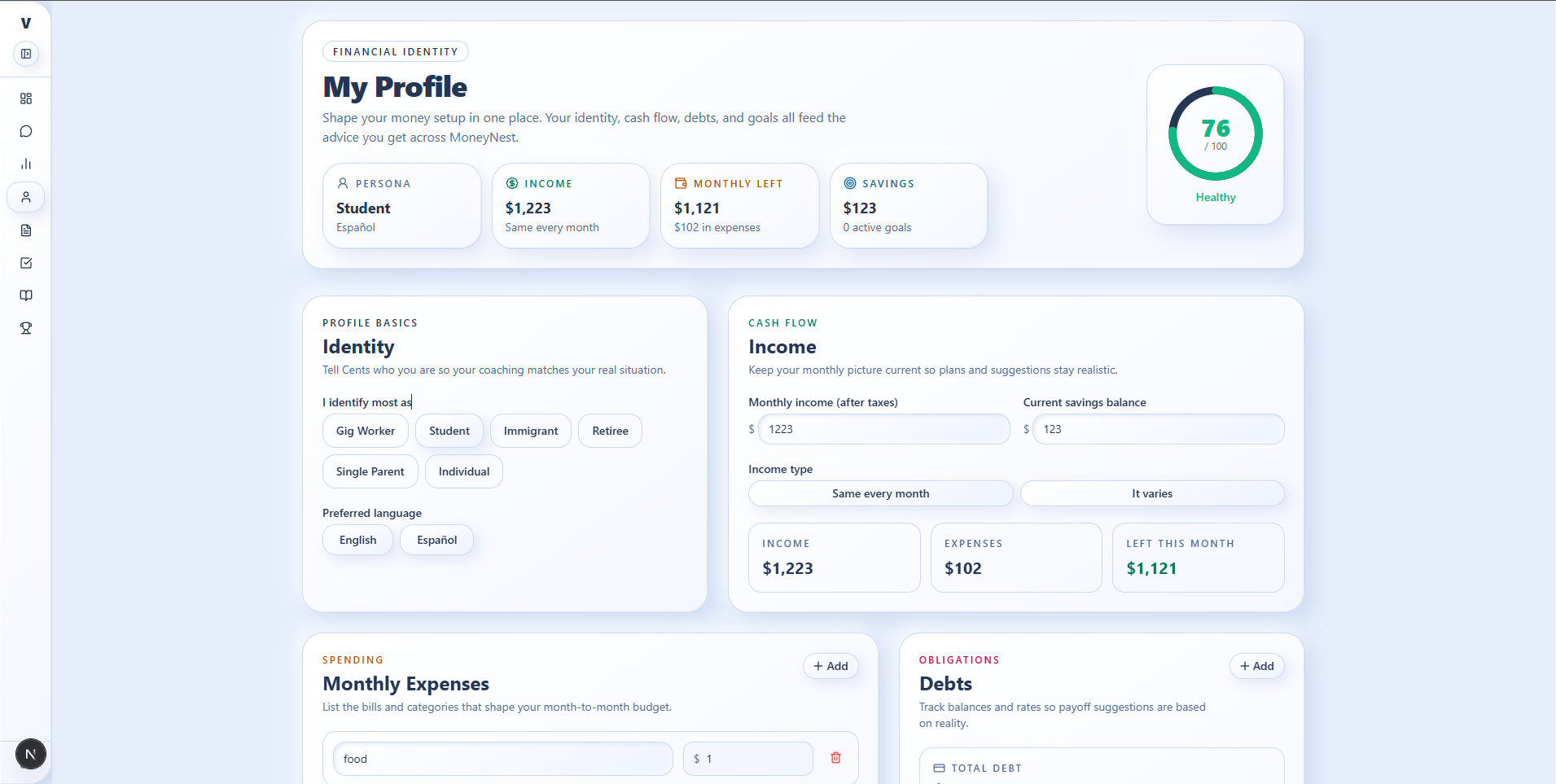
Profile screen
-
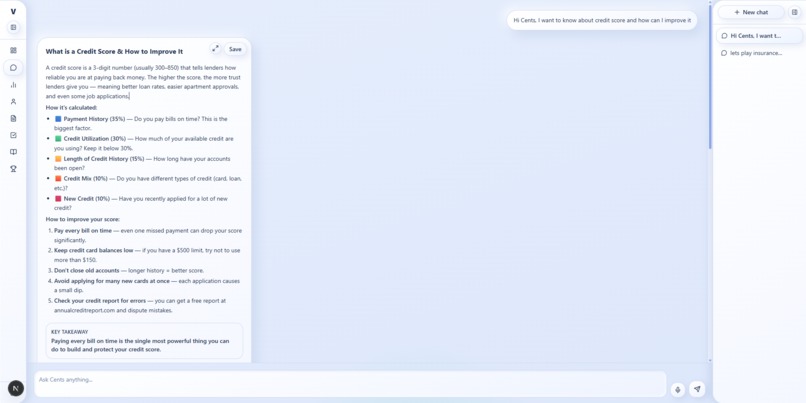
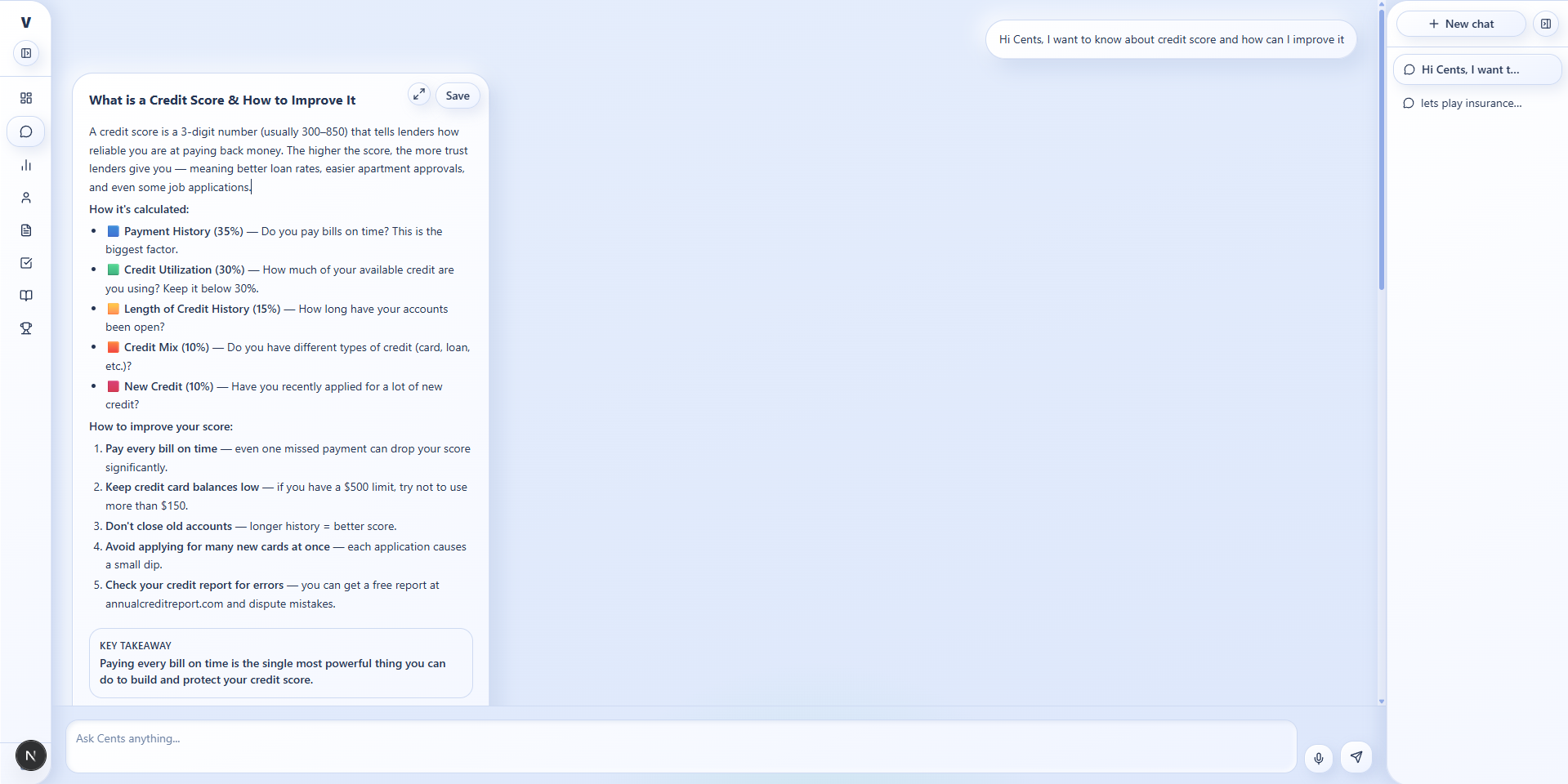
Chat room where you can ask questions to receive explainations along with links to interactive learning sessions to learn.
-
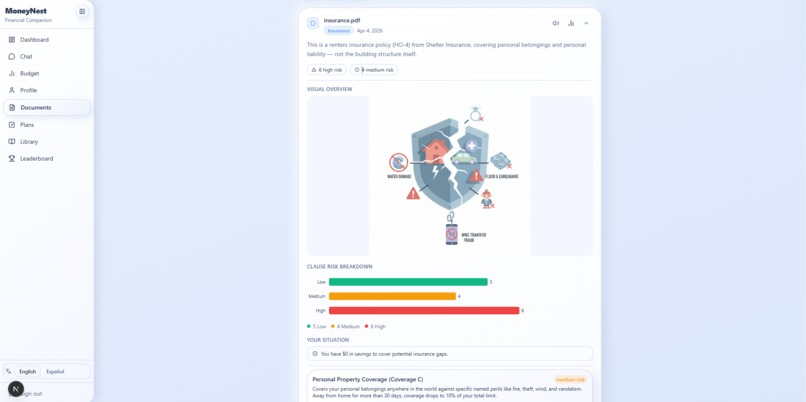
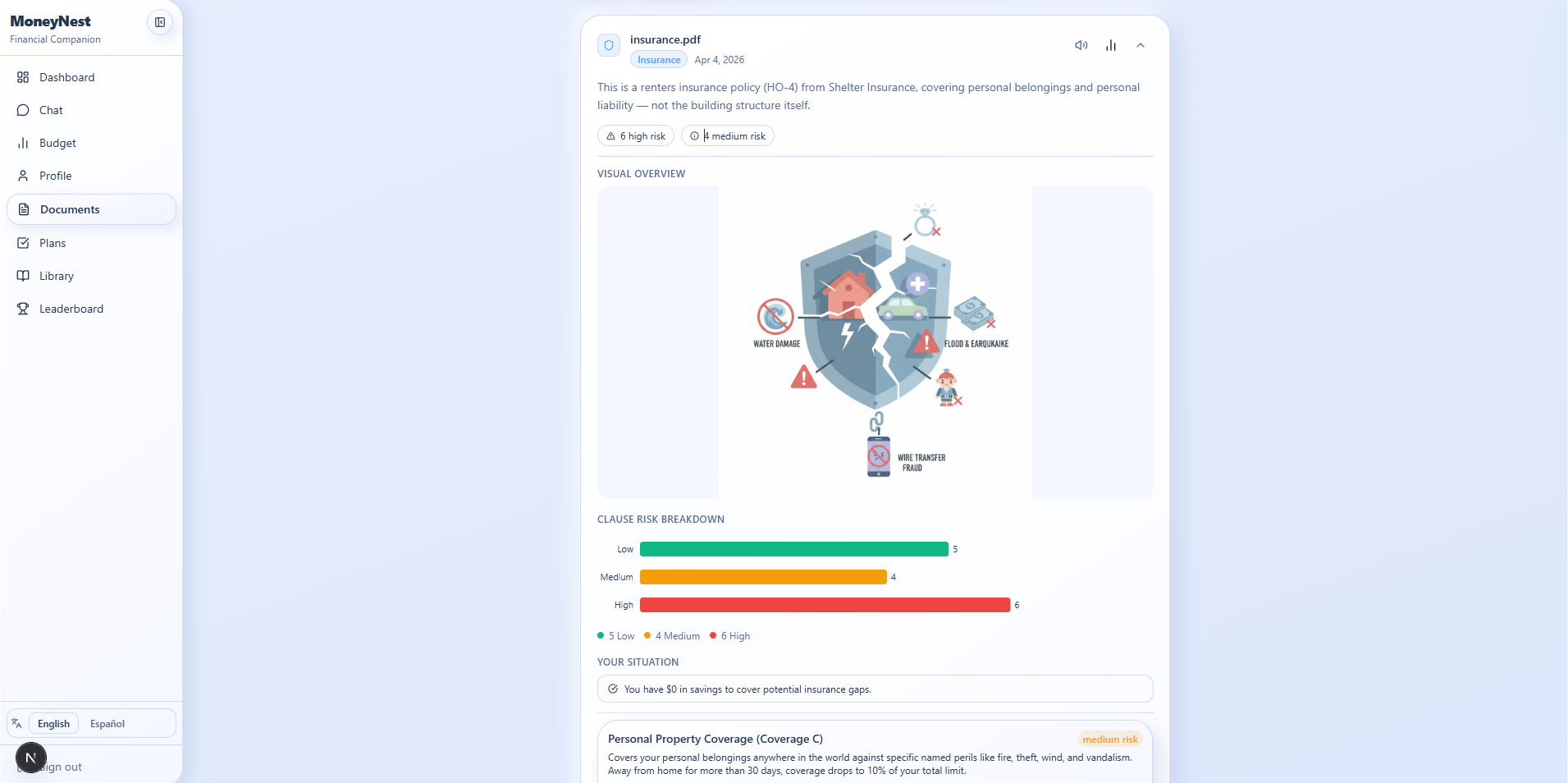
You can upload your documents which can be visualized for a better understanding
-
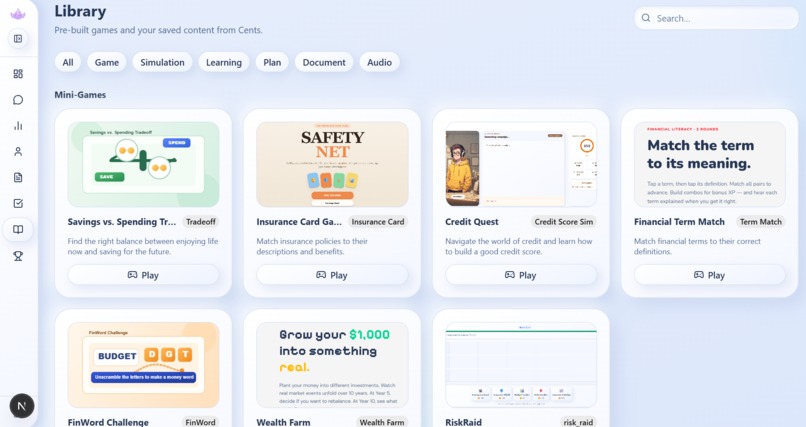
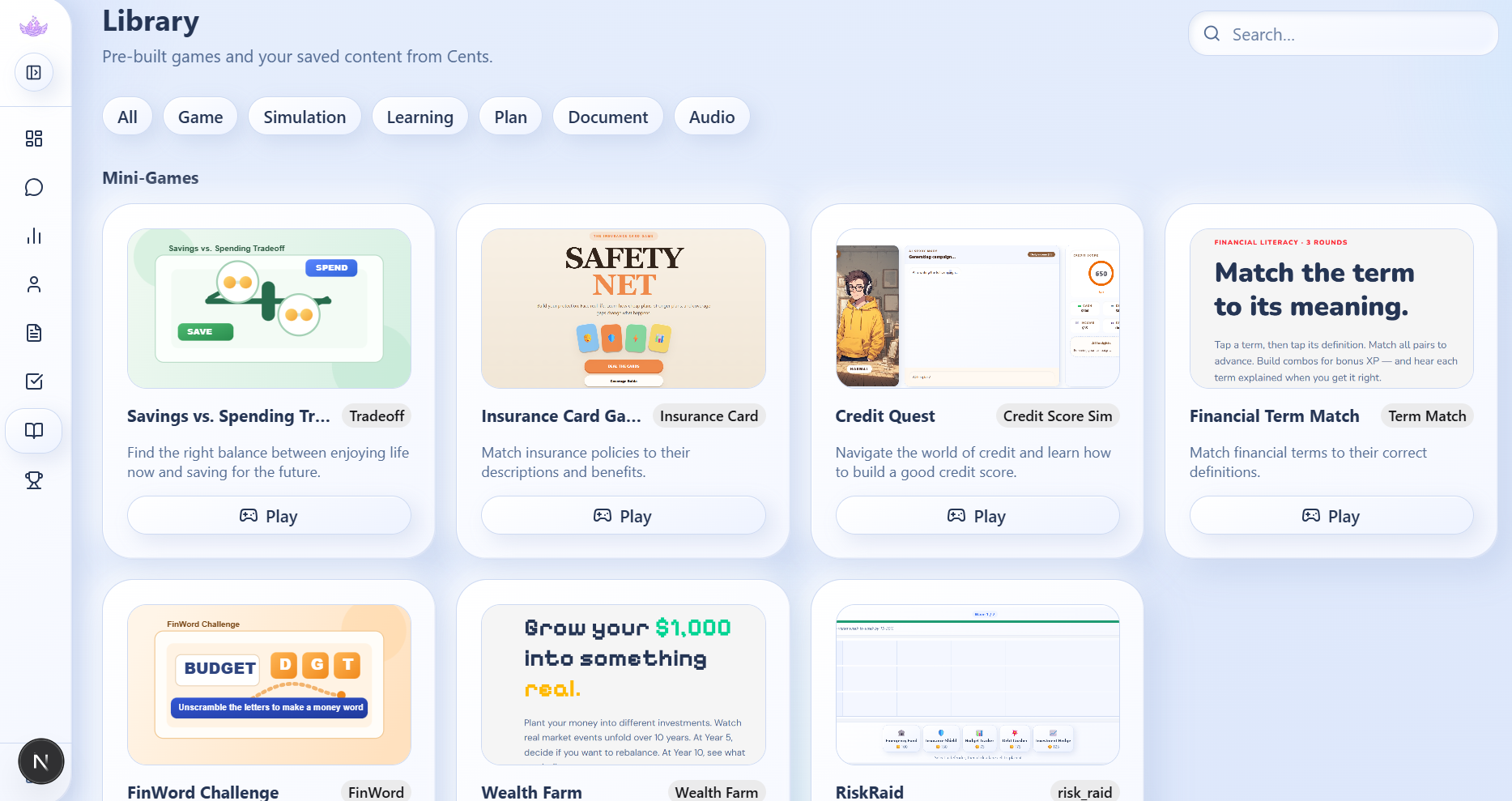
Library of pre-built and generated games, visualizations and components
Inspiration
- Money stress starts early, but most personal finance tools are built for adults with stable incomes and financial vocabulary.
- Teens are making real decisions now: first paychecks, spending pressure, subscriptions, credit traps, and emergency shocks.
- We wanted to build something that feels supportive, not judgmental: a coach you can talk to, not a spreadsheet you avoid.
- The core idea was simple: let people practice financial decisions safely before real life consequences hit.
What it does
- MoneyNest is an AI-powered financial wellness platform designed to help teens build confidence through action, not lectures.
- It supports multiple onboarding paths so users can start in the way that feels easiest: voice, form, document upload, or bank sync.
- It turns plain chat into interactive experiences: crisis simulations, learning cards, mini-games, and personalized action plans.
- It includes a teen-focused game layer (including RiskRaid) to teach risk, debt, budgeting, and resilience through consequence-based play.
- It keeps progress alive across sessions with saved artifacts in a library and trackable action plans.
- It adds motivation through XP and leaderboard mechanics so learning feels social and repeatable.
- It adapts over time with proactive suggestions and plan refresh when a user’s profile changes.
How we built it
- We built MoneyNest with Next.js and TypeScript, using a modular app + API architecture.
- Supabase powers authentication, profile/state persistence, and saved user artifacts.
- Claude (via Vercel AI SDK stream-based orchestration) and Gemini drives generative interactions and component selection.
- We use a component registry approach so AI responses can render meaningful UI blocks, not just text.
- ElevenLabs powers voice and audio moments; Gemini supports generated visual learning content.
- Plaid integration gives optional read-only financial context for stronger personalization.
- We implemented interaction-awareness so game and simulation outcomes feed back into future AI responses.
- We added staleness detection for plans so recommendations stay grounded in current user reality.
Challenges we ran into
- Balancing “fun” and “serious” in a finance product for teens without trivializing real hardship.
- Keeping generative AI outputs consistent, safe, and useful across very different user contexts.
- Maintaining continuity between deterministic pages (dashboard/plans/library) and dynamic chat experiences.
- Designing game mechanics that teach real concepts instead of becoming disconnected entertainment.
- Handling missing or partial user data gracefully while still delivering personalized insights.
- Making a broad feature set feel like one product story instead of separate demos.
Accomplishments that we're proud of
- We shipped a complete end-to-end experience, not just a prototype screen or chatbot demo.
- We turned AI from a “Q&A assistant” into a guided interactive system with tangible outputs and follow-through.
- We created a teen-centered learning loop that combines coaching, simulation, gaming, and action planning.
- We built adaptive behavior into the product: reactive answers, adaptive updates, and proactive nudges.
- We made accessibility a product decision early through multi-path onboarding and human-first tone.
- We built a strong hackathon narrative with real implementation depth behind it.
What we learned
- Teens engage more deeply with interactive decision loops than static explanations.
- Personalization is only valuable when it leads to concrete next steps users can actually do.
- Human tone matters as much as model quality in a sensitive domain like financial wellness.
- Voice is powerful when used intentionally, not as a default for every interaction.
- Product trust comes from clarity, consistency, and visible reasoning, not just “smart” outputs.
- A coherent story across features is what makes innovation feel real to users and judges.
What's next for MoneyNest
- Pilot with schools, youth programs, and community organizations to validate learning outcomes.
- Add longitudinal progress tracking to measure confidence growth, habit consistency, and readiness.
- Expand localization and cultural personalization so advice feels truly relevant across communities.
- Introduce mentor/guardian mode for guided support without removing teen agency.
- Build mobile-first low-bandwidth pathways for broader accessibility.
- Strengthen explainability and responsible AI safeguards around recommendations.
- Deepen ecosystem partnerships (financial literacy nonprofits, insurers, youth educators) to drive adoption beyond hackathons.
Built With
- elevenlabs
- gemini
- heroui
- nextjs
- node.js
- postgresql
- supabase
- tailwind
- typescript
- zod


Log in or sign up for Devpost to join the conversation.