-
-
VeinViz Poster
-
Demo UI
-
Arm Modeling
Inspiration
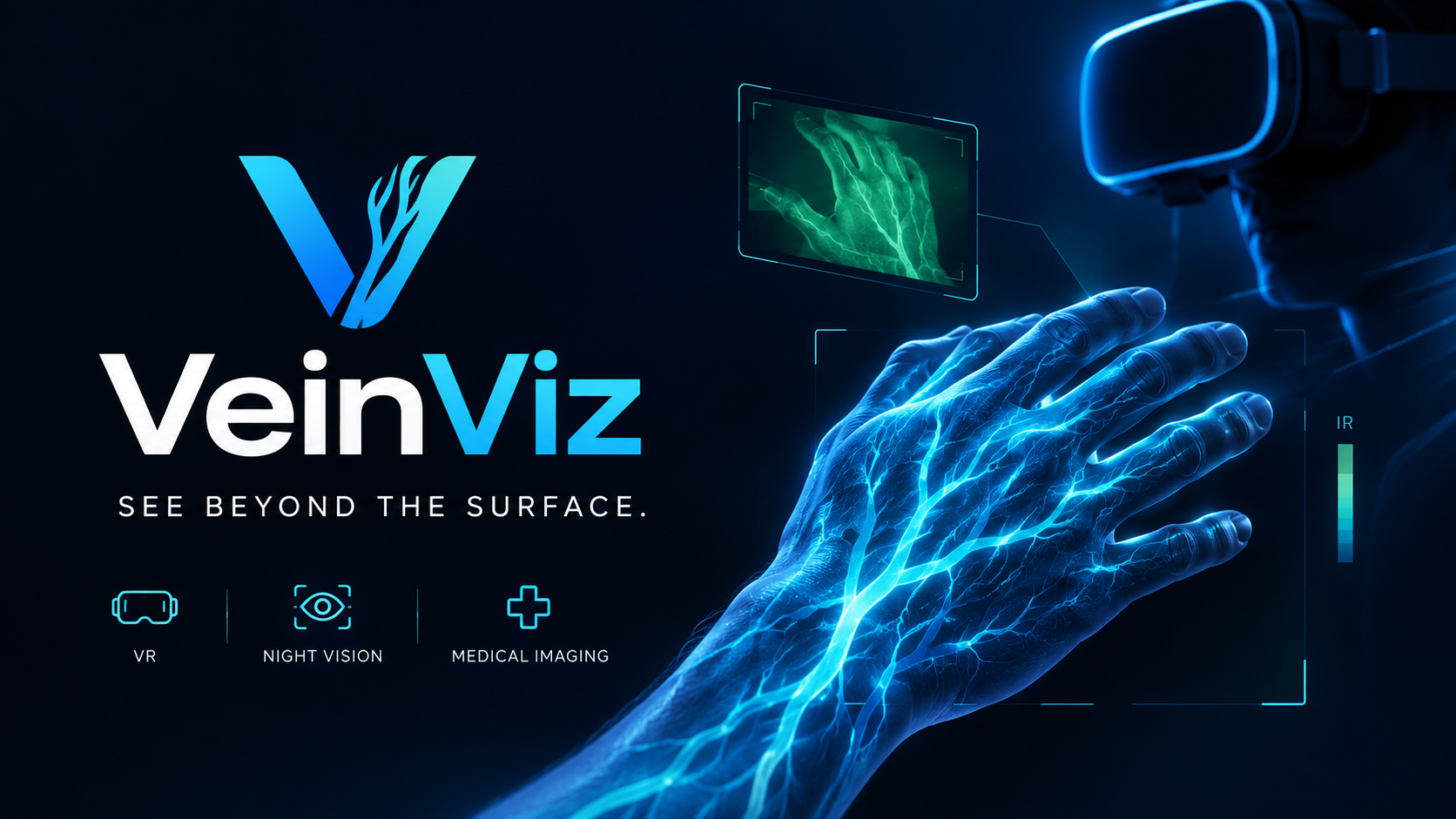
Every time I donate blood or get blood drawn, it's the same story: a new or overworked nurse sticks me four or five times before finding a vein. I walk away with a bruised arm, and a ten-minute process turns into a frustrating ordeal. That frustration isn't just mine. The U.S. is facing a national blood shortage, hospitals are constantly in need of donations, and many would-be donors stay away because of painful experiences like these. We believed this was a problem that didn't need an expensive solution, so we built VeinViz.
What it does
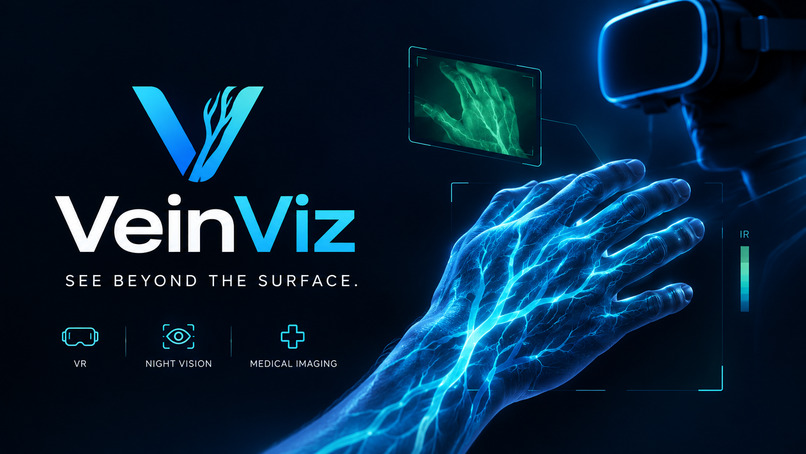
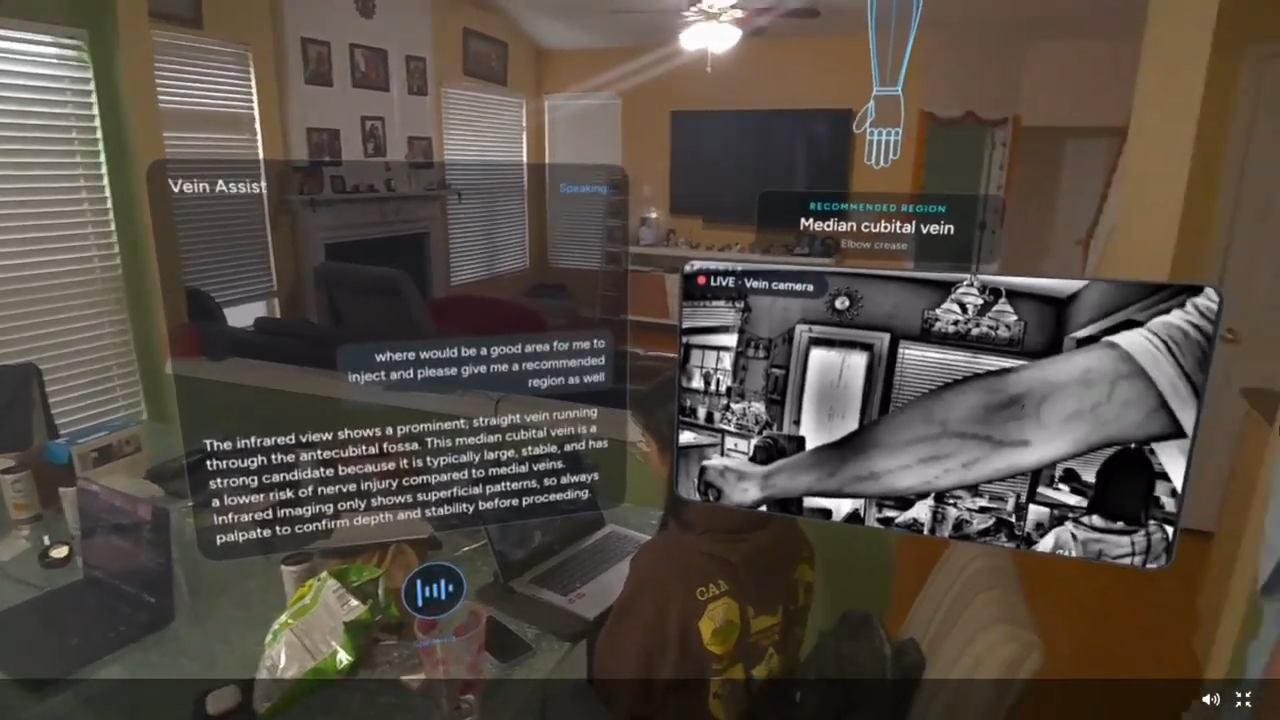
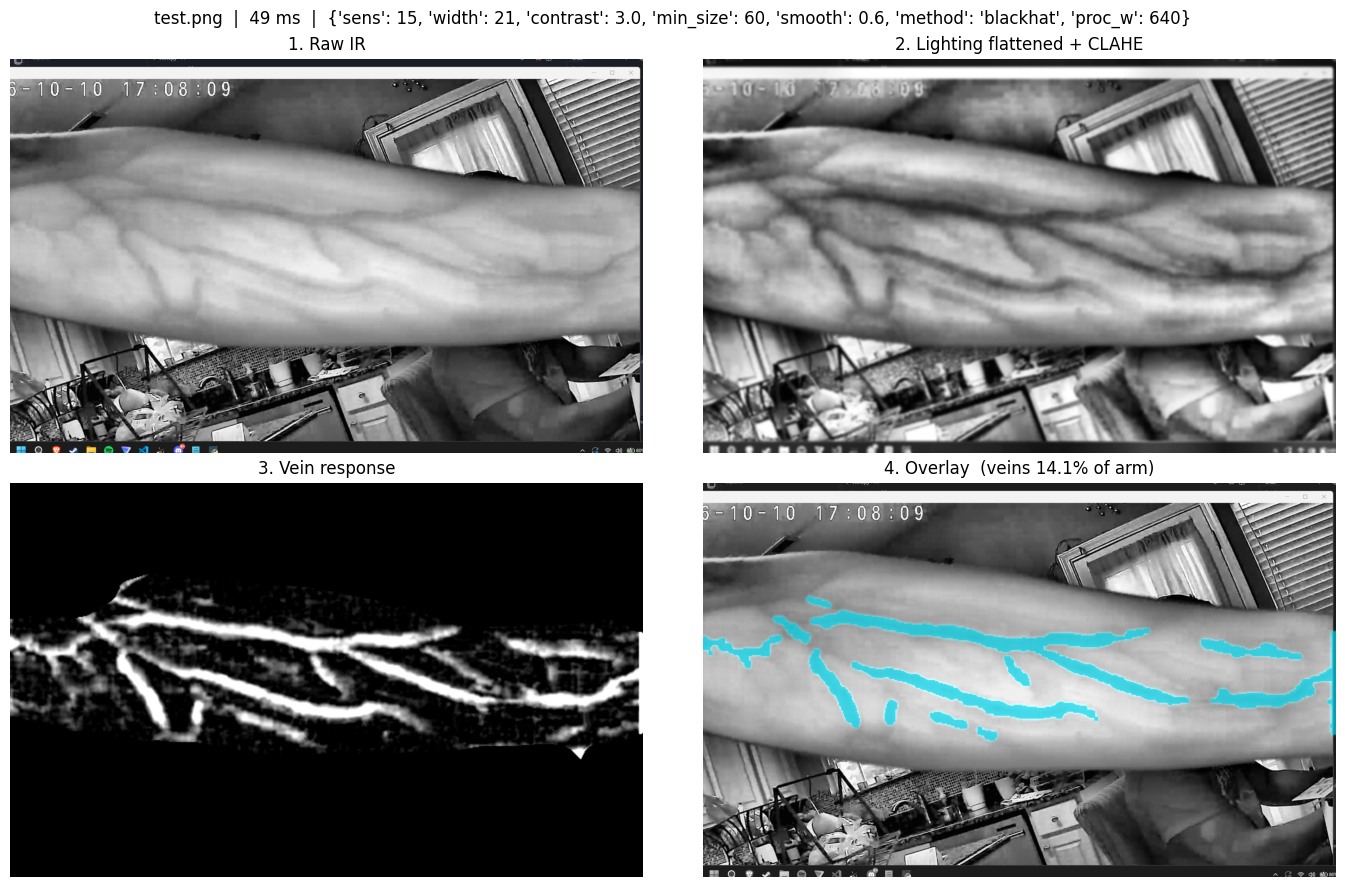
VeinViz makes the invisible visible. Using a modified camera and a custom computer vision model, it reveals the veins beneath a person's skin in real time, giving nurses a clear map of where to place the needle. The goal is simple: one stick instead of five. And unlike commercial vein finders, which cost hundreds to thousands of dollars, VeinViz is built from hardware that costs about as much as a lunch out.
How we built it
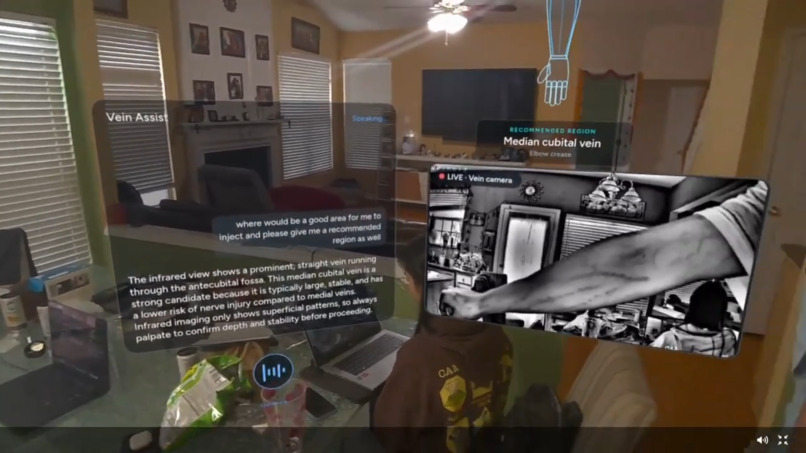
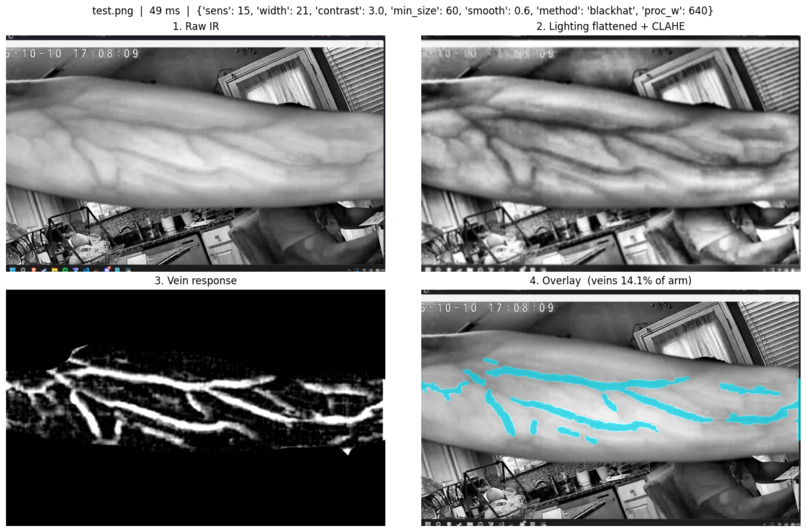
We started with a $25 security camera and modified it by removing one of its outer lens layers, allowing it to capture near-infrared (NIR) light. Under NIR, veins appear as dark lines because the blood inside them absorbs infrared light while the surrounding skin reflects it. We then trained a custom computer vision model to identify and highlight those veins. On top of that, we built an interface where users can talk to a Gemini agent that analyzes the vein data. Finally, we streamed everything into a Meta Quest 3, so a medical professional can see the vein information right alongside the patient's actual arm.
Challenges we ran into
Our first obstacle was hardware: NIR cameras aren't something you can grab off a store shelf on short notice, so we built our own by modifying a consumer camera. Our second was the Quest 3. None of us had worked with Unity or C# before, so we learned them on the fly. Our third was the network. With a camera, laptop, AI model, and headset all talking to each other in real time, bandwidth quickly became a bottleneck we had to fight throughout the build.
Accomplishments that we're proud of
We're proud that a $25 camera, with some modification and a custom model, produced vein visibility comparable to medical devices costing hundreds to thousands of dollars. We're also proud that we got the whole system running on the Quest 3, despite starting the weekend with zero experience in headset development.
What we learned
We learned a lot about MedTech and the challenges facing the medical industry. We also gained hands-on experience with the Meta Quest development environment and with how infrared cameras work. Most of all, we learned how to get the most out of the technology available to us, turning inexpensive, everyday hardware into a tool capable of solving a real problem.
What's next for VeinViz
We want to overlay the vein map directly onto the patient's arm in the headset, so medical professionals can place the needle without ever looking away from the patient. We also plan to upgrade the camera to improve image quality and make vein detection even more accurate

Log in or sign up for Devpost to join the conversation.