Inspiration
We were inspired by a simple question: “Why does an app need access to my data?” Modern applications often request sensitive permissions such as location, camera, microphone, contacts, SMS, and storage, but users rarely understand the privacy implications behind these requests.
We wanted to build a solution that makes application privacy understandable to everyone—not just cybersecurity experts. This led us to create Veilix AI, an evidence-first platform that combines application permission data, deterministic analysis, and AI-powered explanations.
What it does
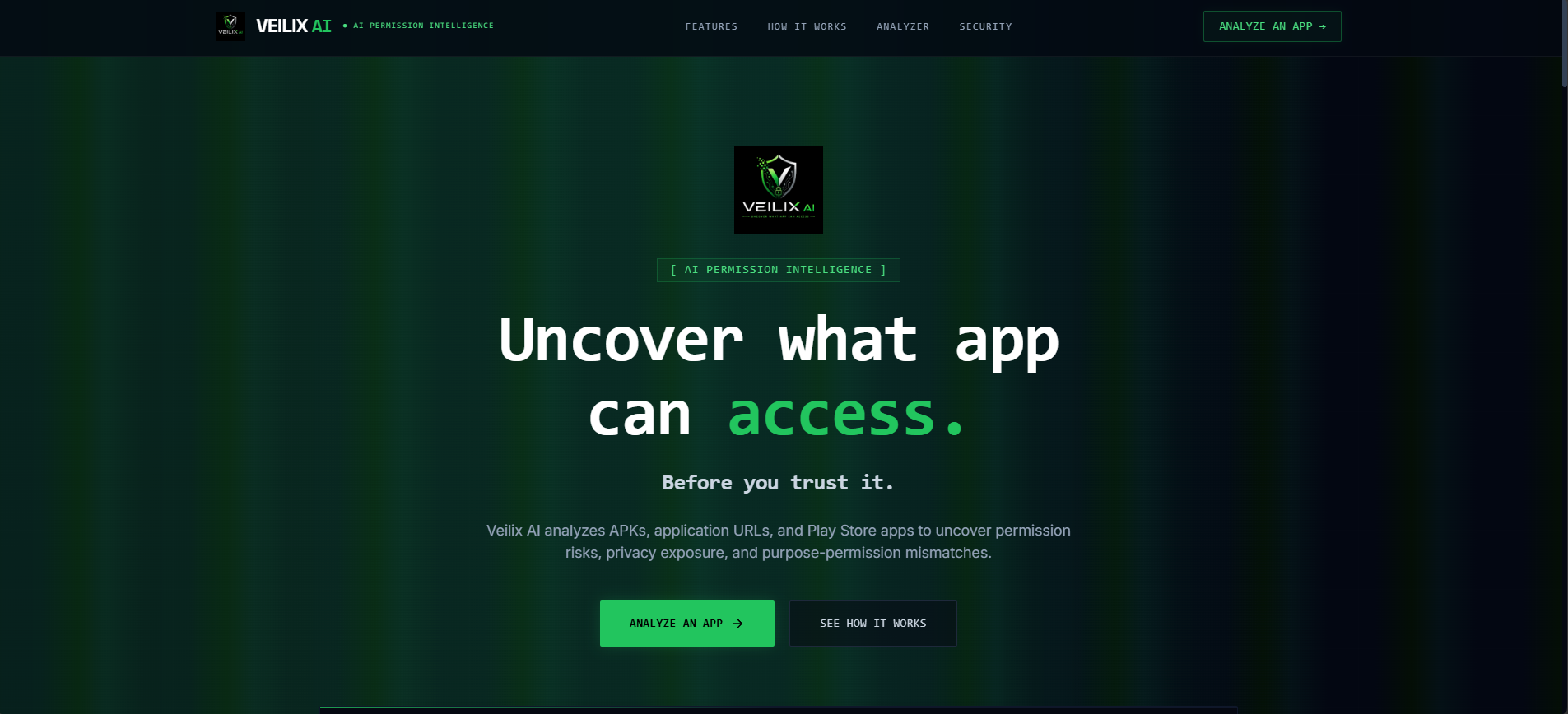
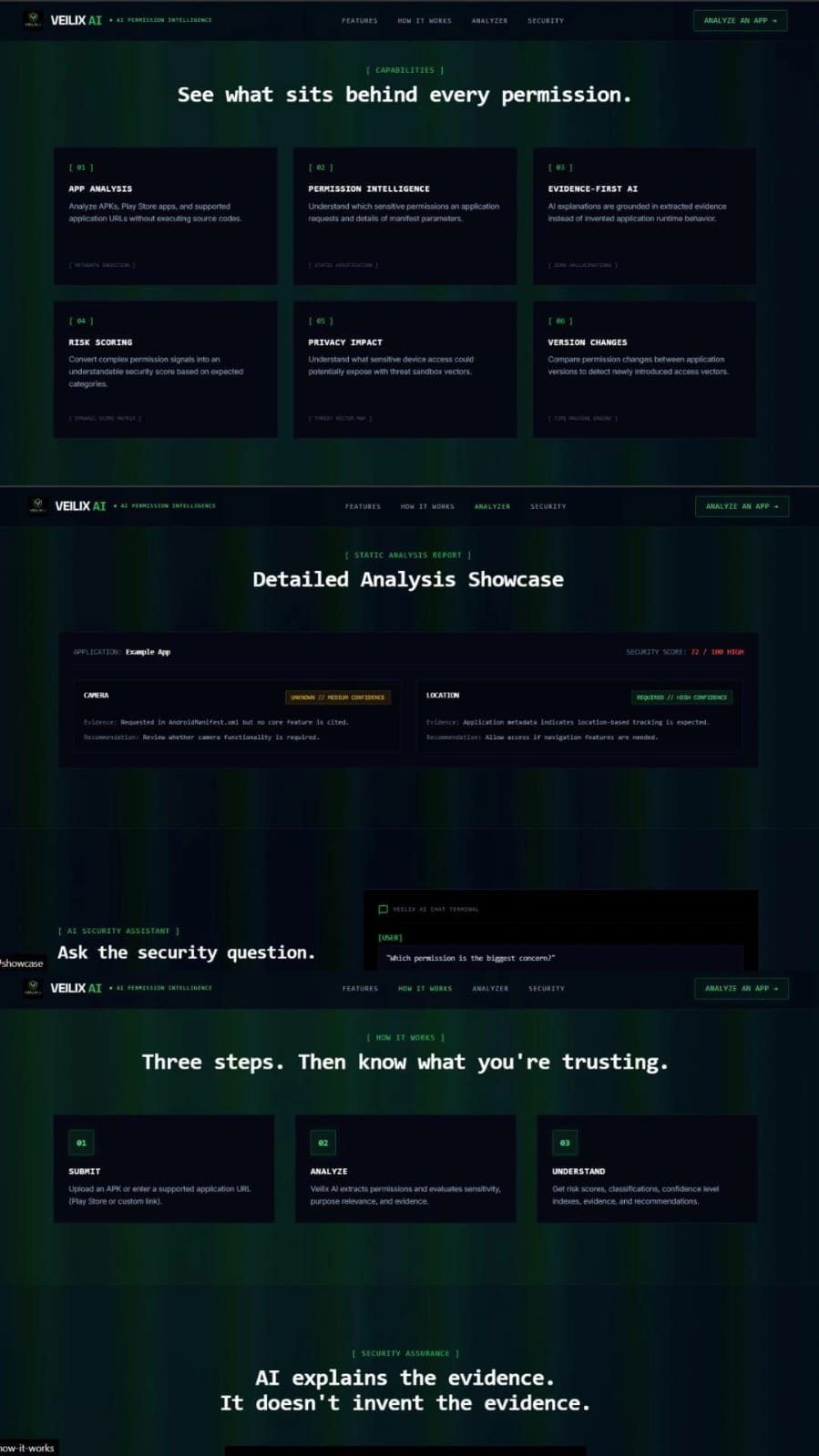
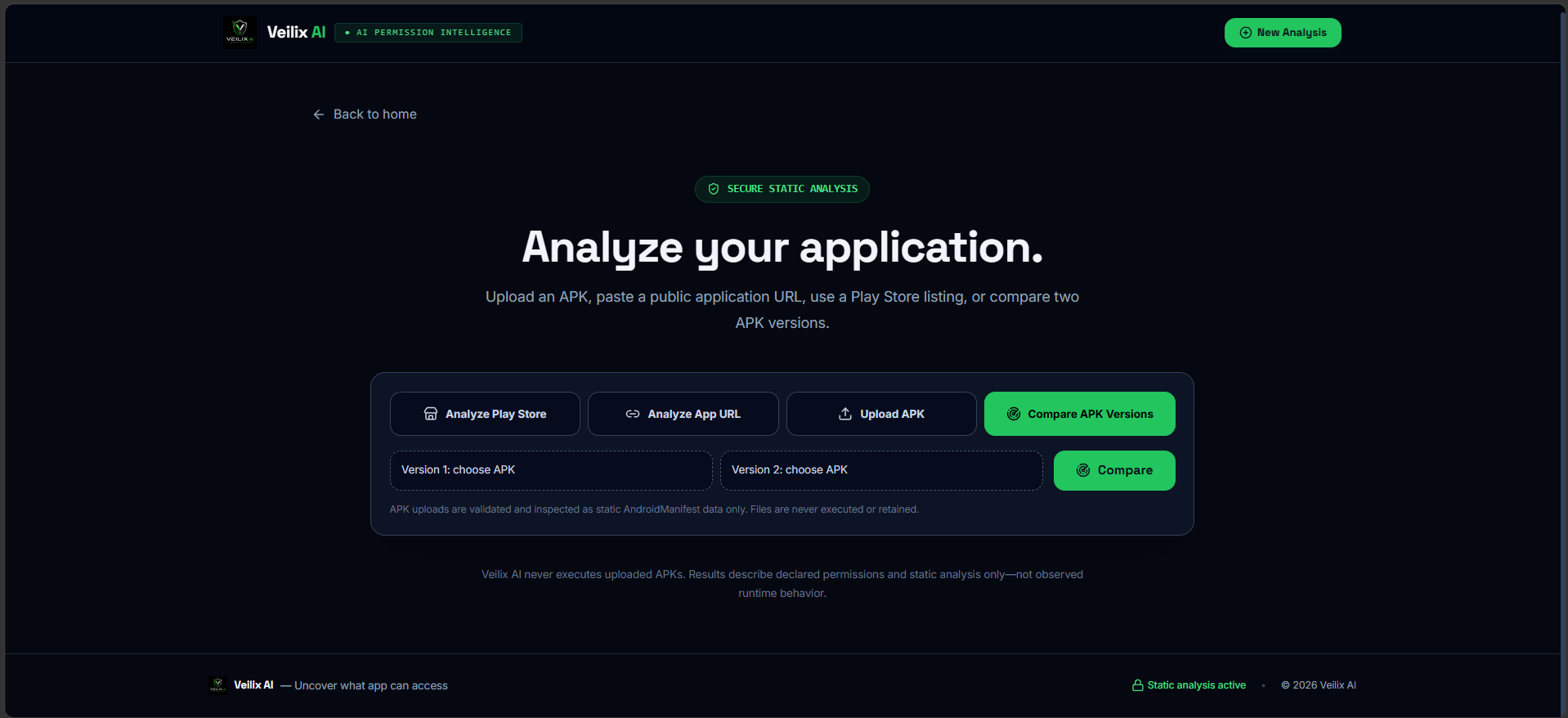
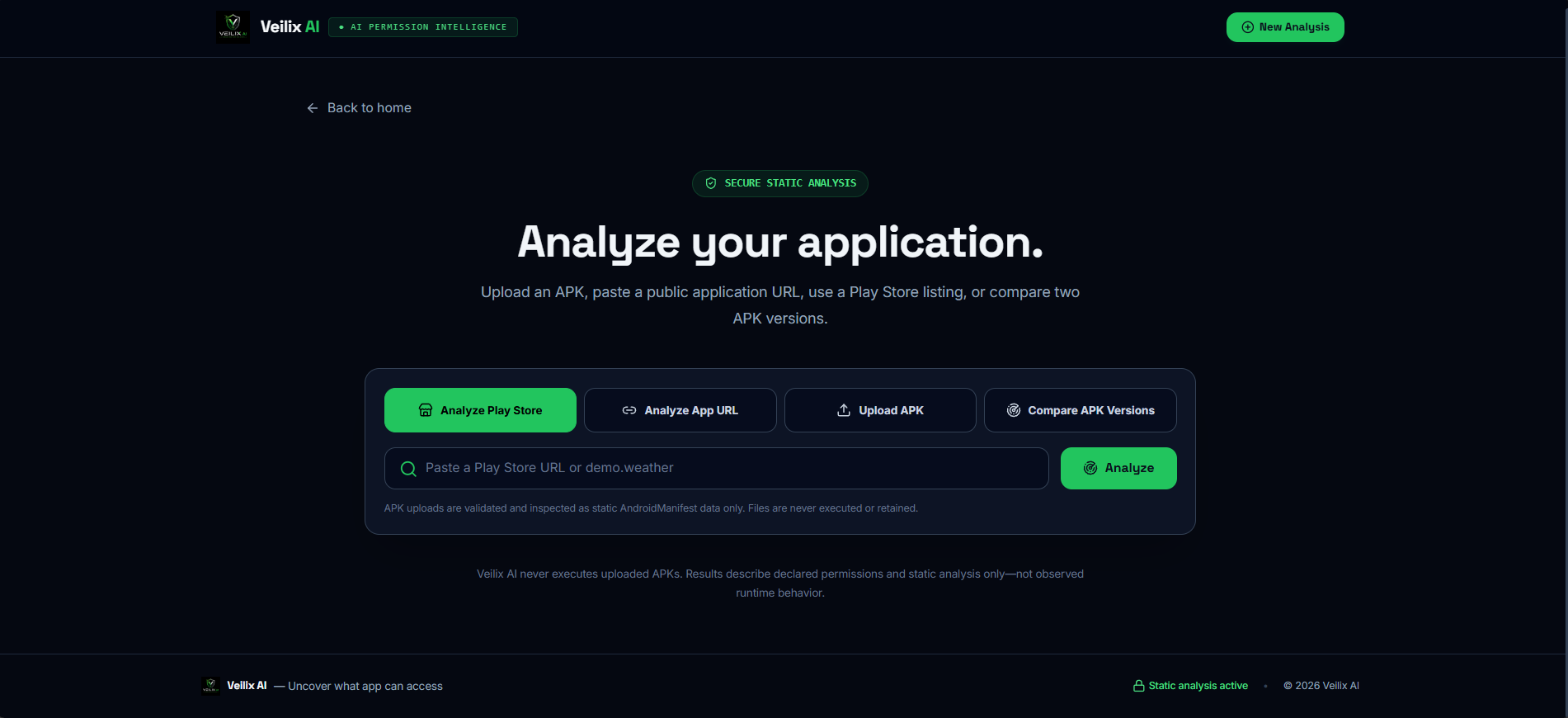
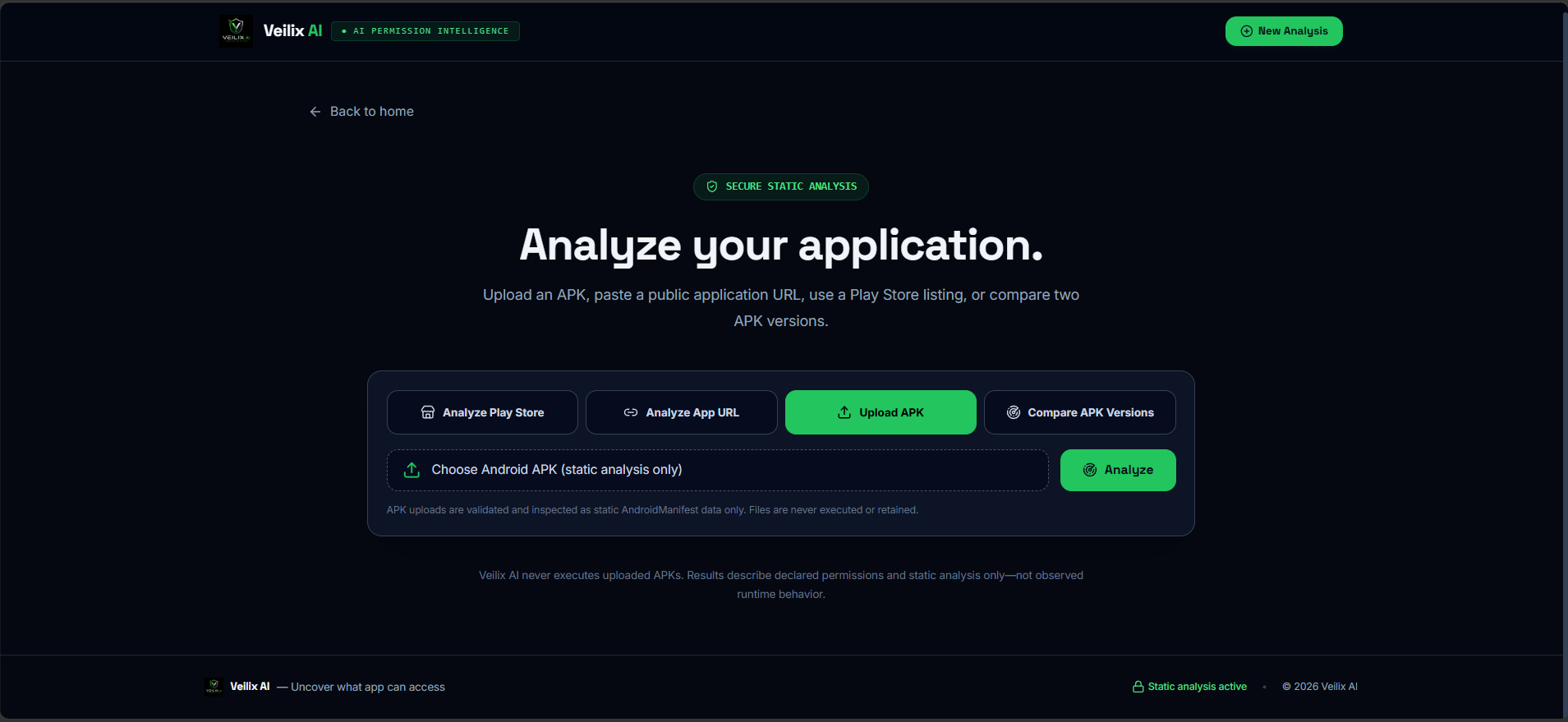
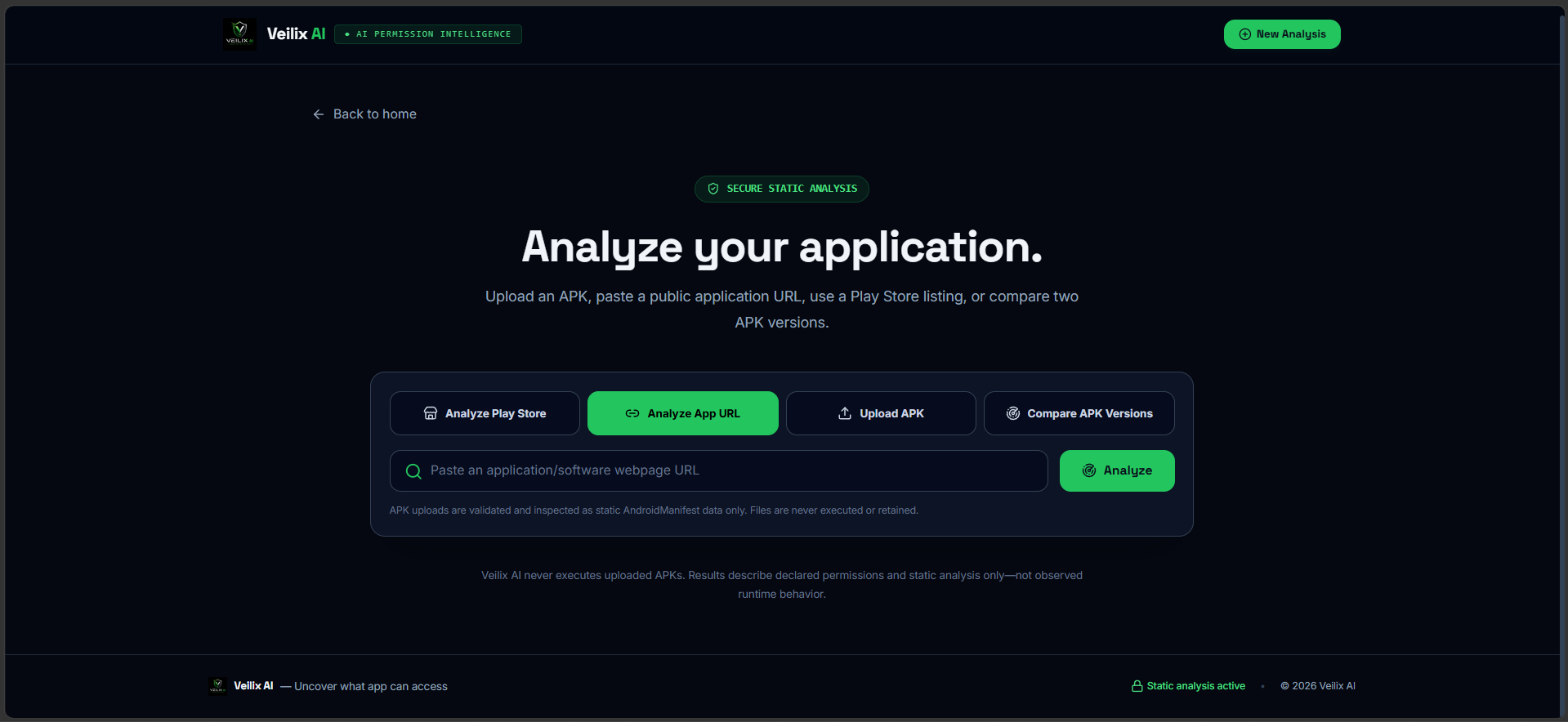
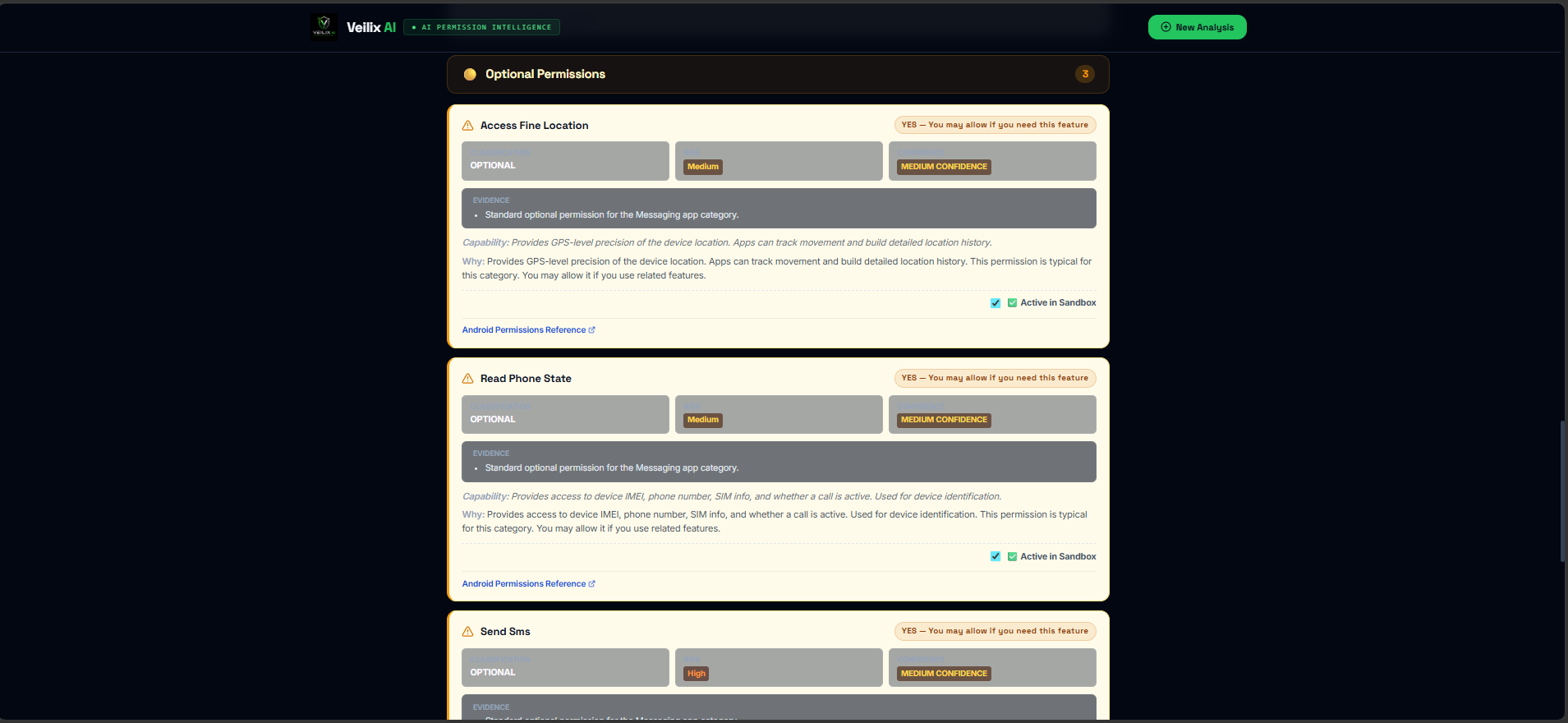
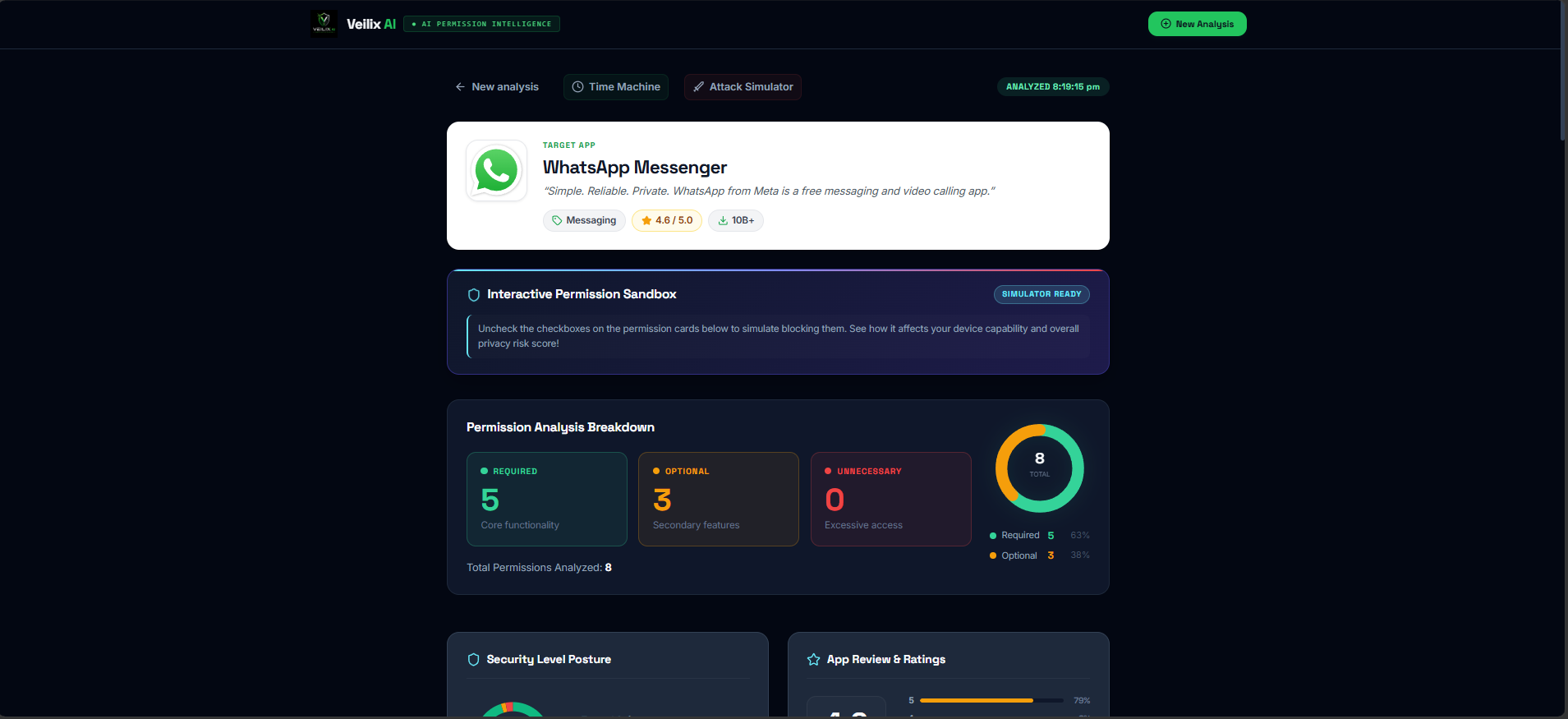
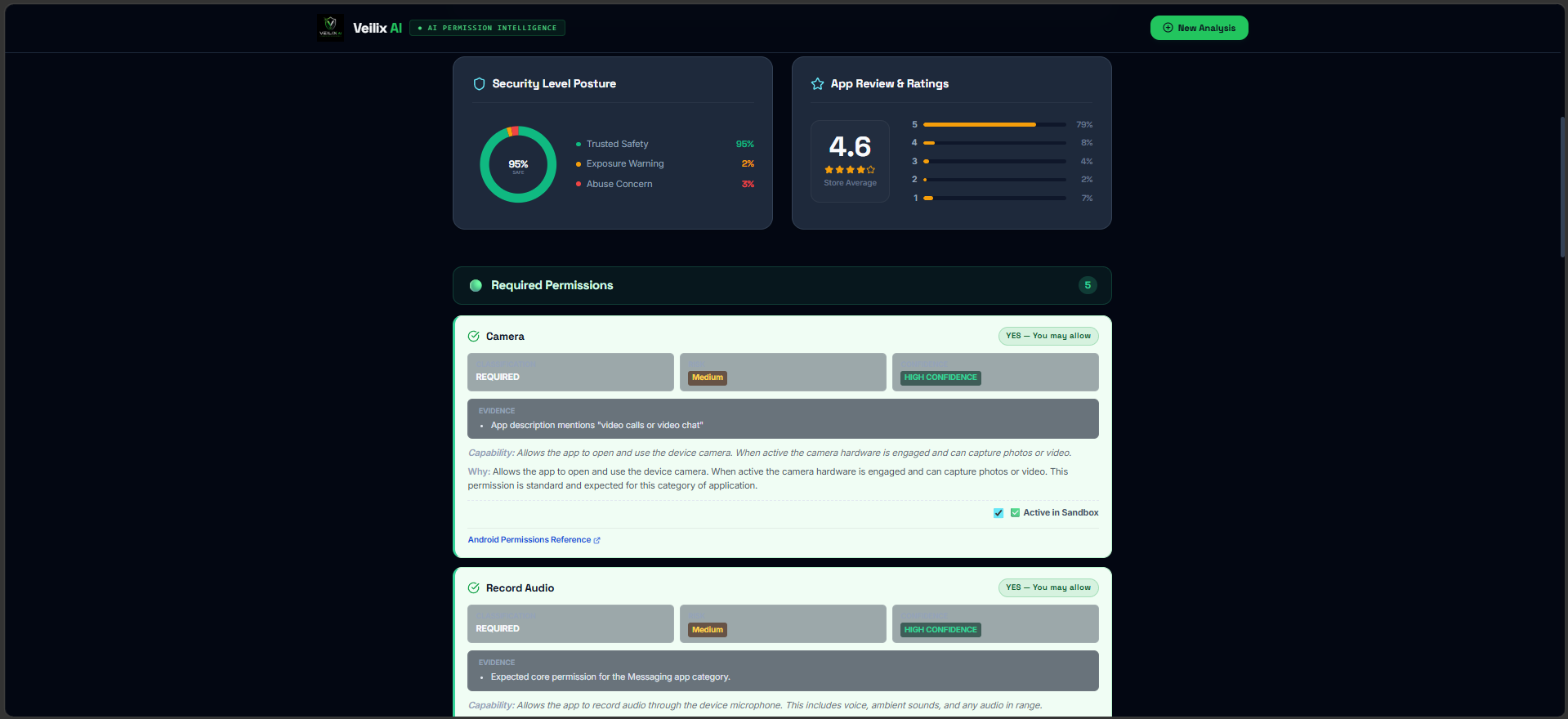
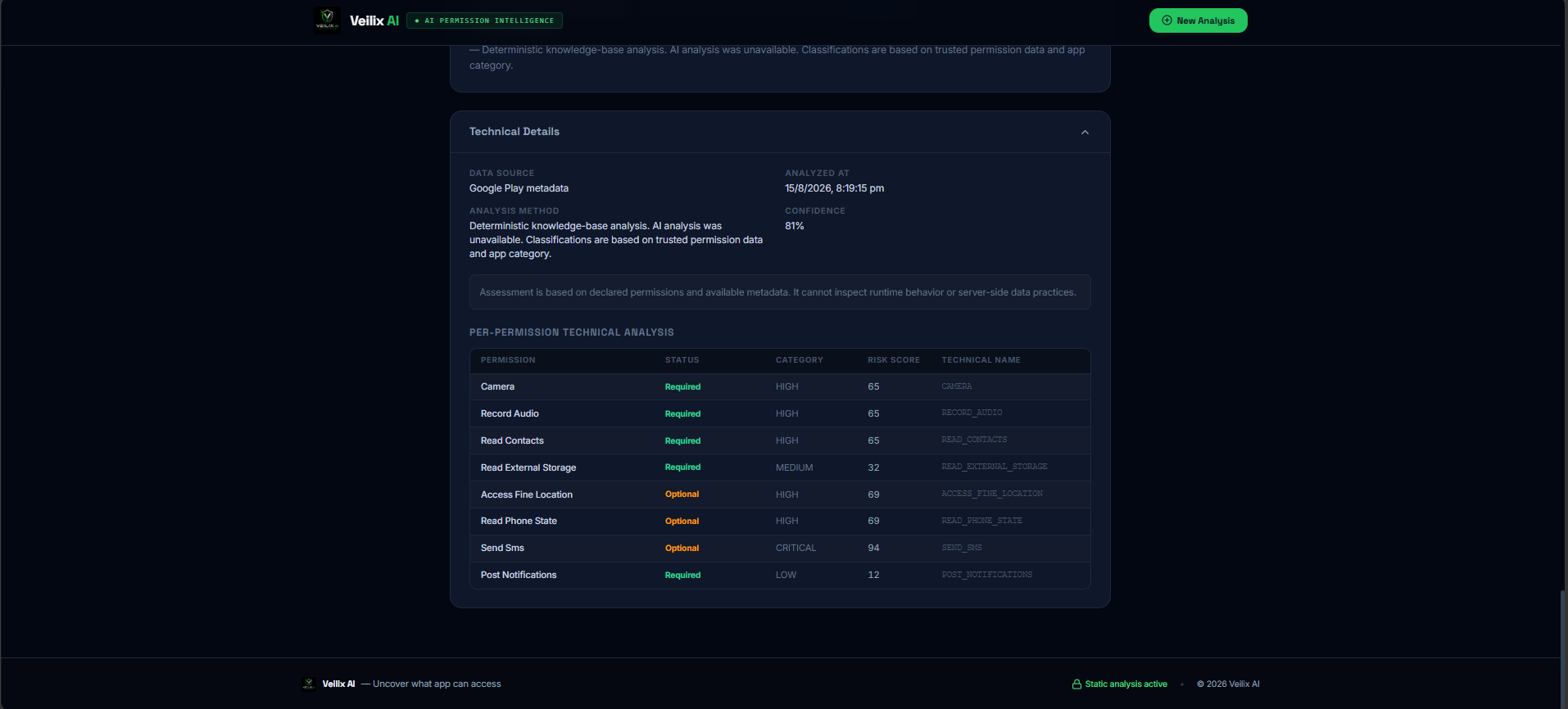
Veilix AI analyzes application permissions and available security evidence to identify unnecessary or potentially risky access.
It helps users understand:
- What permissions an application requests
- Whether those permissions are relevant to its functionality
- Which permissions may create privacy risks
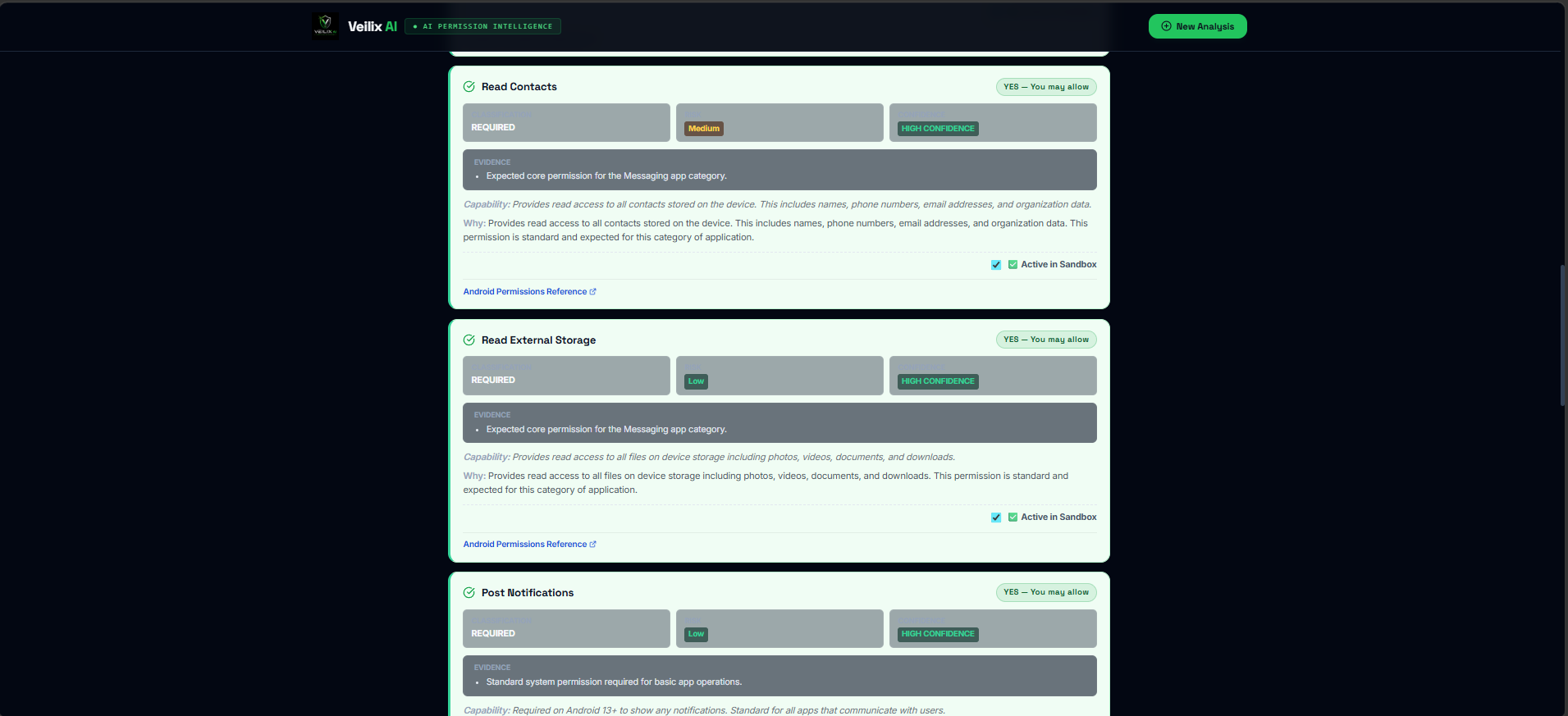
- What sensitive capabilities the app can access
- Why a particular permission may be concerning
- How serious the overall privacy risk is
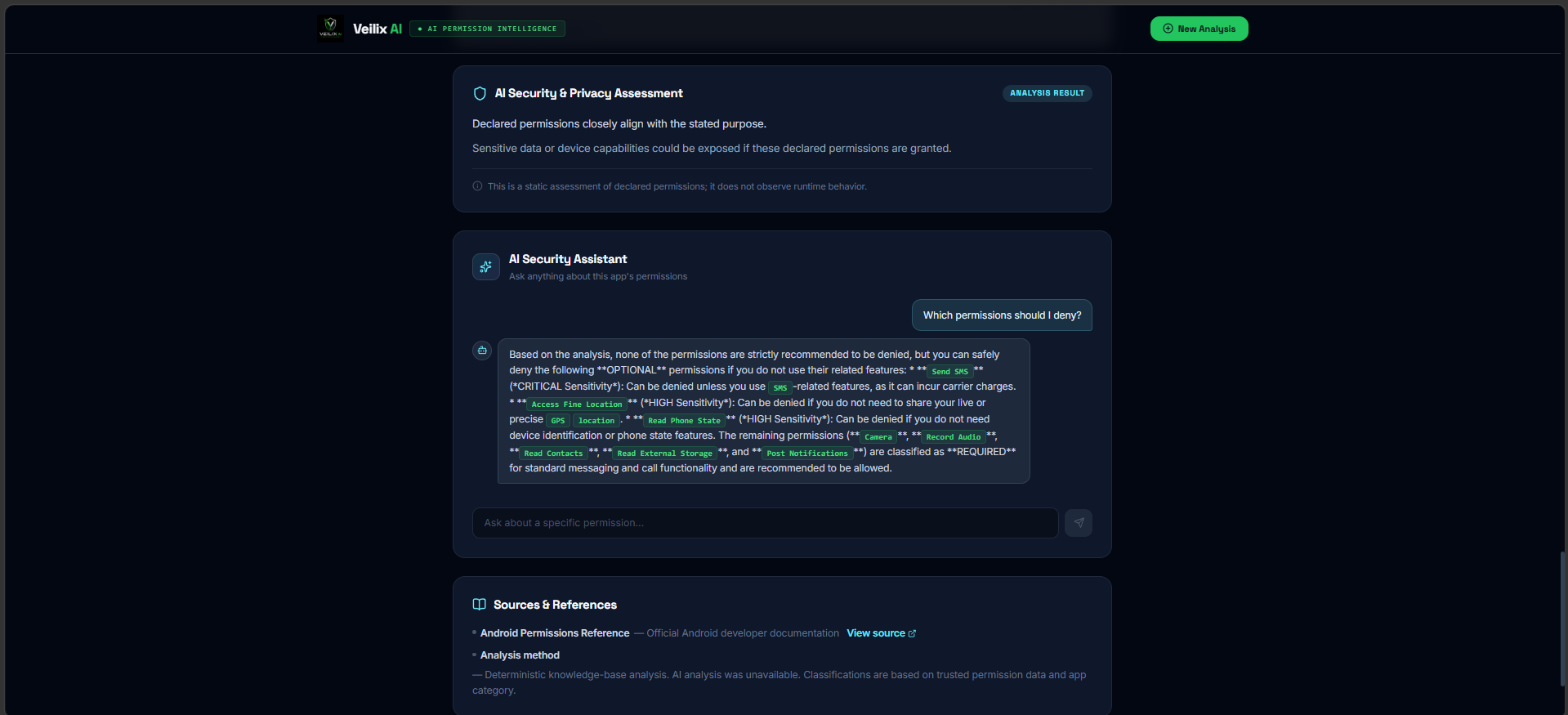
Instead of presenting users with complex technical permission names, Veilix AI converts the analysis into simple, actionable explanations.
How we built it
We designed Veilix AI around an evidence-first analysis pipeline:
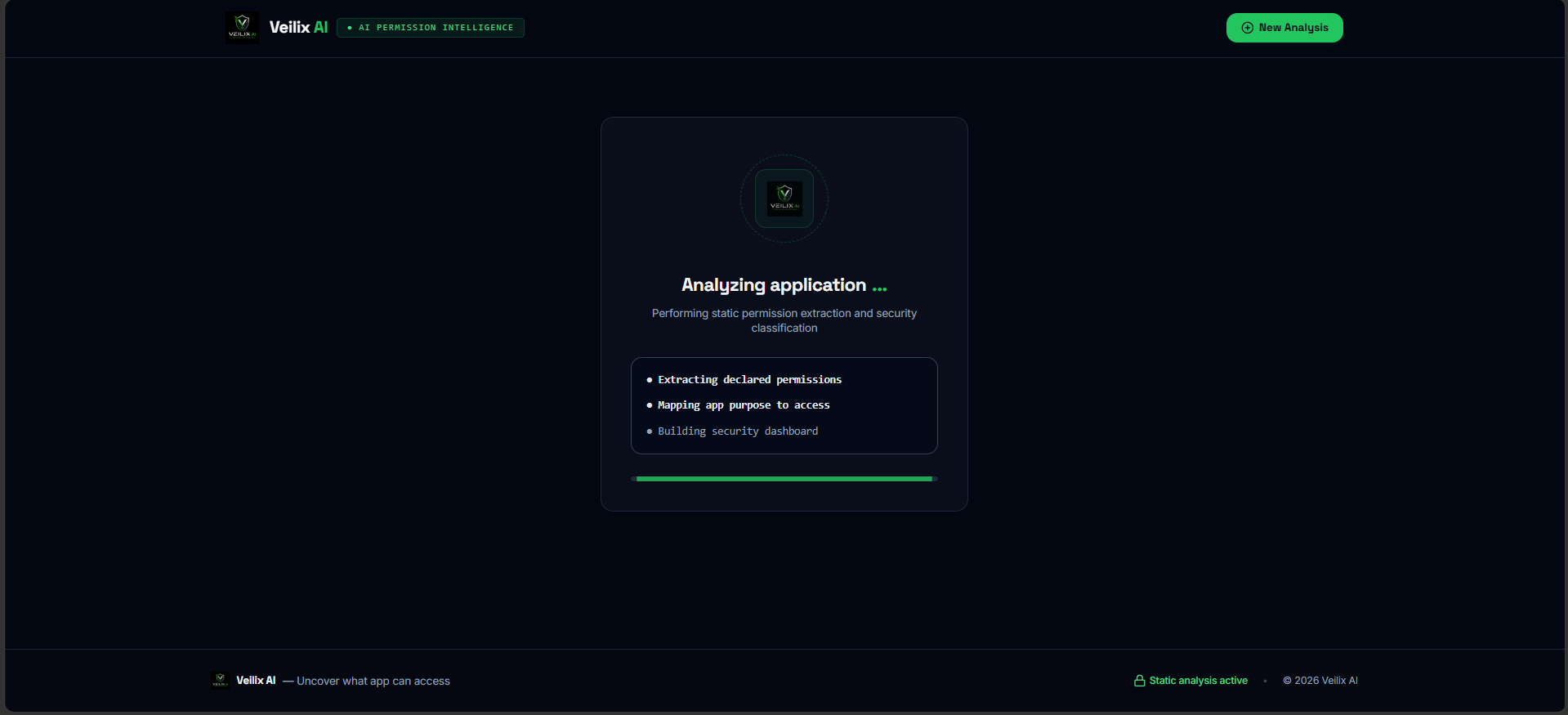
Application Input → Permission Analysis → Risk Evaluation → AI Analysis → Explanation → Security Report
Frontend
The frontend is built using React.js with Vite for a fast development and build environment. The interface is developed using JavaScript/JSX and CSS/Tailwind CSS for responsive and modern UI styling.
We use React Router for page navigation where required and Recharts to visualize security and privacy insights such as risk scores and permission analysis.
Lucide React is used for clean and consistent interface icons, while React Doctor helps identify potential React code quality and performance issues during development.
Backend
The backend is built with Node.js and Express.js, providing REST APIs that connect the frontend with the analysis and AI services.
We use Gemini API / Google Generative AI to analyze verified application permission information and generate understandable explanations for users.
dotenv is used to securely manage environment variables and API credentials, while middleware-based validation and error handling help maintain reliable backend communication.
The backend follows a modular approach with separate components for application data extraction, permission analysis, risk evaluation, API handling, and AI-powered explanations.
A key principle of our architecture is that AI does not independently invent security evidence. The application first processes the available permission and security information, and the AI layer then uses that information to generate a clear explanation.
Challenges we ran into
One of our biggest challenges was making technical permission analysis understandable without oversimplifying the results.
Different applications have different legitimate reasons for requesting permissions, so treating every sensitive permission as automatically dangerous could lead to inaccurate conclusions.
Another challenge was integrating AI responsibly. We wanted Gemini to provide useful explanations while ensuring that the analysis remained grounded in the application's available evidence.
We addressed this by separating the permission and risk analysis logic from the AI explanation layer, allowing the system to analyze the available information first and use AI to communicate the findings clearly.
We also faced challenges in designing a dashboard that could present multiple security indicators without overwhelming the user.
Accomplishments that we're proud of
We are proud of building an AI-powered privacy analysis platform that focuses on transparency, explainability, and evidence-based insights.
Our key accomplishments include:
- Building a responsive React-based privacy analysis interface
- Developing REST APIs using Node.js and Express.js
- Creating permission and risk analysis workflows
- Integrating Gemini for AI-powered security explanations
- Building interactive security visualizations using Recharts
- Creating an intuitive privacy risk dashboard
- Implementing validation and error-handling middleware
- Designing the system so AI explanations remain connected to analyzed evidence
What we learned
Through this project, we learned that building an AI-powered security product requires more than simply connecting an application to an AI API.
We learned the importance of:
- Understanding Android application permissions
- Designing evidence-based analysis workflows
- Building modular frontend and backend architectures
- Creating REST APIs for frontend-backend communication
- Integrating generative AI responsibly
- Validating AI-generated insights against available evidence
- Designing intuitive dashboards for complex technical information
- Optimizing React applications for quality and performance
Most importantly, we learned that AI should explain security evidence, not invent security evidence.
What's next for Veilix AI
We plan to expand Veilix AI into a more comprehensive application privacy intelligence platform.
Future improvements include:
- Deeper APK analysis
- Tracker and third-party SDK detection
- Sensitive API detection
- Background activity analysis
- Network and data-flow analysis
- Play Store application analysis
- Privacy comparison between similar applications
- Safer application recommendations
- Continuous application monitoring
- Browser extension for analyzing applications before installation
- More advanced AI-powered privacy insights
Our long-term vision is to make Veilix AI a privacy intelligence layer that helps users understand what applications can access, why they need it, and what risks that access may create before they choose to trust them.
Built With
- css3
- dotenv
- express.jsx
- geminiapi
- googlegenerativeai
- javascript
- jsx
- lucide-reacts/icons
- node.jsx
- react-doctor
- react-router
- react.js
- recharts
- restapi
- tailwind
- vite


Log in or sign up for Devpost to join the conversation.