💡 Inspiration
We were inspired by the "Architect of Order" theme to subvert the traditional Action RPG power fantasy. Instead of a hero bringing light to a dark world, we wanted the player to be the "System"—a chillingly logical force of order that views spontaneity as variance and magic as an anomaly. The goal was to make players confront the consequences of their own "efficiency."
⚙️ What it does
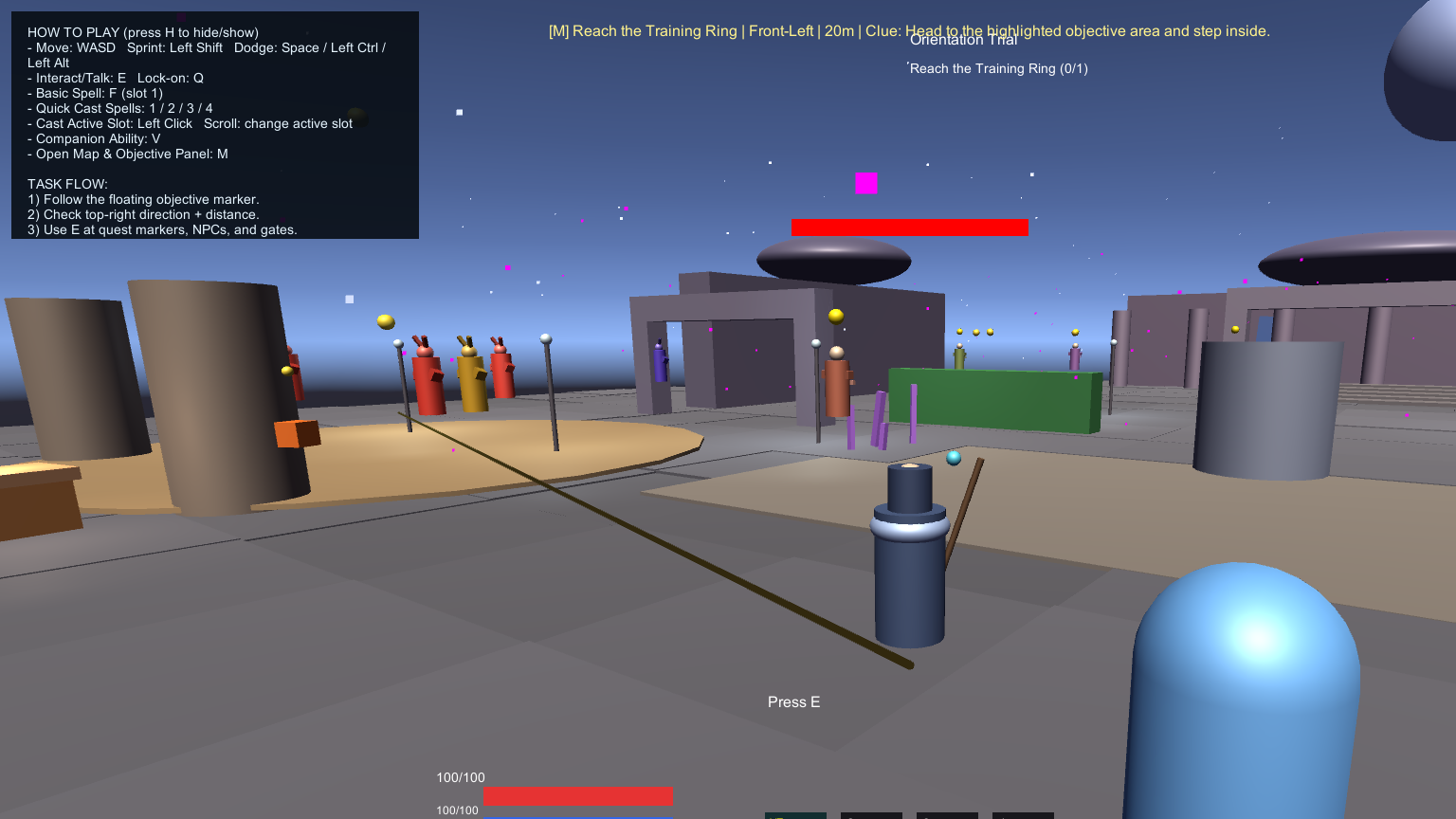
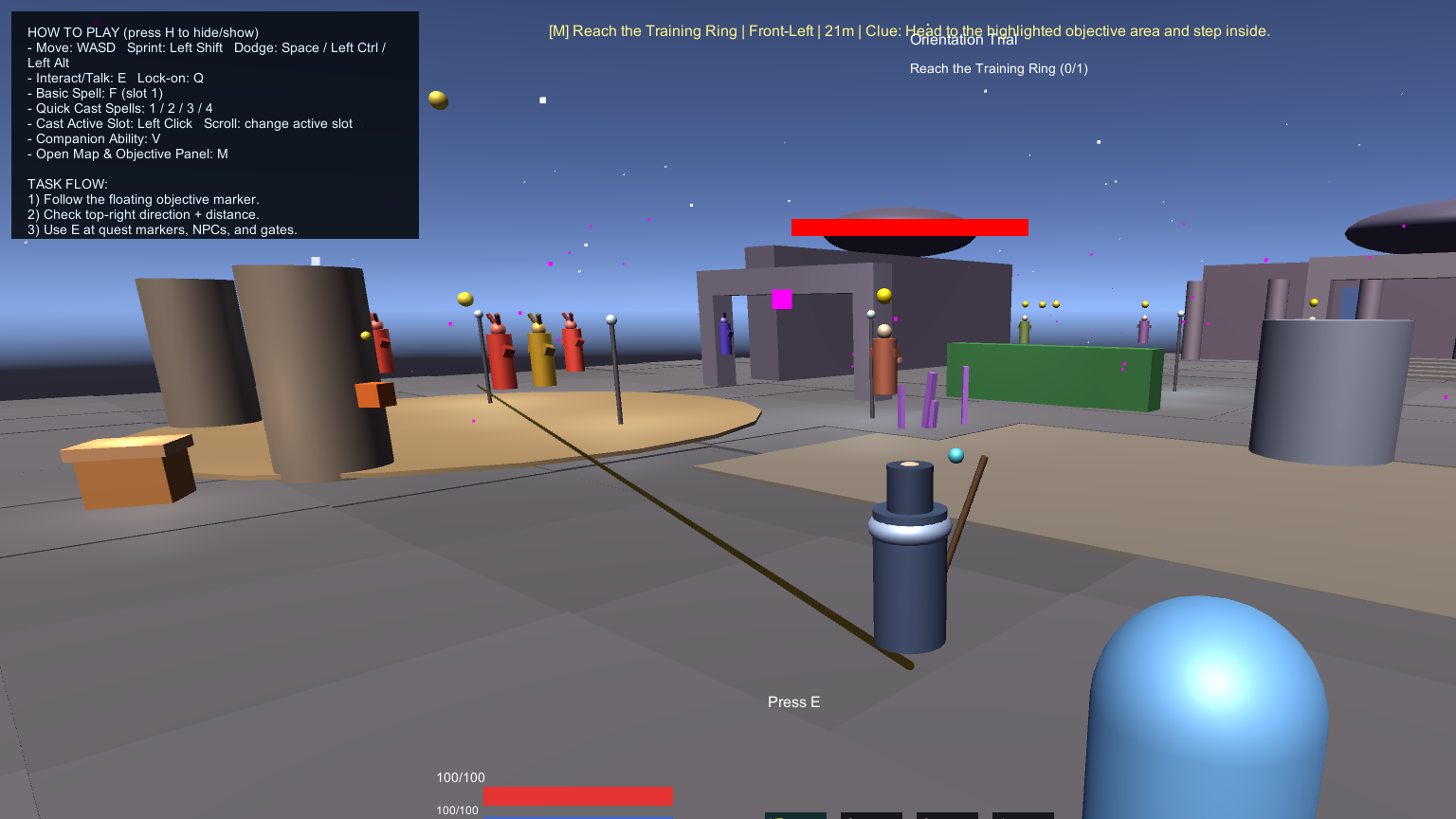
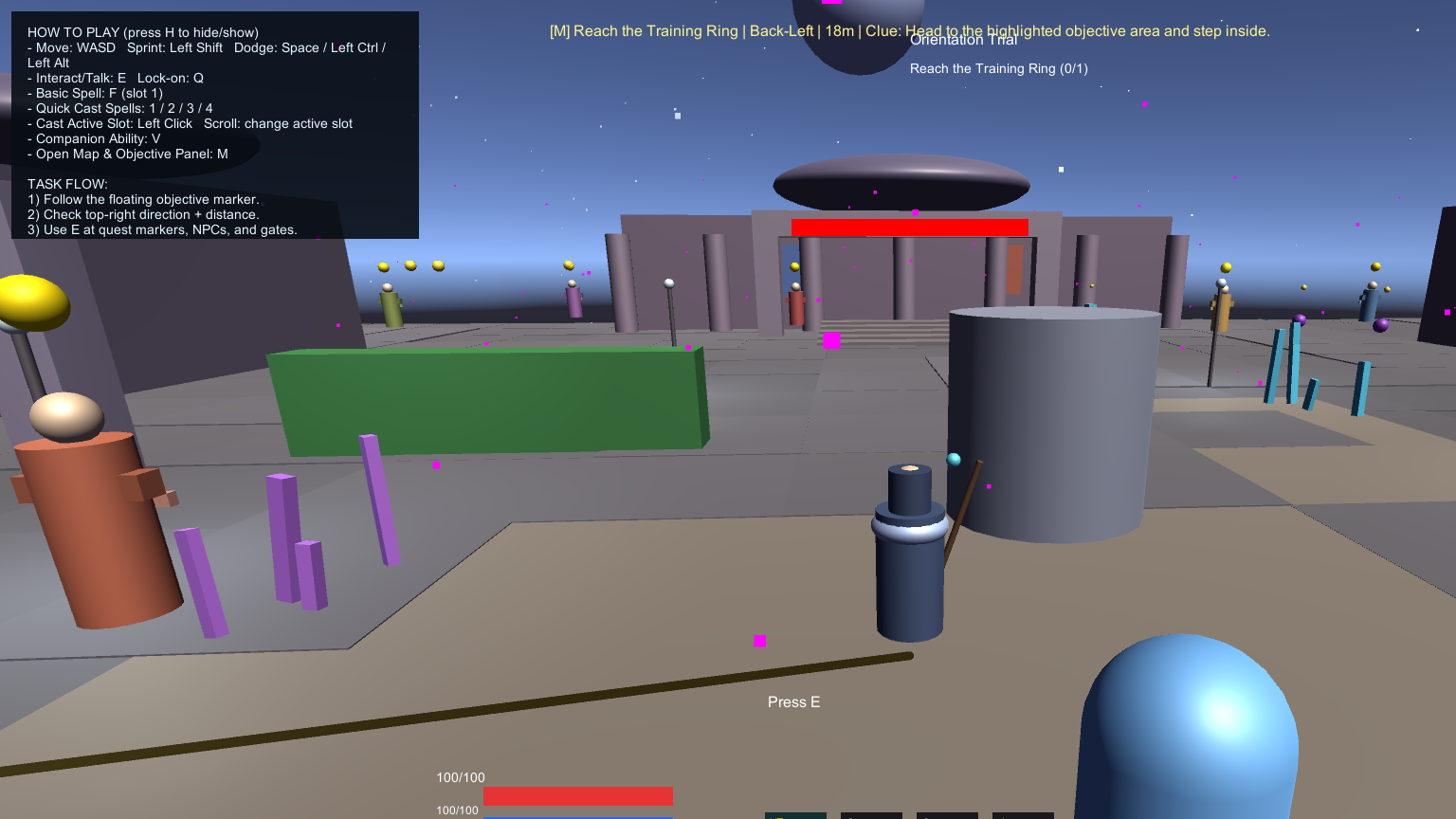
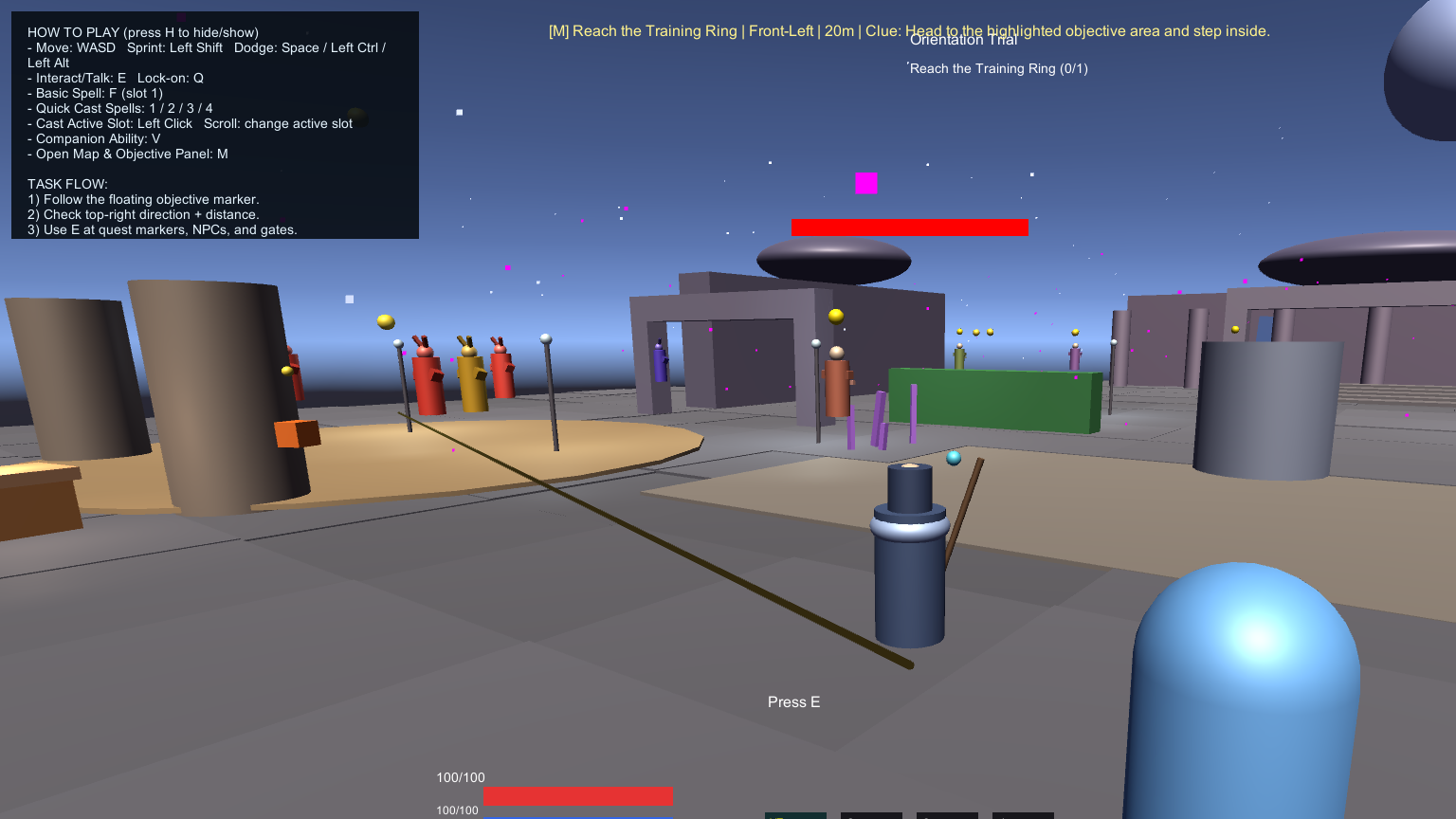
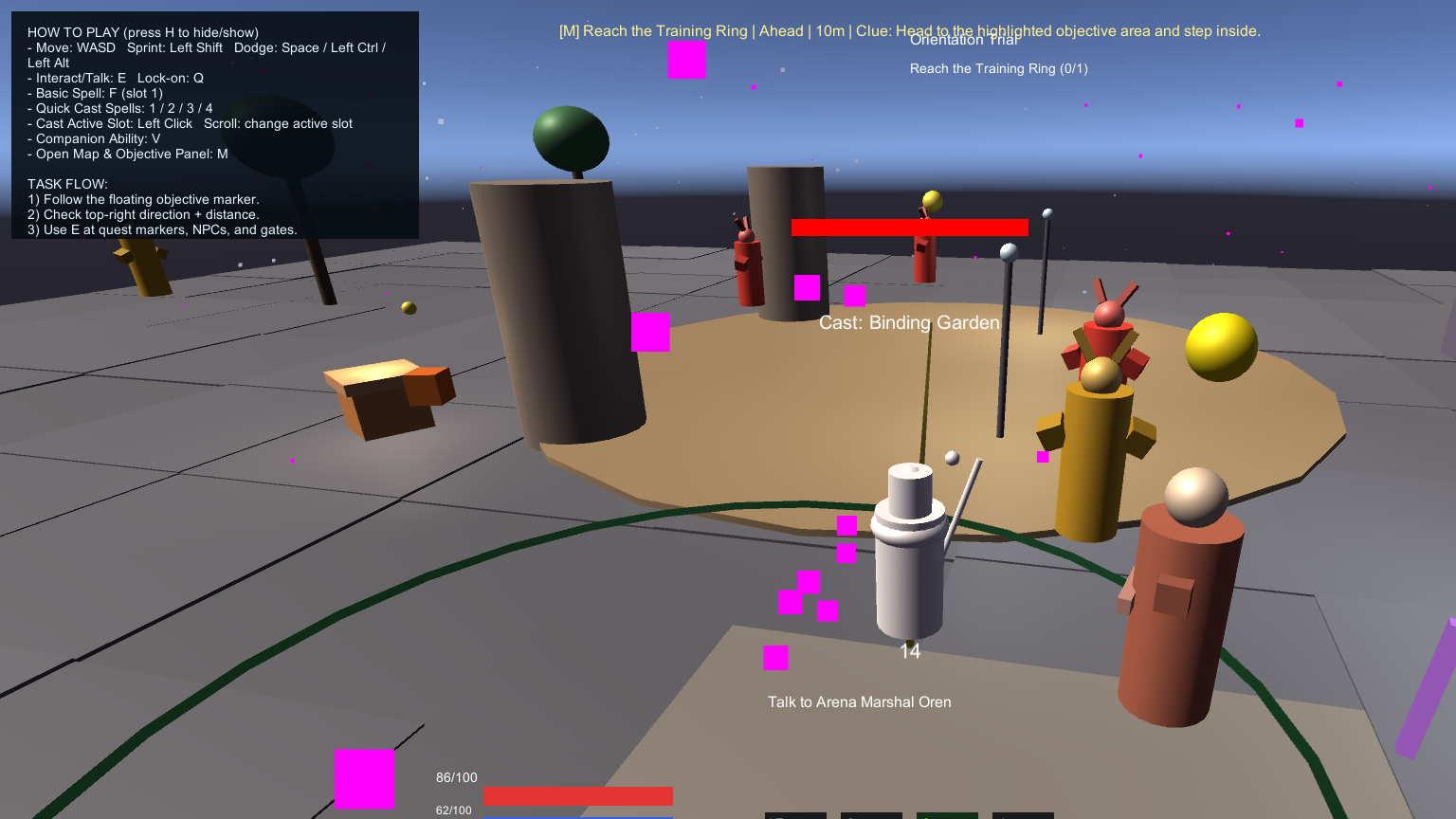
- DecayDirector System: A progressive world-state engine that monitors player actions. As you complete directives, the world physically decays: lighting dims, colors desaturate, fog closes in, and music fades into absolute silence.
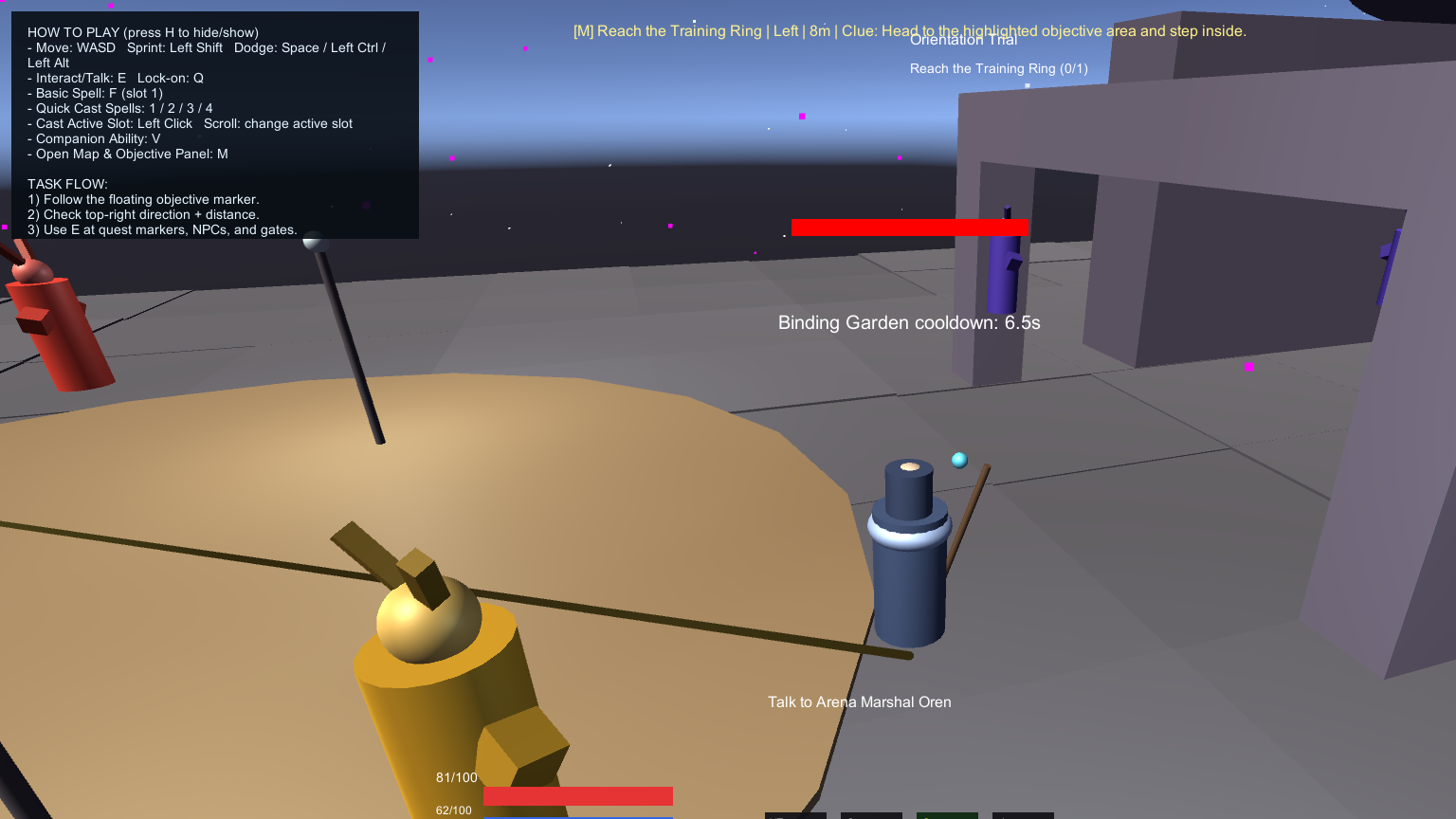
- The Optimizer Narrative: Every quest, dialogue, and UI element has been reframed. You don't "save" NPCs; you enforce "Operational Compliance." You don't "learn spells"; you register "Optimization Protocols."
- NPC Behavioral Degradation: NPCs react dynamically to the rising stability index. They stop roaming, huddle together in fear, and flinch away from the player as the world becomes quieter and emptier.
- The Climax of Silence: A final "Quiet Ending" sequence where the world's activity reaches zero, leaving the player alone in a perfectly ordered, perfectly dead academy.
🛠️ How we built it
- Engine: Unity 2022.3 LTS (URP).
- Core Logic: Implemented a custom
DecayDirectorsingleton using a decoupledEventBusarchitecture to monitor quest, combat, and exploration events. - Atmospheric Shaders: Utilized URP's Volume system and custom scriptable lighting overrides to drive the progressive desaturation and fog density.
- Narrative Mapping: Rewrote 15+ quests and hundreds of lines of dialogue to maintain a consistent "System" persona.
- Save System: Built a persistent world-state manager that tracks the "Stability Index" across sessions.
🚀 Challenges we faced
The primary challenge was ensuring that the "Decay" felt like a mechanical reward (Order) while remaining an emotional tragedy (Silence). We had to carefully balance the lighting and audio fades so that the world didn't just feel "dark," but felt emptied. Reframing standard RPG tropes (like leveling up) into clinical system language required a complete overhaul of the narrative design.
🏆 Accomplishments that we're proud of
Successfully creating the "Climax of Silence"—a gameplay state where the world's procedural activity stops entirely, and the audio reaches 0.0 volume, forcing the player to experience the absolute order they've spent the game architecting.
🧠 What we learned
We learned that subtraction is as powerful as addition. In game design, we often add more effects and more units for progress. In Veilborn, we found that removing music, removing NPC autonomy, and removing visibility created a far more haunting and thematic sense of "absolute order."
🔮 What's next for Veilborn
- Procedural Optimization Zones: Expanding the decay logic to affect procedural room generation.
- Complex Variance Types: Introducing "Chaos Manifestations" that require specific logic-based puzzles to suppress.
- Deep Faction Branching: Expanding the choice between "Absolute Stability" and "System Failure."

Log in or sign up for Devpost to join the conversation.