Inspiration
Every bad first date costs time, money, and emotional energy.
Yet today's dating apps are designed to optimize for one thing: more matches. Their business model rewards engagement, not successful relationships. The longer people keep swiping, the better the platform performs.
At the same time, the generation abandoning dating apps already spends hours socializing as avatars in Roblox, VRChat, and Fortnite. That led us to ask a different question:
What if the first date happened before the first date?
Instead of helping people find more matches, we wanted to help them eliminate the wrong ones before investing an evening together.
That became Veil.
What it does
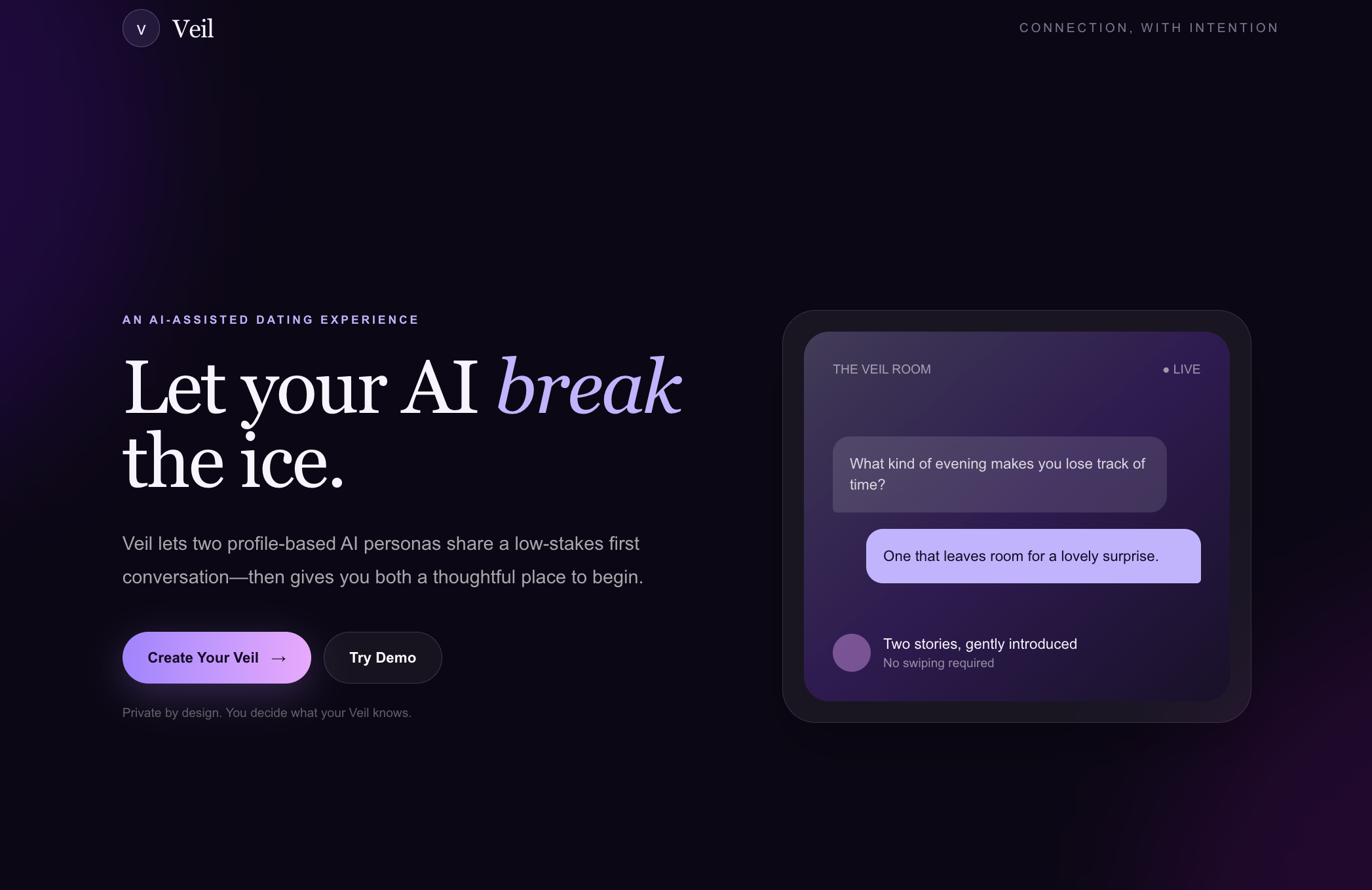
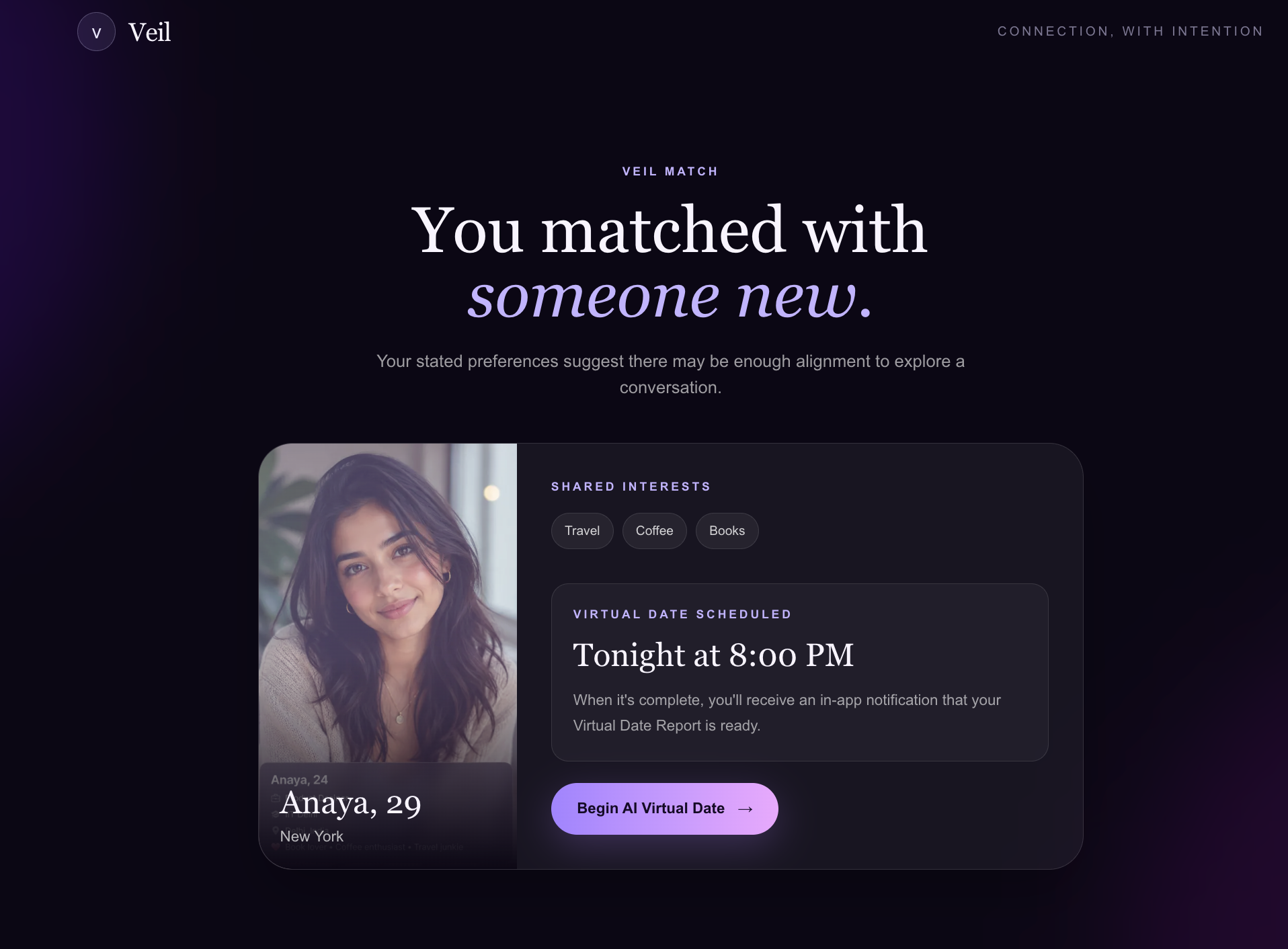
Veil is an avatar-first dating platform that helps people screen potential matches before meeting in real life.
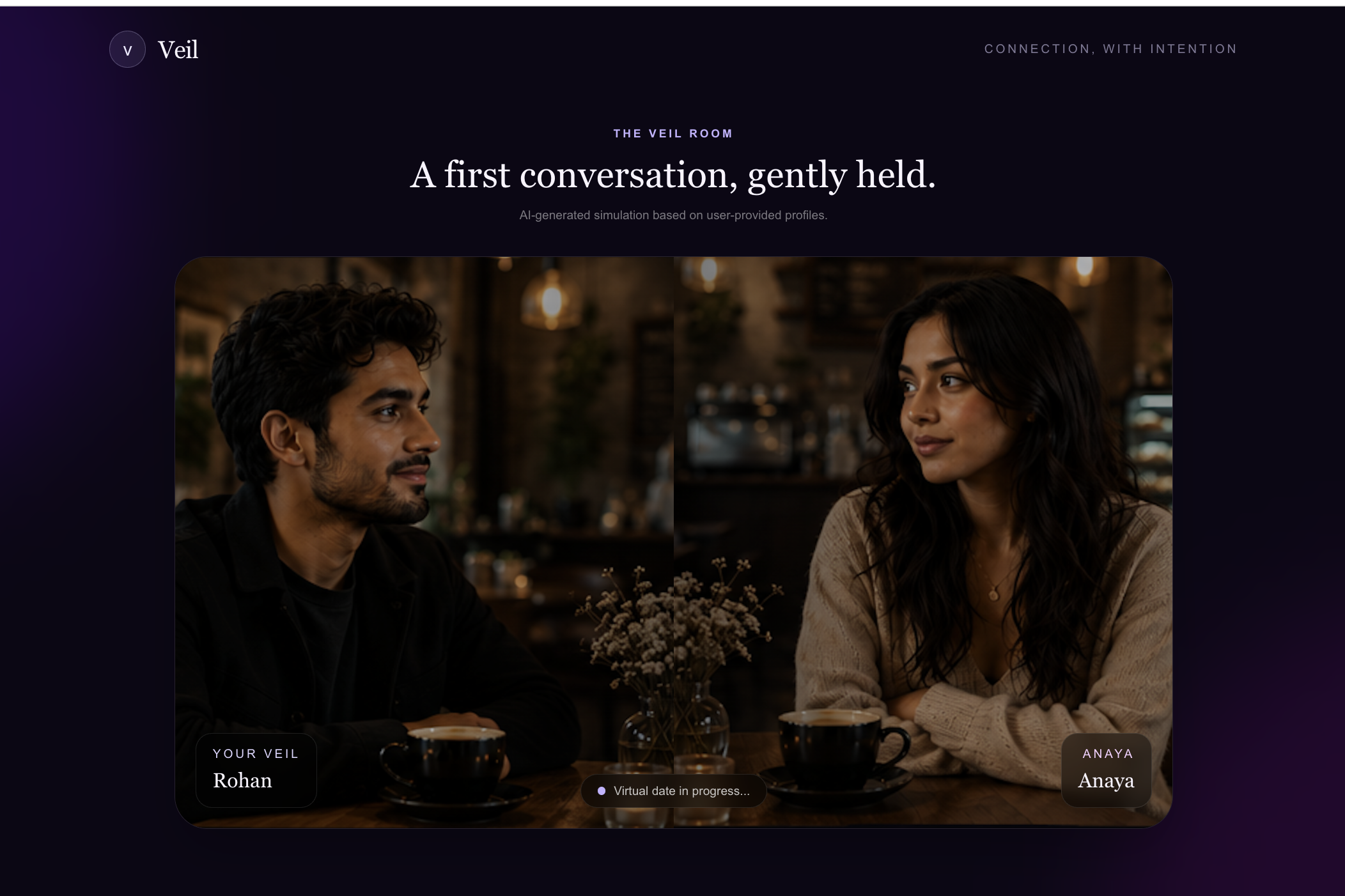
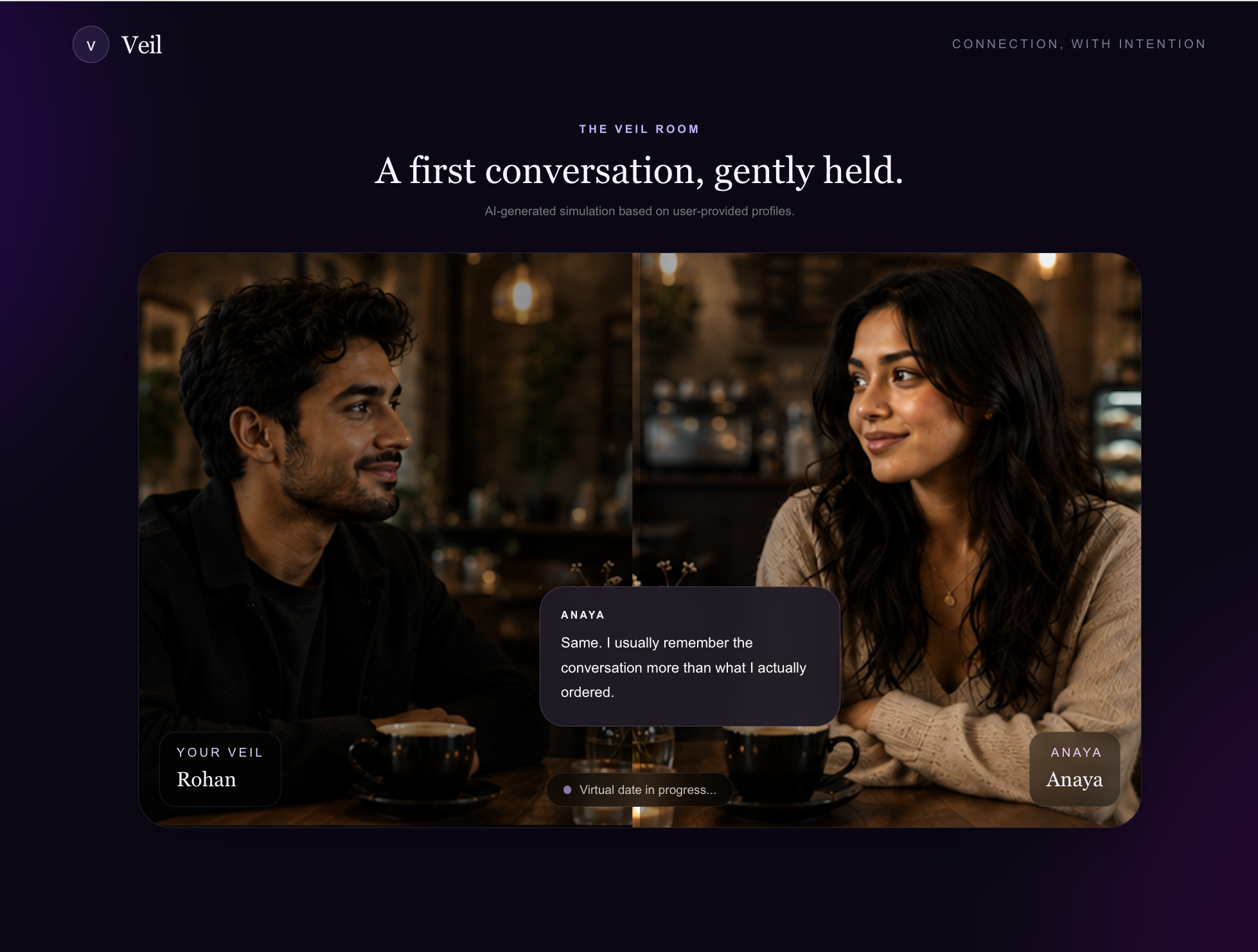
Instead of judging someone by photos, users meet first as customizable avatars using their real voices inside a virtual venue. They can talk, laugh, play games, and get a genuine sense of each other's personality without appearance dominating the interaction.
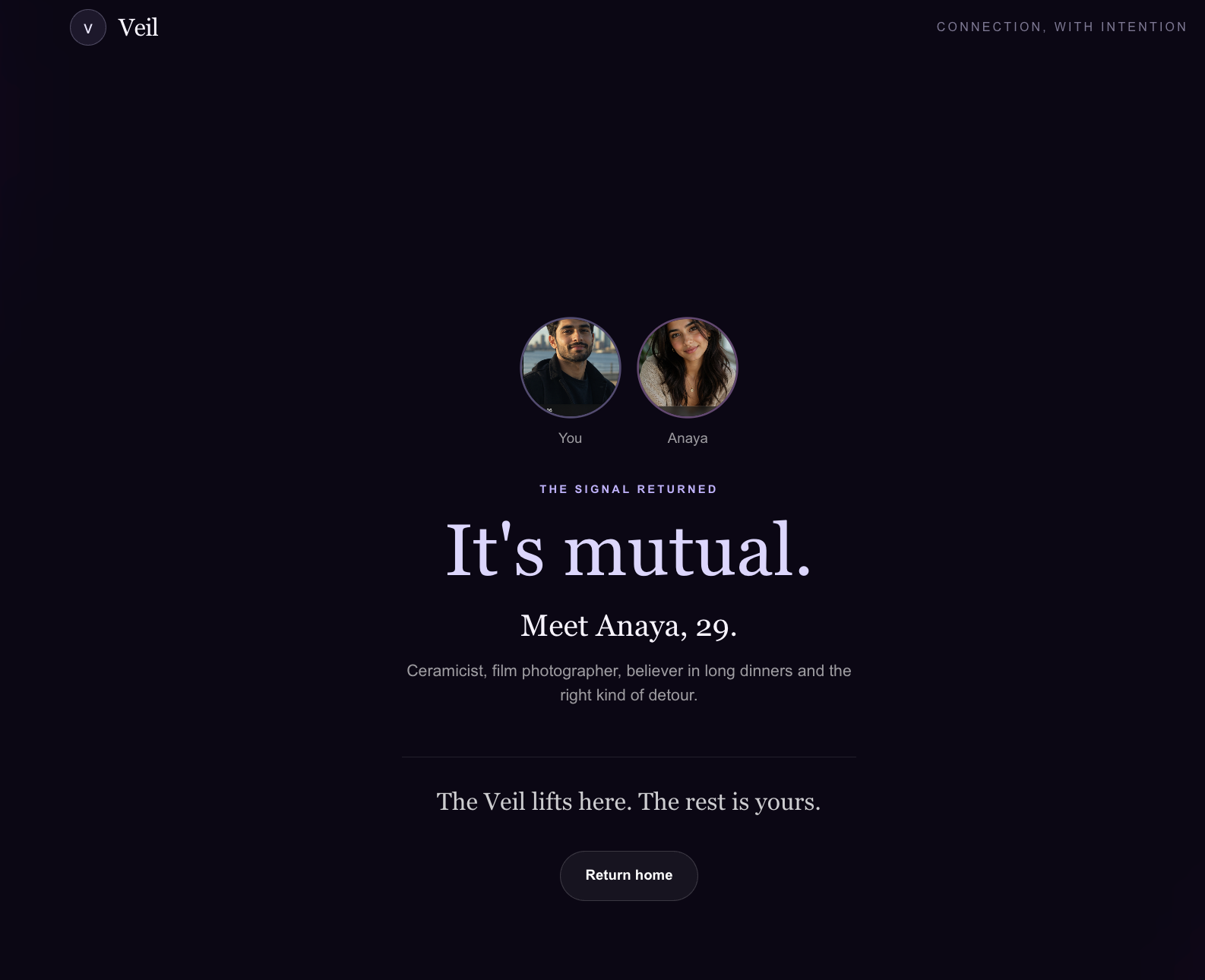
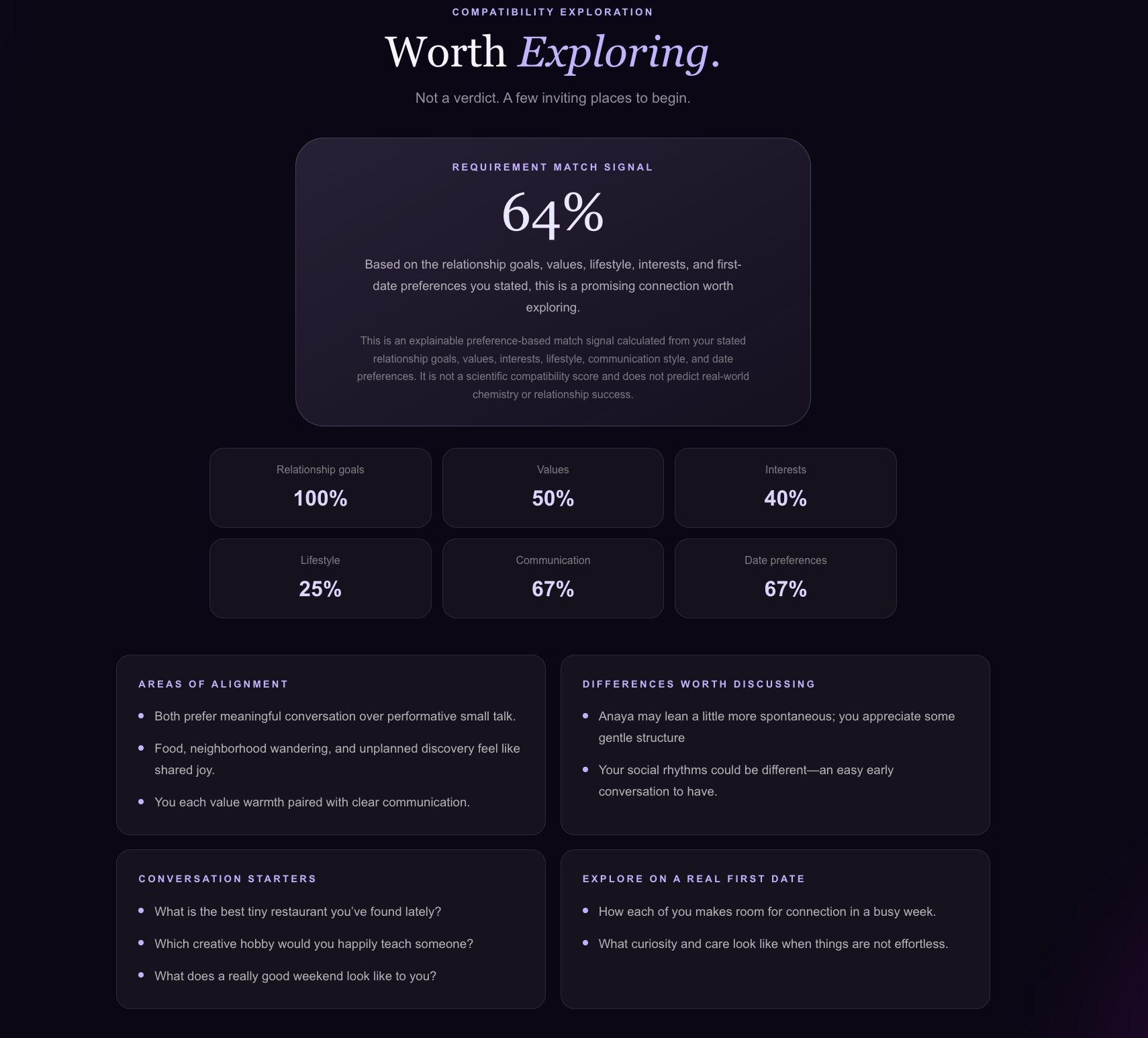
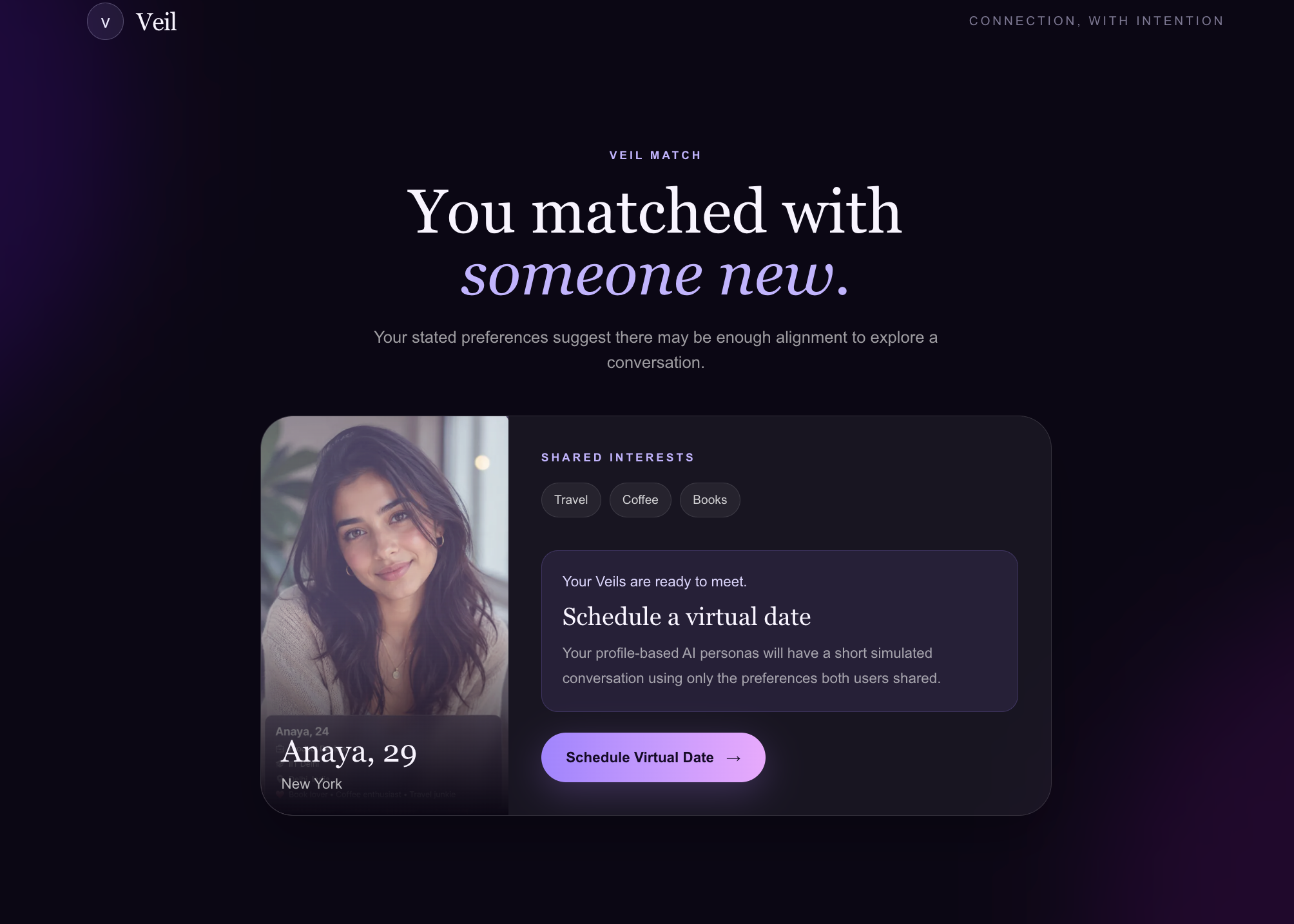
After the conversation, Veil generates an explainable alignment report highlighting where two people connected and where they differed. Photos remain hidden until both users independently choose to reveal them.
Our long-term vision goes one step further.
Every conversation teaches your avatar who you naturally connect with—and more importantly, who you don't. Over time, your avatar becomes an intelligent first-date filter, conducting introductory conversations on your behalf and recommending only the people most worth meeting.
We're not trying to replace dating. We're trying to eliminate bad first dates.
How we built it
We built Veil using Next.js, React, TypeScript, Tailwind CSS, the OpenAI API, GPT-5.6, and Codex.
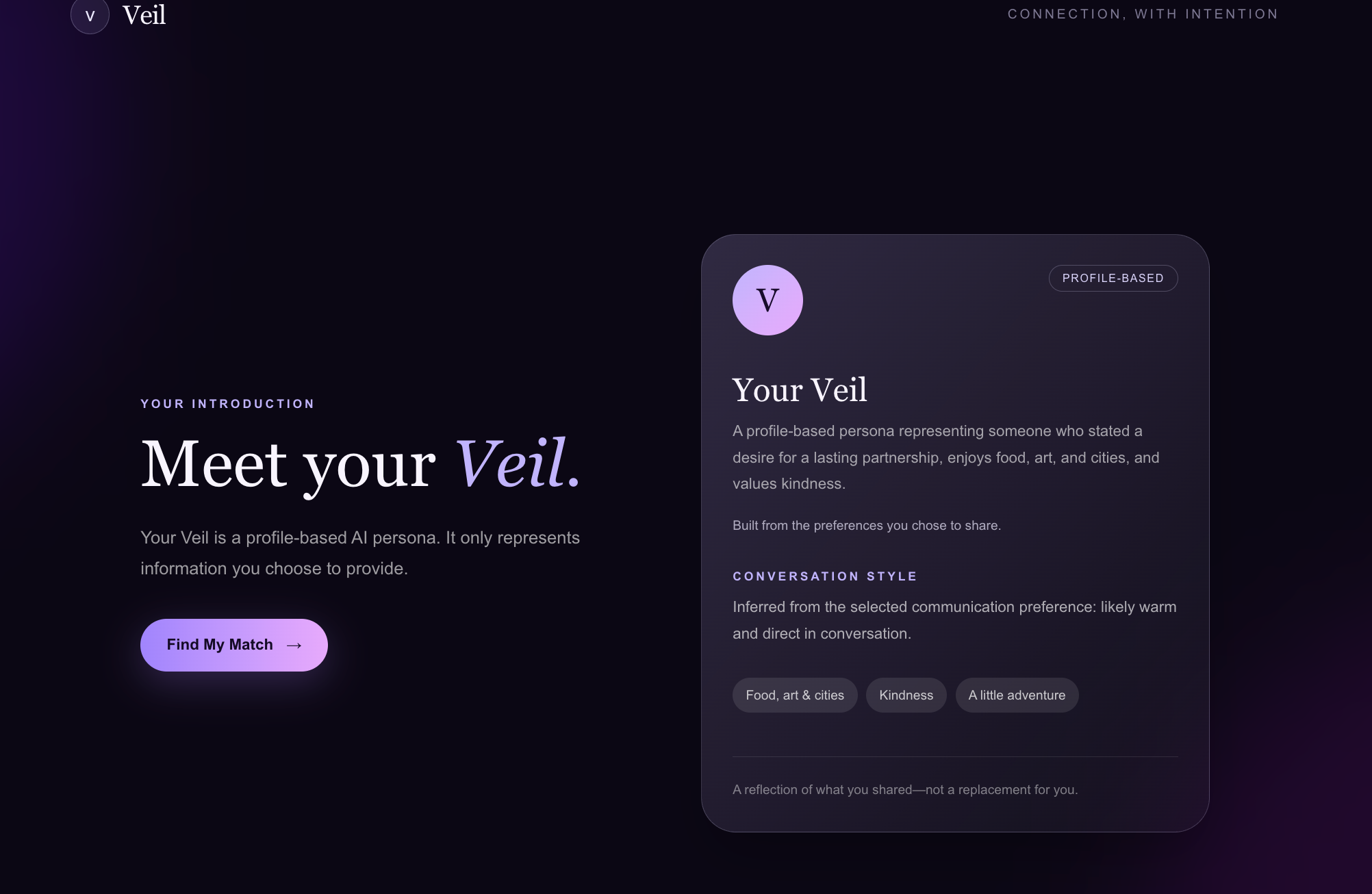
GPT-5.6 helped transform user preferences into structured profile insights, generate conversation context, summarize avatar interactions, and produce explainable alignment reports after each virtual date. Rather than acting as the user, GPT-5.6 helps users better understand their conversations while keeping humans in complete control.
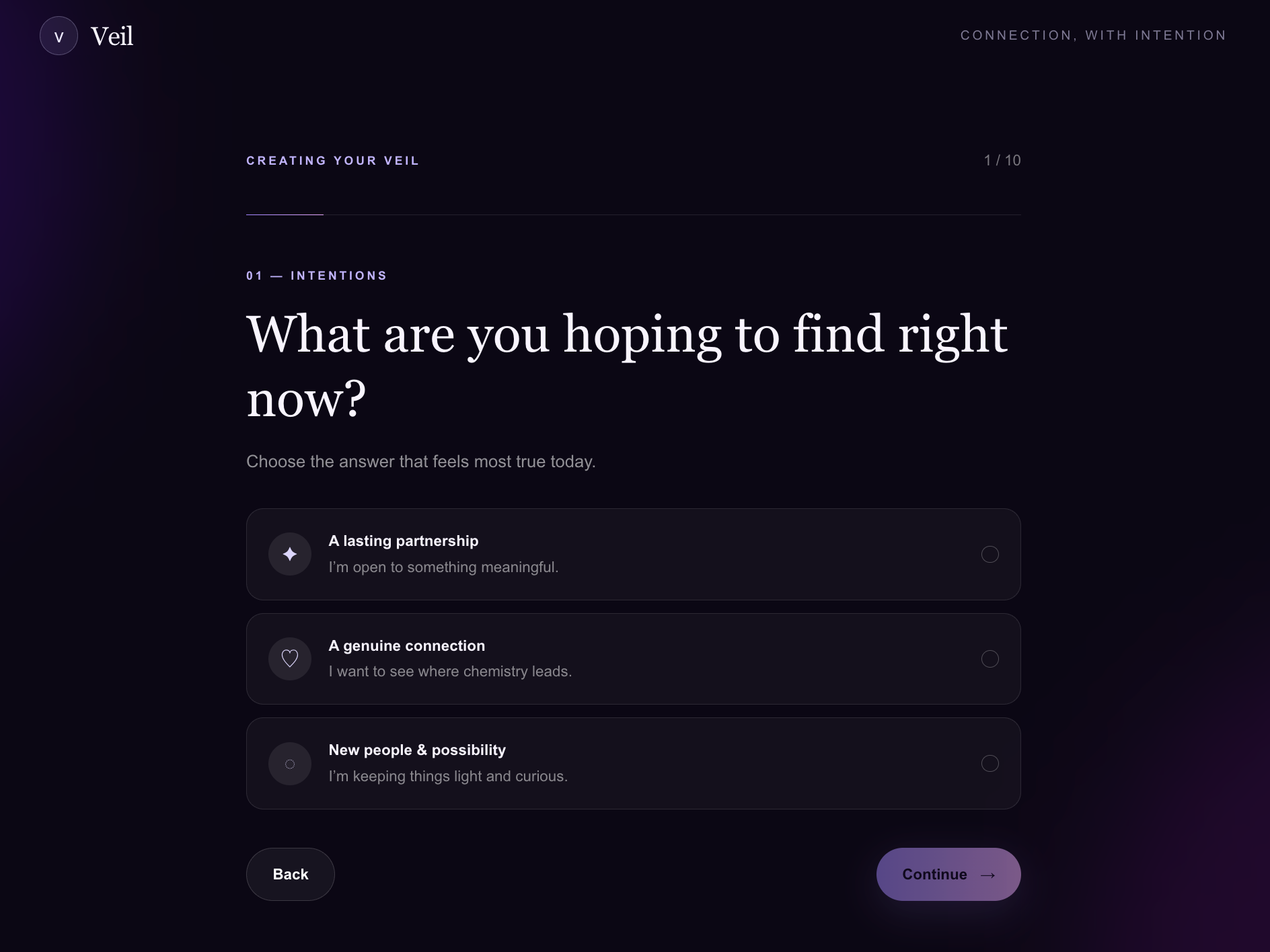
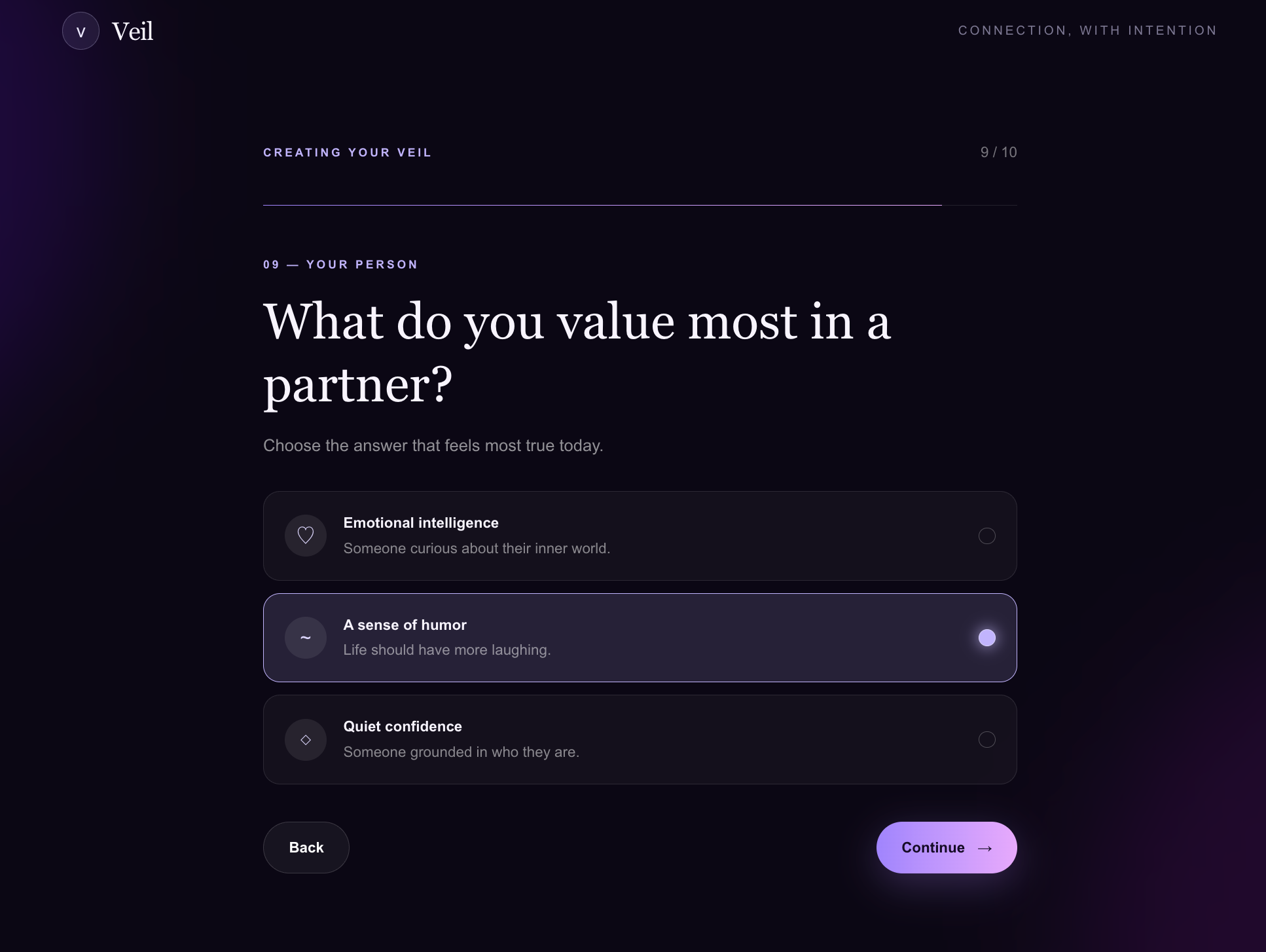
Codex served as our primary development partner throughout Build Week. It helped us scaffold the application, build reusable React components, integrate APIs, debug TypeScript issues, implement onboarding flows, and rapidly iterate on new ideas as the product evolved.
Throughout development we intentionally avoided building a black-box matchmaking system. Every recommendation is designed to be understandable and transparent, because AI should help people make better decisions—not make decisions for them.
Challenges we ran into
Our biggest challenge wasn't technical—it was designing an experience that genuinely captures personality while protecting privacy.
Could two avatars have a conversation authentic enough to predict whether two real people would enjoy meeting? That question shaped almost every design decision we made.
We also had to balance realism with practicality. During the hackathon we experimented with expressive avatars, real-time emotional responses, and AI-generated conversation insights, while remaining constrained by token budgets and inference costs. That forced us to think carefully about how much intelligence belongs in every conversation and how premium experiences could unlock longer, richer interactions in the future.
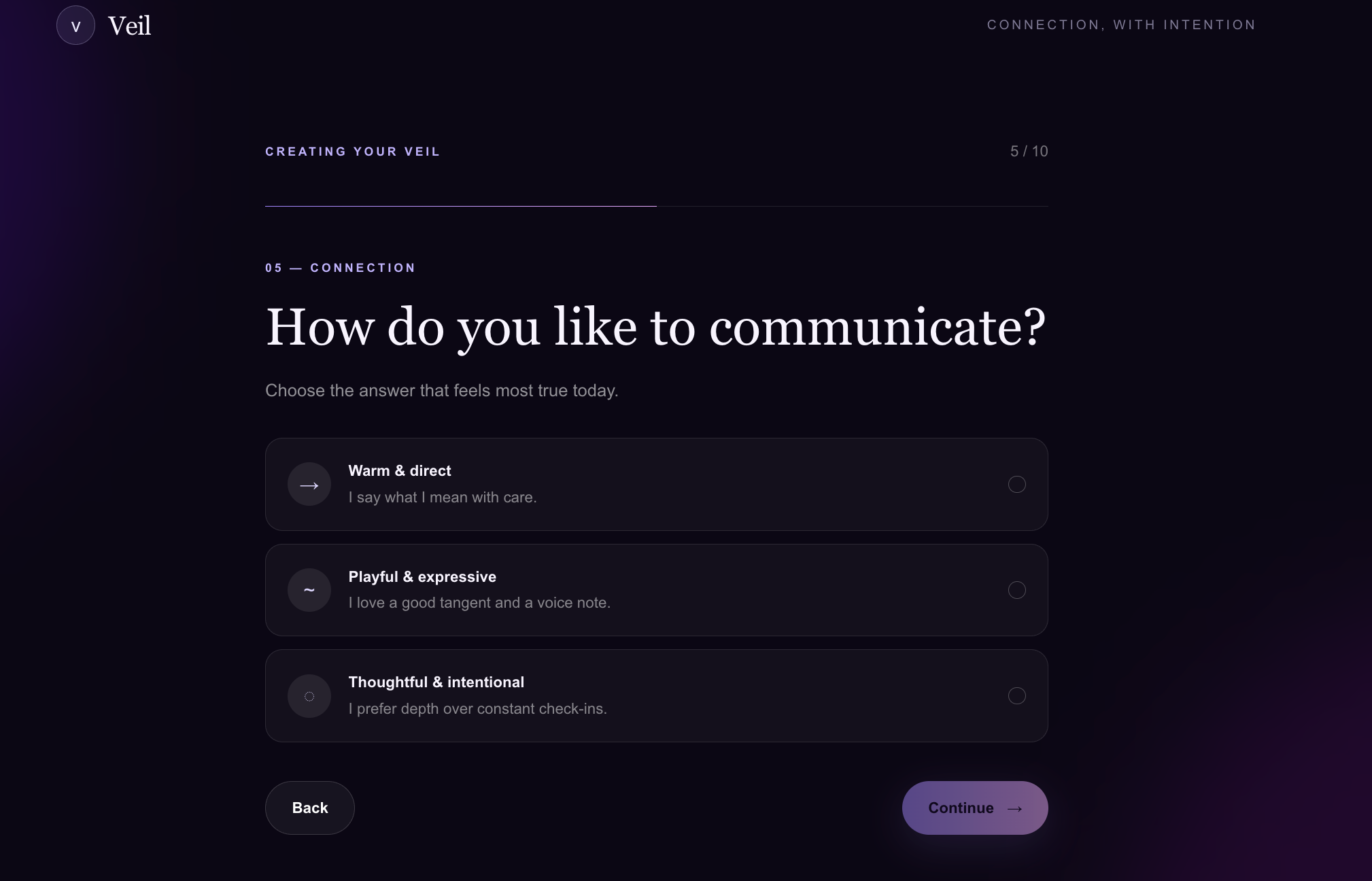
Finally, we spent considerable time designing for trust. Identity verification, consent-based photo reveals, privacy, and user safety weren't features we added later—they became fundamental parts of the product experience.
What we learned
One of our biggest lessons was that AI economics become product decisions.
Longer conversations create better screening experiences, but they also require significantly more inference. That naturally led us to think about premium tiers where users who want richer conversations can unlock additional AI-powered dates.
We also realized that not every relationship goal is the same. Someone casually dating has different priorities than someone actively looking for marriage. That insight inspired a future product we're calling Veil Marriage—a more structured experience with deeper conversations and more nuanced compatibility designed specifically for people seeking long-term partners.
Most importantly, we learned that our biggest innovation wasn't AI itself. It was changing when people meet. Instead of asking AI to replace dating, we used AI to help people decide whether a first date is worth having in the first place.
What's next for Veil
Our roadmap has two acts.
Act One: Build the world's best avatar-first dating experience.
We'll begin with a pilot study involving 10 men and 10 women in New York City, comparing avatar-date chemistry with real-world first dates to validate whether avatar interactions meaningfully predict in-person chemistry. We'll also launch recurring hosted events and live venues while measuring retention, engagement, and mutual reveal rates.
Act Two: Build the intelligent first-date filter.
Every conversation will continue teaching each user's avatar who they naturally connect with. Over time, avatars will conduct introductory conversations on behalf of users and recommend only the people most worth meeting.
We'll also introduce Veil Marriage, a premium experience designed for people seeking long-term relationships, where conversations become longer, more intentional, and optimized around life goals rather than casual dating.
Dating apps optimize for more matches.
Veil optimizes for fewer bad dates.
The first date happens before the first date.
Built With
- codex
- git
- github
- jaccard
- next.js
- node.js
- openai-api
- openai-javascript-sdk
- react
- similarity
- statistics
- tailwind-css
- typescript

Log in or sign up for Devpost to join the conversation.