-
-
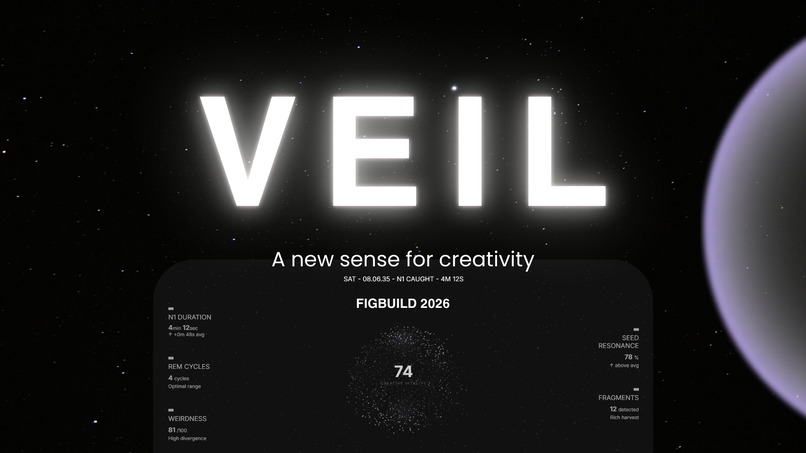
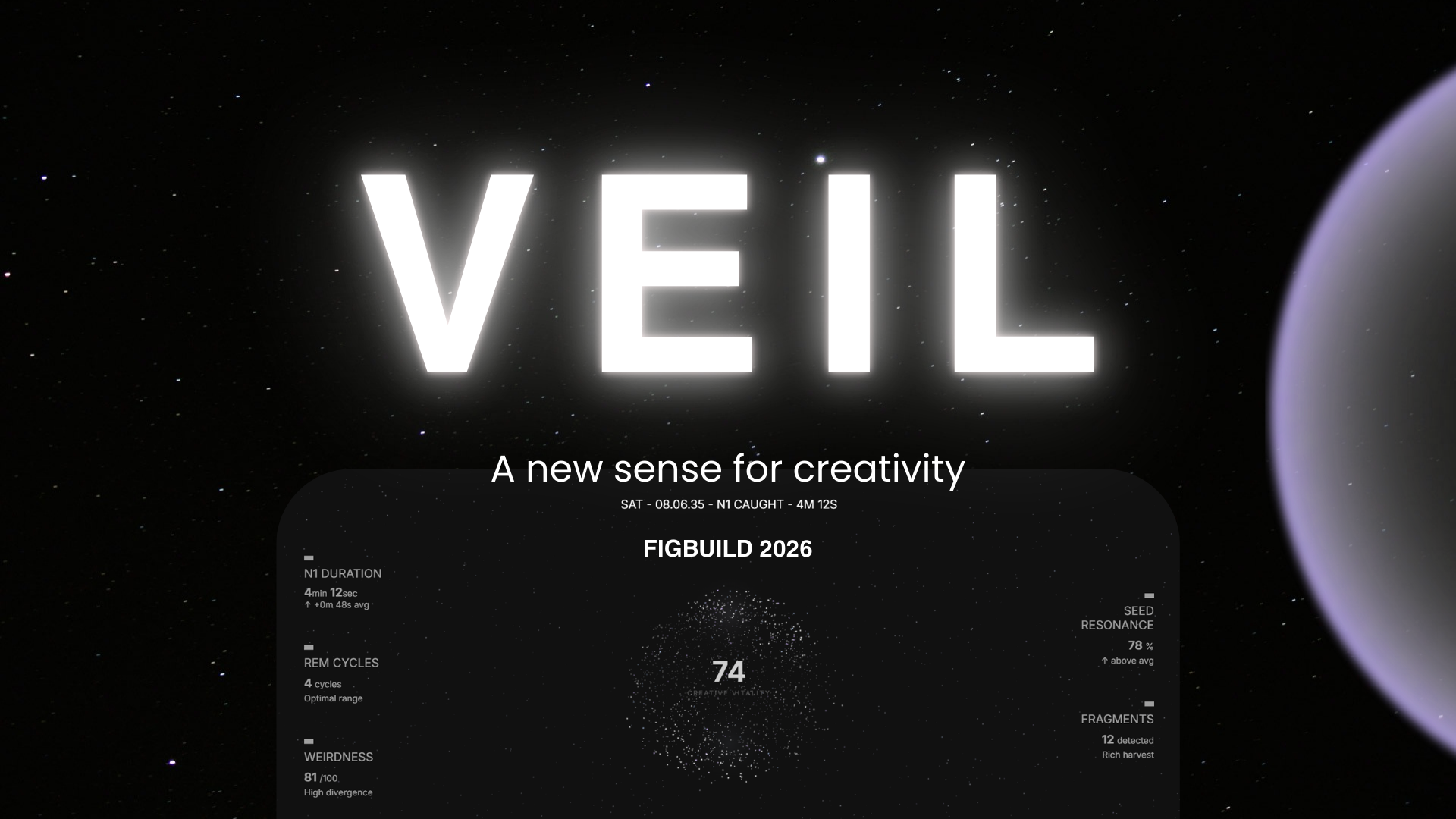
Introducing VEIL, a new sense for creativity
-
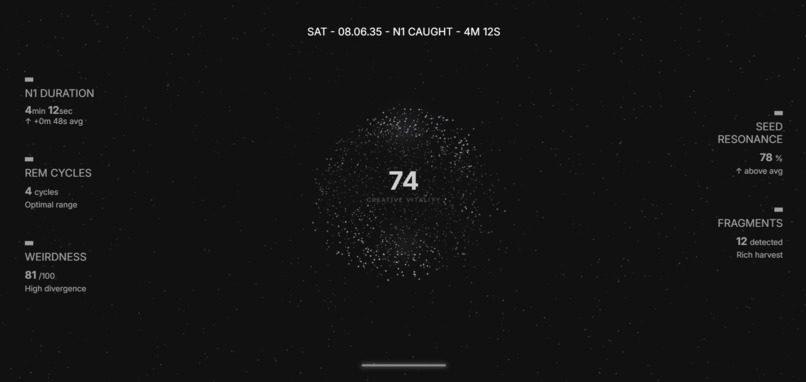
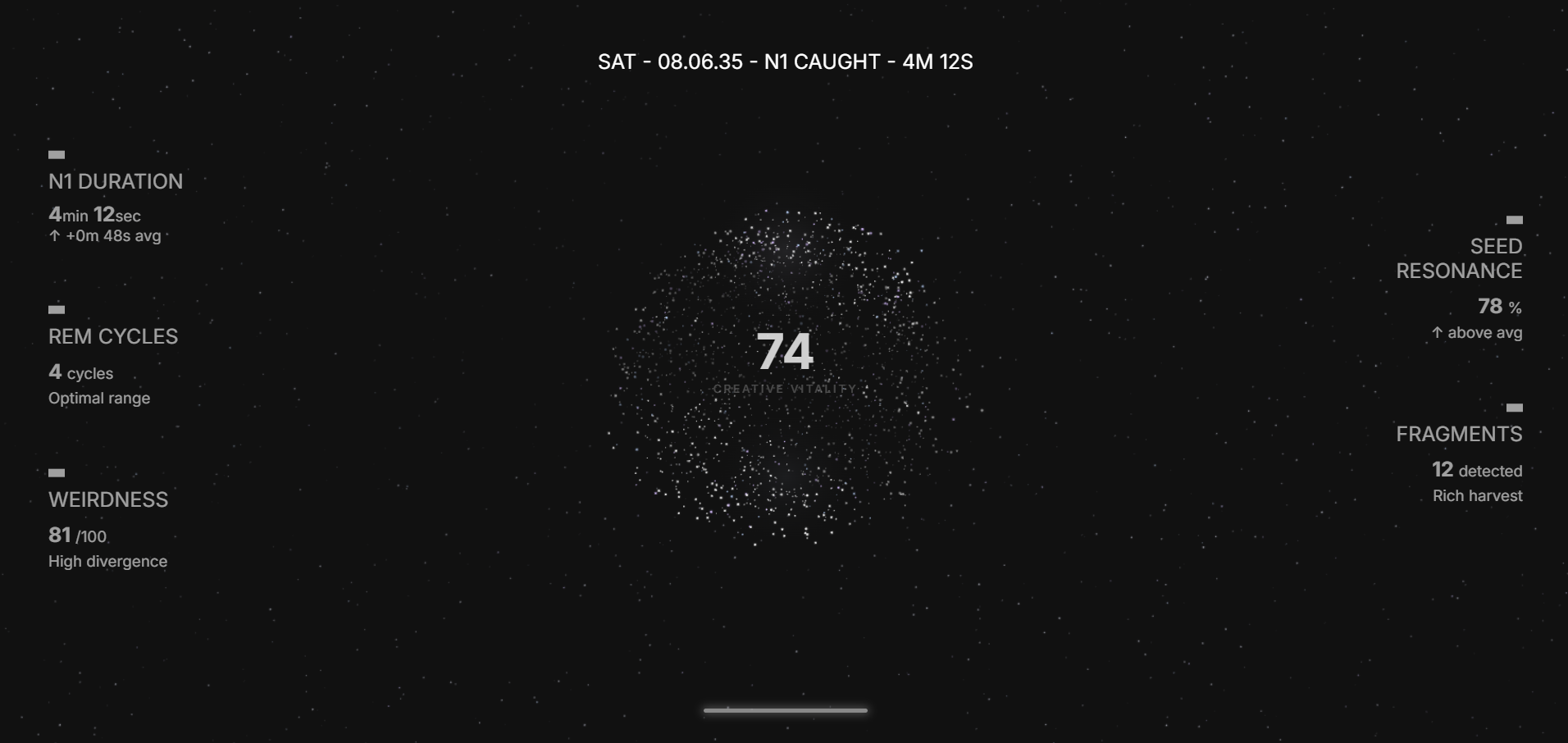
The Home Snapshot (Feature 1)
-
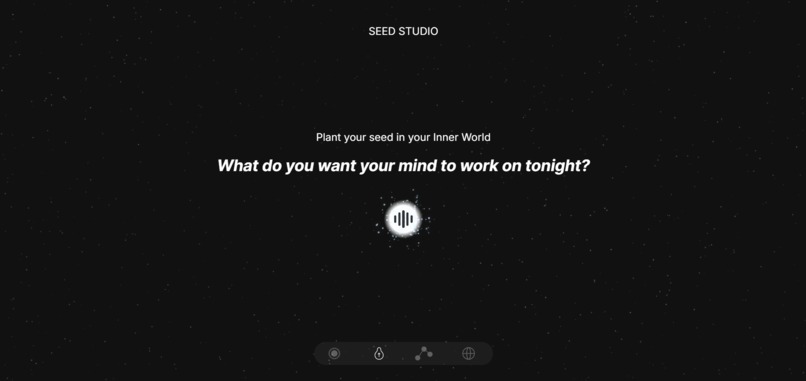
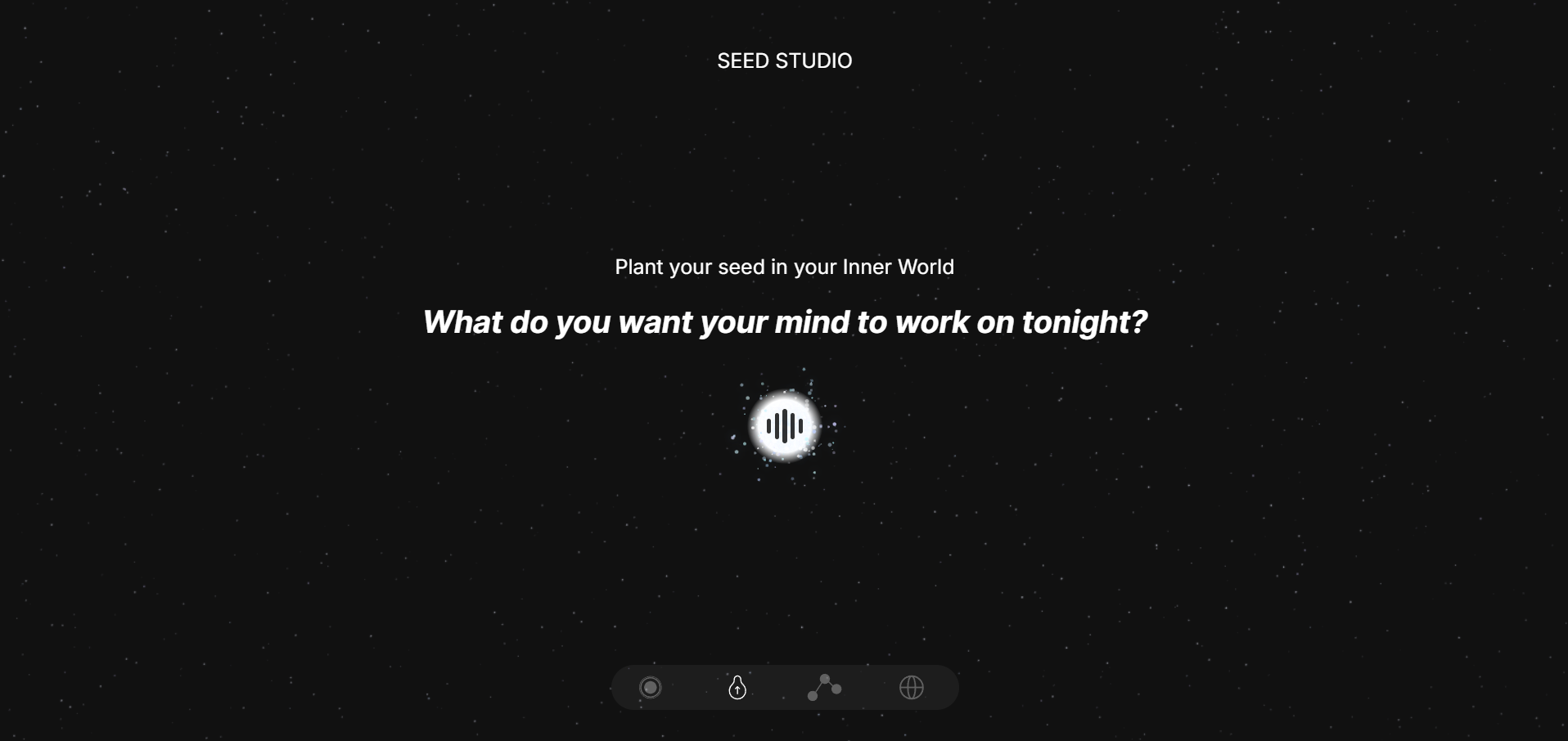
The Seed Studio (Feature 2)
-
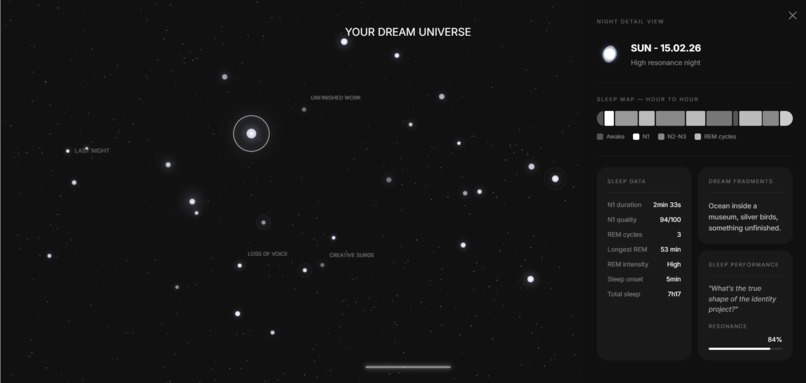
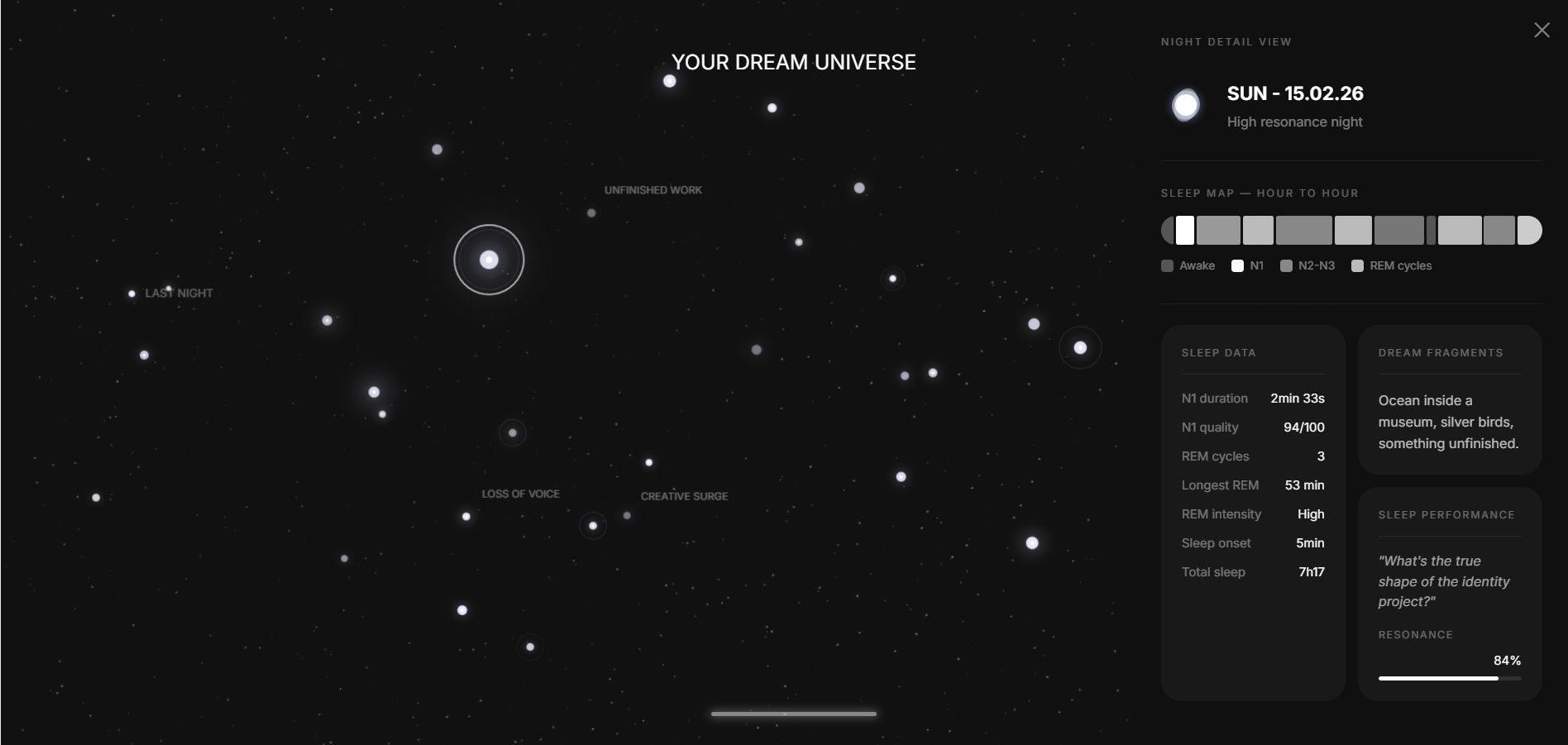
Your Dream Universe (Feature 3)
-
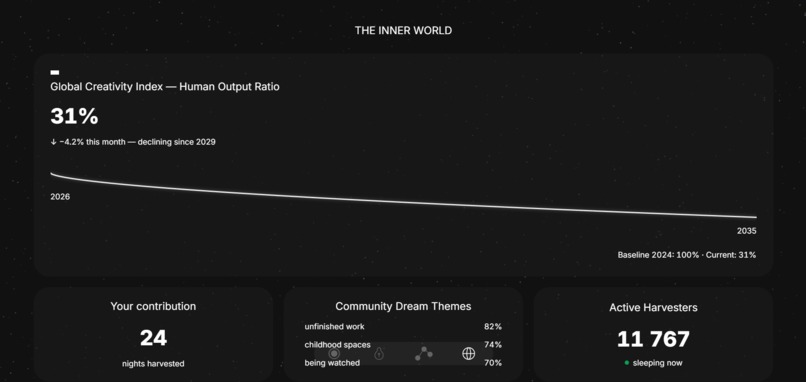
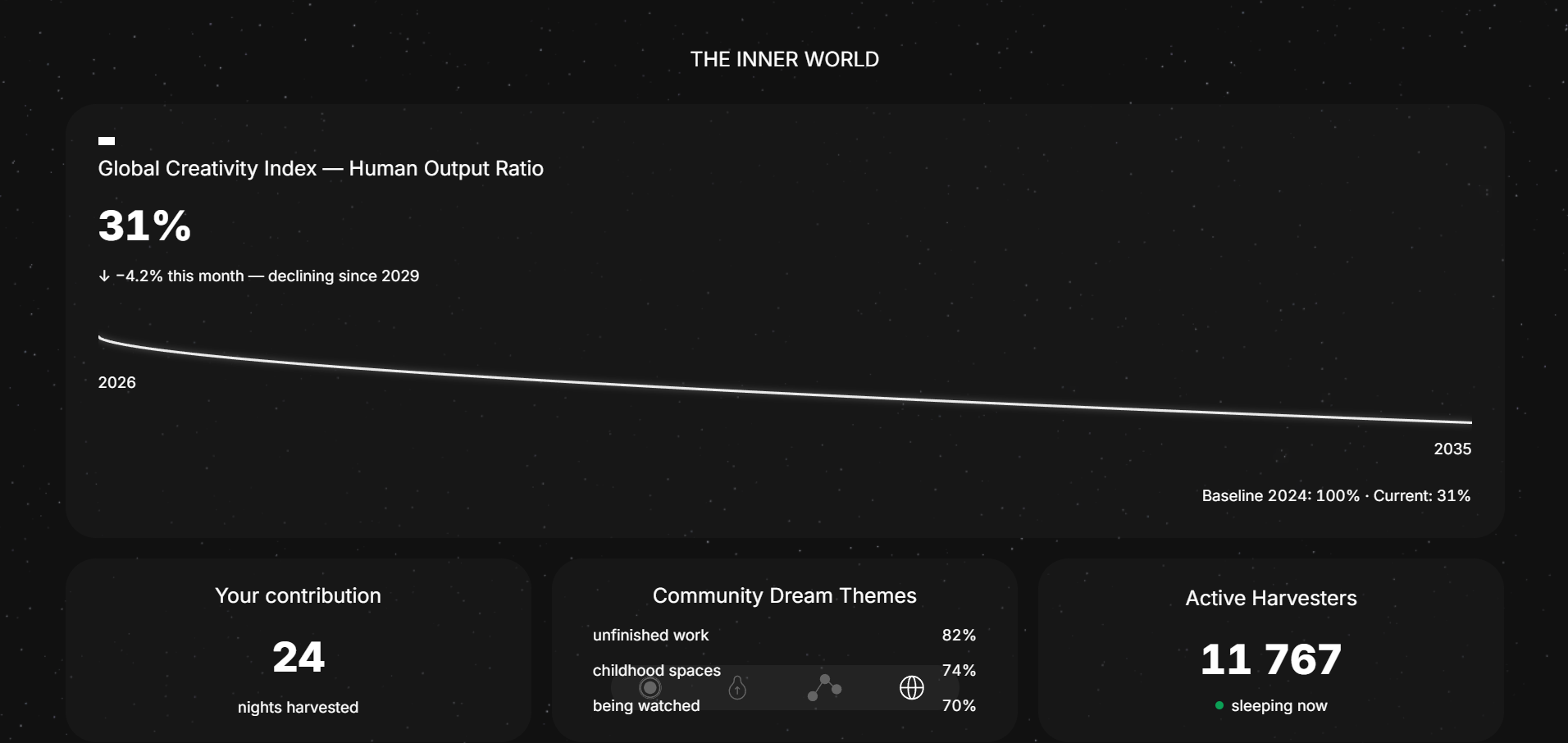
The Inner World (Feature 4)
Inspiration:
The idea for VEIL began at the intersection of two ideas that feel like they belong to the near future dream capturing and neural interface technology like Neuralink.
We kept coming back to a simple but unsettling observation: the moments when humans are most creative deep in REM sleep, mid-daydream, in that foggy threshold between waking and sleeping are exactly the moments we have the least ability to capture and understand. The most generative state of the human mind is also the most invisible one. We started asking what it would look like if that invisibility was finally lifted. Not through journaling or self-reporting, but through a speculative sensing layer that could sit between your cognitive processes and your conscious awareness making the unconscious, visible. VEIL was born from that question.
What It Does:
VEIL is a speculative cognitive tool that captures the signals surrounding your creative mind dream fragments, sleep cycles, emotional states, and spontaneous idea flashes and transforms them into something you can actually see and explore.
At its core, VEIL detects moments of high creative potential and maps how ideas emerge, evolve, and connect over time. Each dream insight or spontaneous idea becomes a node in a dynamic living visualization a personal map of your imagination. Clusters form around recurring themes, connections surface between ideas you didn't know were related, and patterns emerge that reveal when you're most creatively alive and what triggers that state.
For creators, designers, and knowledge workers, VEIL answers three questions that no tool has ever seriously tried to answer: When am I most creative? What triggers my inspiration? And how is my subconscious actually influencing my thinking?
How We Built It:
Entirely within the Figma ecosystem, using Figma Design for the visual language and interface architecture, and Figma Make to bring the interactive and dynamic layers to life. The node visualization system and the interactive dream mapping interface were prototyped and connected within Make, allowing us to simulate the living, responsive quality of VEIL's core experience. We used React to build and structure the interactive components, and integrated Claude as the intelligence layer powering the reflective responses to dream inputs, detecting thematic patterns across entries, and generating the language that makes VEIL feel like it genuinely understands what you're describing rather than simply logging it.
Challenges We Ran Into:
The technical challenges were real React introduced integration issues we hadn't anticipated, and building animations and transitions that felt organic and intentional rather than decorative took far longer than expected. Getting motion to feel like it belonged to the concept slow, breathing, non-mechanical required a lot of iteration. But the deeper challenge was conceptual. Finding the right prompts for Claude was harder than we expected not because the technology wasn't capable, but because the experience we were designing for is genuinely subtle. We needed Claude to respond to half-formed dream fragments in a way that felt expansive rather than clinical, understood rather than analyzed. That required a lot of refinement.
The biggest challenge of all was making sure the interface itself felt genuinely new. We weren't building a wellness app or a journaling tool we were designing something that monitors a sensory and cognitive experience that has never had a visual language before. Every UI decision had to be justified by the concept, not convention.
Accomplishments We're Proud Of:
The animations are the thing we're most proud of. Getting the node visualization to feel alive to breathe and shift in a way that mirrors how ideas actually feel when they're forming was a real craft achievement. It would have been easy to make something that looked impressive but felt like a dashboard. We pushed until it felt like something else entirely. We're also proud that VEIL feels coherent. Every screen, every interaction, every word of copy serves the same idea. That kind of intentionality across a whole team, built under time pressure, is harder than it sounds.
What We Learned:
We learned how genuinely hard the brainstorming process is and how dangerous it is to skip it. We spent significant time at the start not just deciding what to build, but why it should exist, who it's for, and what feeling it should leave someone with. That investment paid off in every decision that came after. We also learned what it actually means to be aligned as a team. Not just agreeing on features, but agreeing on the soul of the thing — what VEIL believes, what it refuses to be, and what success looks like for a user three months in. When that alignment exists, every design decision becomes easier because you always have something to measure it against.
What's Next for VEIL:
VEIL was always intended as a proof of concept for a speculative future a design artifact that asks what cognitive tools could look like when sensing technology catches up to human experience. The natural next step is the world that makes VEIL fully real where passive neural sensing, ambient biological data, and real-time REM monitoring make the input layer automatic rather than manual. Where VEIL doesn't wait for you to describe a dream fragment but perceives it alongside you.
In that world, VEIL becomes something closer to a creative nervous system an always-present perceptual layer that maps the invisible geography of your imagination in real time. We built the interface for that world. The technology is catching up.
Built With
- claude
- figma
- react


Log in or sign up for Devpost to join the conversation.