Inspiration
What it does
How I built it
Challenges I ran into
Accomplishments that I'm proud of
Inspiration
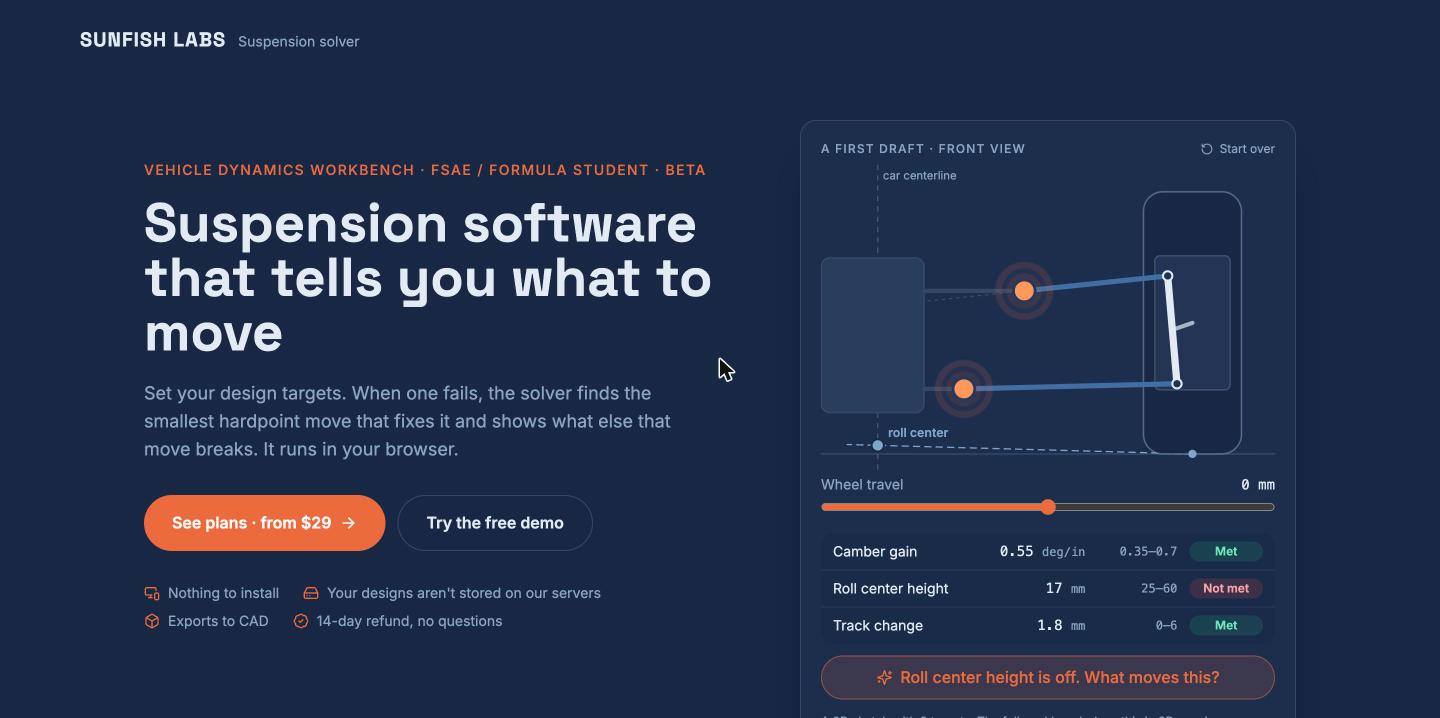
Designing a double-wishbone corner usually means changing a hardpoint, re-running the kinematics, and checking whether you made things better or worse somewhere else. The Workbench was built to answer the question that comes after "which target failed?": what should I move, and by how much?
What it does
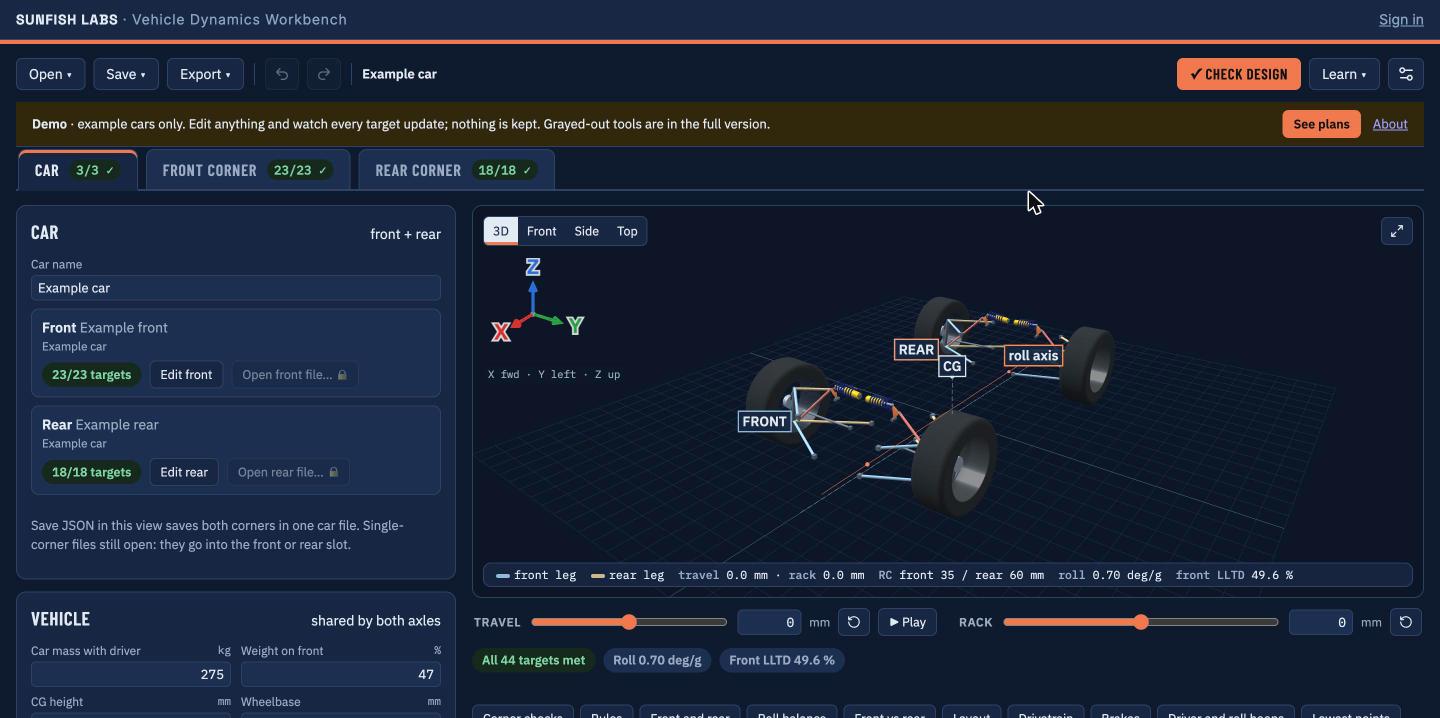
Set your design targets. When one fails, the solver searches single and paired hardpoint moves that bring it back into range. Every candidate is re-solved and re-checked against every other target, so you see the side effects before you commit.
- Both axles in 3D: camber, toe, roll center, caster, KPI, scrub, trail and anti-dive through travel
- Motion ratio, wheel rate, ride frequency and spring rates
- Member forces for bump, cornering, braking and potholes, with buckling and yield safety factors
- Skidpad balance up to the grip limit
- Tire model fitting from your own TTC data, in the browser
- Hardpoints in from SolidWorks; STEP, IGES, FEA part loads, a jig sheet, a setup sheet and a design report out
How we checked it
Three corners run through LABSUS, an independent open-source suspension solver, agree on camber, toe, caster, KPI, scrub and trail within 0.0001 degrees and 0.0001 mm over ±25 mm of travel. Every release also has to match 182 hand calculations and 104 reference comparisons. Roll center is checked against KineSolver on three real corners.
Try it
The free demo runs the example car with nothing to install: https://sunfish-labs.com/solver/demo
What I learned
What's next for Vehicle Dynamics Workbench
Built With
- cloudflare
- react
- supabase
- typescript
