-
-
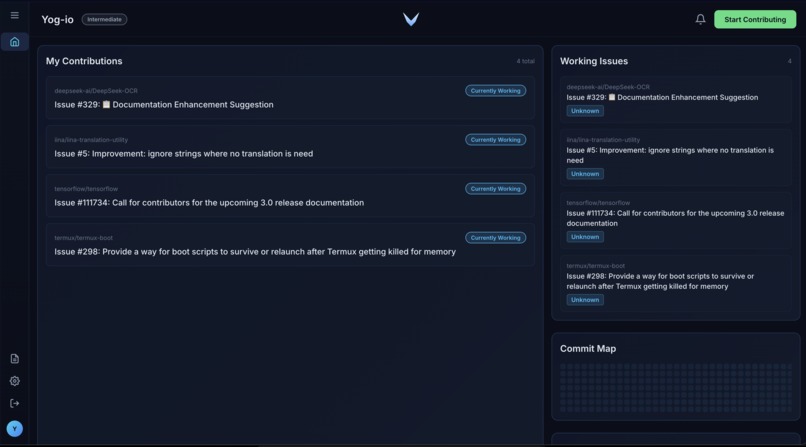
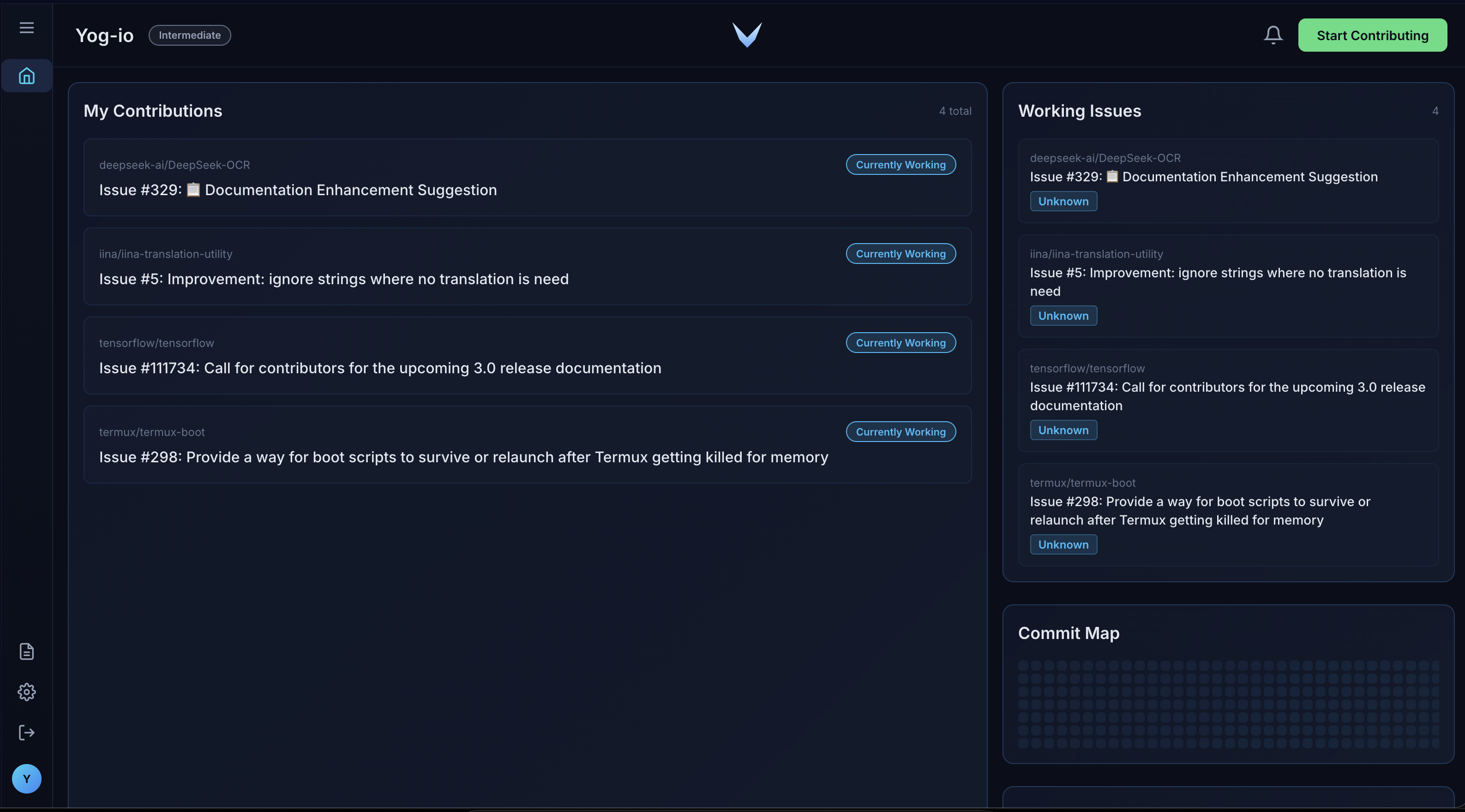
main dashboard screen
-
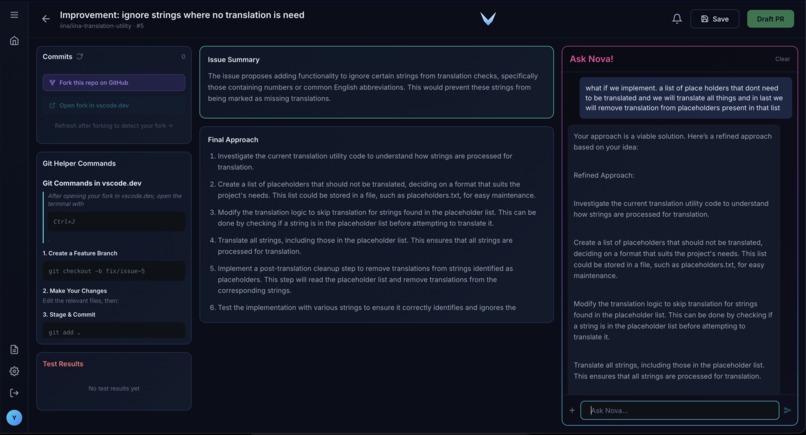
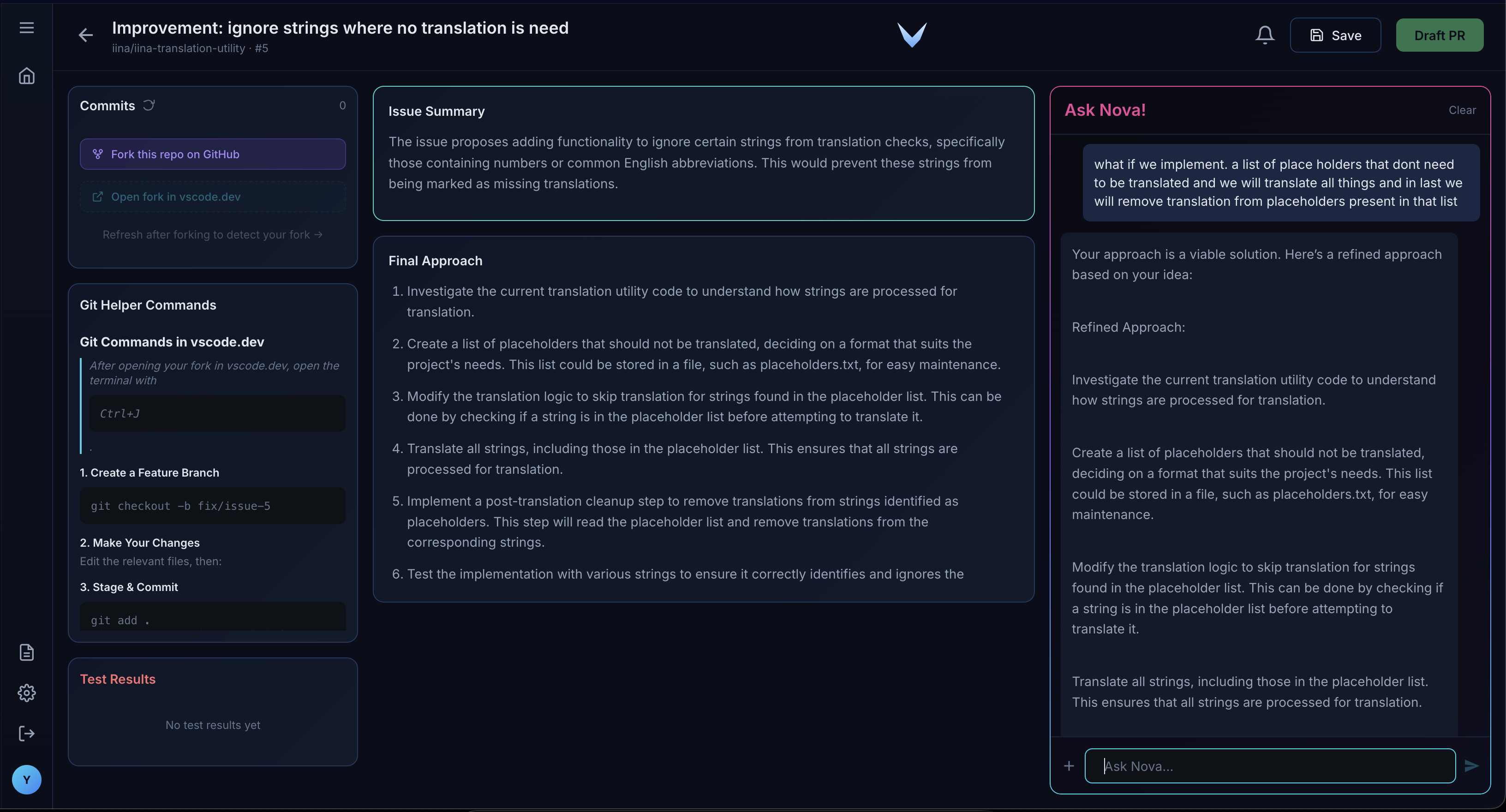
issue contribution screen
-
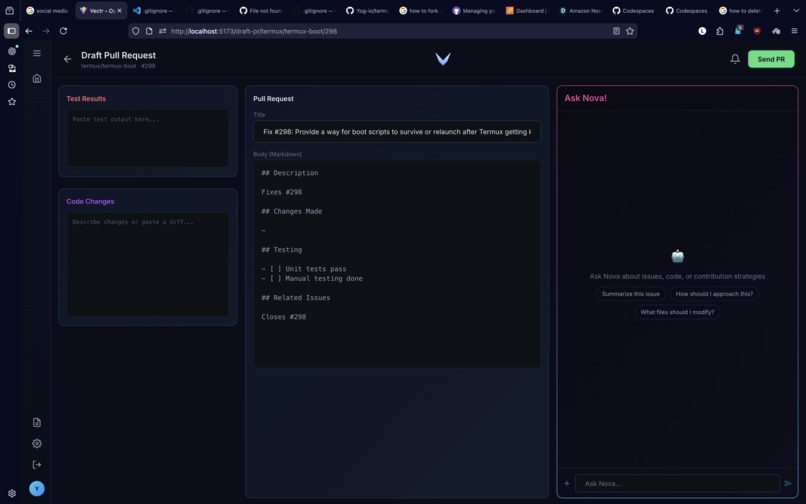
Draft PR screen
-
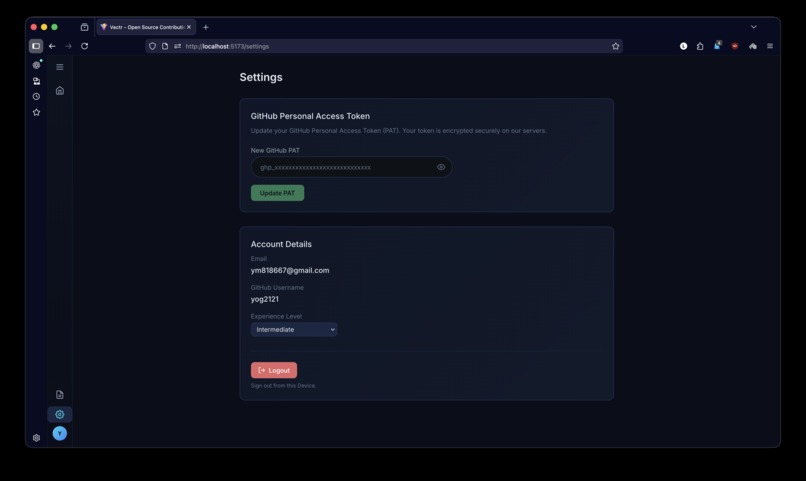
settings page
-
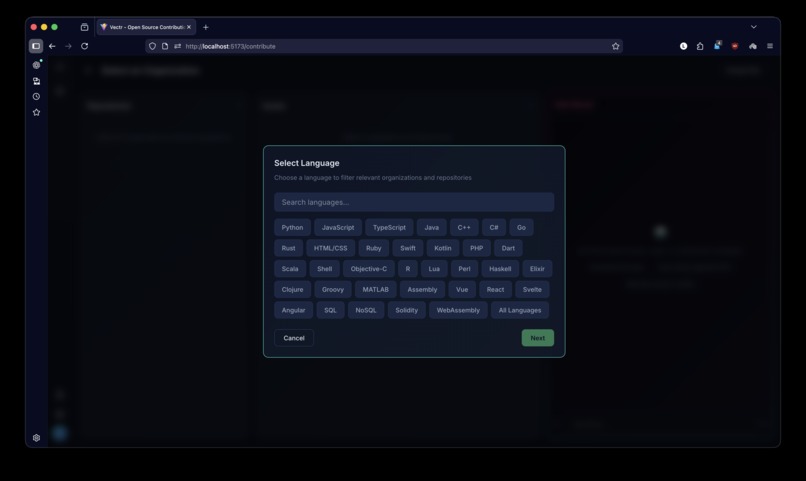
language selection
-
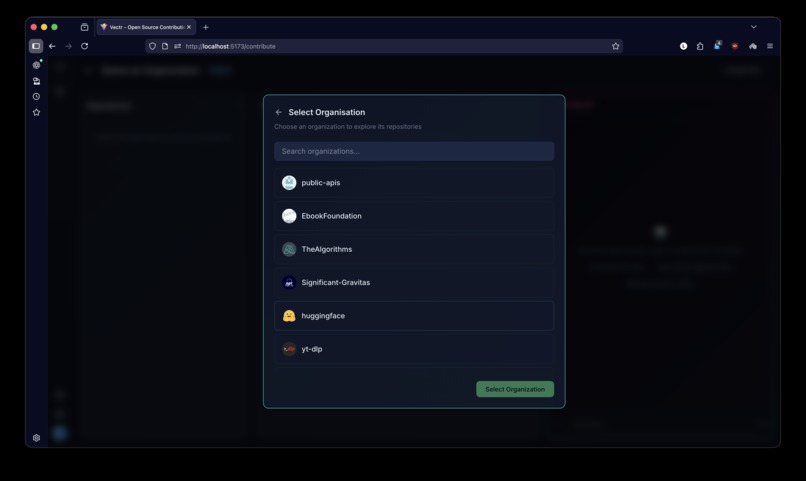
org selection
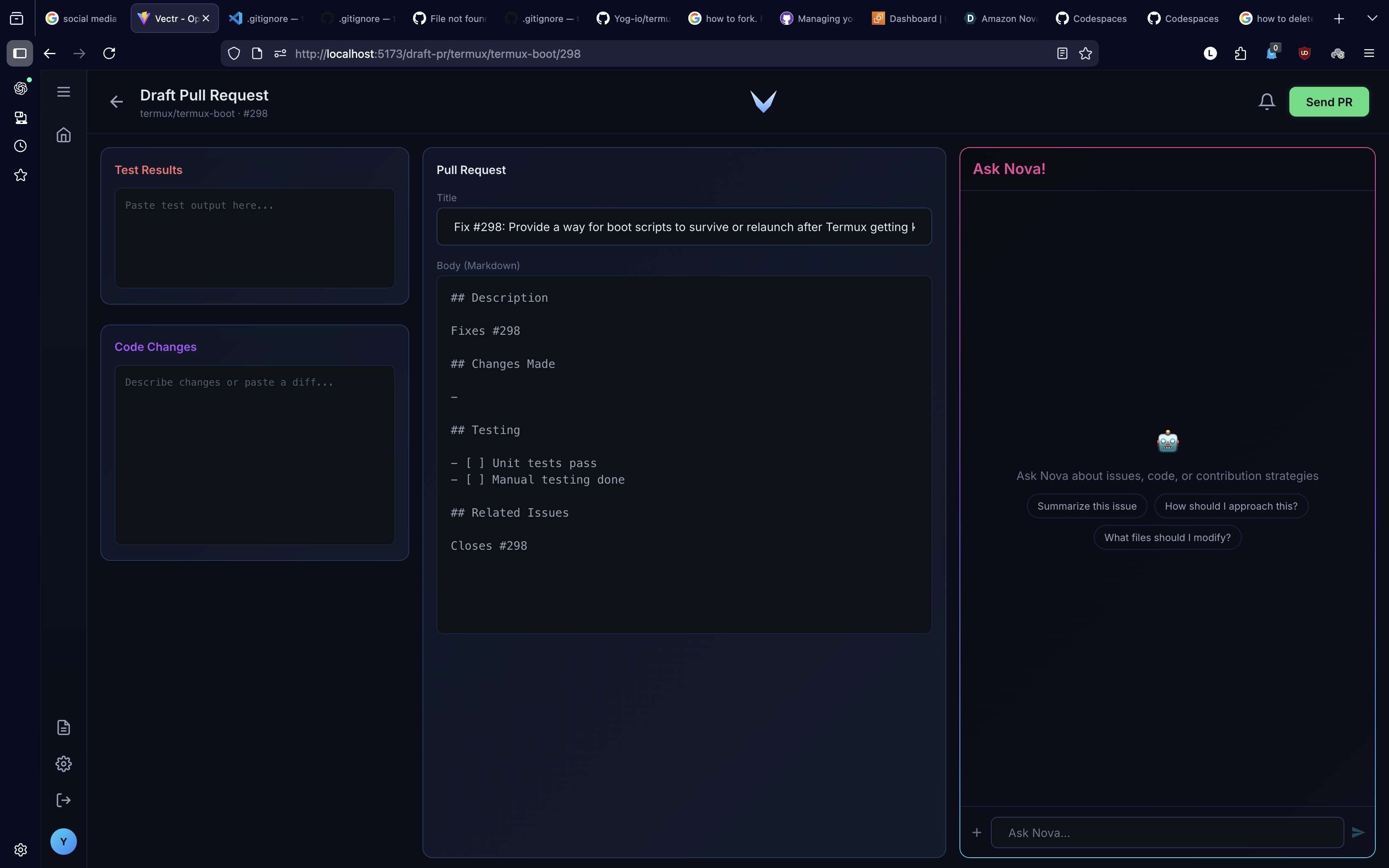
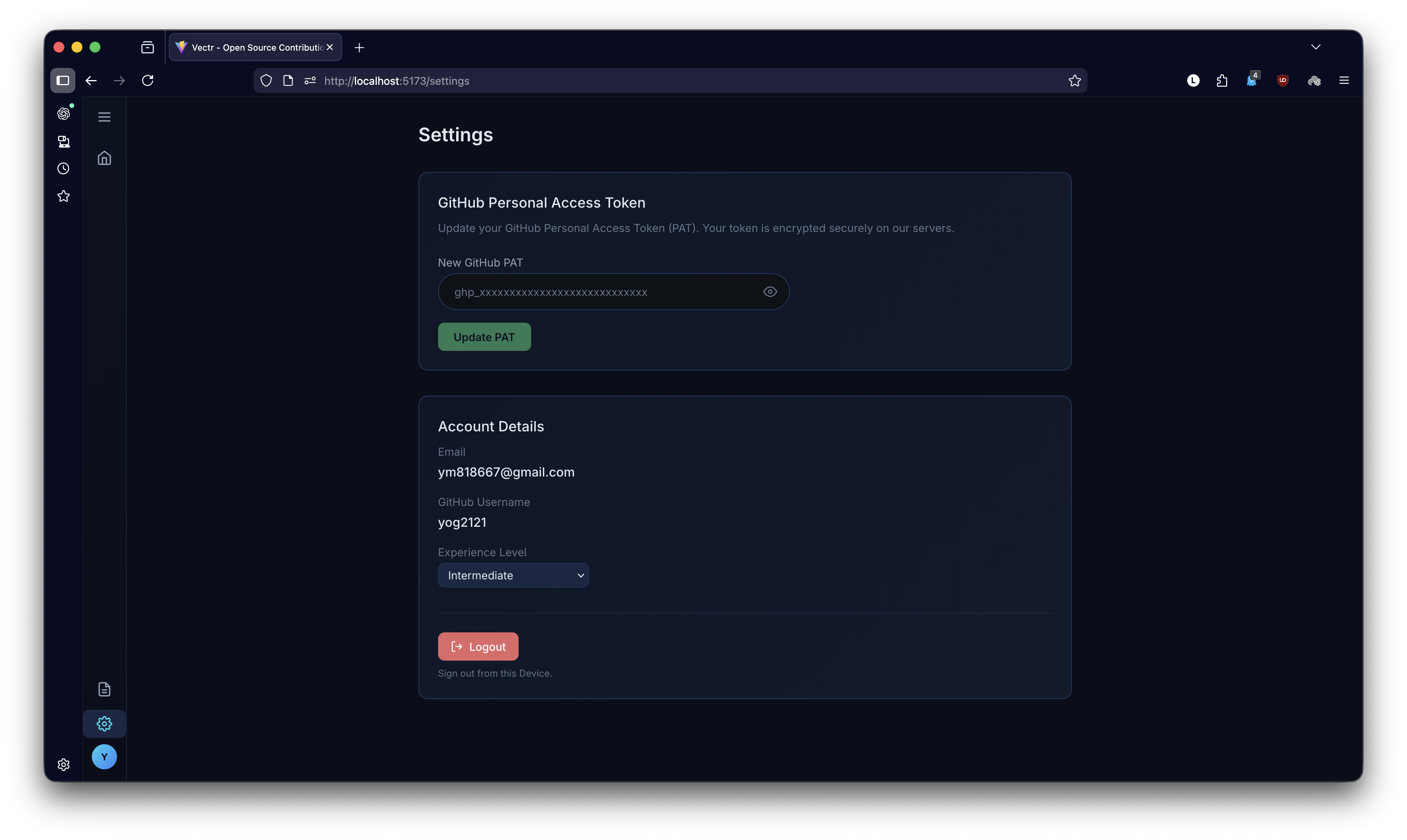
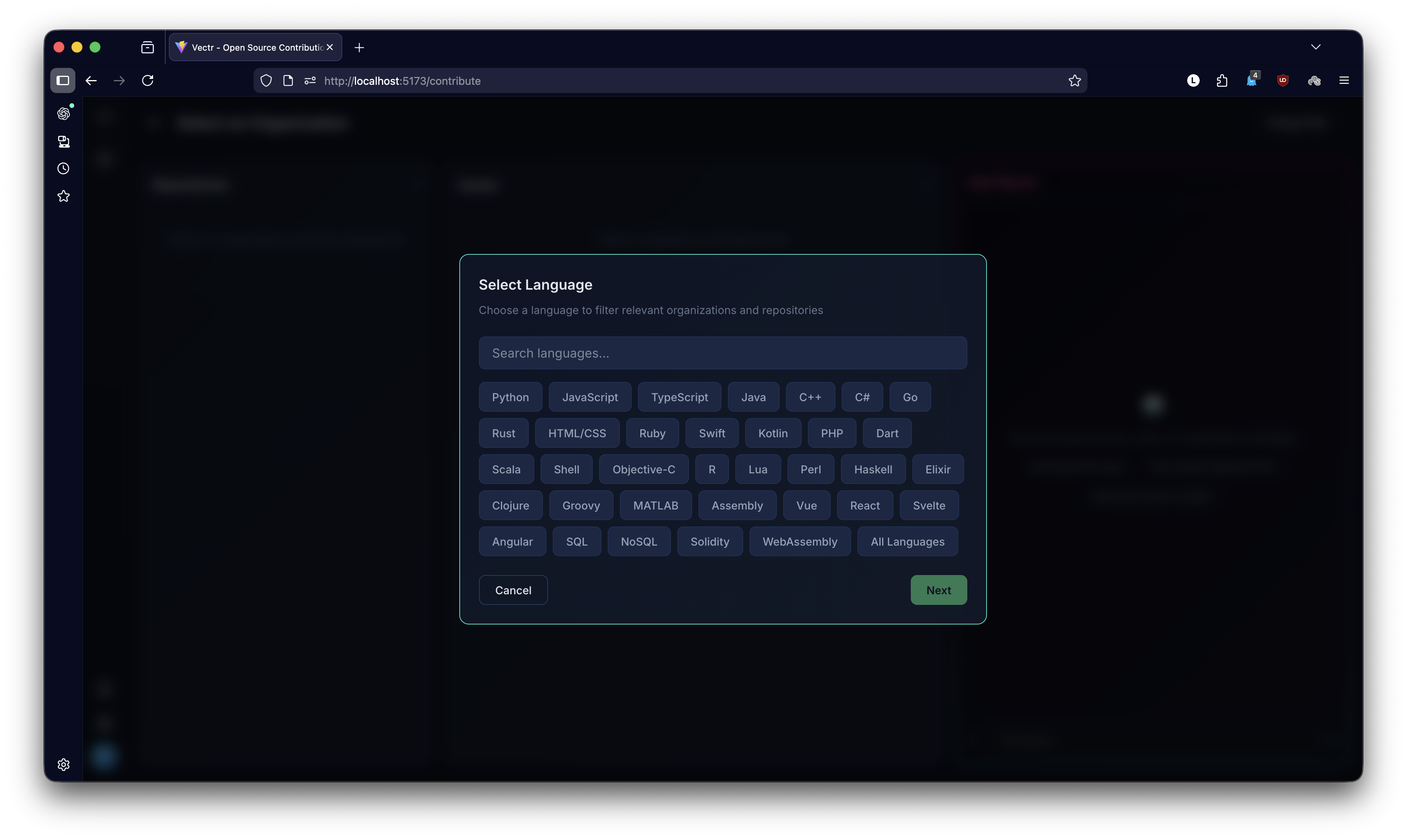
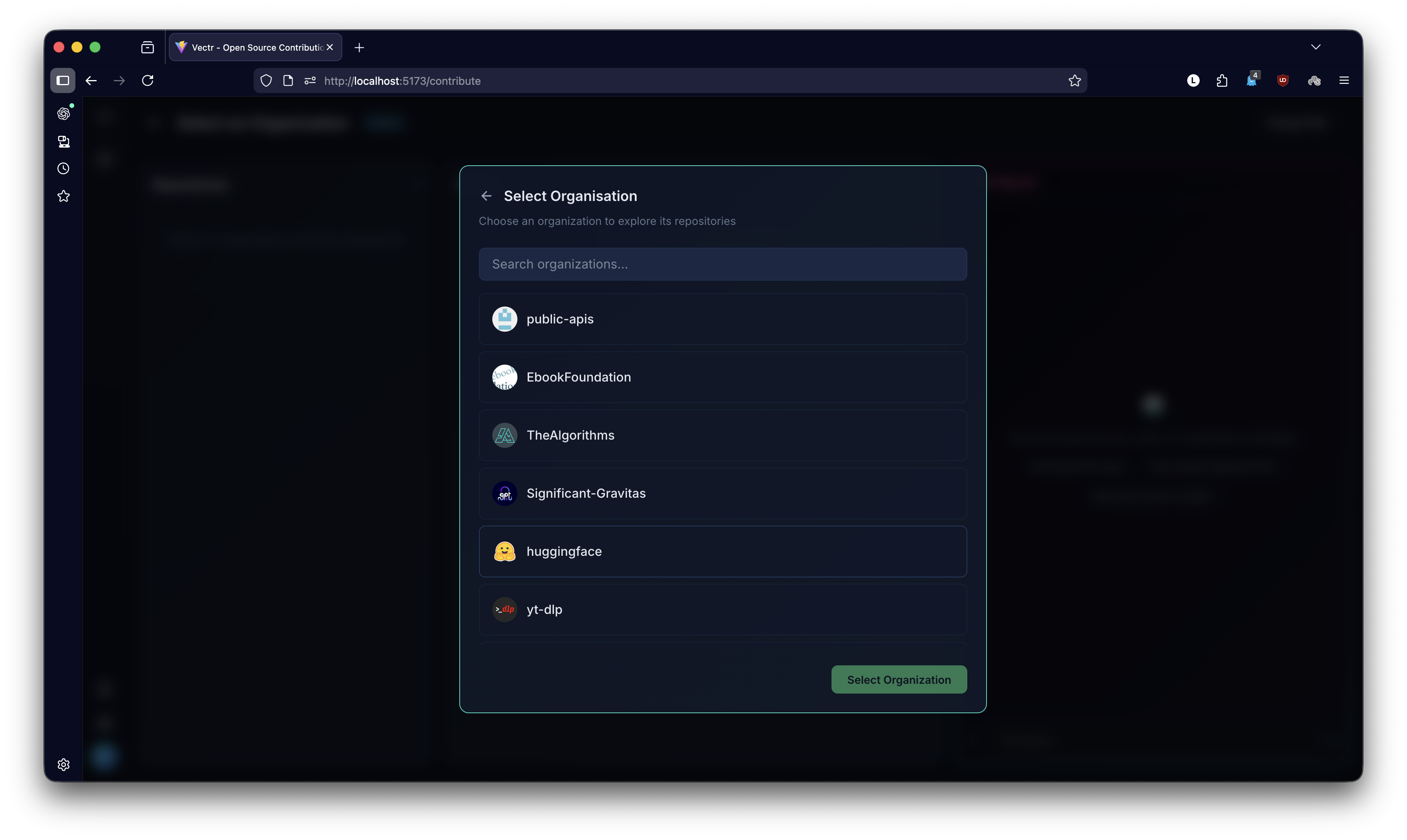
Inspiration
To contribute to the open-source ecosystem, many developers—especially novices—face a "paradox of choice." Thousands of repositories frequently overwhelm them, and they are unclear of which organizations best suit their particular expertise. We were motivated to create a "compass" that streamlines this process, going beyond seasonal occasions like GSOC to encourage significant, year-round involvement.
What it does
Vectr is an intelligent platform for finding open-source organizations and their technical specifications. To find projects that fit their particular tech stack (e.g., Python, Django, FastAPI), users can instantly filter through a curated database after creating profiles and setting their experience levels. It transforms the daunting question of "where do I start?" into a customized road map for a developer's initial pull request.
How we built it
Our asynchronous logic and high-performance API routing are powered by FastAPI. Our reliable, cloud-hosted relational database is PostgreSQL (AWS RDS). To guarantee strict schema integrity, we use SQLAlchemy and Pydantic as our ORM and data validation layers. The infrastructure needed to host our application logic is provided by Amazon Nova and AWS EC2. Python-Dotenv: Protects our cloud credentials by managing sensitive environment variables.
Challenges we ran into
"The Handshake"—connecting our local development environment to a private, secure AWS RDS instance—was our largest obstacle. We overcame difficult networking challenges, such as configuring VPC Route Tables, establishing Internet Gateways, and adjusting Security Group rules to permit particular IP traffic (Port 5432) without jeopardizing the security of the database.
Accomplishments that we're proud of
We successfully constructed a cloud-connected backend that is fully operational and capable of managing large-scale data migrations from JSON files into AWS. We take pride in building a system that allows for a smooth developer experience when adding new organizations to the platform by clearly separating the data layer from the API layer.
What we learned
This project involved a thorough examination of cloud infrastructure. We discovered that creating an application is only half the battle; the other half is the plumbing knowing how CIDR blocks, public accessibility toggles, and subnets interact to make a cloud application accessible. Additionally, we improved our abilities in ORM optimization and asynchronous API design.
What's next for Vector
Multi-Tiered Matching: To specifically classify projects for Intermediate and Expert developers, we are extending our filtering logic. For seasoned engineers, this entails determining challenging architectural tasks, performance optimization requirements, and core maintainer opportunities. Real-time "Good First Issue" Scraper: To guarantee a constant flow of entry points for novices, we intend to put in place a live tracker that tags repositories according to current difficulty levels. AI-Powered Career Roadmaps: We aim to evaluate a user's current GitHub portfolio using Amazon Nova in order to suggest "Next Step" projects that assist them in transitioning from contributor to maintainer. Organization Analytics: Our goal is to give organizations "health scores" that indicate to experts which projects have the highest demand for specialized senior-level contributions and the most active code reviews.


Log in or sign up for Devpost to join the conversation.