
Inspiration
VCynic was inspired by a common problem in the startup ecosystem: founders often discover the weaknesses in their pitch only after facing rejection from investors. At the same time, investors receive thousands of pitch decks and cannot deeply validate every market claim, competitor, or financial assumption.
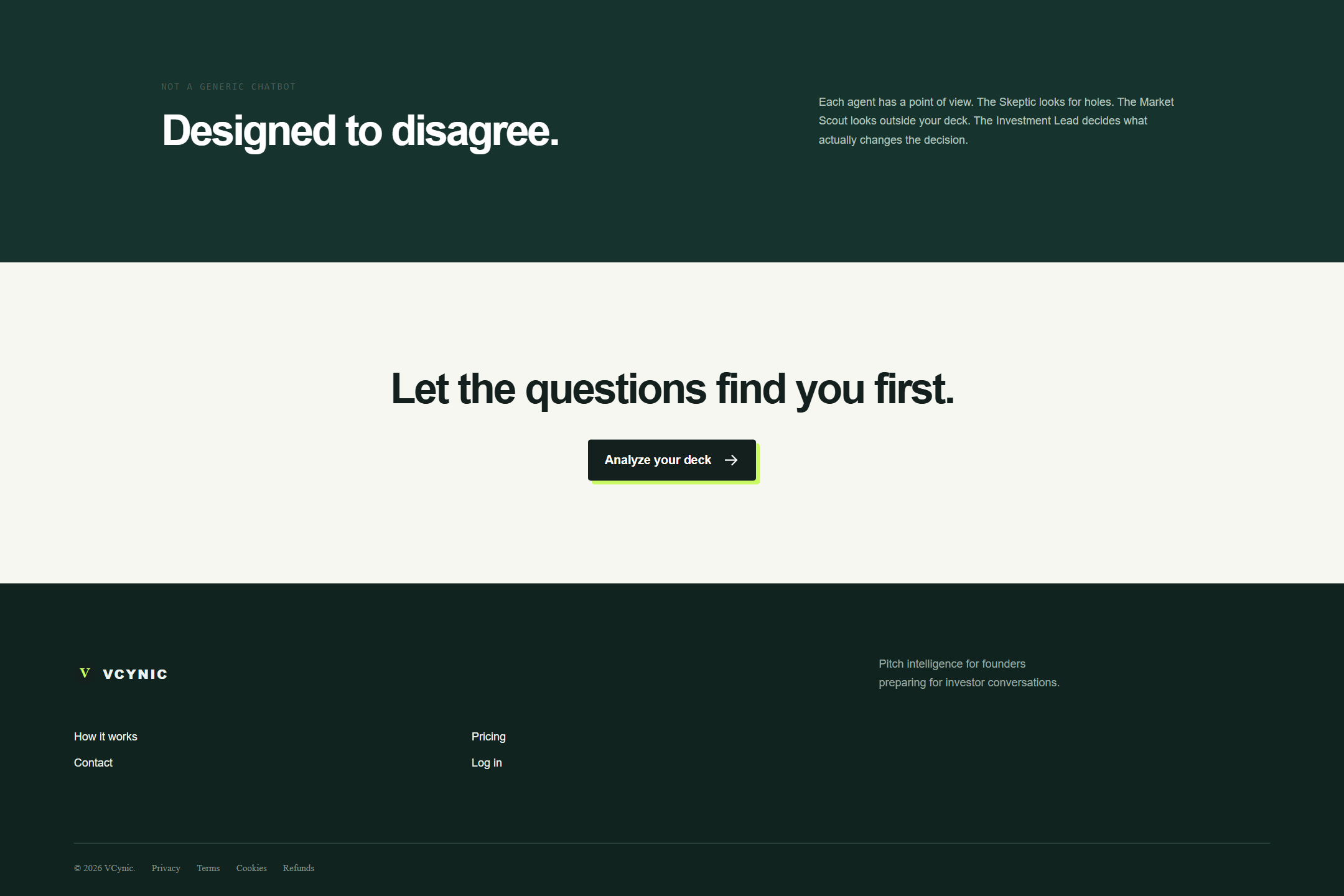
We wanted to build an AI system that could act like a "cynical investor" before the real pitch — challenging the founder's assumptions, finding overlooked competitors, and identifying the weaknesses an investor would likely attack.
What it does
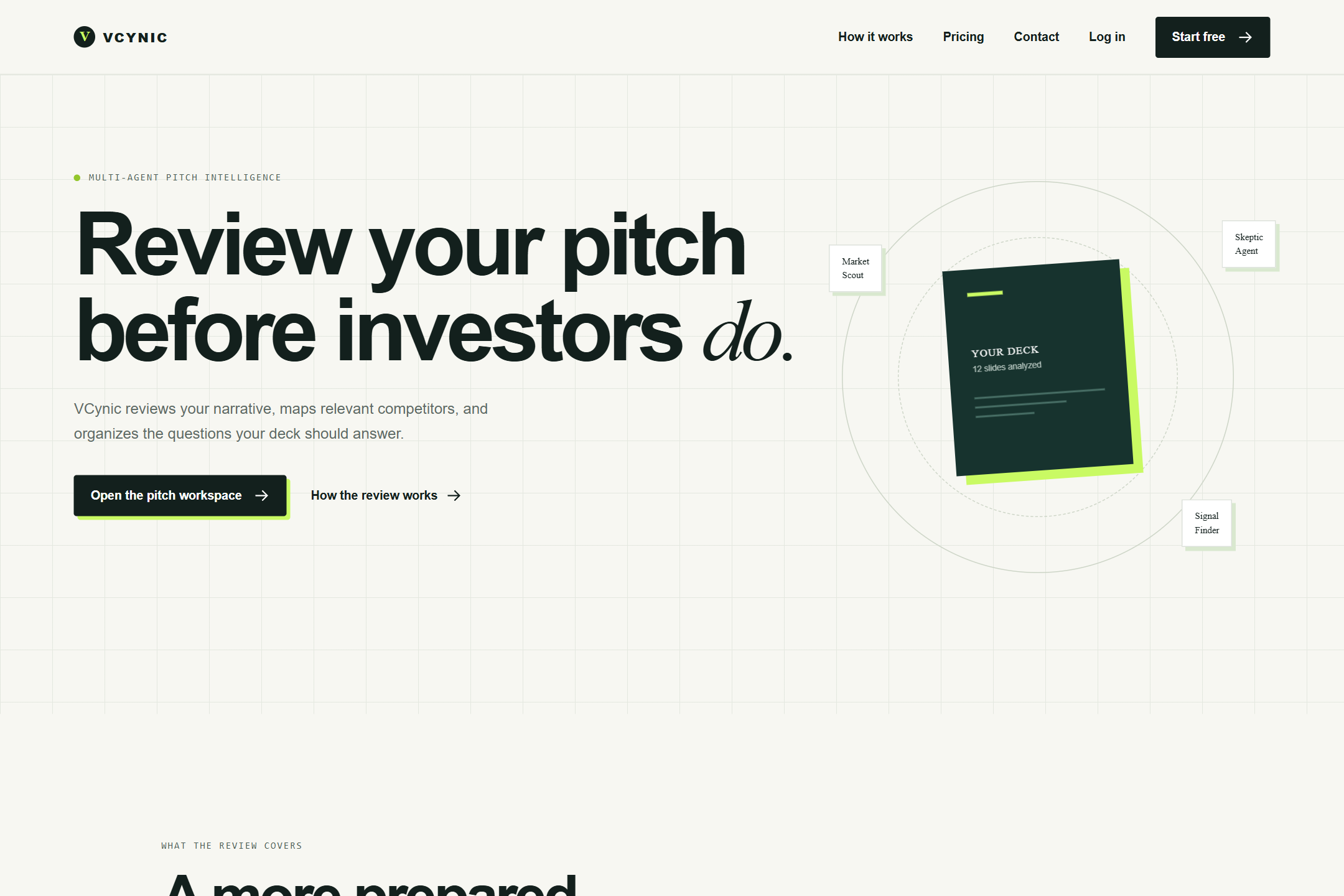
VCynic is an AI-powered investor-readiness platform that analyzes startup pitch decks and provides a critical, evidence-driven assessment.
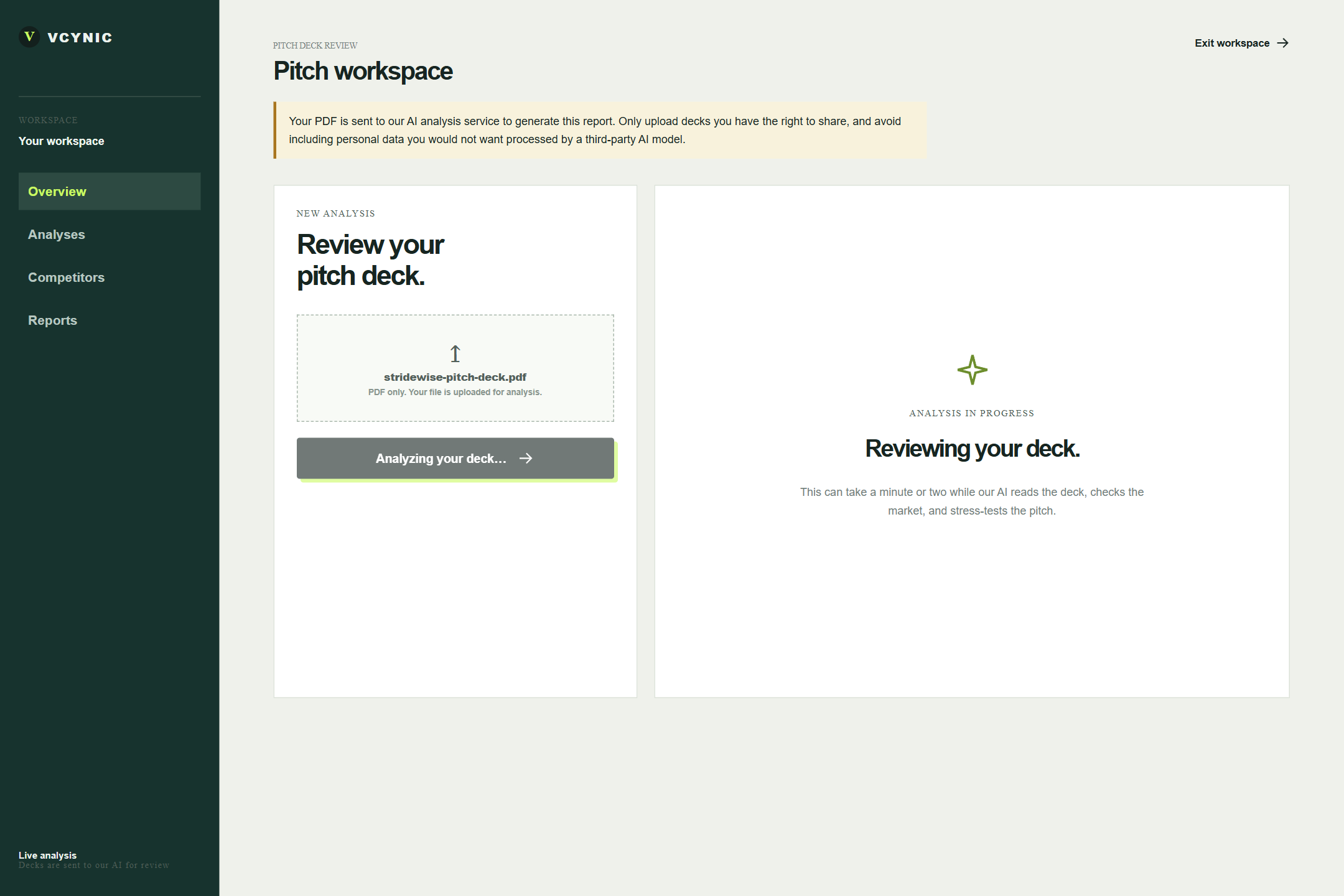
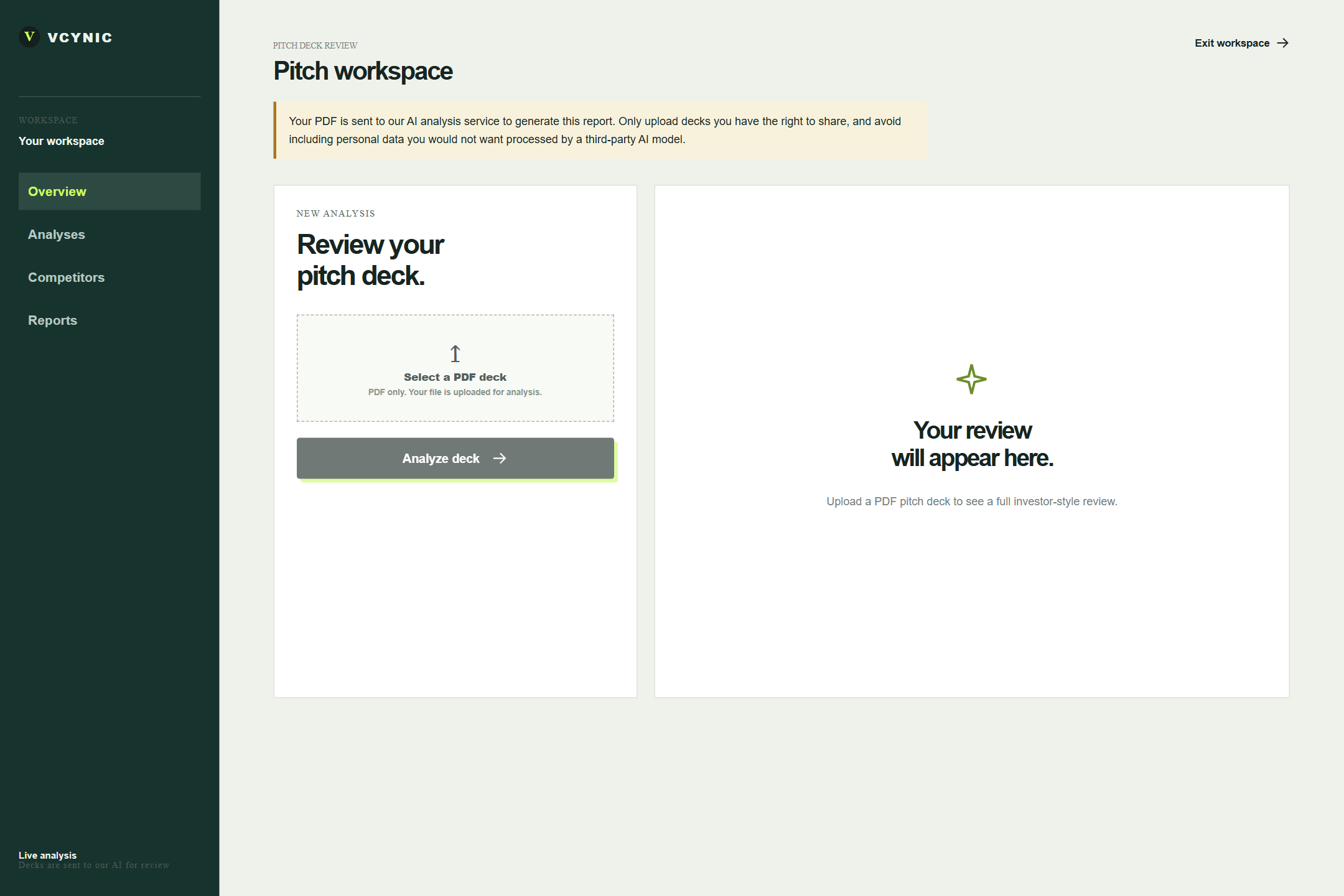
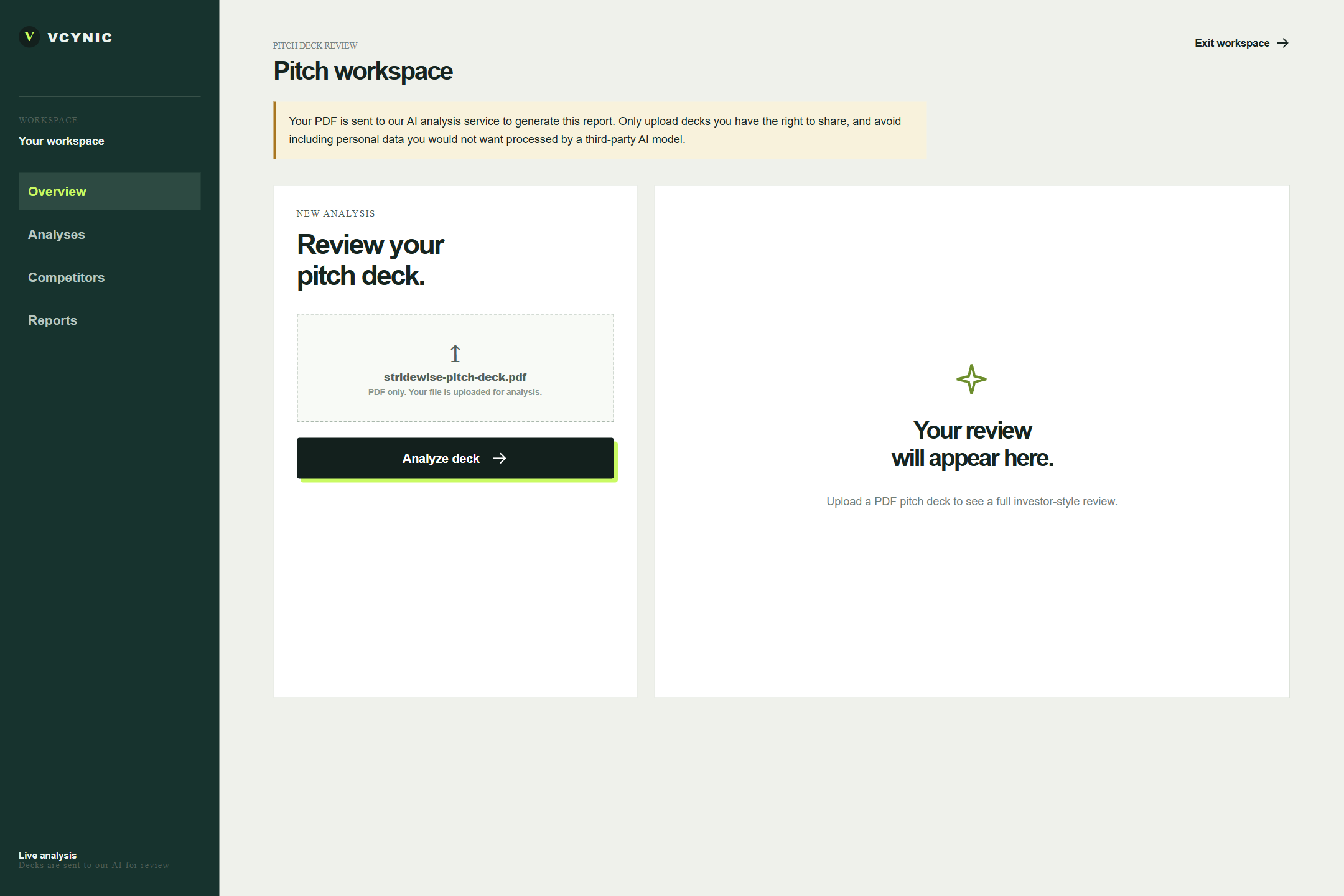
A founder uploads a pitch deck as a PDF, and VCynic analyzes the business, researches direct and indirect competitors, reviews the stated financial assumptions, and generates a structured "Tear-Down Report".
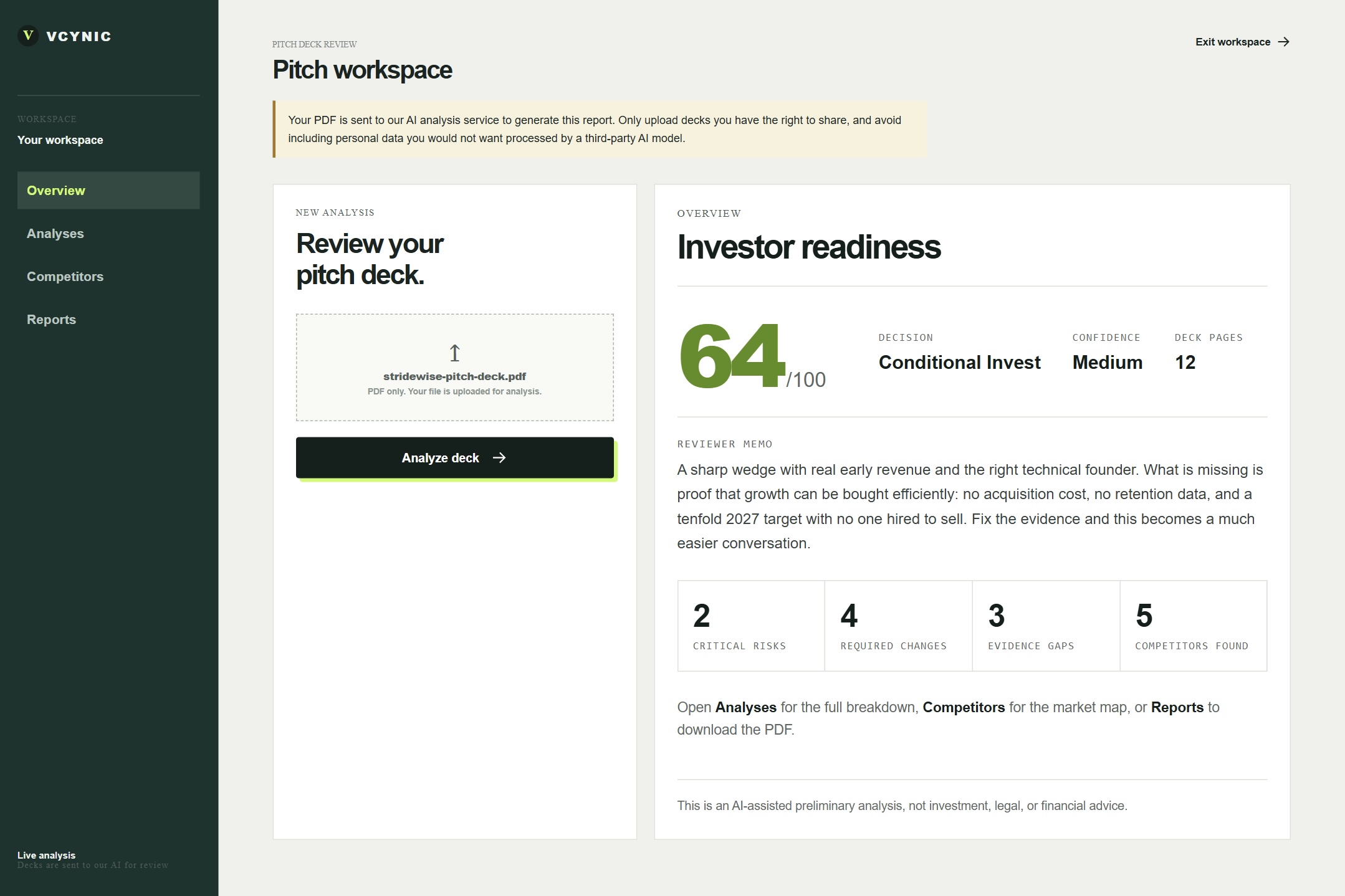
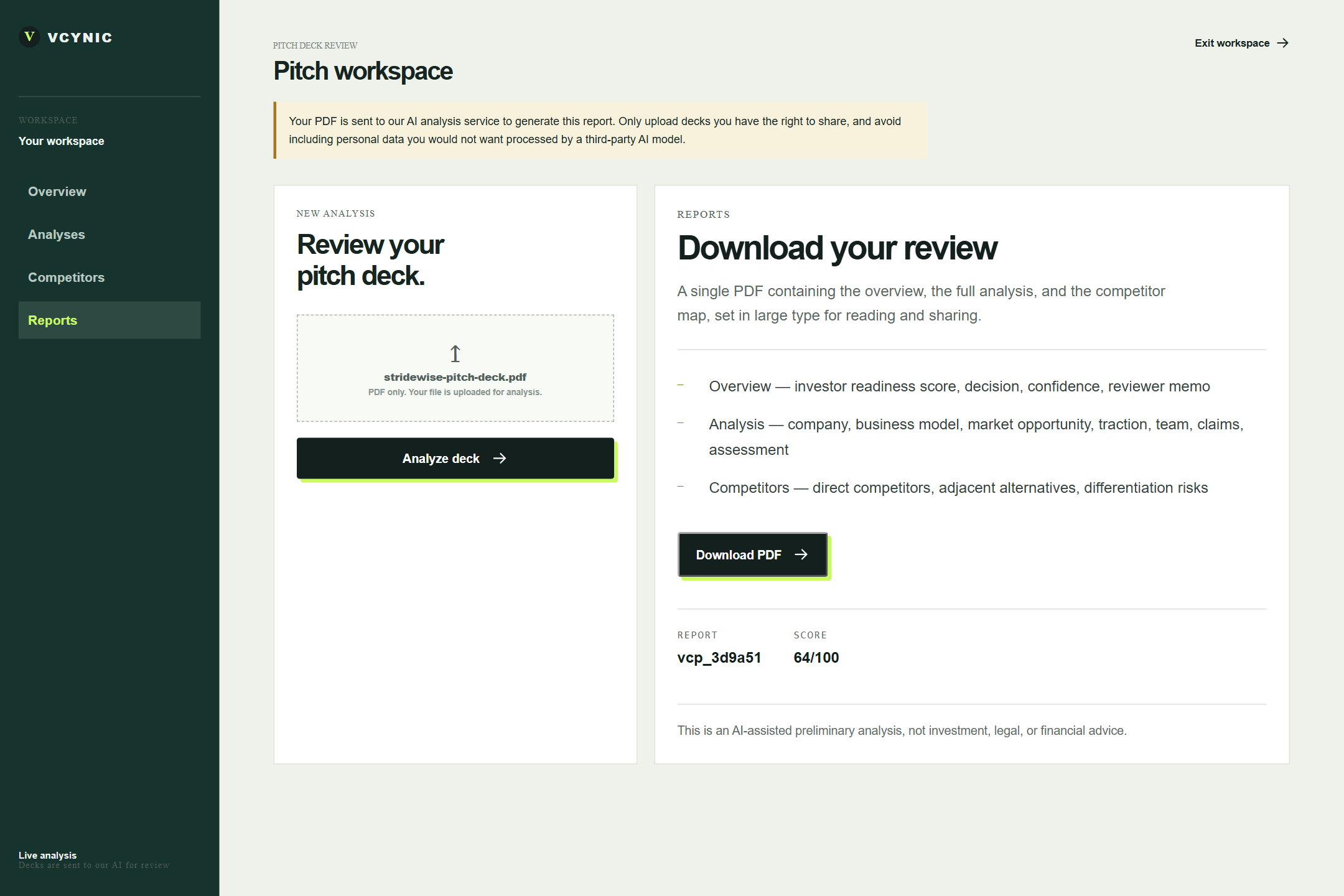
The report includes an investor-readiness score, investment decision and confidence, business analysis, competitor mapping, financial and unit-economics review, critical risks, diligence questions, and recommended changes. The complete report can also be exported as a PDF.
How we built it
We built VCynic using Next.js, React, and TypeScript for the frontend, with a separate Python analysis service using FastAPI and CrewAI.
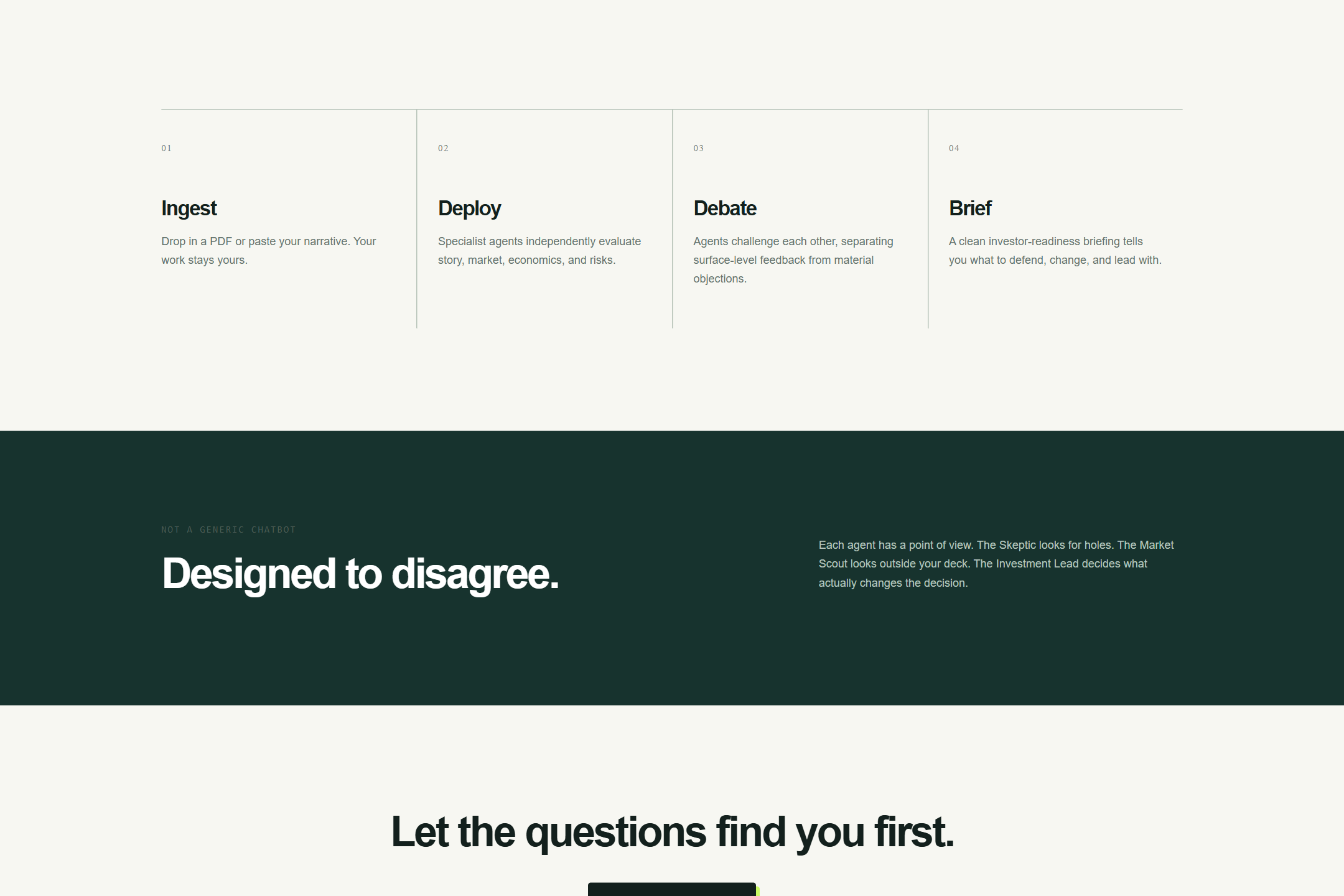
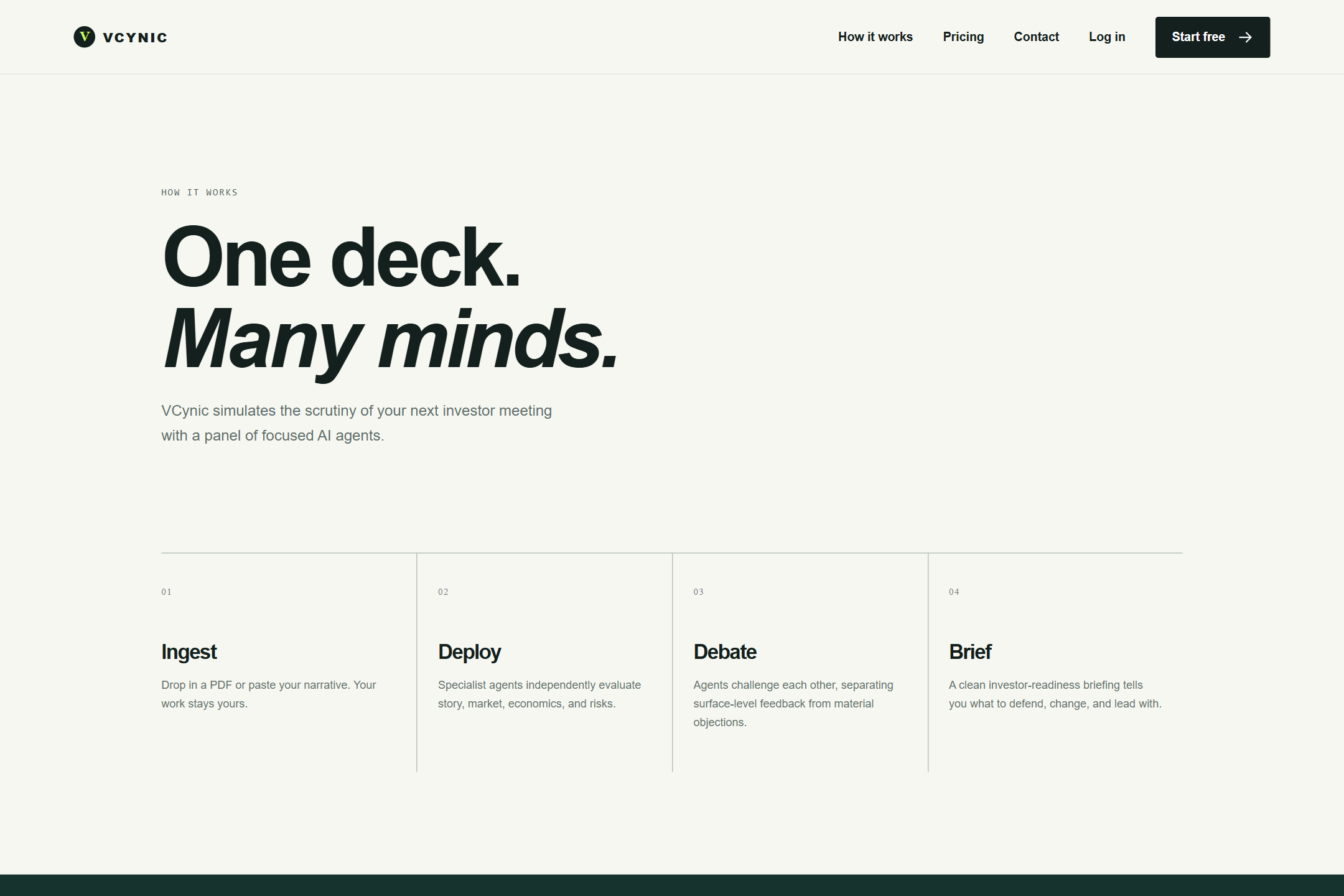
Instead of using a single AI prompt, we created a multi-agent system where each agent has a specific responsibility:
- Extractor Agent: extracts information and financial claims from the pitch deck.
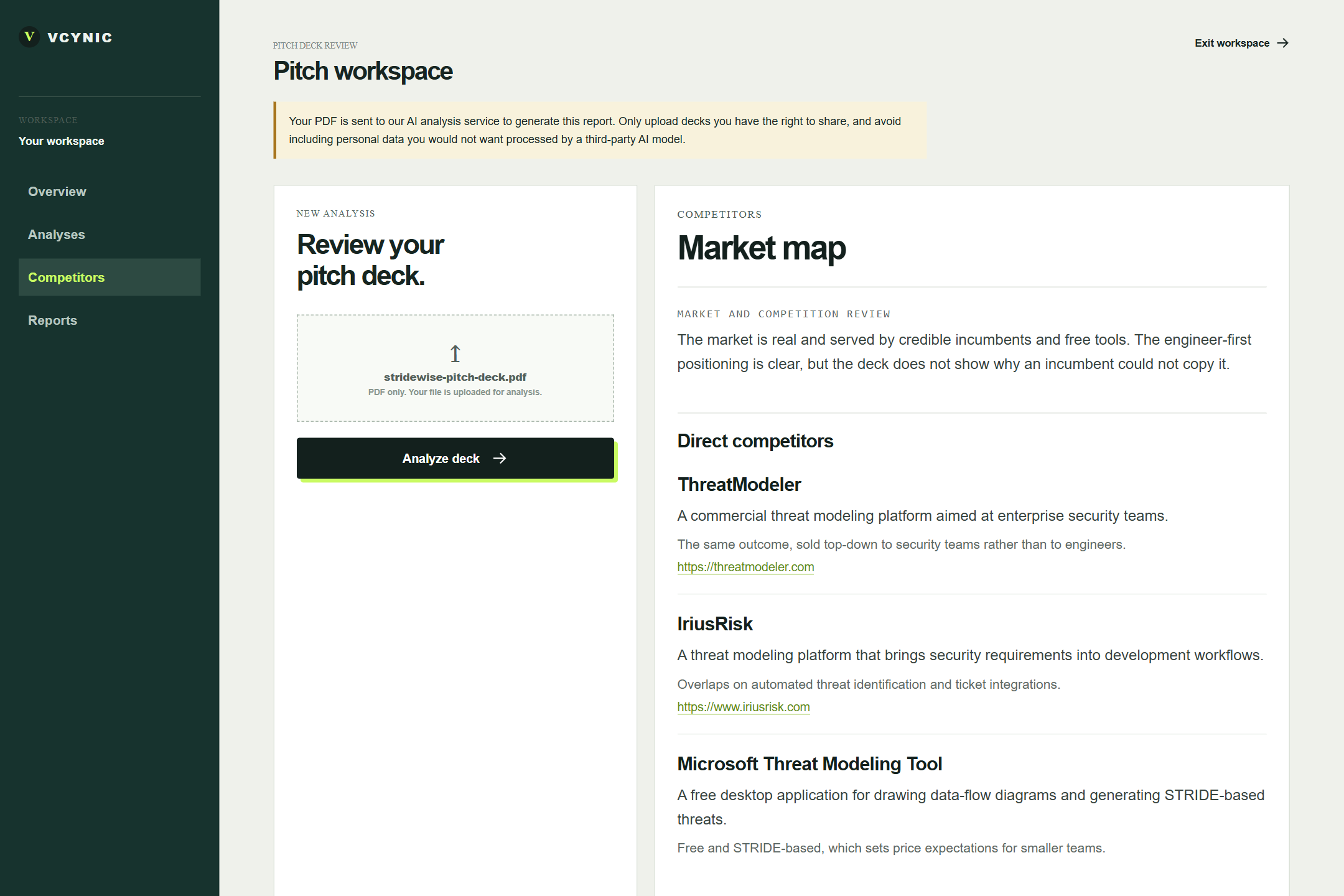
- Researcher Agent: performs live web research to identify competitors and validate market information.
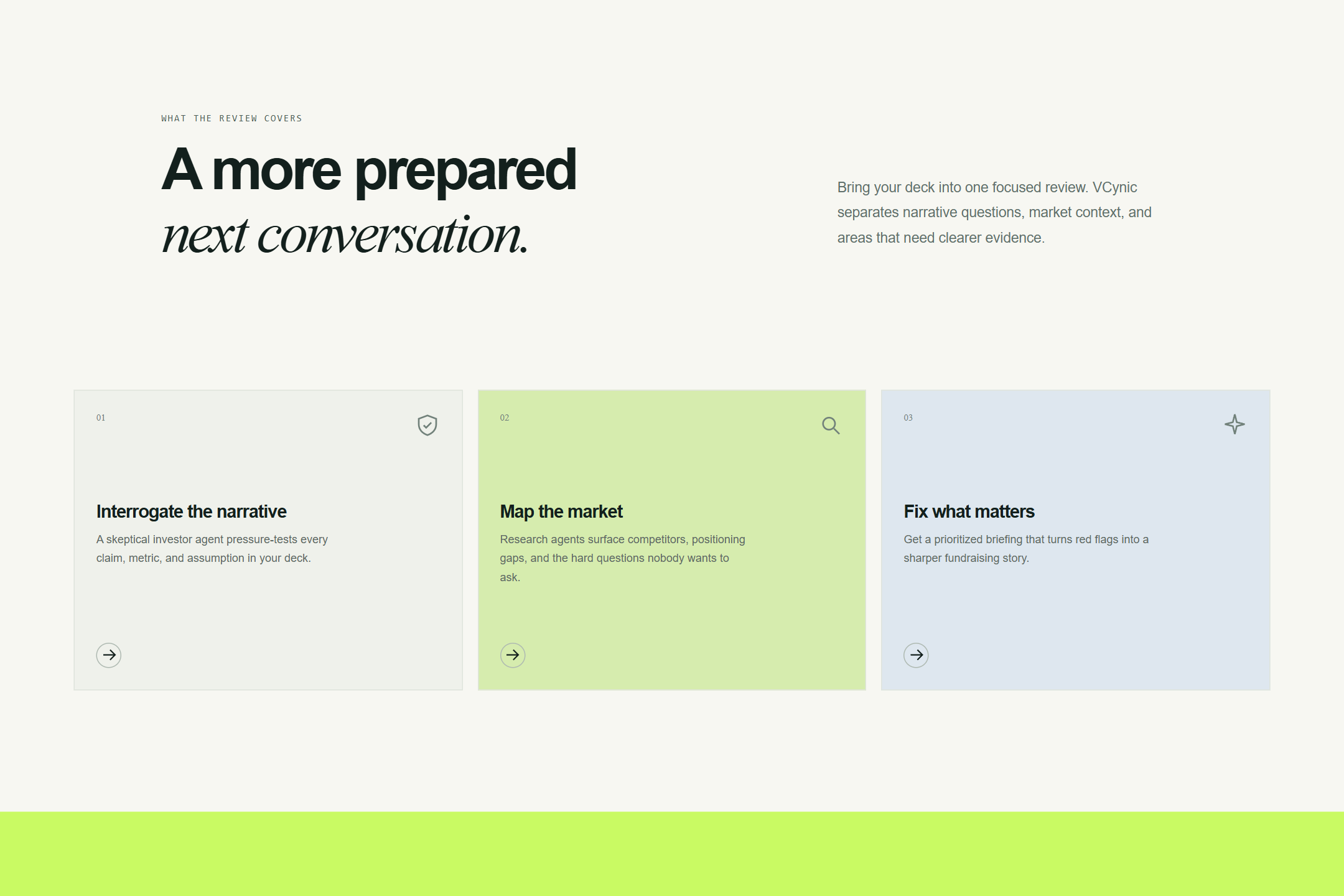
- Cynic Agent: combines the extracted information and research to generate the final critical assessment.
The analysis is returned as structured JSON and displayed through a four-section dashboard: Overview, Analyses, Competitors, and Reports.
Challenges we ran into
One of our biggest challenges was making the AI agents communicate reliably through structured JSON while handling PDF validation and the OpenAI/CrewAI integration.
We also faced issues with CORS, timeouts, server-side credentials, and keeping the analysis pipeline stable.
Another challenge was the amount of information generated by the AI. Our first dashboard displayed the entire report in one dense view, which made it difficult to understand. We solved this by redesigning the experience into separate sections and using different layouts for risks, business information, competitors, and recommendations.
Accomplishments that we're proud of
We are proud of turning a complex multi-agent AI workflow into a working platform with a clear and practical use case.
VCynic can analyze an actual pitch deck, perform market research, identify competitors, evaluate financial assumptions, and turn all of this into a structured investor-style assessment.
We are also proud of building the system around the idea of providing founders with the kind of critical feedback they might otherwise only receive after pitching to real investors.
What we learned
This project taught us that building an effective AI product is about much more than simply connecting an LLM to an application.
We learned how to design and orchestrate specialized AI agents, handle structured AI outputs, integrate frontend and backend services, protect API credentials, and build a user experience around large amounts of AI-generated information.
Most importantly, we learned how important it is to make AI output reliable, structured, and understandable rather than simply generating more information.
What's next for VCynic
Our next goal is to make VCynic even more useful for real-world startup evaluation.
We plan to integrate platforms such as Crunchbase and PitchBook for deeper real-time market benchmarking, add Excel and CSV support for automated financial-model auditing, and eventually expand VCynic beyond pitch decks to analyze founder presentation videos and audio dynamics.
The long-term vision is to make VCynic a practical battle-preparation and due-diligence tool for both startup founders and investors.


Log in or sign up for Devpost to join the conversation.