
Inspiration
We noticed two major problems in the world of AI voice. First, most text-to-speech tools sound robotic and lack human emotion—you can't use them for serious storytelling or education. Second, and more importantly, there is a massive ethical gap: the rise of deepfakes has made people afraid of voice cloning.
We wanted to build VCaaS (Voice Cloning as a Service) to solve both. We envisioned a platform that isn't just a toy, but a professional infrastructure that makes voice AI emotionally expressive (for creators/students) and secure (using invisible watermarking to prevent misuse). Our goal was to democratize high-end voice tech for students, educators, and developers while keeping it safe.
What it does
VCaaS is a comprehensive voice intelligence platform. It goes beyond simple text-to-speech:
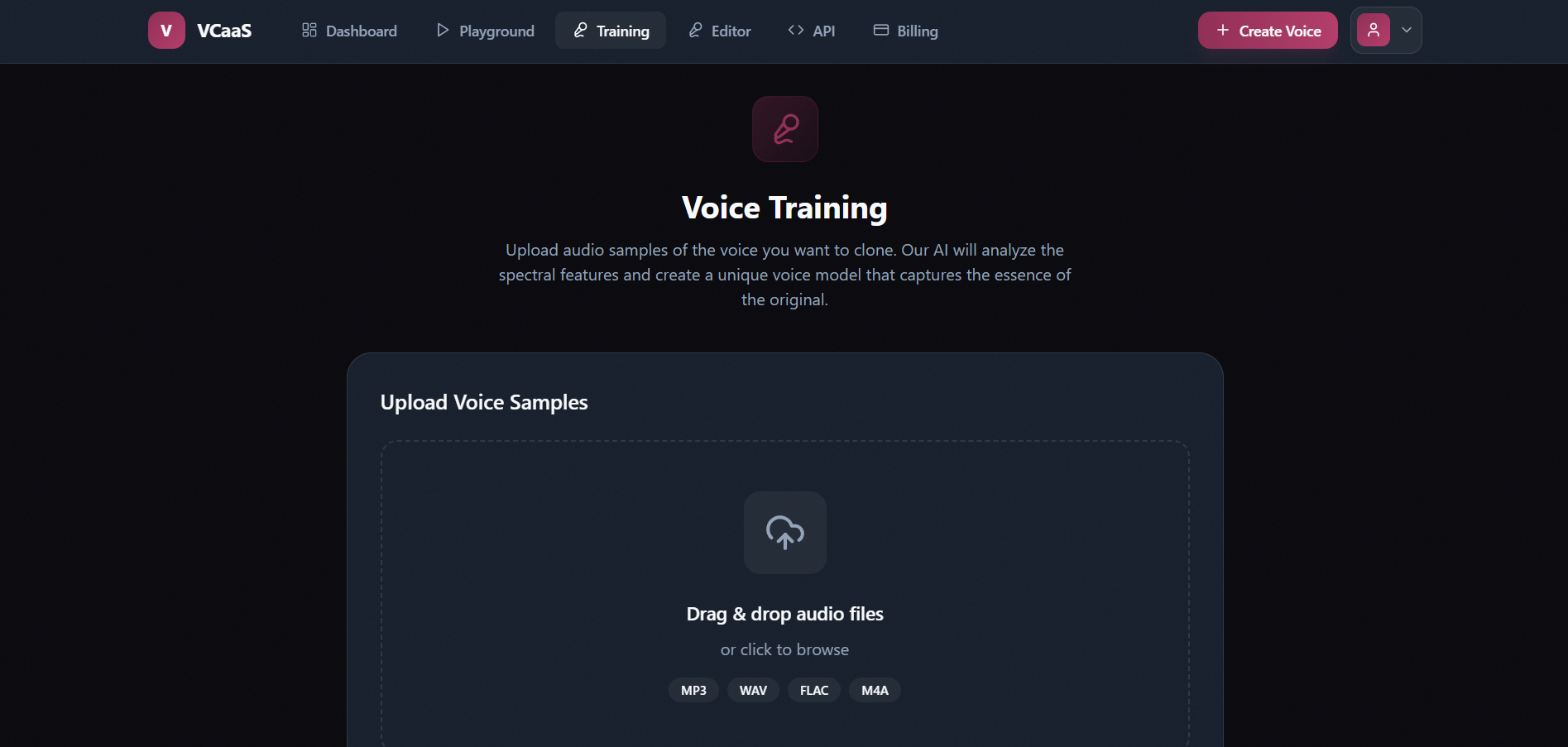
High-Fidelity Voice Cloning: Users can clone a voice with just a few minutes of audio.
Emotion Rendering Engine: Unlike standard AI, VCaaS allows users to control the emotion of the speech (e.g., Joyful, Urgent, Sad) using simple sliders.
Security & Watermarking: Every audio file generated contains an invisible "audio fingerprint," ensuring that synthetic voices can always be detected and traced to prevent deepfakes.
Multilingual Support: It breaks language barriers by allowing a user's voice to speak fluently in other languages—perfect for educational content and accessibility.
Developer-First API: We provide the infrastructure for other students to build voice apps (like detailed screen readers or gaming NPCs) on top of our engine.
How we built it
We built the entire application using Base44.
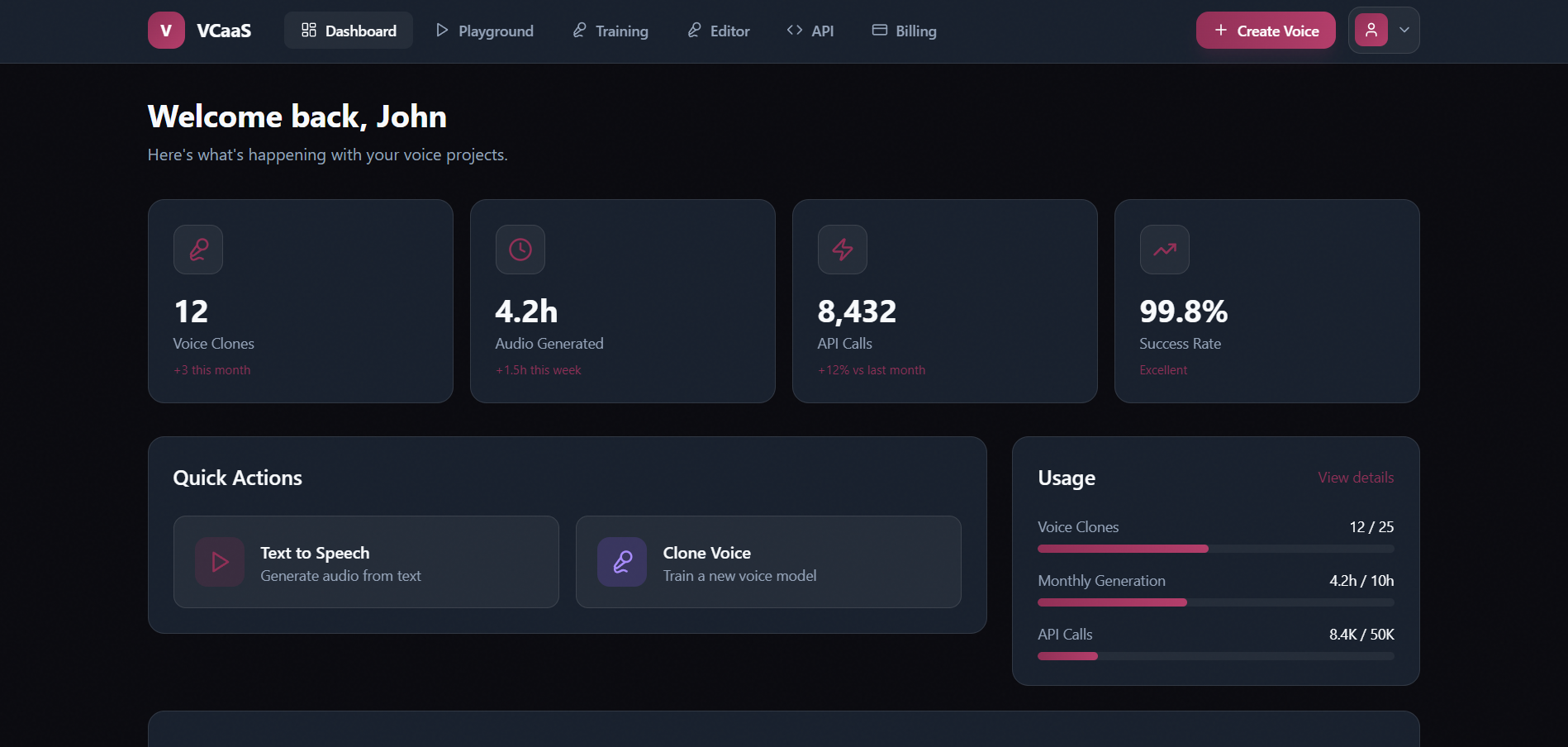
Frontend & UI: We utilized Base44's generator to create a futuristic "Dark Glass" aesthetic (Glassmorphism) using a custom Twilight Berry and Deep Slate color palette. We focused heavily on responsiveness and visual hierarchy.
Logic & Interactivity: We built a multi-page dashboard structure including a Playground, Voice Training center, and Billing analytics.
Authentication: We integrated Firebase for secure user authentication (Google Login & Email), ensuring user data and voice models are protected.
State Management: We implemented global state management to handle complex theming (Light/Dark mode) and real-time updates across the dashboard components.
Challenges we ran into
Global Theming: One of the hardest technical hurdles was getting the "Light Mode" and "Dark Mode" to work consistently across every single component. Initially, text would disappear (white-on-white) when switching themes. We had to refactor the entire CSS architecture to use adaptive variables for a seamless experience.
UI Complexity: Building a complex "Audio Editor" interface inside a web app was difficult. We had to creatively use Base44's components to simulate a professional timeline and spectral analysis tool that looked and felt real.
Ethical Guardrails: Deciding how to present the "Watermarking" feature required deep thought. We had to design the UI to reassure users that their voice data was safe and not being used to train public models without consent.
Accomplishments that we're proud of
Professional UX: We are incredibly proud that the app looks like a Series-A funded SaaS product rather than a typical hackathon project. The "Glassmorphism" UI is clean, accessible, and responsive.
Comprehensive Workflow: We didn't just build a landing page; we built the full user journey: Landing -> Login -> Dashboard -> Playground -> Billing.
Idea Validation: We successfully implemented a feedback loop within the app to gather user interest, satisfying a key judging criteria.
What we learned
The Power of No-Code/Low-Code: We learned how fast we can move from "Idea" to "MVP" using Base44. It allowed us to focus on the logic and product value rather than getting stuck on CSS boilerplate.
Importance of Ethics in AI: Building VCaaS taught us that trust is the most important feature. If users don't trust the security of the platform, the technology doesn't matter.
What's next for VCaaS
Voice Marketplace: We plan to add a feature where voice actors can license their voices to students and creators for a fee, creating a gig economy for voice.
Real-Time API: We want to launch a WebSocket API that allows developers to use VCaaS for live translation in video calls.
Deepfake Detection Tool: A free public tool where anyone can upload a file to check if it was generated by our engine.

Log in or sign up for Devpost to join the conversation.