-
-
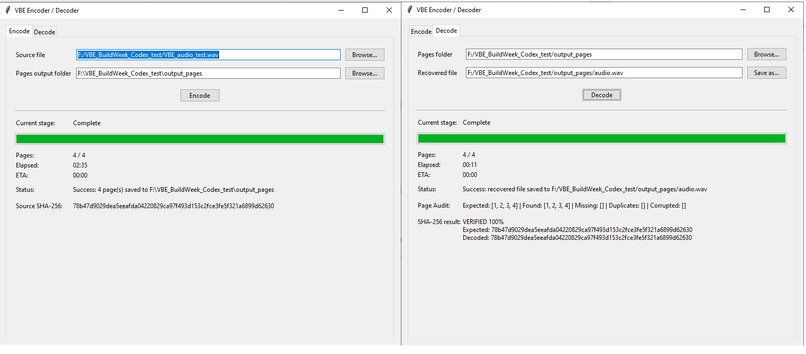
VBE desktop interface for encoding, auditing, and verified recovery
-
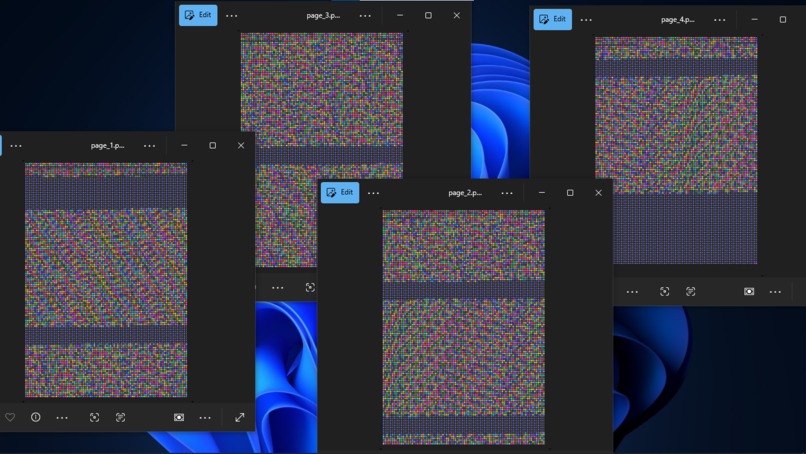
Digital file encoded into structured VBE pages
-
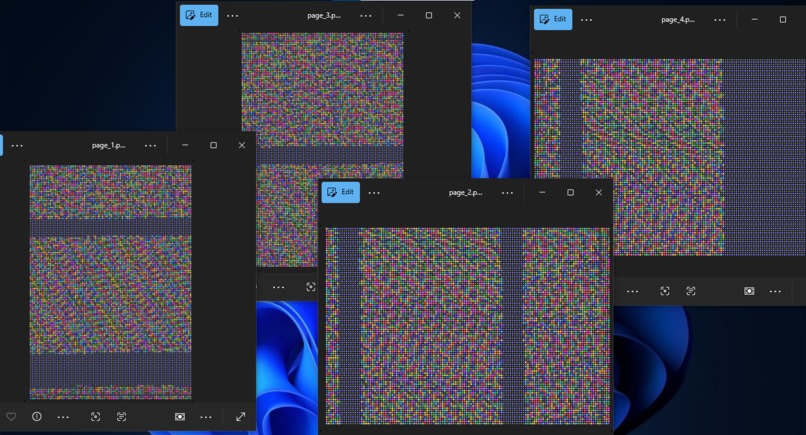
Automatic correction of 0°, 90°, 180°, and 270° page rotations
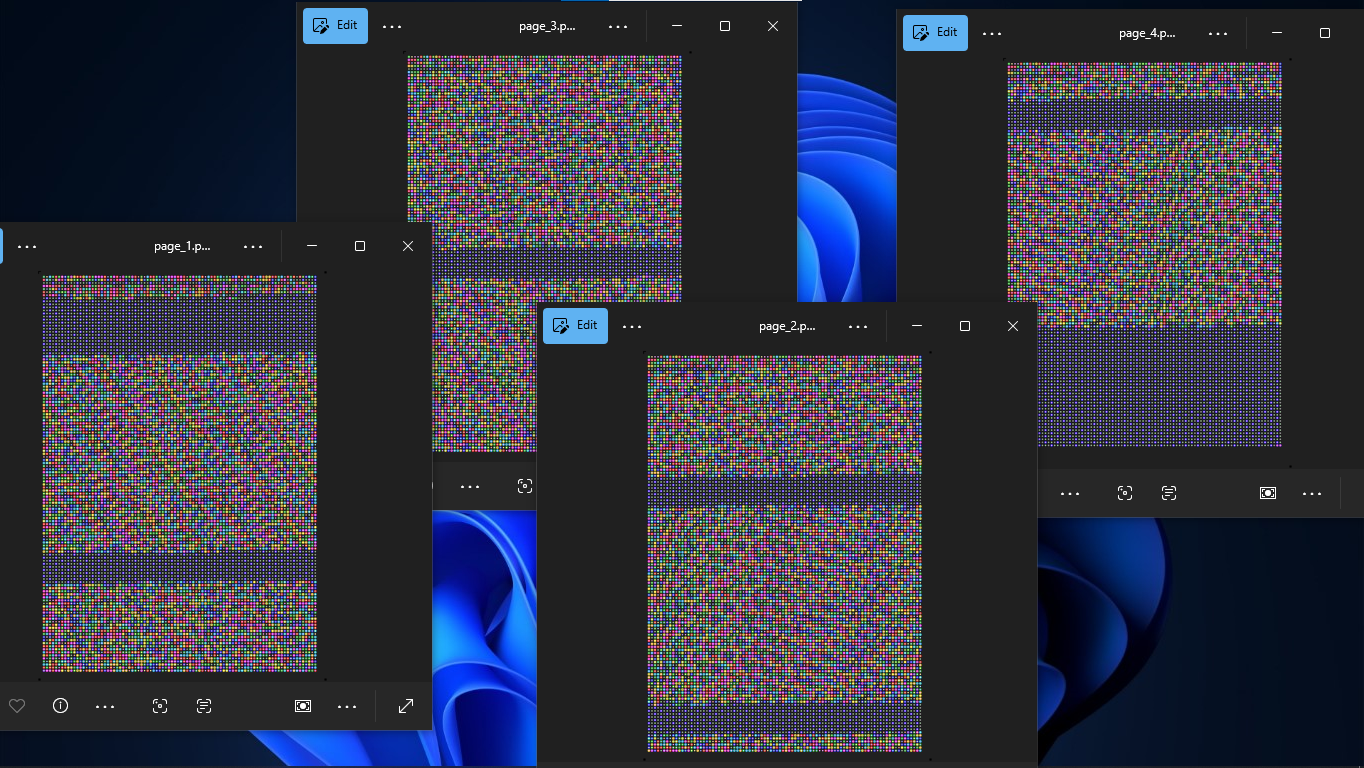
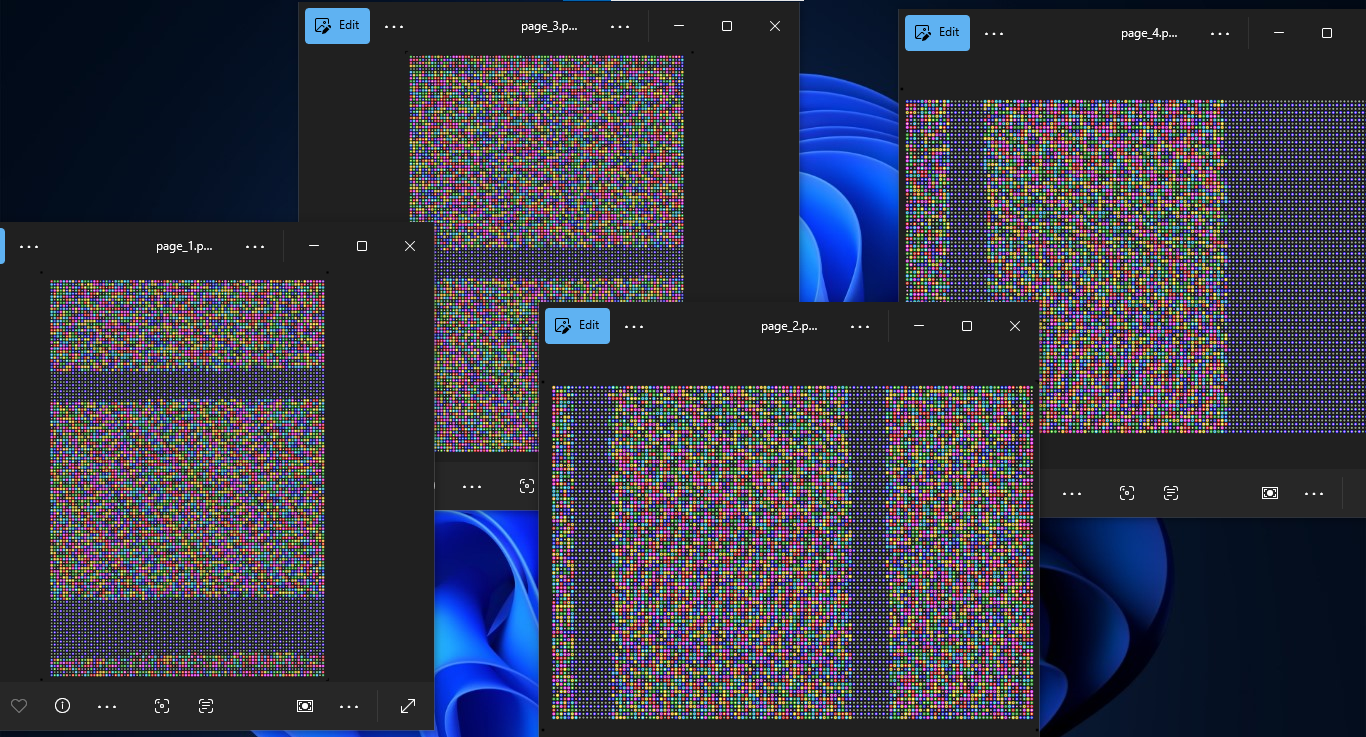
Inspiration
Digital files normally depend on digital storage devices, cloud services, and compatible software. I wanted to explore a different question: can a digital file be represented as physical, printable pages and later reconstructed with verification that the recovered file is identical to the original?
This idea led to Visual Base Encoding, or VBE.
What it does
VBE converts the raw data of any digital file into structured, color-coded image pages that can be stored digitally or printed on paper.
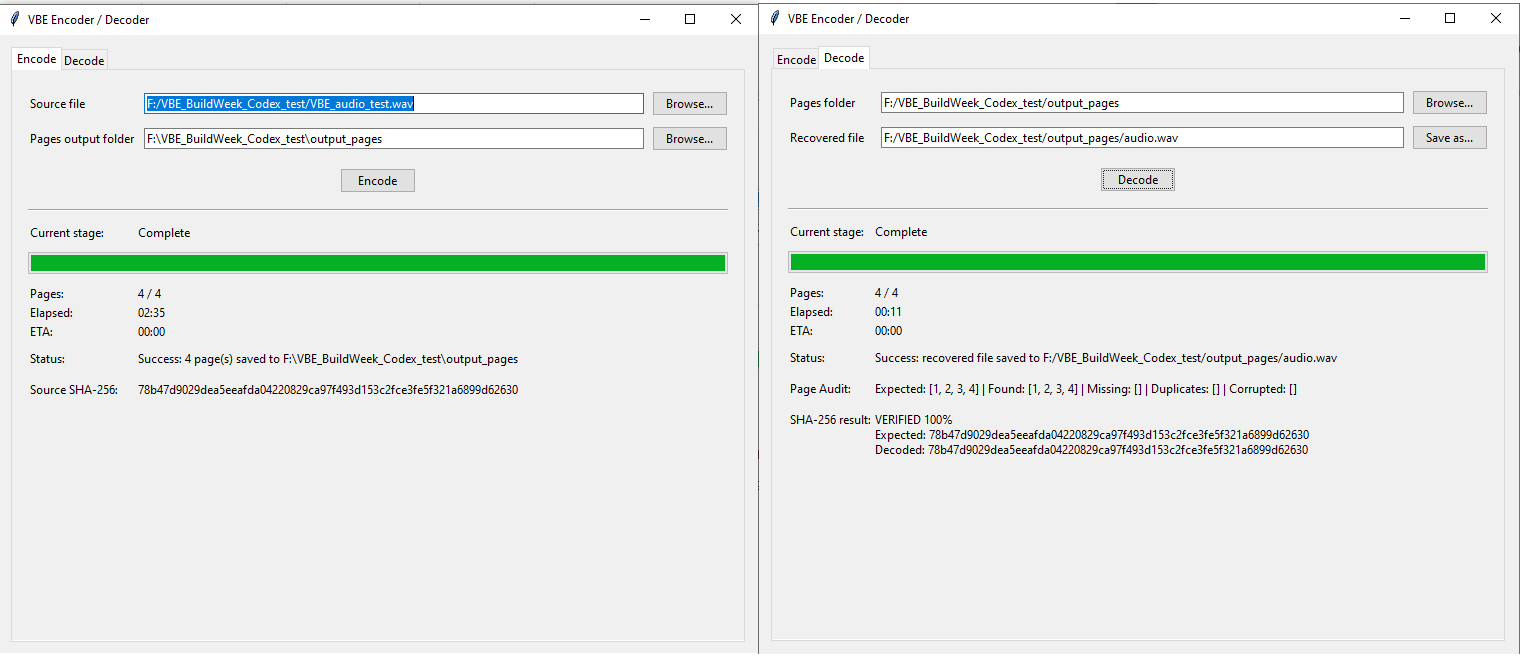
The decoder reads the pages, restores their correct order, reconstructs the original file, and uses SHA-256 integrity verification to confirm whether the recovered file matches the source.
The system also audits the page set to detect issues such as missing, duplicated, or unexpected pages. The current prototype has been tested against several forms of image degradation, including JPEG compression and moderate blur, with further print-and-camera testing in progress. To a casual observer, the printed pages appear as structured color patterns rather than readable file content. This visual opacity is not encryption by itself.
A planned encrypted mode would encrypt the source data before VBE encoding, allowing the pages to act as a durable physical carrier for encrypted information while preserving recovery and integrity verification.
How we built it
I designed the VBE concept, encoding structure, page organization, recovery approach, and testing process.
Because I am a 3D animation professional rather than a traditional software developer, I used ChatGPT as an AI-assisted development partner to help implement and improve the prototype in Python.
The project uses tools and libraries including Python, Pillow, NumPy, and OpenCV for file processing, image generation, analysis, and reconstruction.
I developed the system iteratively: designing a feature, testing it under controlled conditions, identifying failure cases, and improving the design based on the results.
Challenges we ran into
The main challenge is that a generated digital image is perfectly structured, while a printed, scanned, or photographed page may contain color shifts, compression artifacts, blur, rotation, perspective distortion, or incomplete data.
Other challenges included:
- Preserving enough metadata for reliable reconstruction
- Detecting missing and duplicated pages
- Verifying the final reconstructed file
- Improving decoding performance
- Balancing data capacity with physical-world reliability
Accomplishments that we're proud of
The current prototype can:
- Encode arbitrary files into color-coded pages
- Decode the pages back into the original file
- Verify reconstructed files using SHA-256
- Audit page collections for missing, duplicated, or extra pages
- Support multi-page file encoding
- Recover data in selected missing-page test scenarios
- Successfully decode after several controlled compression and image-degradation tests ## What we learned Building VBE showed me that converting information into a visual format is only the first step. A practical system also needs synchronization, metadata, integrity verification, error detection, recovery logic, and robust image processing.
I also learned how AI-assisted development can help a non-programmer transform an original technical concept into a working and testable prototype.
What's next for VBE Resilient Print Archive
The next development steps are:
- A simple graphical user interface
- Automatic page detection and perspective correction
- A manual four-corner correction option
- More real-world printing, scanning, and mobile-camera tests
- Stronger error correction and recovery
- Improved storage density and processing speed
- Optional encryption for sensitive files
- A documented VBE format specification

Log in or sign up for Devpost to join the conversation.